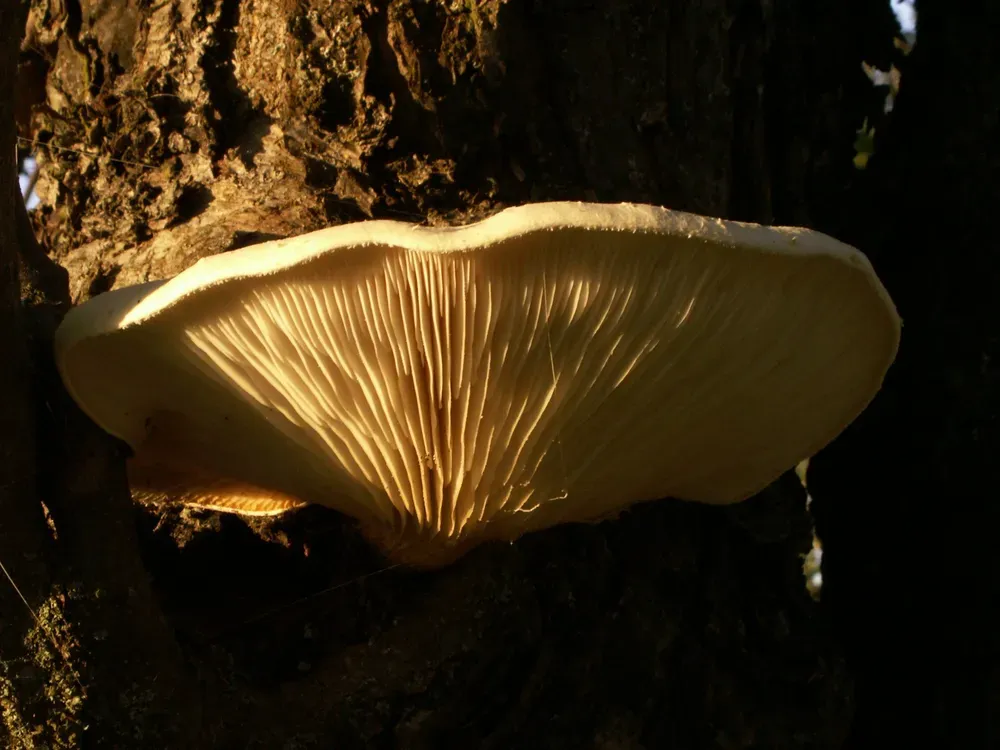
Veiled oysterPleurotus dryinus
Expert-verifiedUpdated October 3, 2026
Passport
- Edibility
- Edible
- Season
- Jul — Nov
- Hymenophore
- Gilled
- Cap color
- White
- Size
- Large (over 15 cm)
- Smell
- Pleasant
- Reviewed
- Yes ✓
Quick answers
Where to look?
Deciduous forest, Mixed forest
When does it appear?
Jul — Nov
Active months: July, August, September, October, November.
How to recognize it? Three signs
- Cap color: White, Cream, Brown
- Cap shape: Convex
- Smell: Pleasant
Fruiting season
July – November
Description
The veiled oyster (Pleurotus dryinus) is a close relative of the common oyster mushroom, but much rarer and more particular. The Latin "dryinus" means "of the oak" — and indeed it grows mainly on old oaks, less often on beeches and other broadleaf trees. Unlike the common oyster mushroom, which forms big "bouquets" of 10–30 fruiting bodies, the veiled oyster grows singly or in twos and threes — and often high up the trunk, where it's not easy to spot.
In Ukraine the mushroom occurs in oak and oak-beech forests of Polissia, the Forest-Steppe, the Carpathians and Zakarpattia. It lives as a saprotroph and weakly parasitizes weakened or dead broadleaf trees. It isn't as plentiful as the common oyster mushroom, so finding it is a pleasant bonus rather than an everyday find. The season is late summer and all of autumn.
An edible mushroom, but of less interesting culinary quality than the common oyster mushroom. Young soft specimens fry well, stew well and go into soups. Old ones turn tough and fibrous — they aren't even worth picking. A distinctive feature: remnants of the veil stay on the stem as a small "skirt-like" ring, which the common oyster mushroom doesn't have. It isn't widely cultivated (growers chose P. ostreatus for its fast growth).
Cap
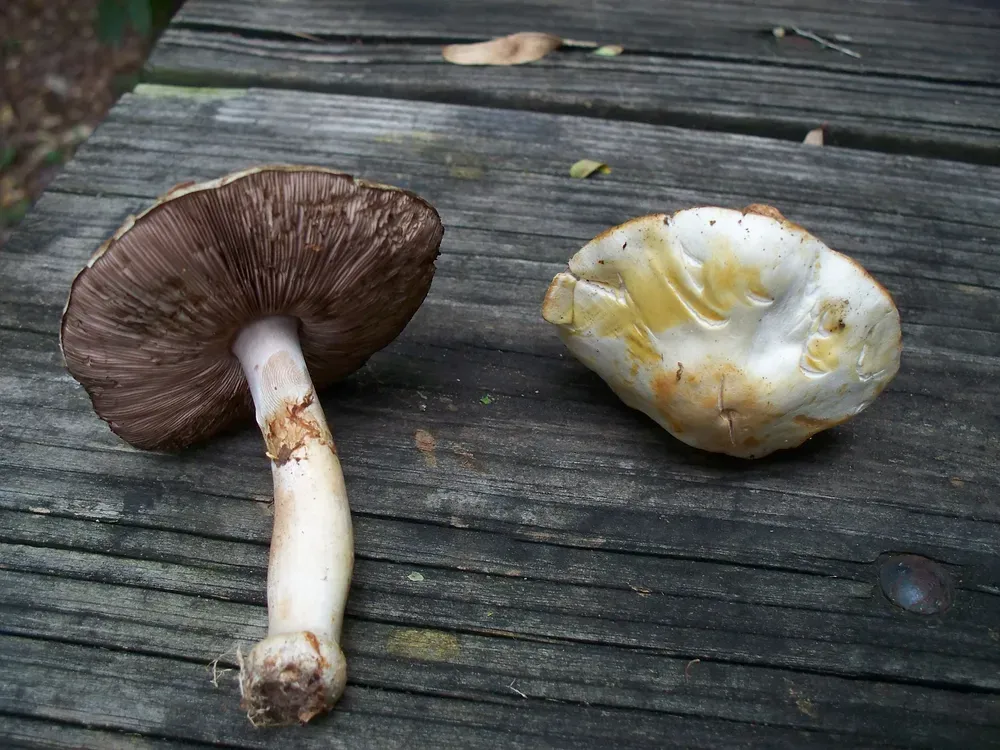
Cap up to 20 cm across, attached by its side to the substrate, fan-shaped, convex in young ones, then flattening out. The color is pale cream to beige, sometimes with a yellowish tint. The surface of a young mushroom is velvety, with fine grayish-brown scales; with age it becomes smooth, and in old ones it may crack. Remnants of the veil sometimes remain on the edges.
Hymenophore
The gills run far down the stem and sometimes join one another with wavy cross-connections in the lower part. White in color, yellowish in mature ones. The spore print is white; spores are elongated, 9–15 × 3–5 µm.
Stem
The stem is short and lateral, from practically absent to 10 cm tall. Whitish or pale brownish in color. A distinctive feature is a membranous or flaky ring in the upper part (veil remnants); in mature ones it often falls off, leaving a band.
Flesh
The flesh is white, springy and fibrous in young mushrooms, tough and leathery with age. It does NOT change color when cut. It sometimes contains extra thick-walled hyphae that add to its toughness.
Smell
The smell is pleasant, slightly fruity or sourish; in young ones it recalls a wildflower. The taste is mild and delicate.
›Scientific synonyms (12)
Agaricus acerinus, Agaricus corticatus, Agaricus dryinus, Agaricus spongiosus, Lentinus integer, Lentinus underwoodii, Pleurotus acerinus, Pleurotus albertinii, Pleurotus corticatus, Pleurotus corticatus subsp. tephrotrichus, Pleurotus corticatus var. albertinii, Pleurotus corticatus var. tephrotrichus
Lookalikes
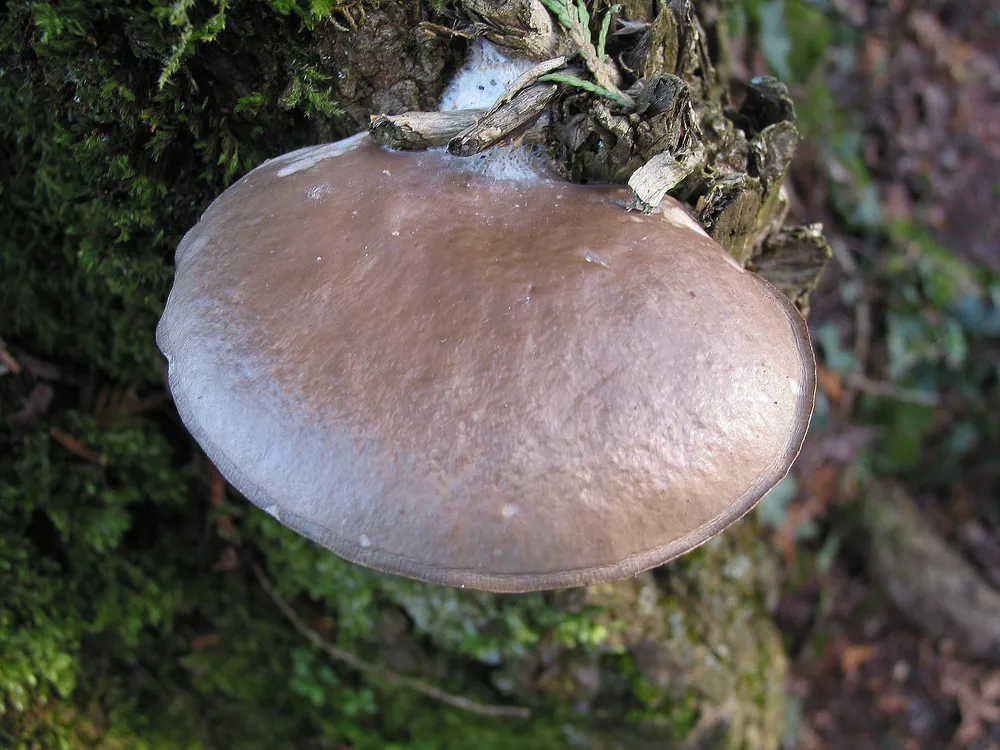
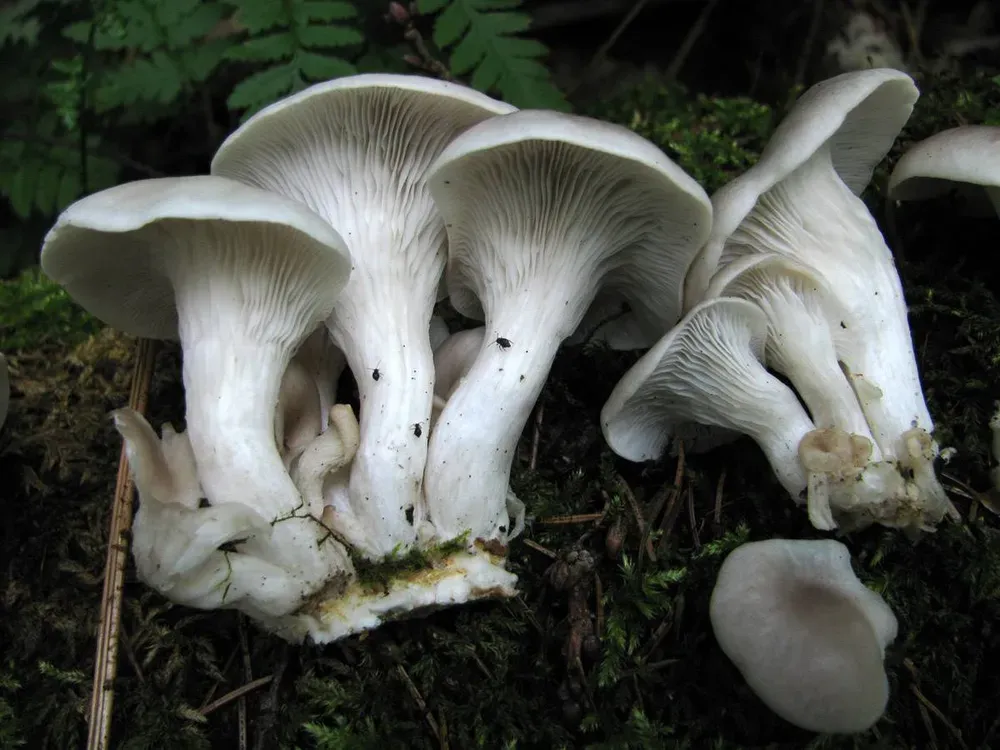
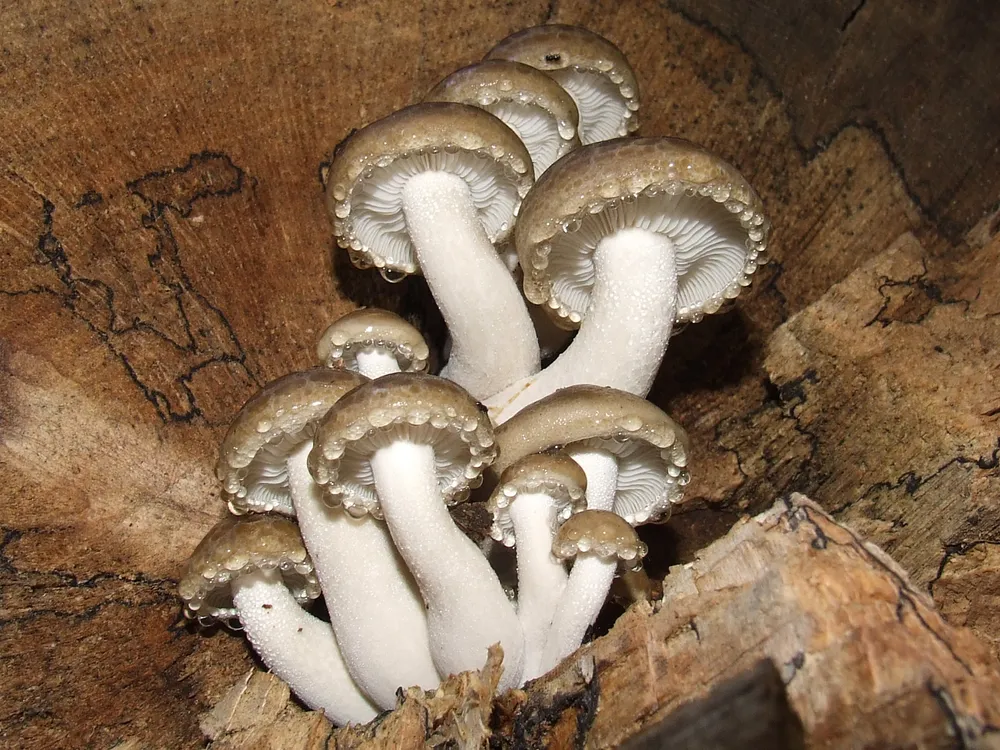
Related species
Mushrooms of the same genus and habitat — to study side by side and never mix up.
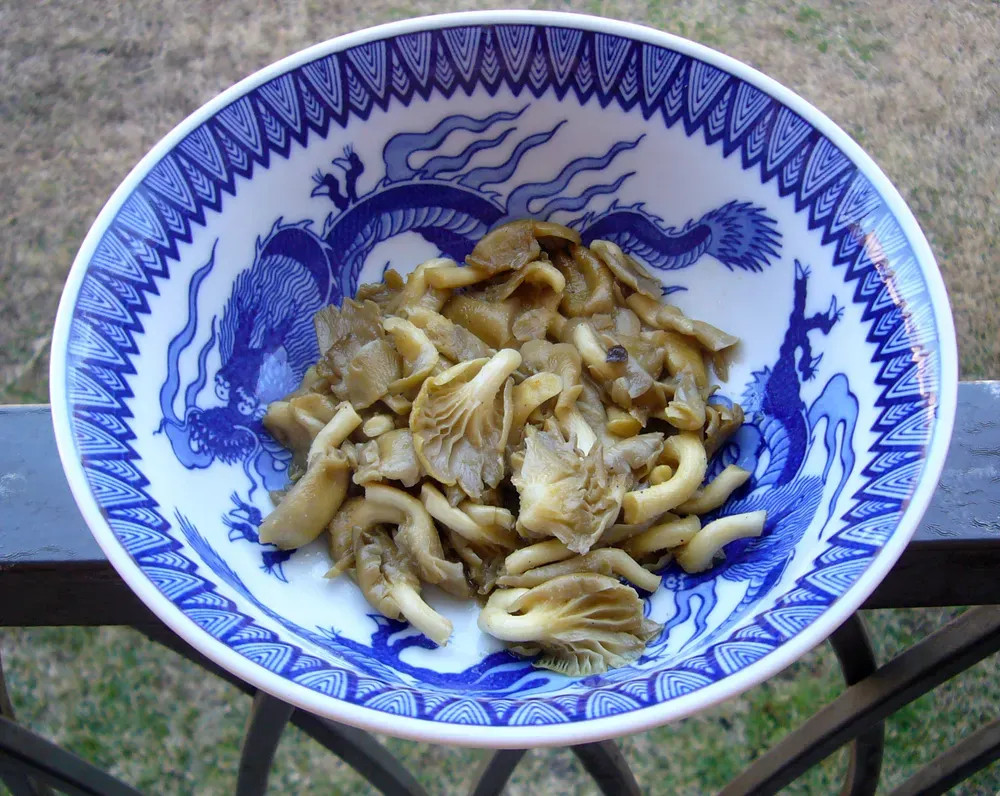
Golden oyster mushroom
Pleurotus citrinopileatus
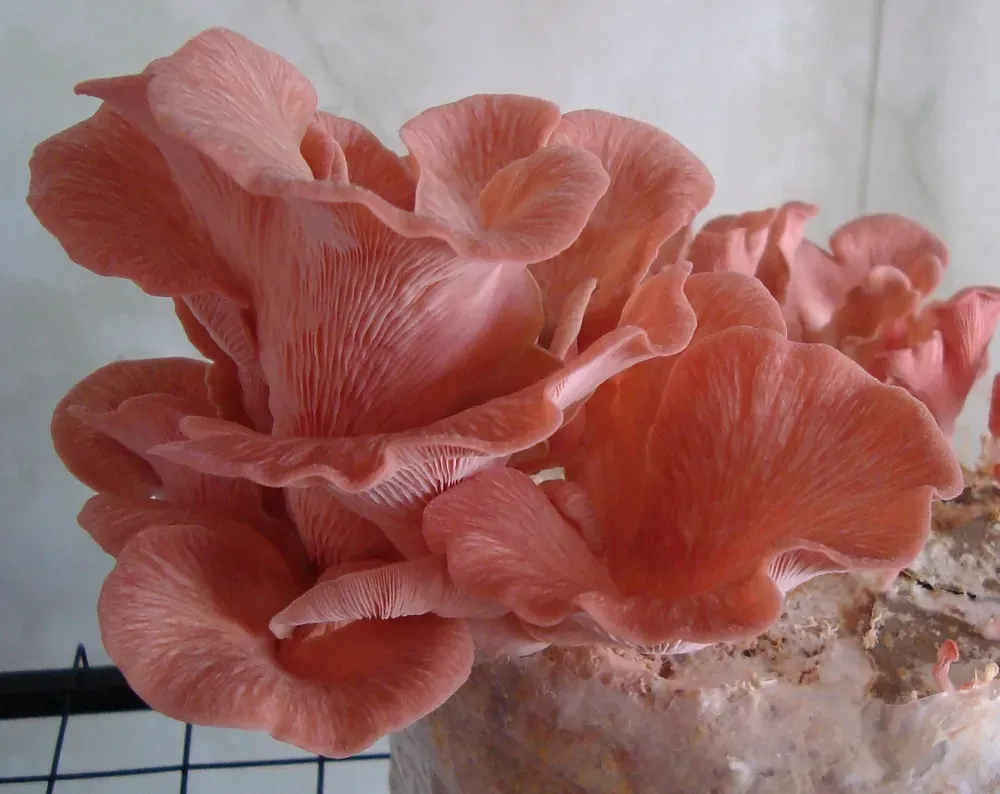
Pink oyster mushroom
Pleurotus djamor
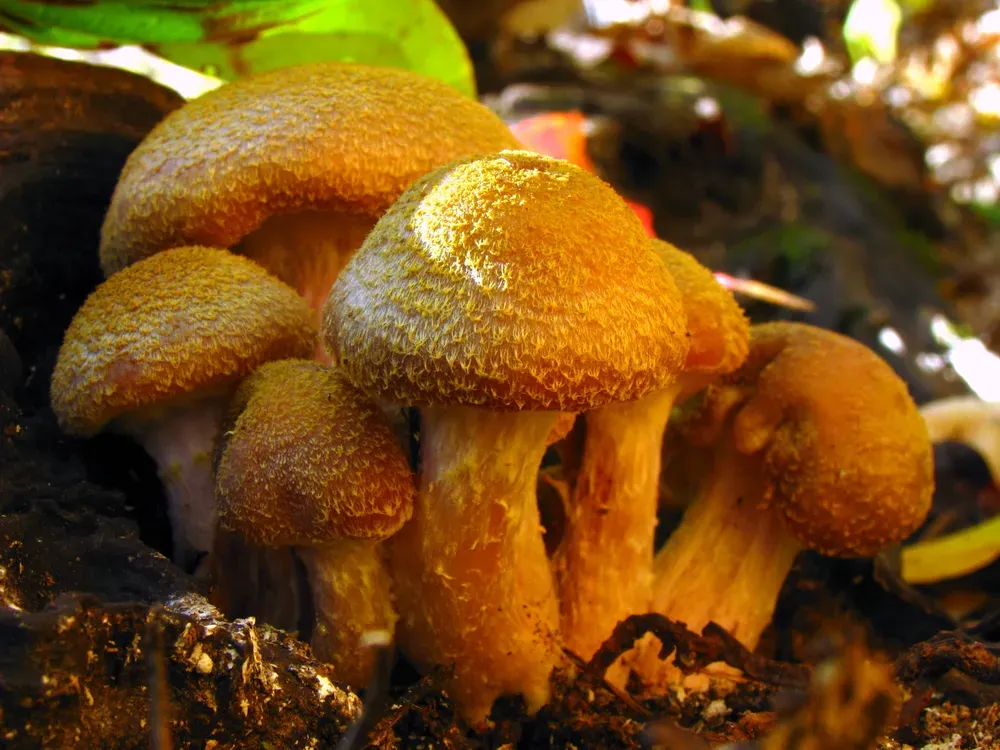
Bulbous honey fungus
Armillaria gallica
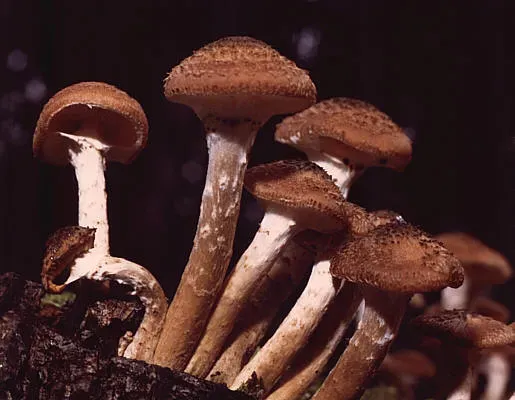
Dark honey fungus
Armillaria ostoyae
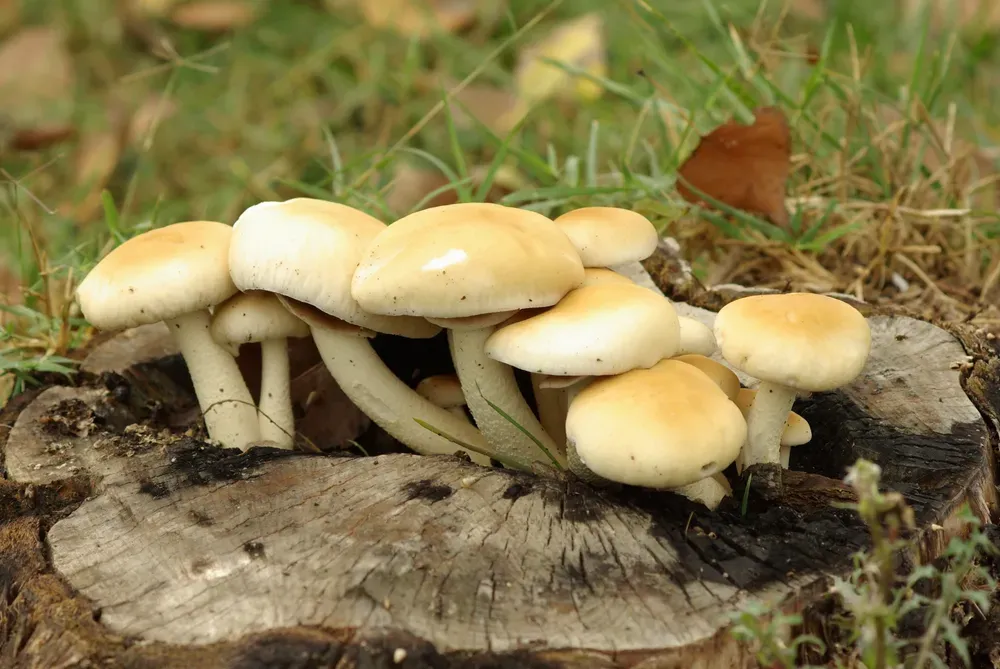
Poplar fieldcap
Cyclocybe aegerita
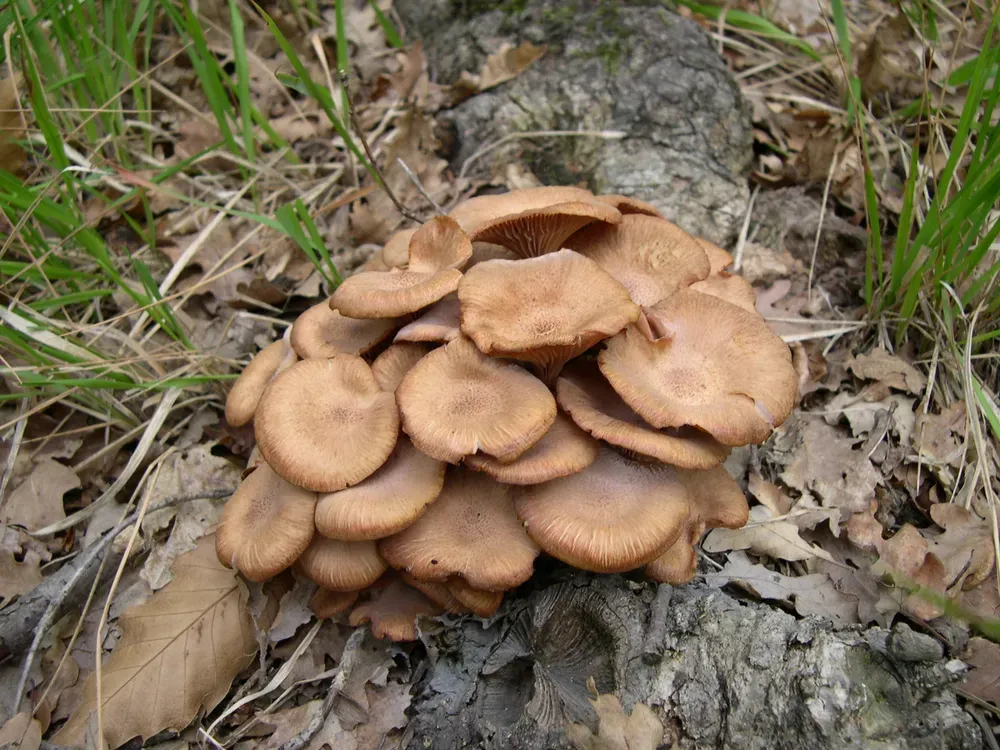
Ringless honey fungus
Desarmillaria tabescens
Agaricus abruptibulbus
Agaricus haemorrhoidarius
Agaricus haemorroidarius
Frequently asked questions
Can it be confused with a poisonous mushroom?
There are no serious dangerous lookalikes. Side-attached mushrooms with white gills and a veil are a small group. Other oyster mushroom species (P. ostreatus, P. cornucopiae) are edible too. Just avoid small, dark-colored side-attached mushrooms without a veil on conifers — those belong to other genera.
Where to look for it in Ukraine?
On trunks and stumps of old oaks, less often beeches, maples and ashes. Polissia, the Forest-Steppe, the Carpathians, Zakarpattia. It loves old parks and forests with ancient trees. It often grows high up the trunk — look carefully at heights of 2–5 m.
When does it fruit?
From August to October (sometimes November), peaking in September–October. It likes a warm, moderately damp autumn. It survives the first light frosts but disappears after hard freezes.
How does it differ from the common oyster mushroom?
The veiled oyster has a ring on its stem (veil remnants) — the common oyster mushroom (P. ostreatus) has no ring. The veiled oyster grows singly or in twos and threes, the common one in big "bouquets" of 10–30. The veiled oyster's cap is lighter (cream), the common one's darker (gray-bluish to brown).
How does it differ from the branching oyster?
The branching oyster (P. cornucopiae) has a funnel-shaped cap, no ring, grows in "bouquets", and its gills run far down and form a net near the stem. The veiled oyster has a funnel-like cap and a ring, and grows singly.
Can it be cultivated?
Technically it can be grown on oak and beech logs, but it isn't farmed commercially — the common oyster mushroom (P. ostreatus) grows faster and gives a bigger yield. Hobby growers sometimes inoculate veiled oyster mycelium in their gardens.
Is it worth taking ones growing high up?
Yes, but carefully. The veiled oyster often settles 2–5 m up the trunk. Don't climb the tree — use a long pole with a hook or a net. Don't take risks: no mushroom is worth an injury.
How to cook it?
Young soft specimens: cut into strips, fry with onion and garlic, stew with cream, add to soups. Leave old tough ones on the tree — not even stewing will make them softer. Cooking time is roughly twice as long as for the common oyster mushroom.
Is Veiled oyster edible or poisonous?
Does Veiled oyster have gills or pores?
What does the cap of Veiled oyster look like?
What does the stem of Veiled oyster look like?
Sources
- [1]Вікіпедія (українська)
- [2]Атлас грибів України, Зеров Д.К. (1979)
- [3]MycoBank Database
- [4]Index Fungorum
- [5]GBIF
- [6]iNaturalist Ukraine