THIS DATA HAS NOT BEEN VERIFIED BY AN EXPERT. Use at your own risk.
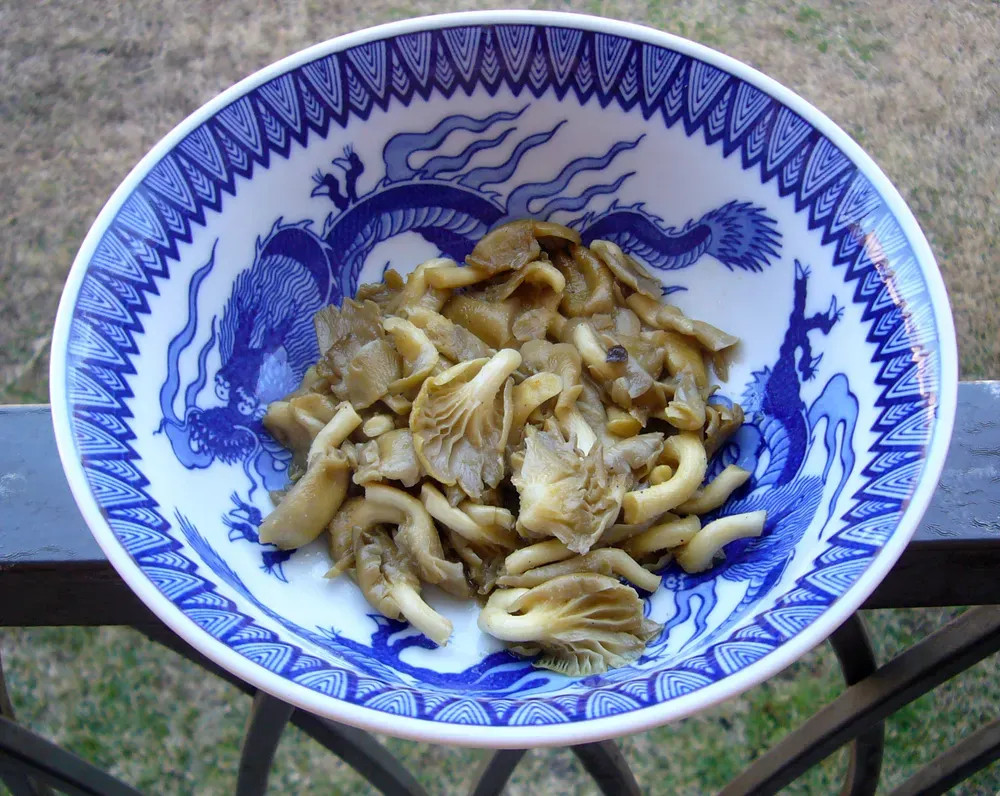
Golden oyster mushroomPleurotus citrinopileatus
Under reviewUpdated October 3, 2026
Passport
- Edibility
- Edible
- Season
- May — Oct
- Hymenophore
- Gilled
- Cap color
- Yellow
- Size
- Small (up to 5 cm)
- Smell
- Pleasant
- Reviewed
- Under review
Quick answers
Where to look?
Deciduous forest, Mixed forest
When does it appear?
May — Oct
Active months: May, June, July, August, September, October.
How to recognize it? Three signs
- Cap color: Yellow
- Cap shape: Convex, Depressed, Irregular
- Smell: Pleasant
Fruiting season
May – October
Description
The golden oyster mushroom, known to science as Pleurotus citrinopileatus, is the brightest of all oyster mushrooms: its caps glow a pure lemon-gold, which is why it is popularly called the golden oyster. Growing in clusters like a bouquet of sunflowers, these little mushrooms brighten up the dead wood of broadleaf trees. It is a saprotroph that settles on weakened trunks and fallen wood, most often elm, oak and beech, breaking down the wood. The species comes from East Asia, where it has long been cultivated.
In Ukraine, the golden oyster mushroom is rarely found in the wild, but it is well known as a popular cultivated mushroom: it's easy to grow on sawdust, straw and other plant waste, and it's these cultivated bouquets of golden caps that end up at markets and in home gardens. Its natural fruiting season falls in the warm half of the year, from late spring to autumn.
The golden oyster mushroom is a good edible mushroom. Its thin, tender flesh has a mild taste with a nutty hint, and its bright color partly survives cooking. Young mushrooms are the tastiest; as they age, the flesh thins and becomes rather tough near the stem. Golden oysters are fried and added to soups, omelets and vegetable dishes, and their sunny color makes any dish more appealing.
Cap
The cap of the golden oyster mushroom is small — 2 to 6, occasionally up to 10 centimeters across. When young it is convex with an inrolled margin; with age it becomes funnel-shaped and depressed, with a thin, often wavy edge. The surface is dry, slightly velvety and matte. The color is the species' main glory: pure lemon-yellow or golden in young mushrooms, fading slightly with age to yellowish-cream. The mushrooms grow fused together in dense clusters, like a bouquet.
Hymenophore
The spore-bearing surface is made of gills. The gills are white or cream, fairly crowded, and run noticeably down the stem (decurrent), often all the way to its base. The spore print is pale pink or pinkish-lilac. Decurrent white gills contrasting with the yellow cap are a telltale feature of the species.
Stem
The stem is thin, white or cream, often curved and off-center, 2 to 5 centimeters tall. Several stems usually fuse at a common base into a single cluster, from which the golden caps fan out. The surface is smooth. There is no ring and no volva. The stem flesh is tougher than the cap, so mostly the caps are eaten.
Flesh
The flesh is white, thin and tender, and does not change color when cut. The taste is mild and pleasant, with a nutty hint. Because the flesh is thin and the stem tougher, choose young caps for the table. When cooked, the mushroom loses some of its brightness but keeps its pleasant taste and aroma.
Smell
The smell is pleasant and mushroomy, somewhat mealy or nutty in fresh mushrooms. Scent isn't a defining feature; the mushroom is recognized above all by the bright lemon-yellow color of its caps, its growth in dense clusters on hardwood and its decurrent white gills.
›Scientific synonyms (1)
Pleurotus cornucopiae var. citrinopileatus (Singer) Ohira (1987)
Lookalikes
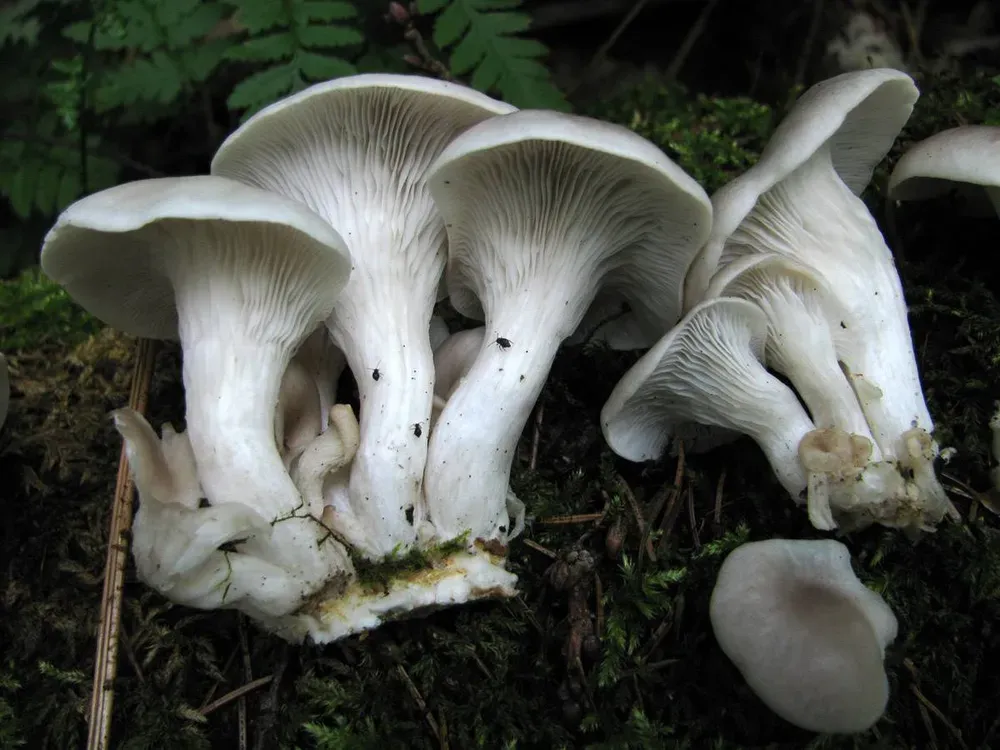
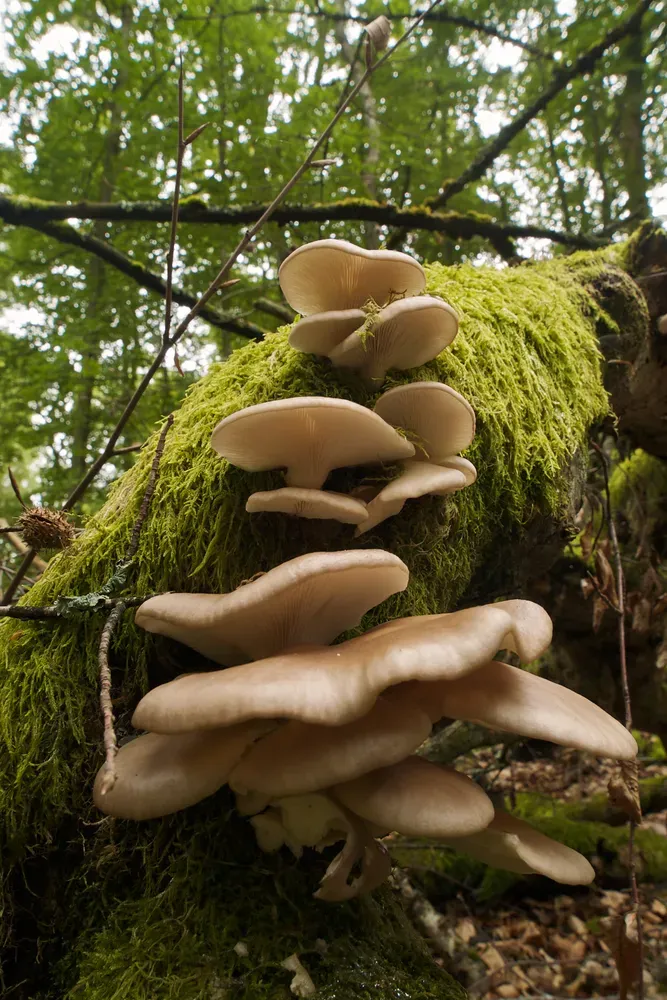
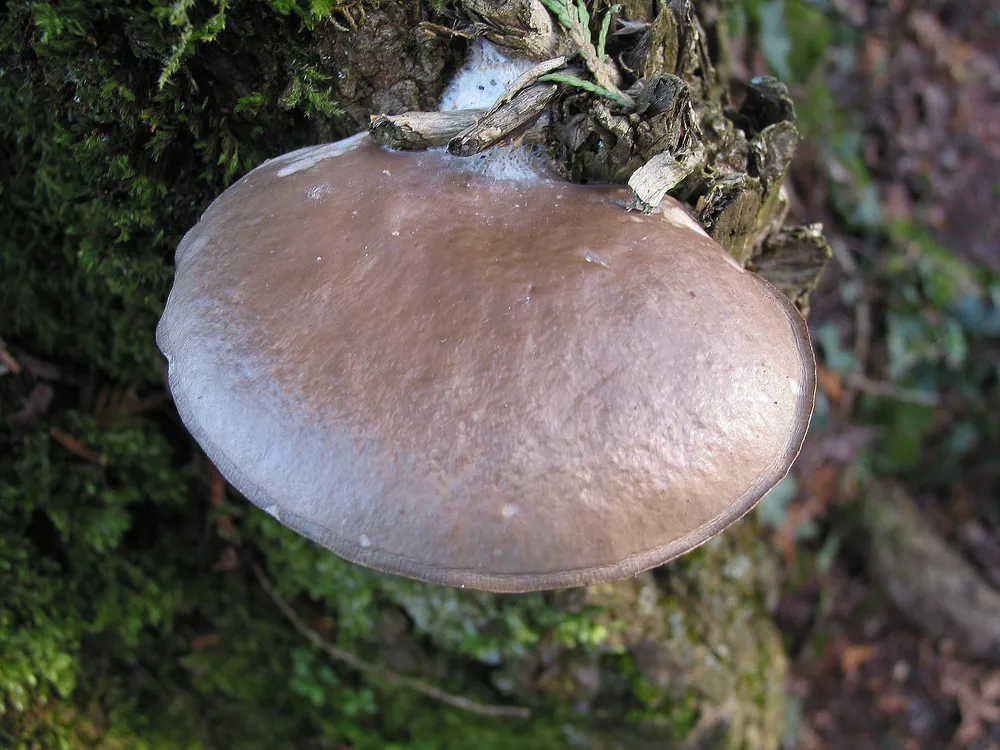
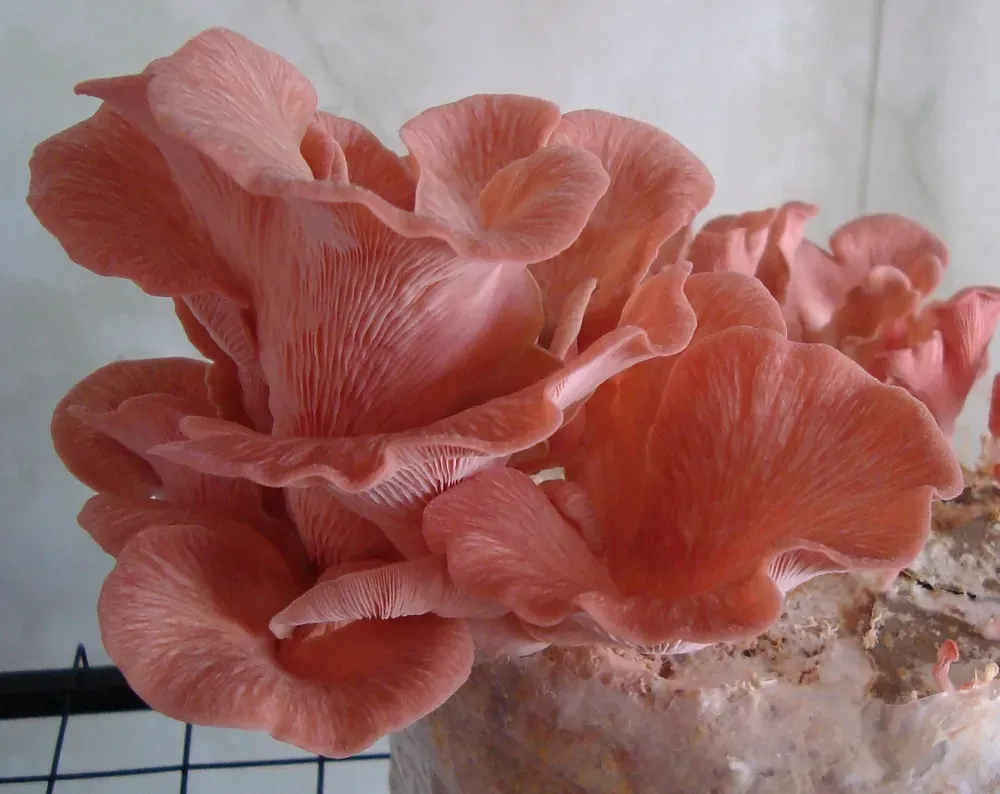
Related species
Mushrooms of the same genus and habitat — to study side by side and never mix up.
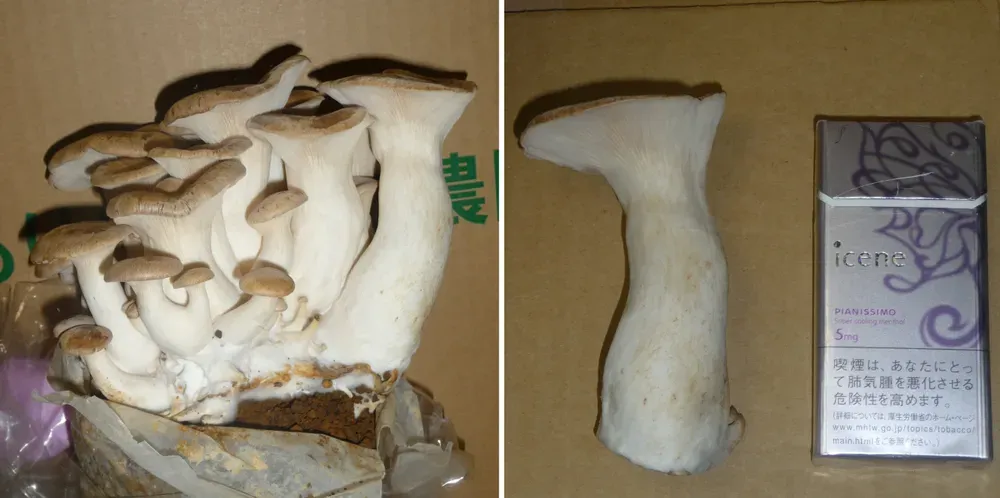
King oyster
Pleurotus eryngii
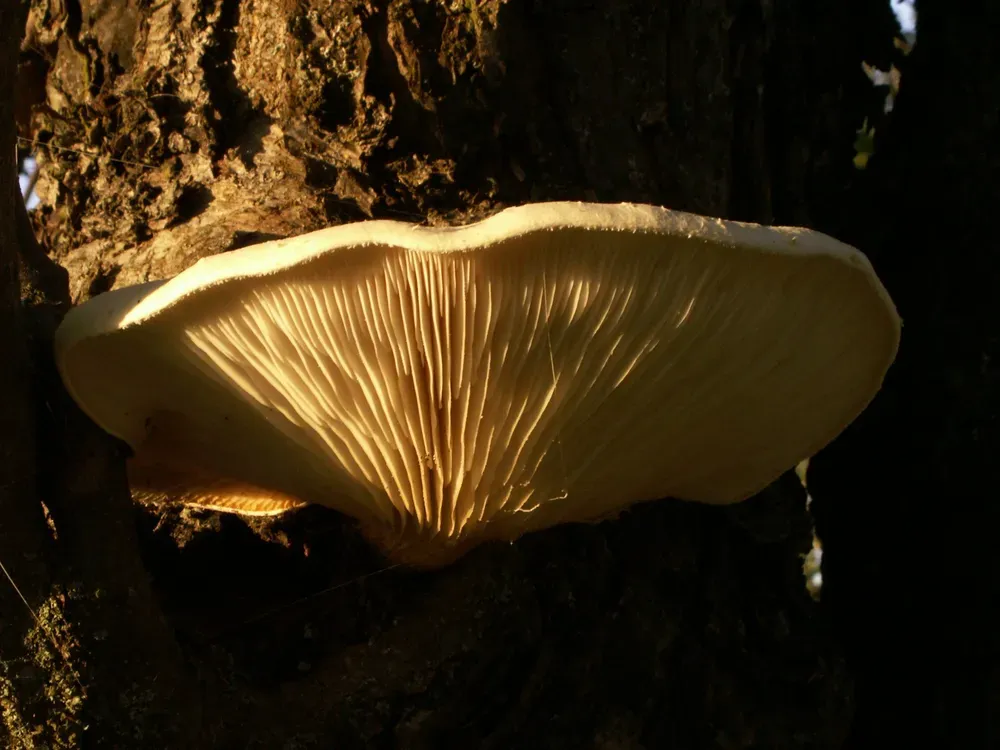
Veiled oyster
Pleurotus dryinus
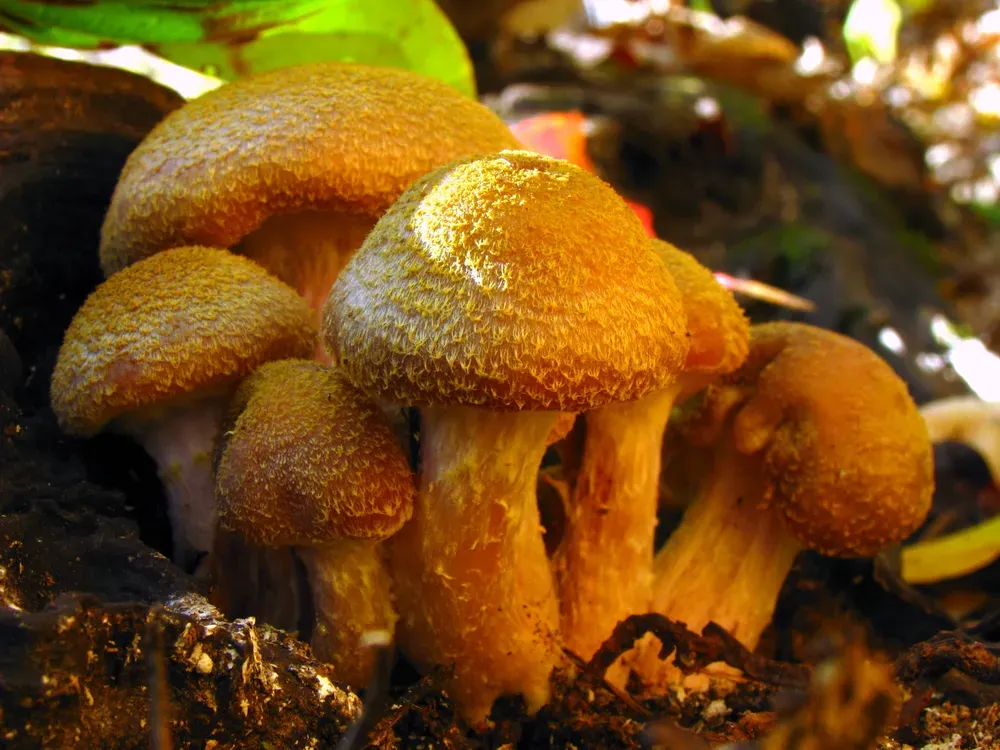
Bulbous honey fungus
Armillaria gallica
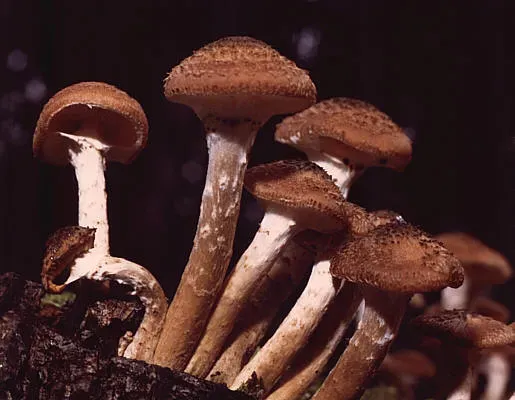
Dark honey fungus
Armillaria ostoyae
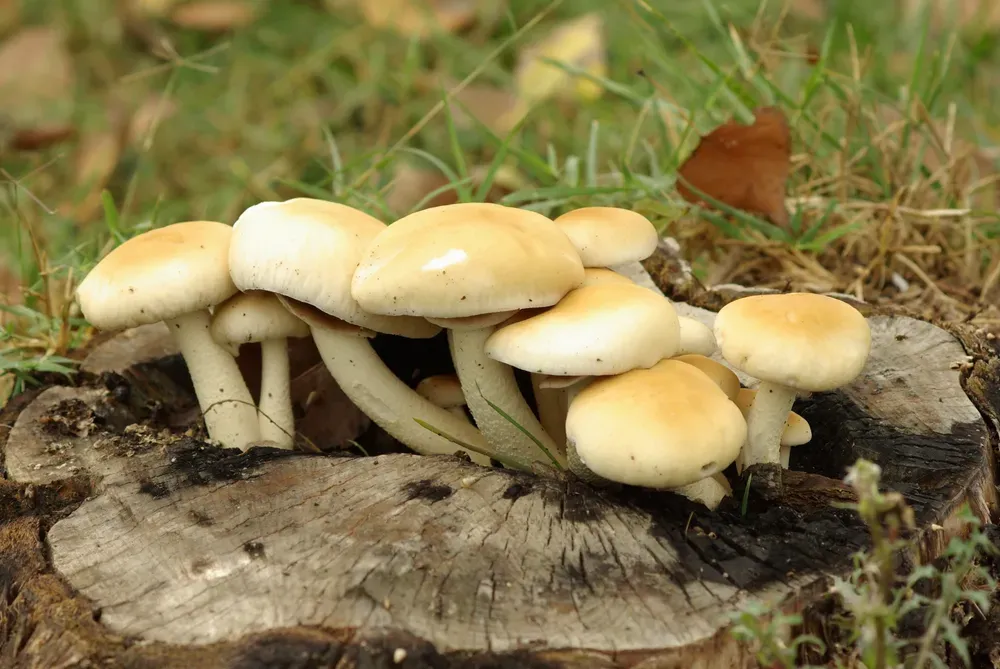
Poplar fieldcap
Cyclocybe aegerita
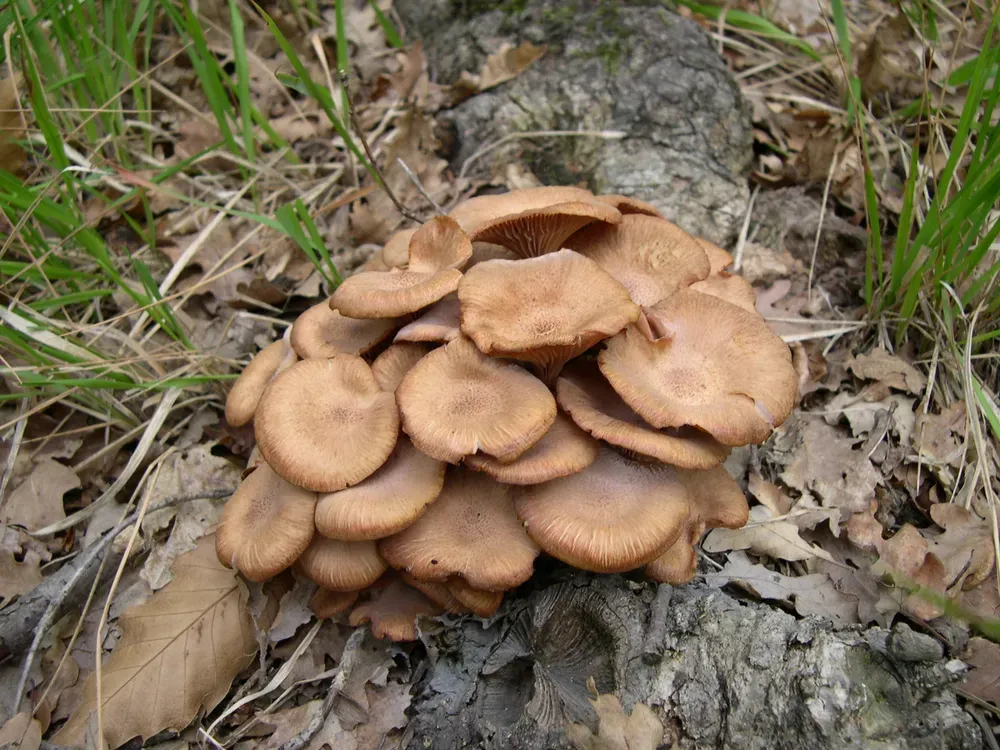
Ringless honey fungus
Desarmillaria tabescens
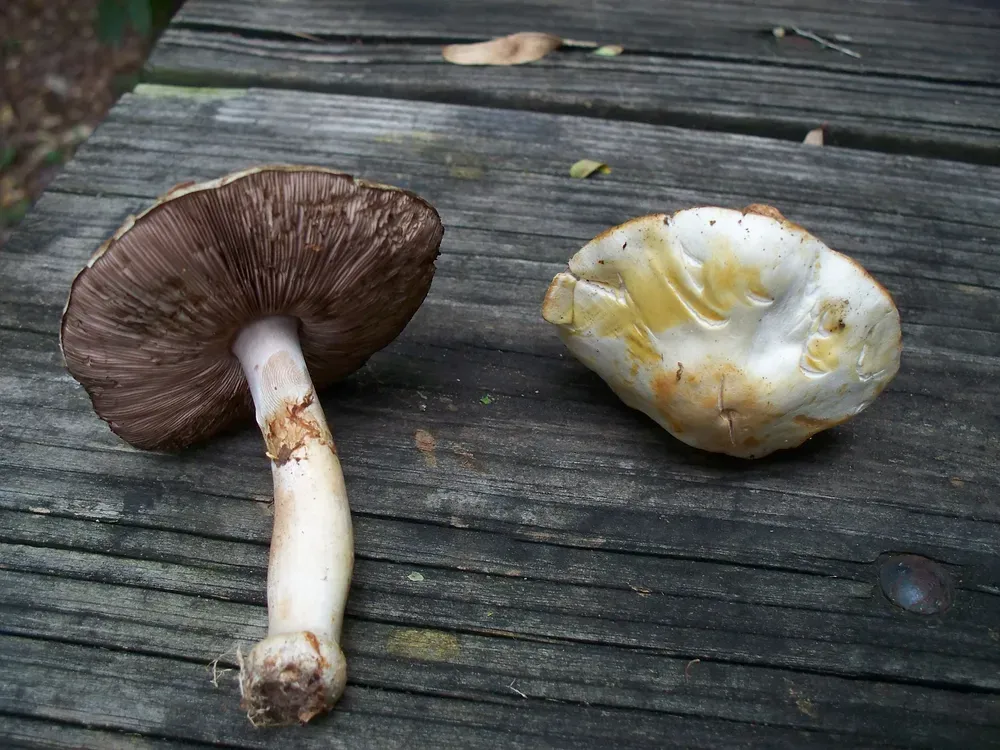
Agaricus abruptibulbus
Agaricus haemorrhoidarius
Agaricus haemorroidarius
Frequently asked questions
Is Golden oyster mushroom edible or poisonous?
Does Golden oyster mushroom have gills or pores?
What does the cap of Golden oyster mushroom look like?
What does the stem of Golden oyster mushroom look like?
What do Golden oyster mushroom smell and taste like?
Where does Golden oyster mushroom grow?
Which trees does Golden oyster mushroom grow under?
When should you pick Golden oyster mushroom?
What can Golden oyster mushroom be confused with?
How do you cook Golden oyster mushroom?
Can you dry Golden oyster mushroom?
What is the scientific name of Golden oyster mushroom?
Sources
- [1]Вікіпедія (українська)
- [2]Атлас грибів України, Зеров Д.К. (1979)
- [3]MycoBank Database
- [4]Index Fungorum
- [5]GBIF
- [6]iNaturalist Ukraine