THIS DATA HAS NOT BEEN VERIFIED BY AN EXPERT. Use at your own risk.
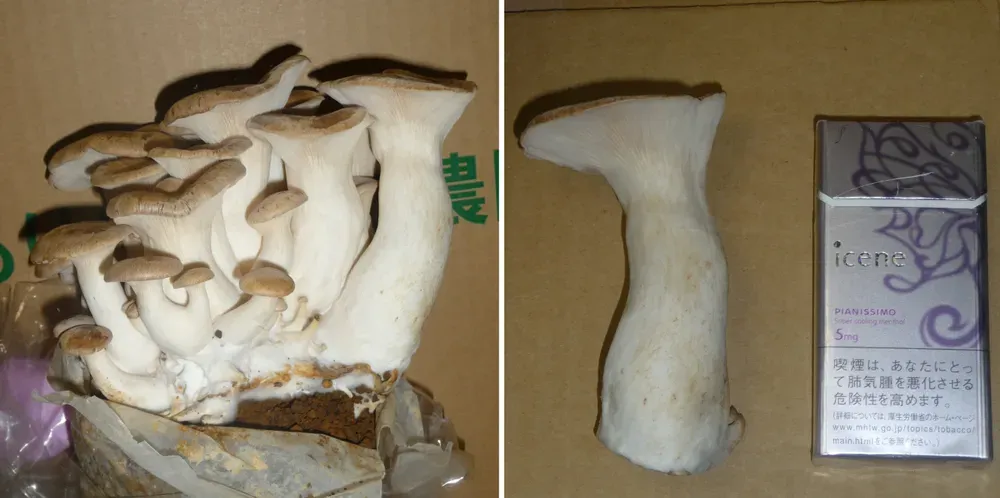
King oysterPleurotus eryngii
Under reviewUpdated October 3, 2026
Passport
- Edibility
- Edible
- Season
- Apr — Oct
- Hymenophore
- Gilled
- Cap color
- Brown
- Size
- Medium (5–15 cm)
- Smell
- Pleasant
- Reviewed
- Under review
Quick answers
Where to look?
Meadow, Field
When does it appear?
Apr — Oct
Active months: April, May, September, October.
How to recognize it? Three signs
- Cap color: Brown, Grey, Cream
- Cap shape: Convex, Flat, Depressed
- Smell: Pleasant
Fruiting season
April, May, September, October
Description
King oyster, known to science as Pleurotus eryngii, is the meatiest of all oyster mushrooms, standing out among its relatives with a thick, white, pillar-like stem and dense, springy flesh. Unlike the wood-dwelling oyster mushrooms that pile up in fans on trunks, king oyster grows singly or in small groups on the ground, because it feeds on the roots and remains of steppe umbellifers, above all eryngo (Eryngium), to which it owes its scientific name. It is a saprotroph and weak parasite of herbaceous plants in dry steppes and along forest edges.
In Ukraine, king oyster is found in the southern steppe and forest-steppe regions, in dry meadows, on roadsides and in wasteland where eryngo and other umbellifers grow. It fruits in spring and autumn. Still, most people know this mushroom not from the wild but from store shelves: king oyster is one of the most popular cultivated mushrooms in the world, grown commercially under the names "eryngii" or "king oyster."
In terms of edibility, king oyster is an excellent edible mushroom. Its dense white flesh barely shrinks during cooking, has a pleasant nutty, mushroomy taste and a rich umami note, and its springy, almost meaty texture has made it a favorite of chefs as a plant-based meat substitute. It is fried, grilled, stewed, and added to pasta and soups; unlike many mushrooms, it holds its shape well and doesn't turn mushy.
Cap
The cap of king oyster is 4 to 12 centimeters across, up to 15 centimeters in cultivated specimens. When young it is convex with an inrolled margin; with age it becomes flat or funnel-shaped and depressed. The surface is smooth, dry or faintly velvety, and matte. The color is grayish brown, light brown or beige, darker in the center, often with fine radial fibers. In wild mushrooms the cap is usually smaller and darker than in greenhouse-grown ones.
Hymenophore
The hymenophore is gilled. The gills are white or cream, fairly crowded, and run noticeably down the stem (decurrent), often all the way to its base. The spore print is whitish or pale pink. Decurrent white gills combined with a thick central stem set king oyster apart from the side-stemmed, wood-dwelling oyster mushrooms.
Stem
The stem is the most distinctive feature of the species: thick, dense, white, central or slightly off-center, 3 to 10 centimeters tall and 1–3 centimeters thick, often club-shaped and swollen. It provides most of the edible flesh. Unlike other oyster mushrooms with a short lateral stem, here the stem is well developed and meaty. There is no ring and no volva.
Flesh
The flesh is white, dense, springy, almost cartilaginous, and doesn't change color when cut. The taste is pleasant, nutty and mushroomy, with a rich umami note that only fully comes through during cooking. Thanks to its dense texture, the flesh hardly cooks down or turns mushy and holds its shape well, which is why the mushroom is so valued in the kitchen.
Smell
The smell is faint, pleasant and mushroomy, somewhat indistinct in the fresh mushroom but becoming rich during cooking. Aroma is not a defining feature; the mushroom is recognized by its thick white stem, decurrent gills and growth on the ground among steppe umbellifers.
›Scientific synonyms (2)
Agaricus eryngii DC. (1815), Pleurotus fuscus Battarra ex Bres. (1928)
Lookalikes
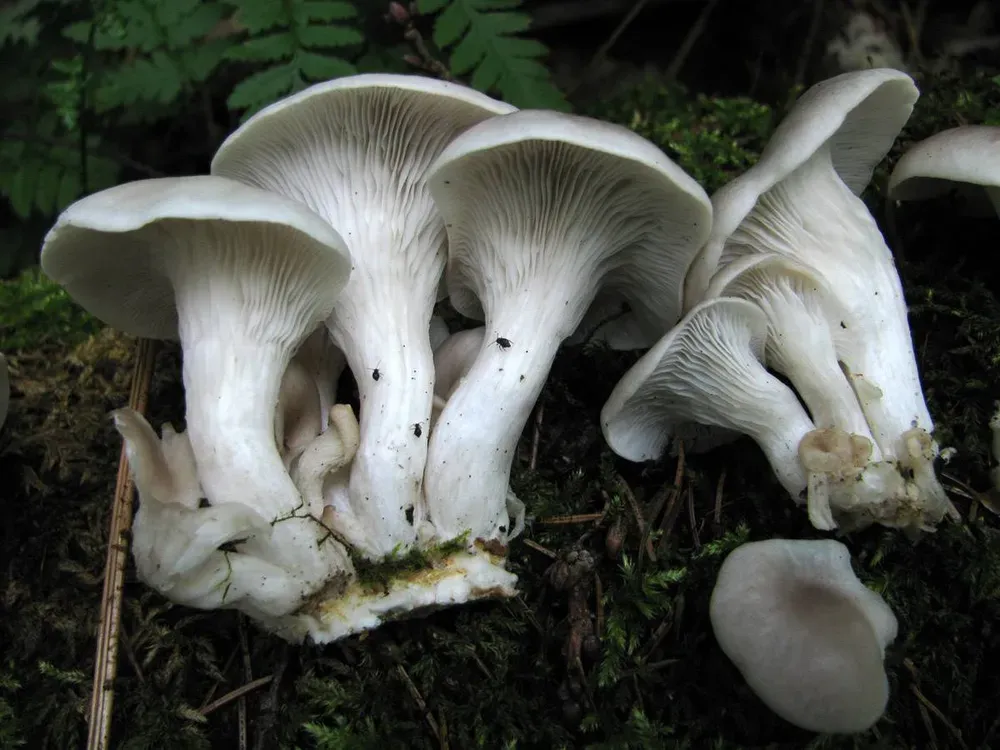
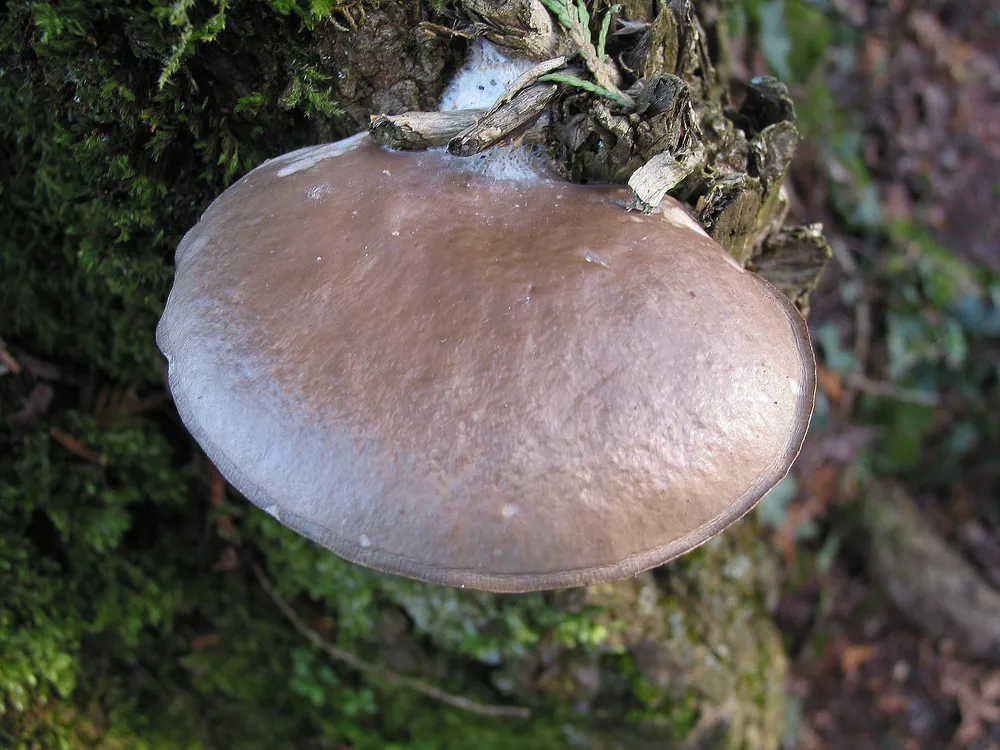
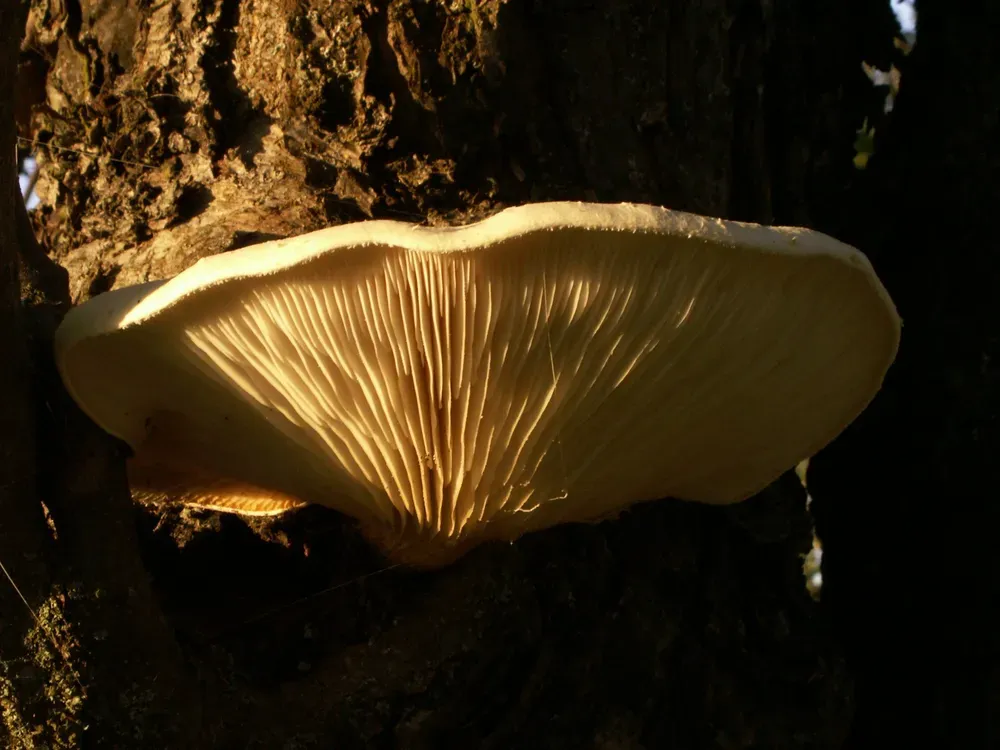
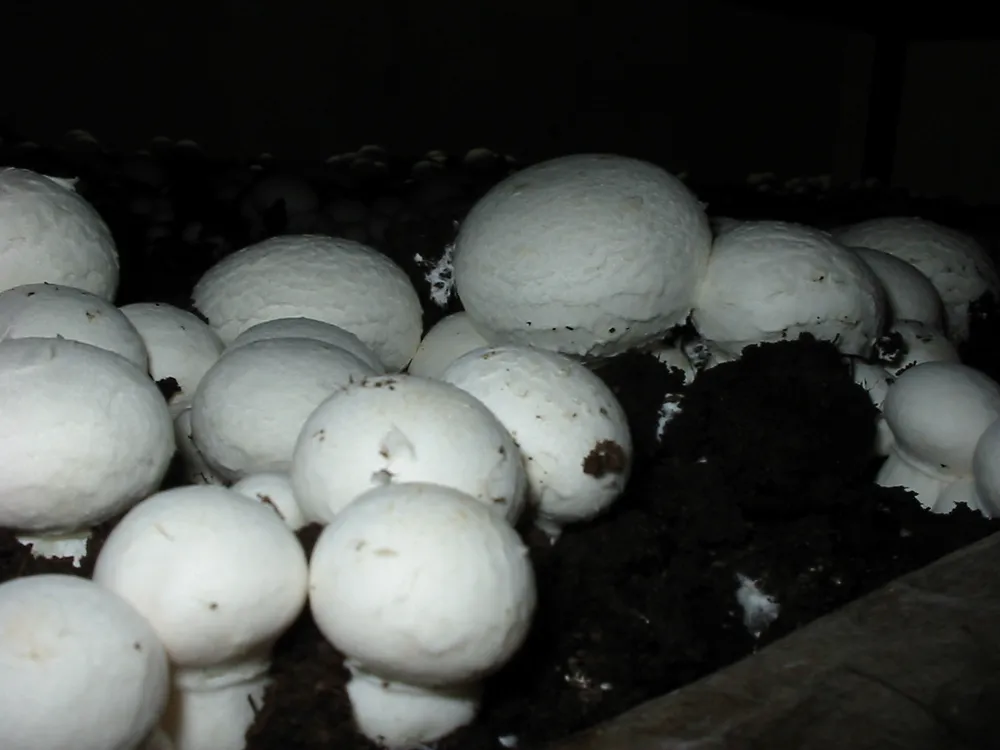
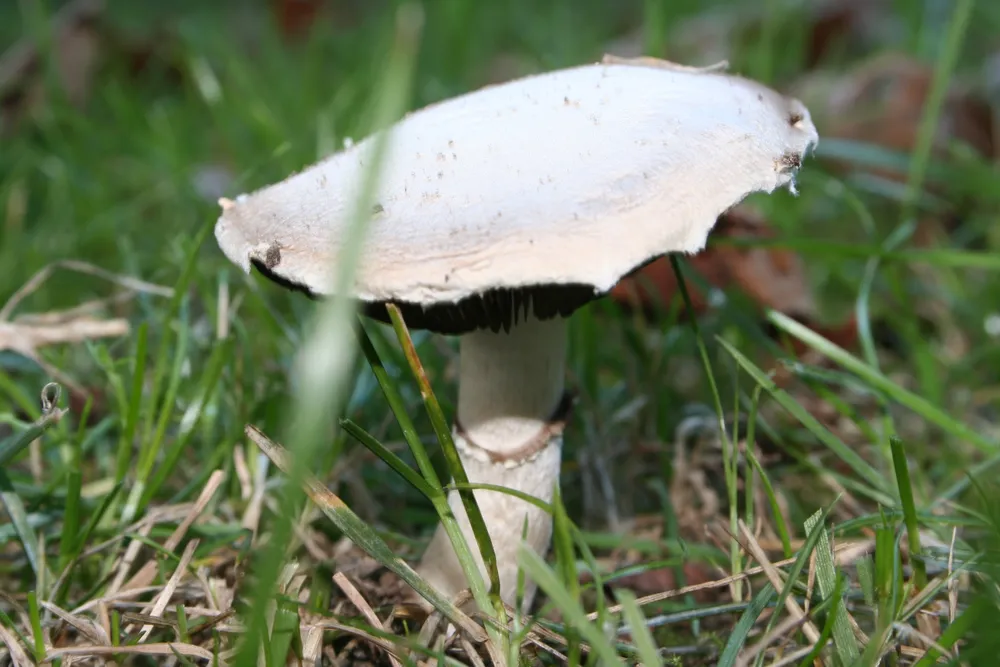
Related species
Mushrooms of the same genus and habitat — to study side by side and never mix up.
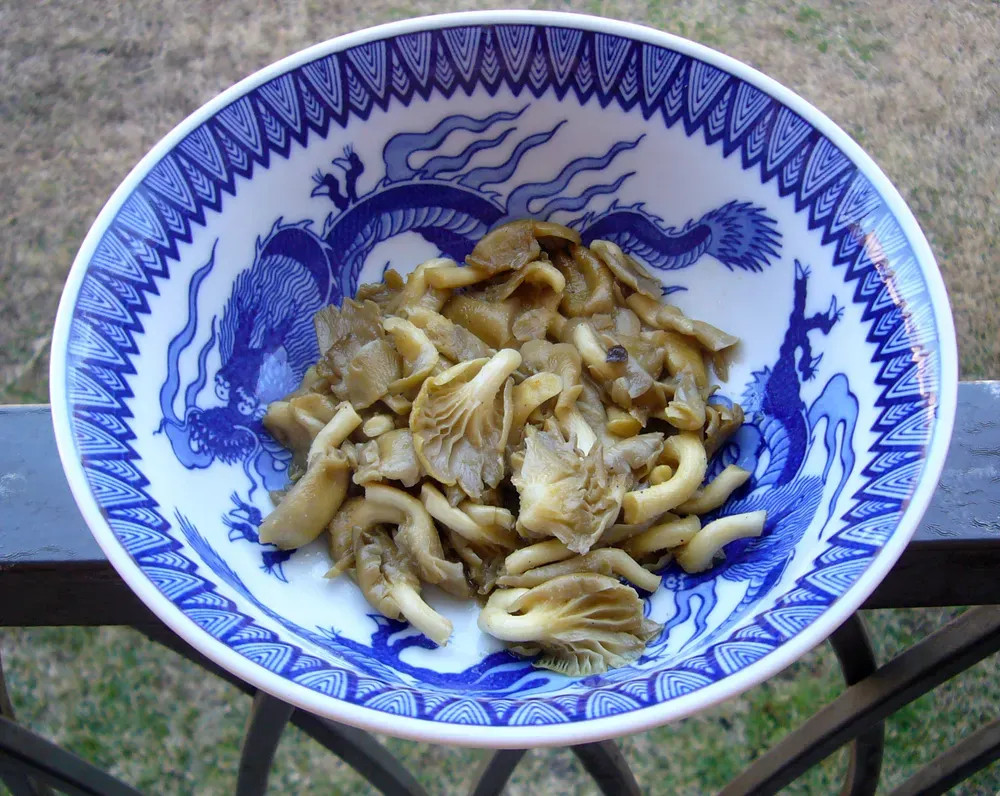
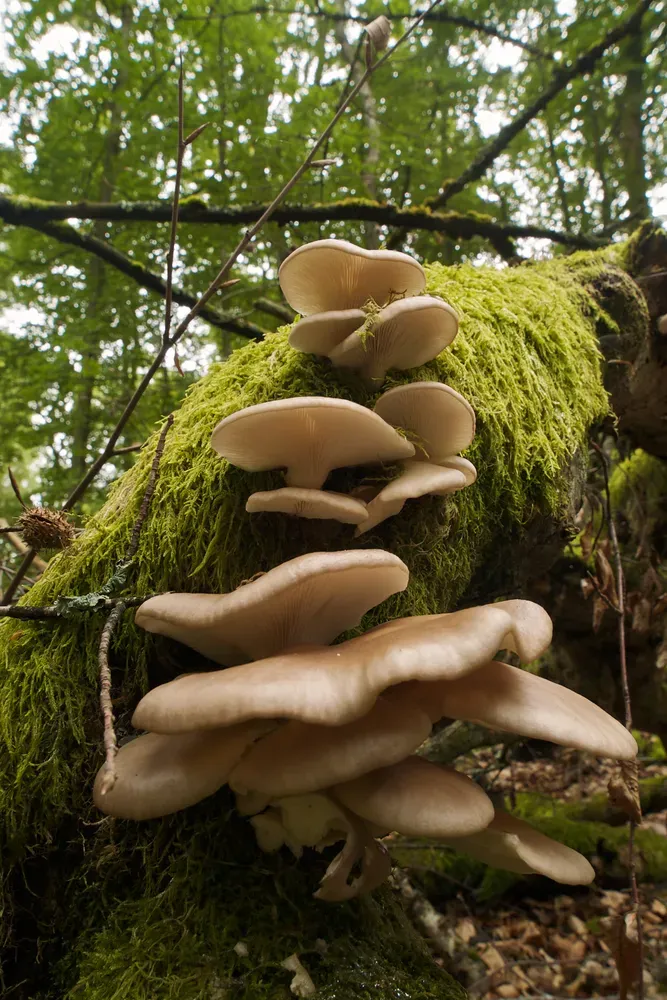
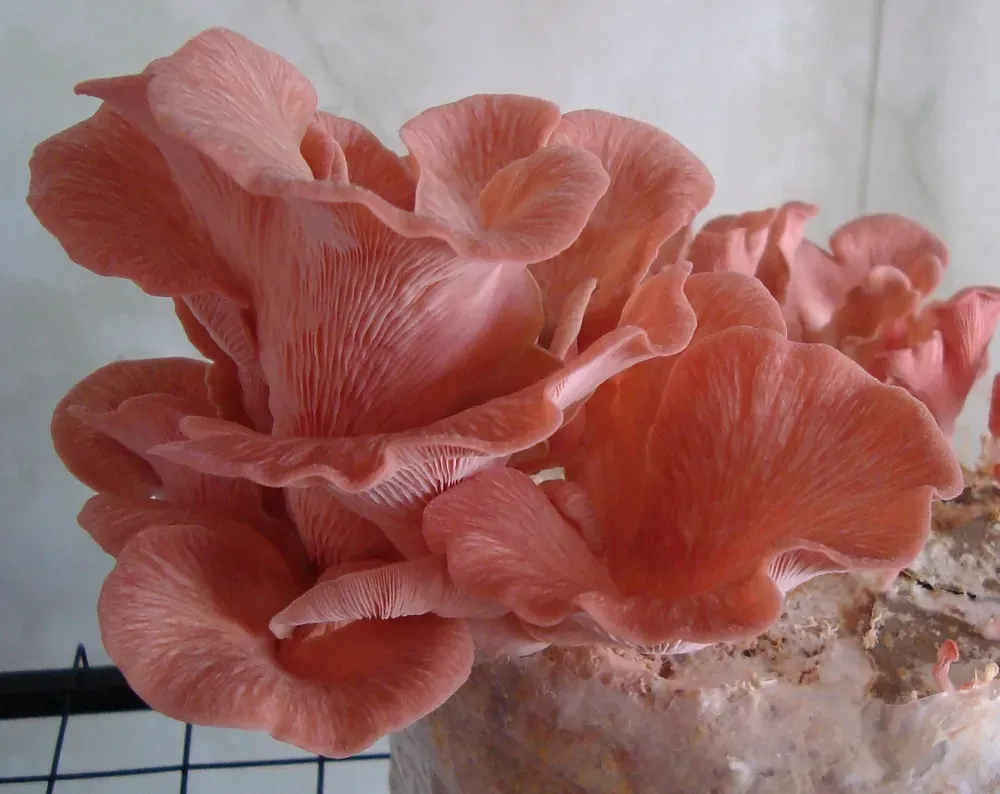
.webp)
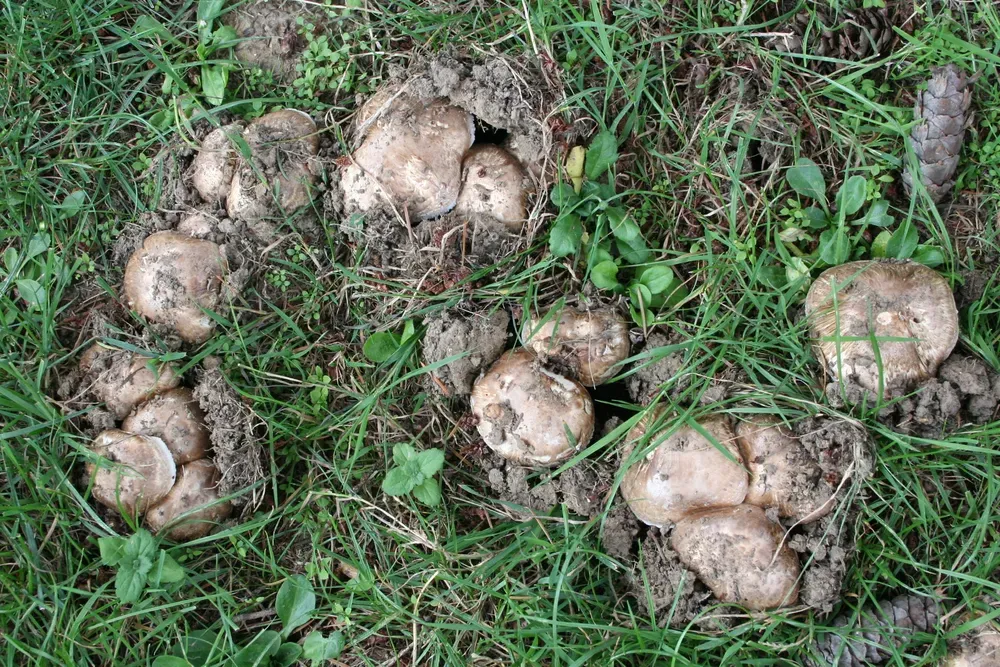
_Fr._4948278370-2.webp)
Frequently asked questions
Is King oyster edible or poisonous?
Does King oyster have gills or pores?
What does the cap of King oyster look like?
What does the stem of King oyster look like?
What do King oyster smell and taste like?
Where does King oyster grow?
When should you pick King oyster?
What can King oyster be confused with?
How do you cook King oyster?
Can you dry King oyster?
What is the scientific name of King oyster?
Sources
- [1]Вікіпедія (українська)
- [2]Атлас грибів України, Зеров Д.К. (1979)
- [3]MycoBank Database
- [4]Index Fungorum
- [5]GBIF
- [6]iNaturalist Ukraine