Sordid blewitLepista sordida
Expert-verifiedUpdated October 3, 2026
Passport
- Edibility
- Edible
- Season
- Aug — Nov
- Hymenophore
- Gilled
- Cap color
- Violet
- Size
- Medium (5–15 cm)
- Smell
- Pleasant
- Reviewed
- Yes ✓
Quick answers
Where to look?
Deciduous forest, Mixed forest
When does it appear?
Aug — Nov
Active months: August, September, October, November.
How to recognize it? Three signs
- Cap color: Violet, Grey, Pink
- Cap shape: Convex
- Smell: Pleasant
Fruiting season
August – November
Description
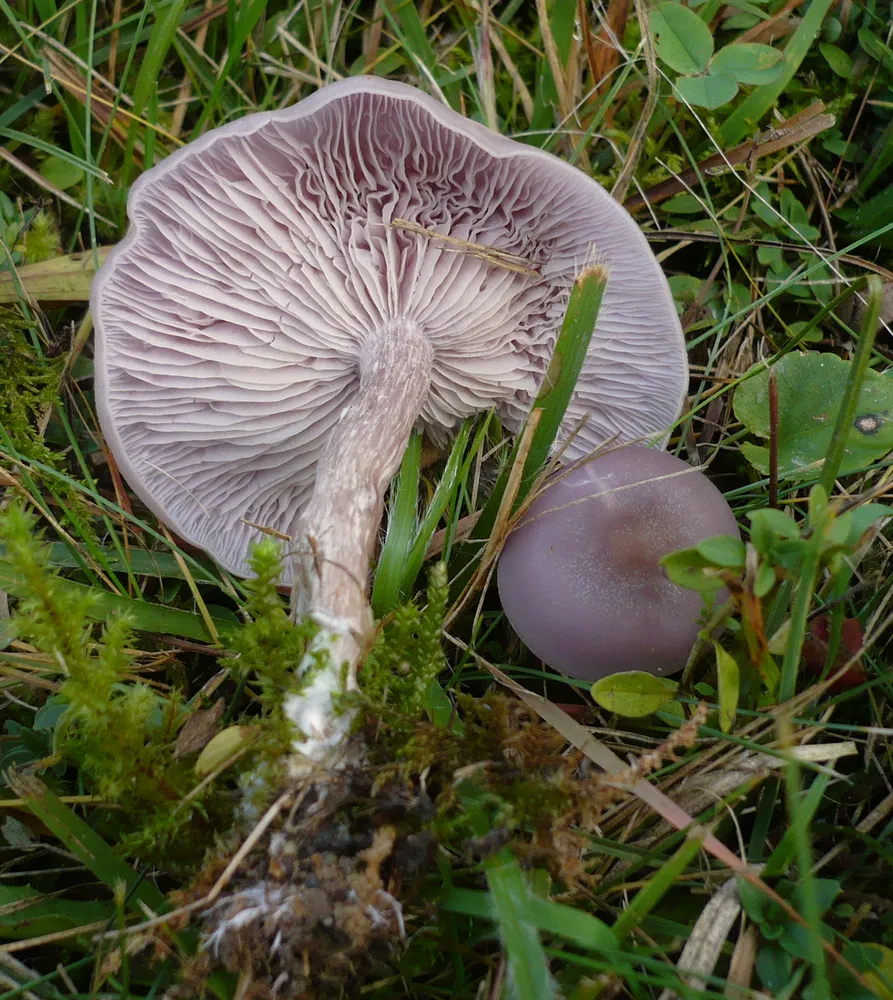
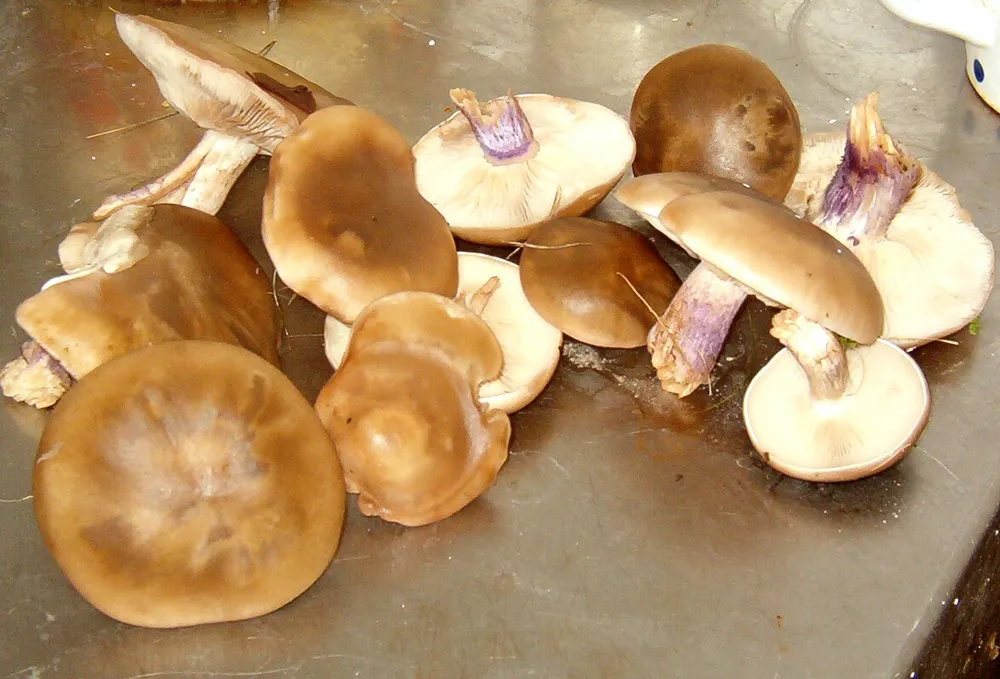
The sordid blewit (Lepista sordida) is a close relative of the popular wood blewit (Lepista nuda), with the same telltale lilac-violet tones, but smaller and less vivid. The cap is 4-8 cm across, lilac-grayish or violet-gray; young mushrooms have a distinct violet tint, and with age it fades to a dingy grayish lilac — hence the "sordid" in its name. It often grows in cultivated spots: on heaps of humus, in gardens, on compost heaps, in parks with well-fertilized soil. It's one of those "urban" species that have adapted to human activity.
This is an edible mushroom of moderate culinary value. The flesh is firm, lilac-white, with a pleasant fruity, perfumed aroma much like the wood blewit's. Young ones are the best for cooking. Before use, it's recommended to boil it for 10 minutes for a milder flavor — in some people, raw or undercooked flesh can cause mild stomach discomfort. Good fried with cream, stewed or pickled. In Soviet cooking it was a "mushroom for salting" alongside the wood blewit.
In Ukraine it is widespread throughout the forest-steppe zone: in parks, gardens, on compost heaps, in dacha (allotment) areas and at forest edges. A saprotroph with a strong preference for cultivated soils. The season runs August–November, peaking in September–October. It often grows in groups of 10-30 fruiting bodies, sometimes in rings. In wild forests it's rarer; the best finds are in cultivated or semi-cultivated landscapes.
Cap
Cap 4-8 cm across; convex with an inrolled margin when young, later flattening out with a thin, wavy margin. Color lilac-grayish, violet-gray, with a distinct violet tint when young, fading with age to a dingy grayish lilac or cream with a trace of violet. The surface is silky-matte and smooth, slightly sticky in wet weather.
Hymenophore
Gills. The gills are crowded, thin, notched where they meet the stem, and break off easily. Color lilac-violet in young mushrooms, lilac-cream with age. The spore print is pale pinkish-cream (typical of the genus Lepista).
Stem
Stem 3-6 cm tall, 0.5-1.2 cm thick, cylindrical, slightly thickened toward the base. Color violet-lilac, matching the cap, lengthwise fibrous, with whitish mycelial fuzz near the base. No ring. The stem flesh is firm.
Flesh
Flesh of medium thickness, lilac-white, soft, firm in young mushrooms. It doesn't change color when cut. It has a pleasant fruity, perfumed aroma.
Smell
Pleasantly fruity and perfumed, with a note of ripe fruit — typical of the genus Lepista. One of the most distinctive aromas among the lilac-violet mushrooms. The taste is mild; after boiling, pleasantly mushroomy.
›Scientific synonyms (7)
Tricholoma sordidum (Schumach.) P. Kumm., Rhodopaxillus sordidus (Schumach.) Maire, Melanoleuca sordida (Schumach.) Murrill, Lepista domestica Murrill, Lepista nuda var. sordida (Schumach.) Maire, Clitocybe tarda Peck, Lepista sordida var. ianthina Bon
Lookalikes
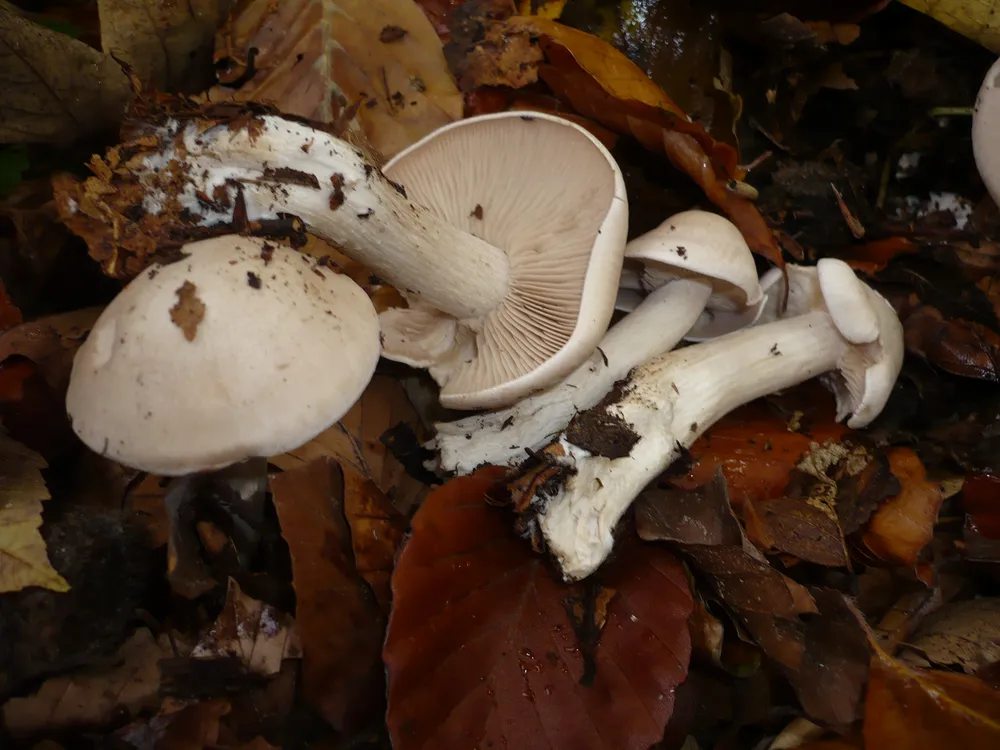
Related species
Mushrooms of the same genus and habitat — to study side by side and never mix up.
_Ricken_185798.webp)
Booted knight
Tricholoma focale
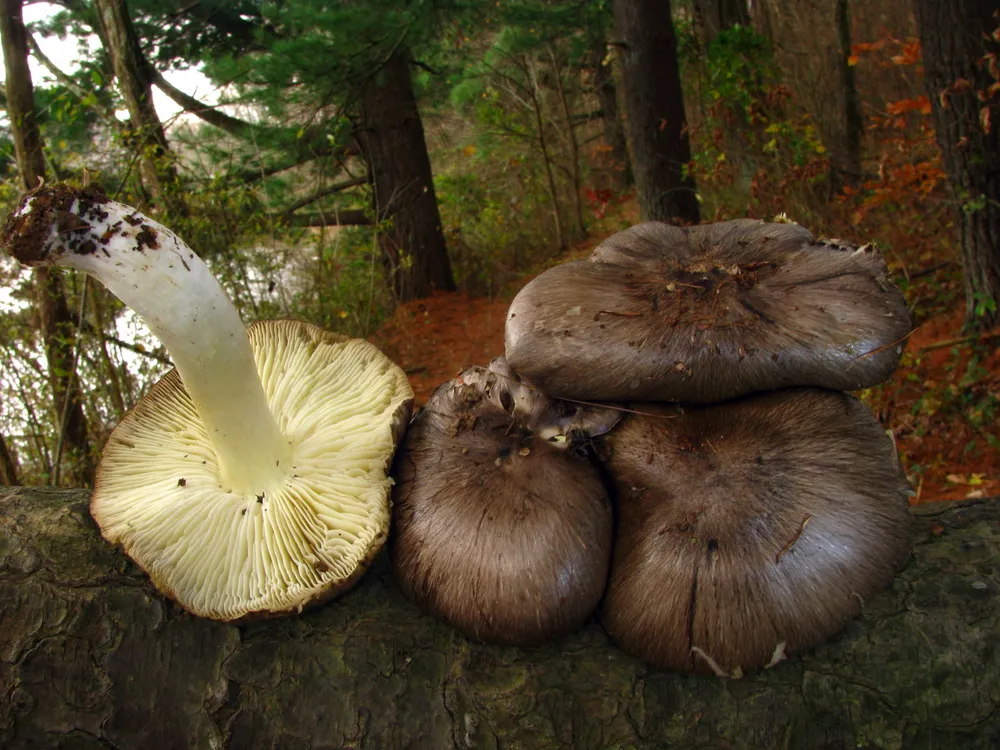
Charbonnier
Tricholoma portentosum
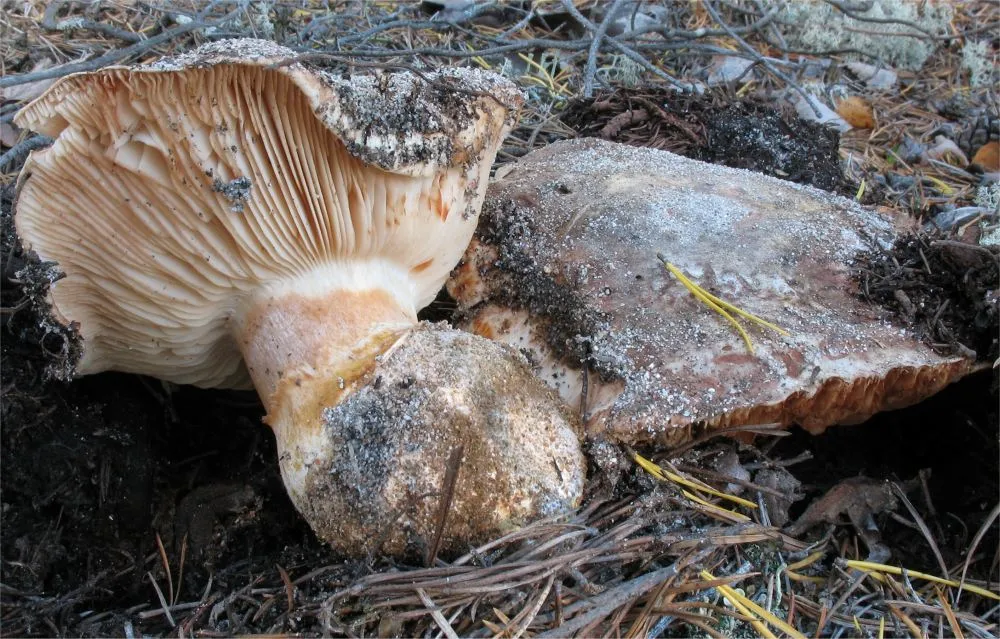
Giant knight
Tricholoma colossus
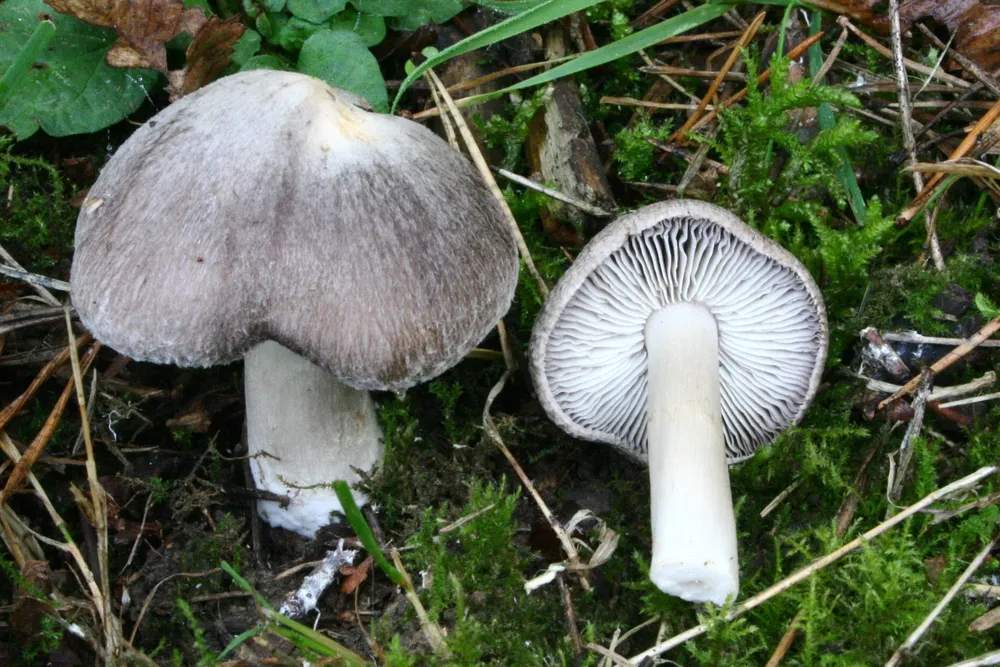
Grey knight
Рядовка наземна
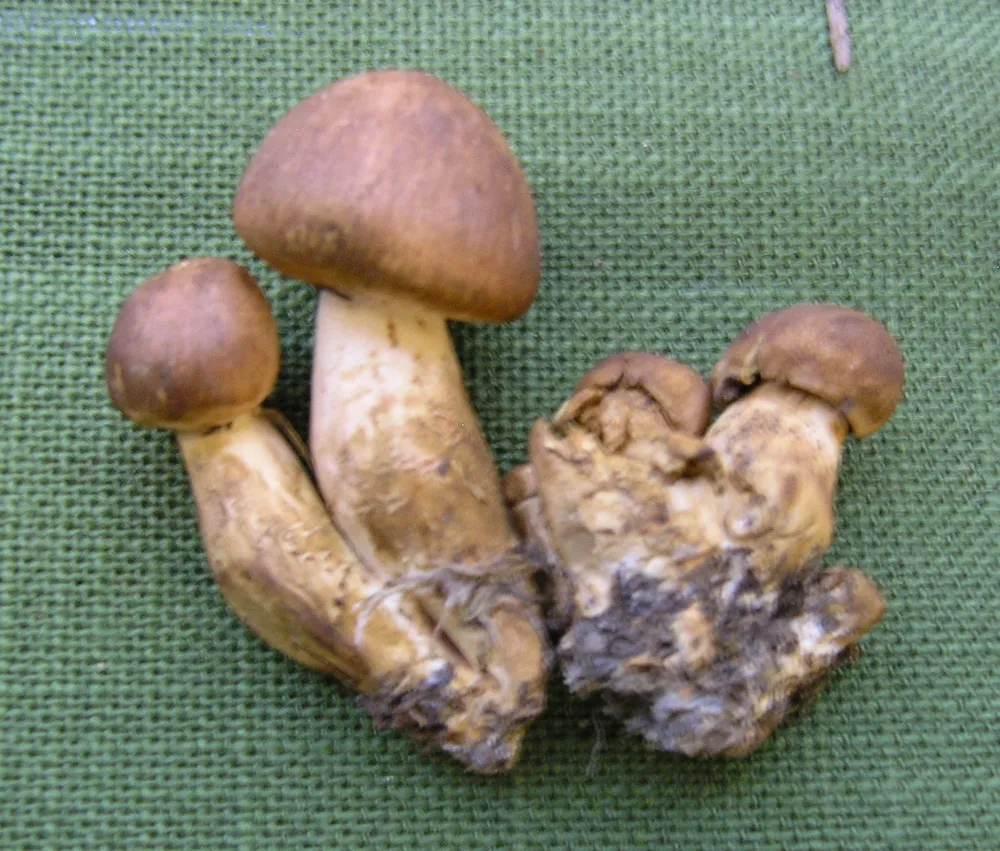
Matt knight
Tricholoma imbricatum
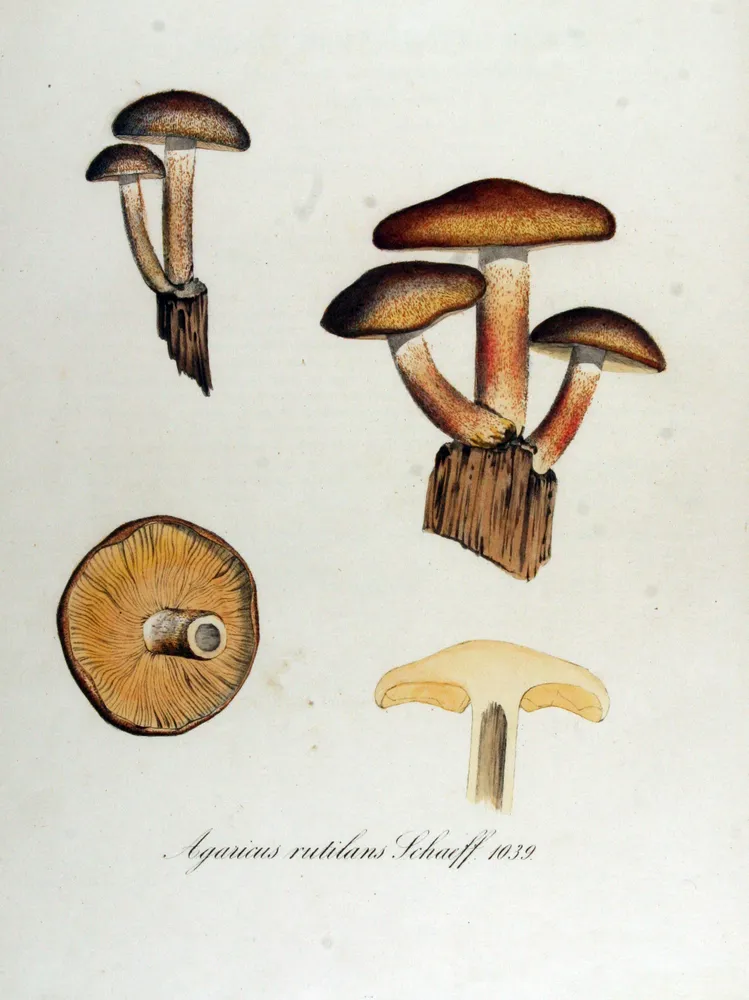
Plums and custard
Рядовка червона
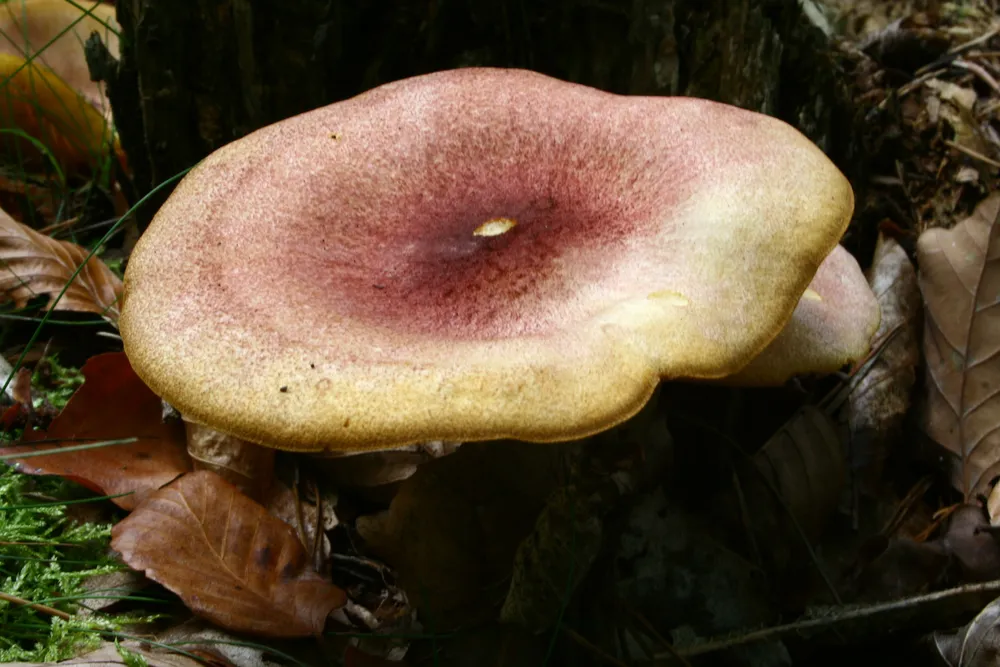
Plums and custard
Tricholomopsis rutilans
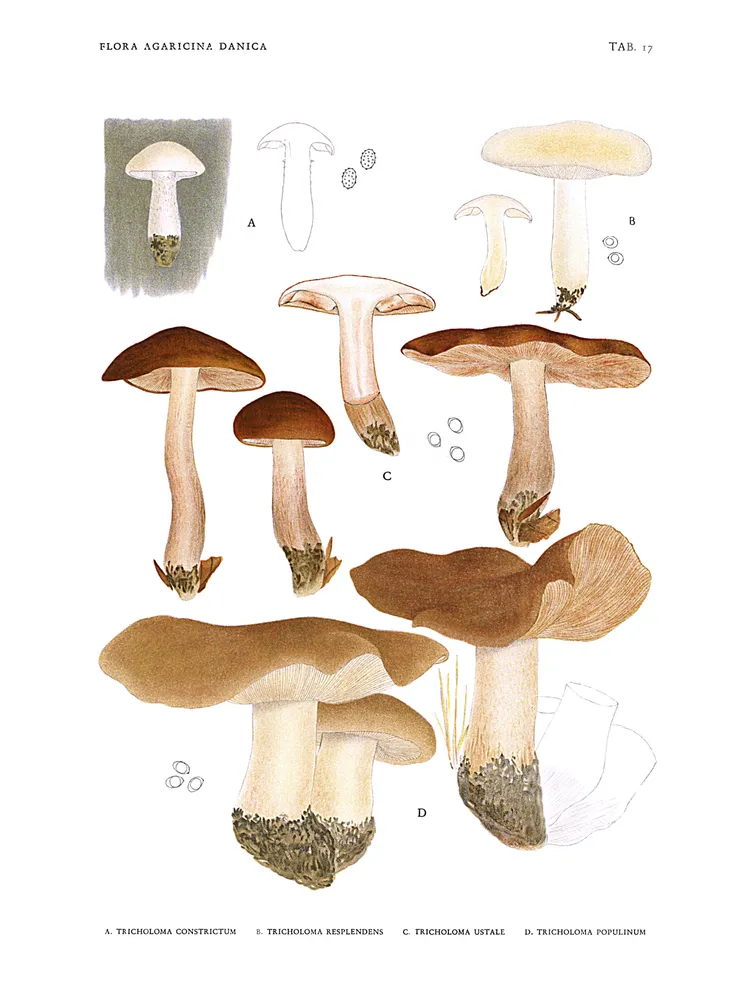
Poplar knight
Рядовка тополева
Frequently asked questions
Is it safe to eat?
Yes, this is an edible mushroom. There are no deadly poisonous lookalikes with the same lilac-violet tone and fruity, perfumed aroma. It's recommended to boil it for 10 minutes before the main cooking — raw or undercooked flesh causes mild stomach discomfort in some people.
How should you cook it?
Clean and slice. Boil for 10 minutes in salted water and discard the water. Then fry with onion and cream (the classic way), stew, or add to soups. It pickles well — the firm flesh holds its shape. For salting, mix it with wood blewits for a lilac-violet hue.
Why boil it if it's edible?
In the genus Lepista (as in the closely related Tricholoma), some species contain weak heat-sensitive irritants that break down or wash out with proper cooking. In people with a sensitive gut, symptoms are mild nausea and stomach discomfort 1-3 hours after eating undercooked mushrooms. A simple 10 minutes of boiling, with the water discarded, removes this risk completely.
Where should you look for it?
In parks, gardens, on compost heaps, in dacha (allotment) areas, at the edges of managed woodland, in shelterbelts with fertilized soil. It loves rich, nitrogen-rich soils. It often grows in groups of 10-30 fruiting bodies, sometimes in rings. In wild forests it's rarer; the classic find is the edge of an allotment plot or a corner of a city park.
Where in Ukraine does it occur?
Throughout the forest-steppe zone: all three forest-steppe belts, Polissia, the Carpathians, the Carpathian foothills. In the steppe — in parks and public gardens. Overall a widespread species.
When should you look for it?
August — November, peaking in September–October. It tolerates the first light frosts. One of the latest mushrooms in cultivated landscapes.
What is it confused with?
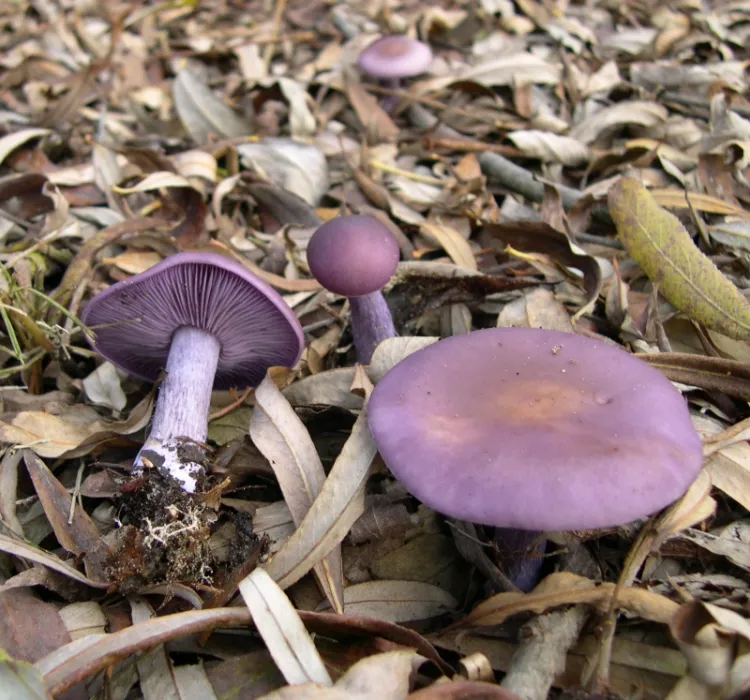
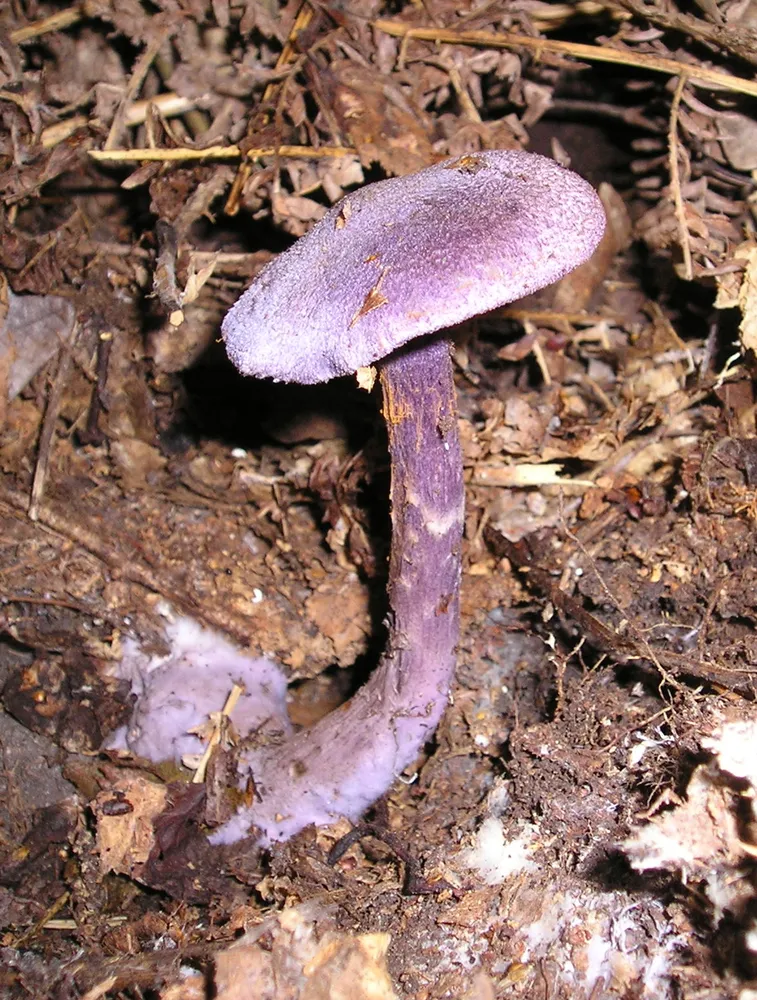
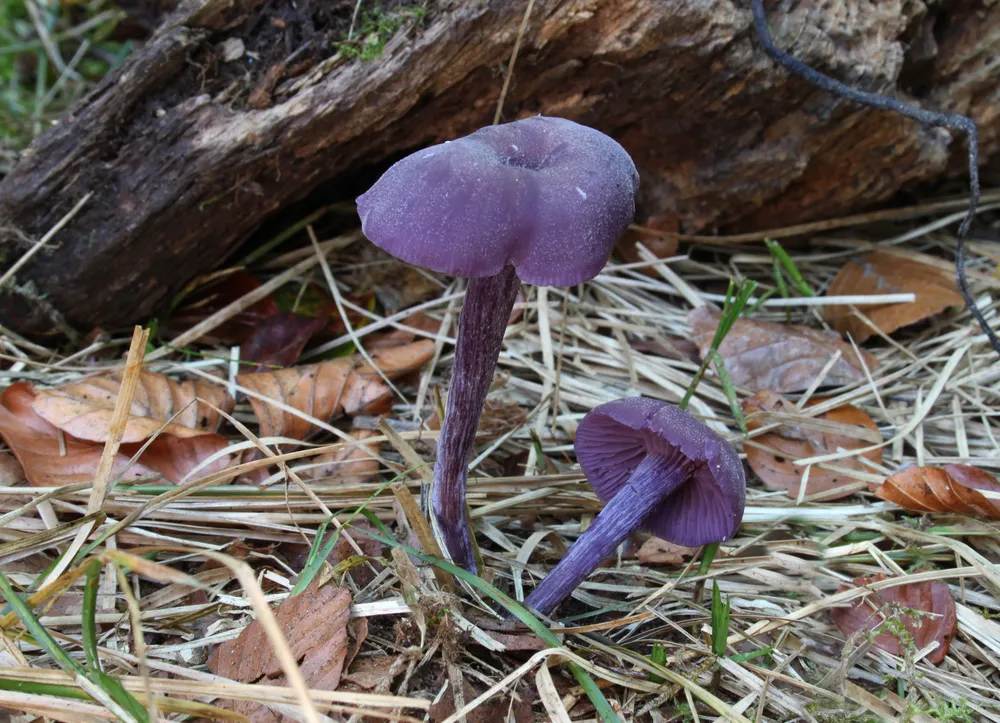
With the wood blewit (Lepista nuda) — a close relative, also edible; it's larger (5-15 cm) and a more intense violet. With violet webcaps (Cortinarius violaceus) — also violet, but with a cobwebby veil and a brown spore print (in Lepista it's pinkish-cream). All lilac-violet mushrooms with a pinkish-cream spore print are Lepista, and safe.
How can you identify it for sure?
Three features together: (1) lilac-gray or violet-gray tones of the cap and stem; (2) a fruity, perfumed aroma; (3) growing in cultivated or semi-cultivated places (parks, gardens, allotments). If all three match, it's Lepista sordida or its close relative L. nuda — both edible. The spore print will be pinkish-cream, which sets the genus Lepista apart from the brown-spored Cortinarius.
Is Sordid blewit edible or poisonous?
Does Sordid blewit have gills or pores?
What does the cap of Sordid blewit look like?
What does the stem of Sordid blewit look like?
Sources
- [1]Вікіпедія (українська)
- [2]Атлас грибів України, Зеров Д.К. (1979)
- [3]MycoBank Database
- [4]Index Fungorum
- [5]GBIF
- [6]iNaturalist Ukraine