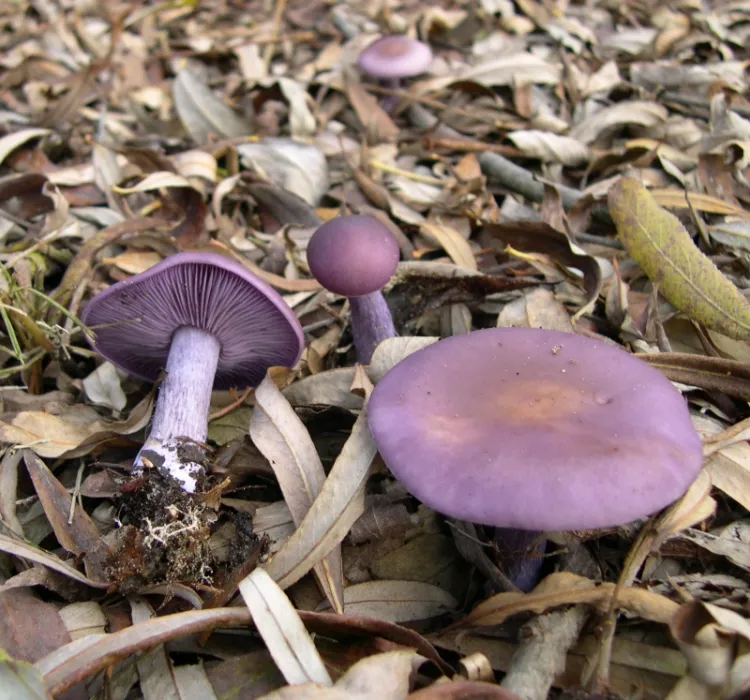
Wood blewitLepista nuda
Expert-verifiedUpdated October 3, 2026
Passport
- Edibility
- Conditionally edible
- Season
- Sep — Dec
- Hymenophore
- Gilled
- Cap color
- Violet
- Size
- Medium (5–15 cm)
- Smell
- Pleasant
- Reviewed
- Yes ✓
Quick answers
Where to look?
Deciduous forest, Conifer forest, Mixed forest
When does it appear?
Sep — Dec
Active months: September, October, November, December.
How to recognize it? Three signs
- Cap color: Violet, Brown
- Cap shape: Convex
- Smell: Pleasant
Fruiting season
September – December
Description
The wood blewit (Lepista nuda, synonym Clitocybe nuda; in Ukraine also called "syniy korin" ("blue root") or "syniukha", and in English-speaking countries "wood blewit") is one of the best-known and most popular autumn mushrooms, with a characteristic deep violet or lilac-gray color throughout the fruiting body. The Latin epithet nuda means "naked" (a nod to the smooth, scale-free cap skin). Cap 5-15 cm across, fleshy, from vivid violet-lilac when young to brownish-violet with a pink tint when mature, and almost brown when very old.
Conditionally edible — after mandatory boiling for 15-20 min, discarding the water. Raw or undercooked mushrooms can cause gastrointestinal discomfort (nausea, heaviness in the stomach) in some people. Properly boiled, it is tasty, with tender flesh, a light anise-like perfumed scent and a sweetish taste. In Western European folk tradition (Britain, France, Italy) it's a long-standing favorite; in Ukraine it's less popular, but people pick it too.
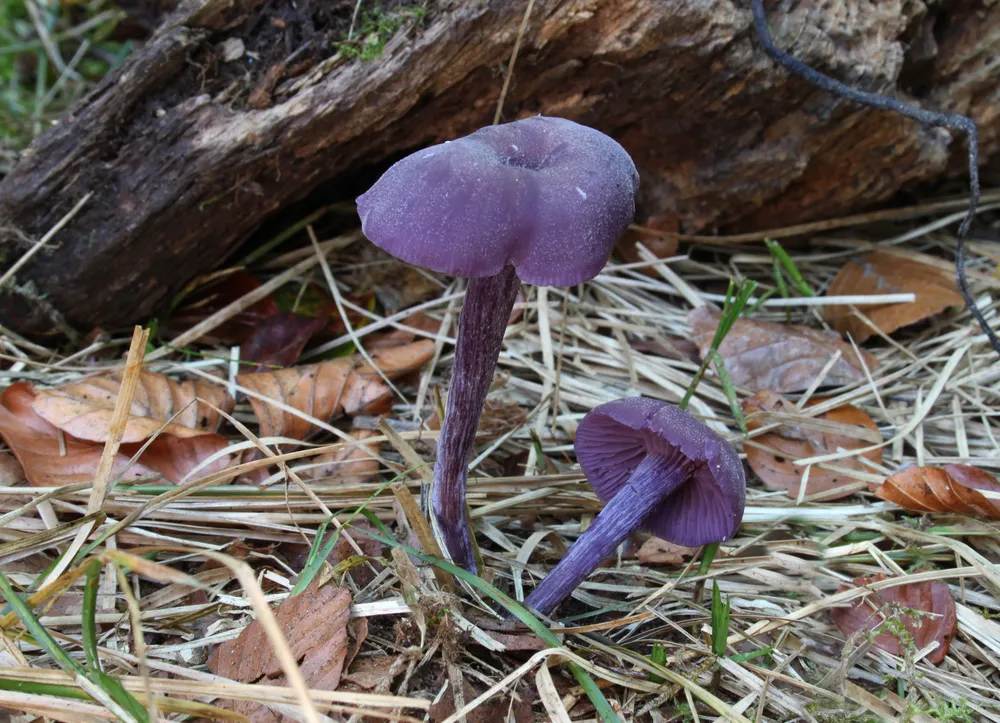
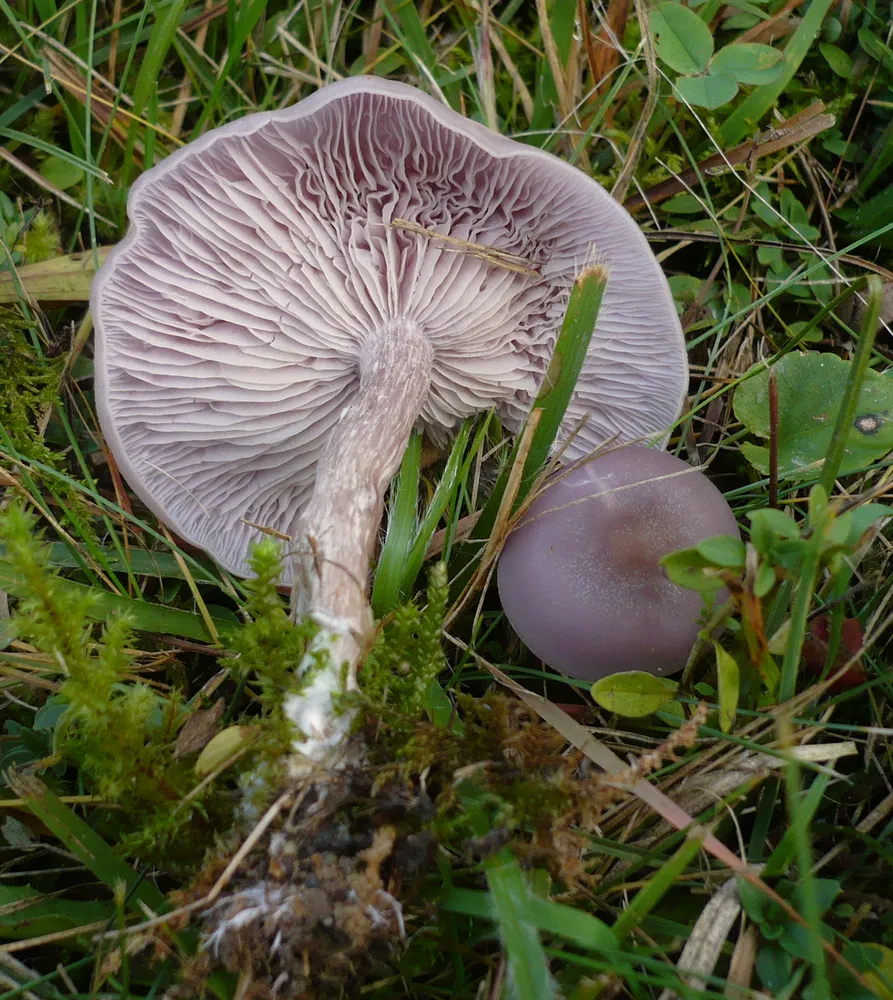
The main diagnostic feature — the violet color of the WHOLE fruiting body (cap, gills and stem), especially in young specimens. With age the violet fades on the cap to brownish-cream, but the gills and upper stem often keep a violet tint. A distinct pleasant smell — sweet and perfumed, reminiscent of lilac or faintly of anise — is also characteristic.
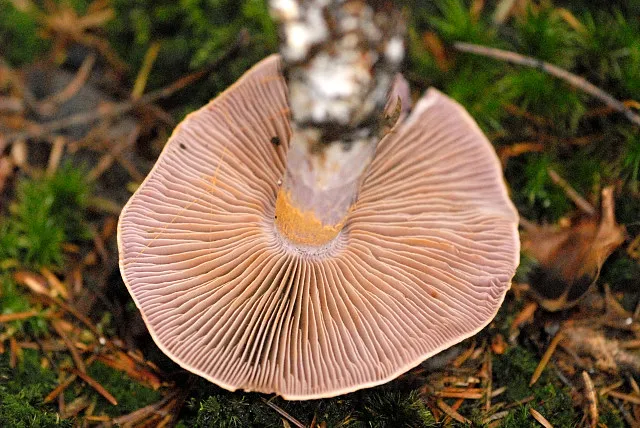
The main risk is confusing it with young violet webcaps (Cortinarius spp.), some of which are seriously poisonous (in particular, C. violaceus is edible, but it has many questionable relatives). The key difference: the spore print of Lepista nuda is PALE PINK to creamy pink (typical of the genus Lepista), webcaps' is rusty-orange. Young webcaps also have a cobwebby veil (cortina) on the stem; Lepista doesn't.
In Ukraine, the wood blewit is common throughout the forest zone: the Carpathians, Prykarpattia, Polissia, the forest-steppe, and parts of the steppe (in shelterbelts). A saprotroph of broadleaf and conifer litter. Season: September — November, peaking in October-November — one of the late autumn mushrooms. It often grows in "fairy rings" in meadows, gardens and compost heaps.
Cap
Cap 5-15 cm across, when young convex with an inrolled margin, becoming with age flat and spreading. The cap skin is smooth, slightly slimy in wet weather, dry and matte in dry weather. Color vivid violet or lilac-violet when young, less often with a pink tint; with age it fades to brownish-violet, then to brownish-cream with violet traces at the margin. The margin is even, inrolled when young.
Hymenophore
Gilled hymenophore — the gills are adnate or slightly decurrent, very crowded, thin. Color distinctly violet-lilac when young, brownish-violet to brownish-cream with age, with a greenish-pink tint when mature. Spore print pale pink to creamy pink — characteristic of the genus Lepista.
Stem
Stem 5-10 cm tall, 1.5-3 cm thick, firm, fleshy, cylindrical, thickening toward the base. Color violet to lilac-violet, often paler lower down, with whitish mycelium at the base. The surface is smooth with fine lengthwise fibers. No ring.
Flesh
Flesh firm; thin in the cap, thick in the stem, violet-whitish to pale lilac. Doesn't change color when cut or slowly fades to grayish-violet. Smell pleasant, sweetish and perfumed, reminiscent of lilac or violet, with a hint of anise, taste sweet at first, then mildly mushroomy.
Smell
A distinct, pleasant, sweetish-perfumed smell — reminiscent of lilac, violet or a touch of anise. A diagnostic feature that clearly sets it apart from webcaps (whose smell is neutral).
›Scientific synonyms (7)
Agaricus nudus Bull. (1790), Cortinarius nudus (Bull.) Gray (1821), Gyrophila nuda (Fr.) Quél. (1886), Lepista nuda (Bull.) Cooke (1871), Tricholoma nudum (Bull.) P.Kumm. (1871), Rhodopaxillus nudus (Bull.) Maire (1913), Tricholoma personatum var. nudum (Bull.) Rick (1961)
Lookalikes
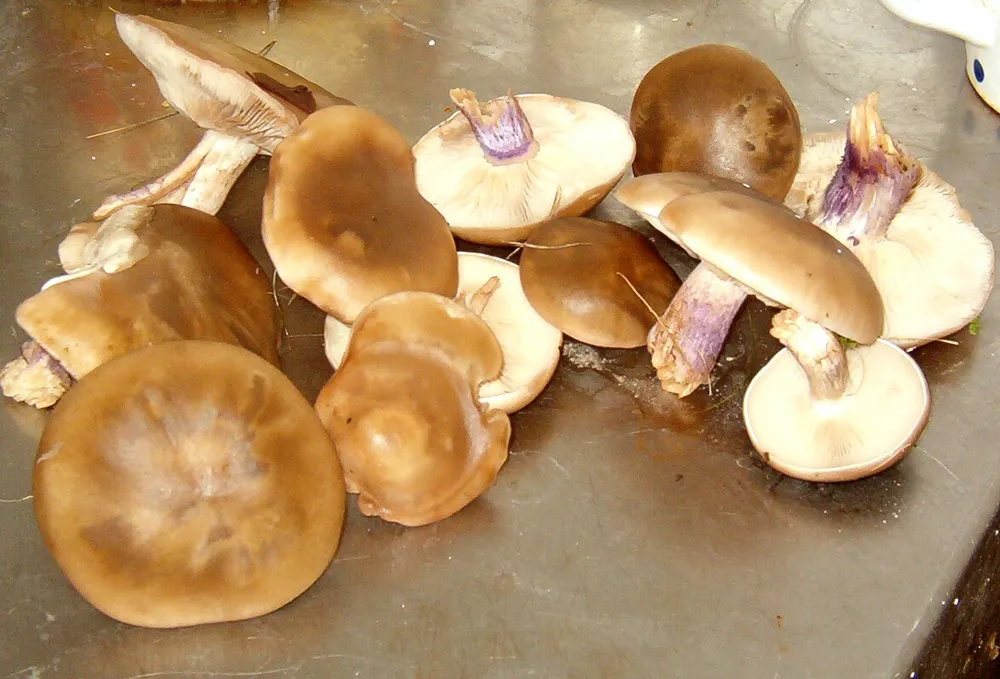
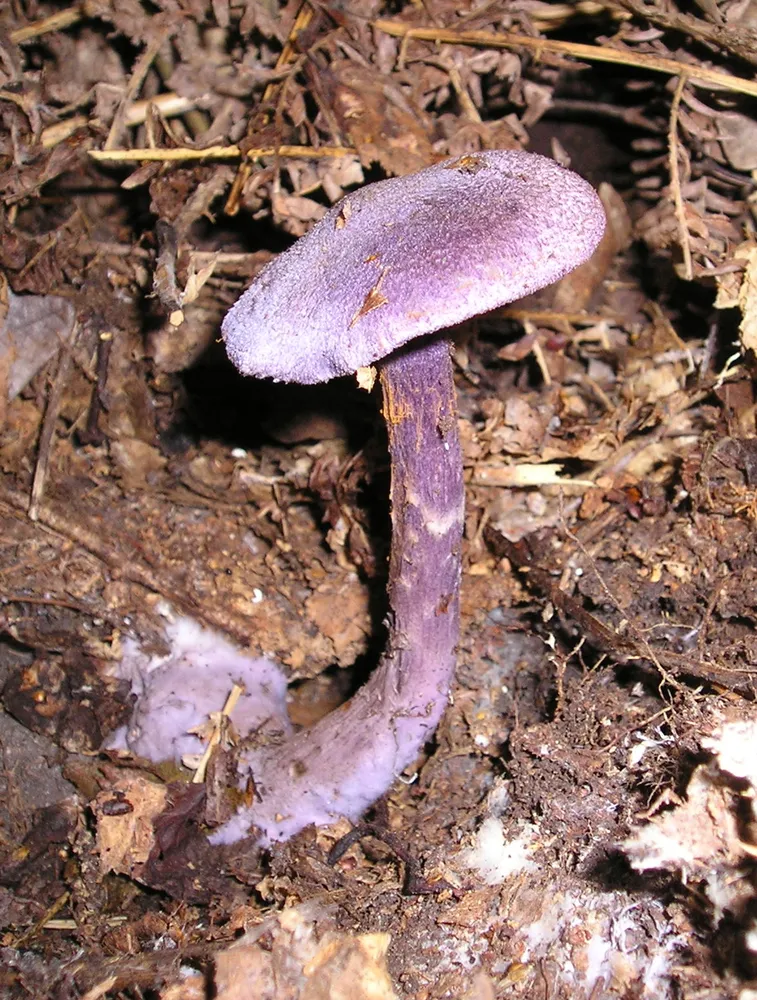
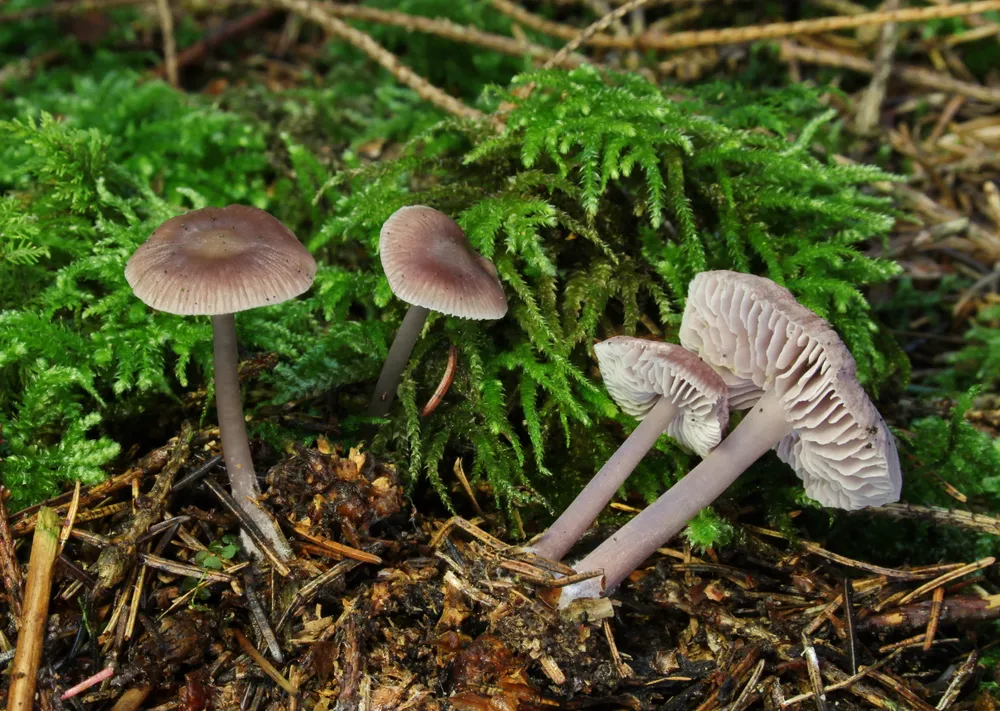
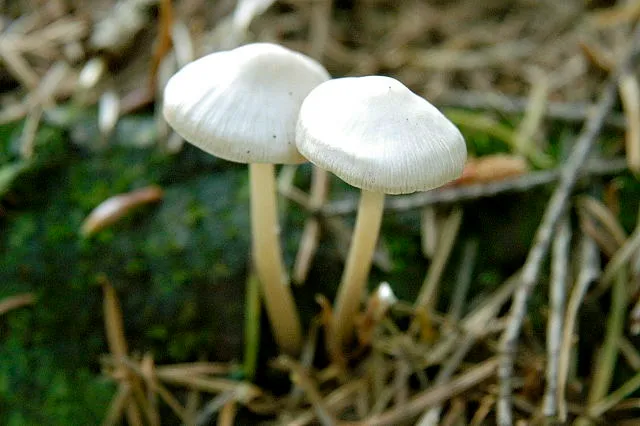
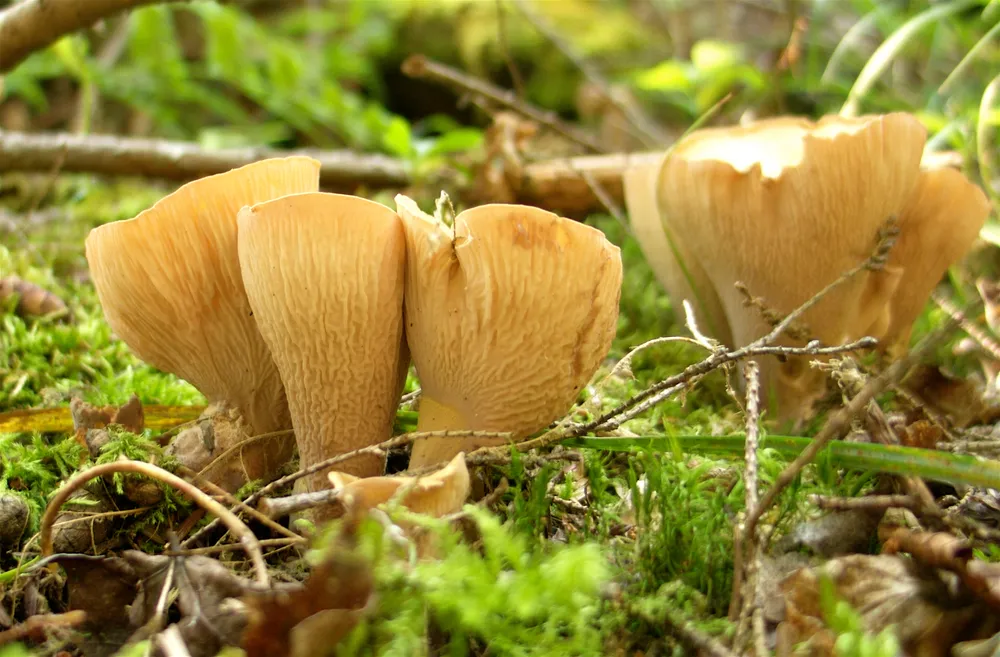
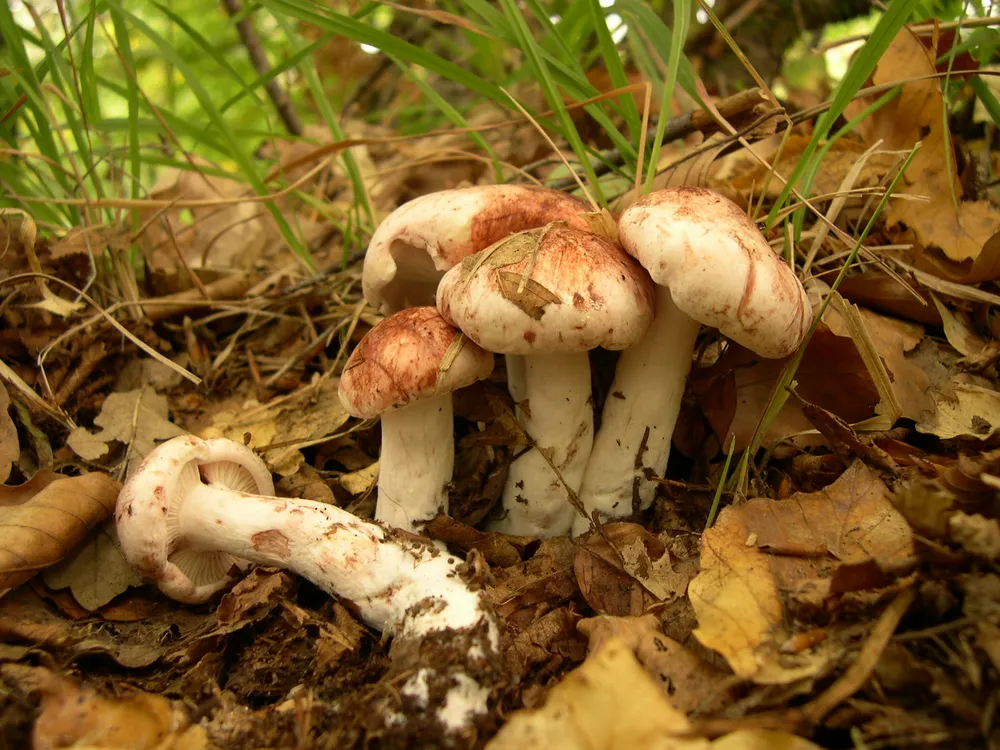
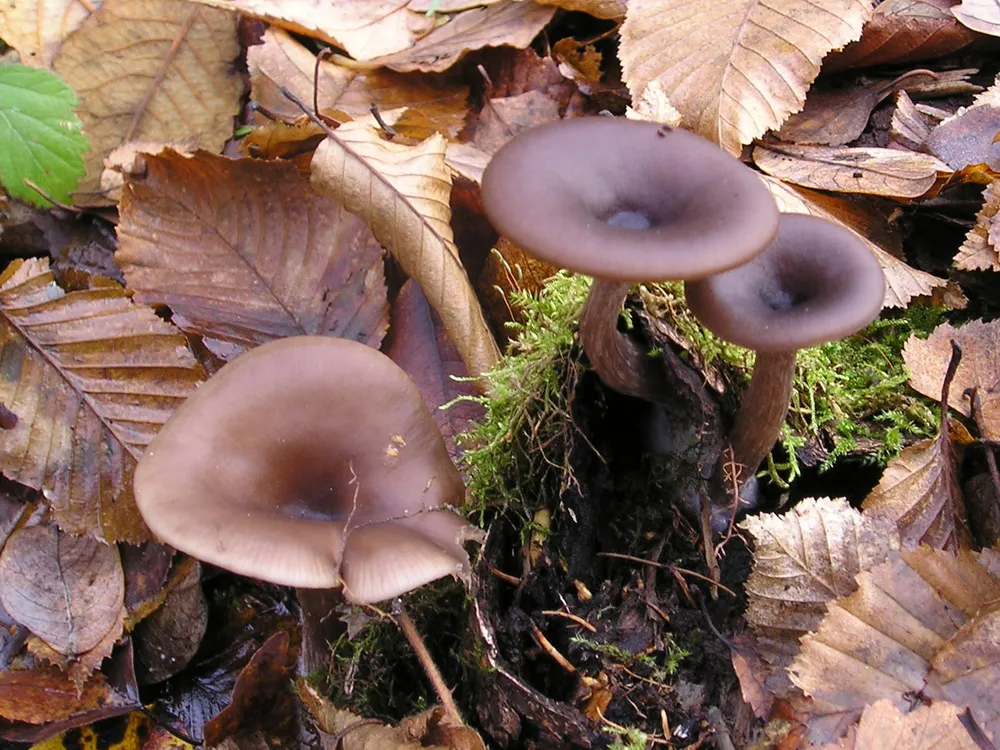
Related species
Mushrooms of the same genus and habitat — to study side by side and never mix up.
_Ricken_185798.webp)
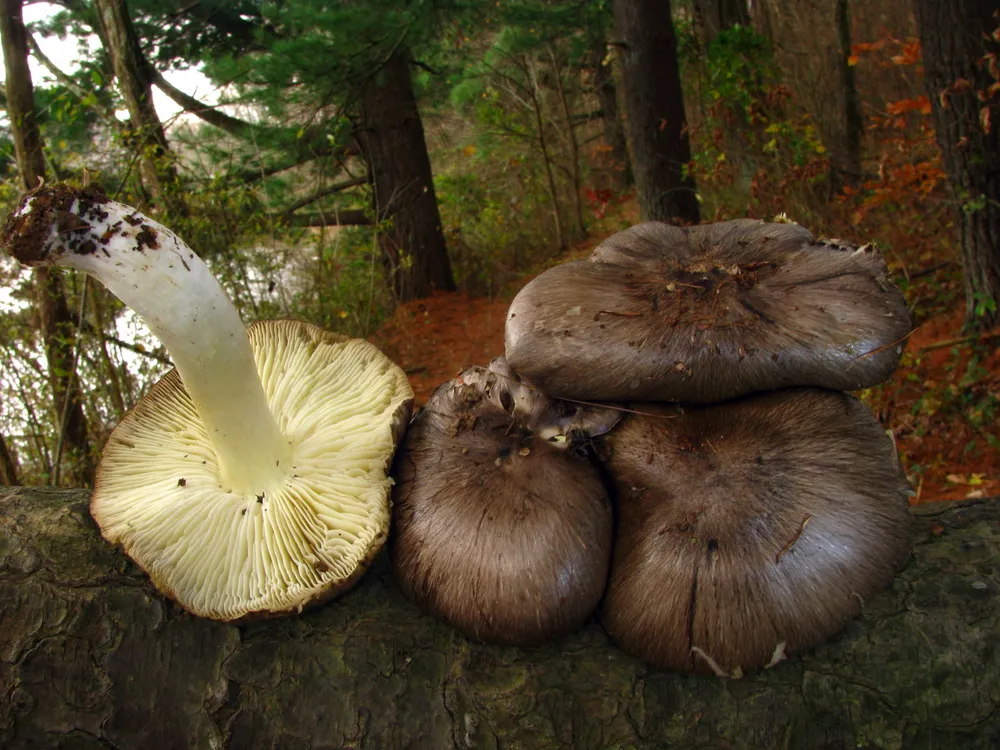
Booted knight
Tricholoma focale
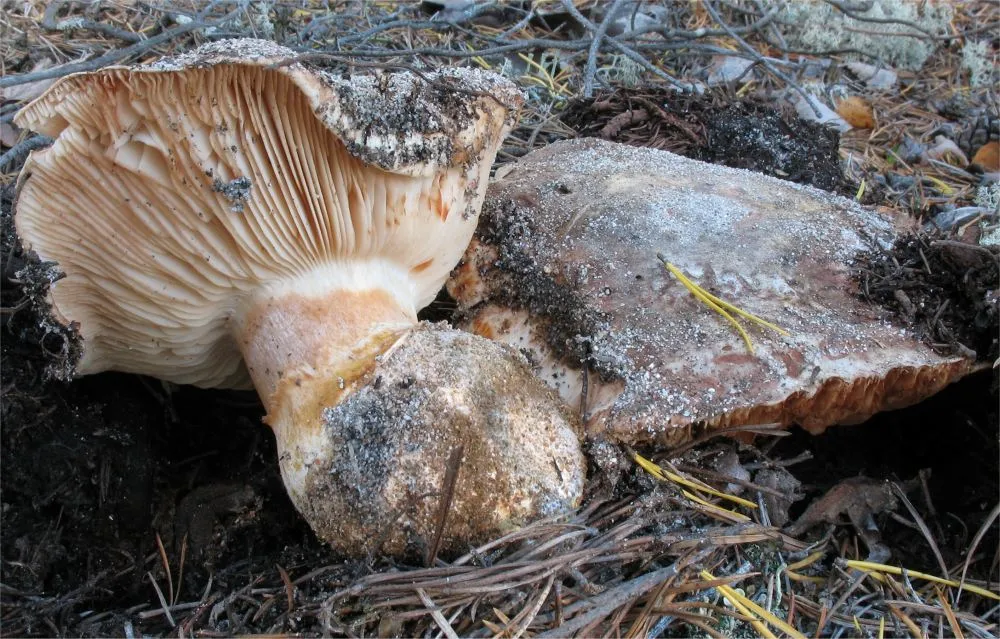
Charbonnier
Tricholoma portentosum
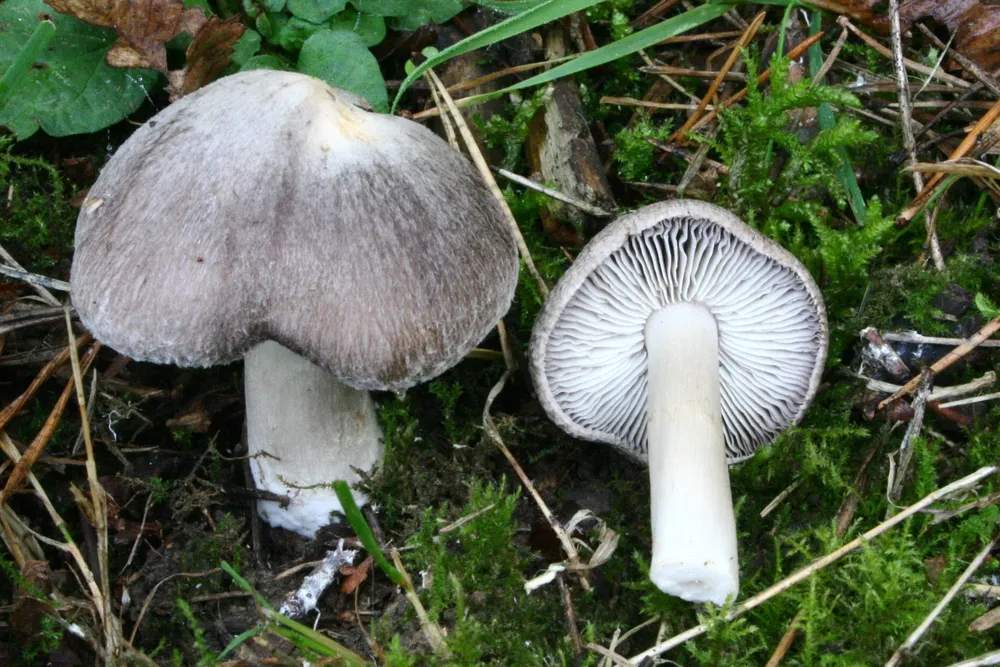
Giant knight
Tricholoma colossus
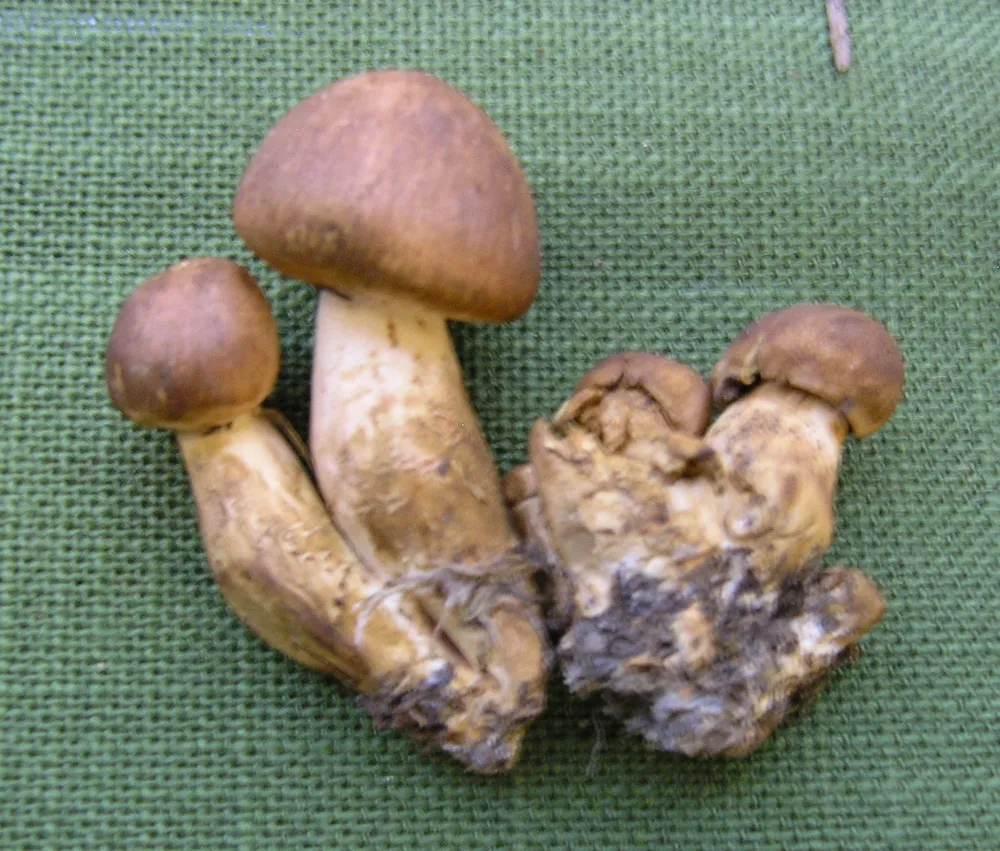
Grey knight
Рядовка наземна
Matt knight
Tricholoma imbricatum
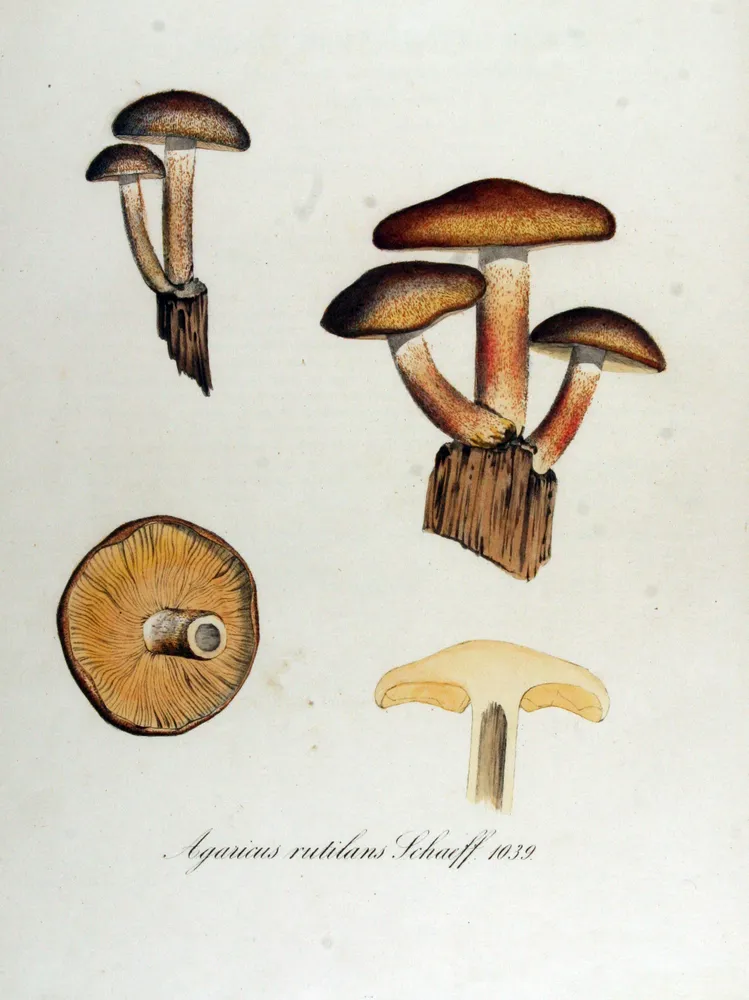
Plums and custard
Рядовка червона
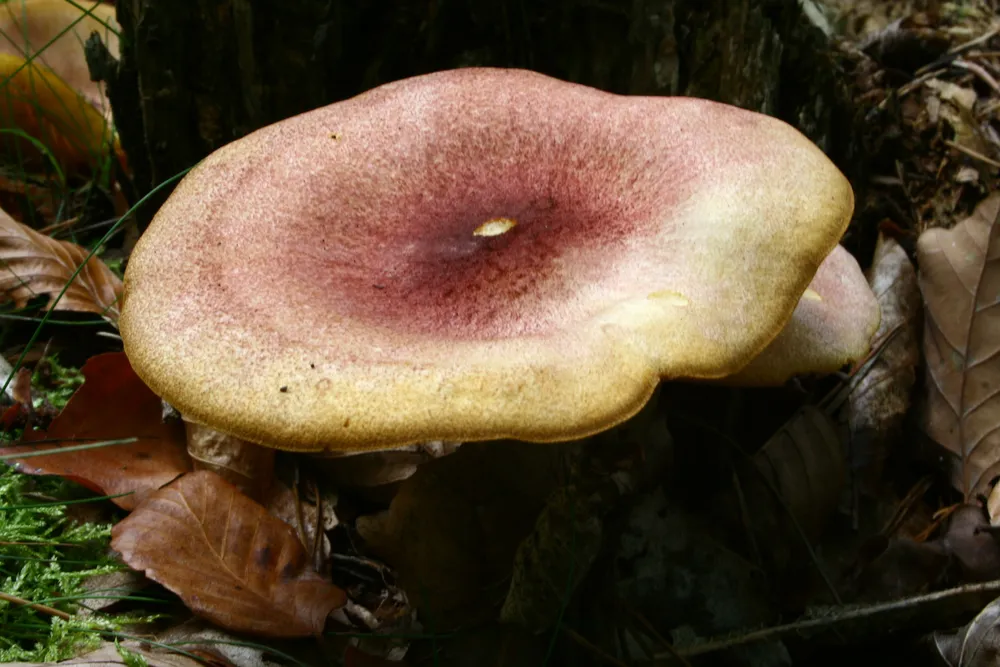
Plums and custard
Tricholomopsis rutilans
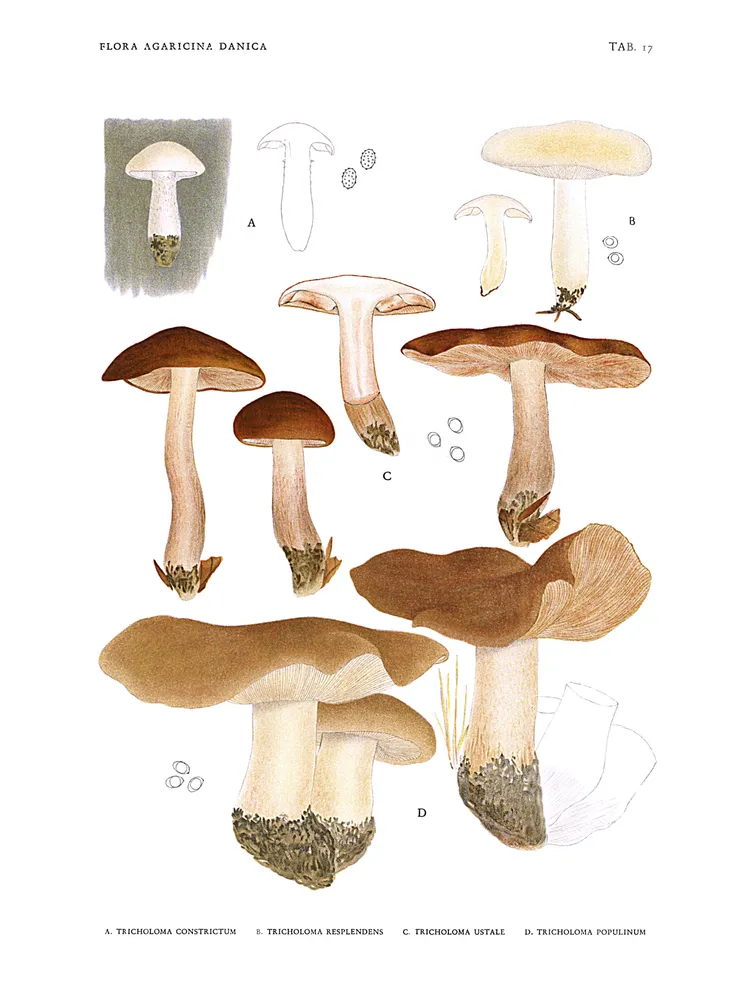
Poplar knight
Рядовка тополева
Related reading
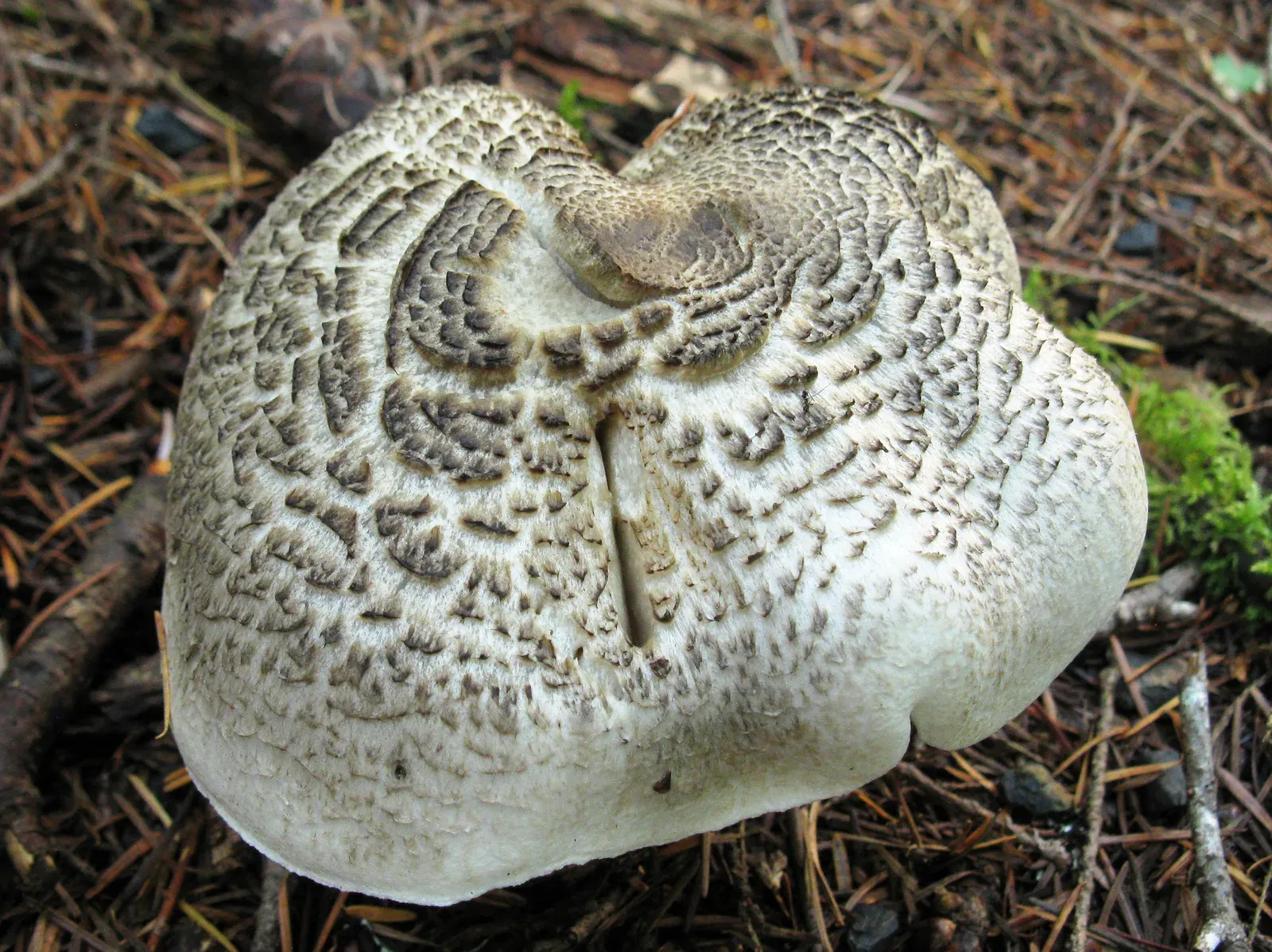 Safety
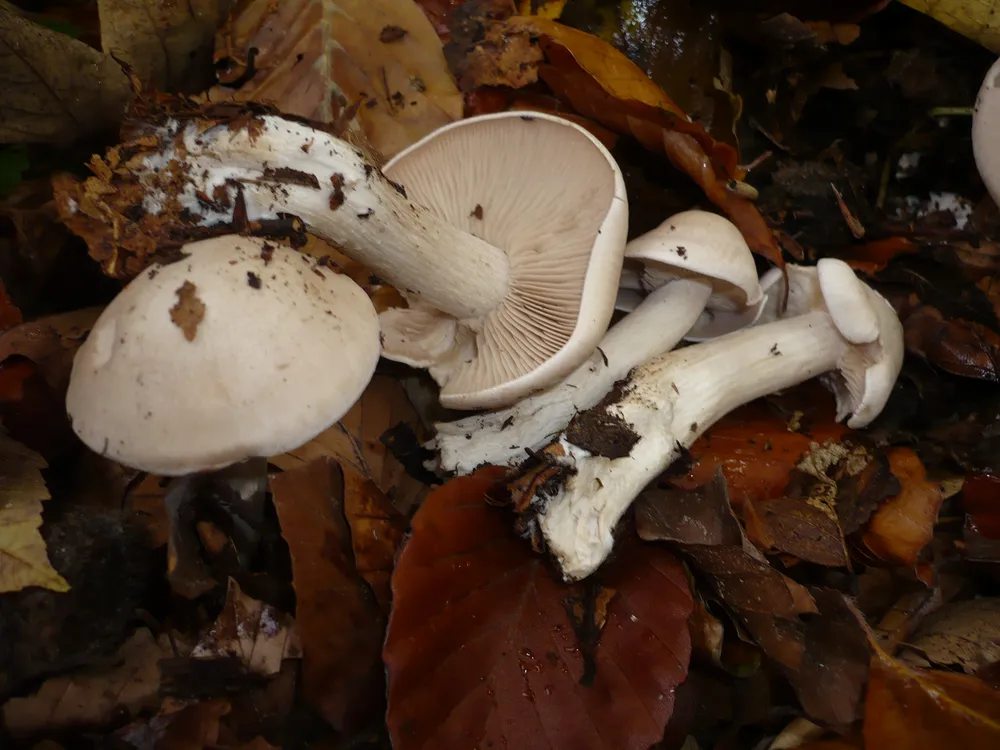
Tricholoma lookalikes: false and poisonous species
Knights (Tricholoma) are a rewarding autumn family, but it includes poisonous lookalikes, above all the tiger…
July 20, 2026·2 min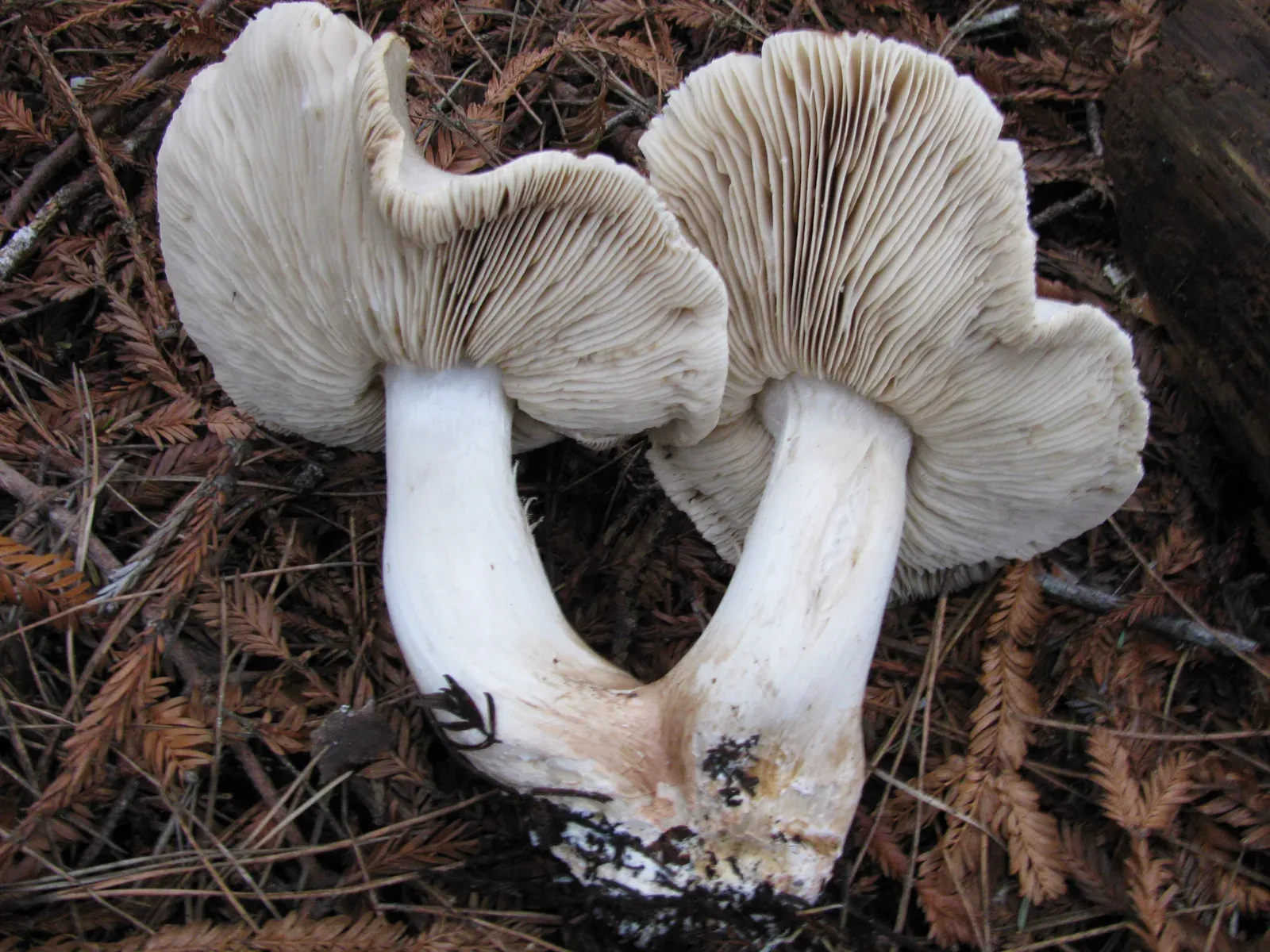 Safety
Poisonous Tricholomas: the tiger tricholoma and other dangerous species
Most knights are edible, but a few species are poisonous — and the most dangerous of them is the tiger (leopar…
July 14, 2026·2 min.webp) How to identify
How to identifyTypes of Tricholoma in Ukraine: a complete guide
Knights are a large family of fall mushrooms: the grey knight, poplar knight, wood blewit, yellow knight and o…
July 14, 2026·2 min
Frequently asked questions
How do you tell it apart from poisonous webcaps?
A spore print is a must. Leave a cap on white paper for 12 hours: Lepista nuda — pale pink, webcaps (Cortinarius) — rusty-orange. Second check: young webcaps have a cobwebby veil (cortina) between the cap margin and the stem; Lepista doesn't. Third: smell: Lepista — perfumed and sweet (violet/lilac), webcaps — neutral. Fourth: stem color: in Lepista — violet with white mycelium at the base; in webcaps — variable, often brown or yellowish.
Does it have dangerous lookalikes?
Young Cortinarius violaceus and C. camphoratus — also deep violet, but with a rusty-orange spore print and a distinct camphor smell in C. camphoratus. C. traganus — brownish-violet with a characteristic foul smell. Lepista personata (field blewit) — a close edible relative; usually only the stem is violet.
Does it really have to be boiled?
Yes, especially for beginners and sensitive people. 15-20 min in salted water, then drain. Raw or undercooked mushrooms can cause mild gastrointestinal discomfort (nausea, heaviness in the stomach) in some people. Properly boiled, it is no problem at all, and tasty.
How do you cook it?
Be sure to boil it for 15-20 min and drain the water. Then fry it with onions and cream (an excellent dish), stew it with potatoes, add it to soups. Pickling is a traditional use (it keeps its flavor and color). Drying works, but some of the aroma is lost. In sauces it gives a rich, sweetish flavor.
Where should you look for it?
On the forest floor in broadleaf, mixed and, less often, coniferous forests, at forest edges, in parks, in compost heaps, on manure piles, in gardens. It loves nitrogen-rich soil with a thick layer of forest litter. It often grows in "fairy rings" of 10-50 fruiting bodies.
Which regions of Ukraine is it found in?
Throughout Ukraine: the Carpathians, Prykarpattia, Polissia, the forest-steppe, and parts of the steppe (in plantations and shelterbelts). One of the most widespread late-autumn mushrooms.
When should you look for it?
September — November, peaking in October-November. One of the latest autumn mushrooms — it fruits until the first hard frosts. In warm autumns, even into December in the southern regions.
What else does it look like?
On Lepista personata (field blewit) — a close relative with a violet stem and a paler cap, also edible after boiling. It also resembles Mycena pura (lilac bonnet) — small, with a pinkish-violet cap, poisonous! (contains muscarine). It also resembles Inocybe geophylla var. lilacina — small, conical, with white spines, poisonous. The key difference: size (Lepista is large) and smell (sweet and perfumed in Lepista).
Is Wood blewit edible or poisonous?
Does Wood blewit have gills or pores?
What does the cap of Wood blewit look like?
What does the stem of Wood blewit look like?
Sources
- [1]Вікіпедія (українська)
- [2]Атлас грибів України, Зеров Д.К. (1979)
- [3]MycoBank Database
- [4]Index Fungorum
- [5]GBIF
- [6]iNaturalist Ukraine