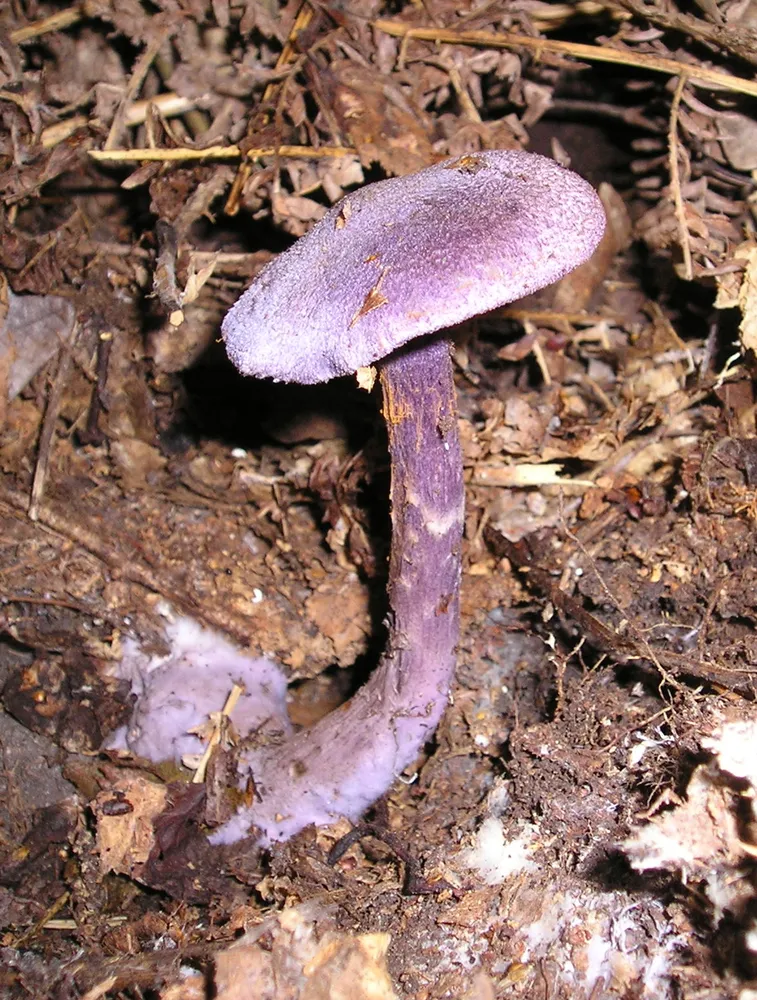
Violet webcapCortinarius violaceus
Expert-verifiedUpdated August 15, 2026
Passport
- Edibility
- Inedible
- Season
- Aug — Oct
- Hymenophore
- Gilled
- Cap color
- Violet
- Size
- Large (over 15 cm)
- Smell
- Pleasant
- Reviewed
- Yes ✓
Quick answers
Where to look?
Deciduous forest, Mixed forest
When does it appear?
Aug — Oct
Active months: August, September, October.
How to recognize it? Three signs
- Cap color: Violet, Black
- Cap shape: Convex
- Smell: Pleasant
Fruiting season
August – October
Description
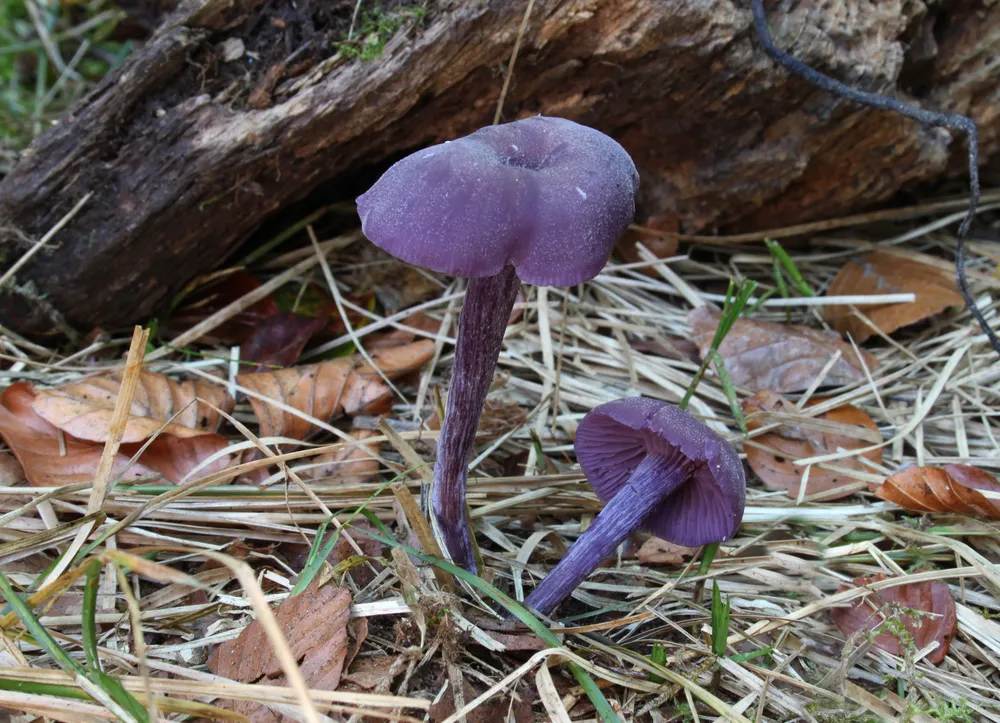
The violet webcap (Cortinarius violaceus) is the most beautiful of Ukraine's webcaps and one of the most stunning mushrooms on the planet: entirely deep violet, a rich inky purple — cap, stem, gills, even the flesh in young specimens. A large, fleshy mushroom with a velvety-scaly cap — finding one in the forest is a real visual event, like spotting a wild orchid. The Latin violaceus means "violet".
In Ukraine it is listed in the Red Data Book and in regional red lists — it is rare, and its populations are shrinking fast as old forests are cut down. Picking it is prohibited. Technically, in some Western European countries it is considered edible after boiling, but in Ukraine this species is not eaten, for three reasons: (1) Red Data Book status — picking it carries criminal liability. (2) It belongs to the genus Cortinarius, which includes deadly poisonous species containing orellanine — accurate identification requires an expert. (3) Fruiting bodies are few — even if you find one, the ethical thing is to leave it to spread its spores.
In Ukraine it is found mainly in old mountain beech and fir-beech forests of the Carpathians, less often in the Carpathian foothills and northern Polissia. It forms mycorrhiza with beech, spruce and oak. The season runs August — October, peaking in September. Very sporadic — in some years 5-10 fruiting bodies per hectare, in others none at all. A find is an event worth a photo on iNaturalist UA with a GPS tag. This helps scientists track the species' distribution.
Cap
Cap 5-15 cm across, hemispherical with an inrolled margin in young mushrooms, later becoming convex-flat with a low umbo. Color deep violet, inky purple, almost black in the center. Surface velvety-scaly, with fine violet-inky scales — a hallmark of the species. In damp weather it looks matte and velvety.
Hymenophore
Gills — attached to the stem, moderately spaced, deep violet, darkening with age to purple-black, then to rusty brown as the spore powder ripens. Spore print rusty brown. In young mushrooms the gills are covered by a cobweb-like partial veil (cortina) with a purple tint.
Stem
Stem 8-12 cm tall, 1.5-2.5 cm thick, cylindrical, thick and fleshy, with a bulbous swelling at the base. Color deep violet, matching the cap, paler toward the base. The surface has fine violet fibers. Remnants of the cobwebby cortina on the stem — purple in young mushrooms, covered in rusty-brown spores in old ones.
Flesh
Flesh firm, violet in young mushrooms, turning gray-violet to brownish with age. When cut, it does not change color. Smell faint, mushroomy; in some populations with a hint of cedar.
Smell
Faint, pleasant and mushroomy, with a subtle resinous or cedar note in some populations.
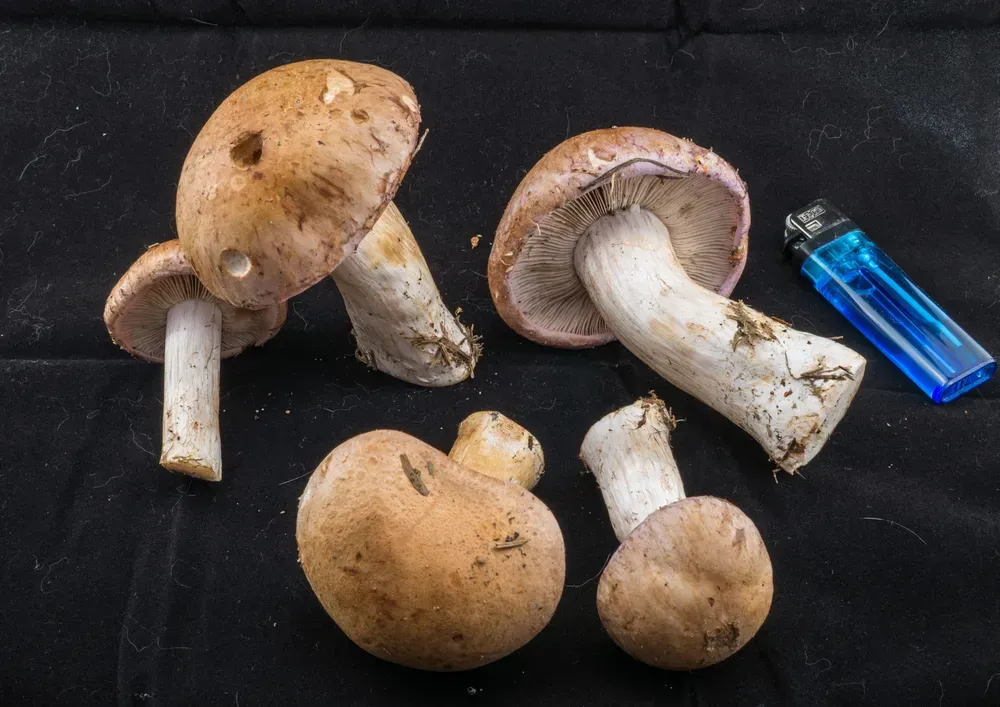
Lookalikes
.webp)
Related species
Mushrooms of the same genus and habitat — to study side by side and never mix up.
_Fr_387091.webp)
Cortinarius multiformis
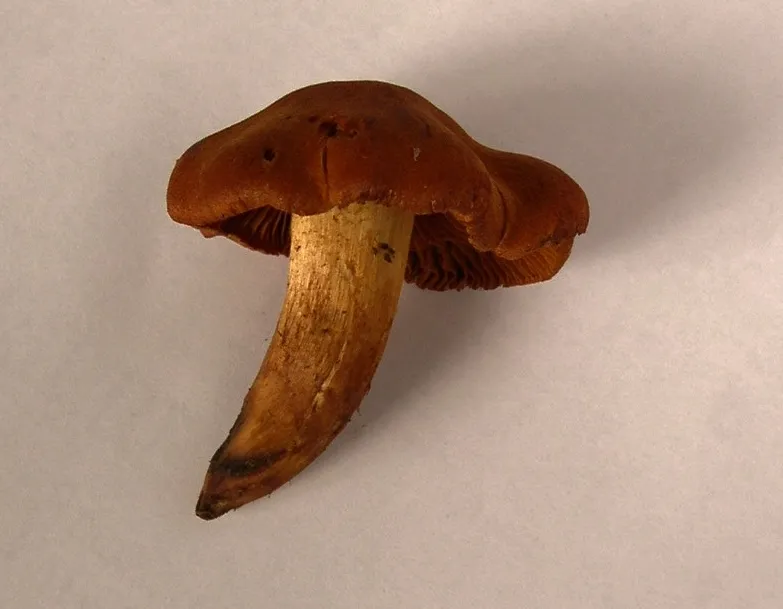
Fool's webcap
Cortinarius orellanus
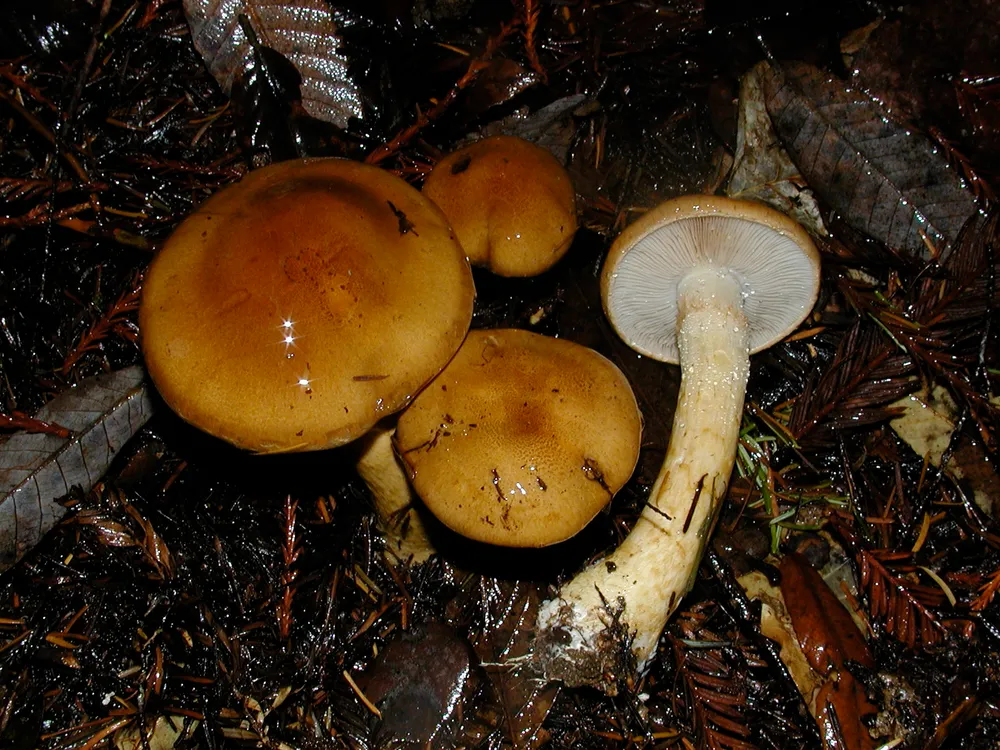
Orange webcap
Cortinarius mucosus
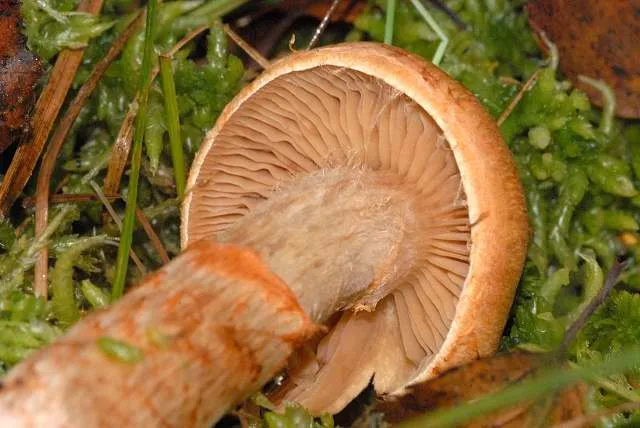
Red banded webcap
Cortinarius armillatus
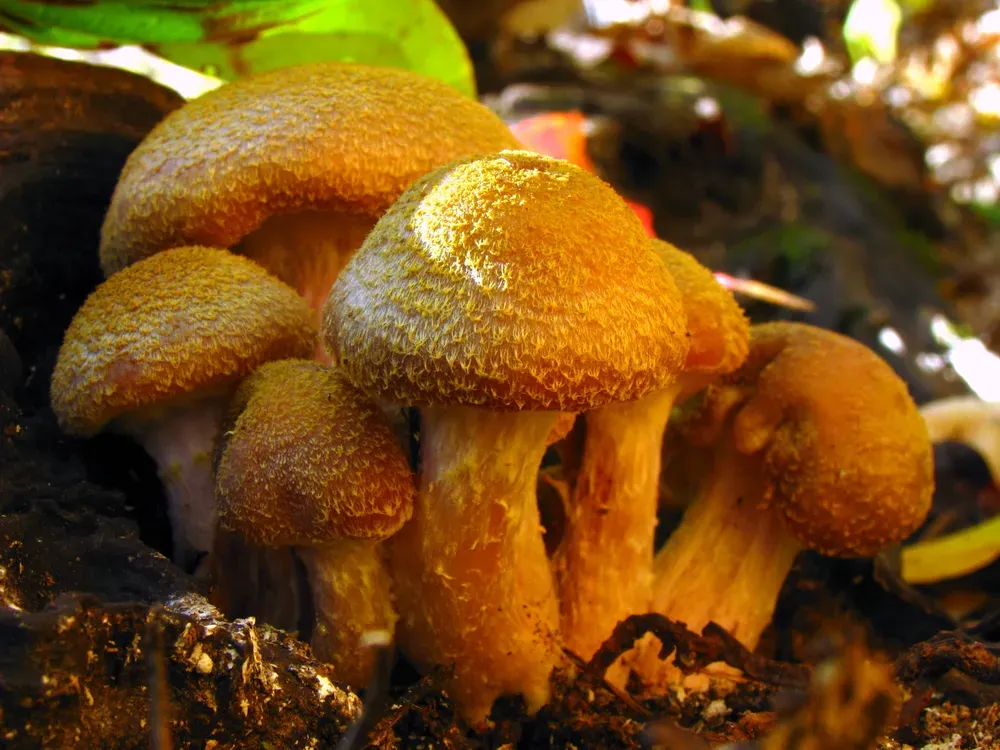
Bulbous honey fungus
Armillaria gallica
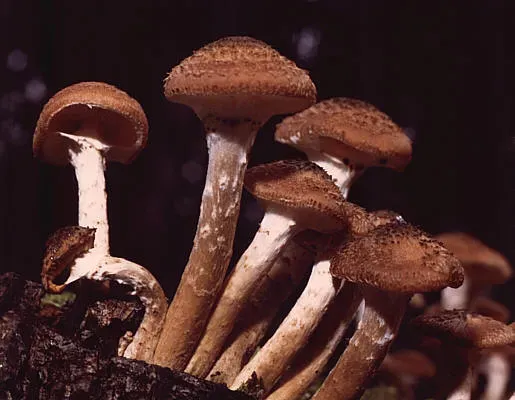
Dark honey fungus
Armillaria ostoyae
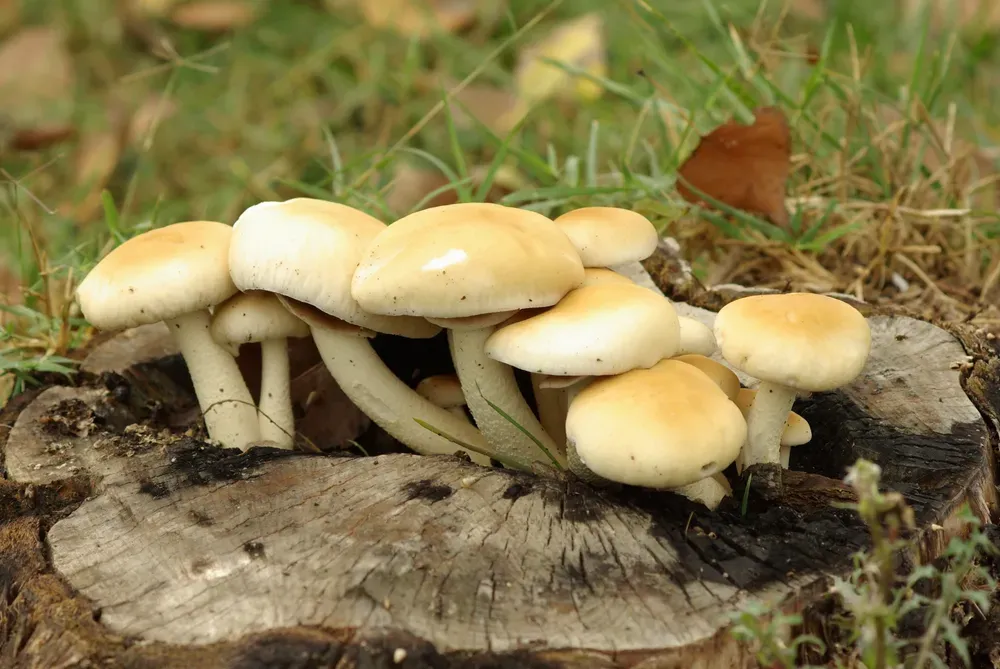
Poplar fieldcap
Cyclocybe aegerita
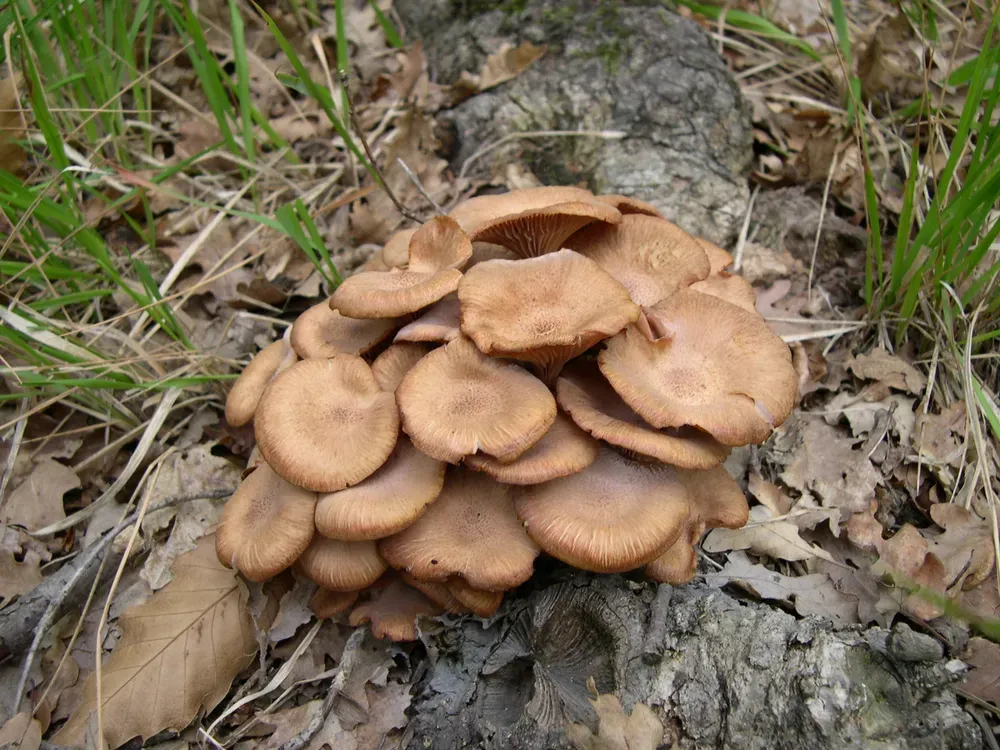
Ringless honey fungus
Desarmillaria tabescens
Frequently asked questions
Can you eat it?
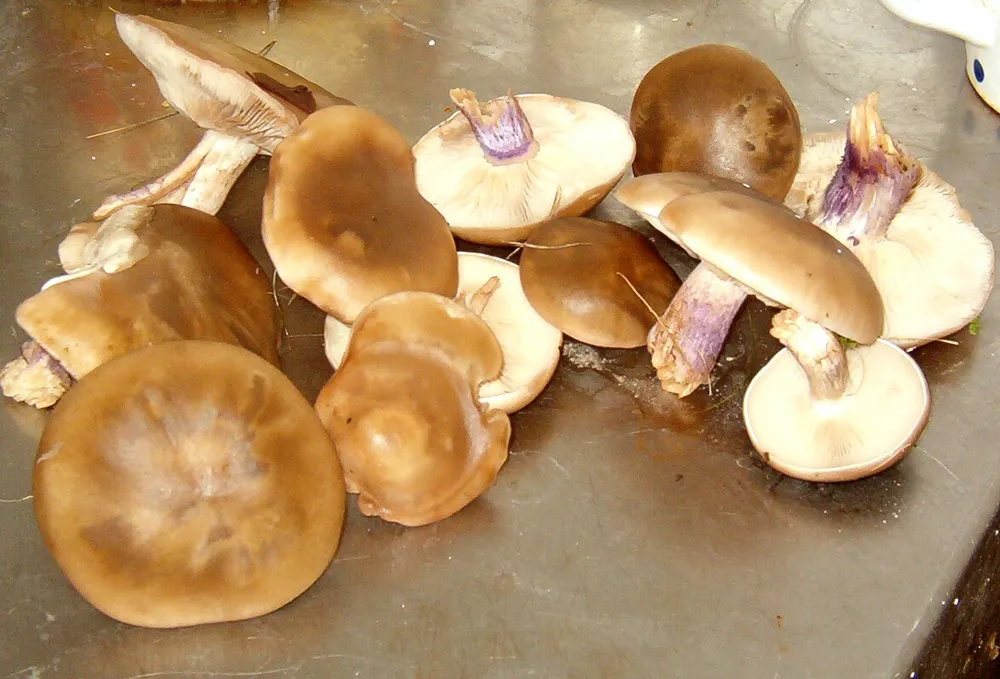
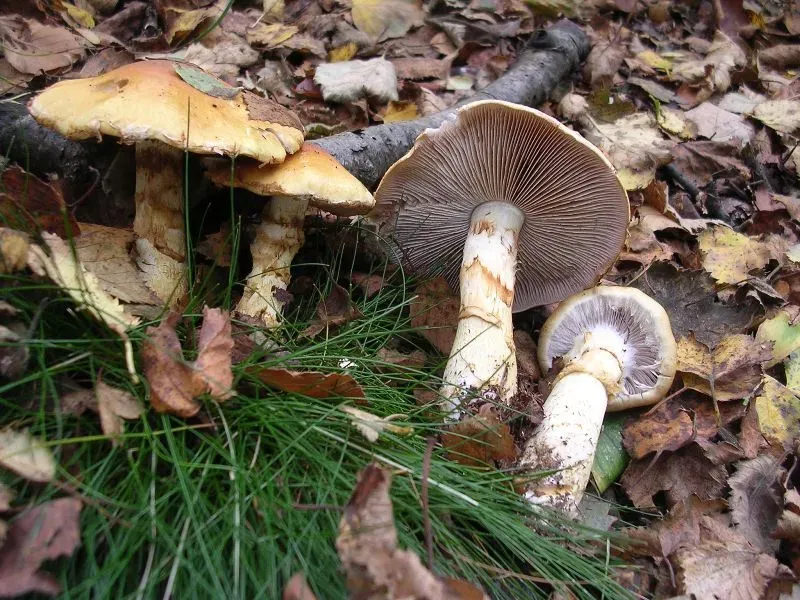
No, picking it is prohibited — it is listed in the Red Data Book of Ukraine, with criminal liability. Technically, in some Western European countries it is edible after boiling, but in Ukraine it is not eaten because of its protected status and the risk of confusing it with deadly relatives in the genus Cortinarius (fool's webcap, deadly webcap).
What should you do if you find one?
Photograph it as it grows (an overall shot + close-ups of the cap and the stem with its cortina). Note the GPS coordinates (with any map app). Upload it to iNaturalist UA tagged "Red Data Book of Ukraine". Don't pull it up or cut it — every fruiting body matters for the species to keep spreading. This is a real find, worthy of your personal photo archive.
Is it dangerous to touch?
No, it's safe. All the risks of Cortinarius come from eating it. You can touch it, hold it in your hands, carry it out of the forest. Just don't eat it and don't "test it on your tongue".
Where should you look for it?
In old mountain beech, fir-beech and mixed forests. It loves old-growth forest with an undisturbed forest floor — mossy, with rotting wood and sparse grass. It forms mycorrhiza with beech, spruce and oak. It does not occur in young plantations or disturbed forests — it is an indicator of well-preserved old forest.
Which regions of Ukraine is it found in?
Mainly the Carpathians (especially abundant in the old beech primeval forests of Zakarpattia, Lviv and Ivano-Frankivsk regions), the Carpathian foothills. Less often in northern Polissia (Rivne region, Volyn) in old mixed forests. It does not occur in the steppe or the southern forest-steppe.
When should you look for it?
August — October, peaking in September. Very sporadic — in some years 5-10 fruiting bodies per hectare, in others none at all. The best finds come after a cool, damp summer and early autumn.
What mushrooms is it confused with?
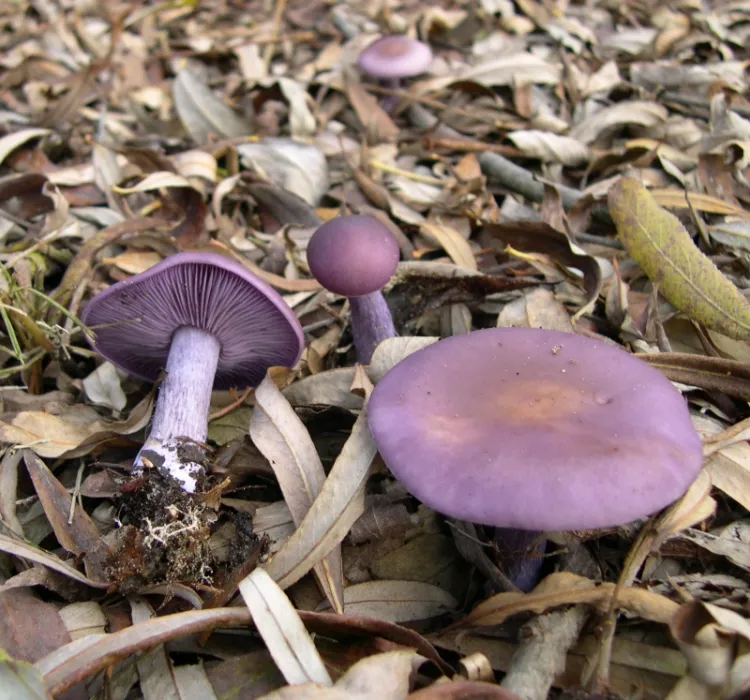
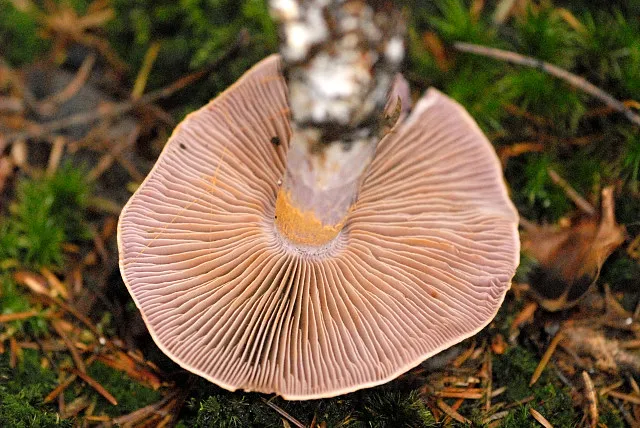
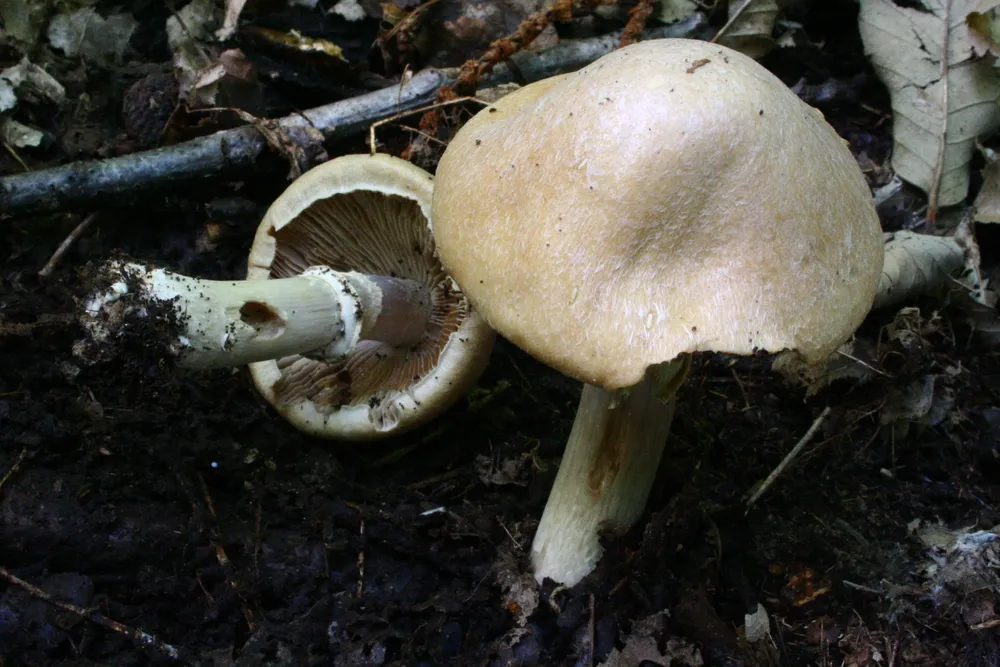
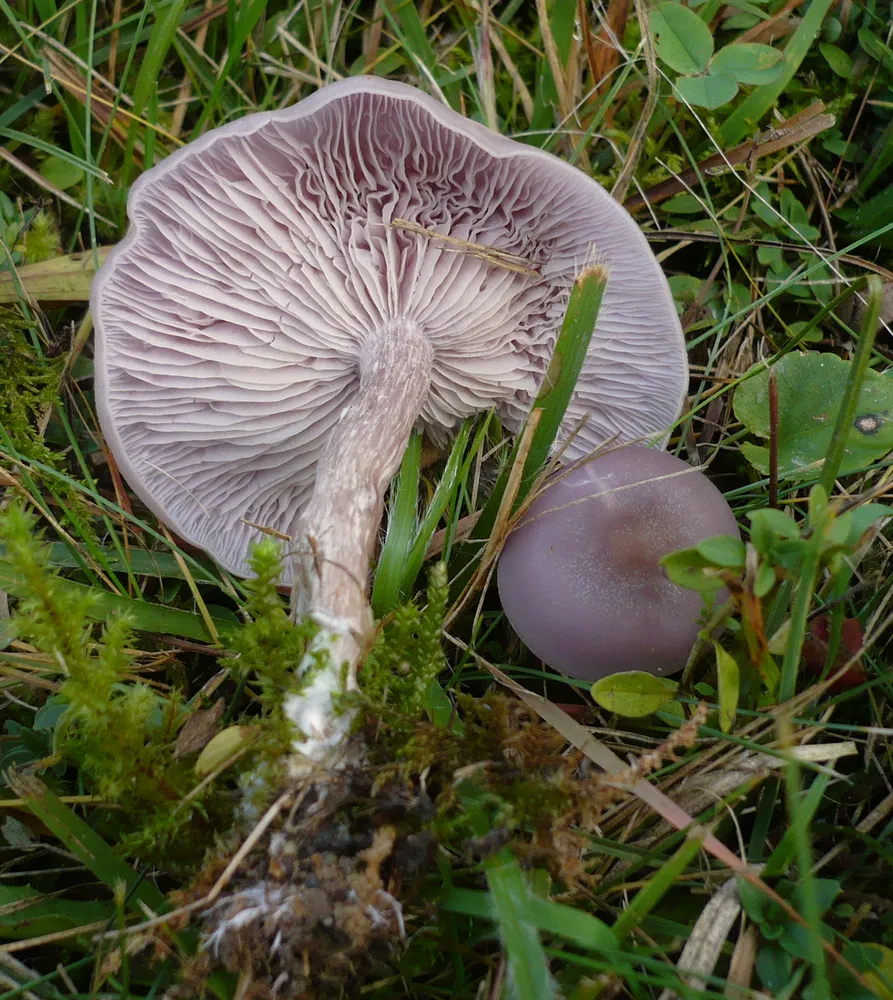
Among violet and lilac mushrooms — with the wood blewit (Lepista nuda), but that one has a pink spore print (not rusty) and no cortina. With the goatcheese webcap (C. camphoratus) — also lilac, but with a repulsive smell of rotting potatoes, while the violet webcap smells pleasantly of cedar. With the Goliath webcap (C. praestans) — a rare species, also in the Red Data Book, only larger and with orange tints.
Should we worry about it disappearing?
Yes, we should. The violet webcap is an indicator of well-preserved old forest. Its disappearance from a region means that the old-growth forest is gone, and with it dozens of other Red Data Book species (other fungi, lichens, rare insects, orchids). So protecting its populations effectively means protecting the whole living forest. If you've found this species, share your find with conservationists — it may become an argument for expanding a protected area.
Is Violet webcap edible or poisonous?
Does Violet webcap have gills or pores?
What does the cap of Violet webcap look like?
What does the stem of Violet webcap look like?
Sources
- [1]Вікіпедія (українська)
- [2]Атлас грибів України, Зеров Д.К. (1979)
- [3]MycoBank Database
- [4]Index Fungorum
- [5]GBIF
- [6]iNaturalist Ukraine