_Fr_387091.webp)
Cortinarius multiformis
Expert-verifiedUpdated October 3, 2026
Passport
- Edibility
- Inedible
- Season
- Aug — Oct
- Hymenophore
- Gilled
- Cap color
- Yellow
- Size
- Medium (5–15 cm)
- Smell
- Odorless
- Reviewed
- Yes ✓
Quick answers
Where to look?
Deciduous forest, Mixed forest
When does it appear?
Aug — Oct
Active months: August, September, October.
How to recognize it? Three signs
- Cap color: Yellow, Orange, Brown
- Cap shape: Convex
- Smell: Odorless
Fruiting season
August – October
Description
Cortinarius multiformis is a typical "nameless" member of Europe's most difficult mushroom genus, with a distinctive orange-yellow or honey-ochre cap, a bulbous stem base and a cobwebby cortina. The Latin epithet multiformis — "many-shaped" — refers to how its color varies between populations: from pale ochre to reddish honey, with variations by region and partner tree.
Inedible by the standard of modern mycology. Some older sources labeled it conditionally edible after boiling, but the genus Cortinarius contains deadly poisonous species with orellanine (C. orellanus, C. rubellus), and telling the species apart precisely is a job for an experienced mycologist. The careful forager's rule: no webcap goes in the basket.
In Ukraine it grows in deciduous and mixed forests: the Carpathians, Prykarpattia, Polissia, the forest-steppe. A mycorrhizal partner of beech, oak, hornbeam, and less often birch. The season runs August — October, peaking in September. One of the more or less common large webcaps, the kind you regularly stumble upon in a September beech wood. It's worth knowing by sight — so you can walk past without a doubt and never mistake it for a young slippery jack or a bolete.
Cap
The cap is 5-10 cm across, hemispherical with an inrolled margin in young mushrooms, becoming convex to flat with a low umbo over time. The color is orange-yellow, honey-ochre, reddish-yellow, darker when young, fading to pale ochre with age. The surface is smooth, slightly slimy in wet weather. Older mushrooms often show fine radial cracks.
Hymenophore
The hymenophore is gilled — the gills are attached to the stem and moderately crowded. In young mushrooms they are pale cream to pale ochre, later turning rusty brown as the spores ripen. The spore print is rusty brown. In young mushrooms the gills are covered by a cobwebby partial veil (the cortina).
Stem
The stem is 5-9 cm tall, 1-2 cm thick, cylindrical, with a pronounced bulbous base (like an onion bulb). The color is whitish to pale ochre. On the stem you'll see remnants of the cobwebby cortina dusted with rusty-brown spores.
Flesh
The flesh is firm, white to pale cream. When cut it does not change color or turns slightly yellow. The smell is faint and neutral.
Smell
Faint, neutral, mushroomy, with no distinctive notes.
›Scientific synonyms (2)
Agaricus varius Schaeff., Agaricus multiformis Fr.
Lookalikes
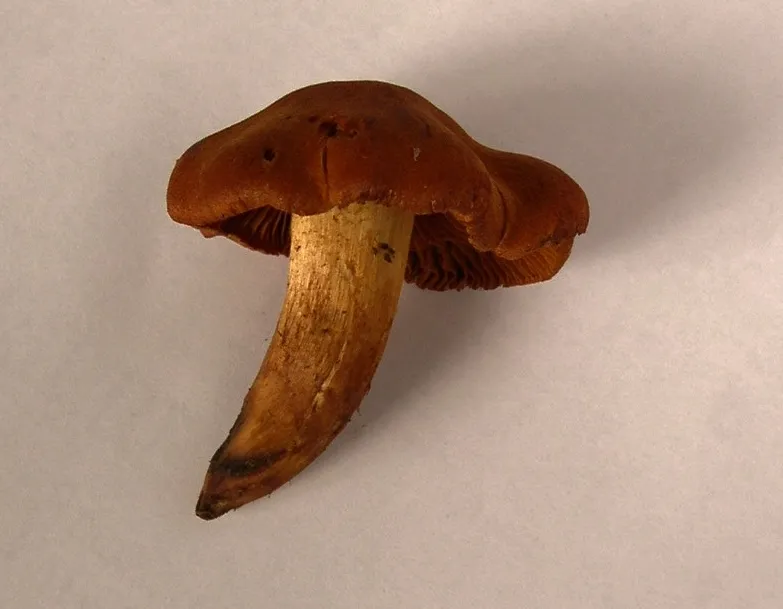
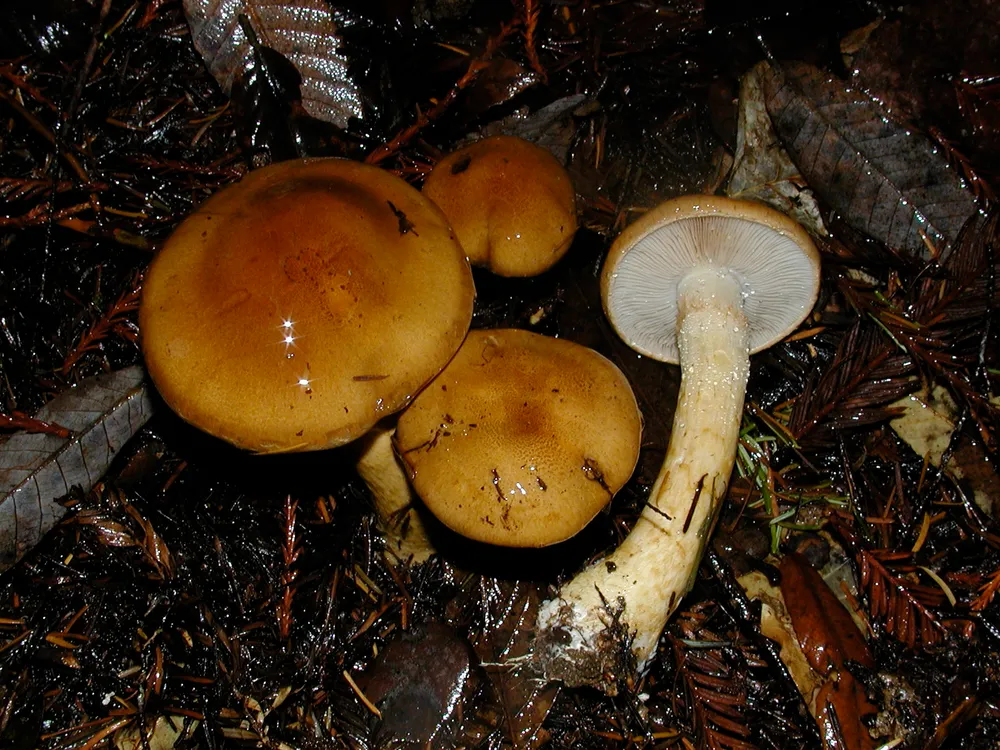
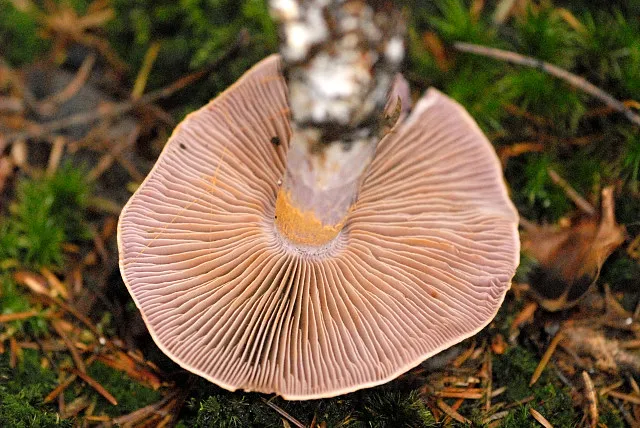
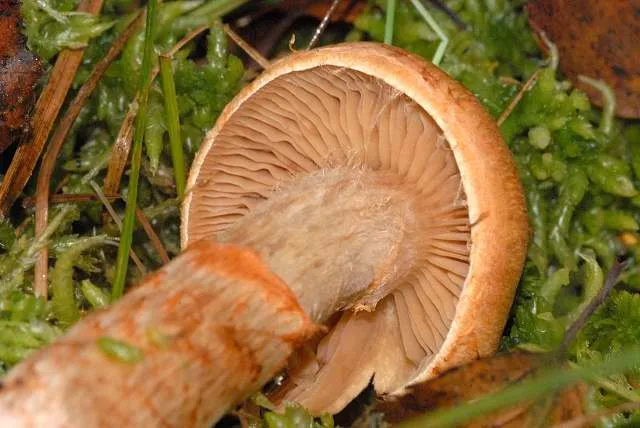
Related species
Mushrooms of the same genus and habitat — to study side by side and never mix up.
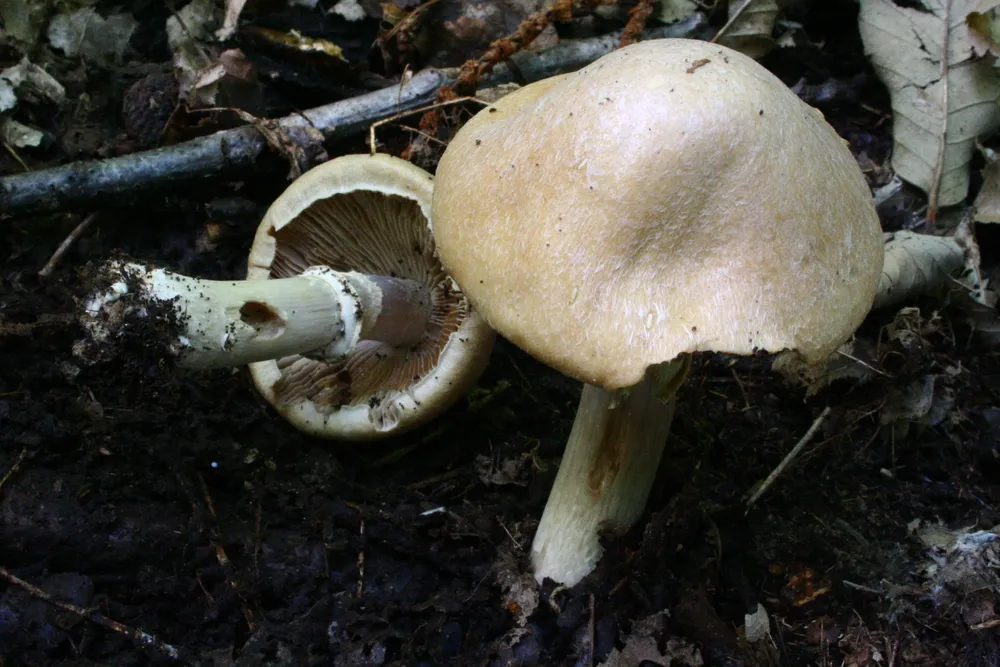
Gypsy mushroom
Cortinarius caperatus
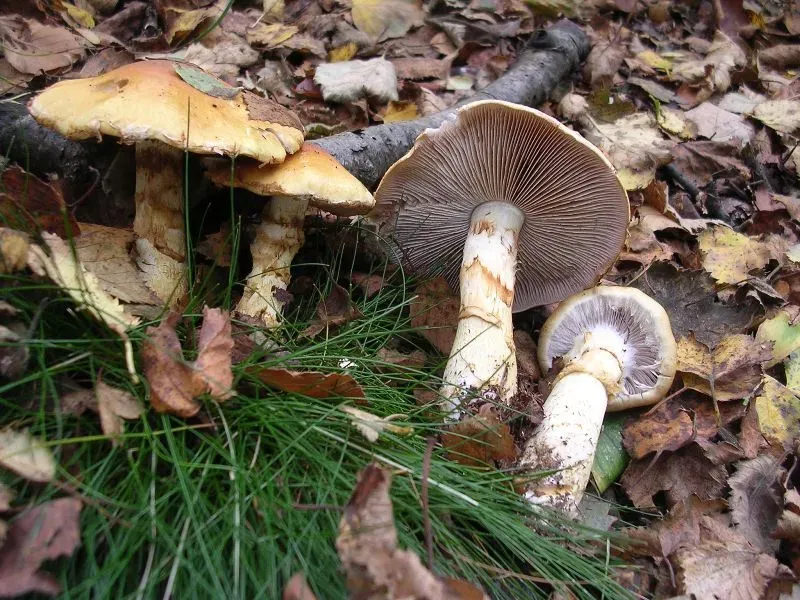
Birch webcap
Cortinarius triumphans
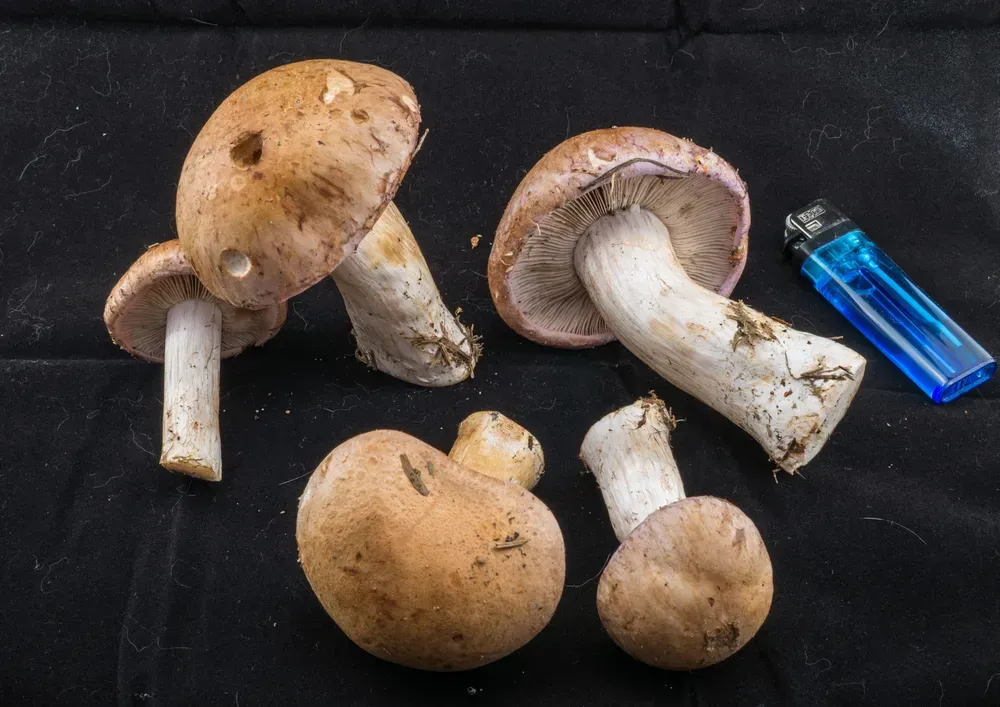
Cortinarius esculentus
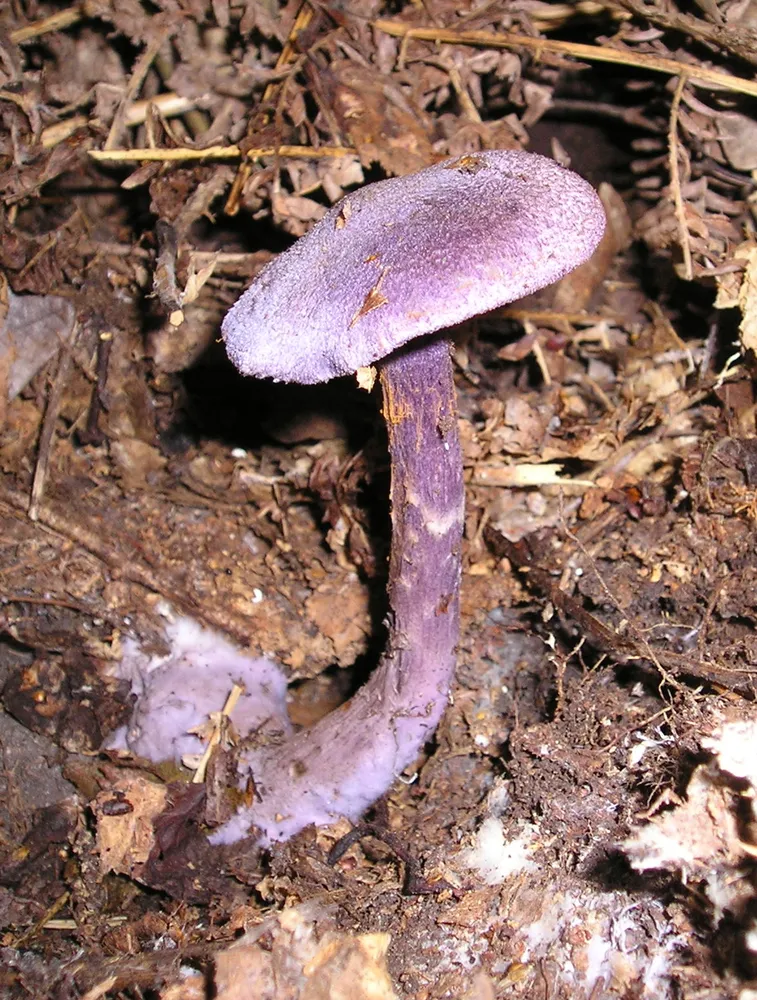
Violet webcap
Cortinarius violaceus
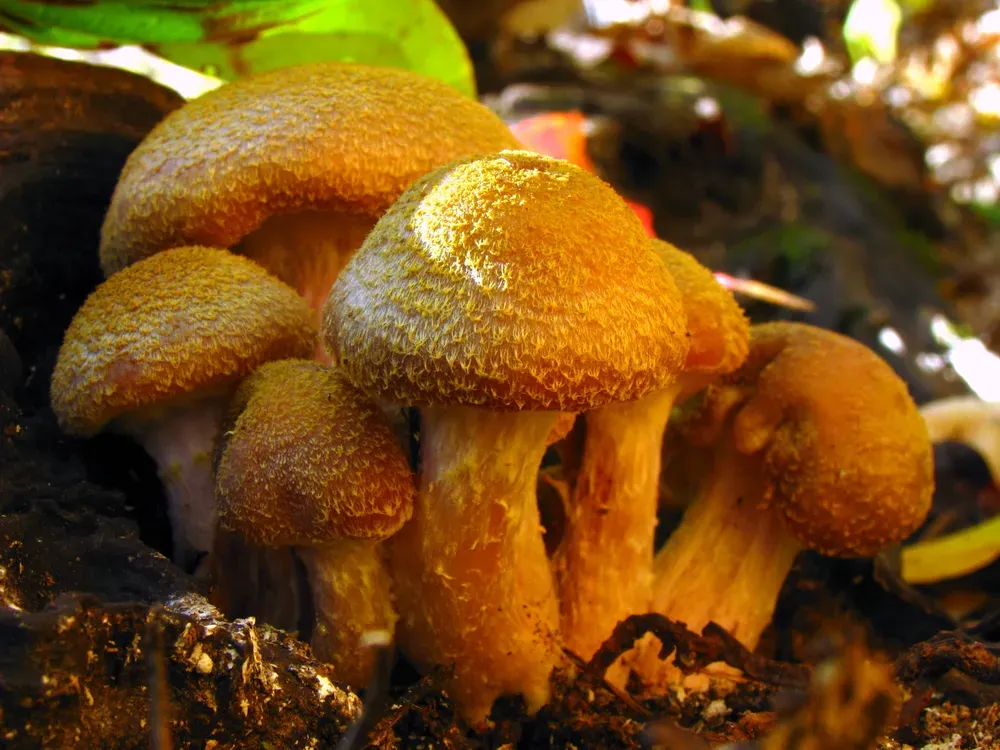
Bulbous honey fungus
Armillaria gallica
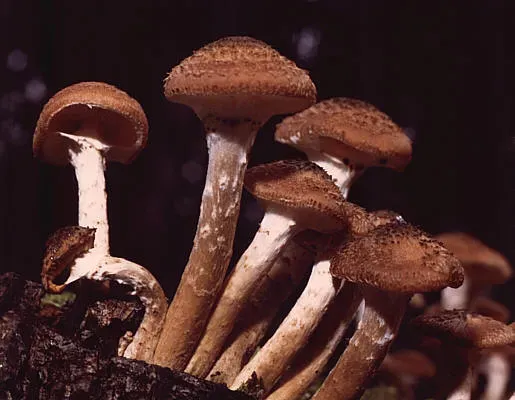
Dark honey fungus
Armillaria ostoyae
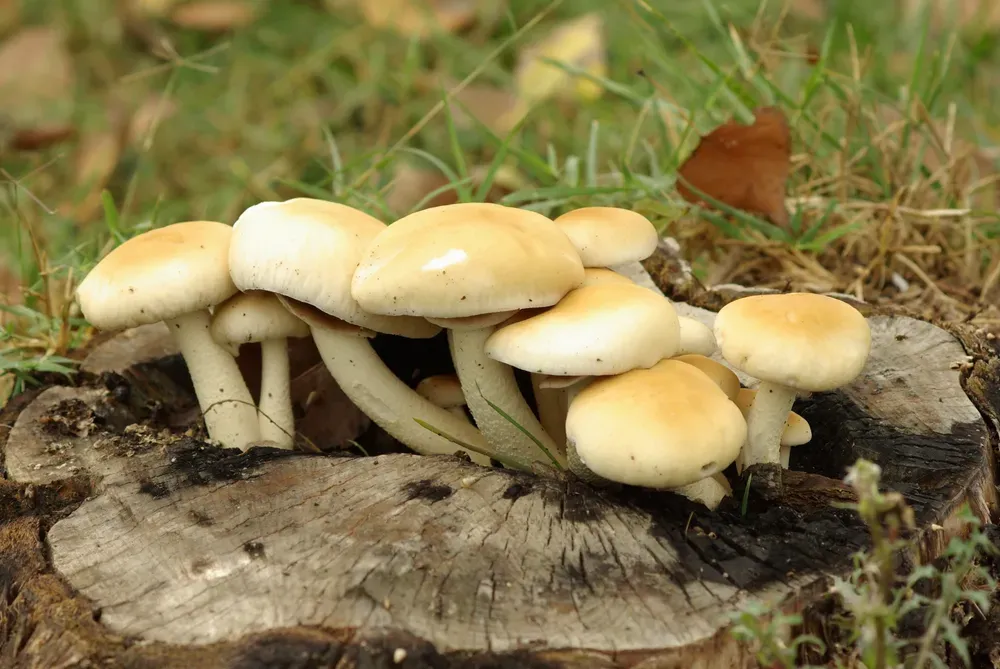
Poplar fieldcap
Cyclocybe aegerita
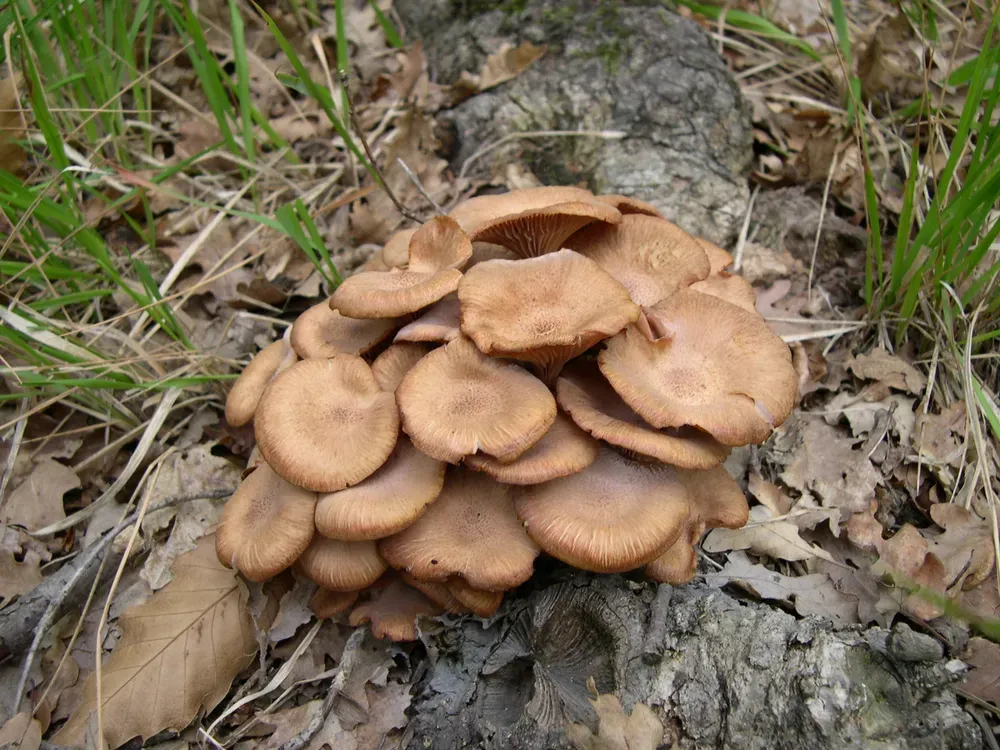
Ringless honey fungus
Desarmillaria tabescens
Frequently asked questions
Can you eat it?
No. The rule of modern mycology: no webcap from the genus Cortinarius goes in the basket. This species itself has no described deadly toxins, but because it resembles deadly poisonous relatives (C. orellanus with orellanine) and precise identification is difficult, it is not eaten.
How do you tell it's a webcap?
Four features of the genus Cortinarius. (1) Cortina — a cobwebby partial veil between cap and stem in young mushrooms. (2) Rusty-brown gills in mature mushrooms. (3) On the stem there's often a band of rusty-brown spores. (4) Rusty-brown spore print (a print on paper takes 6-12 hours). If the mushroom you found has these features, it's a webcap — leave it.
What makes C. orellanus dangerous?
Cortinarius orellanus contains orellanine — a nephrotoxin that destroys kidney cells. Symptoms are delayed by 2-21 days after eating — a record delay among mushroom poisonings. Without timely treatment — acute kidney failure, and in severe cases lifelong hemodialysis or a transplant. Outwardly C. orellanus looks like other webcaps; precise identification requires a microscope. So the rule is: we pass by all webcaps.
Where does it grow?
In deciduous and mixed forests — mostly with beech and oak, less often with hornbeam and birch. It likes damp mossy spots, forest edges, shady slopes. A mycorrhizal partner of these trees.
Which regions of Ukraine is it found in?
Throughout the forest and forest-steppe zones: the Carpathians, Prykarpattia, Polissia, the forest-steppe. In the steppe — in floodplain oak groves.
When should you look for it?
More like "when to recognize it and walk past". August — October, peaking in September.
What mushrooms is it confused with?
With other large webcaps — C. variicolor, C. largus and others. With young slippery jacks — but they have tubes instead of gills. With young Tricholoma (knights) — they have a white spore print (not rusty). Key recommendation: any orange-yellow gilled mushroom with a cortina and a rusty-brown spore print — leave it.
Is it worth knowing at all?
Yes — as a textbook example of a webcap. Telling Cortinarius species apart is a job for specialists, but being able to recognize that you're looking at a webcap at all (by the cortina and rusty spore print) is critical for safe foraging. This species is common, so you're guaranteed plenty of recognition practice.
Is Cortinarius multiformis edible or poisonous?
Does Cortinarius multiformis have gills or pores?
What does the cap of Cortinarius multiformis look like?
What does the stem of Cortinarius multiformis look like?
Sources
- [1]Вікіпедія (українська)
- [2]Атлас грибів України, Зеров Д.К. (1979)
- [3]MycoBank Database
- [4]Index Fungorum
- [5]GBIF
- [6]iNaturalist Ukraine