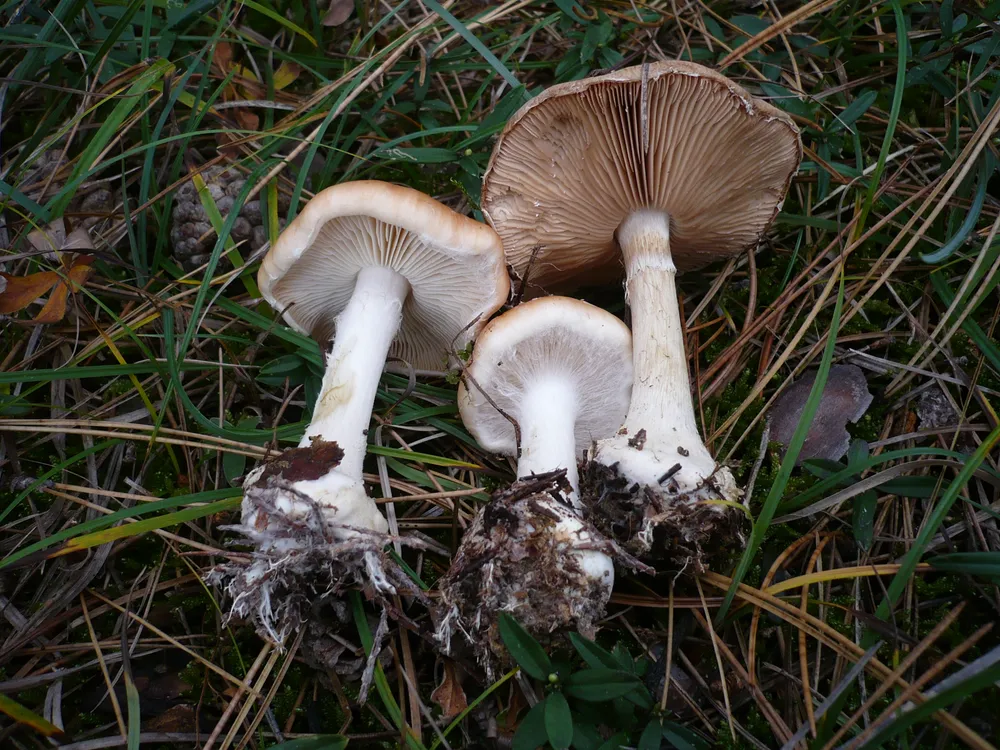
White webcapLeucocortinarius bulbiger
Expert-verifiedUpdated October 3, 2026
Passport
- Edibility
- Edible
- Season
- Sep — Oct
- Hymenophore
- Gilled
- Cap color
- Brown
- Size
- Medium (5–15 cm)
- Smell
- Odorless
- Reviewed
- Yes ✓
Quick answers
Where to look?
Conifer forest, Deciduous forest, Mixed forest
When does it appear?
Sep — Oct
Active months: September, October.
How to recognize it? Three signs
- Cap color: Brown, Cream
- Cap shape: Convex
- Smell: Odorless
Fruiting season
September – October
Description
The White webcap is a gilled mushroom that grows on soil in coniferous and broadleaf forests. It's a small but fleshy species: the cap reaches 8 cm, and the stem has a distinctive bulb at the base. Young fruiting bodies are joined to the stem by a cobweb-like veil — hence the "webcap" in its name.
An edible mushroom, but not a common one. It's picked in September–October. Because it's related to the dangerous genus of true webcaps (Cortinarius), some of which are deadly poisonous, you should identify the White webcap with real confidence before it goes in your basket. Best strategy for beginners: walk on by and settle for a photo.
In Ukraine it has been recorded in the Western and Left-Bank Forest-Steppe, the Starobilsk Steppe and the Crimean Mountains. It's not a frequent find, but a prized one for experienced foragers who can identify species precisely.
Cap
Cap 5–8 cm, hemispherical, fleshy. Brownish-cream in color. On young fruiting bodies, whitish remnants of the veil are visible at the cap margin — like a spider's web.
Hymenophore
Gilled hymenophore. Gills thin, not crowded, notched-attached. White at first, then turning clay-brown — that comes from the spore print color (whitish, pale ochre when dry).
Stem
Stem 5–10 cm tall, 7–10 mm thick. Tapers upward. White. At the base there's a distinctive bulbous swelling 2.5–3 cm across. It has a white cobweb-like ring — the remains of the veil.
Flesh
flesh white, firm, no notable color change when cut.
Smell
No distinctive smell. No sharp notes.
›Scientific synonyms (5)
Cortinellus bulbiger (Alb. & Schwein.) Pat., Agaricus bulbiger Alb. & Schwein., Armillaria bulbigera (Alb. & Schwein.) P. Kumm., Tricholoma bulbigerum (Alb. & Schwein.) Ricken: 331 (1914), Cortinarius bulbiger (Alb. & Schwein.) J.E. Lange
Lookalikes
Related species
Mushrooms of the same genus and habitat — to study side by side and never mix up.
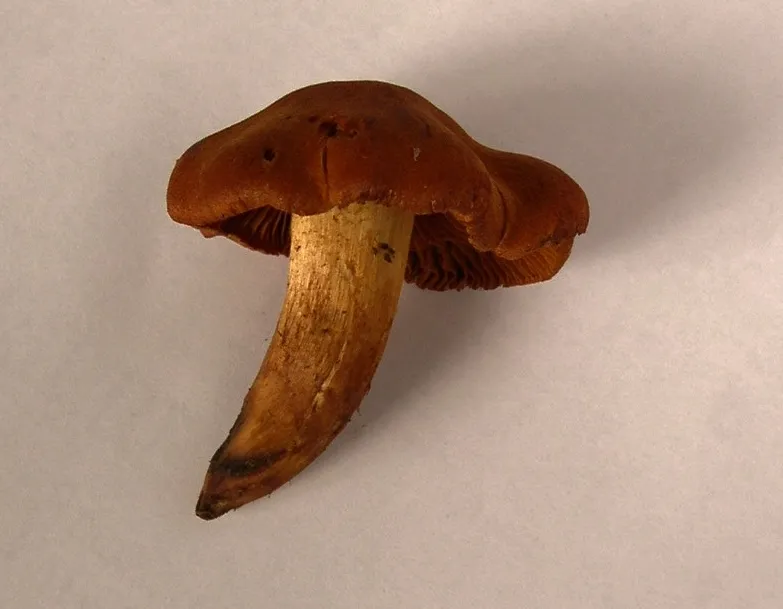
_Ricken_185798.webp)
Booted knight
Tricholoma focale
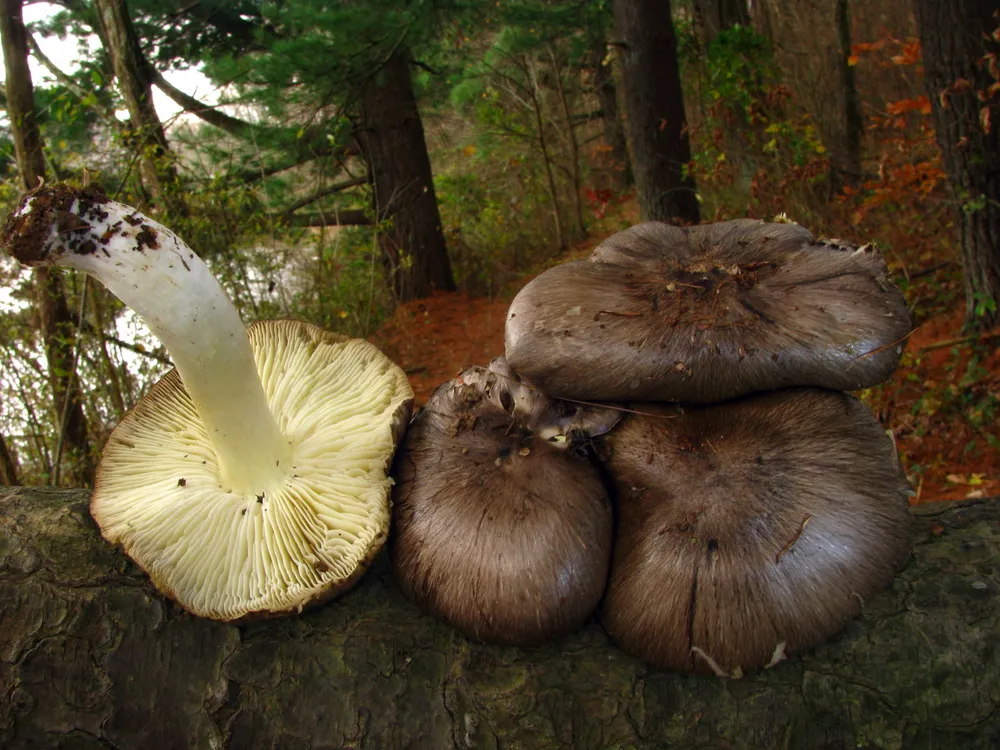
Charbonnier
Tricholoma portentosum
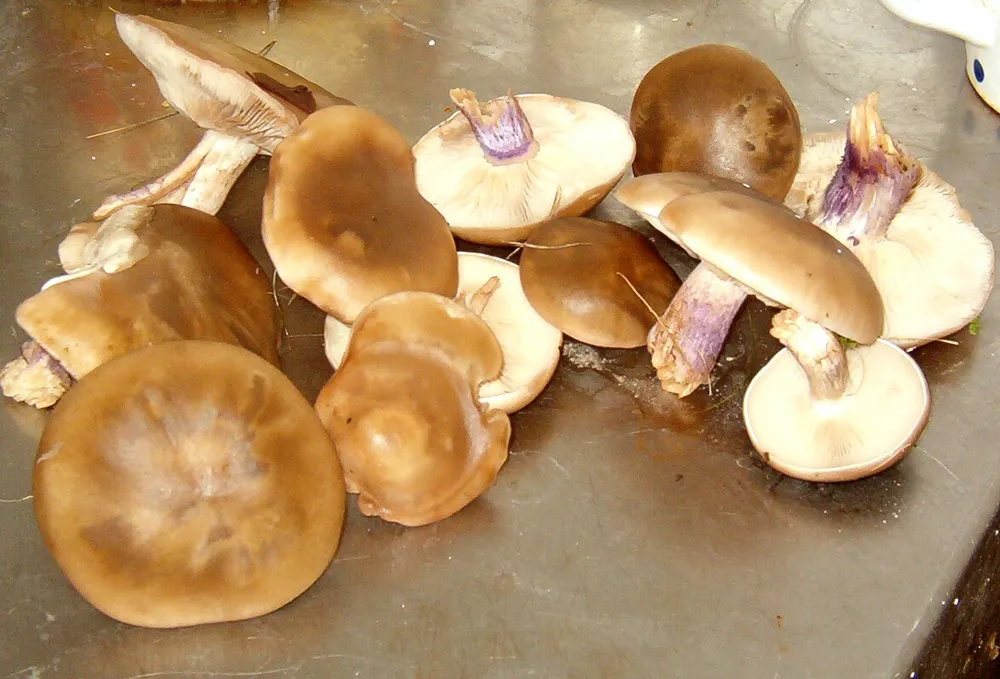
Field blewit
Collybia personata
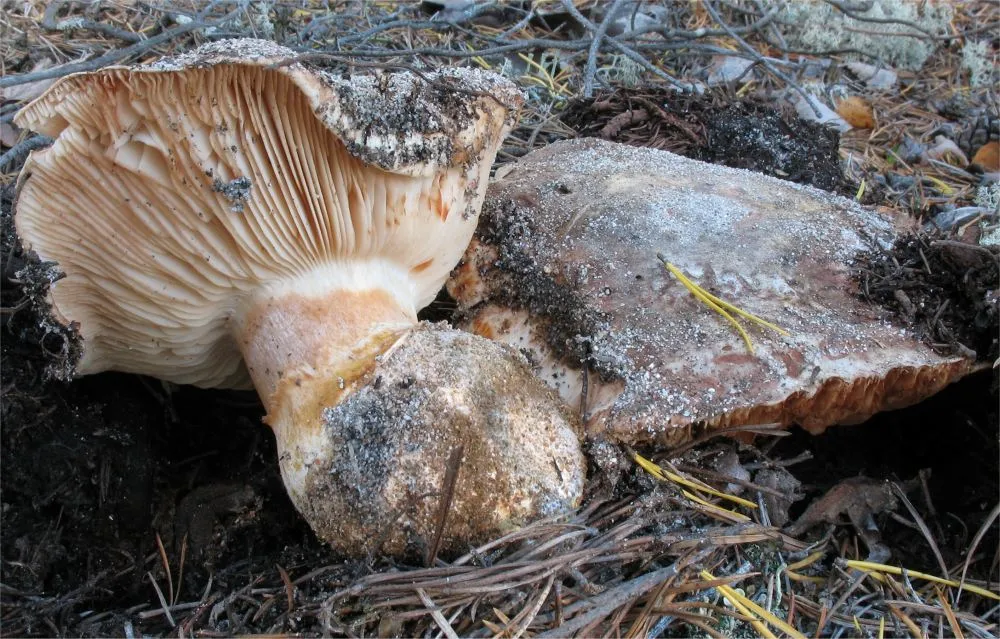
Giant knight
Tricholoma colossus
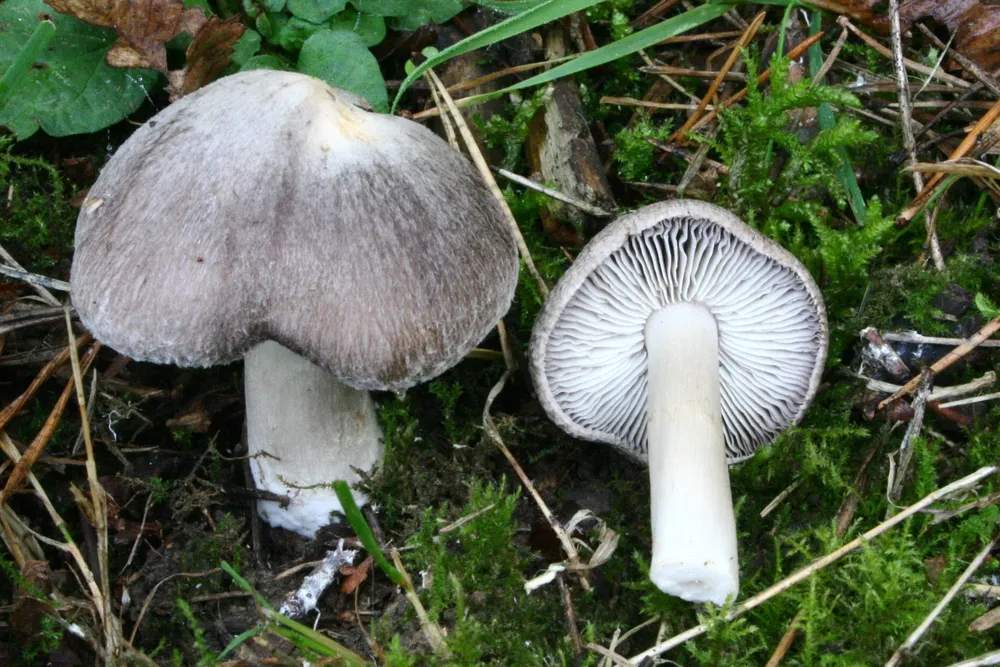
Grey knight
Рядовка наземна
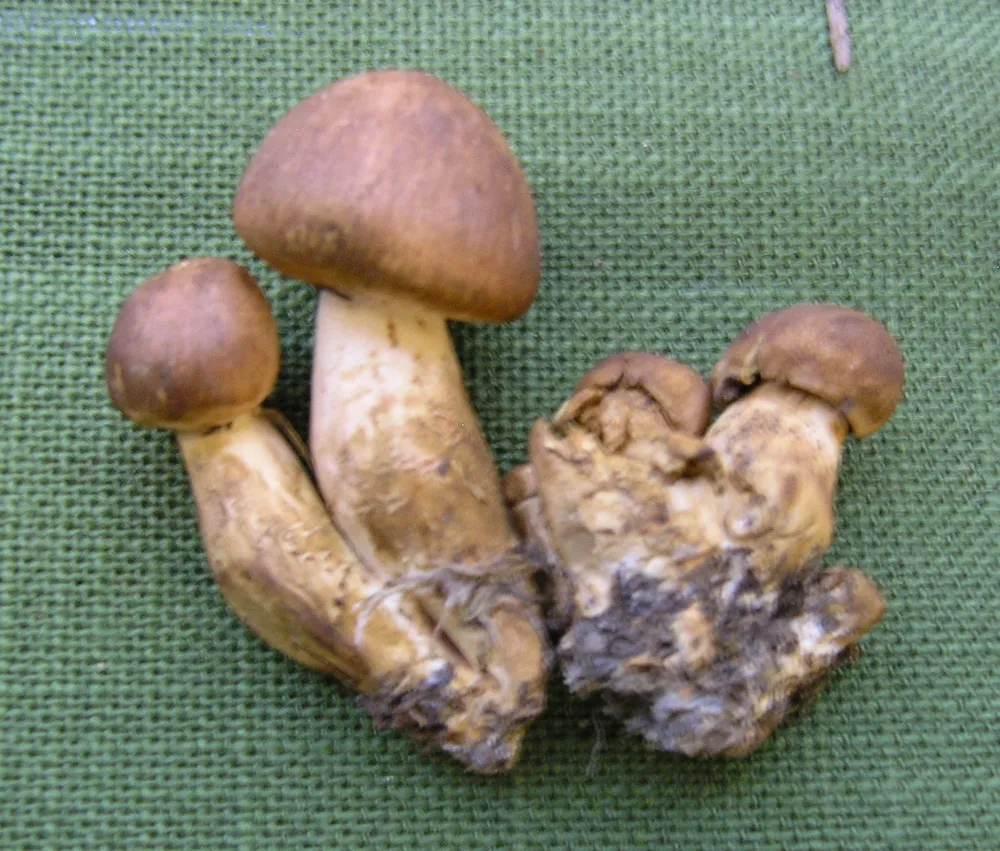
Matt knight
Tricholoma imbricatum
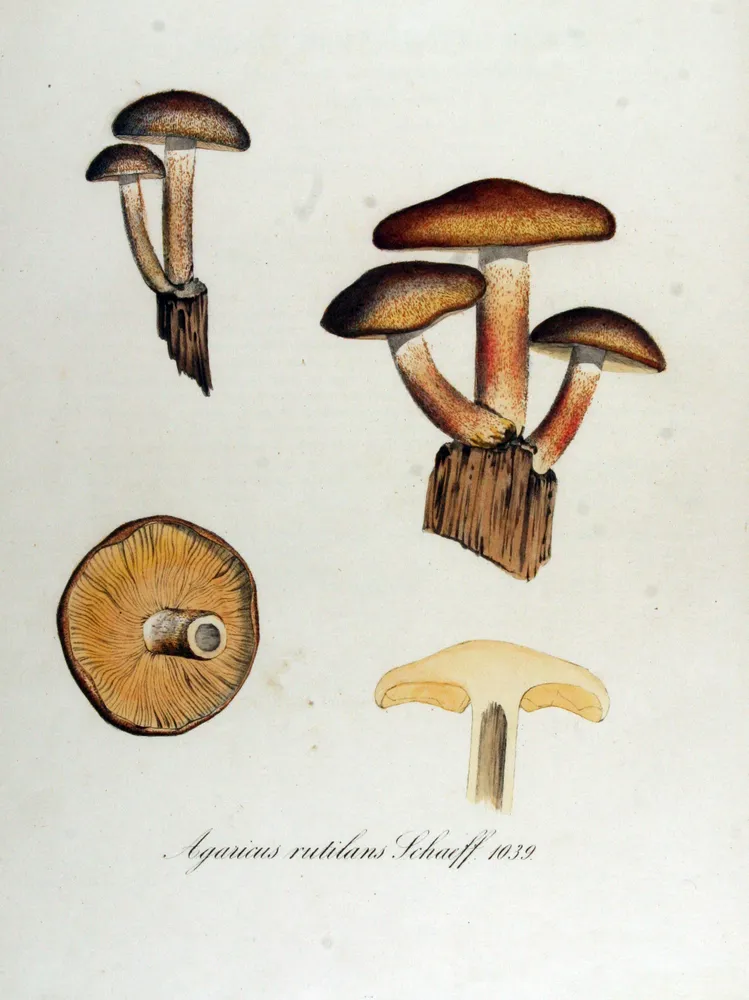
Plums and custard
Рядовка червона
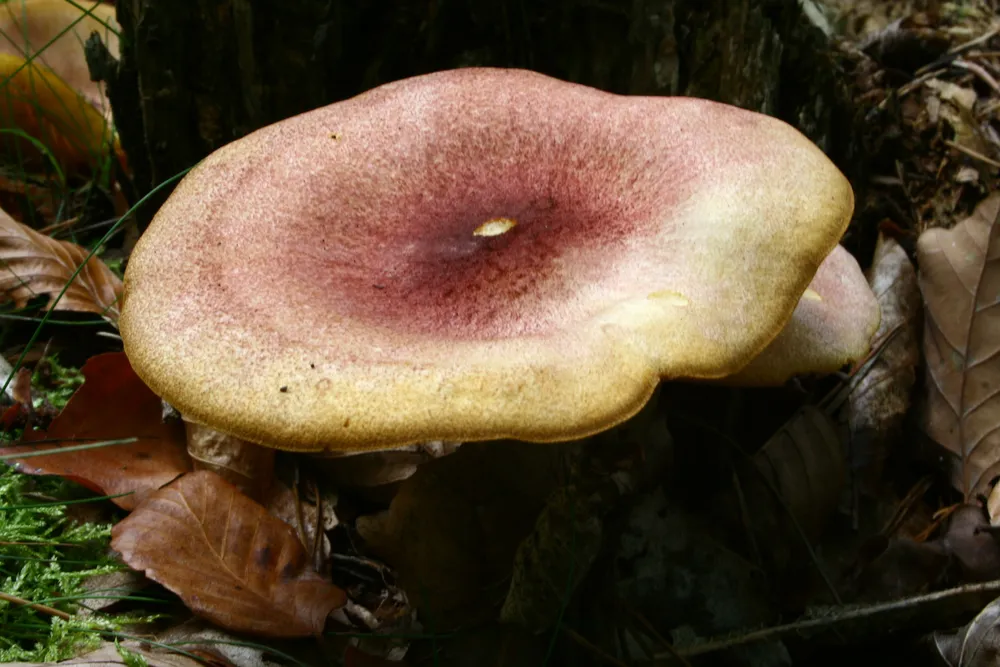
Plums and custard
Tricholomopsis rutilans
Frequently asked questions
Can you eat it?
Yes, it's edible. But first make sure of your identification — its Cortinarius relatives include deadly poisonous species. If in doubt, better leave it.
Why is the White webcap sometimes confused with dangerous mushrooms?
Because a cobweb-like veil and brownish gills are typical of the genus Cortinarius, which includes deadly poisonous species. The White webcap belongs to a separate genus (Leucocortinarius); its key differences are a white spore print and a bulb at the base of the stem.
Where should you look for it?
On soil in coniferous and broadleaf forests. Singly or in small groups; it doesn't form large colonies. It likes somewhat damp spots with leaf litter.
In which regions of Ukraine?
The Western and Left-Bank Forest-Steppe, the Starobilsk Steppe, the Crimean Mountains. Not a common species — exact locations vary from year to year.
When does it fruit?
September–October. It's a late-autumn species that appears when most summer mushrooms are already gone.
Can you find it in November?
Occasional finds happen in November too, especially in years with a long, warm autumn. But the typical peak is late September to mid-October.
What is it confused with?
With species of the genus Cortinarius — the true webcaps. Mistaking it for Cortinarius orellanus (deadly poisonous) is especially dangerous. The main difference: the White webcap's spore print is white, while in Cortinarius it's rusty brown.
How do you do a "spore test"?
Cut off the cap and place it gills down on white paper. Within a few hours you'll see a print of spore powder. White → probably a White webcap. Rusty brown → definitely NOT a White webcap, do not eat.
Is White webcap edible or poisonous?
Does White webcap have gills or pores?
What does the cap of White webcap look like?
What does the stem of White webcap look like?
Sources
- [1]Вікіпедія (українська)
- [2]Атлас грибів України, Зеров Д.К. (1979)
- [3]MycoBank Database
- [4]Index Fungorum
- [5]GBIF
- [6]iNaturalist Ukraine