Inky mushroomAgaricus placomyces
Expert-verifiedUpdated October 3, 2026
Passport
- Edibility
- Poisonous
- Season
- Jun — Oct
- Hymenophore
- Gilled
- Cap color
- White
- Size
- Medium (5–15 cm)
- Smell
- Chemical
- Reviewed
- Yes ✓
POISONOUS
Eating it causes poisoning. Do not pick it unless you have identified it with certainty.
Contains phenolic gastrotoxins, similar to those of the yellow stainer (A. xanthodermus). Causes acute gastroenteritis: nausea, repeated vomiting, abdominal pain, diarrhea 1-6 hours after eating. Symptoms last 12-24 hours. Not fatal, but unpleasant and potentially dangerous due to dehydration, especially for children.
As with the yellow stainer, some people (around 50%) have a genetic tolerance and don't react to the toxins. The rest react with acute symptoms. There's no way to know your sensitivity in advance. Our rule: don't eat it.
Treatment is symptomatic: gastric lavage (within the first 2 h), activated charcoal, IV fluids for dehydration, antiemetics. Recovery usually takes 1-2 days.
If you suspect poisoning, call an ambulance immediately: 112 (the European emergency number) or your local emergency number
Quick answers
Where to look?
Deciduous forest, Mixed forest
When does it appear?
Jun — Oct
Active months: June, July, August, September, October.
How to recognize it? Three signs
- Cap color: White, Grey, Brown
- Cap shape: Convex
- Smell: Chemical
Fruiting season
June – October
Description
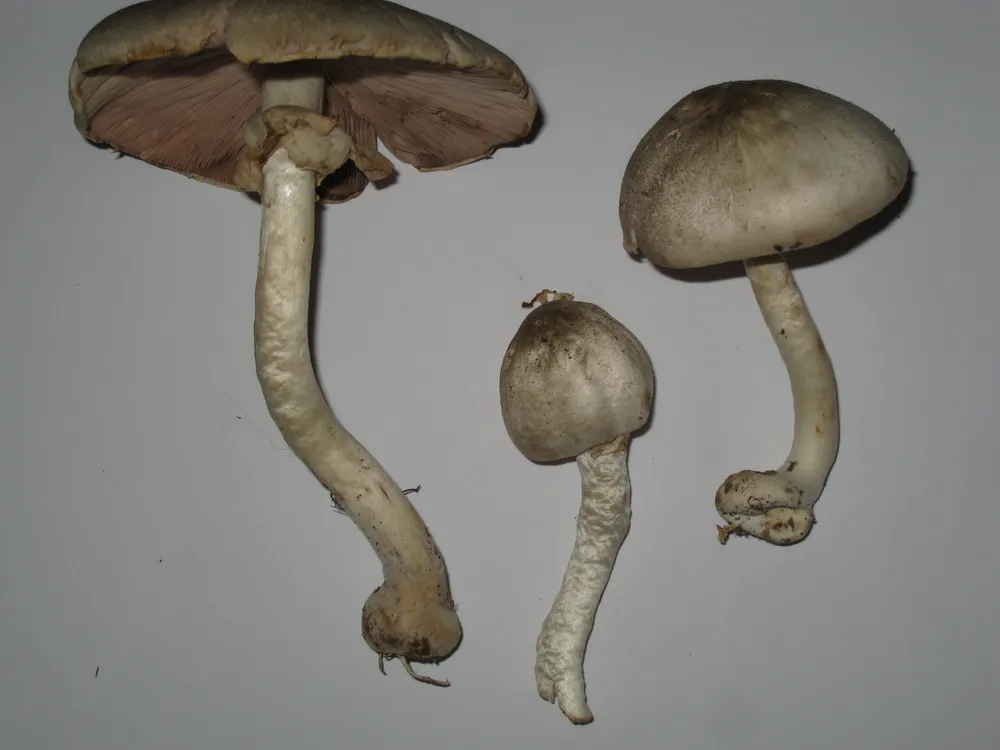
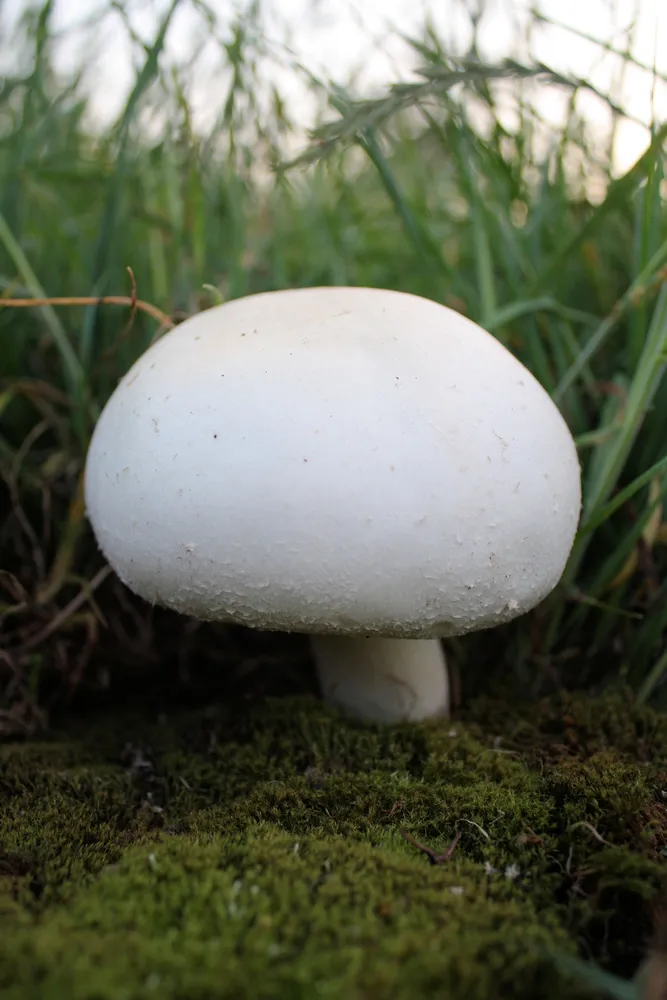
The inky mushroom (Agaricus placomyces, in some literature A. moelleri) is a close relative of the yellow stainer, with the same toxic mechanism, but a different look: the cap is covered in small gray-brown or blackish-gray scales, like fish scales. It's easy to find — in damp deciduous and mixed forests of Ukraine, on humus-rich soil, among fallen leaves.
Poisonous — like the yellow stainer, it contains phenolic gastrotoxins and causes acute gastroenteritis 1-6 hours after eating. Symptoms: nausea, repeated vomiting, abdominal pain, diarrhea. It lasts 12-24 hours; not fatal, but everyone suffers badly. Like the yellow stainer, it has the same characteristic ink/phenol smell and its flesh yellows at the base of the stem when damaged.
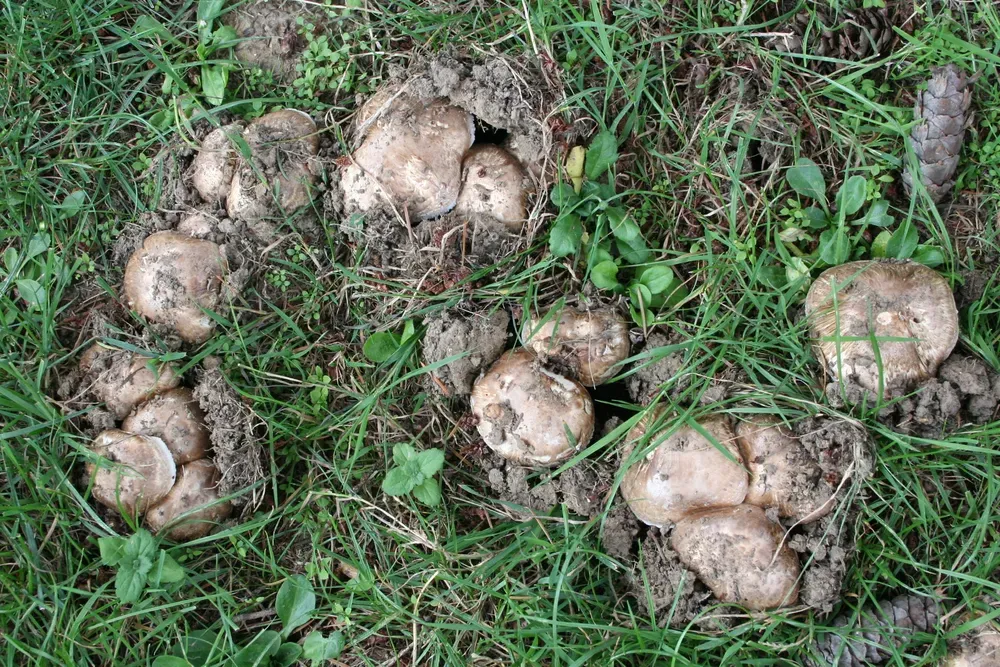
In Ukraine it occurs in deciduous and mixed forests: the Carpathians, Prykarpattia, Polissia, the forest-steppe. A saprotroph on forest litter. Season: June — October, peaking in August–September. It often grows in groups of 3-10 fruit bodies along damp forest edges. Less common than the yellow stainer, but also reliably present, so knowing it by sight is a must for anyone who picks forest Agaricus.
Cap
Cap 5-10 cm across; in young mushrooms hemispherical to conical-convex, later convex with a low umbo. Color whitish to grayish, with distinct, radially arranged small gray-brown or blackish-gray scales — a hallmark of the species (unlike the yellow stainer, whose cap is smooth). When touched, the cap yellows to chrome yellow, like the yellow stainer's.
Hymenophore
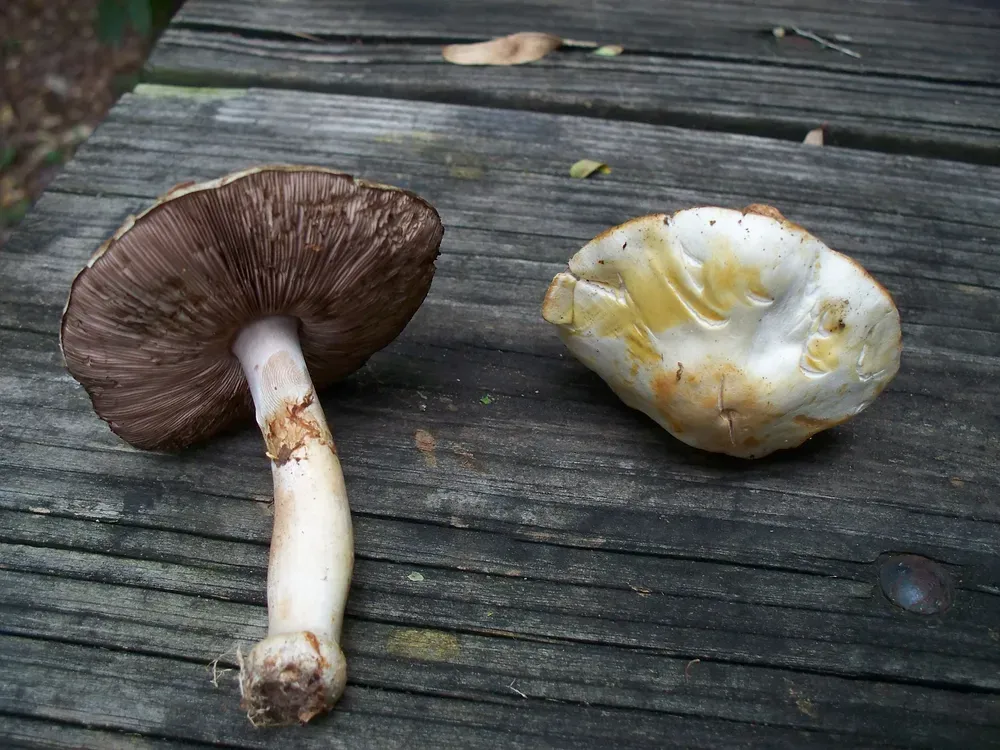
Gilled hymenophore — the gills are free, crowded. In young mushrooms — pale pink to grayish-pink, with age they become dark brown, chocolate-blackish. Spore print dark brown.
Stem
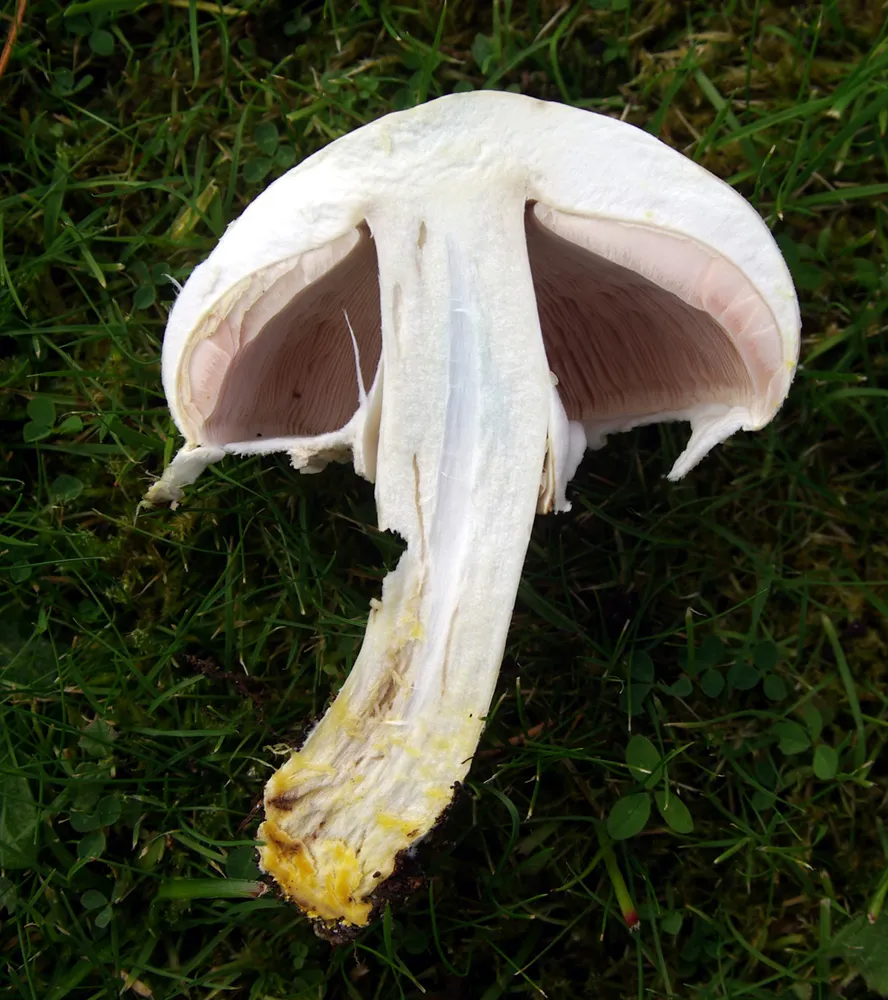
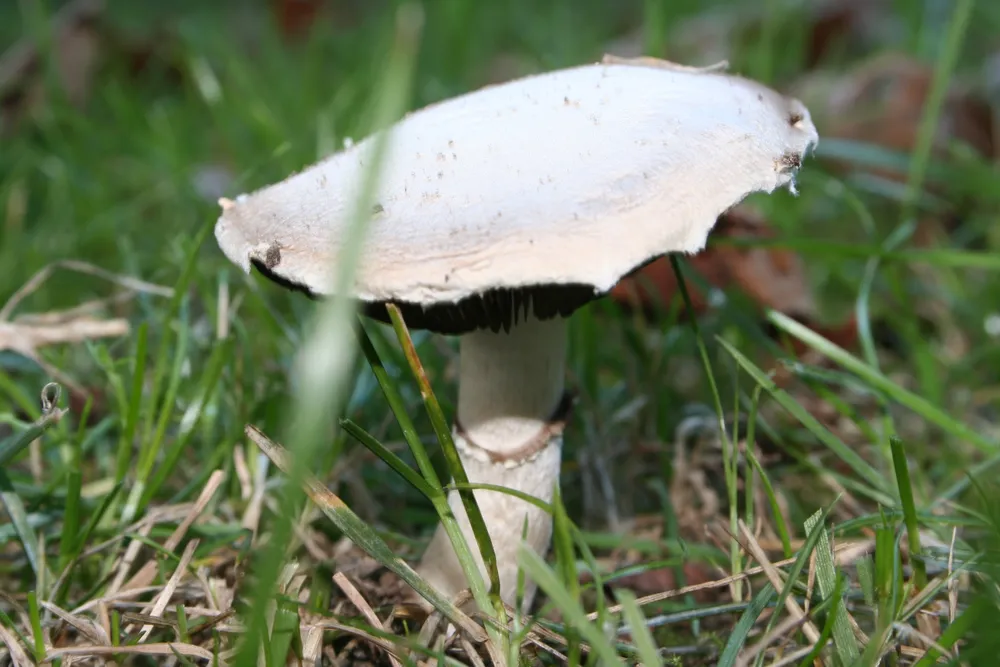
Stem 5-10 cm tall, 0.8-1.5 cm thick, cylindrical, with a bulbous base. Color white. When cut, the flesh in the lower part of the stem turns bright chrome yellow — just like the yellow stainer, the same diagnostic feature. In the upper part — a white membranous ring.
Flesh
Flesh firm, white, turns bright chrome yellow when damaged, in the lower stem and in the flesh of the bulb. Smell distinct and unpleasant — ink, phenol, pharmacy ointment, creosote.
Smell
Distinctly unpleasant, with notes of ink, phenol and pharmacy ointment — like the yellow stainer. It comes out when you rub the flesh.
›Scientific synonyms (2)
Agaricus meleagris, Agaricus praeclaresquamosus
Lookalikes
Related species
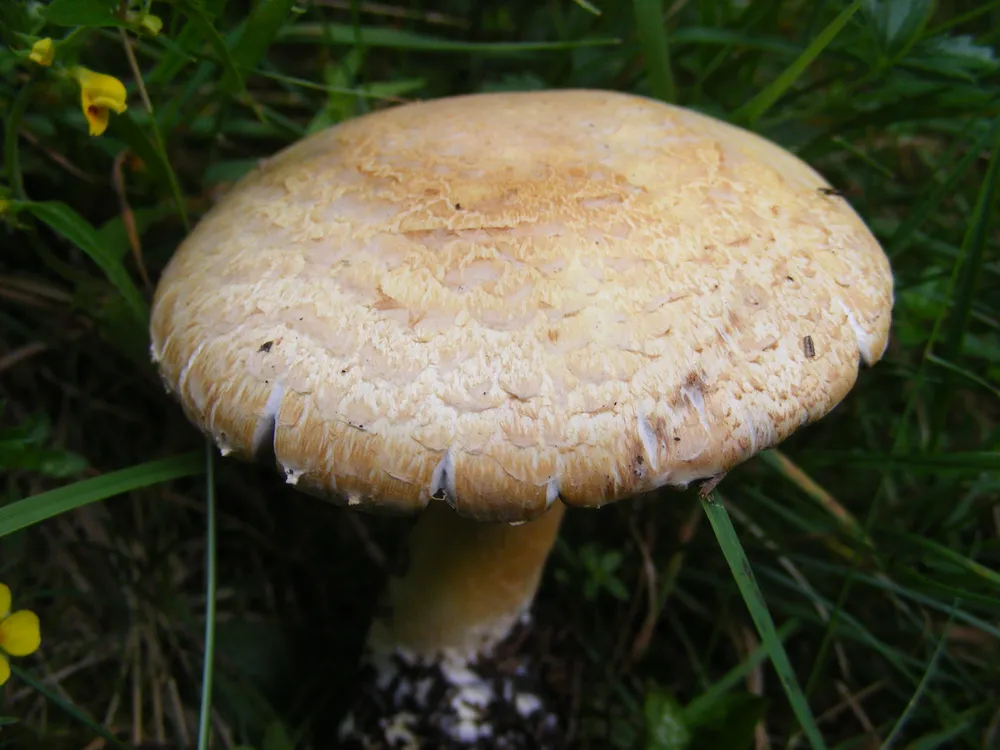
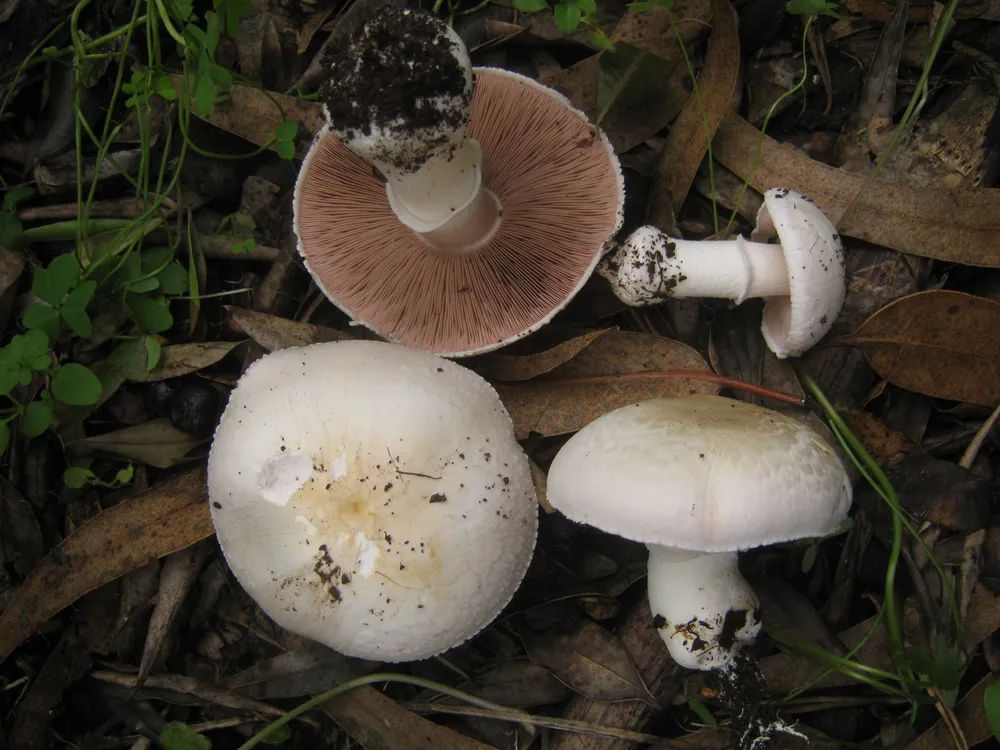
Mushrooms of the same genus and habitat — to study side by side and never mix up.
.webp)
_Fr._4948278370-2.webp)
Frequently asked questions
Can you eat it?
No, it's poisonous. It causes acute gastroenteritis in about half of people. Our rule: never eat it, under any circumstances.
How do you tell it from edible forest Agaricus?
Two key features. (1) Smell: it smells of ink, phenol, pharmacy ointment — UNPLEASANT. Edible forest Agaricus smell pleasant, with a note of almond or anise. (2) Flesh color in a cut stem: a bright chrome-yellow color in the lower part of the stem. In edible ones, the flesh turns pinkish, not bright chrome, throughout the stem.
How is it different from the yellow stainer?
By the look of the cap. The yellow stainer (A. xanthodermus) has a smooth white cap with no scales. The inky mushroom — has distinct gray-brown scales on the cap, like fish scales. The toxicity is the same, so the difference doesn't matter in the kitchen — we skip both.
What happens if you eat it by accident?
After 1-6 hours: nausea, vomiting, abdominal pain, diarrhea. It lasts 12-24 h. Treatment: drink plenty of fluids, activated charcoal, call an ambulance if vomiting is severe or if it's a child. No serious fatal outcomes, but you'll feel awful.
Where should you look for it?
In deciduous and mixed forests — on humus-rich soil among fallen leaves, along damp forest edges. It likes shady spots under beech, hornbeam and oak.
Which regions of Ukraine is it found in?
Throughout the forest and forest-steppe zones: the Carpathians, Prykarpattia, Polissia, the forest-steppe. In the steppe — in floodplain oak woods.
When should you look for it?
Rather — "when to avoid it". June — October, peaking in August–September.
What mushrooms is it confused with?
With the blushing wood mushroom (A. silvaticus) — edible, also scaly, but its flesh reddens (doesn't yellow) and it smells pleasant. With Agaricus squamuliferus — edible, also with small scales. The key difference is the smell and how the flesh reacts. If you're unsure about a scaly forest Agaricus, do a "smell test" and a "stem-yellowing test".
Is Inky mushroom edible or poisonous?
Does Inky mushroom have gills or pores?
What does the cap of Inky mushroom look like?
What does the stem of Inky mushroom look like?
Sources
- [1]Вікіпедія (українська)
- [2]Атлас грибів України, Зеров Д.К. (1979)
- [3]MycoBank Database
- [4]Index Fungorum
- [5]GBIF
- [6]iNaturalist Ukraine