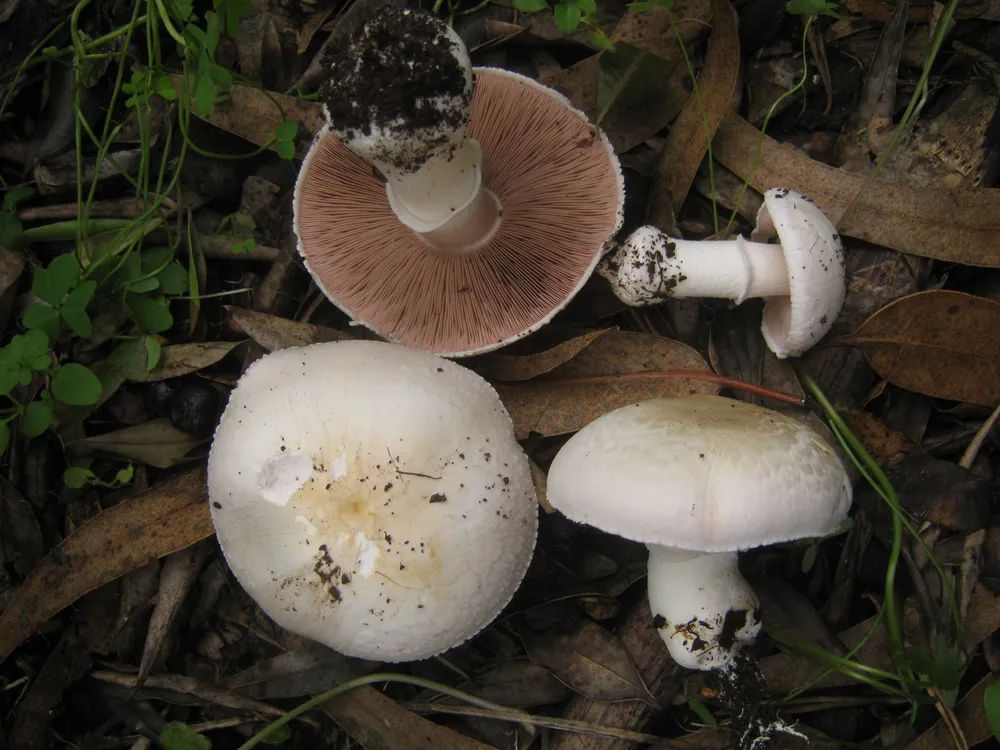
Agaricus romagnesii
Expert-verifiedUpdated June 13, 2026
Passport
- Edibility
- Edible
- Season
- Aug — Oct
- Hymenophore
- Gilled
- Cap color
- Brown
- Size
- Medium (5–15 cm)
- Smell
- Pleasant
- Reviewed
- Yes ✓
Quick answers
Where to look?
Deciduous forest, Mixed forest
When does it appear?
Aug — Oct
Active months: August, September, October.
How to recognize it? Three signs
- Cap color: Brown, Cream
- Cap shape: Convex
- Smell: Pleasant, Almond
Fruiting season
August – October
Description
Agaricus romagnesii is a relatively recently described (1980s) European Agaricus species, named after the French mycologist Henri Romagnesi. In older literature some of its specimens went under "the prince" (A. augustus) or other variations. In appearance it is a large fleshy mushroom with a brownish-scaly cap, similar to A. augustus, but with less intense coloring and a weaker anise smell.
Edible, tasty. The flesh is meaty and fragrant, with a characteristic mushroom flavor. Good for frying, pickling, stewing. Like all scaly woodland Agaricus species, the cut flesh turns pinkish to brownish — a safeguard against confusing it with amanitas.
Safety is critical — as with other Agaricus mushrooms, the most important thing is to rule out confusion with: (1) destroying angels and death caps (white gills + volva — absolutely not our mushroom); (2) the yellow stainer (ink smell + chrome-yellow stem base). When in doubt — leave it.
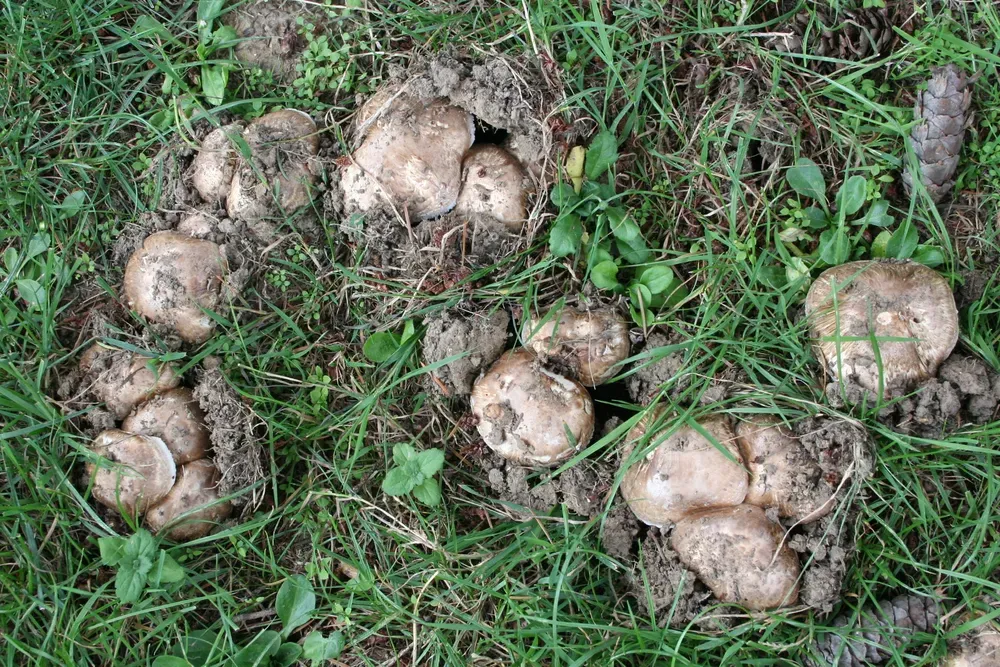
In Ukraine it's uncommon but turns up reliably in deciduous forests: the Carpathians, Prykarpattia, Polissia. A saprotroph on humus-rich soil among fallen leaves. Season: August — October. It often grows singly or in small groups of 2-5 fruiting bodies.
Cap
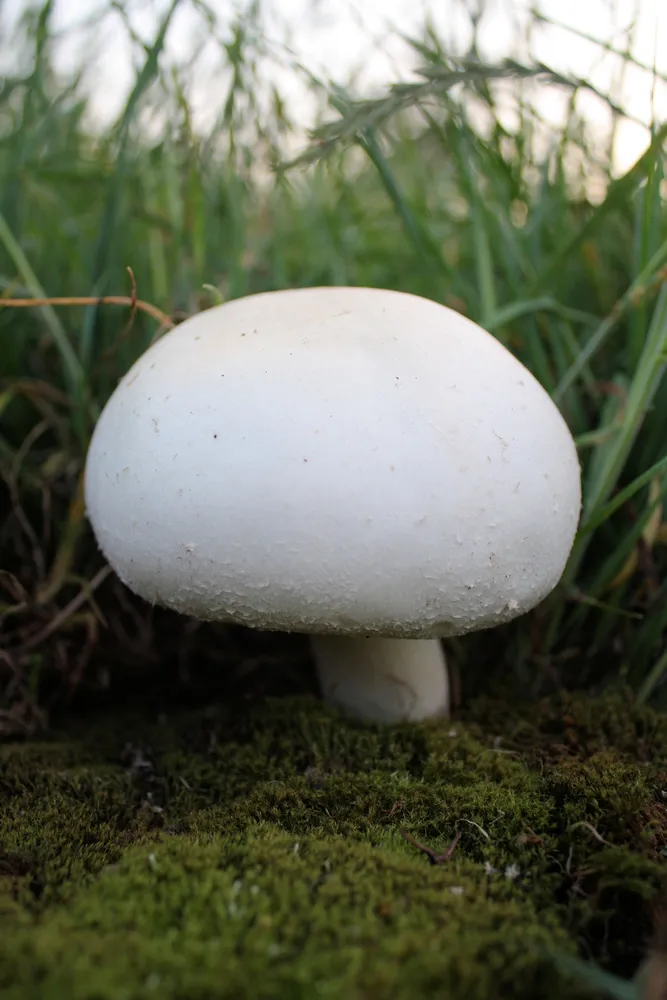
Cap 6-15 cm across; in young mushrooms hemispherical to egg-shaped, later becoming convex to flat. Color brownish-cream to grayish-brown, with distinct small brown or dark brown scales in the center and middle zone. The surface is dry, slightly sticky in wet weather.
Hymenophore
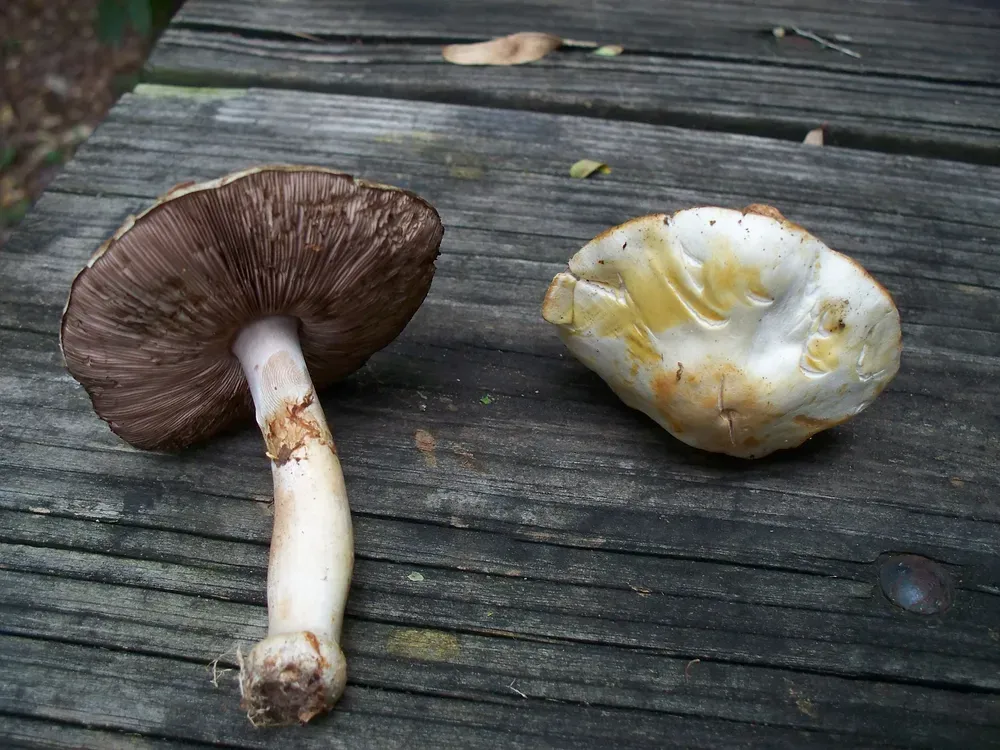
Gilled hymenophore — gills free, crowded. When young — pale pink, becoming with age dark brown, chocolate-blackish. Spore print dark brown.
Stem
Stem 8-12 cm tall, 1-2 cm thick, cylindrical, slightly thickened at the base. Color white to cream, with fine brownish fibers below the ring. On the upper part — a white membranous ring, distinct in young mushrooms.
Flesh
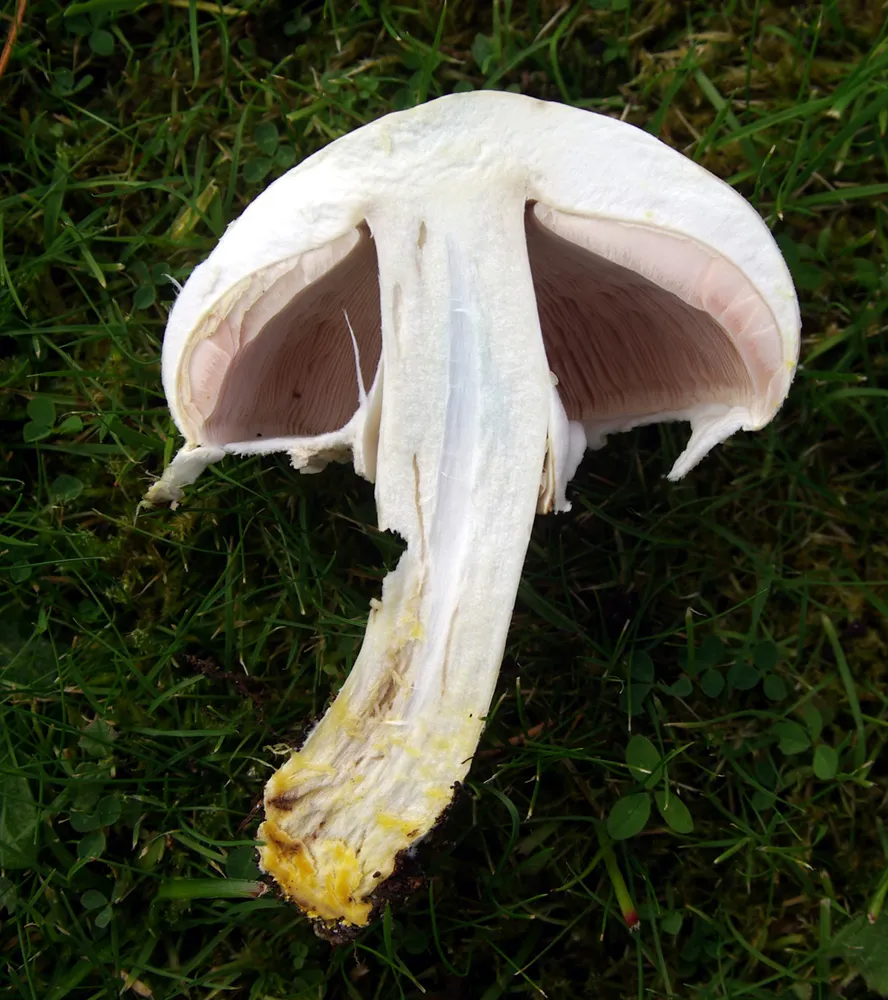
Flesh firm, white; when cut it slowly turns pinkish to brownish. Does not turn chrome yellow (the test against the yellow stainer). The smell is pleasantly mushroomy with a subtle almond-anise note.
Smell
Pleasantly mushroomy, with a subtle almond-anise note. It doesn't smell of ink or medicine.
Lookalikes
Related species
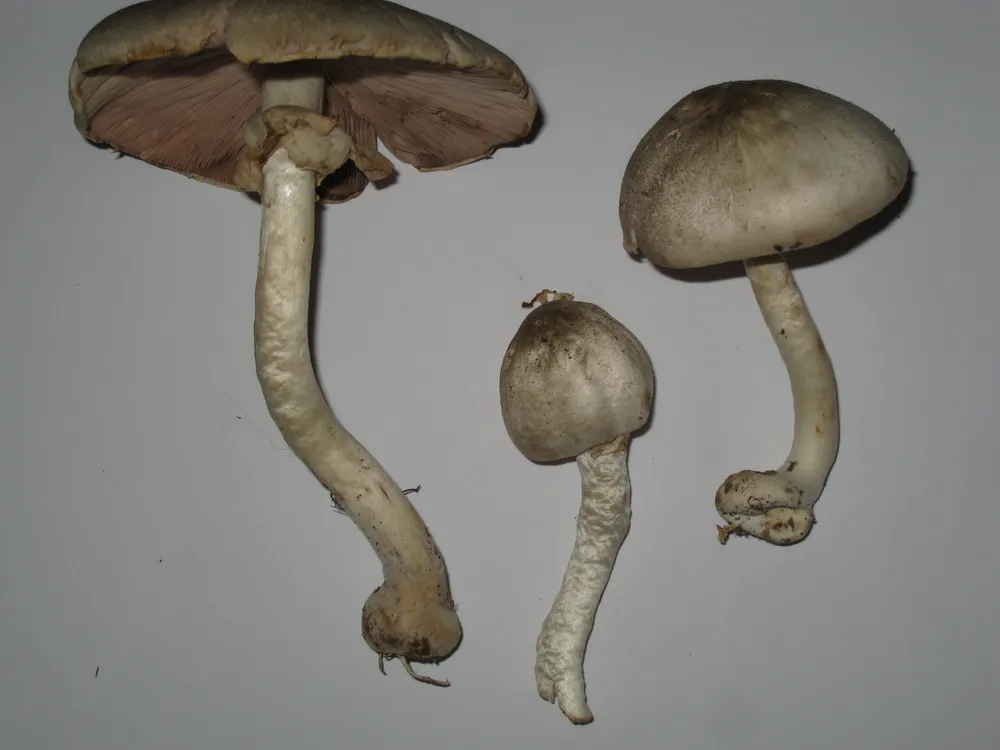
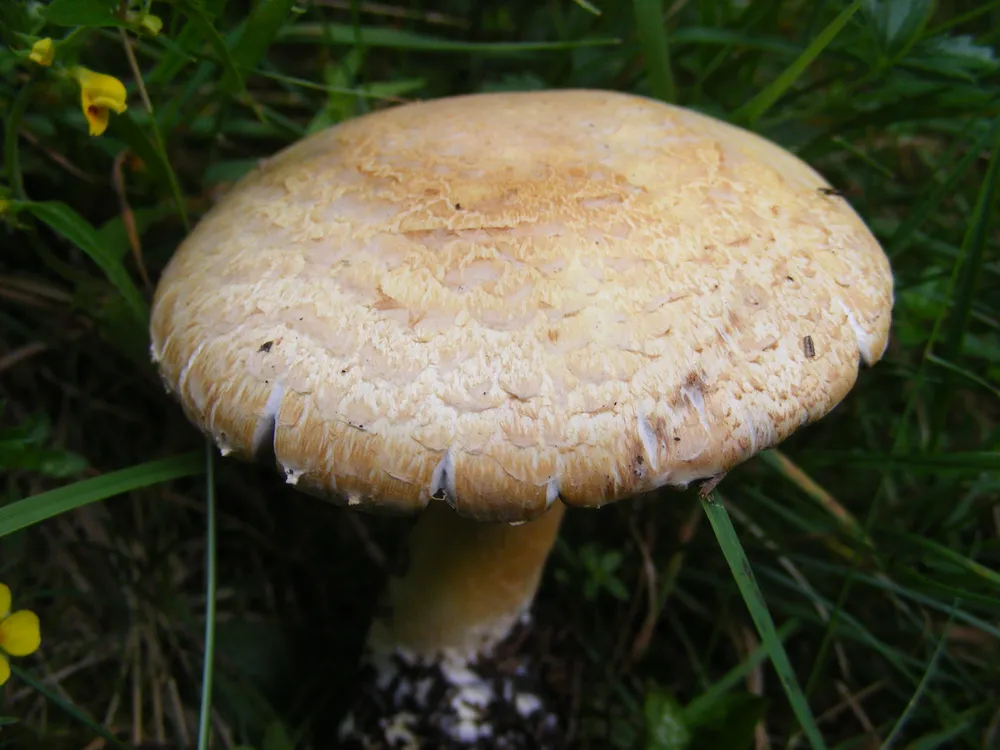
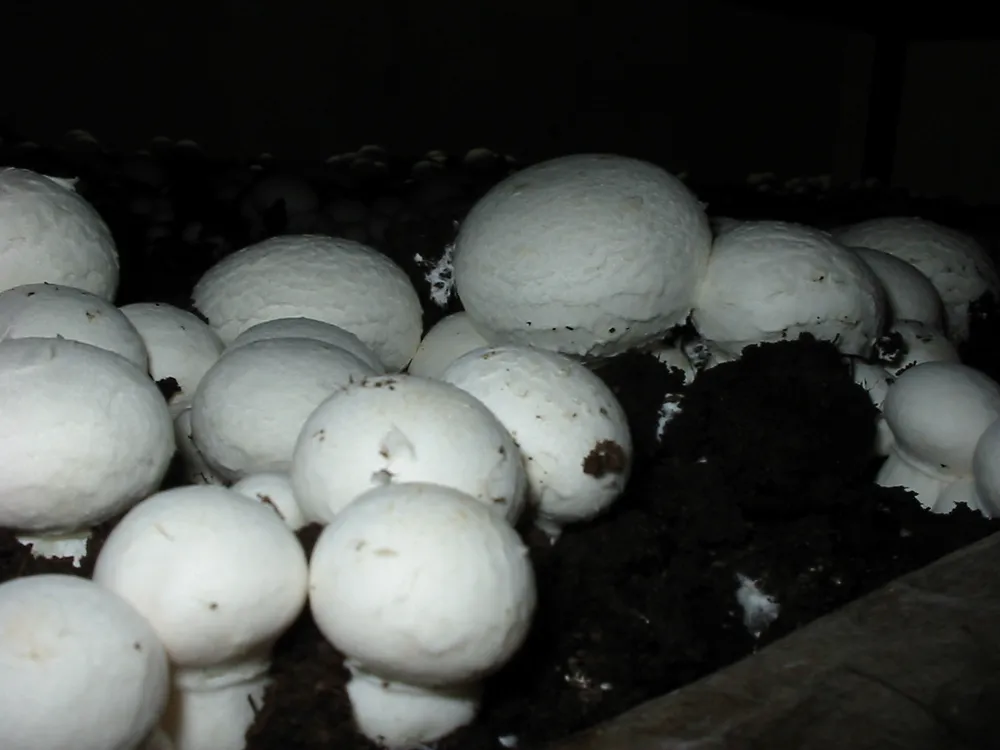
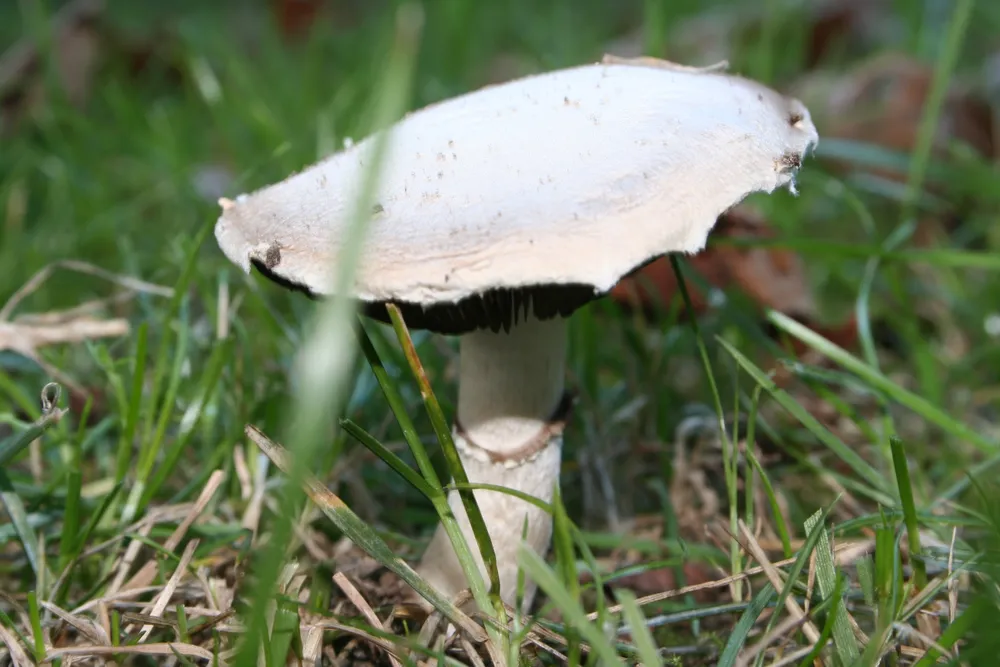
Mushrooms of the same genus and habitat — to study side by side and never mix up.
.webp)
_Fr._4948278370-2.webp)
Frequently asked questions
Is it safe to eat?
Yes, provided the identification is reliable. Young mushrooms are best. Check: gills pink/brown (not white), smell pleasant (not ink), flesh turns pinkish (not chrome yellow).
How do you tell it from its poisonous relatives?
Two key checks. (1) Smell: A. romagnesii smells pleasant, with an almond tinge. The yellow stainer and the inky mushroom smell of ink. (2) Flesh color when the stem is cut: in A. romagnesii it slowly turns pinkish to brownish. In the yellow stainer and the inky mushroom it's bright chrome yellow at the base of the stem. The fundamental danger is confusing it with amanitas (white gills + volva).
How is it different from the blushing wood mushroom?
They look very much alike — both are brownish and scaly. The blushing wood mushroom (A. silvaticus) — its flesh turns STRONGLY red when cut. Agaricus romagnesii — its flesh slowly turns pinkish, not as noticeably. Both are edible, so a culinary mix-up isn't critical — only confusion with amanitas is dangerous.
Where should you look for it?
In deciduous and mixed forests — on humus-rich soil among fallen leaves. It likes shady forest edges and slopes with a thick layer of leaf litter. A saprotroph.
Which regions of Ukraine is it found in?
Mostly in the forest zone: the Carpathians, Prykarpattia, Polissia. Not abundant — finds from year to year are sporadic.
When should you look for it?
August — October, peaking in September. Its season coincides with the main mushroom season.
What mushrooms is it confused with?
With the blushing wood mushroom (A. silvaticus) — edible, also scaly, its flesh reddens more strongly. With the prince (A. augustus) — edible, a closer relative with a more pronounced anise smell. With its poisonous yellow-staining relatives — dangerous; check the smell and the stem.
How do you cook it?
Like other Agaricus mushrooms: fry it with onions and sour cream, pickle it after boiling for 10 min, stew it with potatoes. On its own the dish isn't impressive — it's better in a mix with porcini and Xerocomus boletes.
Is Agaricus romagnesii edible or poisonous?
Does Agaricus romagnesii have gills or pores?
What does the cap of Agaricus romagnesii look like?
What does the stem of Agaricus romagnesii look like?
Sources
- [1]Вікіпедія (українська)
- [2]Атлас грибів України, Зеров Д.К. (1979)
- [3]MycoBank Database
- [4]Index Fungorum
- [5]GBIF
- [6]iNaturalist Ukraine