THIS DATA HAS NOT BEEN VERIFIED BY AN EXPERT. Use at your own risk.
.webp)
Agaricus comtulus
Under reviewUpdated October 3, 2026
Passport
- Edibility
- Edible
- Season
- May — Oct
- Hymenophore
- Gilled
- Cap color
- White
- Size
- Small (up to 5 cm)
- Smell
- Anise
- Reviewed
- Under review
Quick answers
Where to look?
Meadow, Field
When does it appear?
May — Oct
Active months: May, June, July, August, September, October.
How to recognize it? Three signs
- Cap color: White, Cream, Grey
- Cap shape: Convex, Flat
- Smell: Anise
Fruiting season
May – October
Description
Agaricus comtulus is a small, graceful Agaricus of open grassy places, whose slender build and noticeably smaller size than its relatives gave it its Ukrainian common name, which means “slender.” It is a saprotroph of meadows and lawns: it feeds on plant debris and settles among the grass in meadows, pastures, parks and gardens. Despite its modest size, the mushroom has all the hallmarks of the Agaricus genus — pinkish gills that darken with age and a ring on the stem.
In Ukraine, Agaricus comtulus is found in meadows, lawns, roadsides and grassy clearings throughout the country. It fruits during the warm half of the year — from late spring to autumn, especially after rain. Because it's so small, it's easy to miss in the grass, so a sharp eye pays off.
Agaricus comtulus is an edible mushroom, but because of its small size and thin flesh, its culinary value is modest — it's more of a pleasant addition to the basket than the main prize. Its taste is mild, with a light anise-almond note. As with all Agaricus, be careful when picking: make sure the gills are pinkish, there is no volva at the base of the stem, and the flesh does not turn bright yellow when cut or smell of ink, as in the poisonous yellow stainer.
Cap
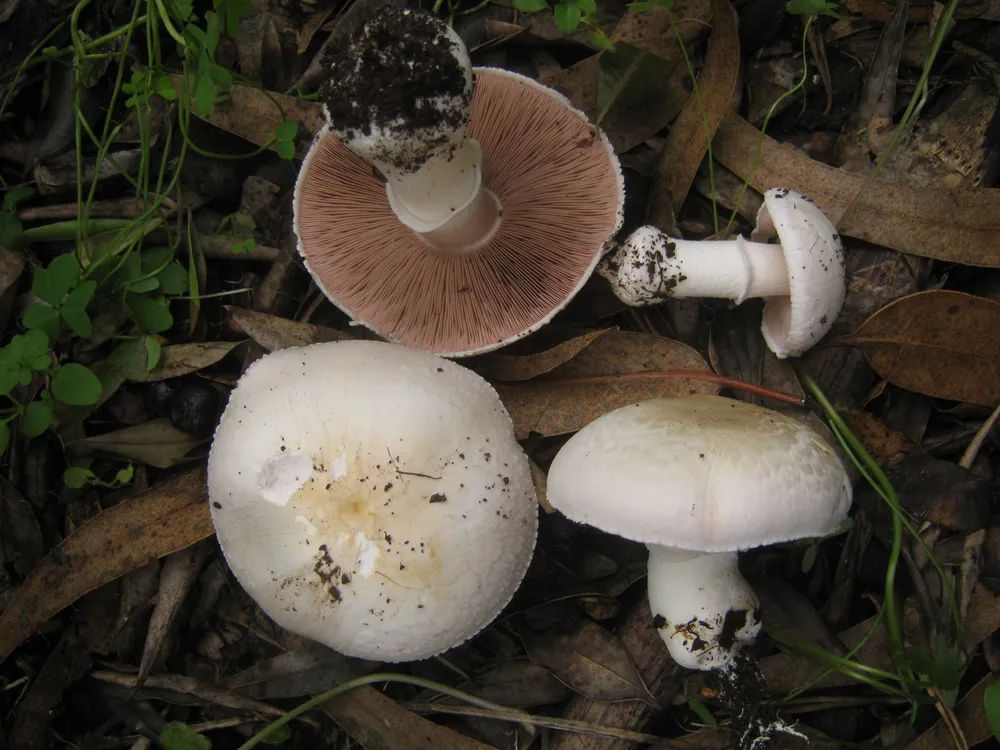
The cap of Agaricus comtulus is small — 2 to 5 centimeters across. When young it is hemispherical or convex; with age it opens out flat. The surface is dry, smooth or finely fibrous, white, cream or with a faint grayish-yellowish tint, often darker in the center. It may turn faintly yellow when touched. Its small size and pale coloring give the mushroom a modest, delicate look.
Hymenophore
The spore-bearing surface is made of gills. The gills are free, not attached to the stem, and crowded. Their color changes with age: in young mushrooms they are pale pink or grayish-pink, then darken to brown and blackish-brown. The spore print is dark brown. Pinkish young gills set Agaricus apart from the white-gilled poisonous amanitas.
Stem
The stem is thin, slender, white, 2 to 5 centimeters tall, often with a slightly thickened base. Near the top there is a thin whitish ring — a remnant of the veil — which can be fragile in small mushrooms. There is no volva at the base — an important difference from poisonous amanitas.
Flesh
The flesh is white and thin, and turns faintly yellow or stays unchanged when cut. The taste is mild and pleasant, with a light anise-almond note. Because the flesh is thin and the mushroom small, its culinary value is modest, so it rounds out a basket rather than forming the basis of a dish.
Smell
The smell is pleasant and faint, with an anise or almond note. If the mushroom smells of ink or carbolic and the flesh turns bright yellow when cut, it may be the poisonous yellow stainer or one of its small relatives, and you must not take it.
›Scientific synonyms (2)
Psalliota comtula (Fr.) Quél., Agaricus comtulus Fr. (1838)
Lookalikes
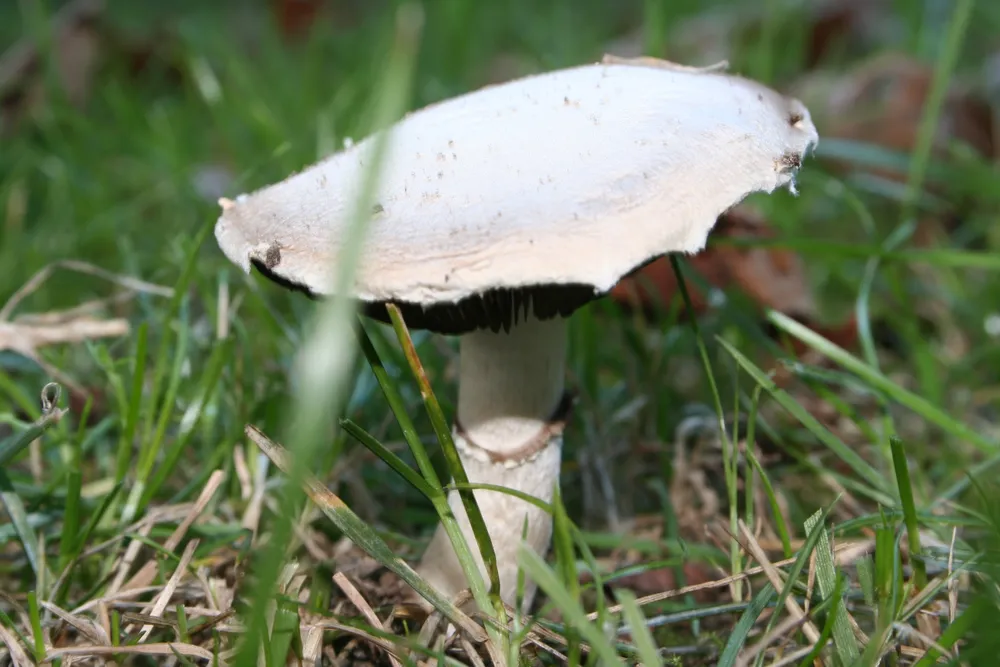
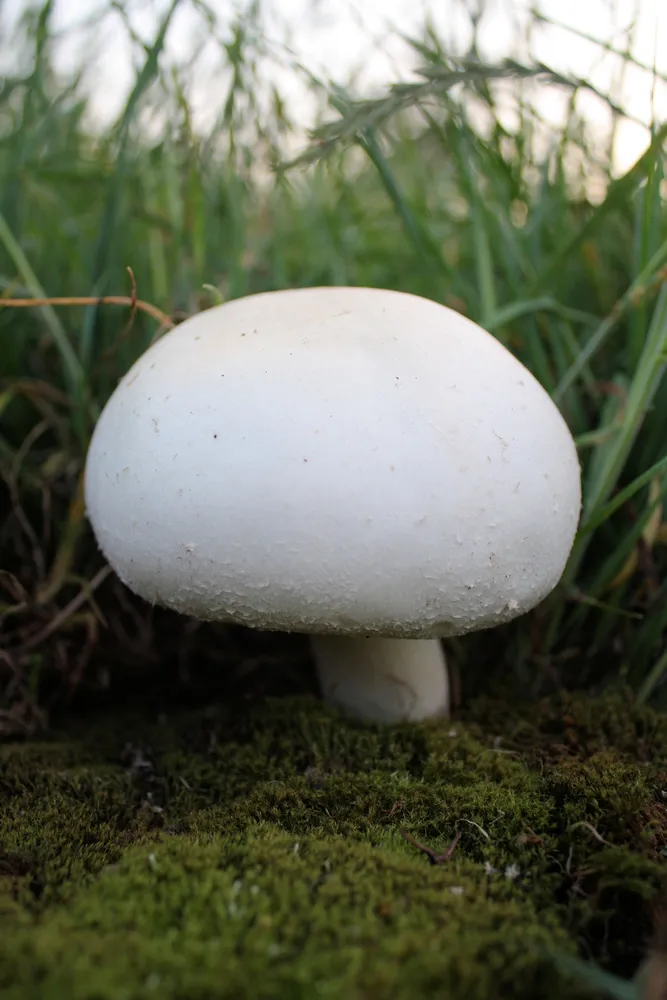
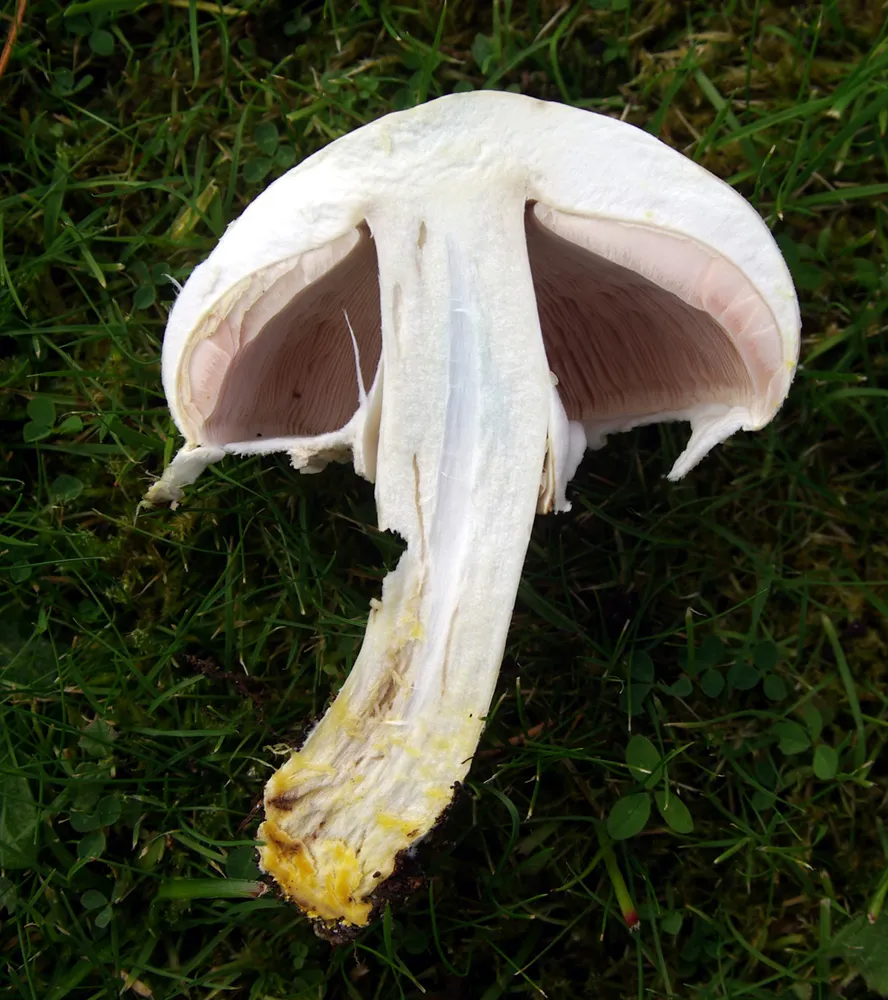
Related species
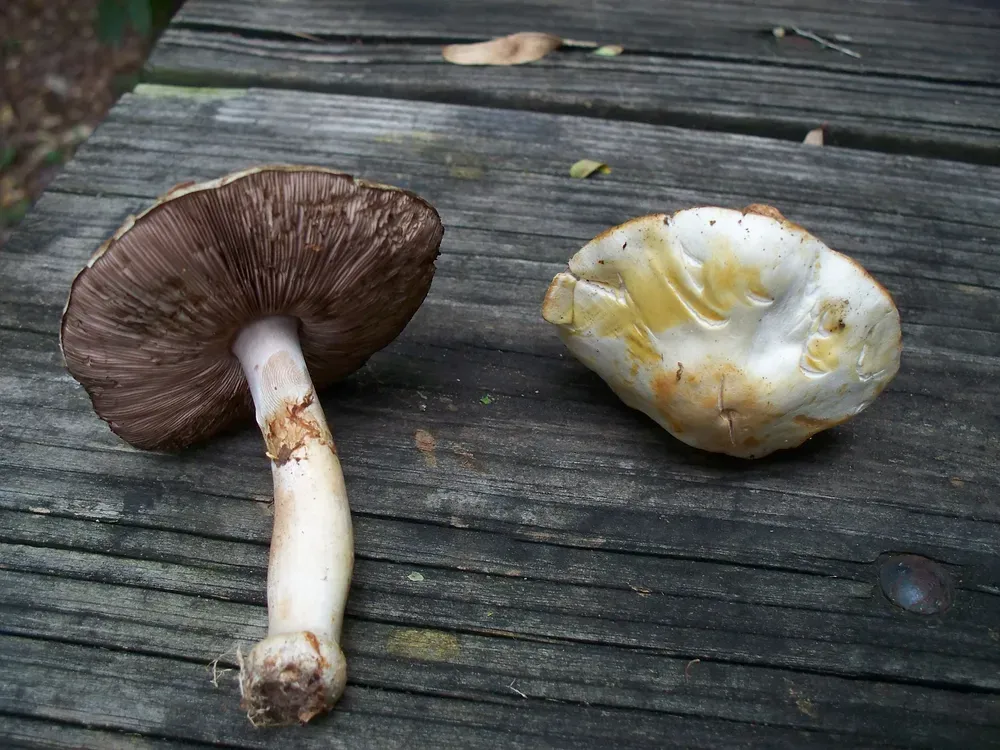
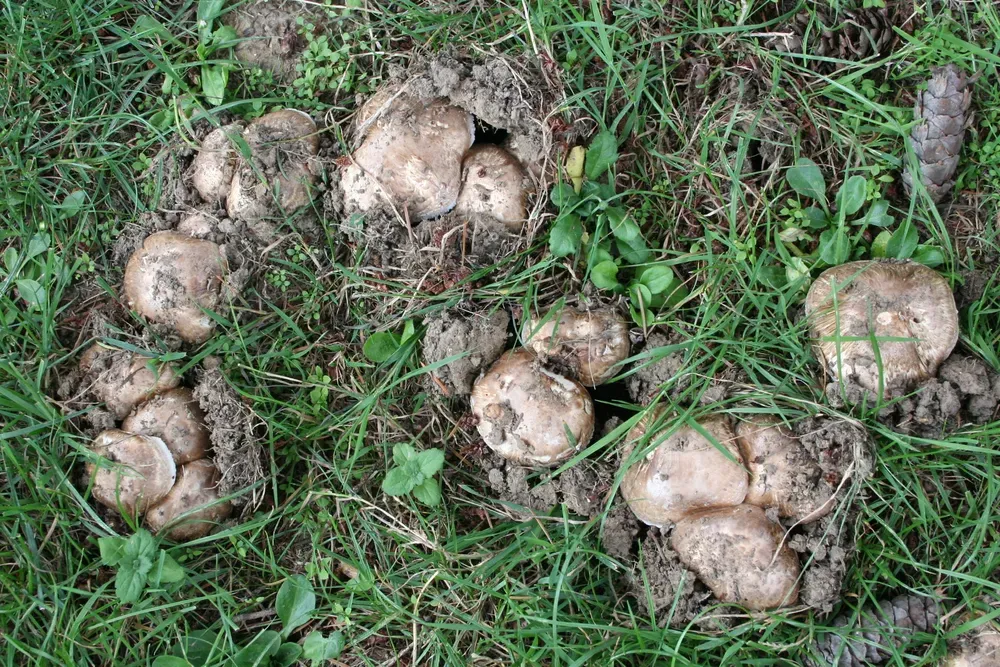
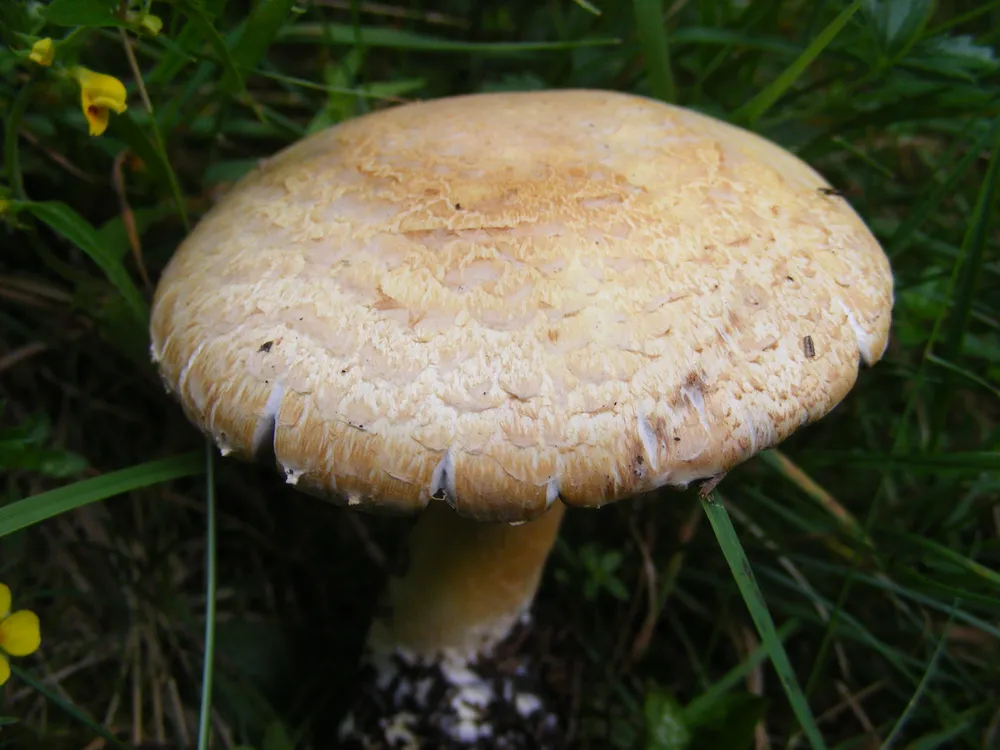
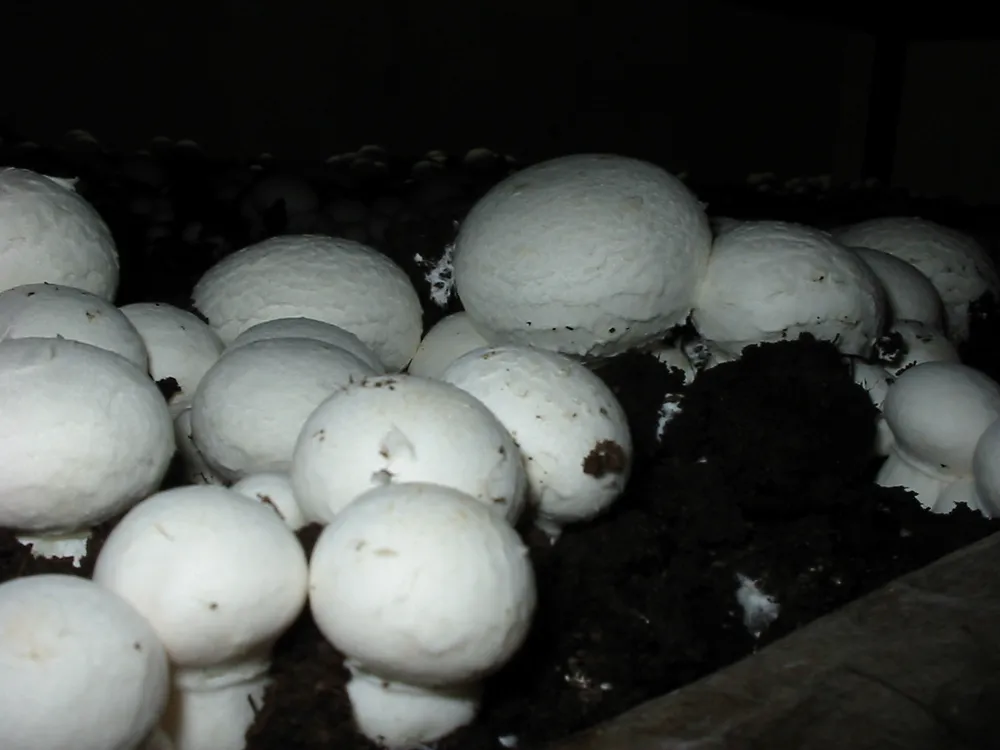
Mushrooms of the same genus and habitat — to study side by side and never mix up.
_Fr._4948278370-2.webp)
Frequently asked questions
Is Agaricus comtulus edible or poisonous?
Does Agaricus comtulus have gills or pores?
What does the cap of Agaricus comtulus look like?
What does the stem of Agaricus comtulus look like?
What do Agaricus comtulus smell and taste like?
Where does Agaricus comtulus grow?
When should you pick Agaricus comtulus?
What can Agaricus comtulus be confused with?
How do you cook Agaricus comtulus?
Can you dry Agaricus comtulus?
What is the scientific name of Agaricus comtulus?
Sources
- [1]Вікіпедія (українська)
- [2]Атлас грибів України, Зеров Д.К. (1979)
- [3]MycoBank Database
- [4]Index Fungorum
- [5]GBIF
- [6]iNaturalist Ukraine