THIS DATA HAS NOT BEEN VERIFIED BY AN EXPERT. Use at your own risk.
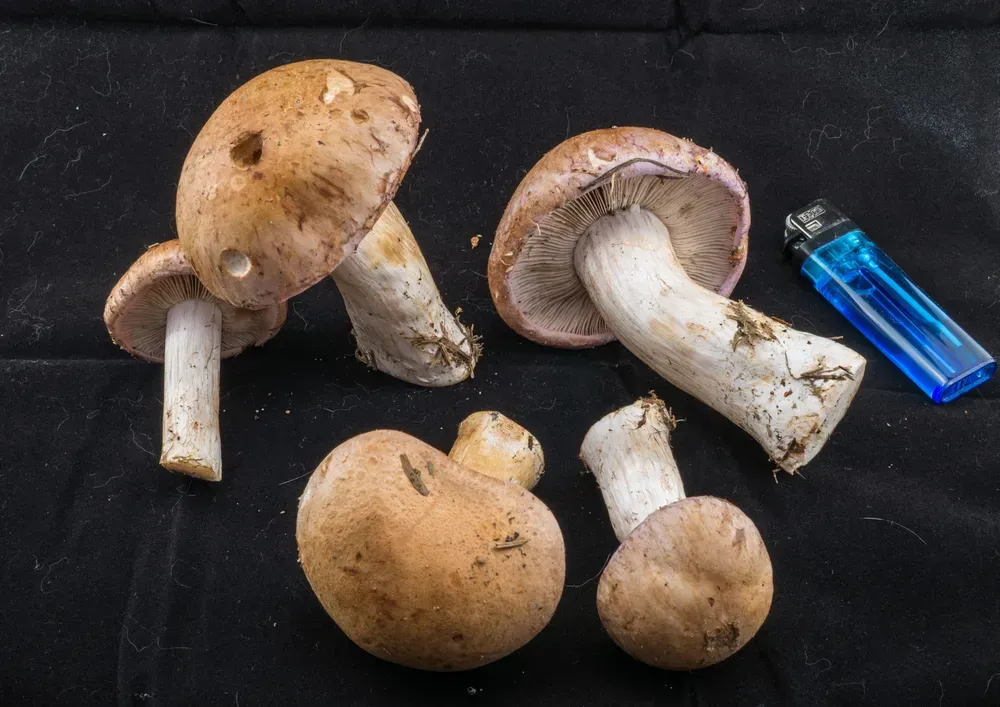
Cortinarius esculentus
Under reviewUpdated October 3, 2026
Passport
- Edibility
- Conditionally edible
- Season
- Aug — Oct
- Hymenophore
- Gilled
- Cap color
- Brown
- Size
- Small (up to 5 cm)
- Smell
- Pleasant
- Reviewed
- Under review
Quick answers
Where to look?
Deciduous forest, Mixed forest
When does it appear?
Aug — Oct
Active months: August, September, October.
How to recognize it? Three signs
- Cap color: Brown, Yellow
- Cap shape: Convex, Flat
- Smell: Pleasant
Fruiting season
August – October
Description
Cortinarius esculentus is one of the few members of the huge and mostly inedible webcap genus whose species name points straight to its edibility. It is a small brown mushroom with a cobwebby veil (cortina) that covers the gills when young — the hallmark of the genus. Like most webcaps, it is mycorrhizal and grows in forests in partnership with trees.
In Ukraine Cortinarius esculentus is found in broadleaf and mixed forests. It fruits in autumn. Because of its modest looks and its membership in a treacherous genus, foragers pay it little attention, and only experienced connoisseurs ever pick it.
In terms of edibility, Cortinarius esculentus is considered conditionally edible and calls for special caution. Although the name itself promises edibility, the webcap genus contains deadly poisonous species that accumulate orellanine — a toxin that causes irreversible kidney damage, with symptoms delayed by several days. It is extremely easy to confuse the edible webcap with a deadly one, so beginners are strongly advised not to pick mushrooms from this genus at all. Collect Cortinarius esculentus only if you are absolutely sure of the identification, and at the slightest doubt, leave it be.
Cap
The cap of Cortinarius esculentus is small — from 3 to 7 centimeters across. When young it is convex to bell-shaped with an inrolled margin, opening out flat with age. The surface is smooth or finely fibrous, dry or slightly moist. The color is brown, yellowish-brown or clay-tan, darker in the center. Its modest brown color makes the mushroom inconspicuous and easy to confuse with other webcaps.
Hymenophore
The hymenophore is gilled. The gills are attached to the stem, fairly crowded, pale at first — clay-colored or pale brown — and take on a rusty-brown, brown tint from the spores as they mature. When young they are covered by a cobwebby veil (cortina), whose remnants settle on the stem. The spore print is rusty brown. Rusty gills and a cortina are the hallmarks of the webcaps.
Stem
The stem is cylindrical, 4 to 8 centimeters tall, whitish or pale brown, often with a fibrous band in the upper part — a trace of the cortina, on which rusty spore dust settles. There is no true ring. There is no volva. The surface is lengthwise fibrous.
Flesh
The flesh is whitish or pale brown and barely changes color when cut. The taste is mild, with no noticeable bitterness. Because this mushroom belongs to the treacherous webcap genus, the flesh is not a reliable guide: identifying it by taste or appearance alone is dangerous, so at the slightest doubt it is not eaten.
Smell
The smell is faint, mushroomy, with no sharp notes. The aroma is not a reliable feature for a safe identification. The mushroom is recognized by its brown cap, rusty gills with a cortina and banded stem, yet even these features demand a great deal of experience because of the risk of confusing it with deadly relatives.
›Scientific synonyms (1)
Cortinarius esculentus Velen. (1920)
Lookalikes
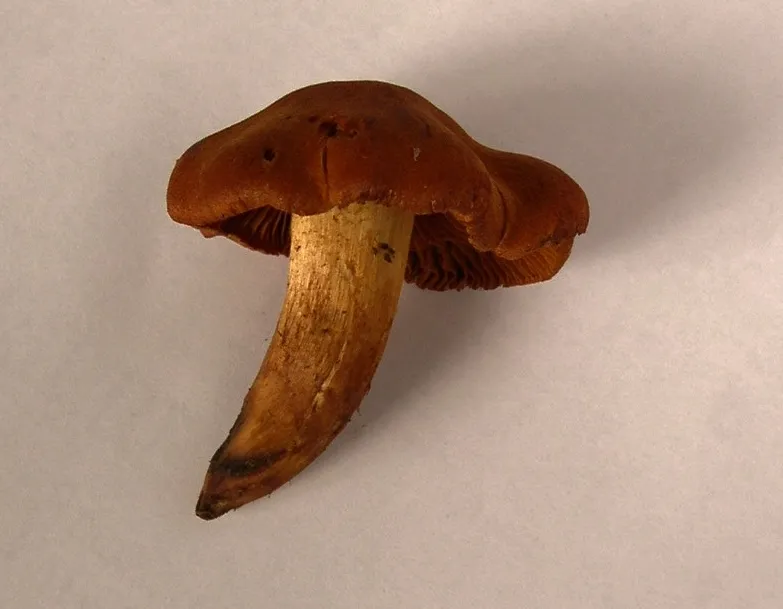
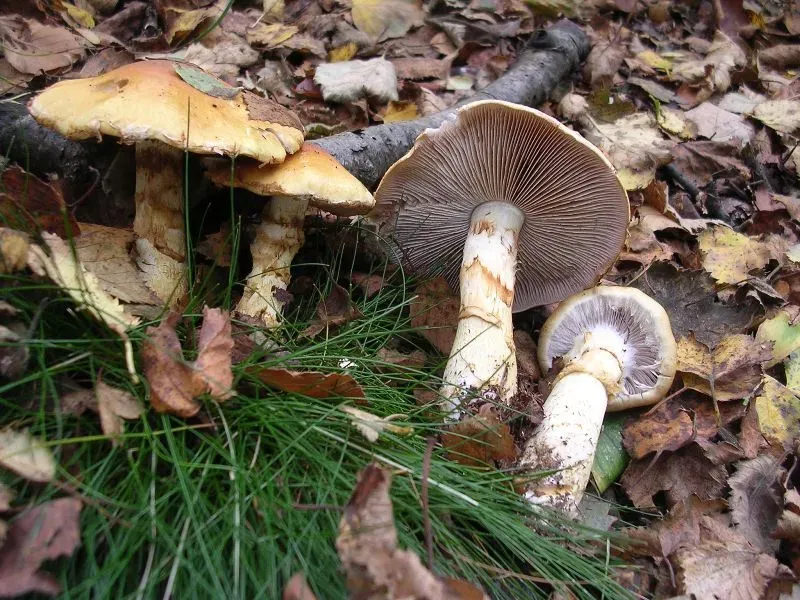
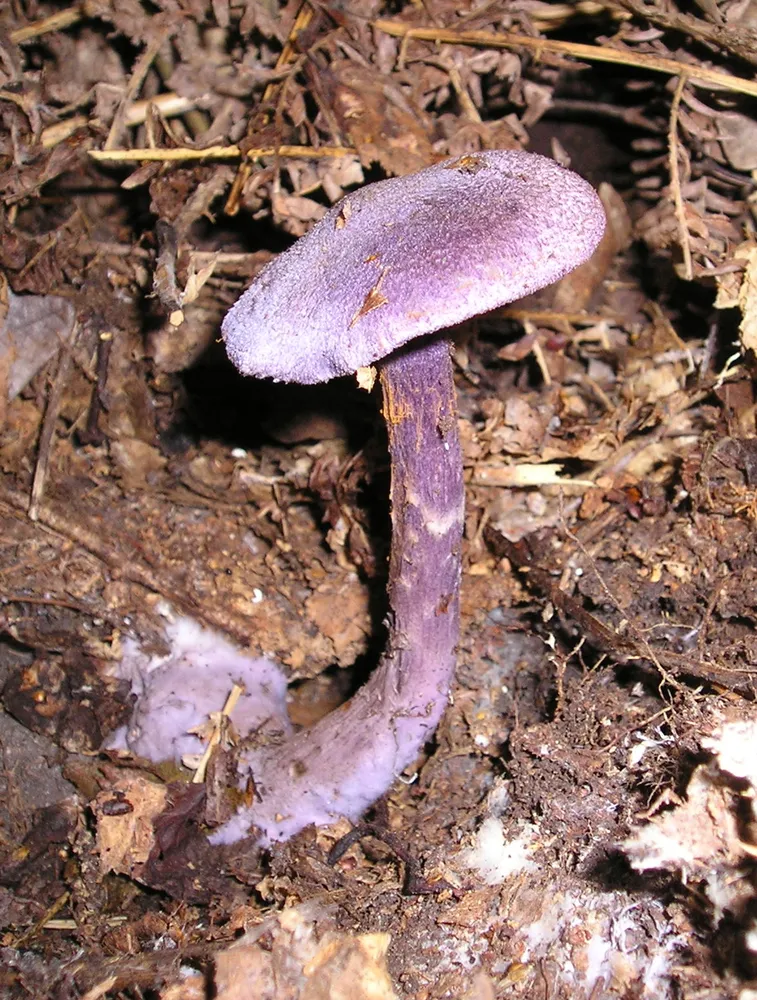
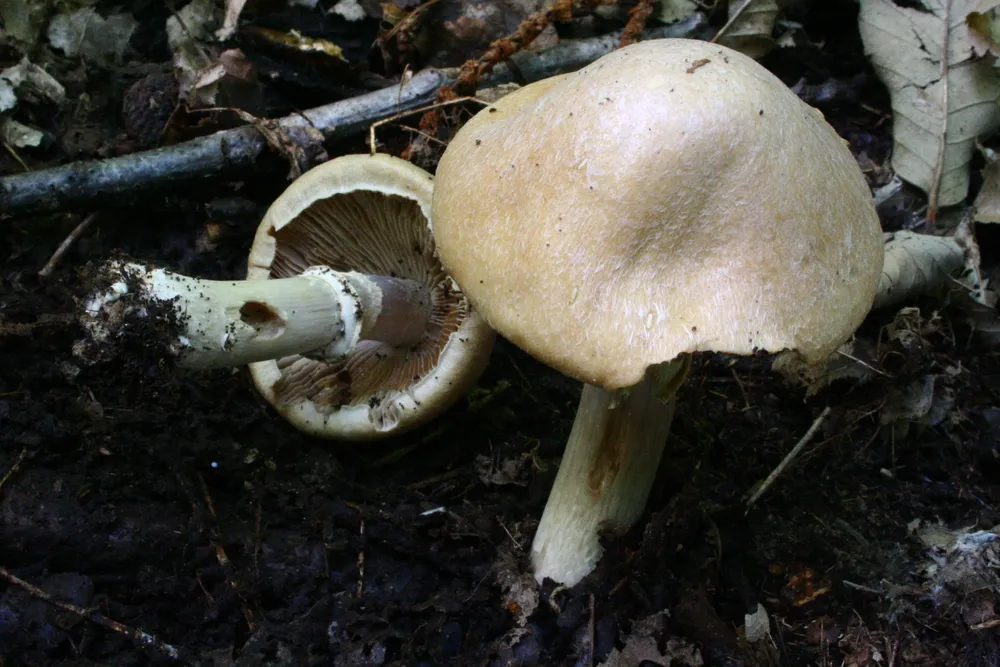
Related species
Mushrooms of the same genus and habitat — to study side by side and never mix up.
_Fr_387091.webp)
Cortinarius multiformis
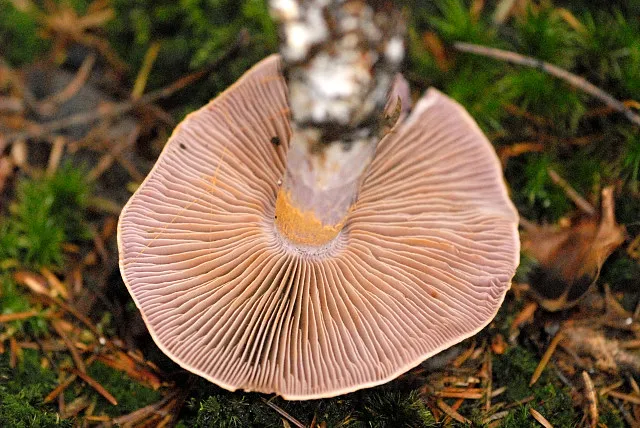
Goatcheese webcap
Cortinarius camphoratus
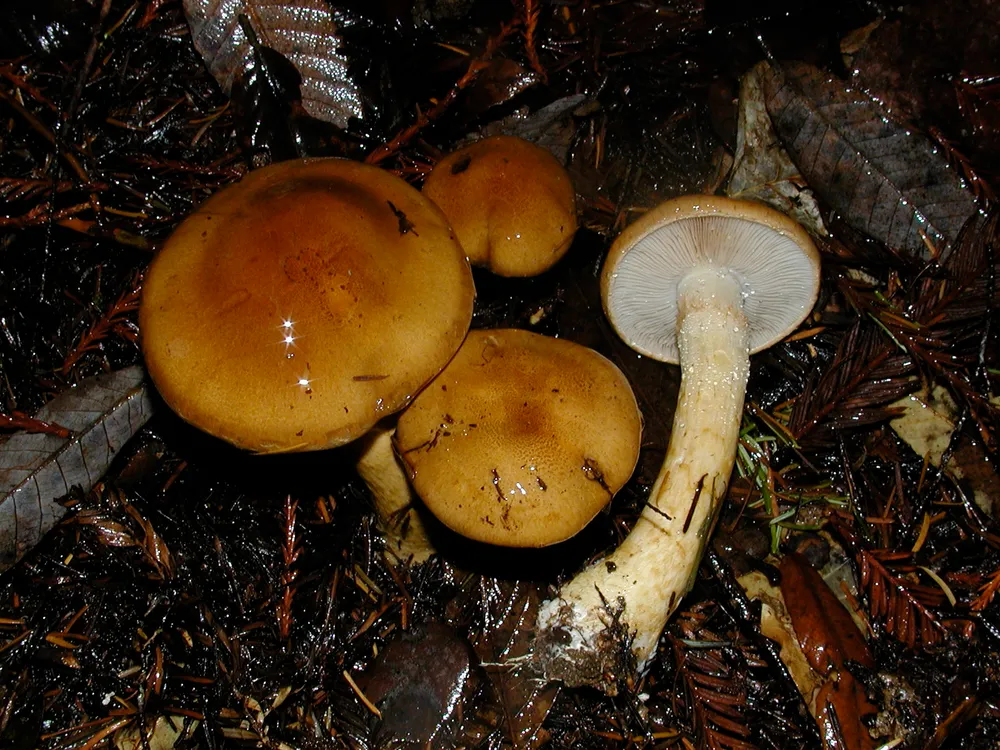
Orange webcap
Cortinarius mucosus
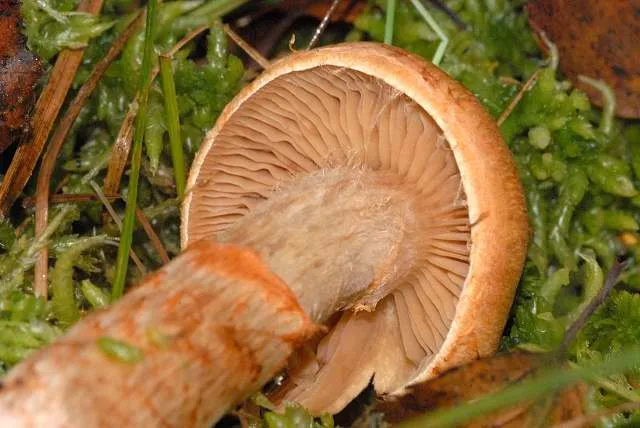
Red banded webcap
Cortinarius armillatus
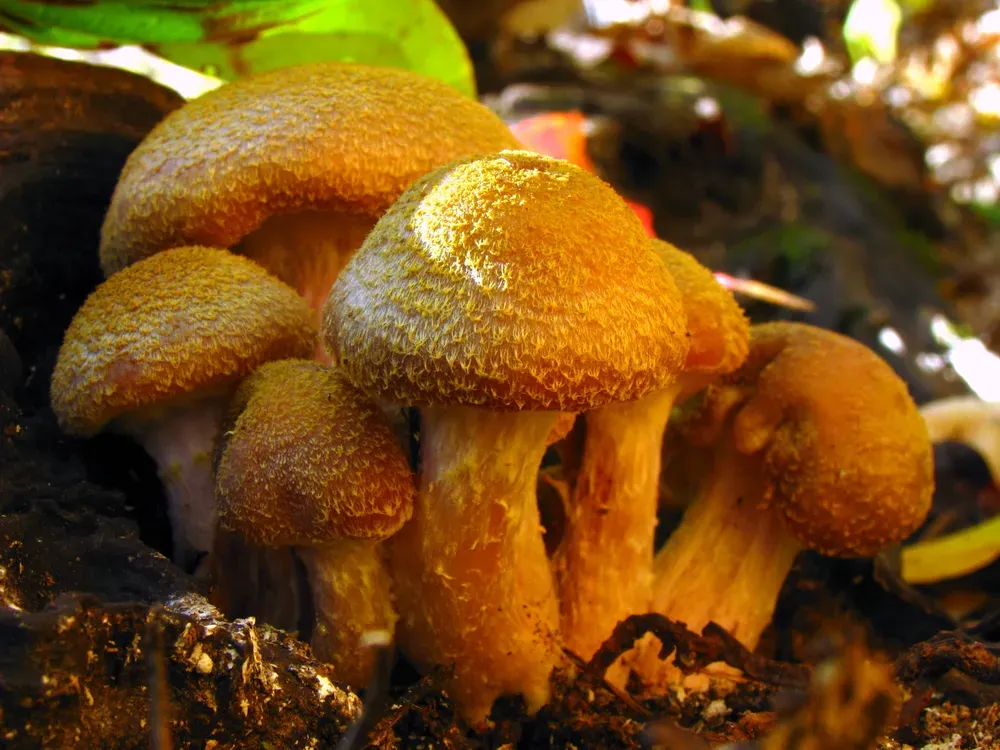
Bulbous honey fungus
Armillaria gallica
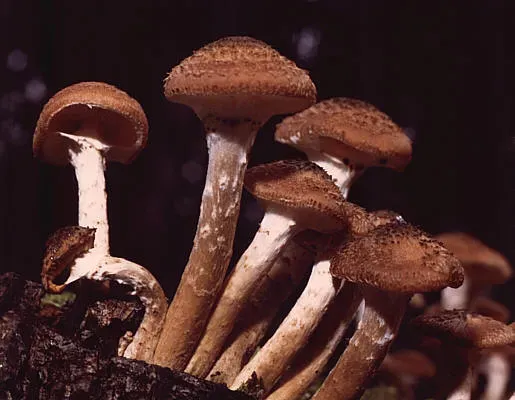
Dark honey fungus
Armillaria ostoyae
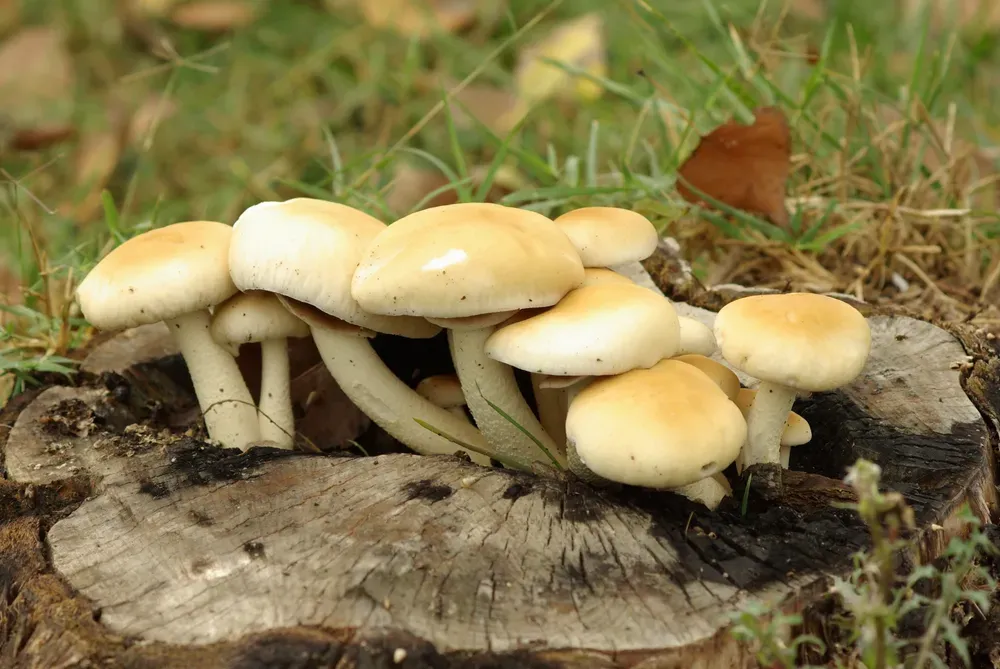
Poplar fieldcap
Cyclocybe aegerita
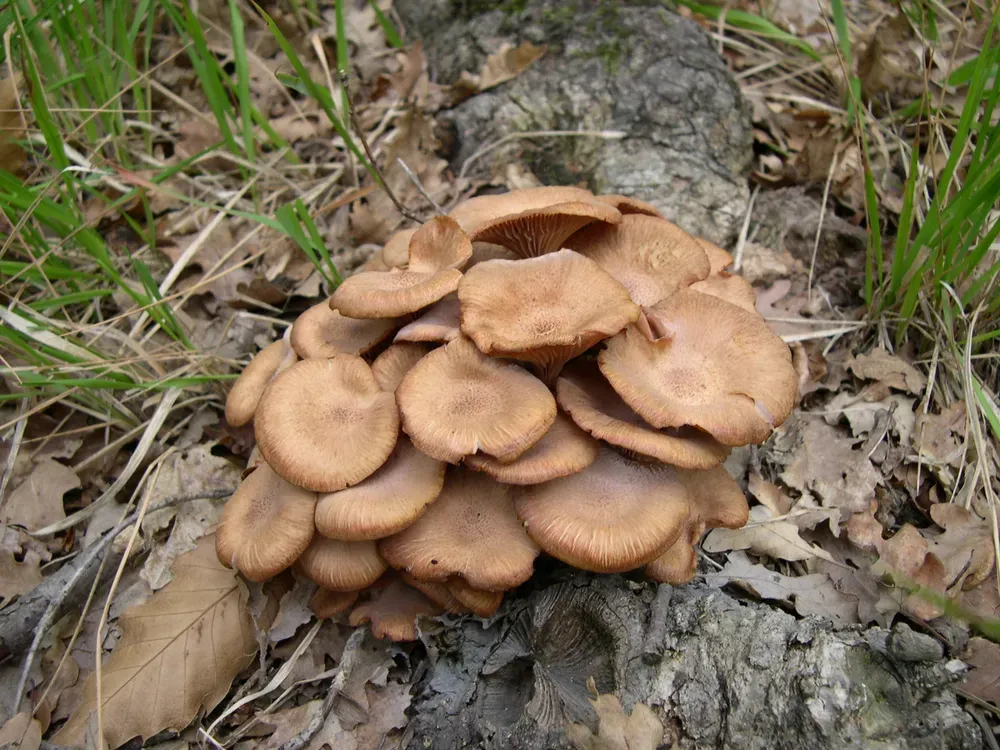
Ringless honey fungus
Desarmillaria tabescens
Frequently asked questions
Is Cortinarius esculentus edible or poisonous?
Does Cortinarius esculentus have gills or pores?
What does the cap of Cortinarius esculentus look like?
What does the stem of Cortinarius esculentus look like?
What do Cortinarius esculentus smell and taste like?
Where does Cortinarius esculentus grow?
Which trees does Cortinarius esculentus grow under?
When should you pick Cortinarius esculentus?
What can Cortinarius esculentus be confused with?
How do you cook Cortinarius esculentus?
Can you dry Cortinarius esculentus?
What is the scientific name of Cortinarius esculentus?
Sources
- [1]Вікіпедія (українська)
- [2]Атлас грибів України, Зеров Д.К. (1979)
- [3]MycoBank Database
- [4]Index Fungorum
- [5]GBIF
- [6]iNaturalist Ukraine