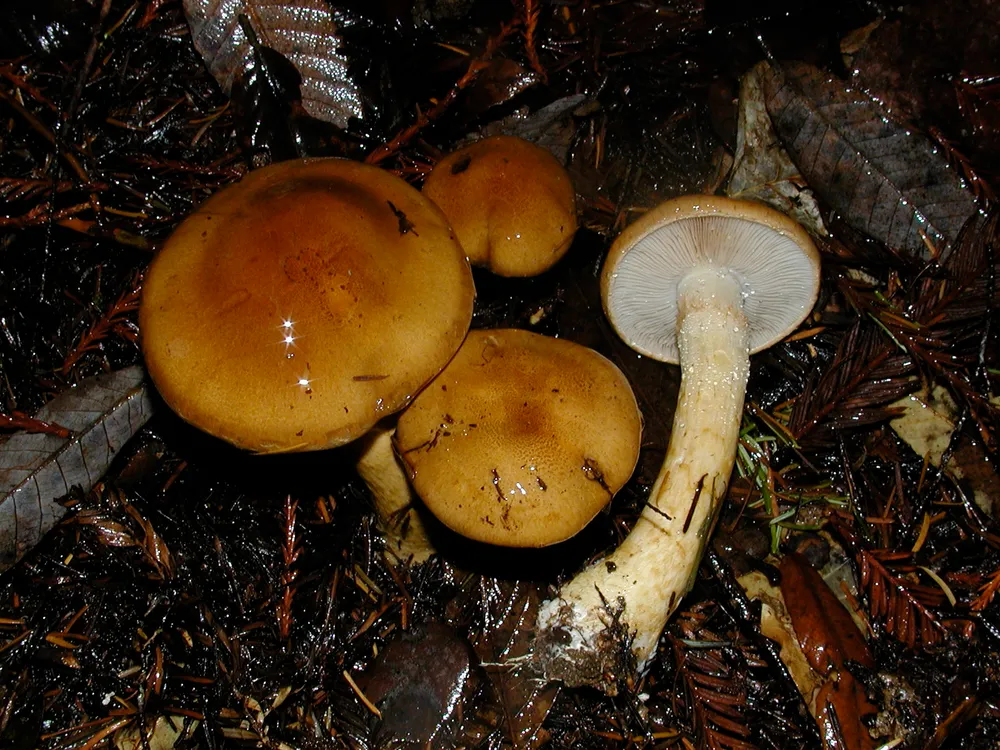
Orange webcapCortinarius mucosus
Expert-verifiedUpdated October 3, 2026
Passport
- Edibility
- Inedible
- Season
- Aug — Oct
- Hymenophore
- Gilled
- Cap color
- Brown
- Size
- Medium (5–15 cm)
- Smell
- Odorless
- Reviewed
- Yes ✓
Quick answers
Where to look?
Conifer forest, Mixed forest
When does it appear?
Aug — Oct
Active months: August, September, October.
How to recognize it? Three signs
- Cap color: Brown, Dark brown
- Cap shape: Convex
- Smell: Odorless
Fruiting season
August – October
Description
The orange webcap (Cortinarius mucosus) is one of the most widespread large webcaps of Ukraine's pine forests, with a distinctive chestnut-brown slimy cap that glistens in the sun after rain. The Latin epithet mucosus means "slimy". It's easily mistaken for young slippery jacks and boletes, but decurrent gills with a rusty-brown spore print + a cobwebby cortina in young mushrooms — make it unmistakably a webcap.
Inedible. Old Soviet field guides sometimes labeled it conditionally edible after boiling, but modern Western mycologists strongly advise against eating any webcap from the genus Cortinarius, since the genus contains deadly poisonous species with orellanine (C. orellanus, C. rubellus) and telling the species apart precisely is very hard even for experts. Symptoms of orellanine poisoning are delayed by 2-21 days, which makes the risk especially insidious. Learn to recognize this mushroom by sight — and walk past it.
In Ukraine it grows throughout the pine zone: Polissia (especially abundant), the Carpathians, Prykarpattia, pine plantations in the forest-steppe, planted pine forests in the northern steppe. A mycorrhizal partner of Scots pine (Pinus sylvestris). The season runs August — October, peaking in September. It often grows in groups of 3-10 fruiting bodies in mossy pine woods. One of the "signature" mushrooms of late summer in Ukrainian pine forests, alongside slippery jacks and boletes — but not one for the basket.
Cap
The cap is 5-10 cm across, hemispherical with an inrolled margin in young mushrooms, becoming convex to flat over time. The color is chestnut-brown, honey-brown, darker in the center, paler at the margin. The surface is very slimy in wet weather — a hallmark of the species. The cap skin peels off easily, as in a slippery jack. In dry weather the cap is simply shiny, without noticeable slime.
Hymenophore
The hymenophore is gilled — the gills are attached to the stem and moderately crowded. In young mushrooms they are pale cream to pale ochre, later turning rusty brown as the spores ripen. The spore print is rusty brown — a diagnostic feature of the genus Cortinarius. In young mushrooms the gills are covered by a cobwebby partial veil (the cortina).
Stem
The stem is 6-12 cm tall, 1-2 cm thick, cylindrical, long, often tapering toward the base. The color is whitish to cream, with reddish tints toward the base. The surface is smooth, slimy in the upper part, with fine lengthwise fibers. On the stem, remnants of the cobwebby cortina form a thin band dusted with rusty-brown spores.
Flesh
The flesh is firm, white to cream. When cut it does not change color. The smell is faint and neutral, with no distinctive notes.
Smell
Faint, neutral, mushroomy, with no pronounced notes.
›Scientific synonyms (4)
Agaricus collinitus β mucosus (Bull.) Fr., Agaricus mucosus Bull., Cortinarius collinitus var. mucosus (Bull.) Fr., Myxacium mucosum (Bull.) P. Kumm.
Lookalikes
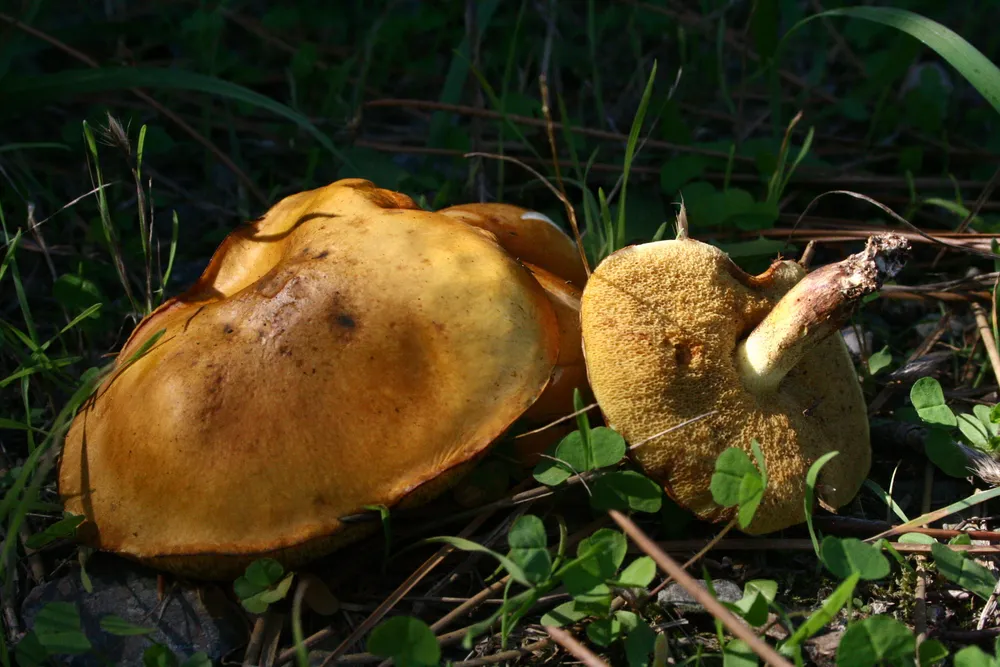
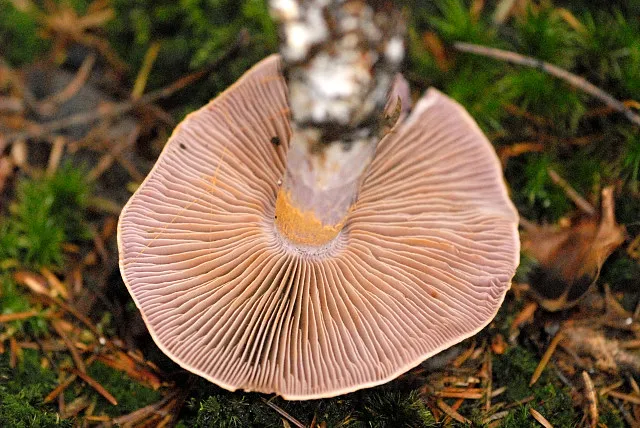
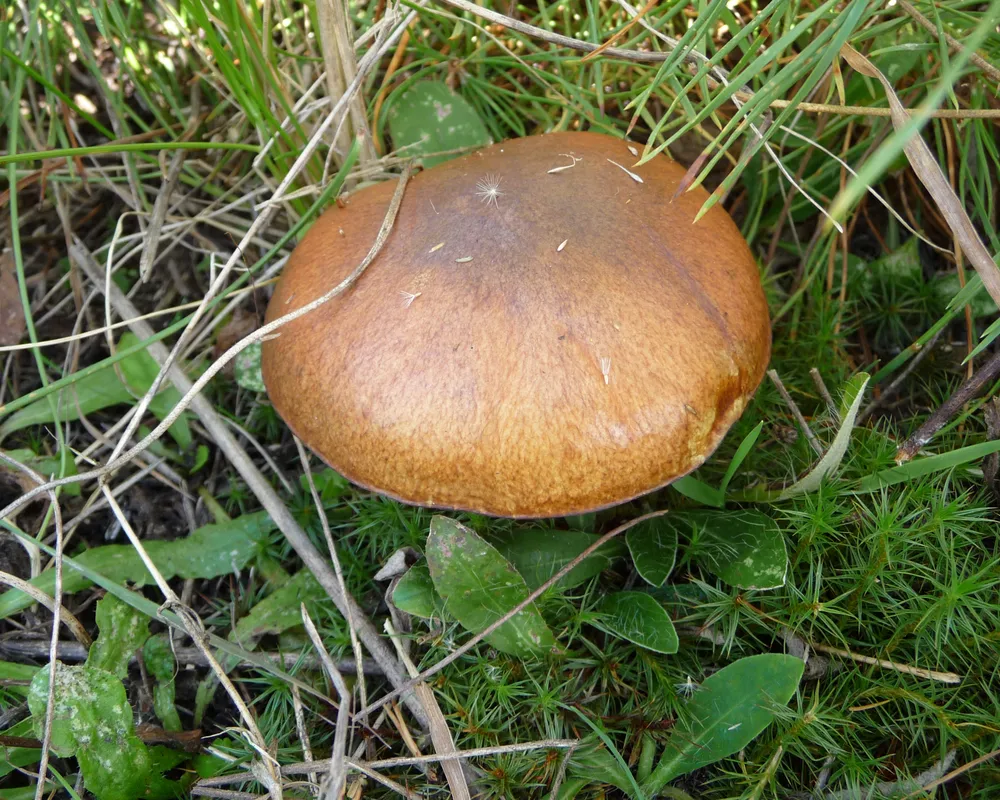
_Fr_387091.webp)
Related species
Mushrooms of the same genus and habitat — to study side by side and never mix up.
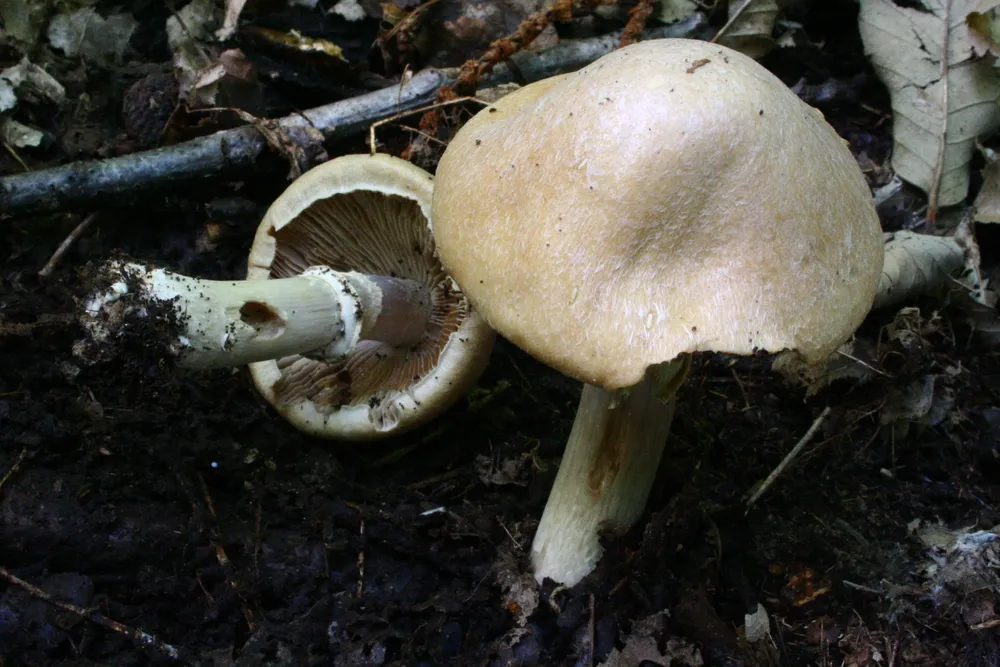
Gypsy mushroom
Cortinarius caperatus
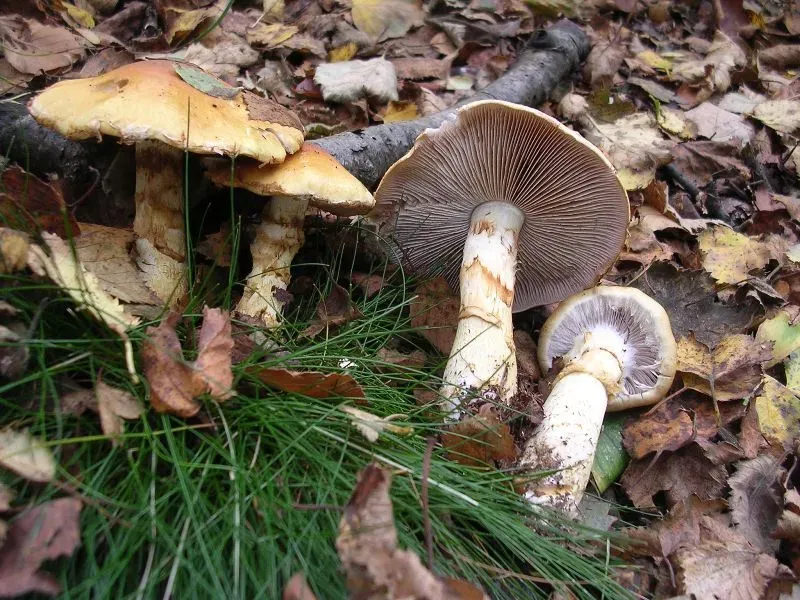
Birch webcap
Cortinarius triumphans
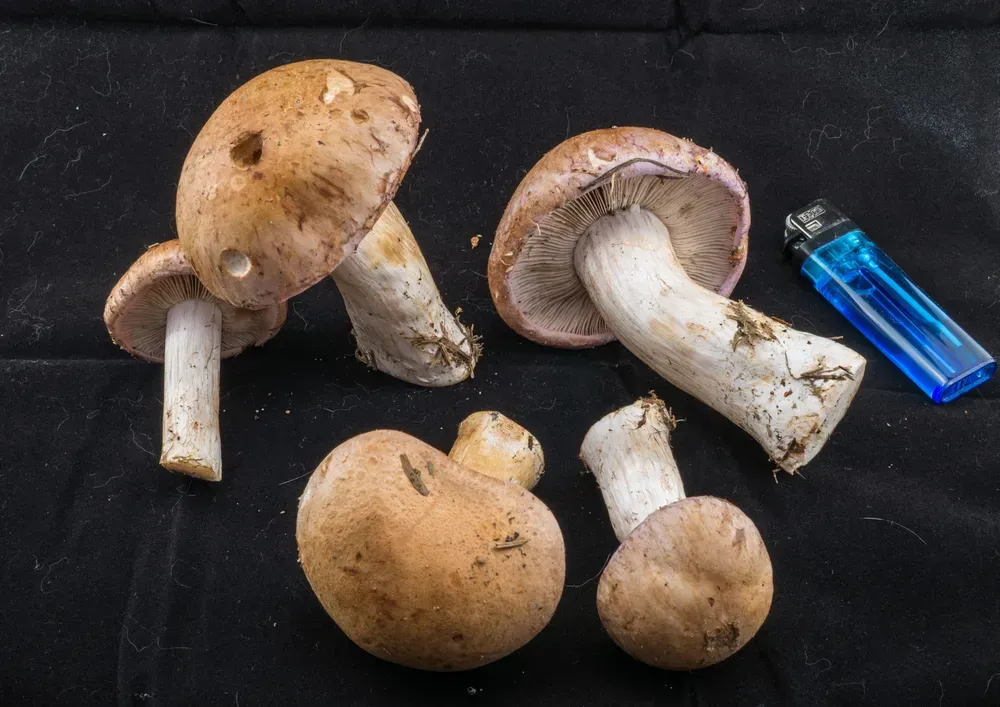
Cortinarius esculentus
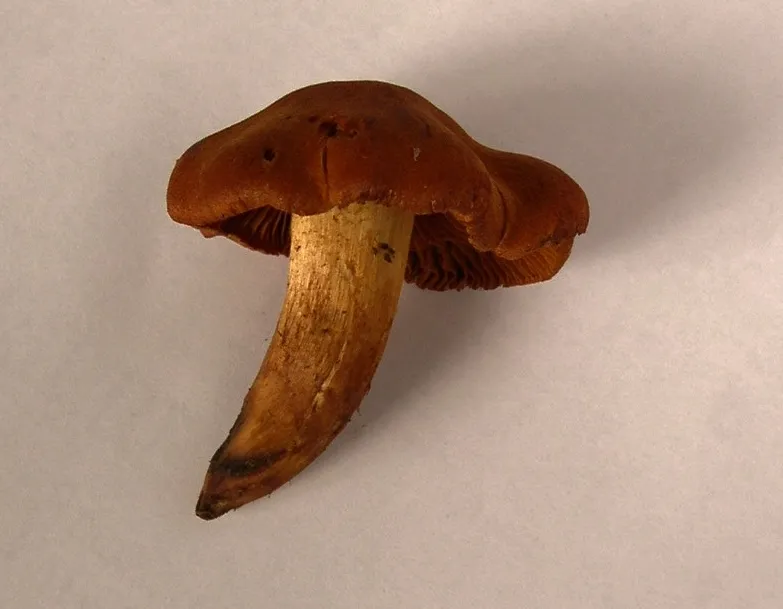
Fool's webcap
Cortinarius orellanus
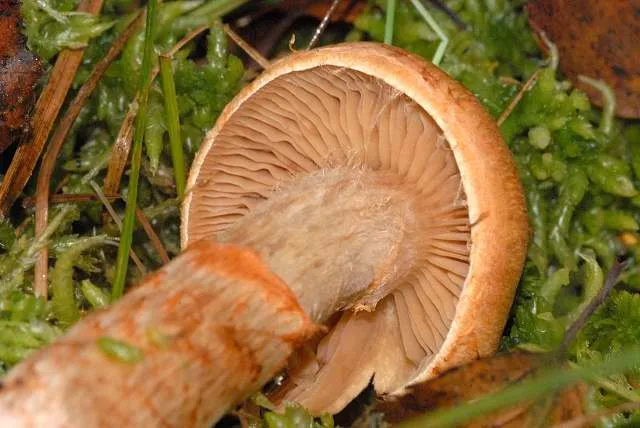
Red banded webcap
Cortinarius armillatus
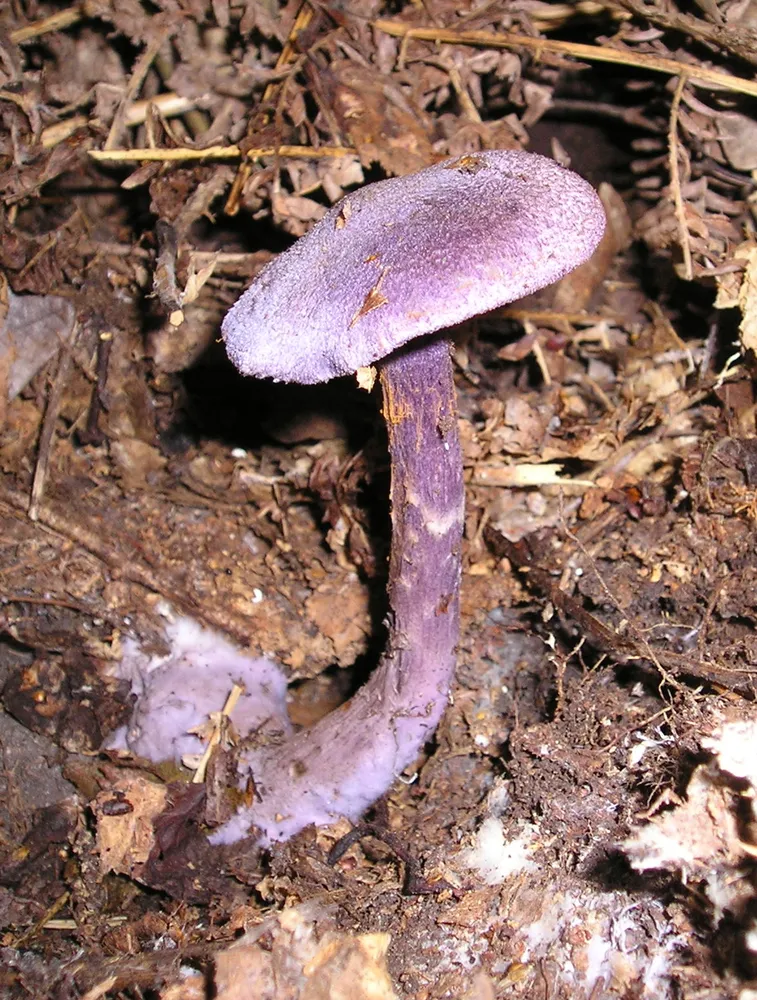
Violet webcap
Cortinarius violaceus
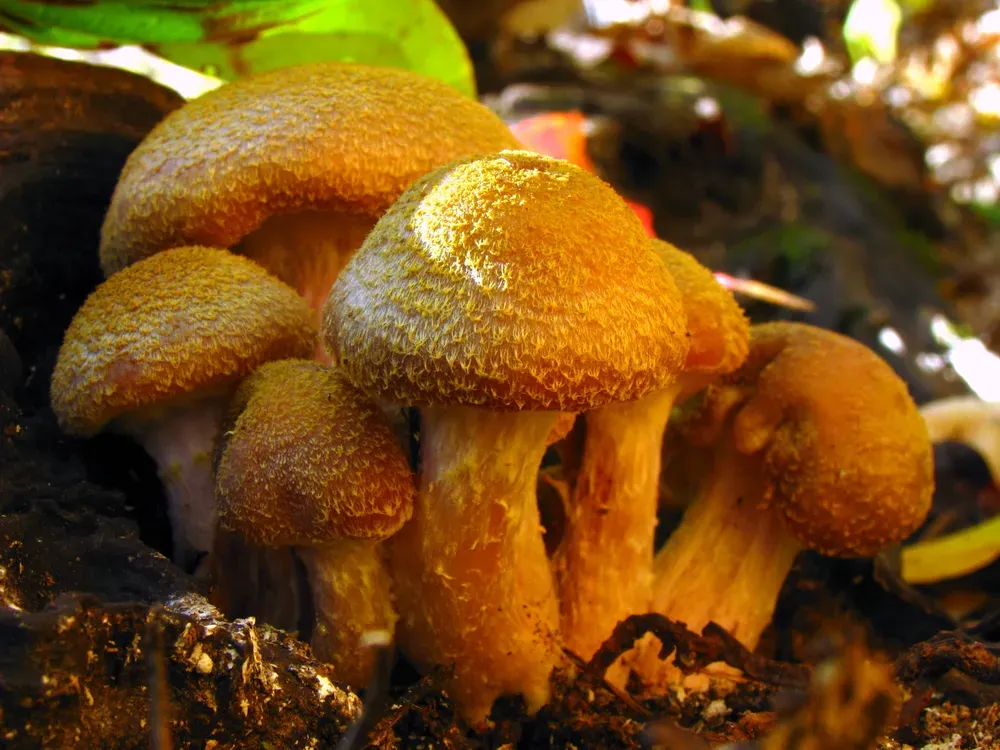
Bulbous honey fungus
Armillaria gallica
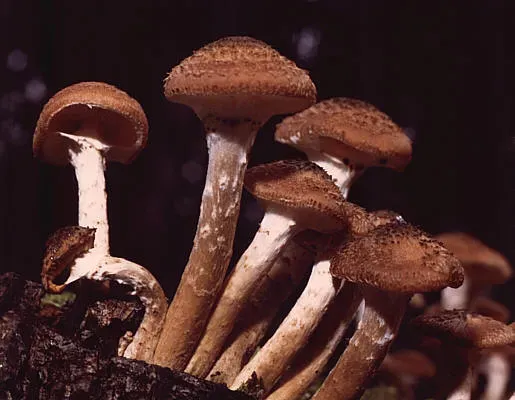
Dark honey fungus
Armillaria ostoyae
Frequently asked questions
Can you eat it?
No. Modern mycology does not recommend eating any webcap. This species itself has no described deadly toxins, but the genus Cortinarius contains deadly poisonous species with orellanine, and telling the species apart precisely is a difficult task. The rule: no webcap goes in the basket.
What is orellanine and why is it so frightening?
Orellanine — a nephrotoxin (it destroys kidney cells) found in several Cortinarius species (C. orellanus — fool's webcap, C. rubellus — deadly webcap). Symptoms are delayed by 2-21 days after eating — a record delay among mushroom poisonings. First come thirst, headache, problems with urination. Without timely treatment — acute kidney failure, and in severe cases lifelong hemodialysis or a kidney transplant. There is no specific antidote; treatment is symptomatic.
How do you tell a webcap from a slippery jack?
Four keys. (1) Hymenophore: a slippery jack has tubes (a porous sponge). A webcap has gills. (2) Spore print: a slippery jack has ochre-brown, a webcap's is rusty brown (visible as a band deposited on the stem). (3) Cortina: in a young webcap, stretched between cap and stem there's a cobwebby partial veil. A slippery jack has a dense membranous ring. (4) Color of mature gills: in a webcap — rusty brown, not grayish-white.
But what if all the grandmothers in my area pick them?
It all depends on the specific webcap species. In some areas people eat large "safe" species (for example, C. caperatus — the gypsy mushroom, considered edible in some sources), but that's a matter for experienced local experts. The universal recommendation for a beginner and even for an experienced forager without specialist knowledge: don't eat any webcap. There are always better and safer species nearby (slippery jacks, boletes, honey fungus).
Where does it grow?
In pine forests and mixed forests with pine — mostly in mossy pine woods with sparse grass. It likes sandy or sandy-loam soil. A mycorrhizal partner of Scots pine. It often grows next to the slippery jack and boletes — so when you're foraging among pines, it's worth recognizing it in order to pass it by.
Which regions of Ukraine is it found in?
Throughout the pine zone: Polissia (especially abundant in Rivne, Volyn, Zhytomyr and Chernihiv regions), the Carpathians and Prykarpattia in pine stands, planted pine forests in the forest-steppe, pine shelterbelts in the northern steppe. One of the country's most widespread large webcaps.
When should you look for it?
More like "when to recognize it and walk past". August — October, peaking in September. The season coincides with the mass slippery jack harvest, so the risk of confusion is at its highest.
What mushrooms is it confused with?
With the young slippery jack (Suillus luteus) — which is edible and not poisonous, but the slippery jack has tubes instead of gills and a dark ring on the stem. With the gypsy mushroom (Cortinarius caperatus) — also edible in some regions, but it requires confident identification. Key recommendation: if in doubt about a gilled mushroom with a cortina — leave it.
Is Orange webcap edible or poisonous?
Does Orange webcap have gills or pores?
What does the cap of Orange webcap look like?
What does the stem of Orange webcap look like?
Sources
- [1]Вікіпедія (українська)
- [2]Атлас грибів України, Зеров Д.К. (1979)
- [3]MycoBank Database
- [4]Index Fungorum
- [5]GBIF
- [6]iNaturalist Ukraine