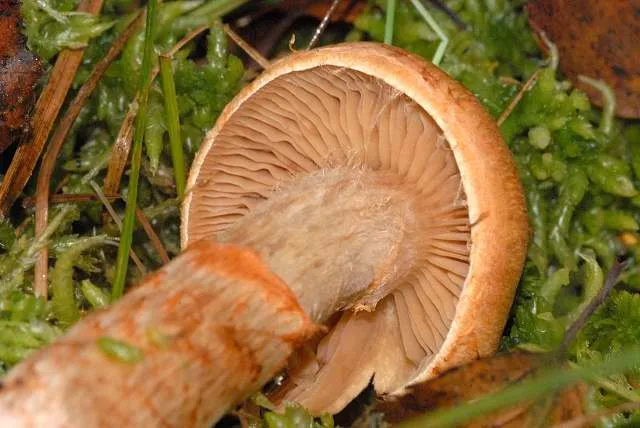
Red banded webcapCortinarius armillatus
Expert-verifiedUpdated October 3, 2026
Passport
- Edibility
- Inedible
- Season
- Aug — Oct
- Hymenophore
- Gilled
- Cap color
- Brown
- Size
- Medium (5–15 cm)
- Smell
- Odorless
- Reviewed
- Yes ✓
Quick answers
Where to look?
Deciduous forest, Mixed forest
When does it appear?
Aug — Oct
Active months: August, September, October.
How to recognize it? Three signs
- Cap color: Brown, Red, Orange
- Cap shape: Convex
- Smell: Odorless
Fruiting season
August – October
Description
The red banded webcap (Cortinarius armillatus) is one of the most recognizable webcaps of the Ukrainian flora thanks to a unique feature: the stem bears several (2-4) distinct red-orange ring-like bands ("bracelets"), which look like a row of rings slipped onto it. The Latin epithet armillatus means "wearing bracelets". No other large woodland webcap has this feature, so once you've seen it, you won't mix it up again.
Inedible according to the consensus of modern mycology. On its own it has no described deadly toxins, and some older sources listed it as conditionally edible, but the genus Cortinarius contains deadly poisonous species with orellanine, and a careful forager's rule makes no exceptions even for well-recognizable species. If you can confidently tell the red banded webcap from the fool's webcap, that doesn't mean your beginner neighbor can — especially when you treat them to mushrooms from your basket.
In Ukraine it is widespread in birch forests and mixed forests with birch: the Carpathians, the Carpathian foothills, Polissia (especially abundant), parts of the forest-steppe. It forms mycorrhiza with birch — strictly specific; it does not occur away from birch stands. The season runs August — October, peaking in September. It often grows in groups of 3-10 fruiting bodies in damp birch woods, especially abundantly in young birch copses of Polissia.
Cap
Cap 5-12 cm across, hemispherical with an inrolled margin in young mushrooms, later becoming convex with a low umbo. Color red-brown, brick, russet-brown, with a pinkish tint when young. Surface velvety and dryish, with fine radial fibers. The cap margin is thin, with pinkish veil remnants in young mushrooms.
Hymenophore
Gills — attached to the stem, moderately spaced. In young mushrooms light pinkish brown, becoming with age rusty brown, dark brick as the spore powder ripens. Spore print rusty brown. In young mushrooms the gills are covered by a cobweb-like partial veil (cortina).
Stem
Stem 8-15 cm tall, 1-2.5 cm thick, cylindrical, long, thickened toward the base. Color brownish cream, with 2-4 distinct red-orange ring-like "bracelet" bands on the lower half — the diagnostic feature of the species. The surface has fine lengthwise fibers. Near the top there is a faint band left by the cobwebby cortina.
Flesh
Flesh firm, brownish cream. When cut, it does not change color. Smell faint; in some populations with a hint of radish.
Smell
Faint and neutral; in some populations with a subtle radish or resinous note.
›Scientific synonyms (3)
Agaricus bulliardii var. squamulosus Alb. & Schwein., Agaricus armillatus Fr., Telamonia armillata (Fr.) Wünsche
Lookalikes
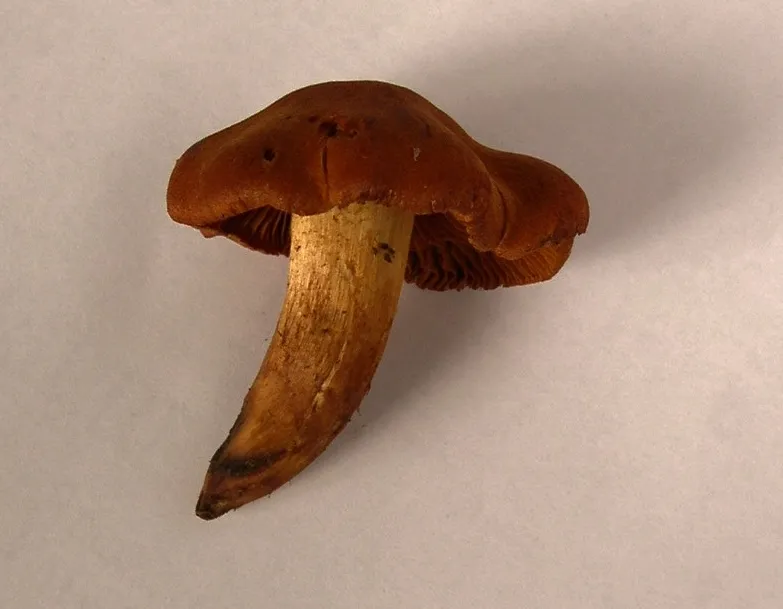
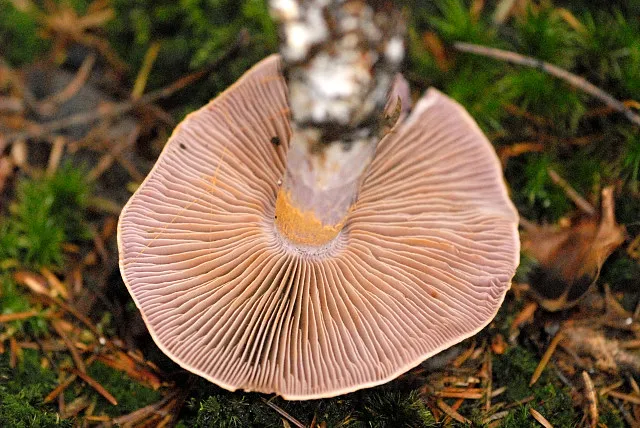
_Fr_387091.webp)
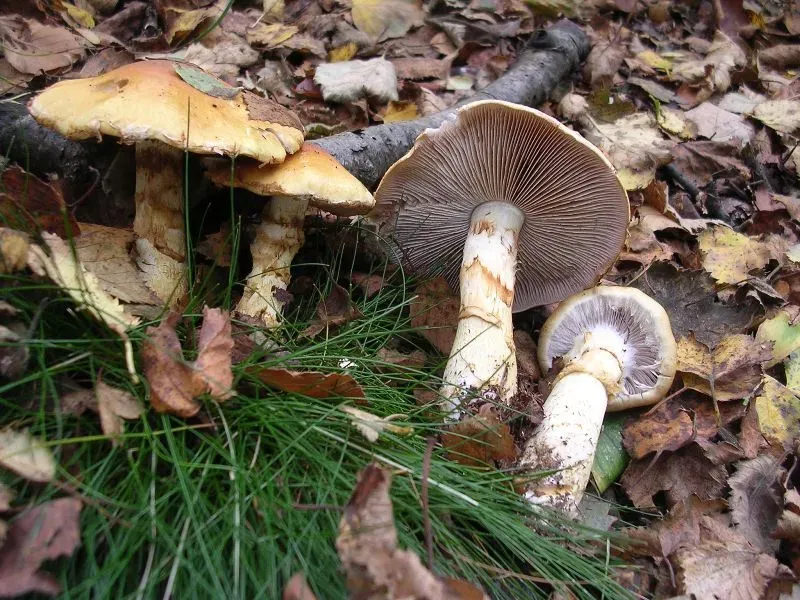
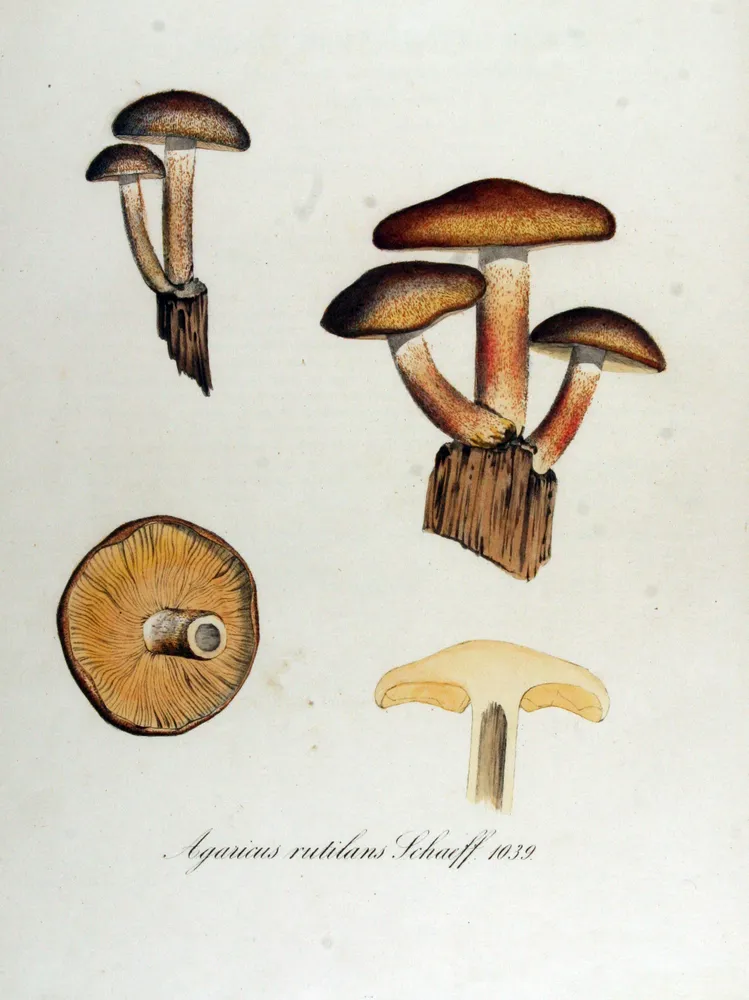
Related species
Mushrooms of the same genus and habitat — to study side by side and never mix up.
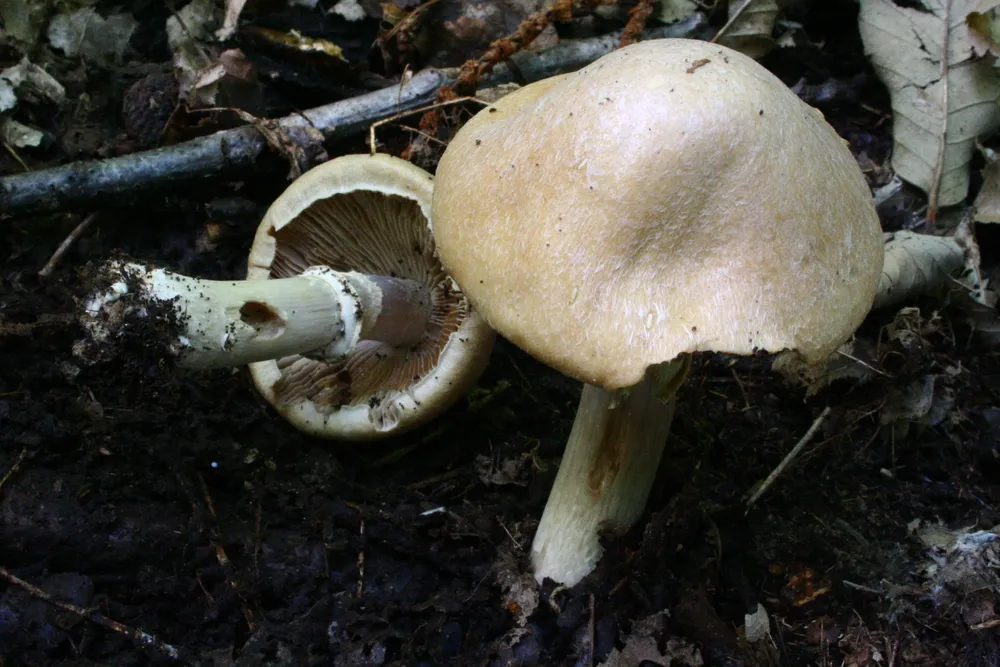
Gypsy mushroom
Cortinarius caperatus
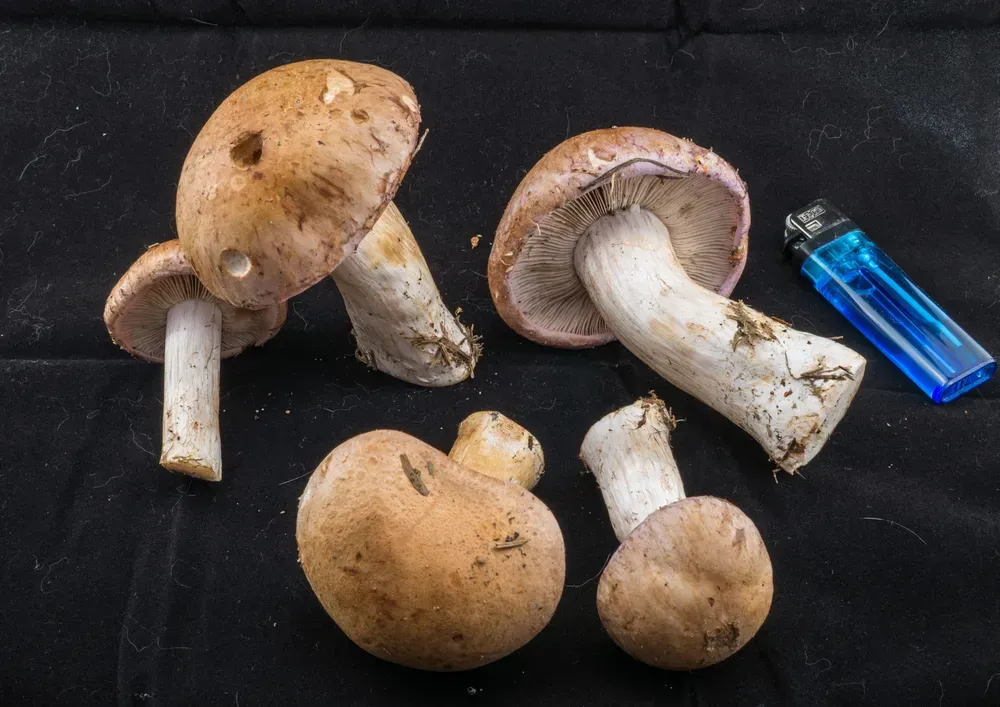
Cortinarius esculentus
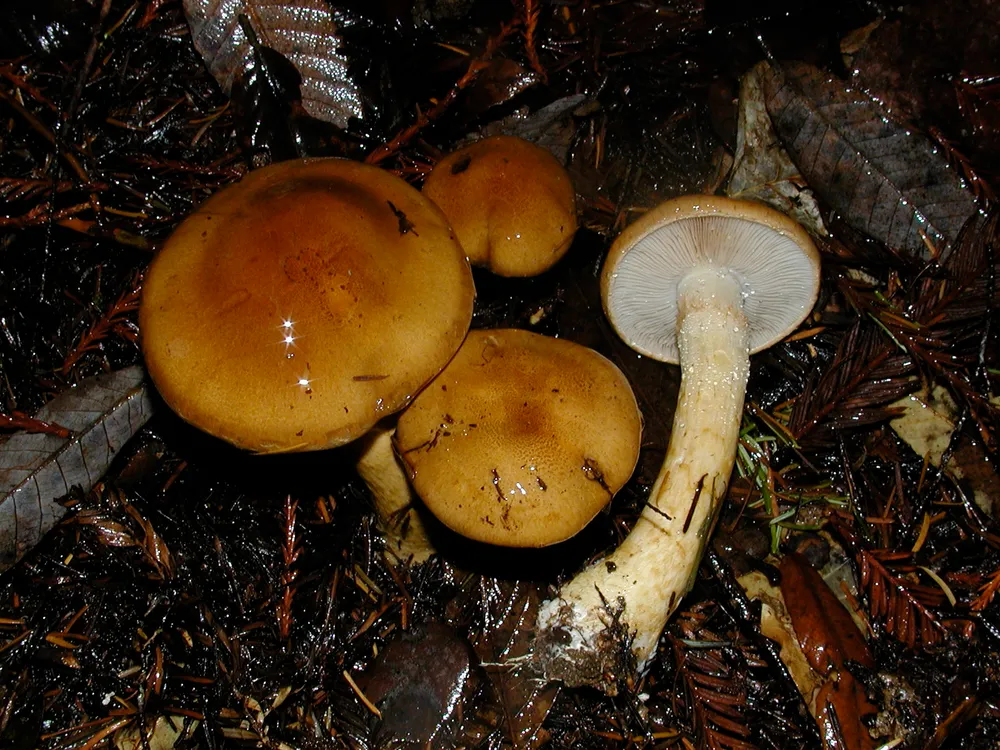
Orange webcap
Cortinarius mucosus
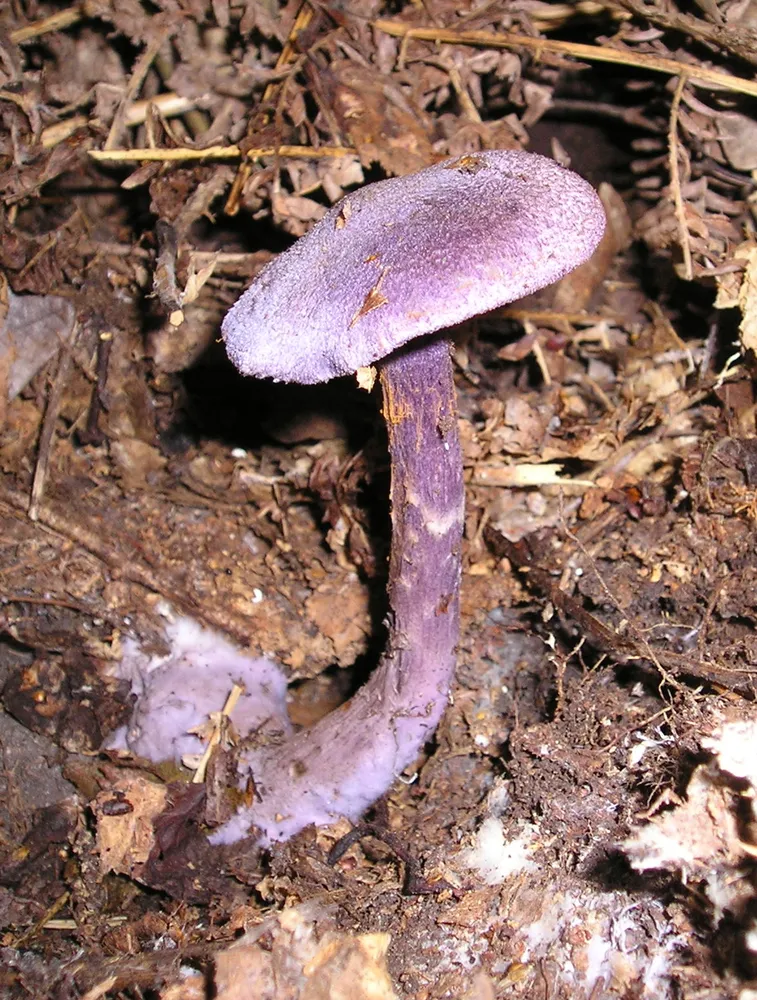
Violet webcap
Cortinarius violaceus
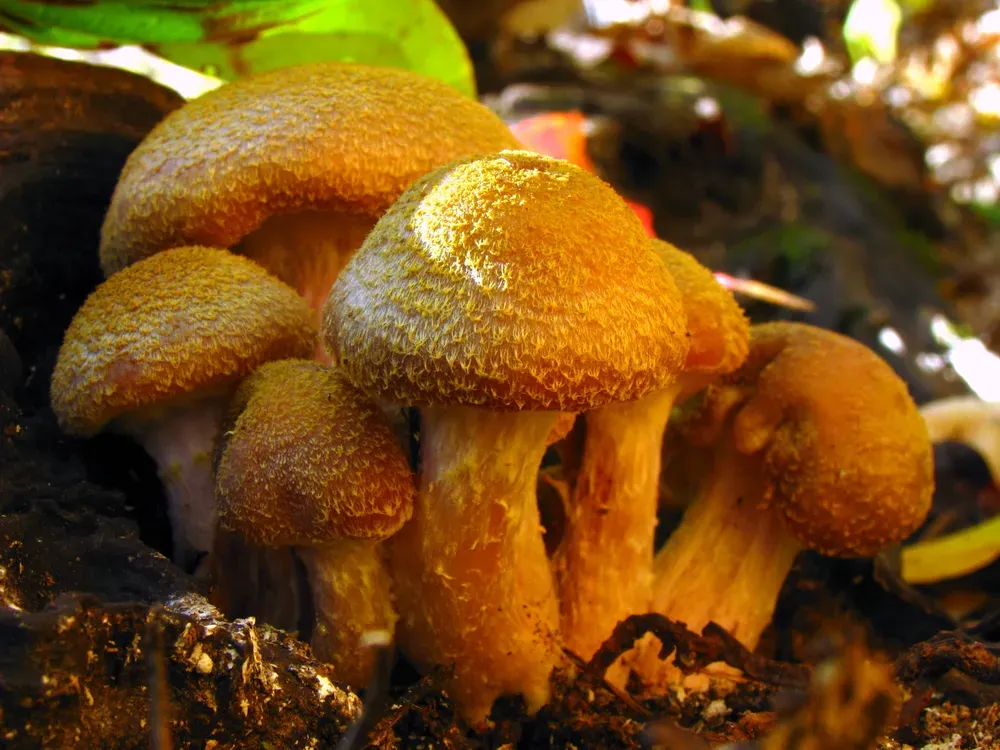
Bulbous honey fungus
Armillaria gallica
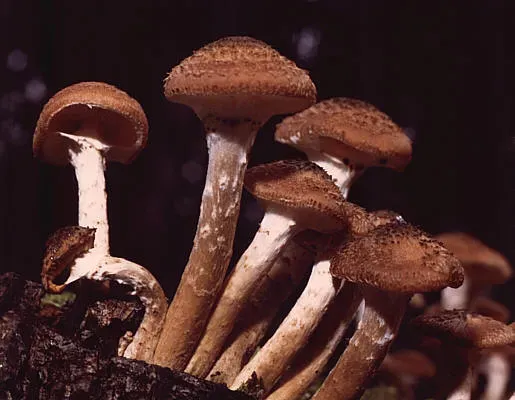
Dark honey fungus
Armillaria ostoyae
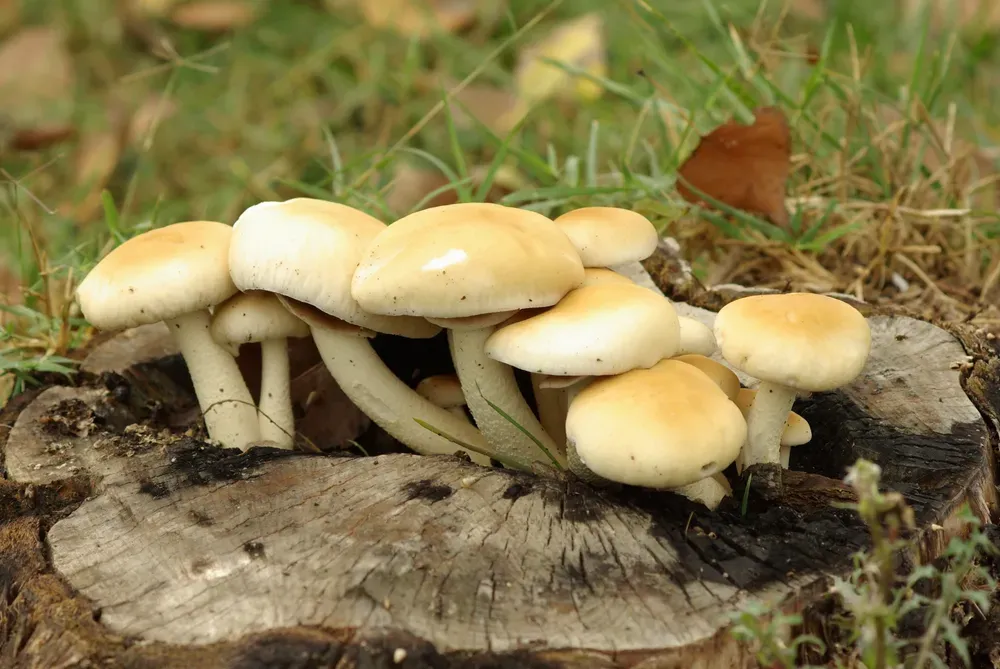
Poplar fieldcap
Cyclocybe aegerita
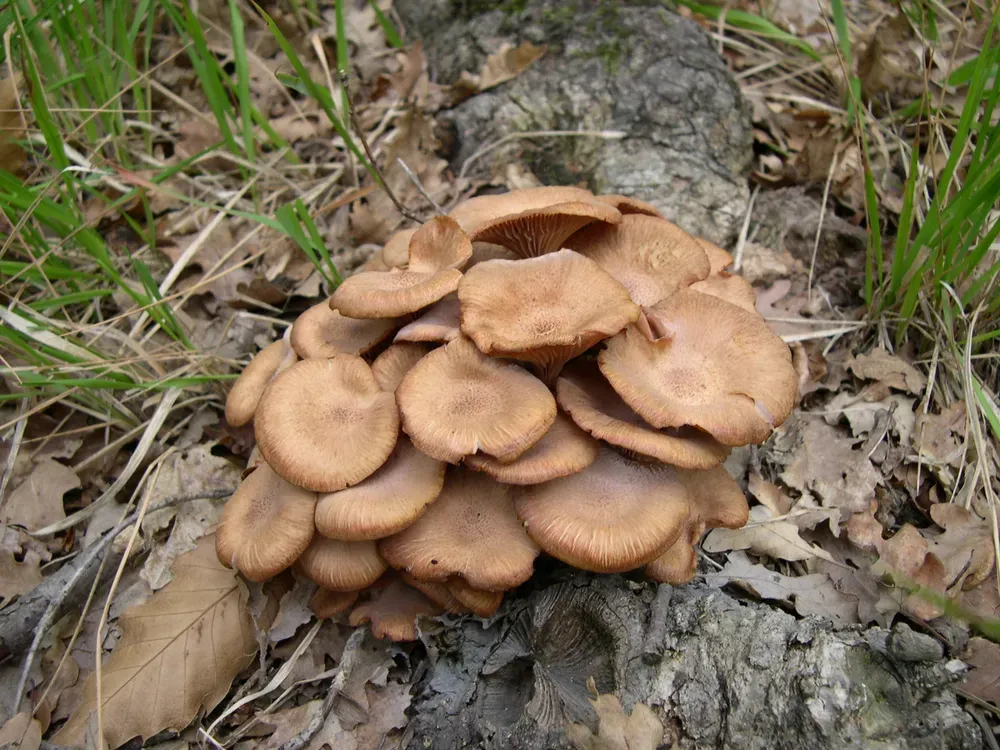
Ringless honey fungus
Desarmillaria tabescens
Frequently asked questions
Can you eat it?
No. The rule of modern mycology is no webcaps in the basket because of the risk of confusion with deadly poisonous relatives (C. orellanus, C. rubellus, which contain orellanine).
How do you recognize it?
The telltale feature is the red-orange ring-like bands ("bracelets") on the lower half of the stem, 2-4 of them. No other large woodland webcap has this feature. Plus, it grows strictly with birch, so if you've found a similar mushroom near a pine or in a beech forest, it's not the red banded webcap.
What makes its deadly relatives dangerous?
Cortinarius orellanus and C. rubellus contain orellanine — a nephrotoxin with a 2-21-day delay of symptoms. Without timely treatment — acute kidney failure, and in severe cases lifelong hemodialysis. They look different from the red banded webcap — they have no bracelets on the stem, and their caps are a brighter orange. But the risk of confusion is higher for beginners, so the rule is: we pass them all by.
Where does it grow?
Strictly in birch forests and mixed forests with birch — it forms mycorrhiza with birch. It likes damp mossy patches, the edges of birch woods, floodplain birch forests. It does not occur in conifer forests without birch.
Which regions of Ukraine is it found in?
Throughout the forest and forest-steppe zones wherever there is birch: Polissia (especially abundant — Rivne, Volyn and Zhytomyr regions), the Carpathians and the Carpathian foothills, parts of the forest-steppe. In the steppe — in floodplain birch copses.
When should you look for it?
Rather — "when to recognize it". August — October, peaking in September.
What mushrooms is it confused with?
With such distinctive bracelets it's hard to mix up. In theory it could be confused with a young red-capped scaber stalk (Leccinum aurantiacum) — it's also reddish brown and found in birch woods, but it has tubes instead of gills. Or with the gypsy mushroom (C. caperatus) — also edible in some regions, but without bracelets and with a distinct net-like veil.
Is it worth knowing at all?
Yes — as an example of an easily recognizable webcap. Its signature feature (bracelets on the stem) is a good exercise in sharpening your mycological attention. Knowing the red banded webcap = being able to confidently recognize the genus Cortinarius in the field = being able to pass it by.
Is Red banded webcap edible or poisonous?
Does Red banded webcap have gills or pores?
What does the cap of Red banded webcap look like?
What does the stem of Red banded webcap look like?
Sources
- [1]Вікіпедія (українська)
- [2]Атлас грибів України, Зеров Д.К. (1979)
- [3]MycoBank Database
- [4]Index Fungorum
- [5]GBIF
- [6]iNaturalist Ukraine