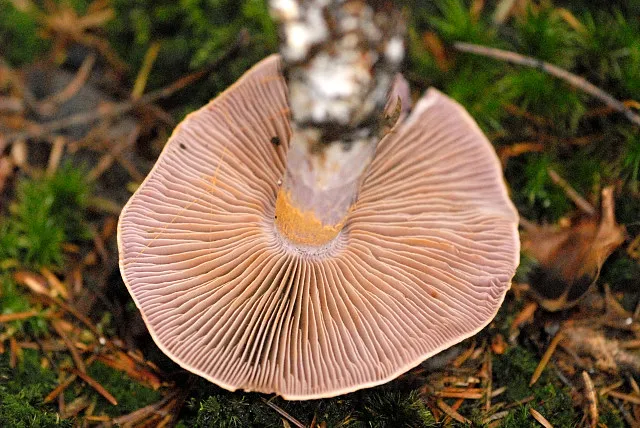
Goatcheese webcapCortinarius camphoratus
Expert-verifiedUpdated October 3, 2026
Passport
- Edibility
- Inedible
- Season
- Aug — Oct
- Hymenophore
- Gilled
- Cap color
- Violet
- Size
- Medium (5–15 cm)
- Smell
- Chemical
- Reviewed
- Yes ✓
Quick answers
Where to look?
Conifer forest, Mixed forest
When does it appear?
Aug — Oct
Active months: August, September, October.
How to recognize it? Three signs
- Cap color: Violet, Brown, Grey
- Cap shape: Convex
- Smell: Chemical
Fruiting season
August – October
Description
The goatcheese webcap (Cortinarius camphoratus) is a characteristic member of the large and "toxicologically tricky" genus Cortinarius, known above all for its strong, sickly smell of camphor, raw potato or rancid cheese. The smell is so strong you can catch it from a distance in the forest — many foragers recognize the species by nose before they even see the cap. The cap color is grayish-lilac to brownish-violet, with a distinctive thread-like "cobweb" (the cortina) — a partial veil connecting the cap margin to the stem in young mushrooms.
Inedible. On its own it has no described lethal toxins, but because of 1) its repulsive smell, which doesn't go away with cooking, and 2) its membership in the genus Cortinarius, which includes deadly poisonous species with the nephrotoxin orellanine (C. orellanus, C. rubellus) — the rule of modern mycology is: don't eat any webcap unless you're a professional mycologist-taxonomist. Telling Cortinarius species apart (approx. 2000 species in Europe) is a difficult task even for experts; similar-looking species can have opposite toxicological profiles.
In Ukraine it grows in coniferous and mixed forests: the Carpathians, Prykarpattia, Polissia. A mycorrhizal partner of spruce, less often pine and beech. The season runs August — October. It often grows singly or in small groups in mossy spruce forests. The best strategy when you meet it — take a photo for iNaturalist UA and move on.
Cap
The cap is 4-9 cm across, hemispherical to conical-convex in young mushrooms, becoming convex-flat with a noticeable low umbo over time. The color is grayish-lilac, lilac-brown, with a violet tint when young, fading to grayish-ochre with age. The surface is smooth, slightly slimy in wet weather. The cap margin is thin, with fine radial fibers.
Hymenophore
The hymenophore is gilled — the gills are attached to the stem and moderately crowded. In young mushrooms they are lilac, mauve-gray, later turning rusty brown as the spores ripen. The spore print is rusty brown — a diagnostic feature of the genus Cortinarius. In young mushrooms the gills are covered by a cobwebby partial veil (the cortina) — a characteristic feature of the genus.
Stem
The stem is 5-10 cm tall, 1-2 cm thick, cylindrical, with a bulbous swelling at the base. The color is lilac to violet in the upper part, paler to whitish lower down. The surface has fine lilac fibers. On the stem, remnants of the cobwebby cortina — noticeable in young mushrooms, disappearing in older ones and leaving a thin band of rusty-brown spores on the stem.
Flesh
The flesh is firm, white to pale lilac. When cut it does not change color. The smell is strong and sickly, camphor-like, with a note of raw potato or rancid cheese — its most characteristic diagnostic feature. The taste is mild, but given the smell it's not worth trying.
Smell
Strong sickly camphor-and-potato smell, with a note of rancid cheese or a damp cellar. You can catch it from a distance. It opens up when you rub the flesh. This is the most reliable diagnostic feature of the species — few other webcaps have such a pungent smell.
›Scientific synonyms (2)
Agaricus camphoratus Fr. (1821), Inoloma camphoratum (Fr.) Wünsche (1877)
Lookalikes
_Fr_387091.webp)
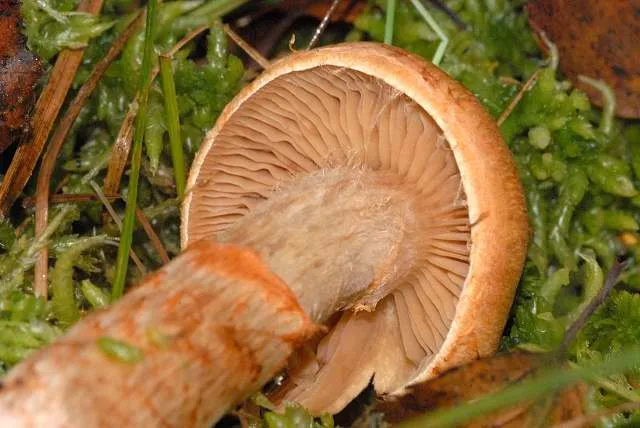
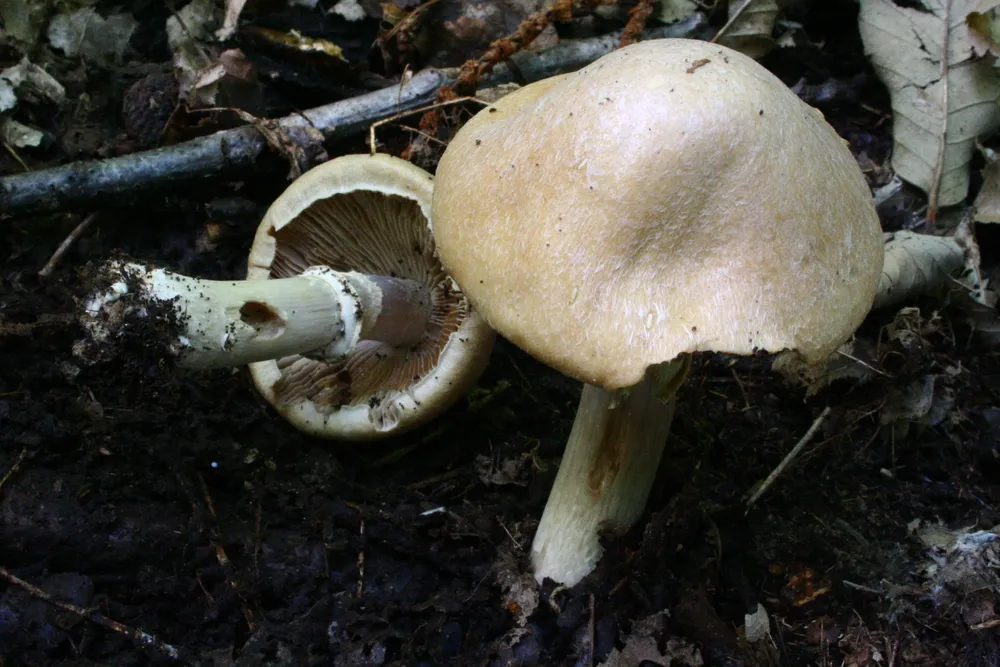
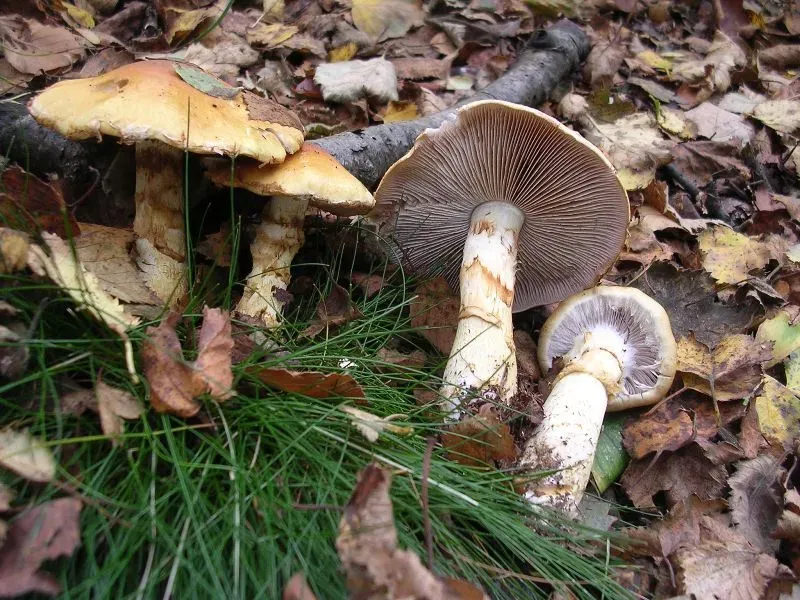
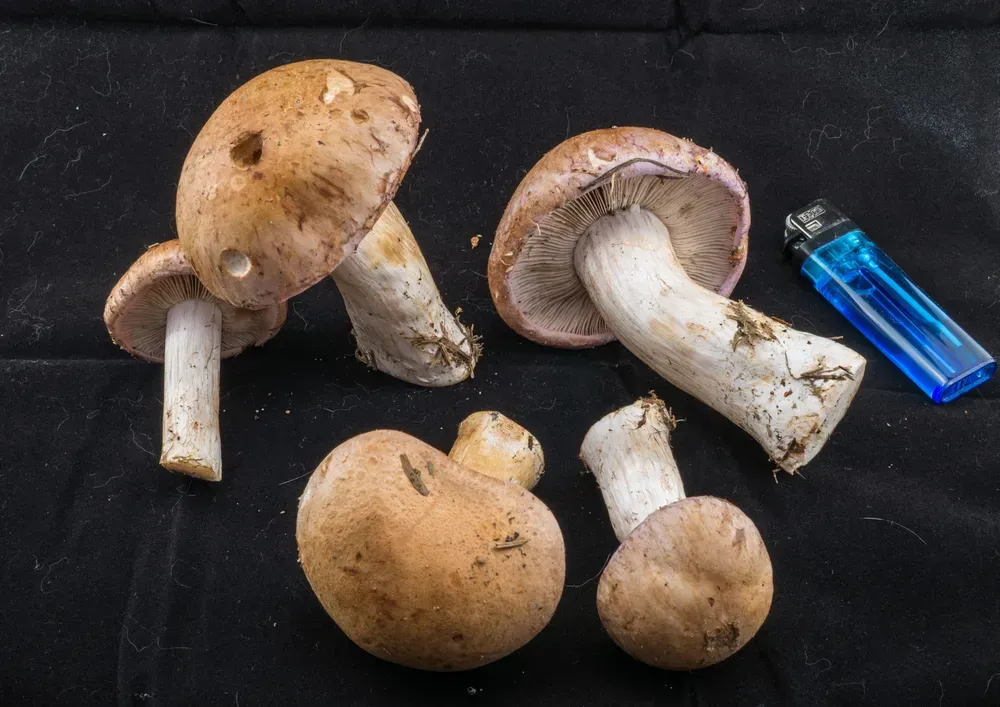
Related species
Mushrooms of the same genus and habitat — to study side by side and never mix up.
Gypsy mushroom
Cortinarius caperatus
Birch webcap
Cortinarius triumphans
Cortinarius esculentus
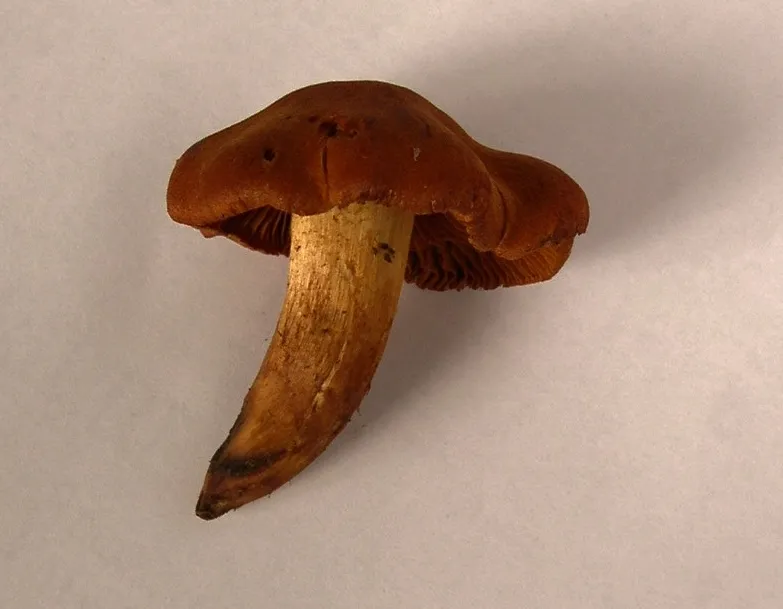
Fool's webcap
Cortinarius orellanus
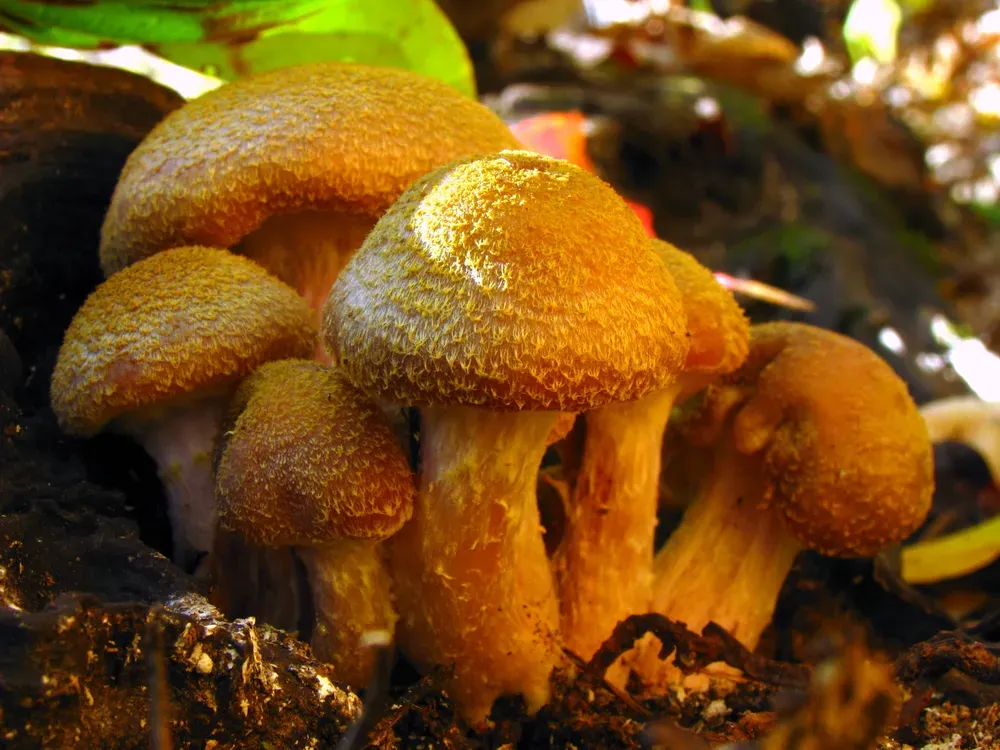
Bulbous honey fungus
Armillaria gallica
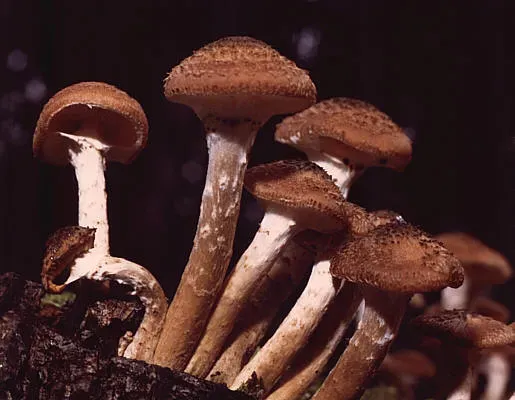
Dark honey fungus
Armillaria ostoyae
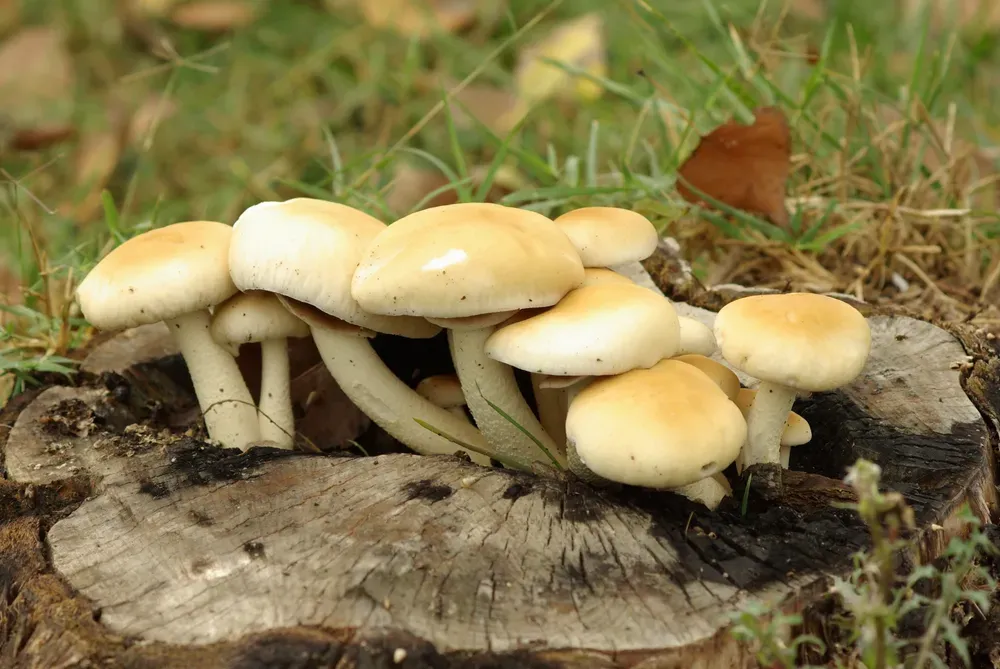
Poplar fieldcap
Cyclocybe aegerita
Ringless honey fungus
Desarmillaria tabescens
Frequently asked questions
Can you eat it?
No. Inedible because of its repulsive camphor-and-potato smell, which doesn't go away with cooking. On its own it contains no described deadly toxins, but the genus Cortinarius has several deadly poisonous species (with orellanine) and telling the species apart precisely is very hard. The rule of modern mycology: don't eat any webcap.
Why is the whole Cortinarius genus dangerous?
Several species in the genus — Cortinarius orellanus, C. rubellus (fool's webcap, deadly webcap) — contain orellanine, a nephrotoxin that destroys kidney cells. Symptoms are delayed by 2-21 days after eating — a record delay among mushroom poisonings. Without timely treatment — acute kidney failure, and in severe cases the need for lifelong hemodialysis or a kidney transplant. Telling these deadly species apart from their "safe" relatives is a job for an experienced mycologist with a microscope, not for an ordinary forager.
What happens if you accidentally eat a goatcheese webcap?
Because of the strong smell, the risk of accidentally eating enough of it is minimal. If it is eaten — usually nausea, an unpleasant aftertaste, possibly mild stomach discomfort. No serious poisonings have been described, but if there's any suspicion of a webcap in your basket — call an ambulance, and get kidney function tests (creatinine, urea) monitored over 2-3 weeks.
How do you recognize a webcap in the forest?
Four features of the genus Cortinarius. (1) Cortina — a cobwebby partial veil between the cap margin and the stem in young mushrooms (like a spider's web). (2) Rusty-brown gills and spore print in mature mushrooms (in young ones the gills can be all sorts of colors — lilac, olive, yellow, reddish). (3) On the stem there's often a thin band of rusty-brown "dust" — spores that settled on the cortina remnants. (4) Large size — many webcaps are sizable (5-15 cm caps), fleshy, with a strong silhouette.
Where does it grow?
In coniferous and mixed forests — mostly with spruce, less often with pine and beech. It likes mossy shady spots and boggy spruce woods. A mycorrhizal partner of spruce.
Which regions of Ukraine is it found in?
Mostly in the forest zone: the Carpathians (especially in old-growth spruce forests), Prykarpattia, Polissia (spruce and pine-spruce forests). It doesn't occur in the steppe or the southern forest-steppe.
When should you look for it?
More like "when to recognize it and walk past". August — October, peaking in September.
What mushrooms is it confused with?
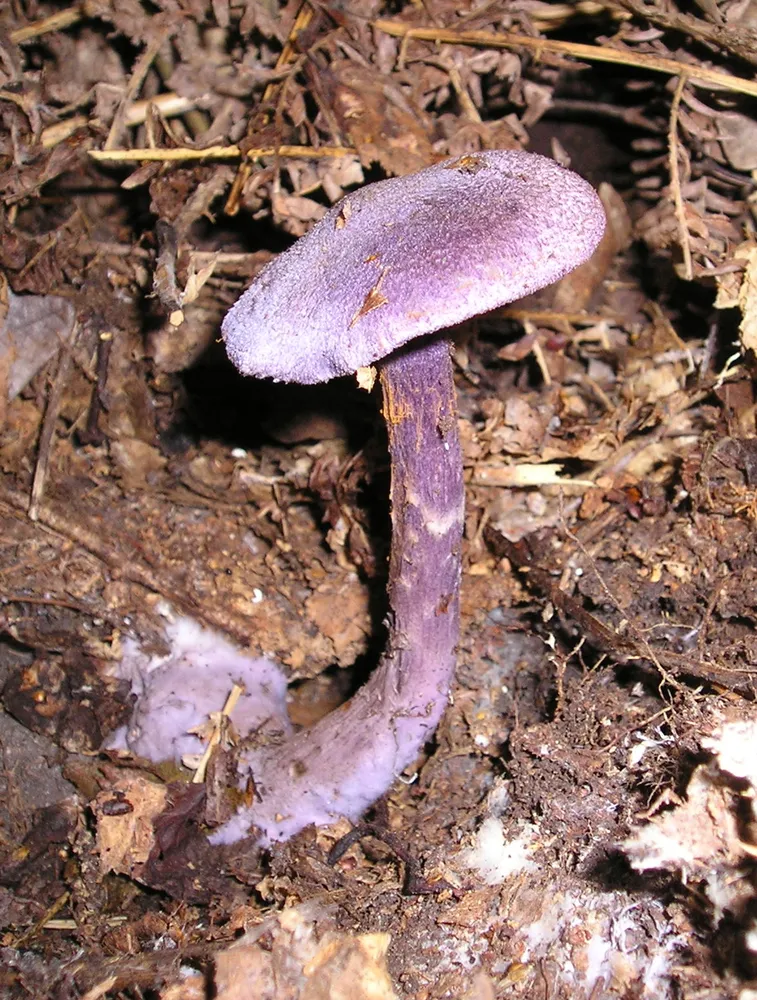
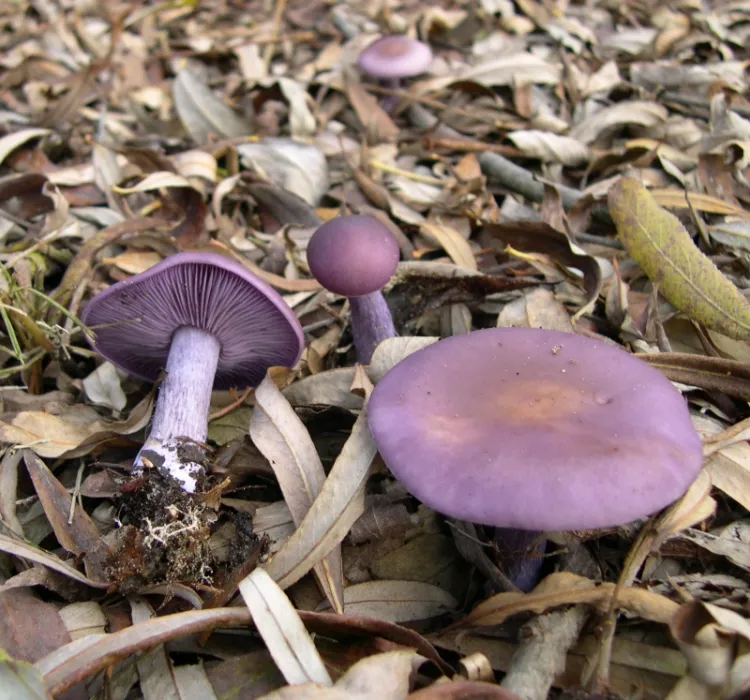
With other lilac webcaps: C. violaceus (violet webcap, rare), C. traganus (gassy webcap, also with a repulsive smell). Among edible lilac look-alikes — the wood blewit (Lepista nuda): its gills are violet, not rusty, the spore print is pale pink, and there's no cortina. If you see a lilac mushroom with a cobwebby veil — it's a webcap, don't eat it.
Is Goatcheese webcap edible or poisonous?
Does Goatcheese webcap have gills or pores?
What does the cap of Goatcheese webcap look like?
What does the stem of Goatcheese webcap look like?
Sources
- [1]Вікіпедія (українська)
- [2]Атлас грибів України, Зеров Д.К. (1979)
- [3]MycoBank Database
- [4]Index Fungorum
- [5]GBIF
- [6]iNaturalist Ukraine