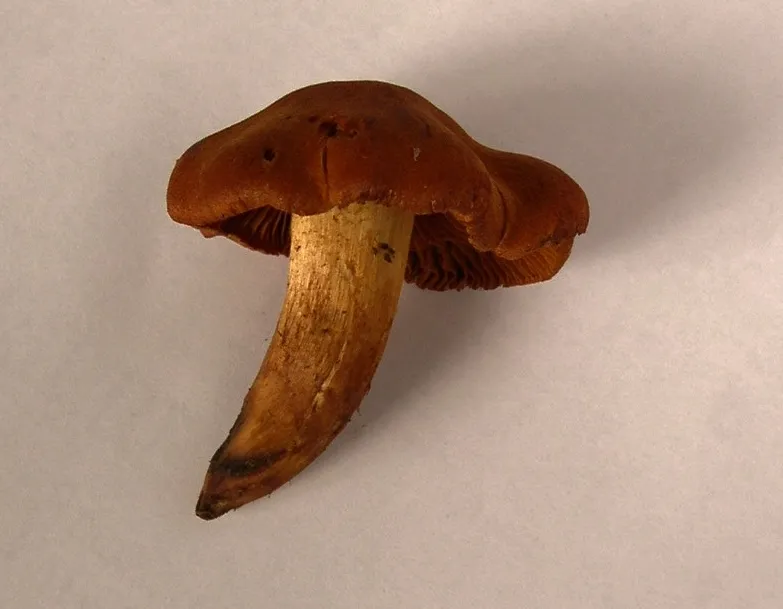
Fool's webcapCortinarius orellanus
Expert-verifiedUpdated October 3, 2026
Passport
- Edibility
- Deadly poisonous
- Season
- Aug — Oct
- Hymenophore
- Gilled
- Cap color
- Orange
- Size
- Medium (5–15 cm)
- Smell
- Odorless
- Reviewed
- Yes ✓
DEADLY POISONOUS
Eating it can cause death. Do not pick it and do not taste it.
It contains orellanine (Cortinarius orellanus contains the highest concentrations among webcaps), as well as the related compounds ben-orellanine and orellinine. Orellanine is a nephrotoxin that destroys the cells of the kidneys' proximal tubules through oxidative stress. It accumulates in the kidneys and produces symptoms slowly.
Its unique feature is a record delay of symptoms: 2-21 days after eating. Because of this delay: people don't link their worsening condition to a mushroom eaten a week earlier, by then several portions may already have been eaten, medical help comes late — when the kidneys are already badly damaged, activated charcoal and gastric lavage are no longer effective.
Clinical phases:
Phase 1 (from day 2, most often days 3-7): thirst, dry mouth, headache, nausea, lower back (kidney) pain, mild gastroenteritis. The symptoms are often written off as a cold or food poisoning.
Phase 2 (days 7-14): oliguria (reduced urination), then anuria (no urine at all). Rising creatinine and urea in the blood, hyperkalemia. This is the phase of full-blown acute kidney failure.
Phase 3 (day 14+): either recovery of kidney function (partial, with scarring), or progression to chronic kidney failure requiring lifelong hemodialysis or a kidney transplant.
Fatality rate up to 15%, mainly due to complications of chronic nephritis or a delayed diagnosis.
Treatment: there is NO specific antidote. Symptomatic: hemodialysis to remove toxins and support the kidneys, infusion therapy, electrolyte correction, and in severe cases a kidney transplant. The effectiveness of treatment depends critically on early detection — in the first 24-48 hours after eating, damage can be limited through forced diuresis and hemodialysis.
Prevention: no orange-russet gilled mushroom with a cobwebby cortina goes into the basket. NO EXCEPTIONS. It has no culinary value, and there are no similar edible species on a dangerous scale (the chanterelle has ridges instead of gills, honey fungus has a ring and paler gills).
If you suspect poisoning, call an ambulance immediately: 112 (the European emergency number) or your local emergency number
Quick answers
Where to look?
Deciduous forest, Mixed forest
When does it appear?
Aug — Oct
Active months: August, September, October.
How to recognize it? Three signs
- Cap color: Orange, Red, Brown
- Cap shape: Convex
- Smell: Odorless
Fruiting season
August – October
Description
The fool's webcap (Cortinarius orellanus) is one of the most treacherous deadly mushrooms of the European flora. In Western literature it is called the "deadly webcap" or simply "orellanus syndrome" as the name of a specific type of mushroom poisoning. It looks innocent: a moderately sized woodland mushroom with an orange-red or fiery orange-russet cap, a fleshy stem and orange gills. No warning colors, no sharp scales, no ring or volva. A classic "ordinary forest mushroom" — and a deadly trap.
It contains orellanine — a nephrotoxin that destroys kidney cells. Symptoms are delayed by 2-21 days after the meal — a record delay among mushroom poisonings, which is why people don't link their worsening condition to the mushroom. First come thirst, headache and oliguria (reduced urination). Then acute kidney failure. Without timely treatment — lifelong hemodialysis or a kidney transplant. Fatality rate up to 15%. There is no specific antidote; treatment is hemodialysis, infusion therapy and monitoring of kidney function.
In Ukraine it occurs in deciduous and mixed forests, mainly with oak and beech — the Carpathians, the Carpathian foothills, Polissia, the forest-steppe. It forms mycorrhiza with oak, beech and, less often, birch. The season runs August — October, peaking in September. It is not abundant, but it is consistently present — and that is exactly the danger: one or two specimens in a basket among "unknown russet" mushrooms can be fatal. THE GOLDEN RULE: no orange or russet gilled mushroom with cobwebby cortina remnants on the stem goes into the basket. No exceptions. If you find one, photograph it for iNaturalist UA, wash your hands after the outing and move on.
Cap
Cap 3-8 cm across, hemispherical to conical-convex in young mushrooms, later becoming convex to flat with a low umbo. Color orange-red, fiery orange, russet-orange, darker in the center, paler at the margin. Surface velvety and dryish, microscopically scaly, not slimy. The cap margin is thin, with fine radial fibers in young mushrooms.
Hymenophore
Gills — attached to the stem, widely spaced, broad. In young mushrooms russet-orange, darkening over time to rusty brown as the spore powder ripens. Spore print rusty brown — a diagnostic feature of the genus Cortinarius. In young mushrooms the gills are covered by a cobweb-like partial veil (cortina).
Stem
Stem 4-9 cm tall, 0.7-1.5 cm thick, cylindrical, long, relatively slender, often thickening toward the base. Color yellow-orange to yellow, paler toward the base. The surface has fine lengthwise fibers. Remnants of the cobwebby cortina on the stem form a thin band with rusty-brown spores that have settled on the veil remnant.
Flesh
Flesh firm, orange-yellow to brownish yellow. When cut, it does not change color. Smell faint, neutral; in some populations with a hint of radish. Taste mild, indistinct (do NOT taste it — even a small amount of toxin is dangerous).
Smell
Faint and neutral, with no distinctive notes. The smell is NOT a warning sign — the mushroom smells neutral, which makes it even more treacherous.
›Scientific synonyms (1)
Cortinarius rutilans Quél.
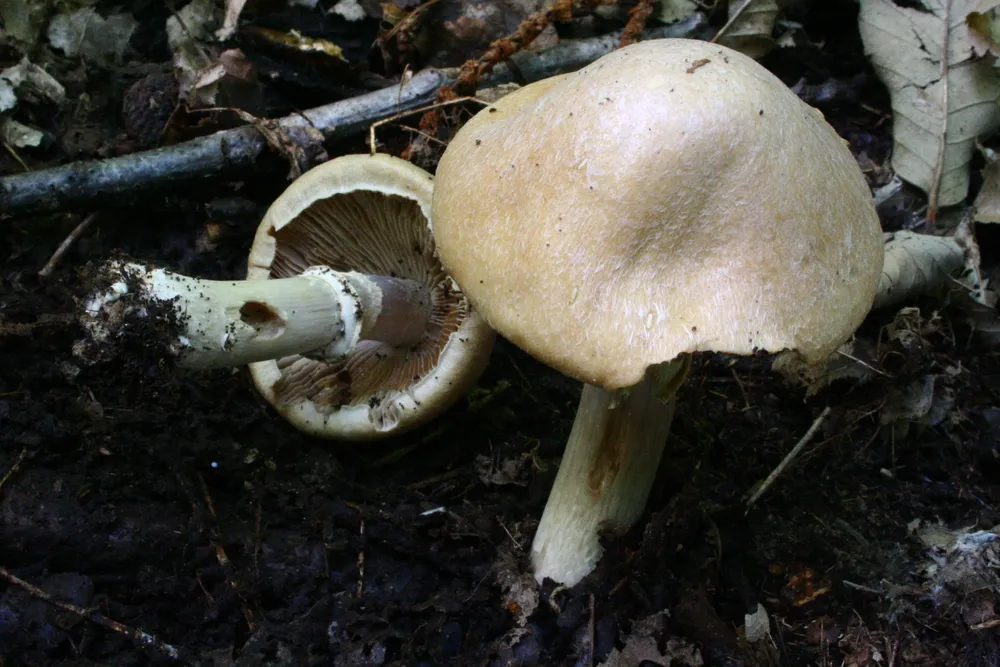
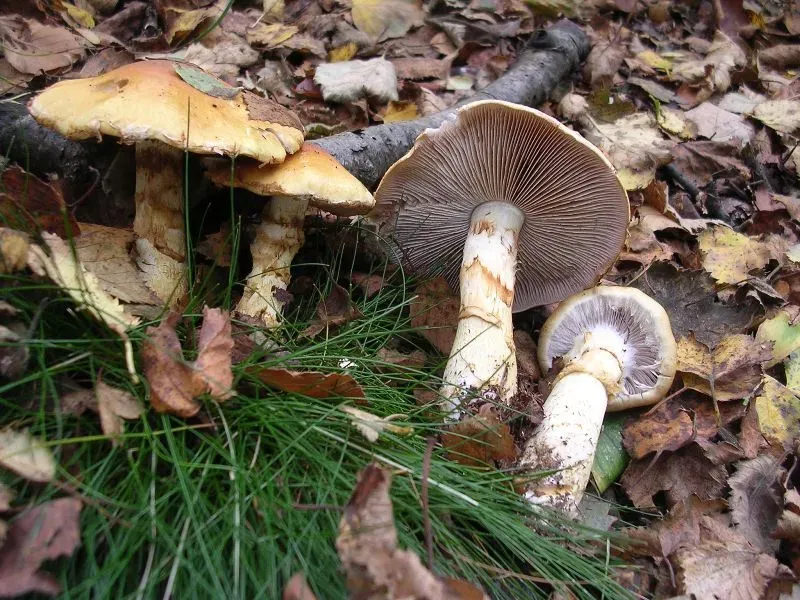
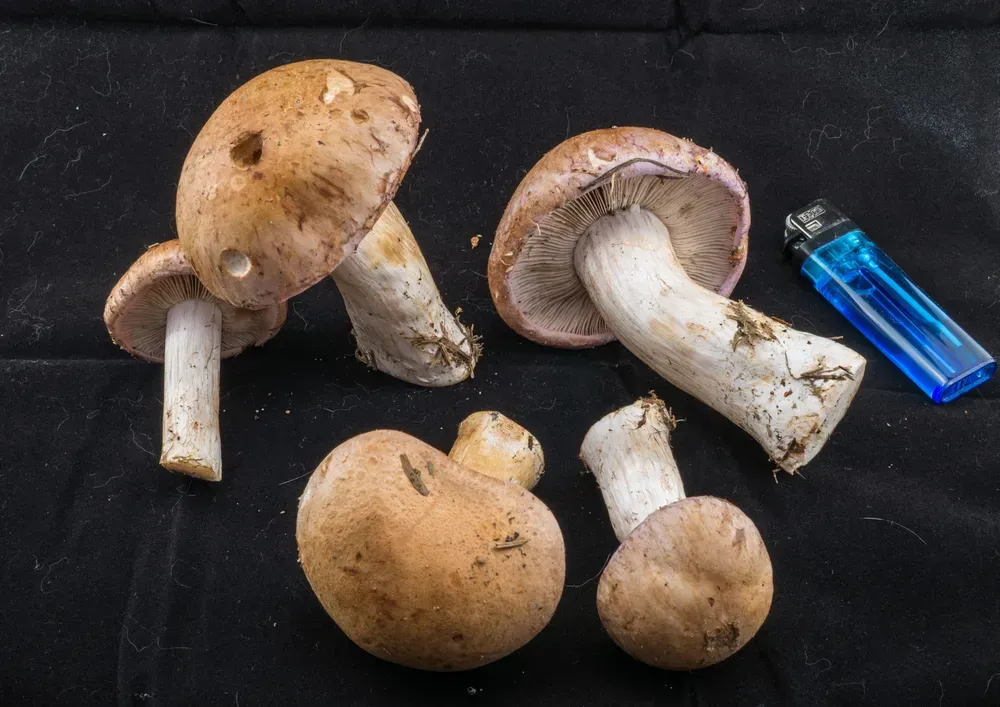
Lookalikes
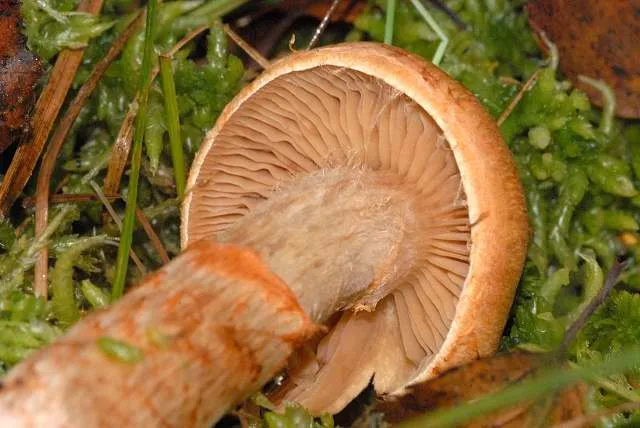
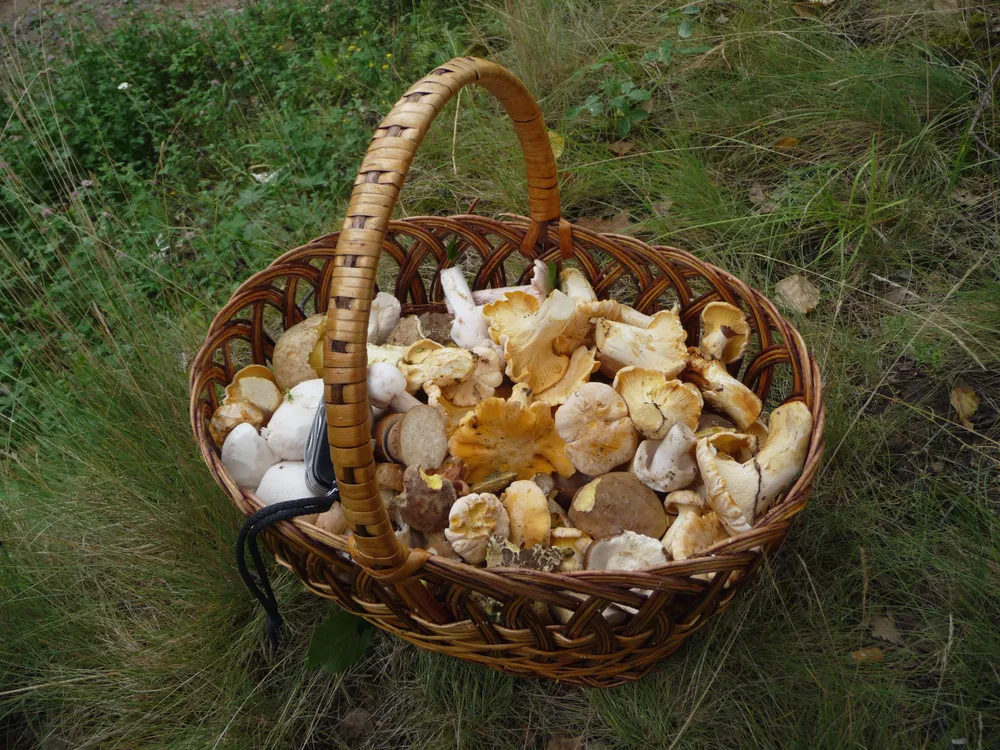
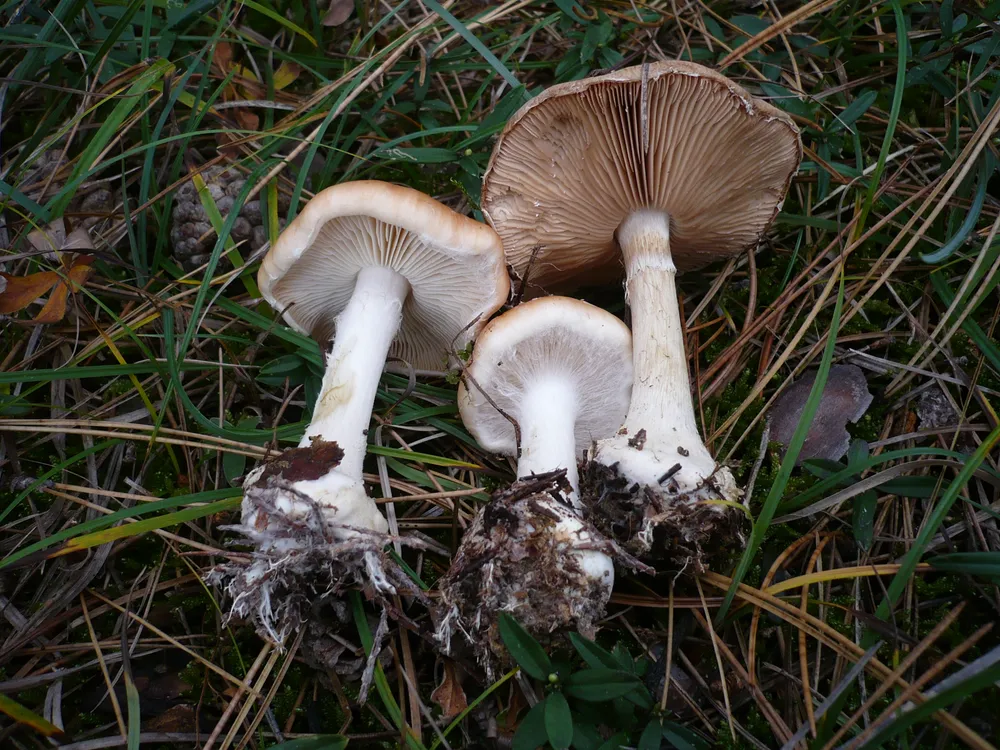
_Fr_387091.webp)
_Ricken_185798.webp)
Related species
Mushrooms of the same genus and habitat — to study side by side and never mix up.
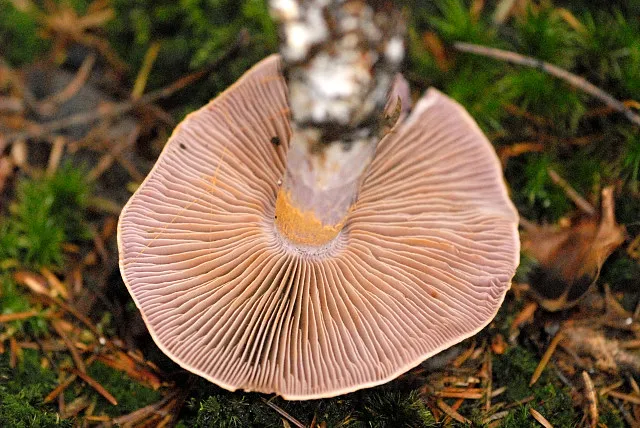
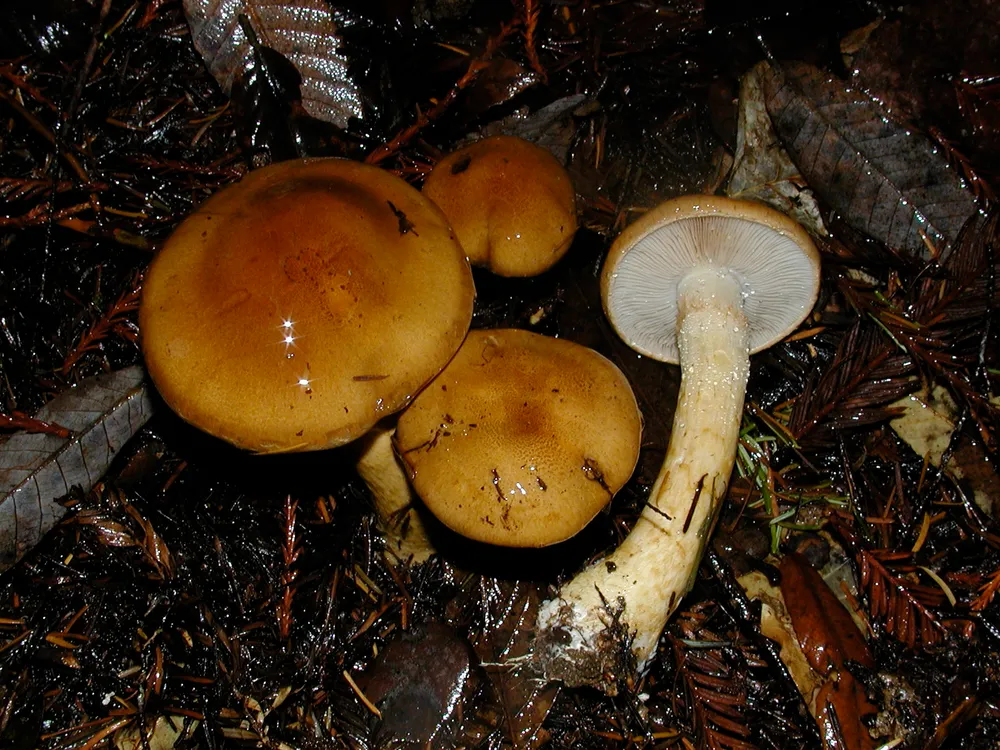
Goatcheese webcap
Cortinarius camphoratus
Orange webcap
Cortinarius mucosus
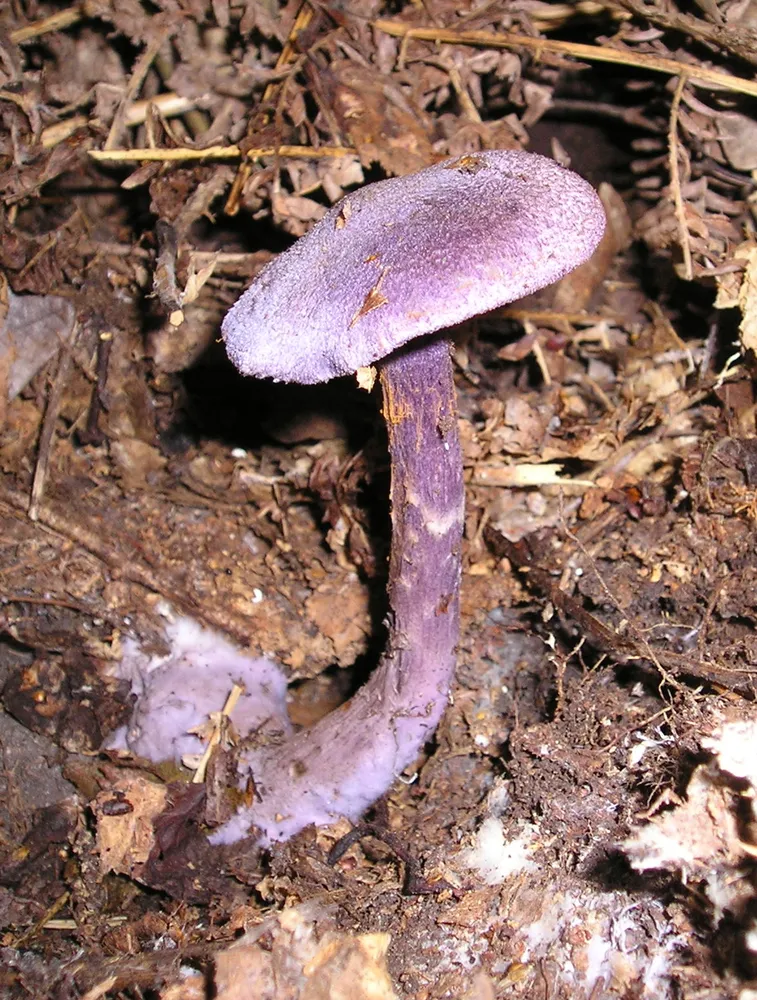
Violet webcap
Cortinarius violaceus
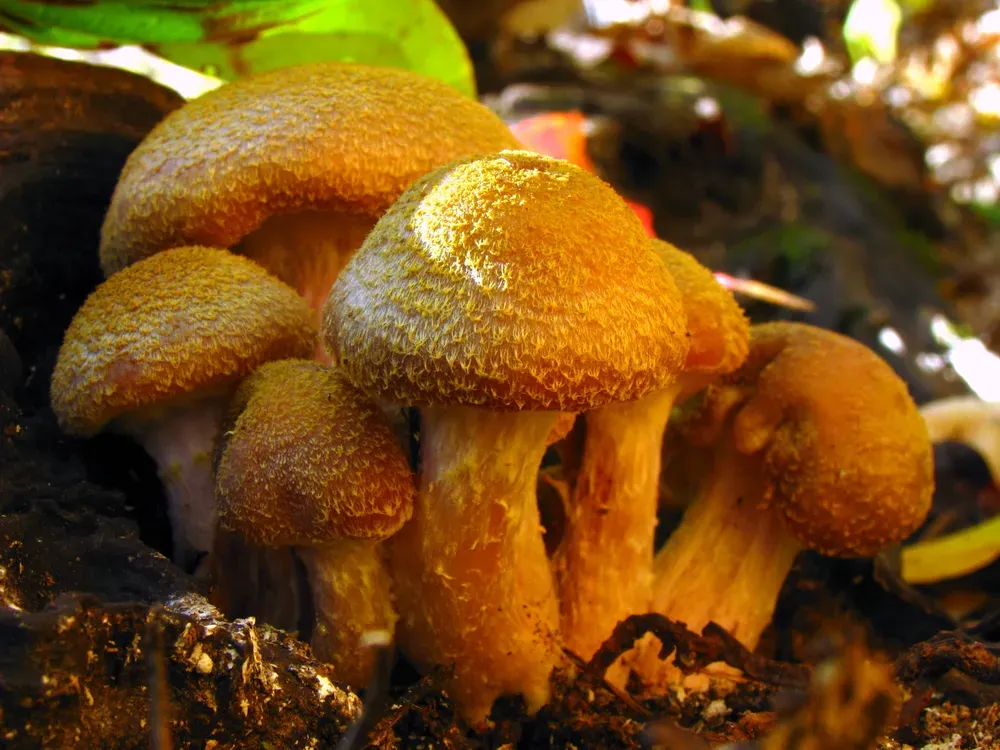
Bulbous honey fungus
Armillaria gallica
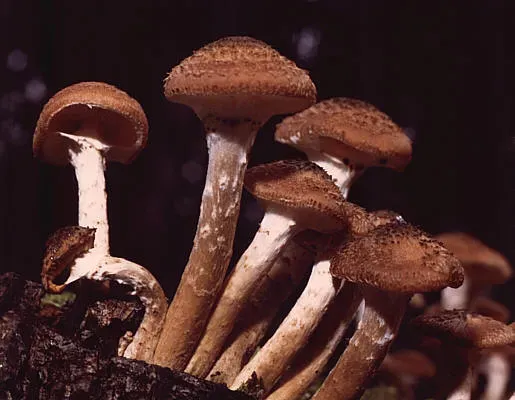
Dark honey fungus
Armillaria ostoyae
Poplar fieldcap
Cyclocybe aegerita
Ringless honey fungus
Desarmillaria tabescens
Agaricus abruptibulbus
Frequently asked questions
Why is it one of the most dangerous mushrooms?
Because of its unique 2-21-day delay of symptoms. The death cap kills within 4-5 days — there is at least a chance of quick help. The fool's webcap is slow: symptoms come a week or two later, the person has already forgotten about the mushroom, and by then the kidneys are badly damaged. There is no antidote. Fatality rate up to 15%; survivors often need lifelong hemodialysis. This isn't a "scare story" — there are documented cases of mass poisonings in Poland (1957, 102 people, 19 deaths), Scotland and France.
How can you identify it for sure in the forest?
Four features together. (1) Cap color: orange-red, russet fiery orange. (2) Gill color: russet-orange in young mushrooms, rusty brown in mature ones. (3) Cobwebby cortina: in young mushrooms — fine white or yellowish fibers between the cap margin and the stem. In old ones — a band of rusty-brown spores on the stem. (4) Rusty-brown spore print: a print on paper within 6-12 hours. Any russet gilled forest mushroom with a cobwebby cortina is a suspected carrier of a deadly toxin. We don't take it.
What should you do if someone suspects they've eaten it?
See a doctor IMMEDIATELY, even without symptoms. Say: "suspected webcap with orellanine, ate mushrooms between 2 days and 3 weeks ago". The doctor will order kidney function tests (creatinine, urea, electrolytes), forced diuresis, and hemodialysis if creatinine rises. Time is critical: the first 24-48 hours after eating give the best chance of full recovery. Keep any remains of the mushroom — anything: the cap, soil from where it was found, photos. Testing for orellanine is available in specialized laboratories.
Is touching it or breathing in the spores dangerous?
No, they're safe. The toxins act only when swallowed (eaten). You can touch the mushroom with your hands, photograph it, carry it out of the forest. Just don't eat it and don't "test it on your tongue" — serious poisonings from a single tiny taste have been described. Washing your hands after the outing is standard hygiene and never a bad idea.
Where does it grow?
In deciduous and mixed forests — mainly with oak and beech, less often with birch. It likes mossy patches, forest edges and shady slopes. It isn't fussy about soil type.
Which regions of Ukraine is it found in?
Throughout the forest and forest-steppe zones: the Carpathians, the Carpathian foothills, Polissia, the forest-steppe. In the steppe — in floodplain oak woods. Not abundant, but consistently present — this isn't "some exotic species from the Alps", it's our local mushroom, one you can come across on an ordinary mushroom-picking trip.
When should you look for it?
Rather — "when to recognize it and pass it by". August — October, peaking in September. Its season coincides with the main mushroom season, so the risk of confusion is highest in September.
What mushrooms can it be confused with?
With other russet webcaps — C. rubellus (deadly webcap), also deadly. With Gymnopilus species (rustgills) — bitter, inedible, on conifer wood. With a young chanterelle (Cantharellus cibarius) — edible, but it has ridges on the underside, not gills, and a characteristic fruity apricot smell. With a young Galerina — also deadly, but on stumps. Our firm advice: gilled mushrooms with a rusty-brown spore print and an orange cap — we NEVER take them.
Should I worry when I'm just walking in the forest?
Just walking — no, there's no need. The mushroom doesn't "jump into your basket" or give off anything. You only need to worry if you are picking mushrooms and unfamiliar russet gilled species have ended up in your basket. For ordinary forest walks this species poses no danger — it's simply a fact worth knowing, so you can make sure your foraging relies on 100% identified species.
Is Fool's webcap edible or poisonous?
Does Fool's webcap have gills or pores?
What does the cap of Fool's webcap look like?
Sources
- [1]Вікіпедія (українська)
- [2]Атлас грибів України, Зеров Д.К. (1979)
- [3]MycoBank Database
- [4]Index Fungorum
- [5]GBIF
- [6]iNaturalist Ukraine