THIS DATA HAS NOT BEEN VERIFIED BY AN EXPERT. Use at your own risk.
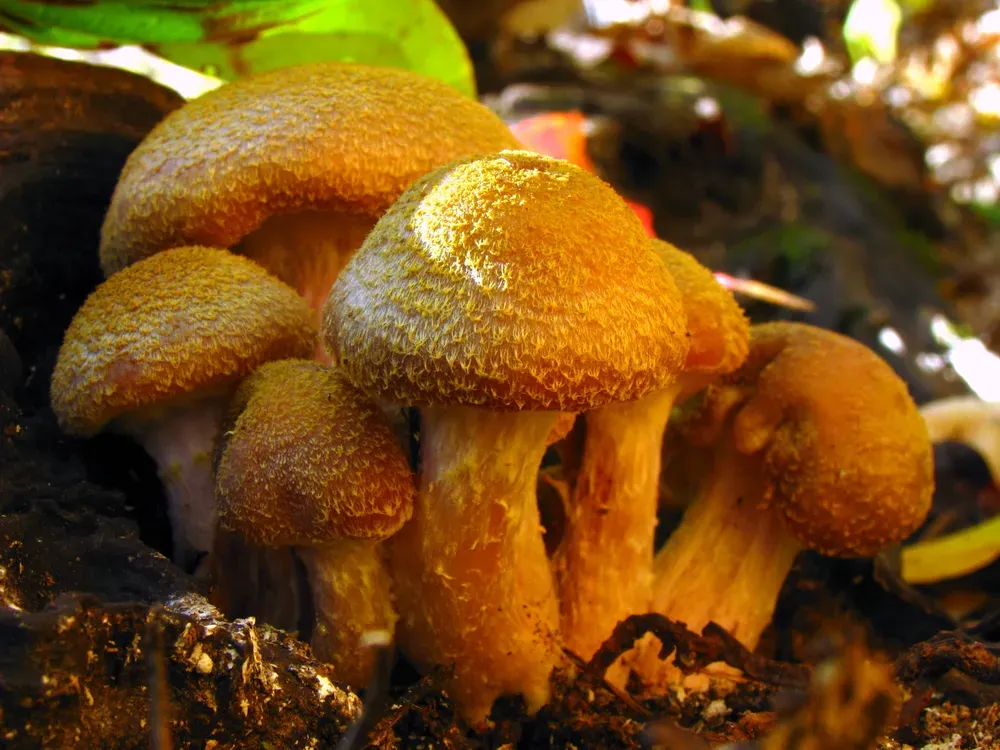
Bulbous honey fungusArmillaria gallica
Under reviewUpdated October 3, 2026
Passport
- Edibility
- Conditionally edible
- Season
- Aug — Oct
- Hymenophore
- Gilled
- Cap color
- Yellow
- Size
- Medium (5–15 cm)
- Smell
- Pleasant
- Reviewed
- Under review
Quick answers
Where to look?
Deciduous forest, Mixed forest
When does it appear?
Aug — Oct
Active months: August, September, October.
How to recognize it? Three signs
- Cap color: Yellow, Brown, Orange
- Cap shape: Convex, Flat
- Smell: Pleasant
Fruiting season
August – October
Description
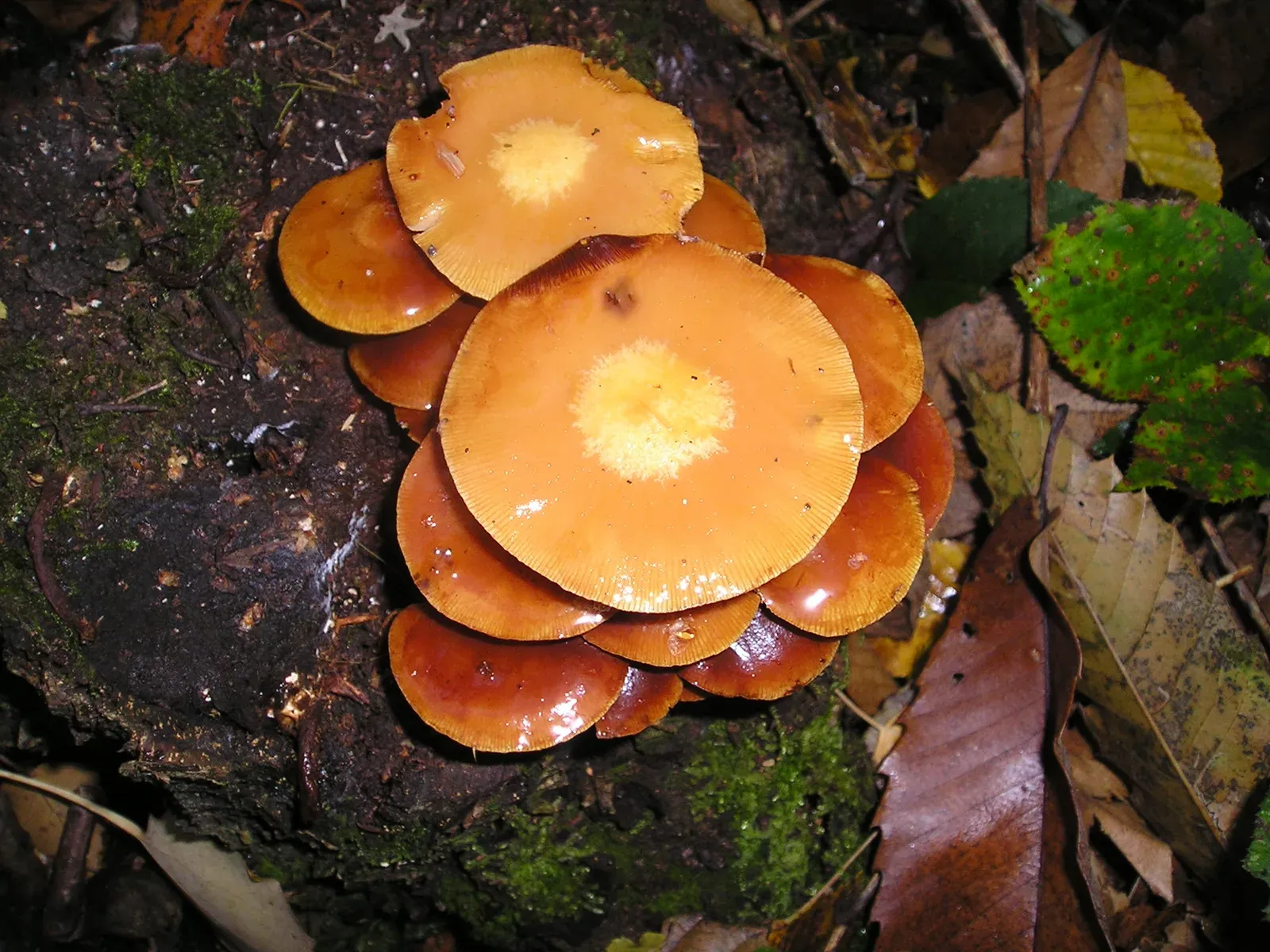
The bulbous honey fungus, known to science as Armillaria gallica (and also as Armillaria lutea or Armillaria bulbosa), is another member of the honey fungus family, standing out from its relatives with a characteristic bulbous, thickened stem base, to which it owes its name. Unlike the aggressive honey fungus (Armillaria mellea), this species more often behaves as a modest saprotroph of dead wood and only rarely as a weak parasite of weakened trees. The ring on its stem is weak, cobwebby and yellowish, which also helps to identify the species.
In Ukraine, the bulbous honey fungus occurs in deciduous and mixed forests, where it grows on stumps, roots and fallen wood of broadleaf trees, often singly or in small groups rather than in the dense clusters typical of honey fungus. It fruits in late summer and autumn — from August to October.
In terms of edibility, the bulbous honey fungus is conditionally edible: it is eaten only when thoroughly boiled, because raw or undercooked mushrooms taste acrid and can cause digestive upset. Its quality is somewhat lower than that of honey fungus: the flesh is thinner and the taste more modest. Mostly young caps are used for food; after boiling they are fried, pickled and salted. Because it resembles other honey fungi, it often ends up in the same basket.
Cap
The cap of the bulbous honey fungus reaches 3 to 10 centimeters in diameter. When young it is convex-bell-shaped; with age it opens out to flat. The surface is covered with small, thin fibrous scales, especially in the center, and becomes smoother in wet weather. The color is yellowish brown, honey brown or ocher, darker in the center; the margin is paler, often with a reddish tinge. In dry weather the color fades noticeably.
Hymenophore
The hymenophore is gilled. The gills are whitish or cream, developing yellowish-reddish spots with age, attached to the stem or running slightly down it. The spore print is white. Pale gills that turn brownish with age, together with the weak cobwebby ring, help you recognize this species.
Stem
The stem is the most distinctive feature of the species: cylindrical, with a noticeably thickened, bulbous base, 5 to 12 centimeters tall. It is yellowish brown at the top and paler toward the bottom. The ring is weak, cobwebby-membranous, yellowish, and often disappears quickly, leaving only a fibrous band. It is precisely the swollen stem base that gave the mushroom its folk name, «thick-legged». There is no volva.
Flesh
The flesh is whitish, rather thin in the cap and fibrous in the stem. It barely changes color when cut. Raw flesh tastes acrid, so the mushroom must always be thoroughly boiled before eating, after which the taste becomes mild. The quality of the flesh is somewhat lower than in honey fungus, so young caps are chosen for the table.
Smell
The smell is faint, pleasant, somewhat sweetish, sometimes with a cheesy hint. The scent is not a defining feature, so for identification rely on the bulbous, swollen stem base, the weak cobwebby ring, the honey-colored scaly cap and its growth on the wood of broadleaf trees.
›Scientific synonyms (3)
Armillaria lutea Gillet, Armillaria bulbosa (Barla) Kile & Watling, Armillariella lutea (Gillet) Karst.
Lookalikes
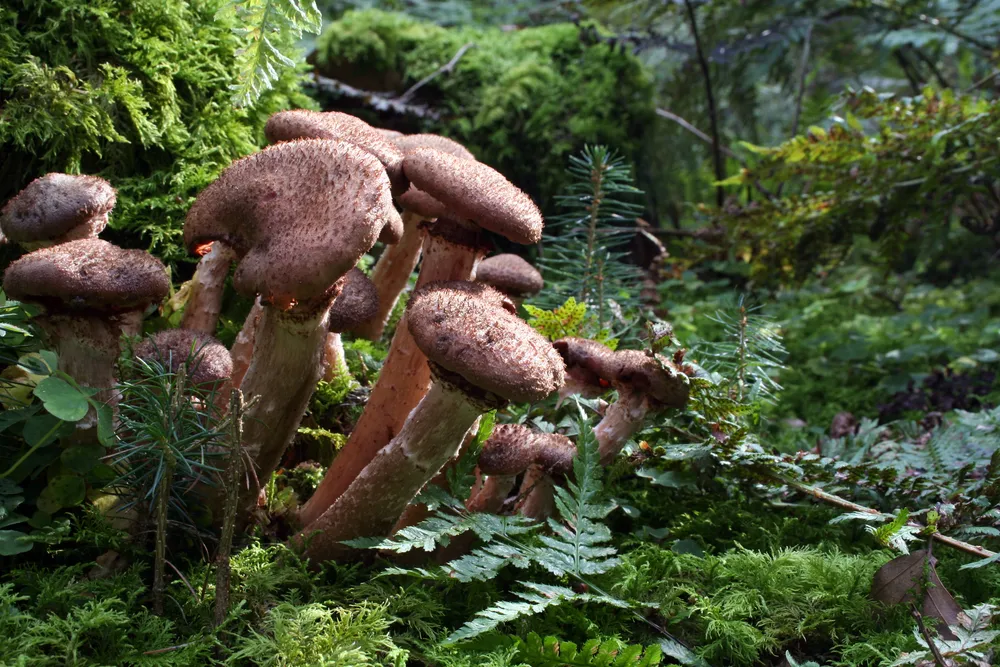
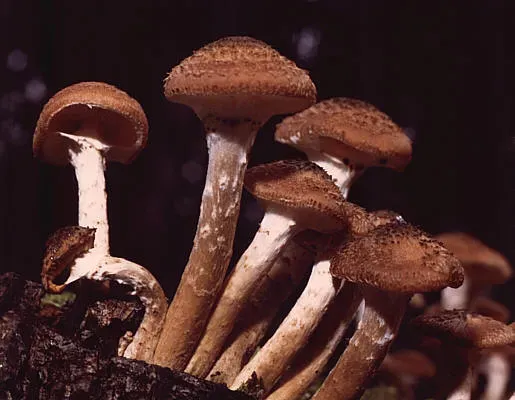
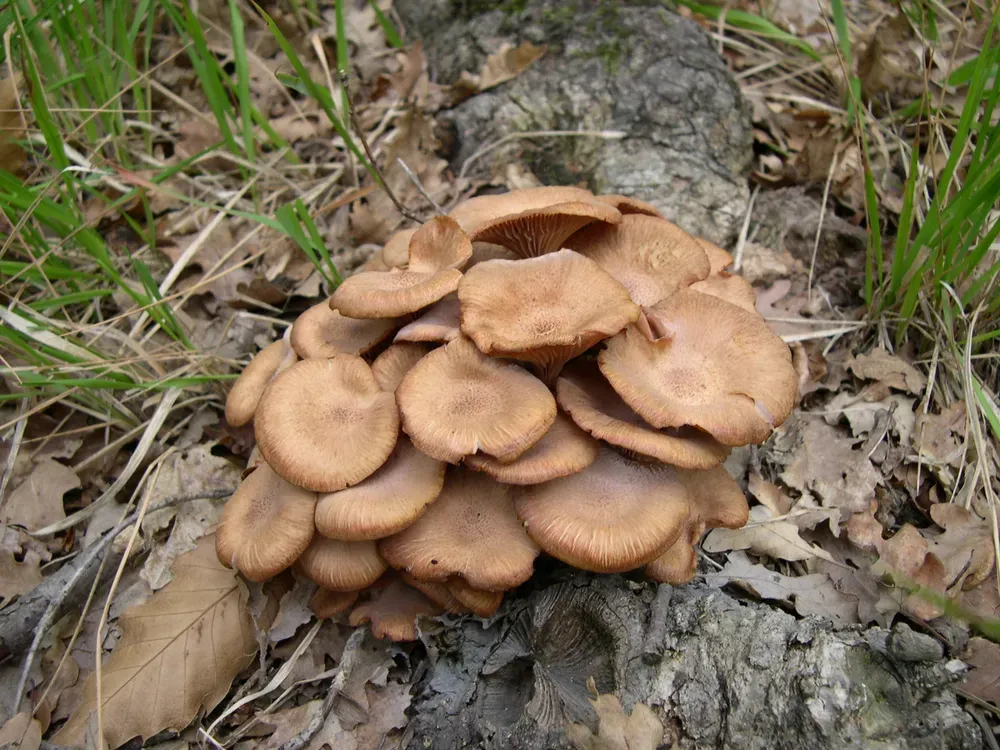
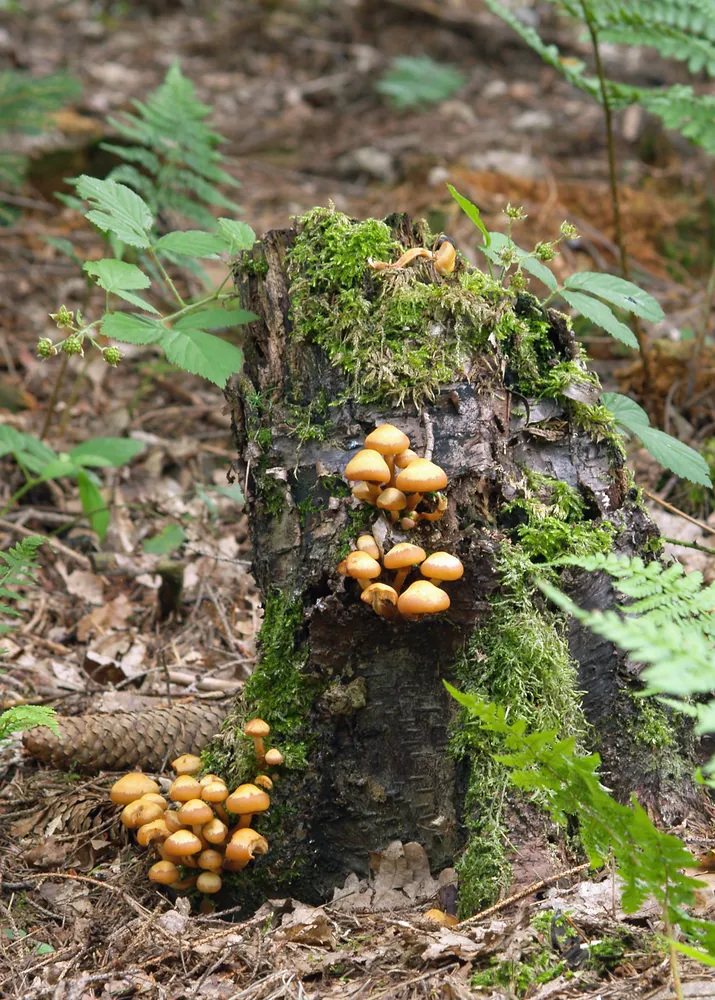
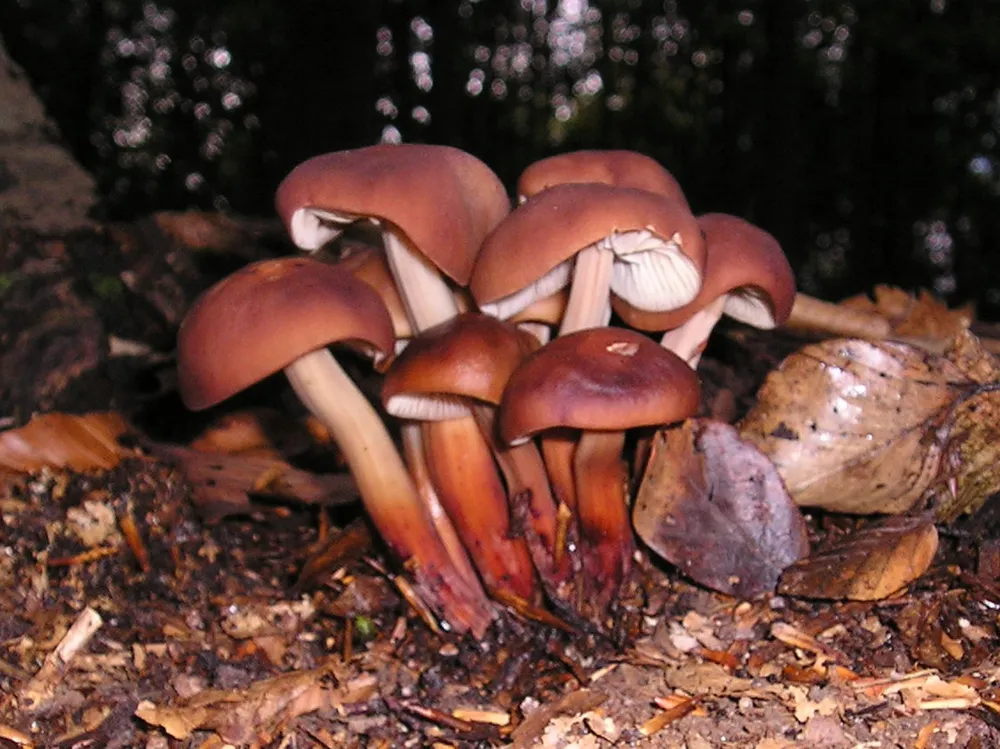
Related species
Mushrooms of the same genus and habitat — to study side by side and never mix up.
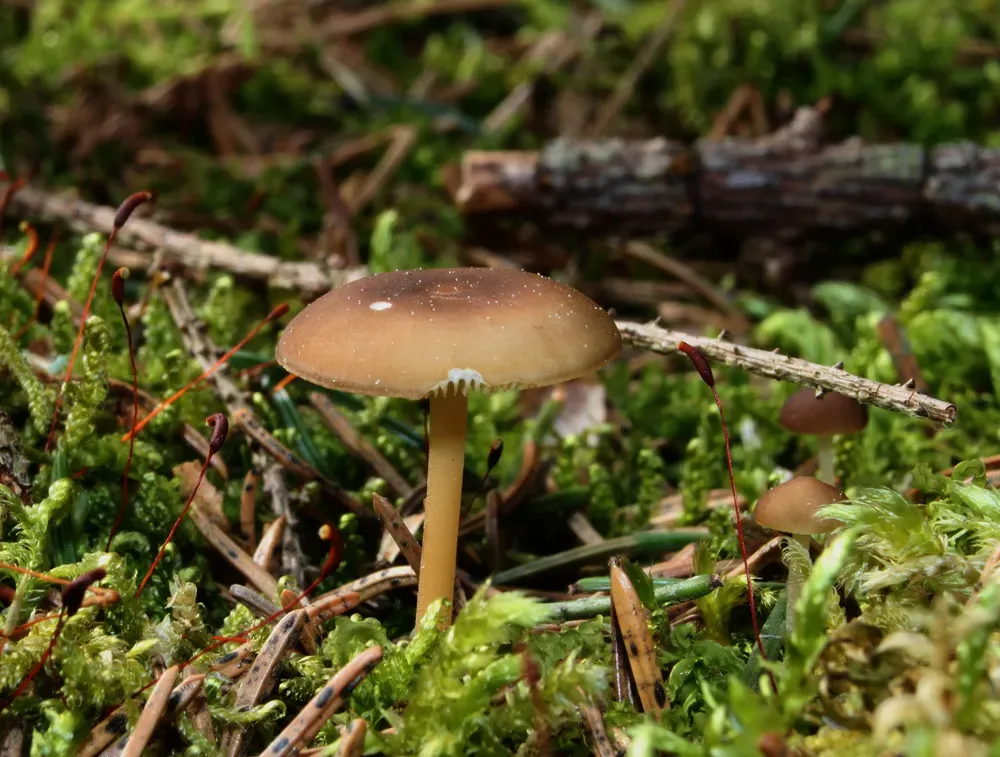
Sprucecone cap
Strobilurus esculentus
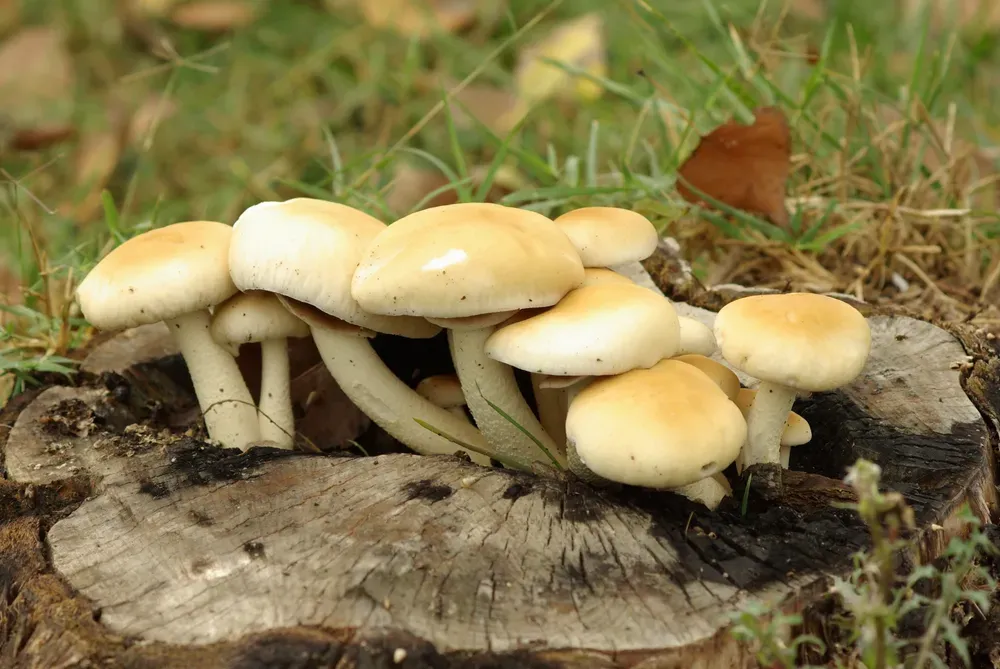
Poplar fieldcap
Cyclocybe aegerita
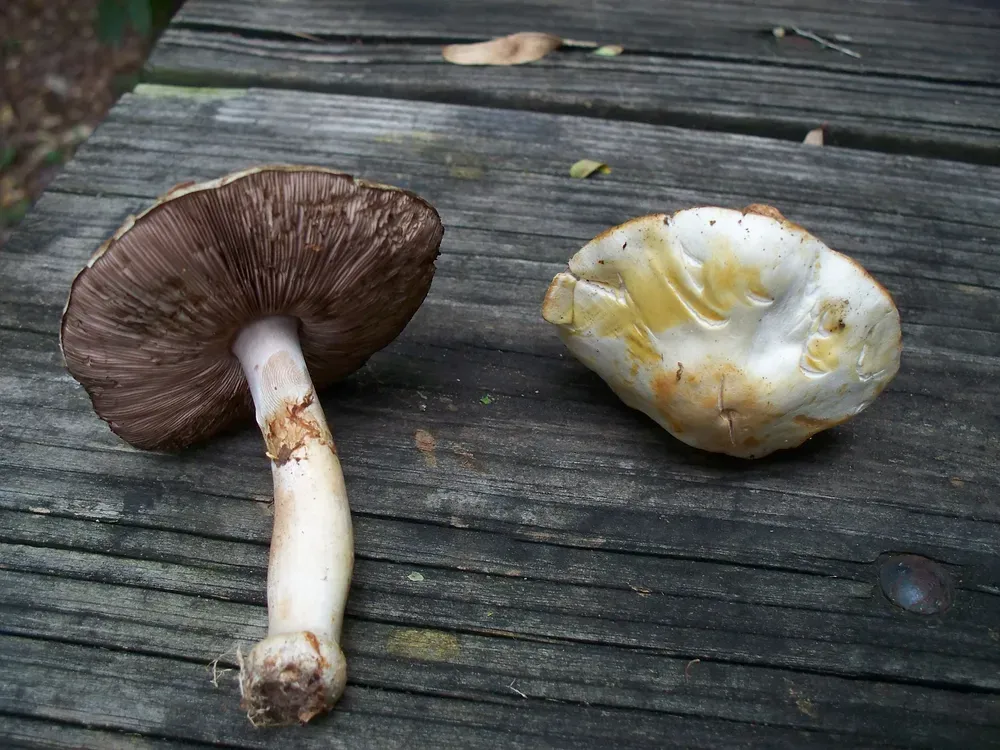
Agaricus abruptibulbus
Agaricus haemorrhoidarius
Agaricus haemorroidarius
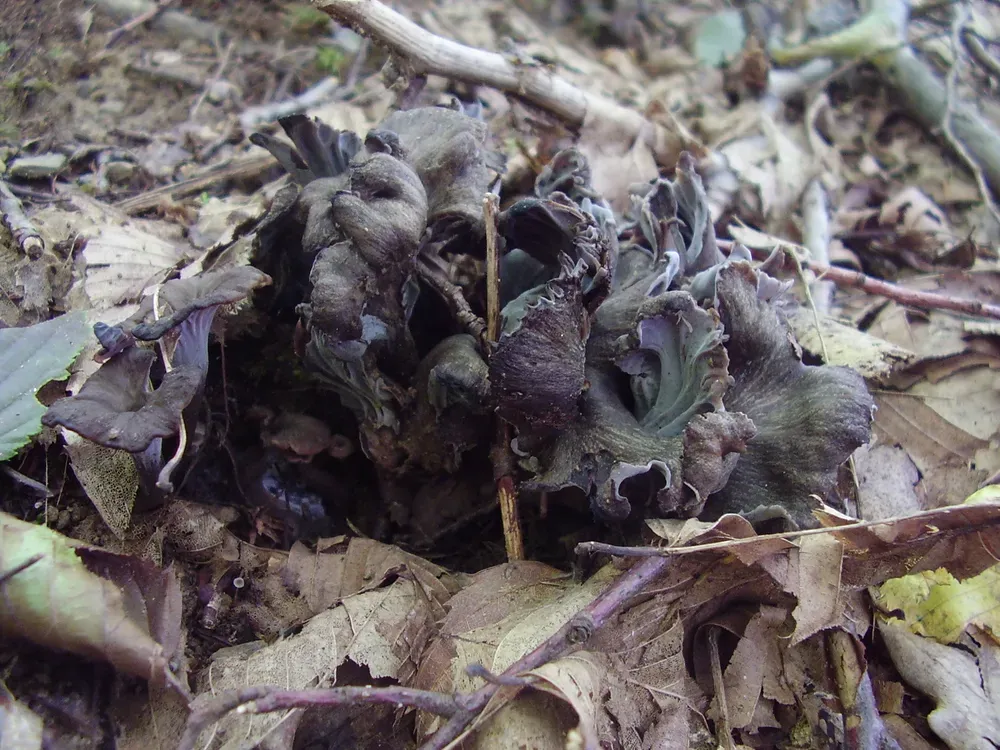
Ashen chanterelle
Cantharellus cinereus
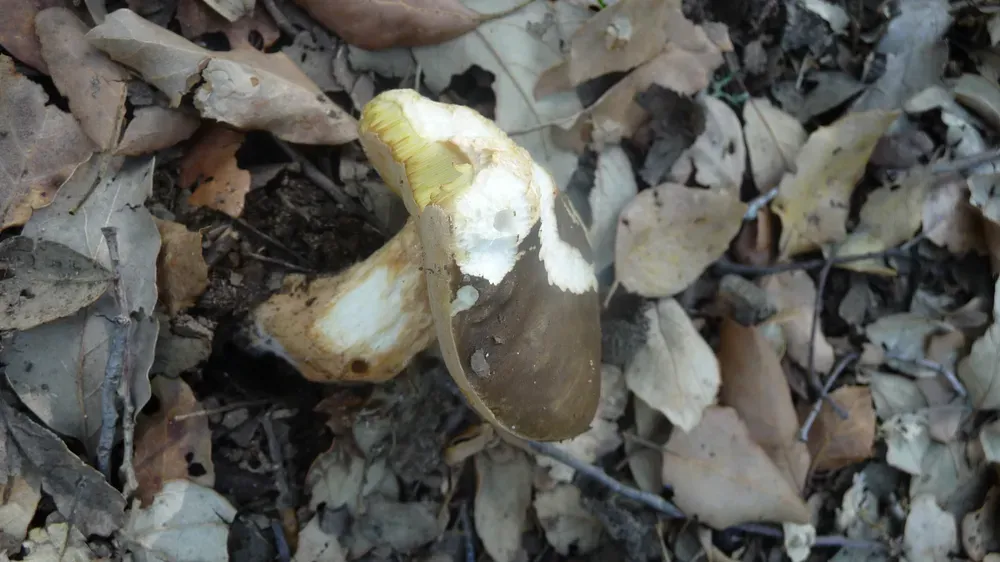
Blushing bolete
Leccinum roseofractum
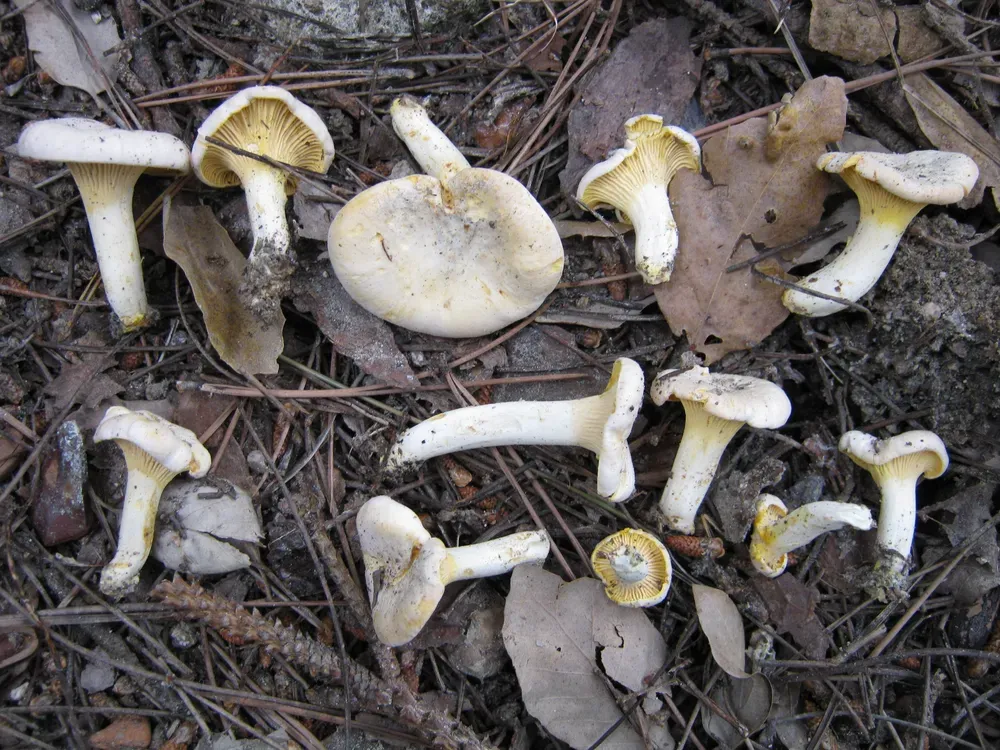
Cantharellus pallens
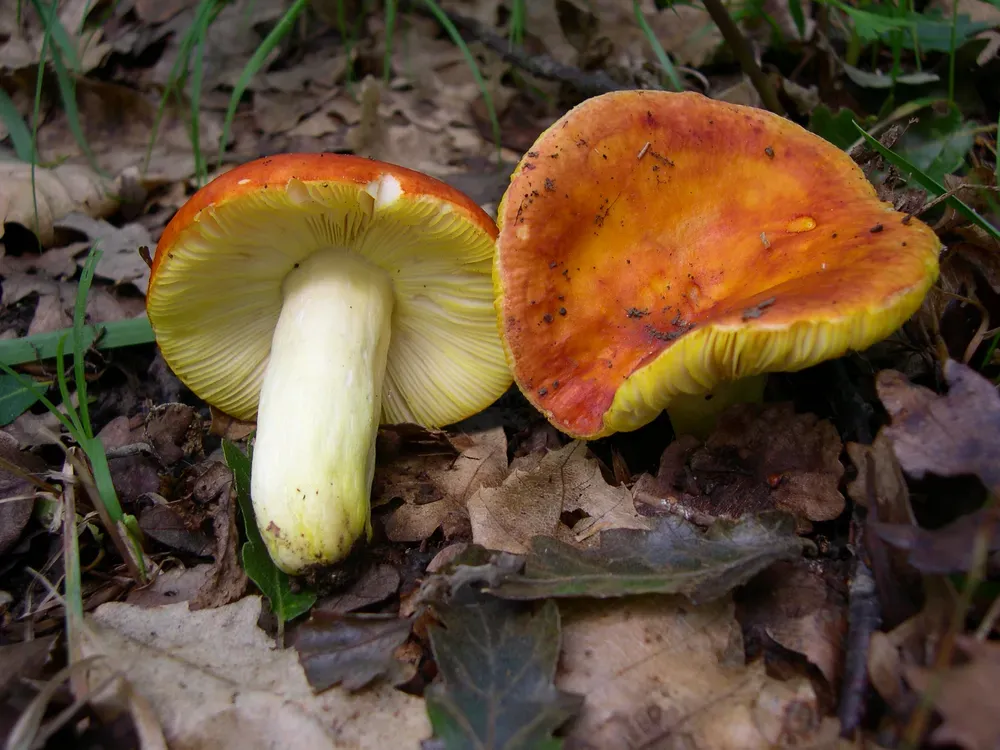
Gilded brittlegill
Russula aurea
Related reading
Frequently asked questions
Is Bulbous honey fungus edible or poisonous?
Does Bulbous honey fungus have gills or pores?
What does the cap of Bulbous honey fungus look like?
What does the stem of Bulbous honey fungus look like?
What do Bulbous honey fungus smell and taste like?
Where does Bulbous honey fungus grow?
Which trees does Bulbous honey fungus grow under?
When should you pick Bulbous honey fungus?
What can Bulbous honey fungus be confused with?
How do you cook Bulbous honey fungus?
Can you dry Bulbous honey fungus?
What is the scientific name of Bulbous honey fungus?
Sources
- [1]Вікіпедія (українська)
- [2]Атлас грибів України, Зеров Д.К. (1979)
- [3]MycoBank Database
- [4]Index Fungorum
- [5]GBIF
- [6]iNaturalist Ukraine