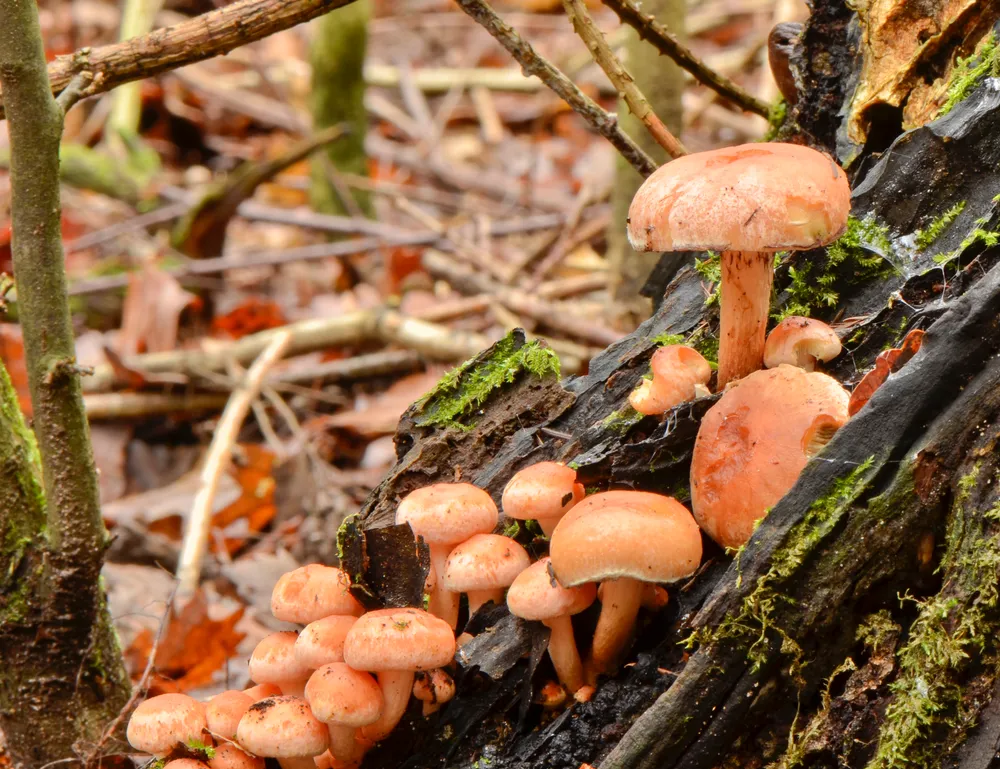
Brick tuftHypholoma lateritium
Expert-verifiedUpdated October 3, 2026
Passport
- Edibility
- Inedible
- Season
- Aug — Nov
- Hymenophore
- Gilled
- Cap color
- Orange
- Size
- Medium (5–15 cm)
- Smell
- Odorless
- Reviewed
- Yes ✓
Quick answers
Where to look?
Deciduous forest, Mixed forest
When does it appear?
Aug — Nov
Active months: August, September, October, November.
How to recognize it? Three signs
- Cap color: Orange, Red, Brown
- Cap shape: Convex
- Smell: Odorless
Fruiting season
August – November
Description
Brick tuft (Hypholoma lateritium, in some literature — H. sublateritium) is the most recognizable of the Hypholoma species thanks to its bright brick-orange cap, which you can spot on old broadleaf stumps from several meters away. Soviet and Eastern European literature used to label it as conditionally edible after boiling, but modern Western mycologists unanimously classify it as inedible or mildly poisonous because of consistently recorded gastrointestinal upsets, even after proper preparation.
Don't confuse it with its "good" relative — Hypholoma capnoides (conifer tuft), which is edible. Brick tuft has bitter-tasting flesh (especially in the stem) and causes nausea, abdominal pain and diarrhea in some people 1-3 hours after eating. Symptoms pass within 6-12 hours without serious consequences, but the dish is ruined, and children and people with sensitive digestion may have more serious reactions.
In Ukraine it is common in broadleaf and mixed forests: the Carpathians, Polissia, the forest-steppe. A saprotroph on broadleaf stumps — oak, beech, hornbeam, poplar. The season runs August — November, peaking in September-October. It often grows in clusters of 10-30 fruiting bodies, especially abundantly on old oak stumps. This is a mushroom worth knowing by sight — and walking past, even if someone advises you to "just boil it".
Cap
Cap 4-10 cm across, hemispherical with an inrolled margin when young, becoming convex with a low umbo over time. Color bright brick-orange, brick-red, darker toward the center to brownish orange, with a yellowish margin. Surface smooth, slightly slimy in wet weather. Often with whitish veil remnants along the cap margin.
Hymenophore
Gilled hymenophore — the gills are attached to the stem, moderately crowded. When young they are yellowish white, darkening with age to olive gray, then dark purplish gray as the spores ripen. Spore print dark purple-brown to blackish brown. They never turn bright sulfur yellow.
Stem
Stem 5-10 cm tall, 0.8-1.5 cm thick, cylindrical, often tapering toward the base. Color yellowish cream at the top, darkening with age to reddish brown toward the base. Surface with fine lengthwise fibers. The ring is faint — young specimens may have a thin fibrous ring zone, which disappears in older ones.
Flesh
Flesh firm and meaty in the cap, yellowish to pale cream. When cut it does not change color. Smell faintly mushroomy. Taste bitterish, especially in the stem and in older specimens — a diagnostic feature.
Smell
Faintly mushroomy, neutral, with no distinctive notes. Older specimens have a slightly rancid note.
Lookalikes
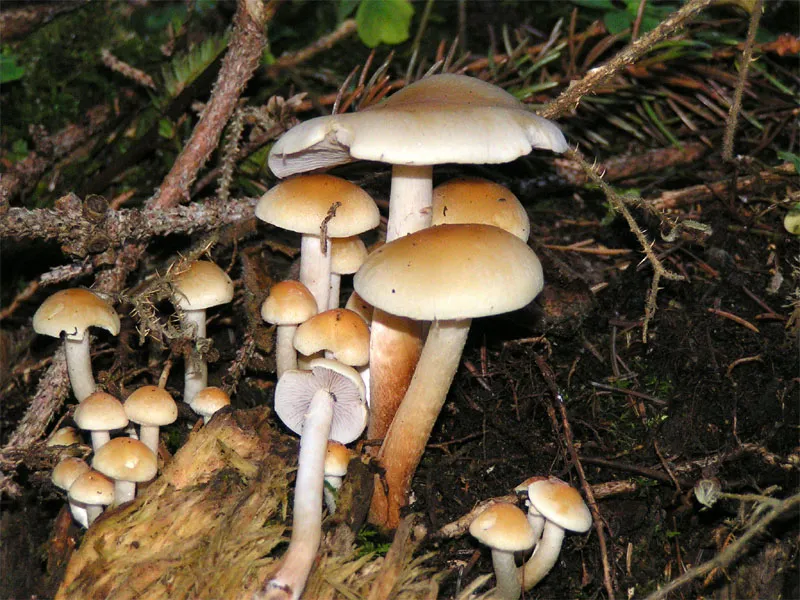
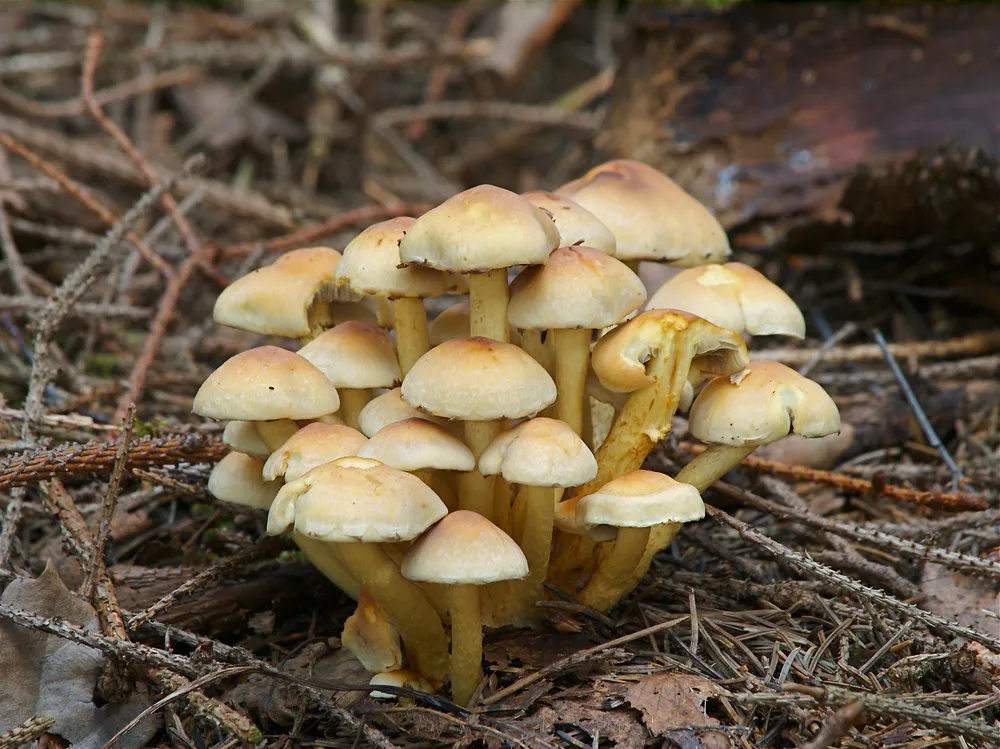
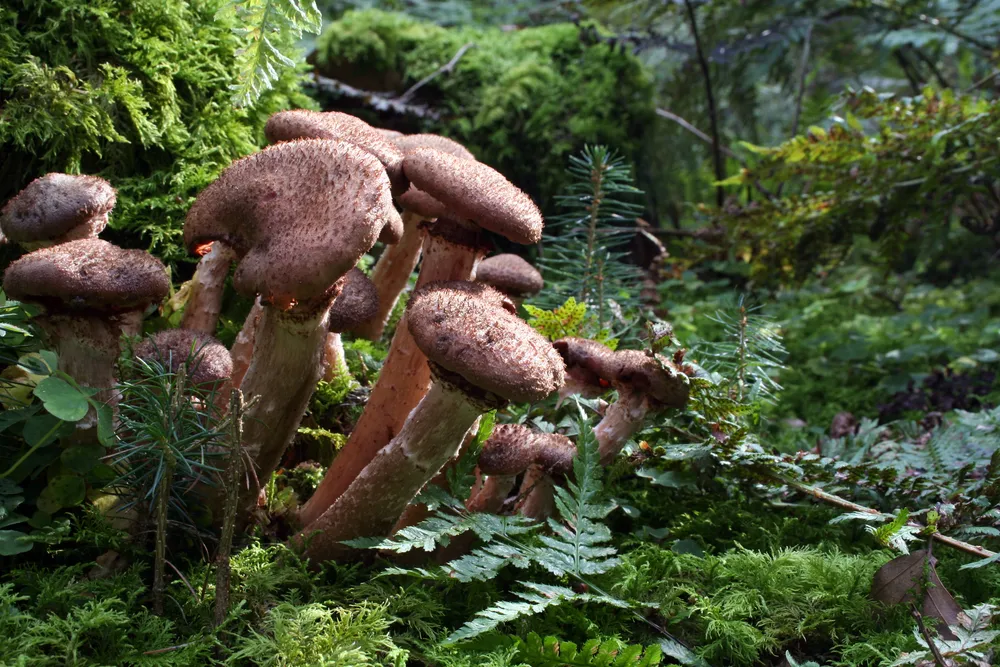
Related species
Mushrooms of the same genus and habitat — to study side by side and never mix up.
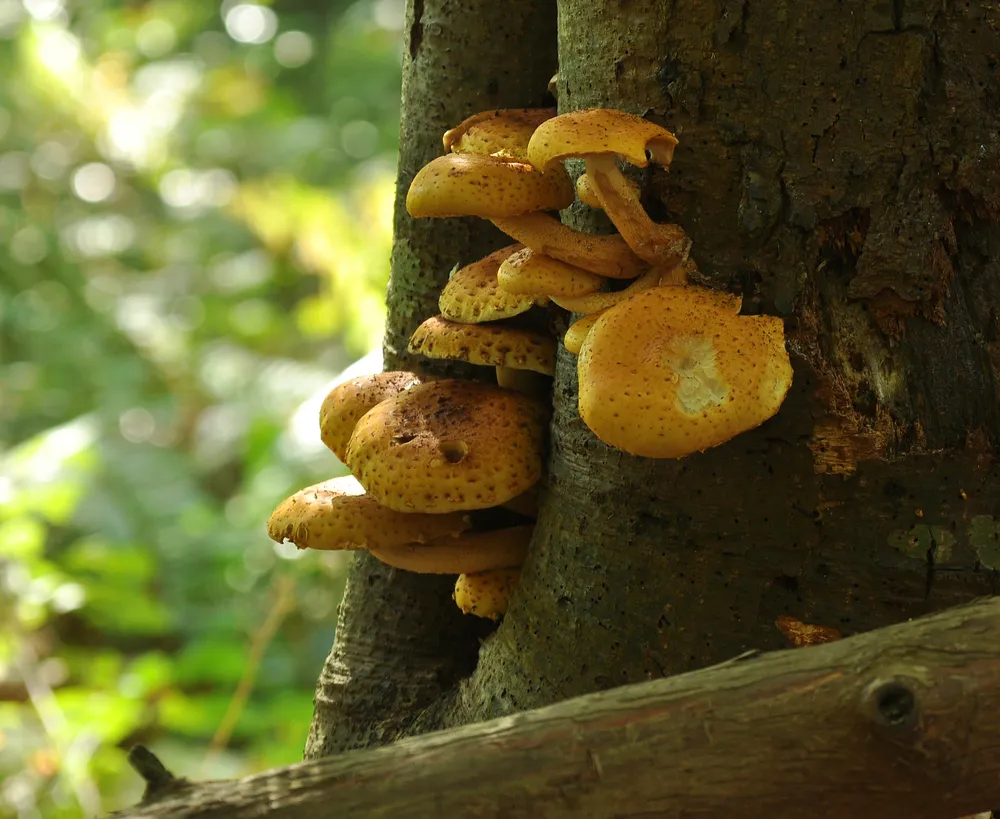
Golden scalycap
Pholiota aurivella
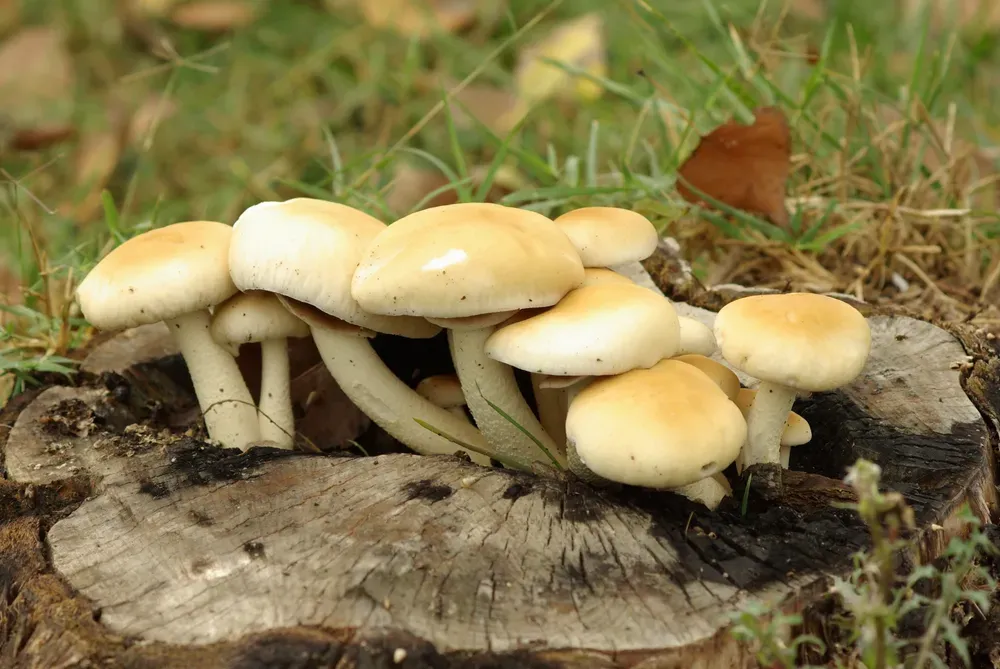
Poplar fieldcap
Cyclocybe aegerita
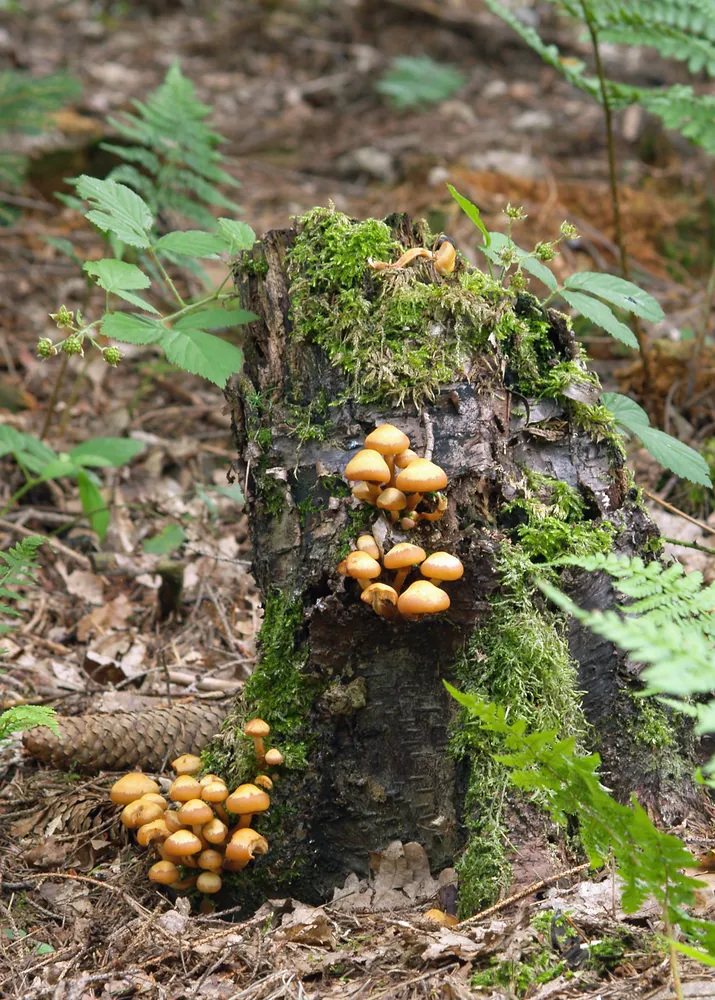
Sheathed woodtuft
Kuehneromyces mutabilis

Agrocybe arvalis
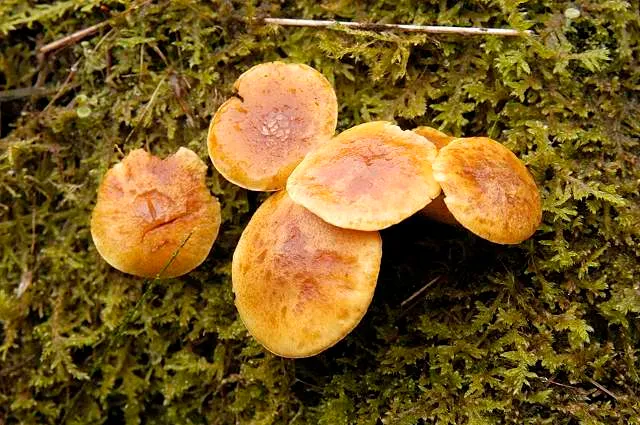
Slender pholiota
Pholiota spumosa
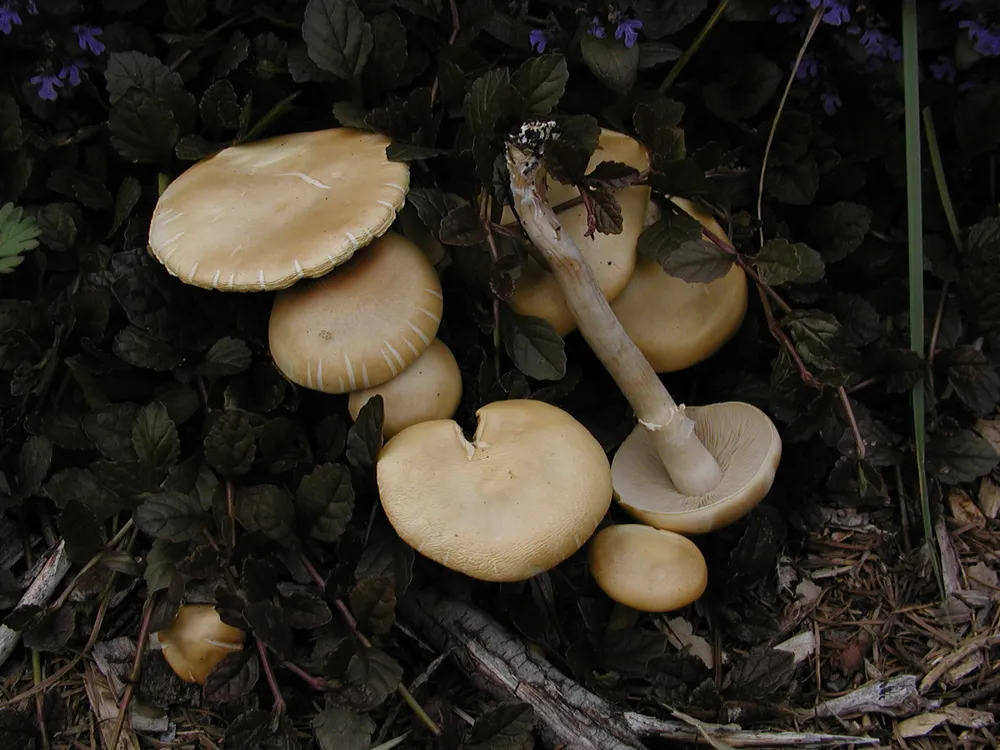
Spring fieldcap
Agrocybe praecox
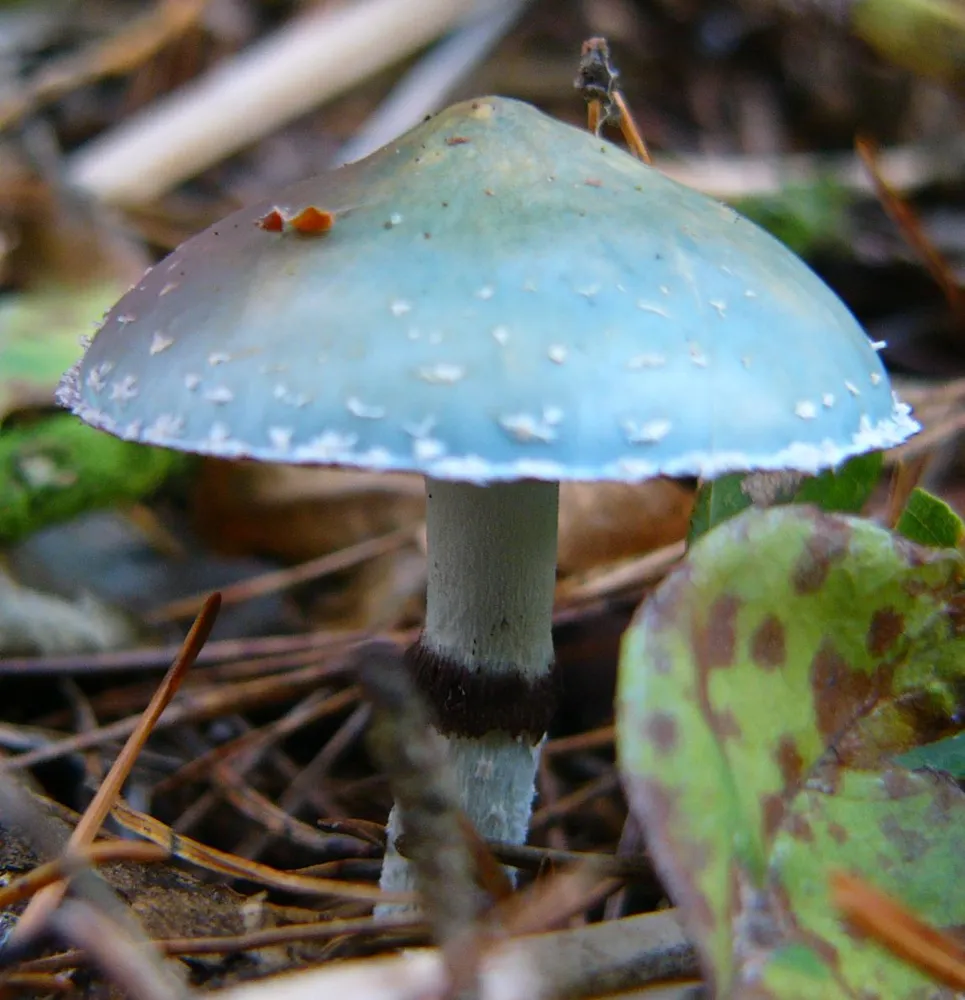
Verdigris agaric
Stropharia aeruginosa
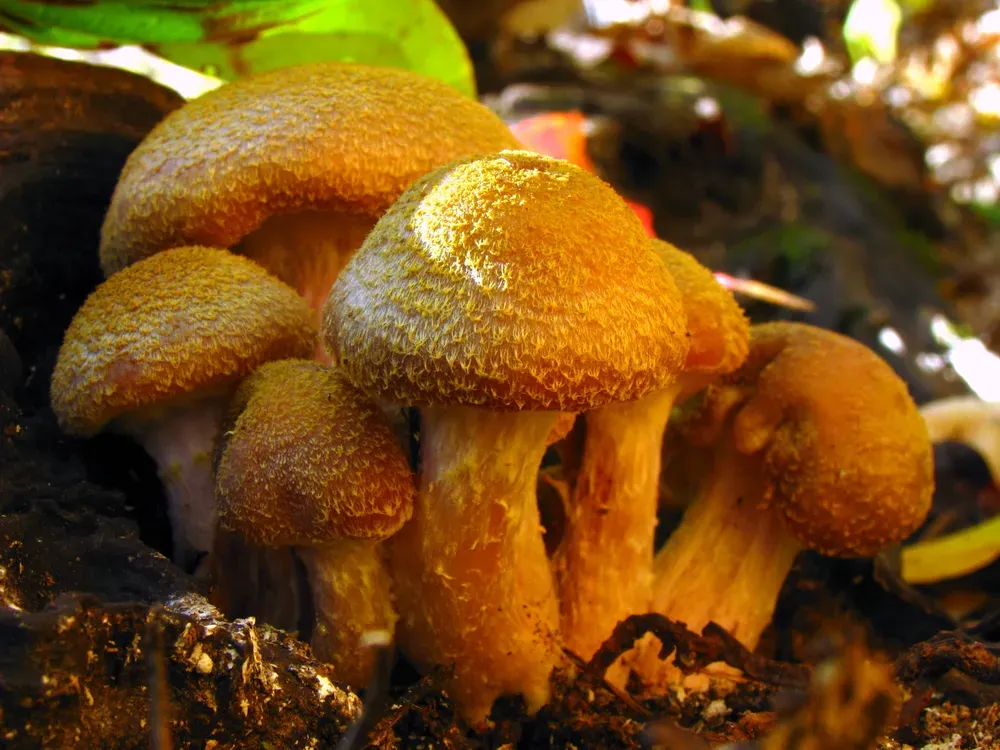
Bulbous honey fungus
Armillaria gallica
Frequently asked questions
Can you eat it?
No, modern mycologists classify it as inedible or mildly poisonous. It causes nausea and diarrhea in some people even after proper preparation. Soviet guidebooks of the 1960s listed it as conditionally edible, but that is outdated advice. A better choice is the conifer tuft (H. capnoides).
What if someone experienced says it's edible?
In some populations and in some years people do eat it without serious consequences — especially after long boiling with the water poured off. But it has no reliable culinary value, the risk of a digestive upset remains, and the alternatives (conifer tuft, honey fungus, sheathed woodtuft) are plentiful and safe in the same forests. Choosing to cook a "maybe edible" mushroom just doesn't make sense.
What happens if you eat it by accident?
After 1-3 hours: nausea, abdominal pain, possibly mild diarrhea. Symptoms are mild and pass within 6-12 hours without serious consequences. Treatment: contact a doctor; in the meantime, drink plenty of fluids and rest. Don't induce vomiting at home, and take activated charcoal only on a doctor's advice. If symptoms are severe (repeated vomiting, dehydration), call 112 or your local emergency number, especially for children.
How do you tell it from the sulphur tuft?
Brick tuft is distinctly brick-orange, with a yellow margin. Sulphur tuft is evenly sulfur yellow, with a greenish tinge, with no orange. Brick tuft is larger (4-10 cm), sulphur tuft smaller (2-5 cm). Brick tuft grows on broadleaf stumps, sulphur tuft on all kinds (both broadleaf and conifer). Neither is worth eating, so telling them apart precisely is mostly about safely passing both by.
Where does it grow?
On stumps, fallen wood and roots of broadleaf trees — mostly oak, beech, hornbeam, poplar, birch. A saprotroph (not a parasite). Often in clusters of 10-30 fruiting bodies on a single stump.
Which regions of Ukraine is it found in?
Throughout the forest and forest-steppe zones: the Carpathians, the Carpathian foothills, Polissia, the forest-steppe. In the steppe — in floodplain oak woods and parks.
When should you look for it?
Better to ask "when to pass it by". August — November, peaking in September-October.
Which mushrooms is it confused with?
With sulphur tuft (H. fasciculare) — poisonous. With conifer tuft (H. capnoides) — edible. With young honey fungus (Armillaria mellea) — edible, but with a ring on the stem. With funeral bell (Galerina marginata) — deadly poisonous. A firm rule: from a stump, only pick honey fungus you are 100% sure of.
Is Brick tuft edible or poisonous?
Does Brick tuft have gills or pores?
What does the cap of Brick tuft look like?
What does the stem of Brick tuft look like?
Sources
- [1]Вікіпедія (українська)
- [2]Атлас грибів України, Зеров Д.К. (1979)
- [3]MycoBank Database
- [4]Index Fungorum
- [5]GBIF
- [6]iNaturalist Ukraine