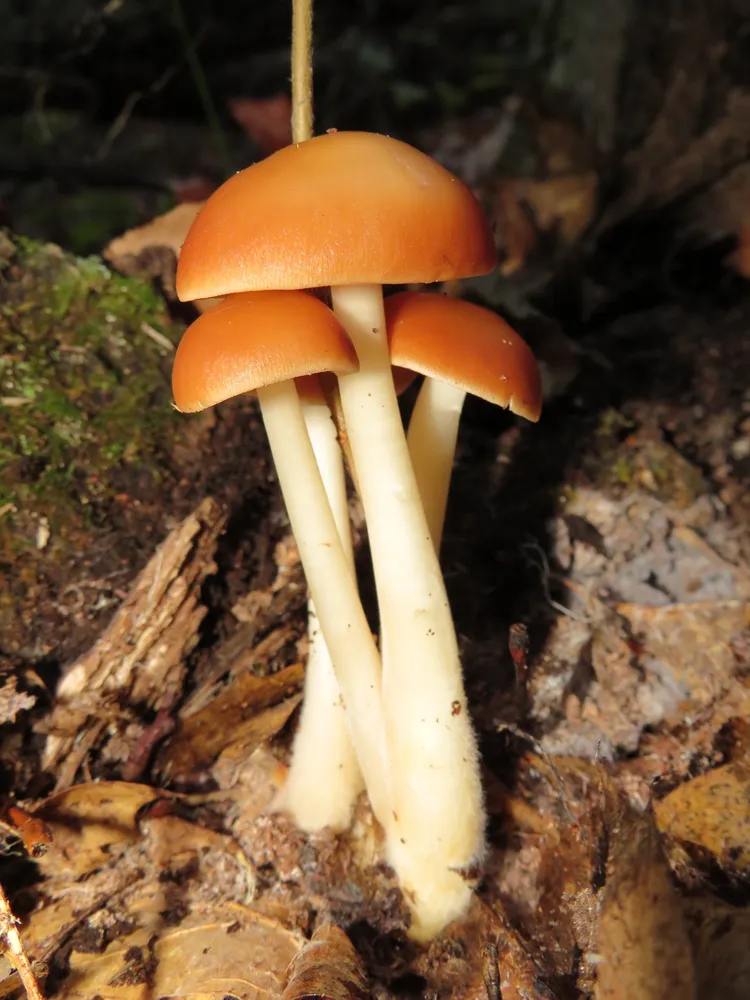
Russet toughshankGymnopus dryophilus
Expert-verifiedUpdated October 3, 2026
Passport
- Edibility
- Conditionally edible
- Season
- May — Nov
- Hymenophore
- Gilled
- Cap color
- Brown
- Size
- Small (up to 5 cm)
- Smell
- Pleasant
- Reviewed
- Yes ✓
Quick answers
Where to look?
Deciduous forest, Mixed forest
When does it appear?
May — Nov
Active months: May, June, July, August, September, October, November.
How to recognize it? Three signs
- Cap color: Brown, Yellow, Orange, Cream
- Cap shape: Convex
- Smell: Pleasant
Fruiting season
May – November
Description
The russet toughshank is one of the most common, most "background" mushrooms of Ukrainian forests. It's small, with a russet-yellowish or yellow-brown cap on a thin, curved stem. It grows in large groups on the forest floor in broadleaf and mixed woods, especially where there are oaks (hence its other folk name, "oak honey fungus", although it is NOT related to honey fungus). In the warm season it turns up under practically every other oak — from May to November, in several flushes.
Technically edible, but only conditionally — the flesh is thin and not very nourishing, and many sources describe it as "third-rate" or "of low culinary quality". Before cooking, it's best to boil it for 10-15 minutes and pour off the water. Foragers mostly take the caps — the stems are too thin and stringy. Fresh, you can add it to other mushrooms in a soup or a fry-up — it adds bulk, though it has almost no flavor of its own. Its best fate is drying for mushroom powder.
In Ukraine it is found throughout the country — it really is a background saprotroph of broadleaf litter. It occurs in the Carpathians, Polissia, the Forest-Steppe, the Crimean Mountains, and in oak plantings of the steppe zone. The season is very long: May–November. The first fruiting bodies appear together with the spring morels, the last ones after the first frosts.
Cap
Cap 2-6 cm, hemispherical at first, then convex-spreading to flat. The color varies — from russet-yellow to yellow-brown, darker in the center and paler toward the edge. In dry weather the cap fades to cream. The surface is smooth and slightly shiny in wet weather.
Hymenophore
Gilled hymenophore. Gills crowded, thin, attached or notched. Whitish to cream. Spore print white.
Stem
Stem 3-8 cm tall, 0.3-0.7 cm thick, thin, cylindrical, often curved; the lower part is darker, reddish brown, the upper part paler. The surface is smooth, the inside hollow. There is no ring.
Flesh
The flesh of the cap is thin, whitish, with no particular aroma. In the stem it is stringy and springy. It doesn't change color when cut.
Smell
Faint, pleasant mushroomy smell. Mild taste, nothing special.
›Scientific synonyms (10)
Agaricus dryophilus, Collybia aquosa var. dryophila, Collybia dryophila, Collybia dryophila var. alvearis, Collybia dryophila var. aurata, Gymnopus dryophilus (Bull.) Murrill (1916), Marasmius dryophilus, Marasmius dryophilus var. alvearis, Marasmius dryophilus var. auratus, Omphalia dryophilus
Lookalikes
Related species
Mushrooms of the same genus and habitat — to study side by side and never mix up.
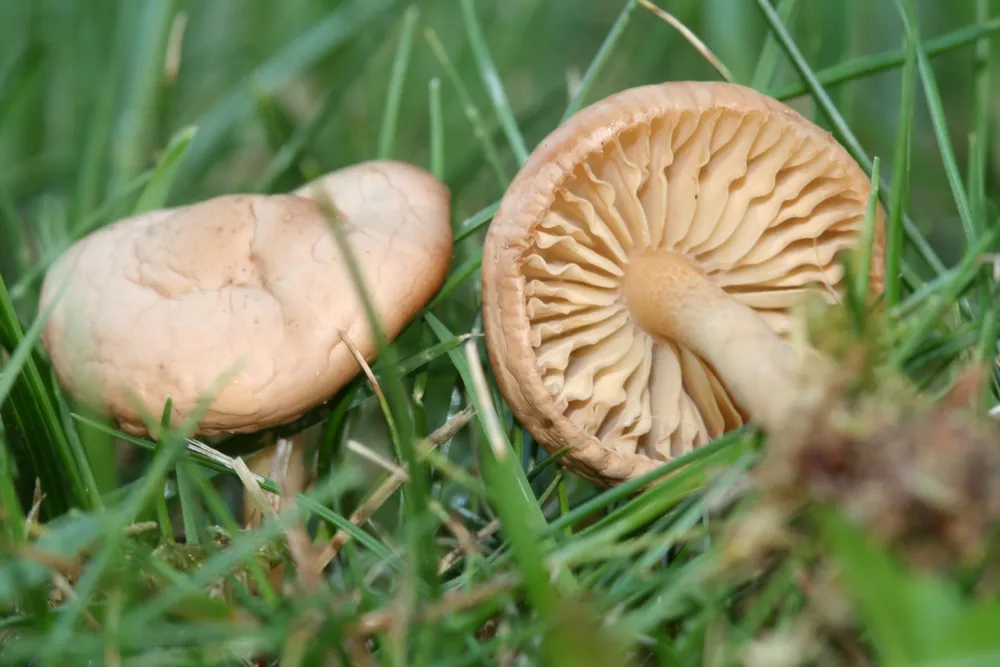
Fairy ring champignon
Marasmius oreades
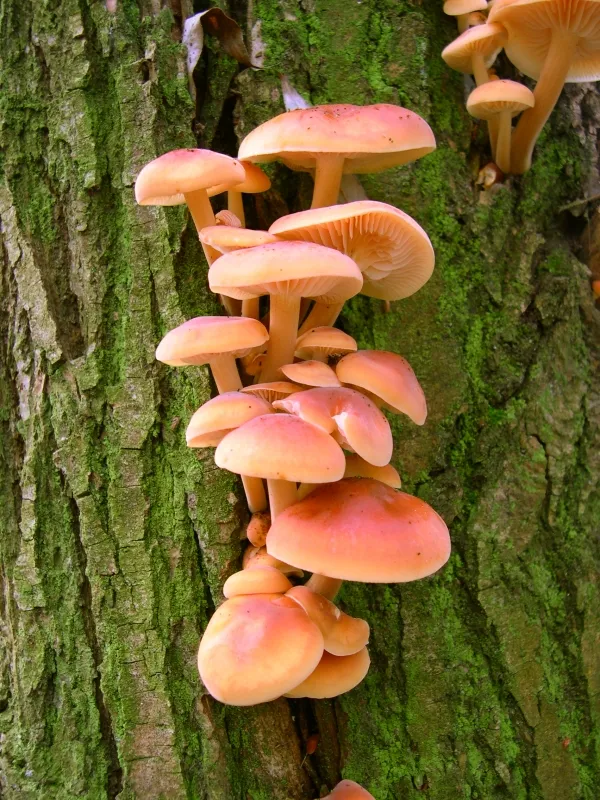
Velvet shank
Flammulina velutipes
_Singer_172533.webp)
Baeospora myriadophylla
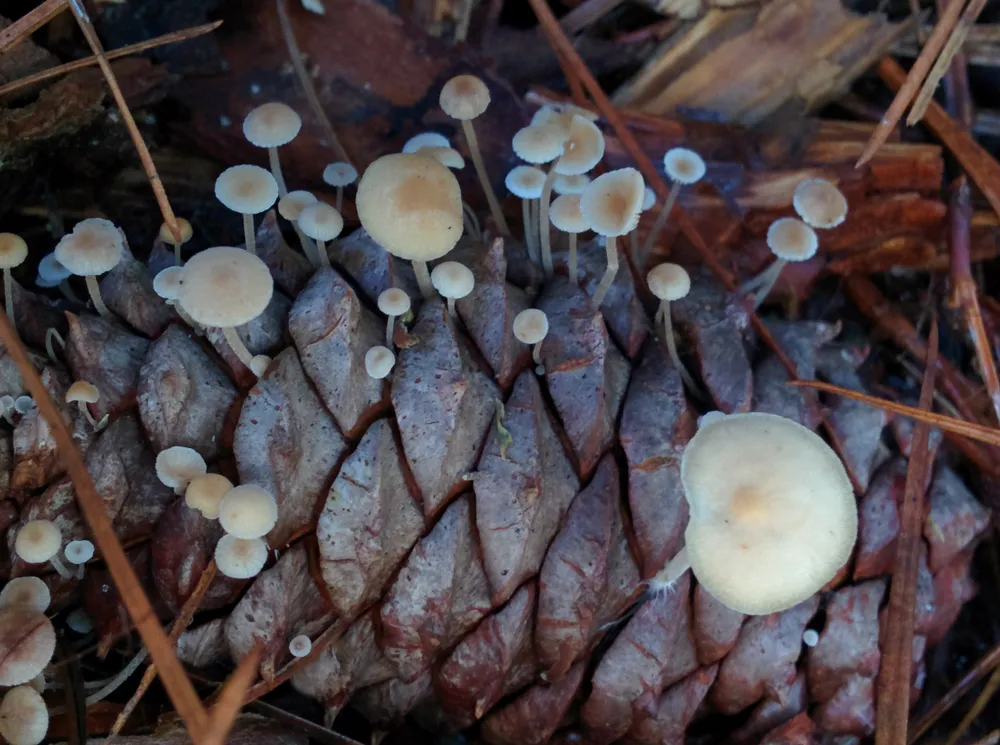
Conifercone cap
Baeospora myosura
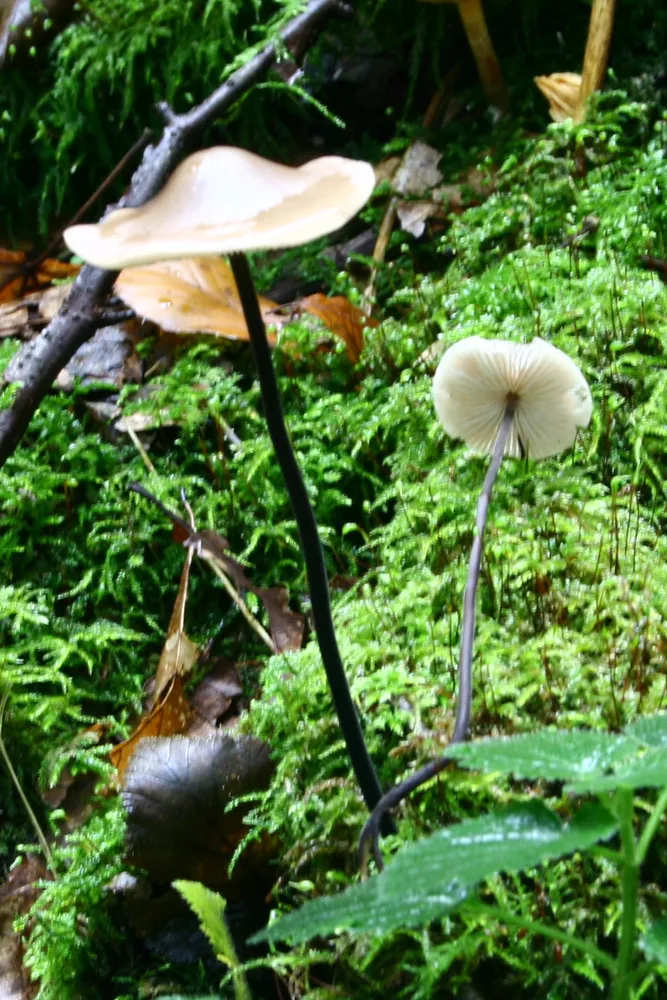
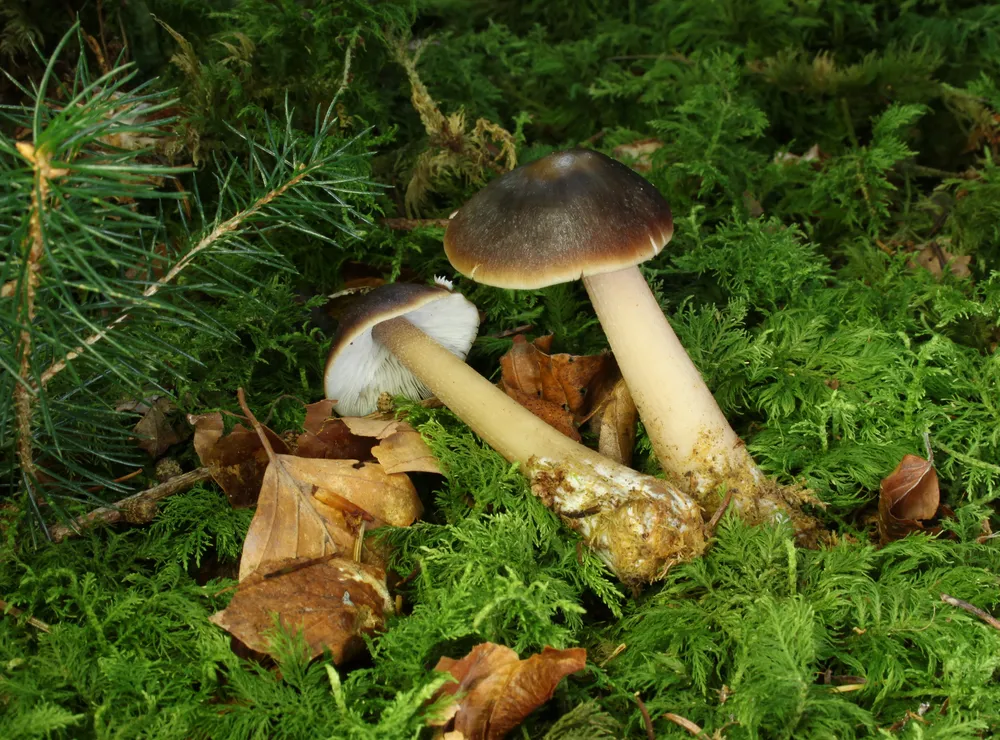
Mycetinis prasiosmus
Marasmius prasiosmus
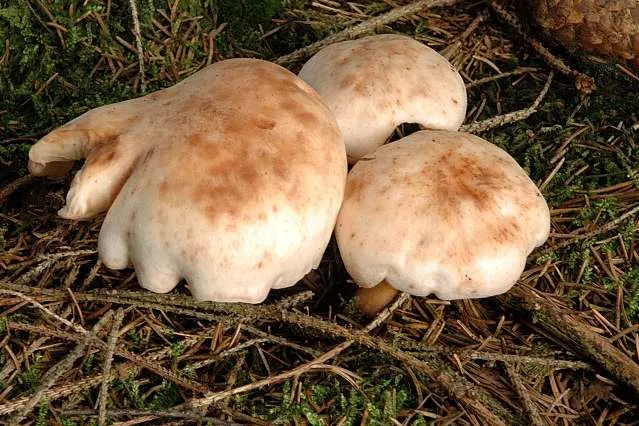
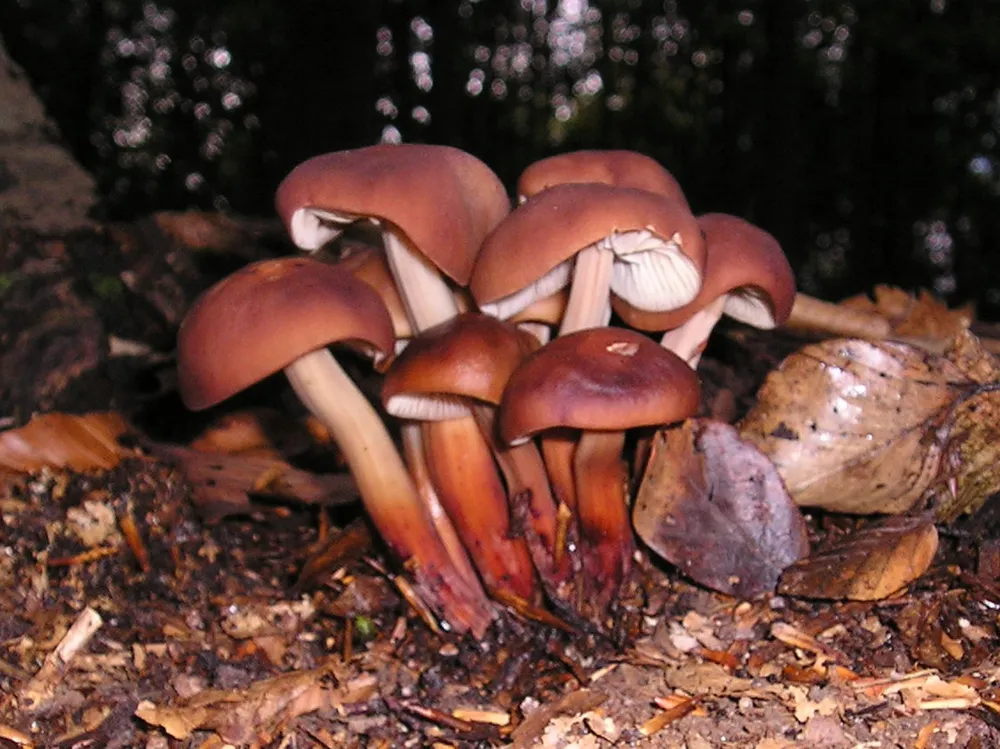
Spotted toughshank
Rhodocollybia maculata
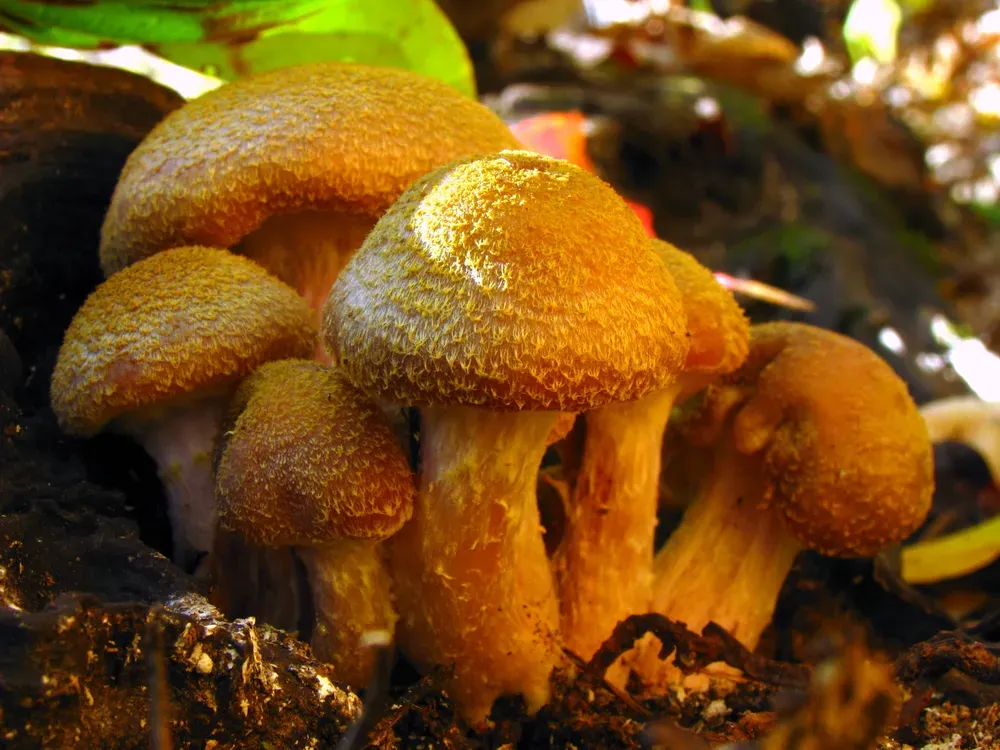
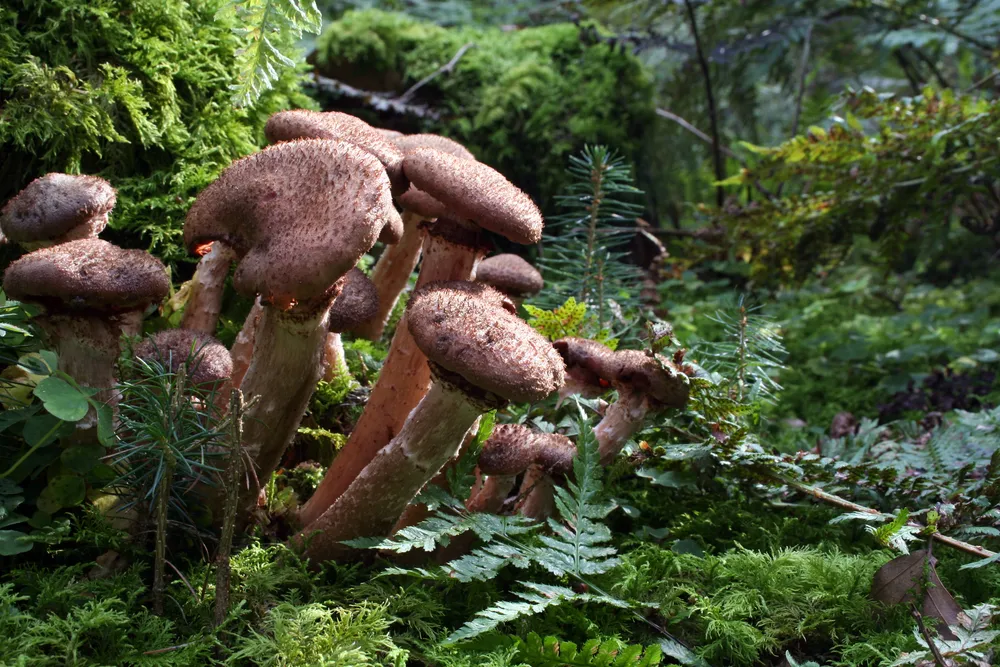
Bulbous honey fungus
Armillaria gallica
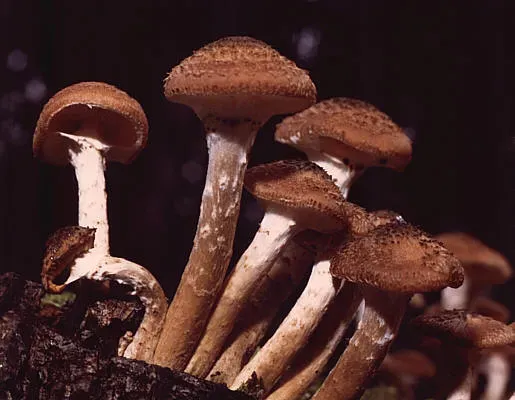
Dark honey fungus
Armillaria ostoyae
Frequently asked questions
Is it safe to eat?
Yes, the mushroom is technically edible. It's not poisonous. But its culinary value is low — the flesh is thin and not very nourishing. It's best to boil it for 10-15 min before cooking and pour off the water. Safe for beginners — there are no dangerous lookalikes with the same thin white gills and russet cap in broadleaf woods.
Does it need to be boiled first?
Preferably — 10-15 minutes, then pour off the water. Not because of toxicity, but to improve the flavor and texture (the flesh gets softer). You can also add it to a soup or a fry-up with other mushrooms without boiling it first — simmering in the soup does the same job.
Where should you look for it?
In broadleaf and mixed woods, especially under oaks — hence the name "oak honey fungus" (although it is not related to honey fungus). Also under beech, hornbeam, birch and aspen. It's a saprotroph of broadleaf litter. It grows in large groups of 10-30 fruiting bodies, often in rings ("fairy rings").
Which regions of Ukraine does it grow in?
All over Ukraine wherever there are broadleaf forests: the Carpathians, the Carpathian foothills, Polissia, the whole Forest-Steppe, the Crimean Mountains. In the steppe — in oak plantings and shelterbelts. It's one of the most "background" mushrooms there is.
When should you look for it?
May–November. It's one of the longest-fruiting mushrooms — with several flushes. The first flush is in May–June (together with the morels). The second in August. The third and most abundant in September–October. It can hang on into November, until the first serious frosts.
Does it appear in winter?
No, fruiting stops once temperatures stay below freezing. The last fruiting bodies appear in November if the autumn is warm. In winter its place is taken by the velvet shank (Flammulina velutipes) — a truly frost-hardy species.
What is it confused with?
With honey fungus (Armillaria mellea), although they belong to different genera. The difference: honey fungus has a ring on the stem and grows in clusters on trees, while the russet toughshank has no ring and grows on leaf litter, not on trunks. It's also confused with funnels (Clitocybe) — their gills are clearly decurrent, running down the stem, while the toughshank's are merely attached.
Are there dangerous lookalikes?
Among the thin-stemmed russet mushrooms of broadleaf woods there are almost no dangerous lookalikes. The biggest risk is mistaking it for a young poisonous funeral bell (Galerina marginata): its cap is also russet, but it has a ring on the stem and a rusty-brown spore print (the toughshank's is white). The funeral bell grows on wood, not on leaf litter. If in doubt — leave it.
Is Russet toughshank edible or poisonous?
Does Russet toughshank have gills or pores?
What does the cap of Russet toughshank look like?
What does the stem of Russet toughshank look like?
Sources
- [1]Вікіпедія (українська)
- [2]Атлас грибів України, Зеров Д.К. (1979)
- [3]MycoBank Database
- [4]Index Fungorum
- [5]GBIF
- [6]iNaturalist Ukraine