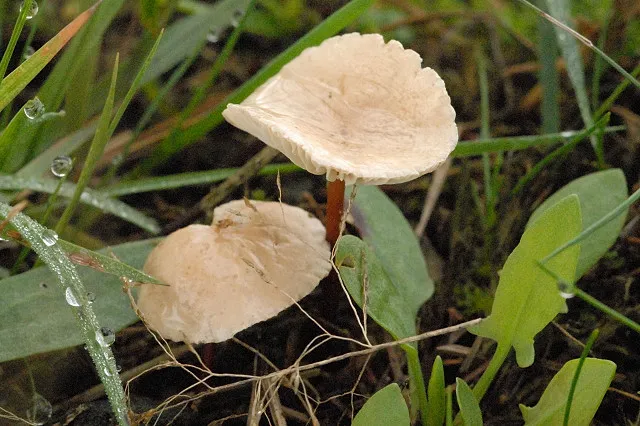
Mycetinis scorodonius
Expert-verifiedUpdated October 3, 2026
Passport
- Edibility
- Edible
- Season
- Jun — Oct
- Hymenophore
- Gilled
- Cap color
- Cream
- Size
- Very small (<3 cm)
- Smell
- Pleasant
- Reviewed
- Yes ✓
Quick answers
Where to look?
Deciduous forest, Mixed forest
When does it appear?
Jun — Oct
Active months: June, July, August, September, October.
How to recognize it? Three signs
- Cap color: Cream, Pink, Yellow
- Cap shape: Convex
- Smell: Pleasant
Fruiting season
June – October
Description
Mycetinis scorodonius (Marasmius scorodonius) is the smallest and most common of Ukraine's three garlic mushrooms. It's a tiny pinkish-yellow mushroom on a thin reddish stem that pops up by the hundreds on grassy forest edges, in damp meadows and on fallen leaves. A strong garlic smell is the key identification feature, just as in all the garlic-scented Marasmius.
This is an edible mushroom prized solely as a natural garlic seasoning. It's never cooked as a dish in its own right — the flesh is very thin, springy and crisp, with no culinary heft. But it dries perfectly and keeps its aroma for years. In old French and Central European cooking it was called «mousseron d'ail» (garlic mousseron) and added to soups, stews and side dishes. Old Ukrainian and Polish "wild cooking" knew it too — especially in the Carpathians and the Carpathian foothills.
In Ukraine it's found throughout the forest and forest-steppe zones, and is especially abundant in Polissia and the forest-steppe. It loves damp grassy patches, the edges of broadleaf woods, and litter from oak, hornbeam and hazel leaves. Season: June–October. It fruits en masse, often in «troops» of 100-300 fruiting bodies per square meter.
Cap
Cap 0.5-2 cm, very small. Hemispherical at first, then flattening out, with a small bump in the center. Color pinkish-cream, creamy ochre, a little darker in the center. The surface is smooth and slightly sticky in damp weather. The cap margin is even, slightly wavy in mature specimens.
Hymenophore
Gilled hymenophore. The gills are distant, often with cross-veins (anastomoses), attached or free. Color white to cream. Spore print white.
Stem
The stem is thin, reddish-brown to dark chestnut, 2-5 cm tall, 0.1-0.2 cm thick, cylindrical, smooth and shiny. Unlike the garlic parachute, its color is not black but reddish, brick-colored. No ring and no volva.
Flesh
Flesh very thin, springy and crisp, not watery. There's almost none in the cap. The mushroom dries perfectly — air, sun, and in a day or two it's parchment-like and keeps its aroma for months.
Smell
A strong smell of fresh garlic — the key feature. You can smell a single specimen half a meter away. The smell grows stronger as it dries. The flesh tastes mild, purely of garlic, with no heat.
›Scientific synonyms (4)
Agaricus scorodonius Fr. (1815), Marasmius scorodonius (Fr.) Fr. (1826), Gymnopus scorodonius (Fr.) J.L. Mata & R.H. Petersen (2004), Marasmius scorodonius
Lookalikes
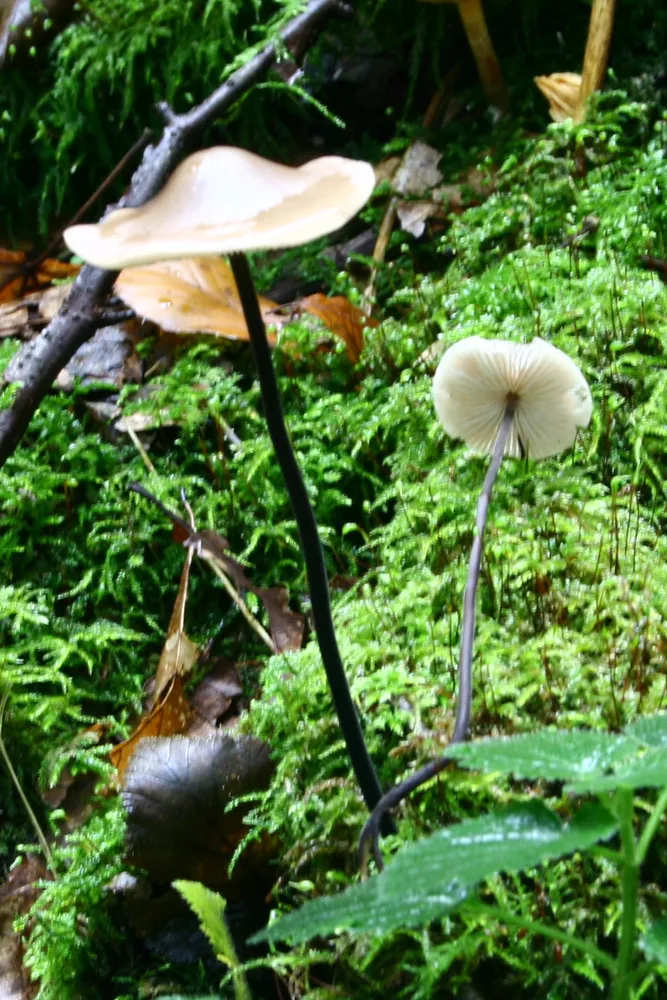
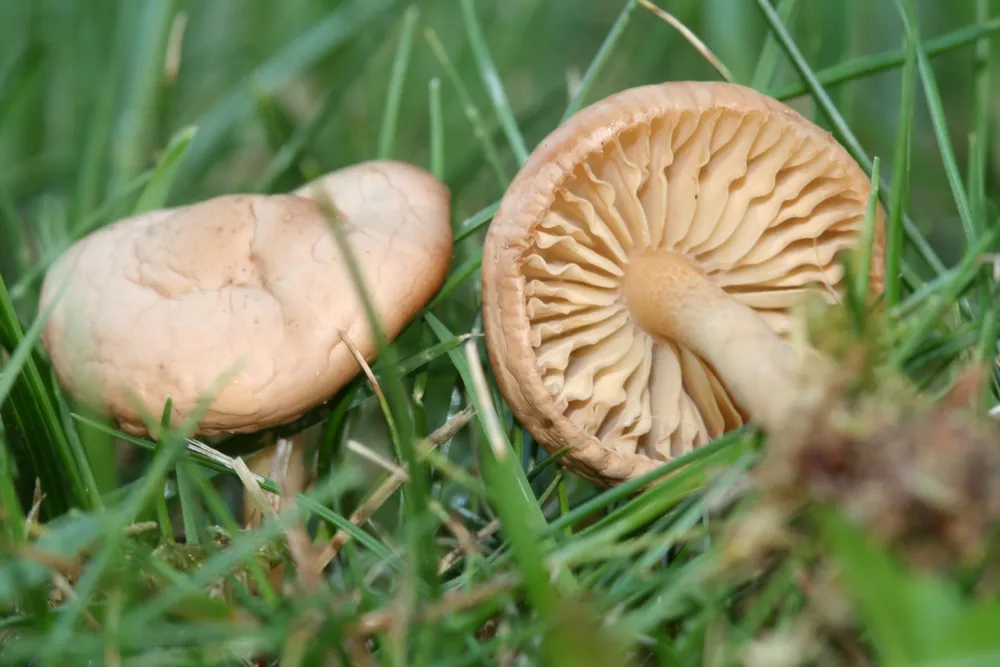
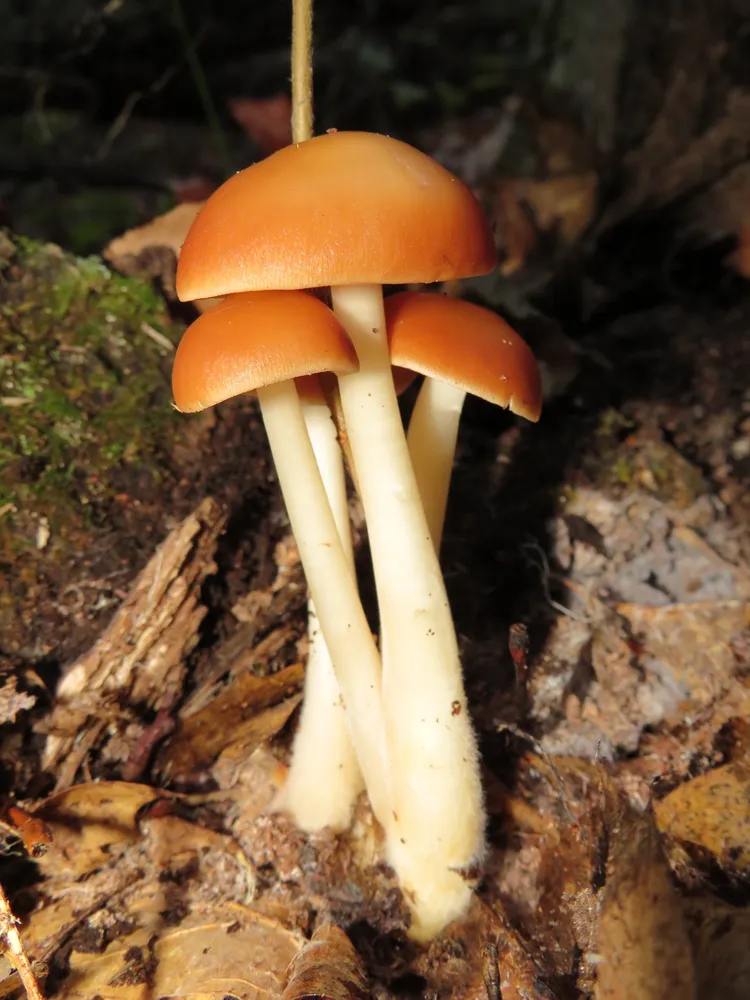
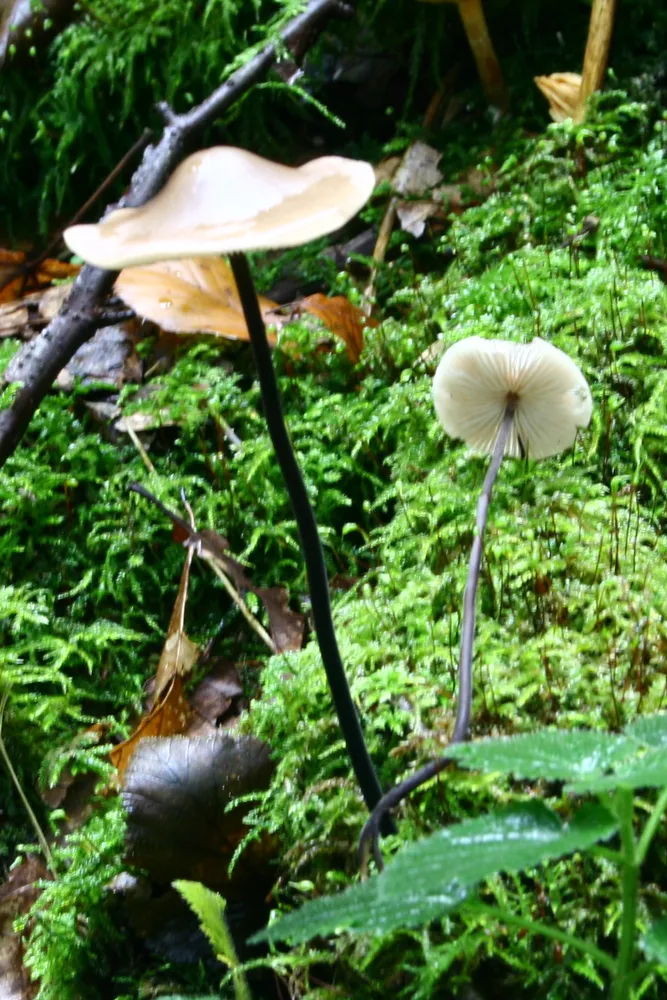
Related species
Mushrooms of the same genus and habitat — to study side by side and never mix up.
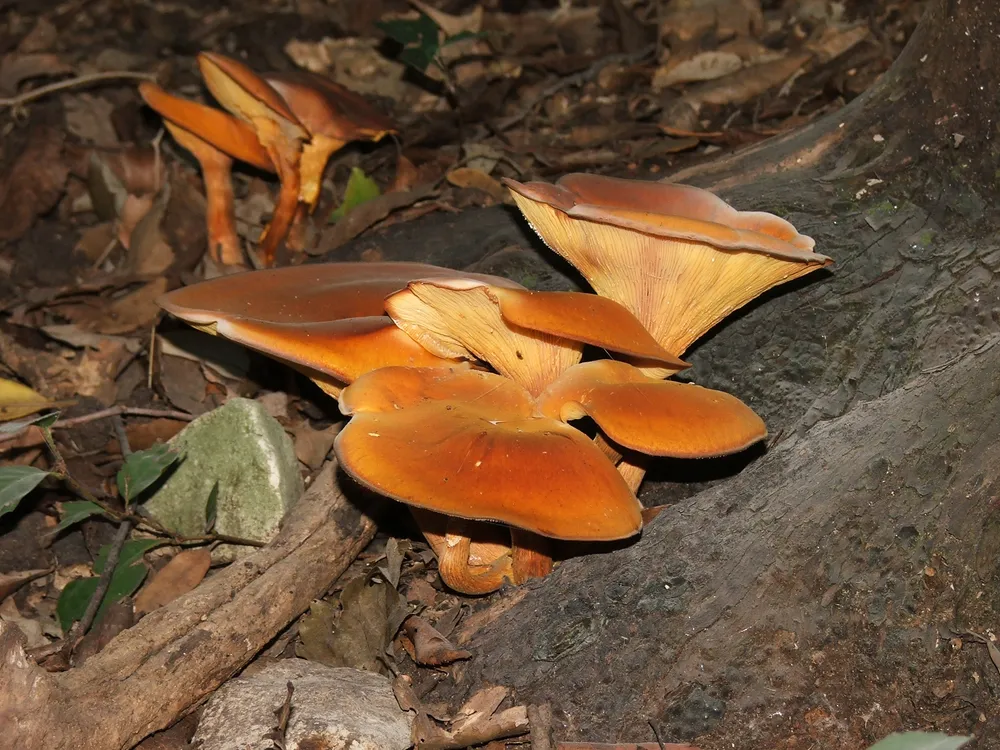
Jack-o'-lantern mushroom
Omphalotus olearius
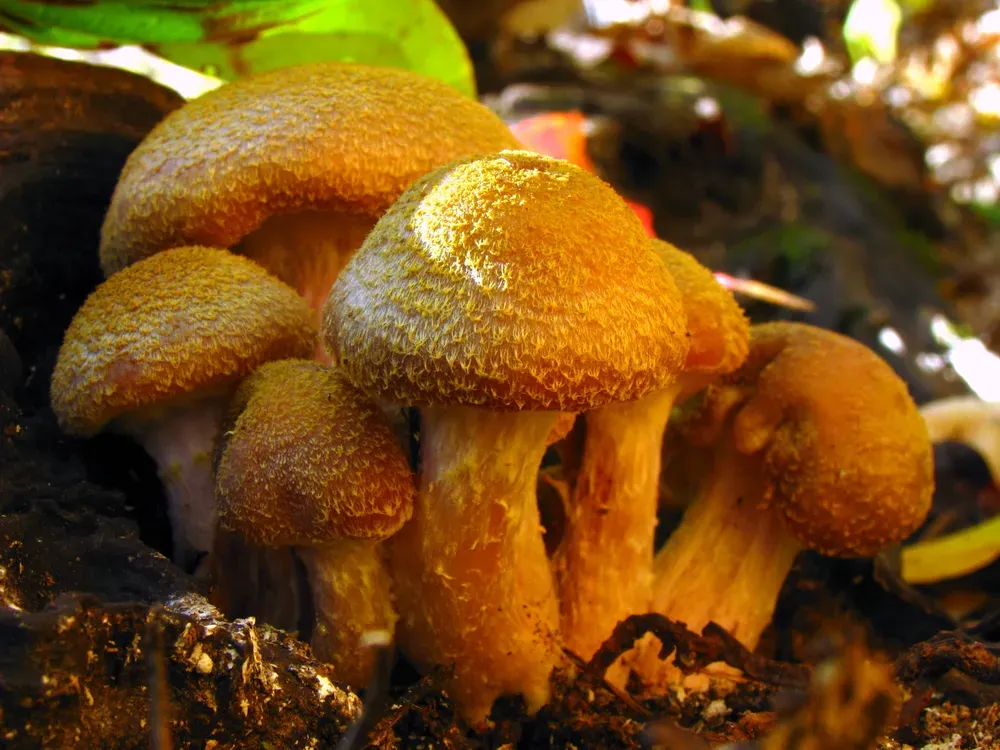
Bulbous honey fungus
Armillaria gallica
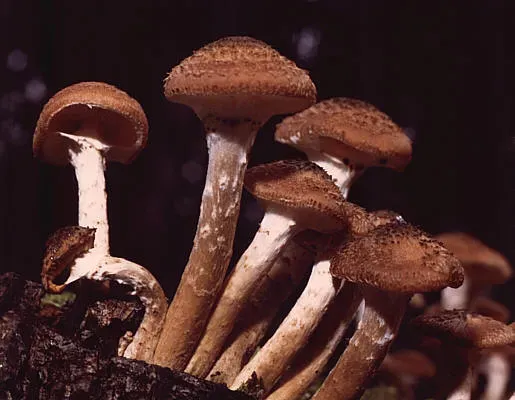
Dark honey fungus
Armillaria ostoyae
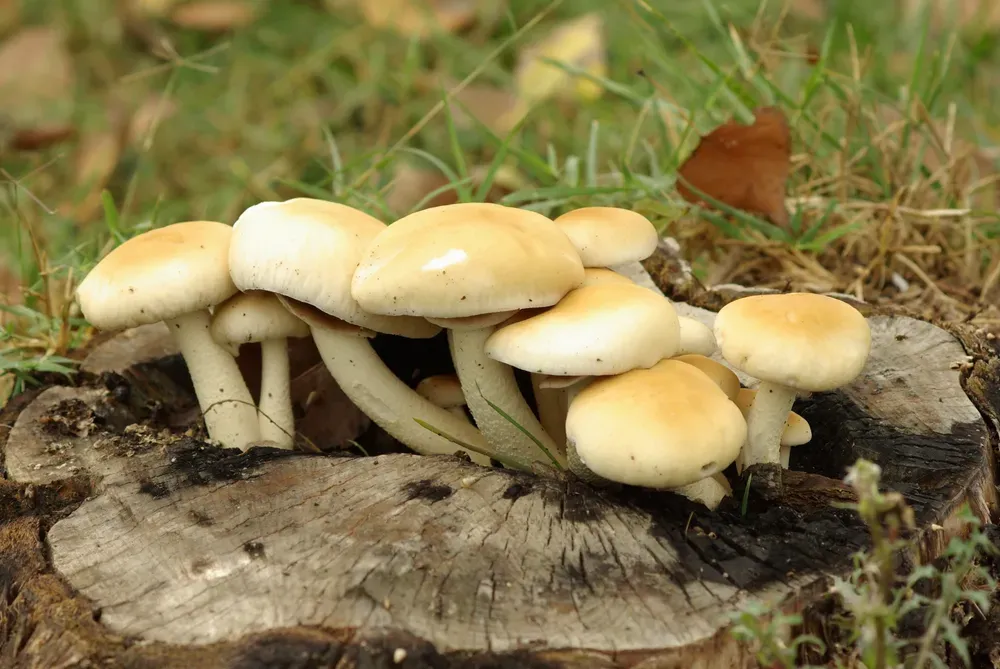
Poplar fieldcap
Cyclocybe aegerita
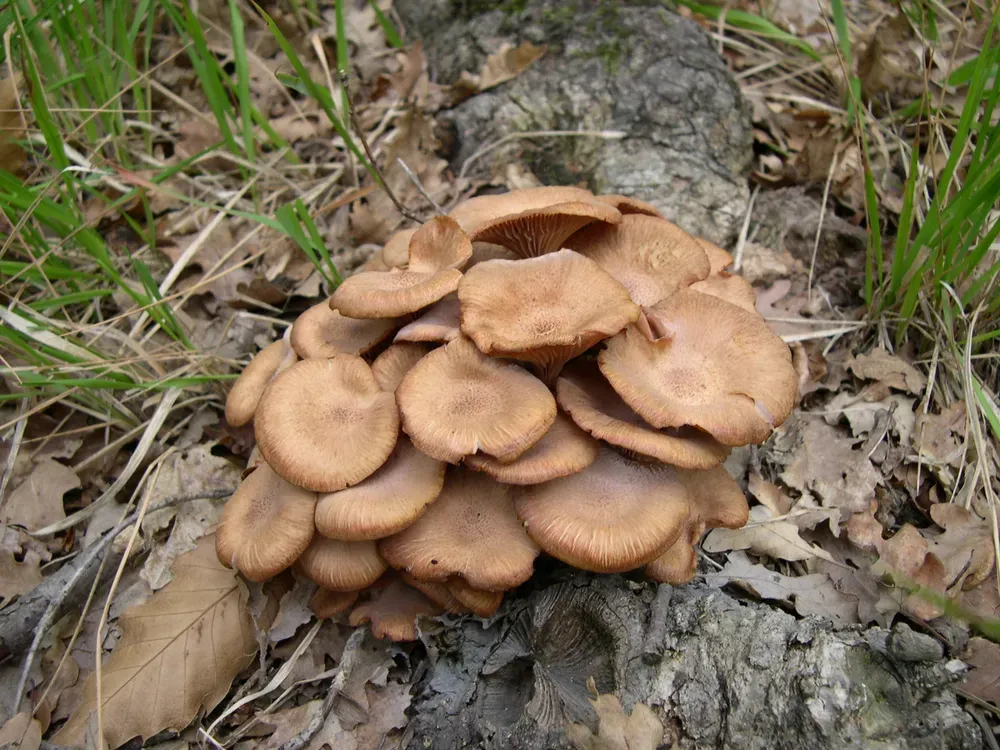
Ringless honey fungus
Desarmillaria tabescens
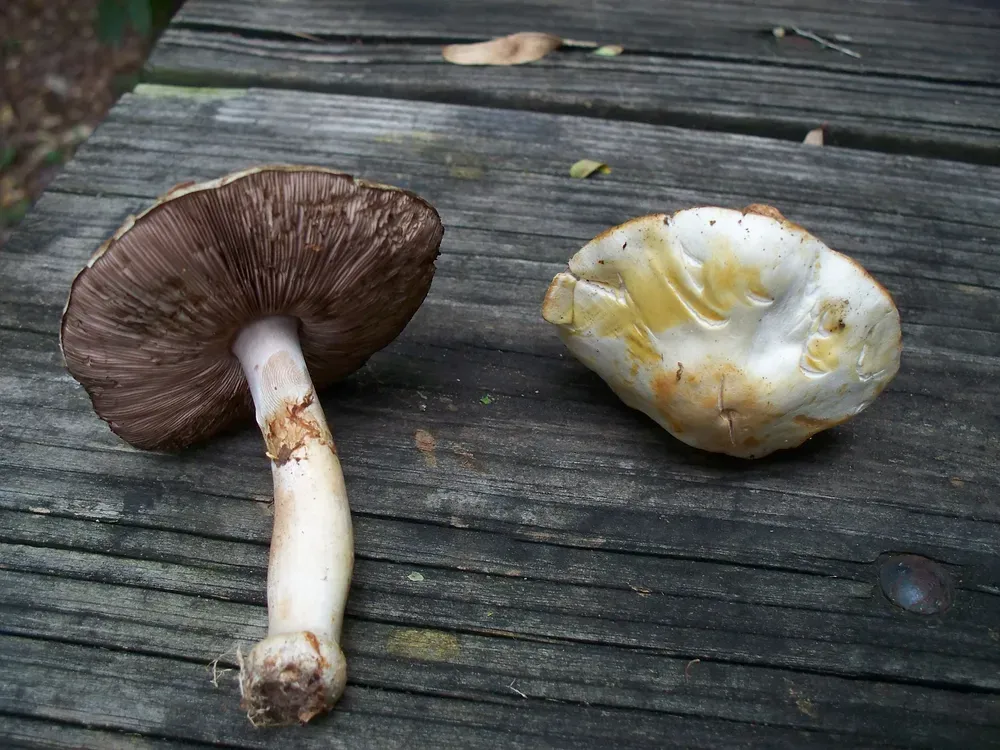
Agaricus abruptibulbus
Agaricus haemorrhoidarius
Agaricus haemorroidarius
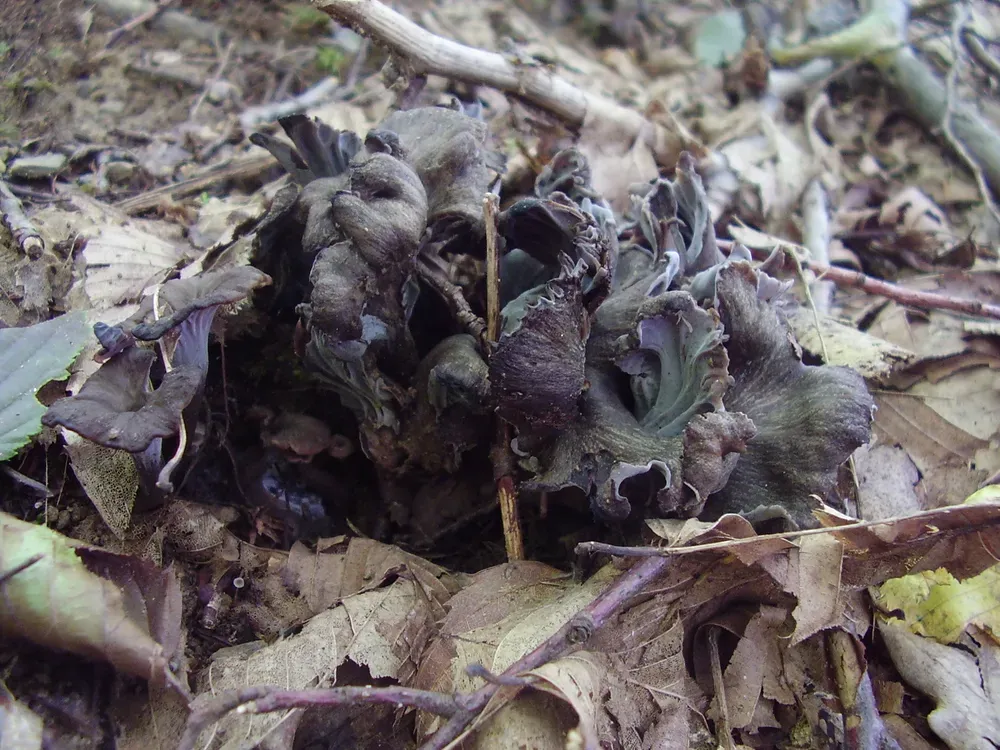
Ashen chanterelle
Cantharellus cinereus
Frequently asked questions
Can you eat it?
Yes, it's safe. As a dish on its own it's uninteresting — very small and thin. Its real value is as a natural garlic seasoning: dry it, grind it to a powder, or add it whole to soups. 5-10 dried caps replace a clove of garlic.
What's the best way to use it?
The classic way: dry a big batch (200-300 little mushrooms) in the sun or in a dehydrator and store them in a glass jar. Add them to soups, stews and braised meat. For sauces and marinades you can grind them to a powder in a coffee grinder. It keeps its aroma for at least a year.
Where does it grow?
On fallen leaves, twigs and grass stems in broadleaf and mixed forests, on forest edges, in damp meadows. A saprotroph (it feeds on organic litter). Most often under oak, hornbeam, hazel and birch, less often in conifer forests.
Which regions of Ukraine?
Throughout the forest and forest-steppe zones. Especially abundant in Polissia (Chernihiv, Kyiv, Zhytomyr and Volyn regions), in the forest-steppe, and in the Carpathian foothills. In the steppe — on damp meadow patches, but less often. One of the most common small mushrooms.
When should you look for it?
June–October, peaking in August–September after rain. It fruits in flushes — one or two damp nights, and 3-5 days later hundreds of fruiting bodies appear. In a dry summer it may not show up at all.
How do you recognize it?
Two features together: 1) a strong garlic smell; 2) a reddish (not black) stem. Size — very small (0.5-2 cm). It's practically impossible to confuse with anything dangerous: the smell is unmistakable.
How do you tell it apart from other garlic mushrooms?
Stem color and tree: the small one (M. scorodonius) — reddish stem, broadleaf litter; the large one (M. alliaceus) — black stem, beech; the oak one (M. prasiosmus) — cream stem, oak litter. All three are equally useful; only the size and the flavor of the seasoning differ slightly.
Are there dangerous «non-garlic» lookalikes?
There are lots of small brown or pink mushrooms on grass and litter (Mycena, Gymnopus, Collybia), and some look similar in shape. But if there's no garlic smell, it's not a garlic mushroom. The smell is your main guarantee of safety. Among small garlic-scented mushrooms, there are no poisonous ones in Ukraine.
Is Mycetinis scorodonius edible or poisonous?
Does Mycetinis scorodonius have gills or pores?
What does the cap of Mycetinis scorodonius look like?
What does the stem of Mycetinis scorodonius look like?
Sources
- [1]Вікіпедія (українська)
- [2]Атлас грибів України, Зеров Д.К. (1979)
- [3]MycoBank Database
- [4]Index Fungorum
- [5]GBIF
- [6]iNaturalist Ukraine