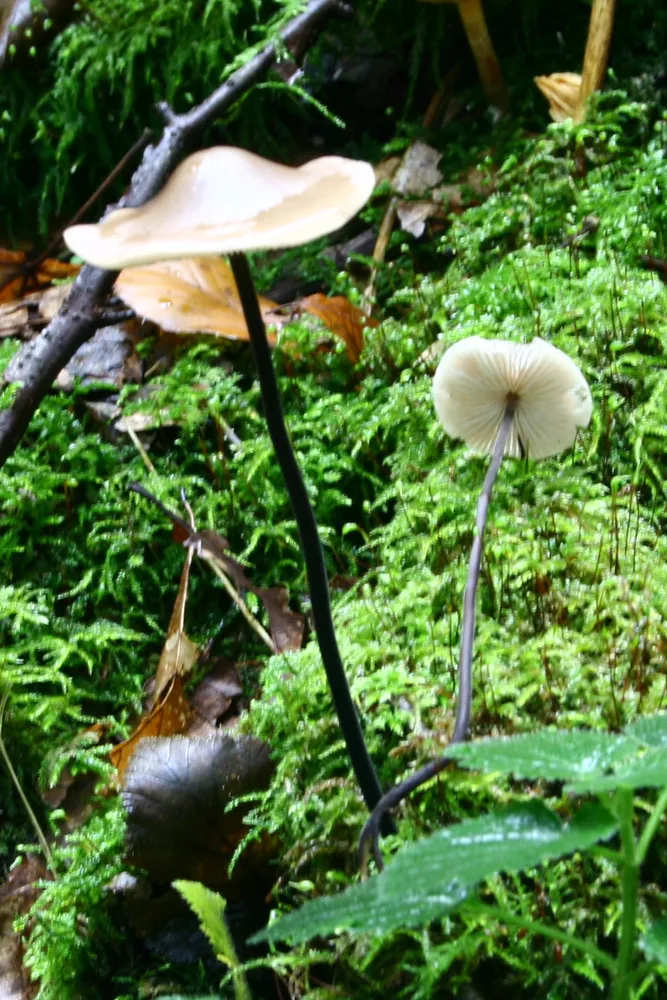
Mycetinis prasiosmusMarasmius prasiosmus
Expert-verifiedUpdated October 3, 2026
Passport
- Edibility
- Edible
- Season
- Aug — Nov
- Hymenophore
- Gilled
- Cap color
- Cream
- Size
- Small (up to 5 cm)
- Smell
- Pleasant
- Reviewed
- Yes ✓
Quick answers
Where to look?
Deciduous forest, Mixed forest
When does it appear?
Aug — Nov
Active months: August, September, October, November.
How to recognize it? Three signs
- Cap color: Cream, Yellow, Pink
- Cap shape: Umbonate
- Smell: Pleasant
Fruiting season
August – November
Description
Mycetinis prasiosmus (Marasmius prasiosmus) is the third of Ukraine’s garlic parachutes — medium-sized, with a distinctive greenish tint on the gills (hence the scientific name prasiosmus, “leek-scented,” a comparison with the leek). The smell is garlicky, like its relatives’, but with a light onion-and-leek note that sets it apart from the other garlic-scented Marasmius. The rarest and least known of Ukraine’s three garlic parachutes.
Like the other garlic parachutes, its culinary value is solely as a natural garlic seasoning. The flesh is thin, without a pronounced “mushroomy” taste, but with a rich garlic-and-leek aroma. It dries perfectly and goes into soups, stews and braised meat. Some gourmets consider it the most interesting of the three — for its light “green, leeky” note, which adds more complexity than the purely garlicky smell of L. scorodonius.
In Ukraine it grows in oak and oak-hornbeam forests of the Carpathians, the Carpathian foothills and the forest-steppe, less often in Polissia. It is clearly tied to oak litter — growing on fallen oak leaves, fallen acorns, oak bark and buds. Season: August–November. It occurs in small groups of 10-30 fruiting bodies per “patch.” Not abundant, but recognizable.
Cap
Cap 1.5-3 cm, bell-shaped at first, then flattening out with a small bump in the center. Pale cream to creamy ocher, darker in the center. Surface smooth, slightly sticky in wet weather. The cap margin is even, with fine radial grooves in mature specimens.
Hymenophore
Gilled hymenophore. Gills moderately spaced, attached or free. Creamy white with a distinctive greenish-gray tint, especially as they mature — a diagnostic feature of the species. Spore print white.
Stem
Stem 5-10 cm tall, 0.1-0.3 cm thick, slender, cylindrical. Color cream or yellowish at the top, dark brown to blackish toward the base — a distinctive two-toned stem. Surface smooth, no ring or volva; the base often has white mycelium.
Flesh
Flesh very thin, springy and crisp, not watery. Almost absent in the cap. Like the other garlic parachutes, it dries perfectly and keeps its aroma for months.
Smell
A garlic smell with a distinct leek (green-onion) note — the main diagnostic feature. Less “pure” garlic than L. scorodonius, but more “complex” and more interesting in the kitchen. The flesh tastes mild, with a characteristic leek-and-garlic flavor.
›Scientific synonyms (12)
Agaricus alliaceus Scop., Agaricus alliatus Schaeff., Agaricus abietis Batsch, Agaricus scopolii Pers., Agaricus schaefferi, Agaricus porreus Pers., Agaricus prasiosmus Fr., Mycena porrea (Pers.) Gray, Marasmius porreus (Pers.) Fr., Marasmius prasiosmus f. prasiosmus (Fr.) Fr.: 370 (1838), Collybia porrea (Pers.) P. Kumm., Mycena prasiosmus (Fr.) P. Kumm.
Lookalikes
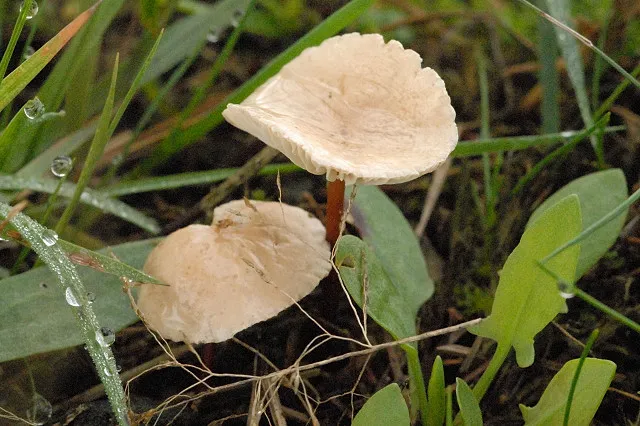
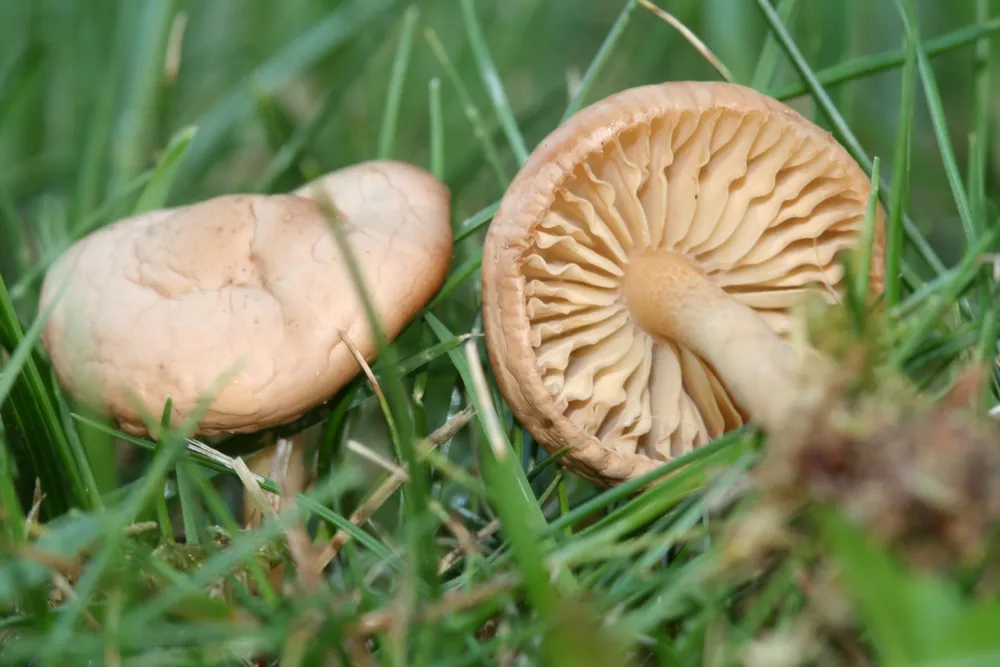
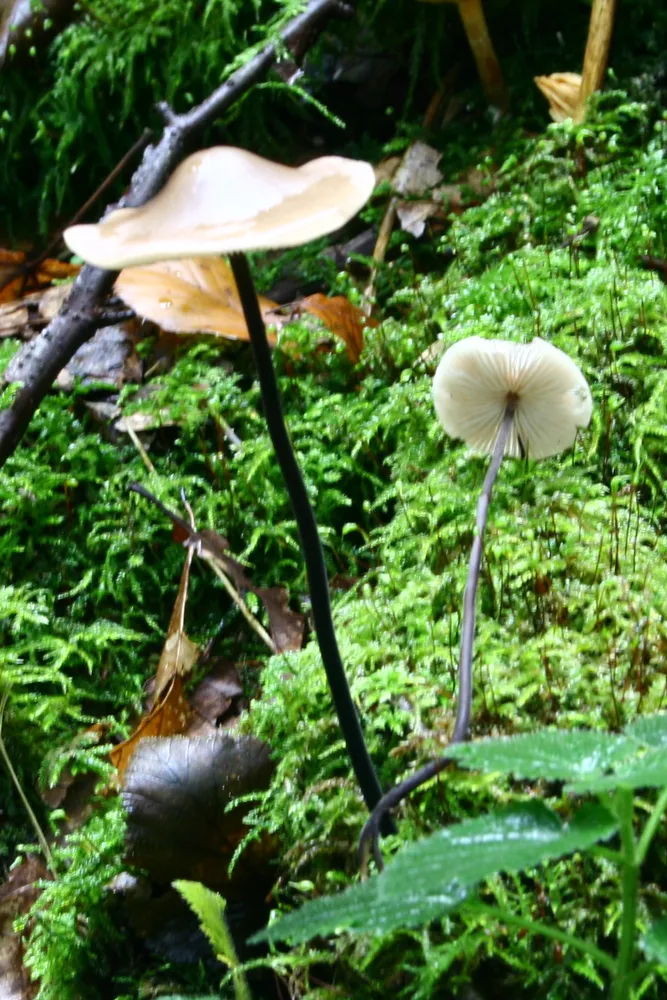
Related species
Mushrooms of the same genus and habitat — to study side by side and never mix up.
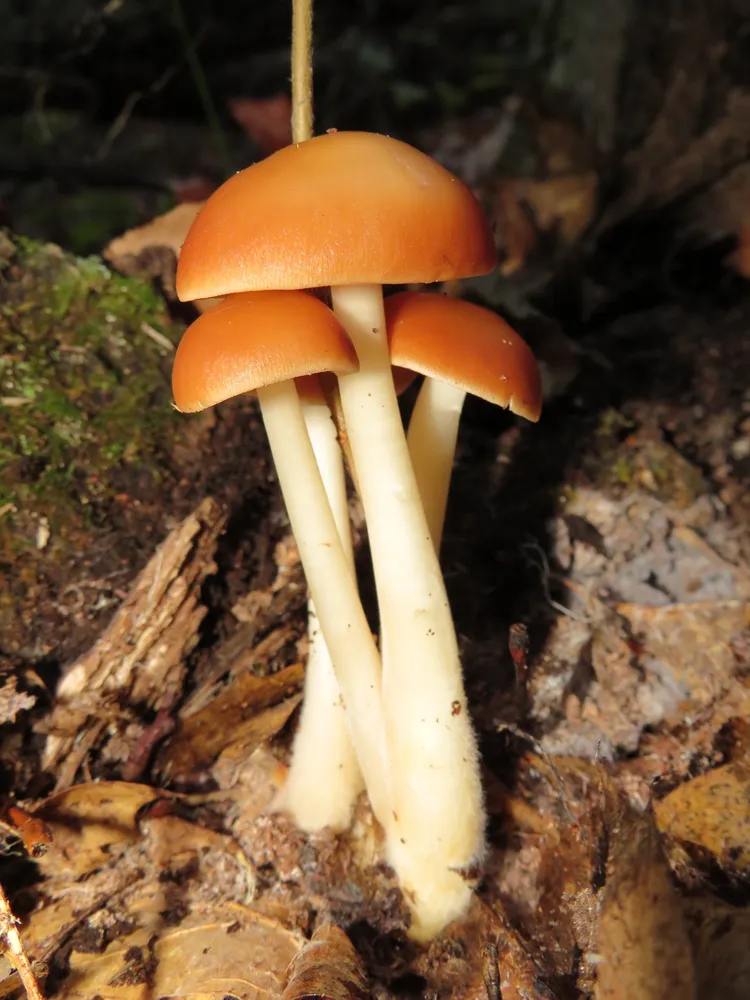
Russet toughshank
Gymnopus dryophilus
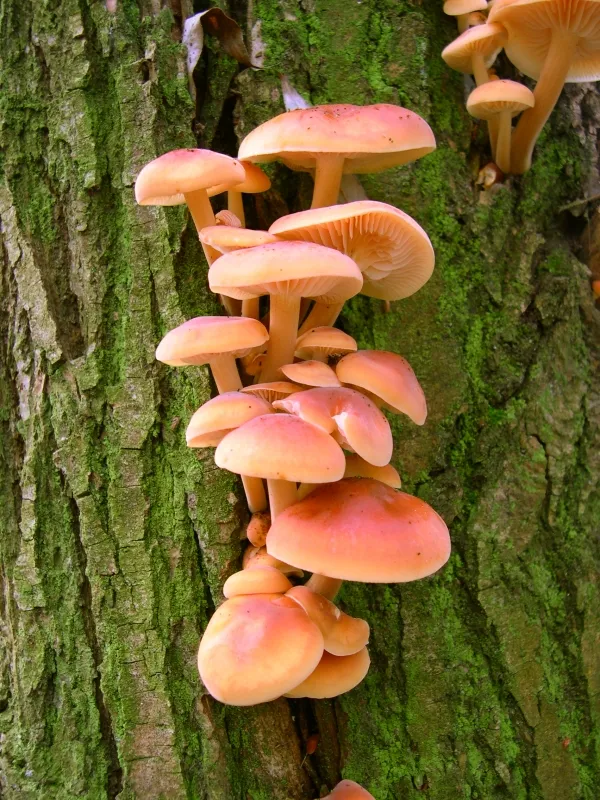
Velvet shank
Flammulina velutipes
_Singer_172533.webp)
Baeospora myriadophylla
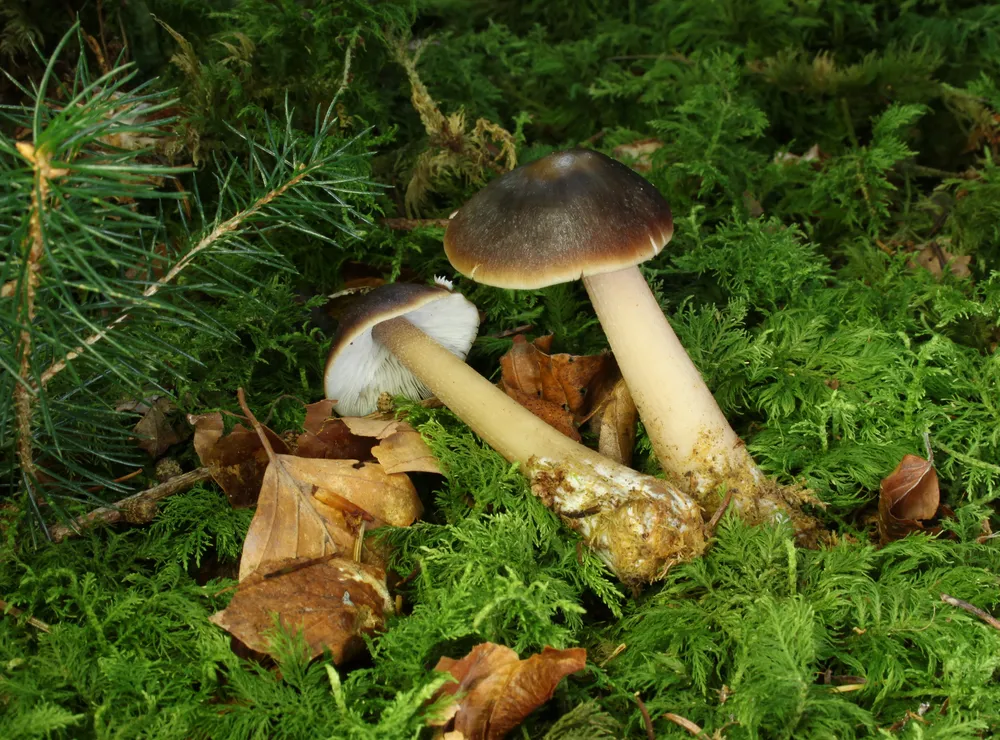
Butter cap
Rhodocollybia butyracea
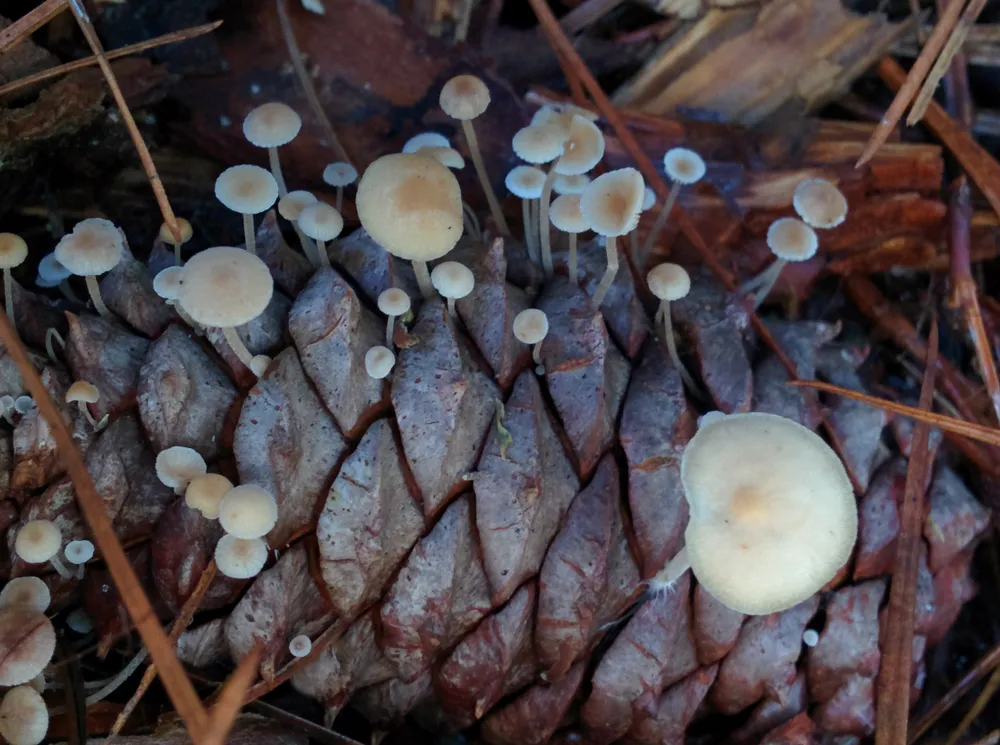
Conifercone cap
Baeospora myosura
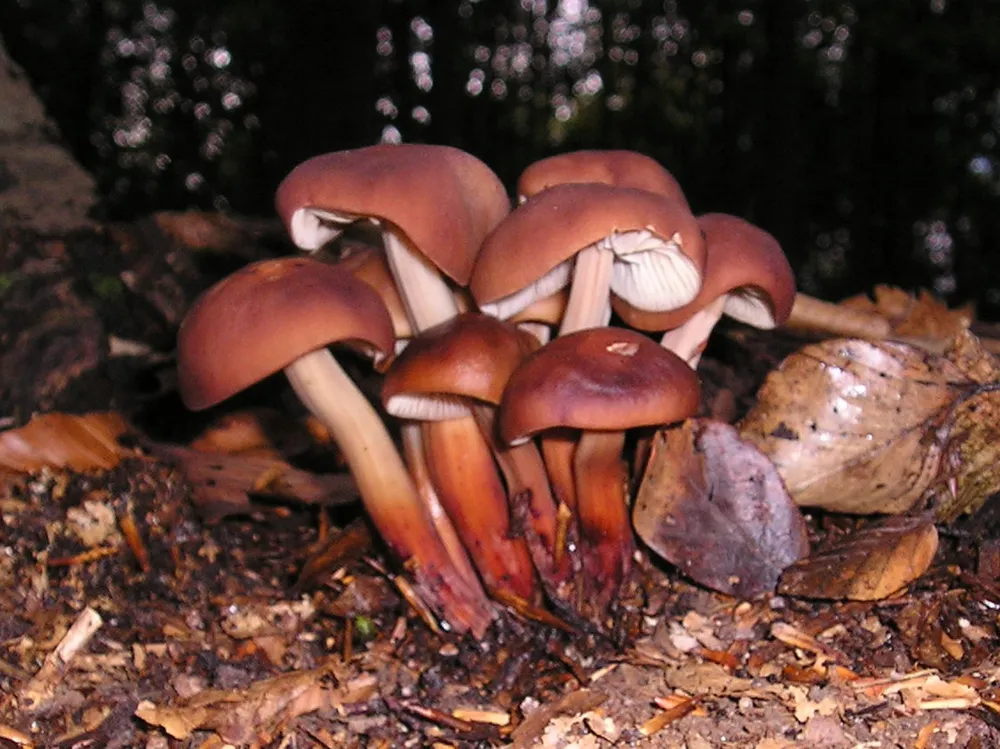
Spindle toughshank
Gymnopus fusipes
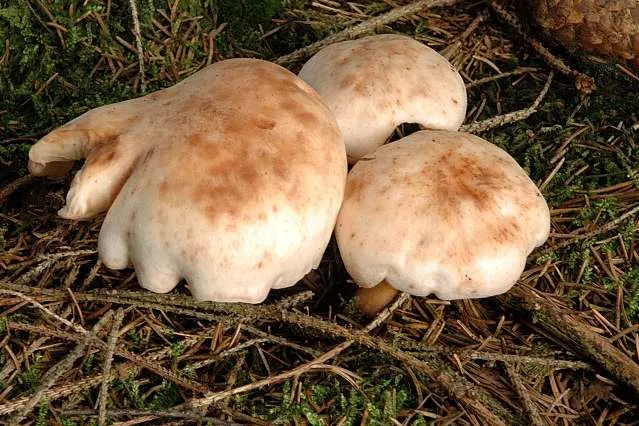
Spotted toughshank
Rhodocollybia maculata
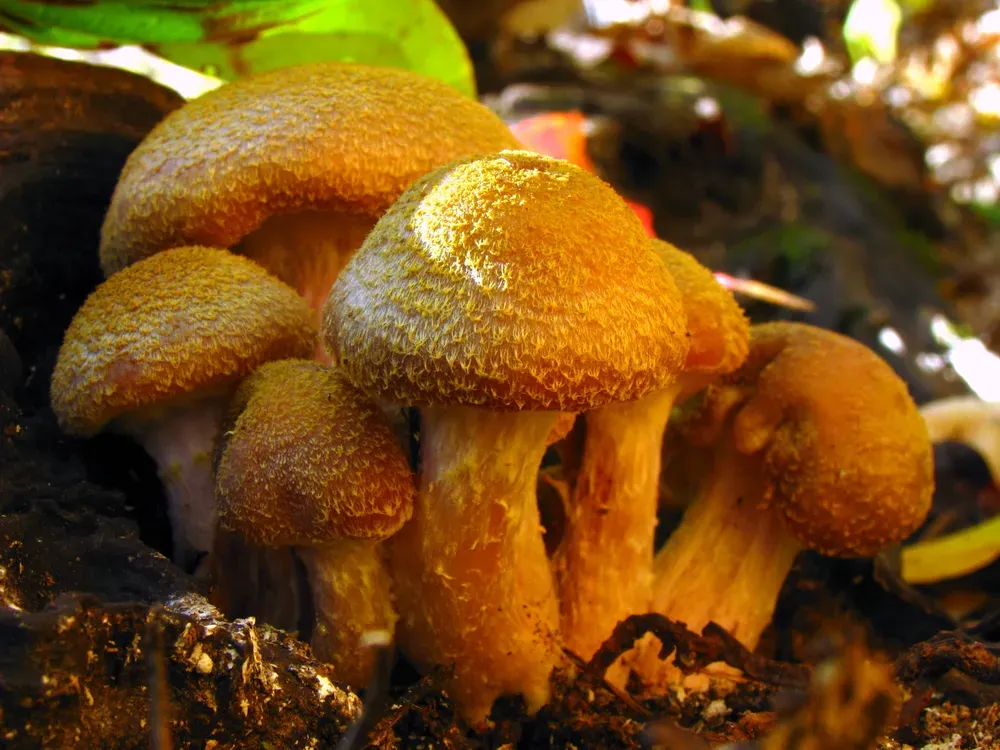
Bulbous honey fungus
Armillaria gallica
Frequently asked questions
Can you eat it?
Yes, it’s safe. It is used exclusively as a natural garlic seasoning with a green, leeky note. In a finished dish it gives a more “complex” aroma than ordinary garlic — something between garlic, leek and young onion.
What’s the best way to dry it?
Just like the other garlic parachutes: in the sun, on a string, or in a dehydrator at 40-45°C. Store dried in a glass jar; add whole to soups or grind into a powder. It keeps its aroma for at least a year.
Where does it grow?
Exclusively on oak litter — fallen leaves, acorns, acorn cups, small twigs and bark. A saprotroph closely tied to oak. In oak and oak-hornbeam forests. It does not occur without oak — that’s its key diagnostic feature.
Which regions of Ukraine?
Oak forests of the Carpathians, the Carpathian foothills, the western and central forest-steppe, less often Polissia. In the steppe — in planted oak stands, but rarely. Not very common, but recognizable for those who know where to look.
When should you look for it?
August–November, peaking in September–October. One of the latest saprotrophs of oak litter. In a warm autumn it can be found until the November frosts. It tolerates cold well.
How do you recognize it?
Four features together: 1) a garlic smell with a greenish leek note; 2) a two-toned stem (cream at the top, dark toward the base); 3) gills with a greenish-gray tint; 4) growth on oak litter. If all of these match — it’s definitely M. prasiosmus.
How do you tell it from the other garlic parachutes?
Oak + two-toned stem + leek smell = prasiosmus. Beech + thin black stem + pure garlic = alliaceus. Meadows and forest edges + reddish stem + small size = scorodonius. All three are useful as a seasoning, but their flavors differ slightly.
Does it have dangerous lookalikes?
Among small mushrooms with a garlic or onion smell, there are no poisonous ones in Ukraine. As with the other garlic parachutes, the smell is your guarantee of safety. Small brown or cream mushrooms without a garlic smell are not garlic parachutes, and you shouldn’t add them to your seasoning.
Is Mycetinis prasiosmus edible or poisonous?
Does Mycetinis prasiosmus have gills or pores?
What does the cap of Mycetinis prasiosmus look like?
What does the stem of Mycetinis prasiosmus look like?
Sources
- [1]Вікіпедія (українська)
- [2]Атлас грибів України, Зеров Д.К. (1979)
- [3]MycoBank Database
- [4]Index Fungorum
- [5]GBIF
- [6]iNaturalist Ukraine