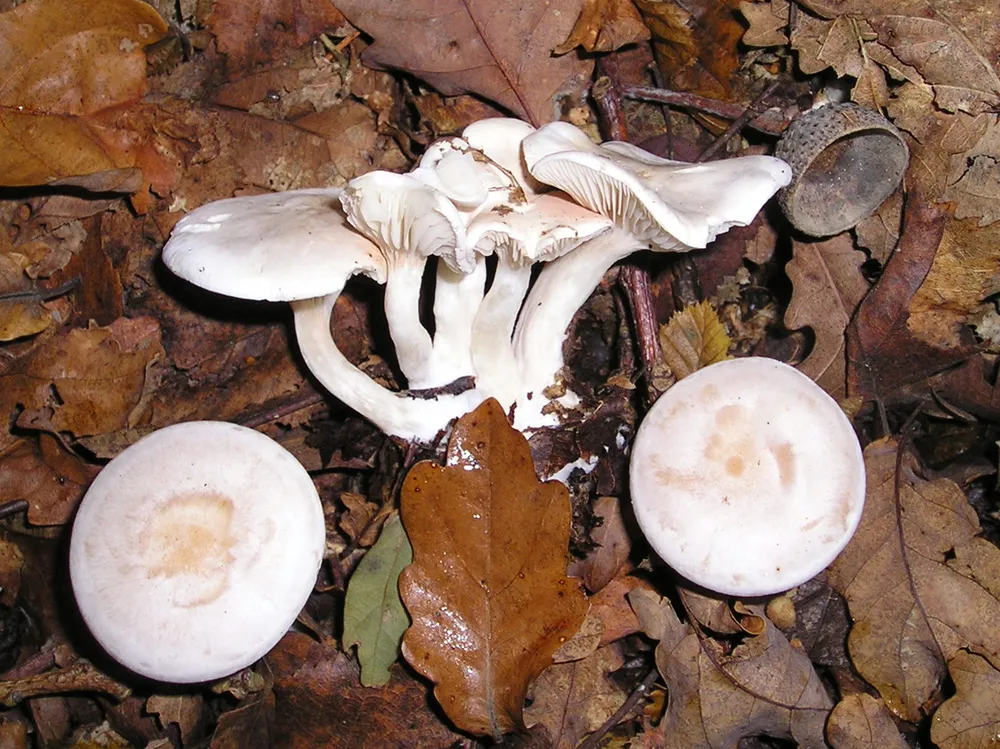
Frosty funnelClitocybe phyllophila
Expert-verifiedUpdated October 3, 2026
Passport
- Edibility
- Poisonous
- Season
- Aug — Nov
- Hymenophore
- Gilled
- Cap color
- White
- Size
- Small (up to 5 cm)
- Smell
- Floury
- Reviewed
- Yes ✓
POISONOUS
Eating it causes poisoning. Do not pick it unless you have identified it with certainty.
Toxin: muscarine in moderately high concentration. Symptoms begin 15-60 minutes after eating. Classic muscarinic syndrome (PSL): profuse salivation, heavy sweating, tearing, constricted pupils (miosis), bronchospasm, bradycardia, low blood pressure, intestinal cramps, diarrhea, nausea. Lasts 4-12 hours. The antidote is atropine, given in hospital under ECG monitoring. If you suspect poisoning — call 112 or your local emergency number immediately. Keep the mushroom remains for identification. The prognosis is good with prompt treatment.
If you suspect poisoning, call an ambulance immediately: 112 (the European emergency number) or your local emergency number
Quick answers
Where to look?
Deciduous forest, Mixed forest
When does it appear?
Aug — Nov
Active months: August, September, October, November.
How to recognize it? Three signs
- Cap color: White, Cream, Pink
- Cap shape: Funnel-shaped
- Smell: Floury
Fruiting season
August – November
Description
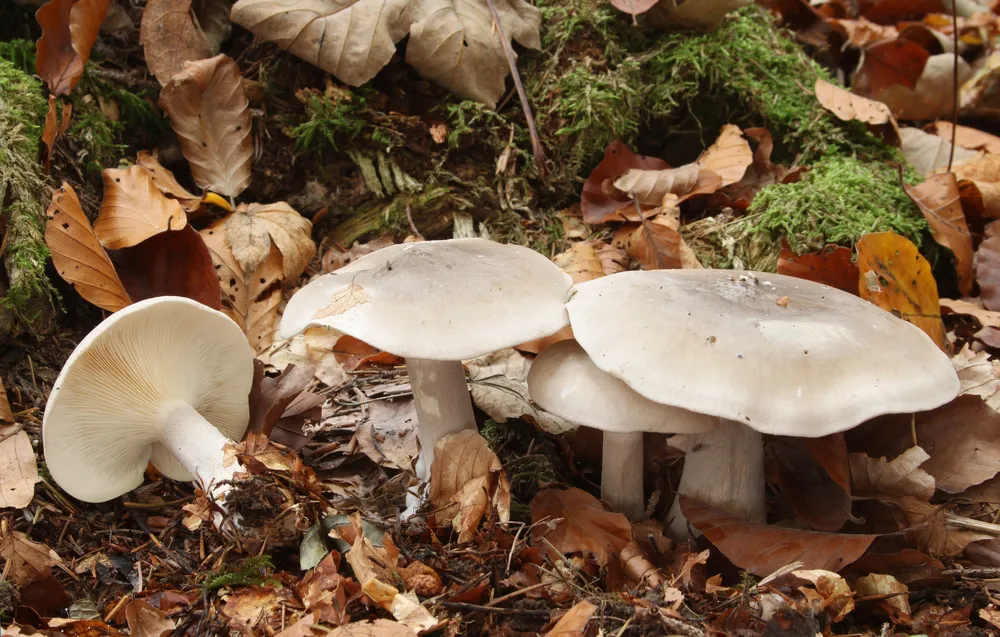
The frosty funnel (Clitocybe phyllophila) is a close relative of the ivory funnel, just as poisonous and just as treacherous. It's a whitish funnel-shaped mushroom with a silky, glossy surface, found mostly in broadleaf and mixed forests among fallen leaves. The Ukrainian name, "waxy", refers to the characteristic soft matte sheen of the cap skin, which looks like a thin coat of wax. It resembles dozens of other whitish woodland Clitocybe, and in the field it is practically impossible to reliably tell the poisonous phyllophila from its edible relatives without microscopic analysis.
This is a poisonous mushroom with muscarinic action — the same toxin found in Inocybe and the ivory funnel. Its muscarine concentration is lower than in Inocybe erubescens, but enough to cause severe poisoning. Symptoms begin 15-60 minutes after eating: profuse salivation, heavy sweating, abdominal cramps, diarrhea, slow heartbeat. Never pick it in any form — even small amounts cause nasty poisoning. No method of preparation neutralizes the toxin.
In Ukraine it is widespread in broadleaf and mixed forests — mainly under oak, beech, hornbeam and birch. A saprotroph on forest litter. Season August-November, peaking in September-October. It often grows in groups of 5-20 fruiting bodies in thick leaf litter, along woodland edges and among moss. A general rule for forest outings: skip all small whitish Clitocybe with decurrent gills — don't pick them.
Cap
Cap 3-7 cm across, convex when young, becoming funnel-shaped over time, with a depressed center and a thin wavy margin. Color whitish to cream, with a pale pink or ochre tint in the center and a characteristic silky, waxy sheen. Slightly sticky in wet weather, matte when dry.
Hymenophore
Gilled hymenophore. Gills crowded, thin, decurrent down the stem. Color whitish to cream, taking on a pale pink tint with age. Spore print white to pale pinkish-cream.
Stem
Stem 3-6 cm tall, 0.4-1 cm thick, cylindrical, often thickening toward the base. Color whitish to cream, with white mycelial fuzz at the base. Surface smooth, no ring.
Flesh
Flesh thin, white, soft. Does not change color when cut. It has a pleasant mealy smell and a mild taste — as with other poisonous Clitocybe, the lack of any unpleasant smell makes it all the more treacherous.
Smell
Faintly mealy, neutral. Raises no suspicion. Taste mild. Don't rely on smell or taste for identification — they give no hint of toxicity.
›Scientific synonyms (1)
Clitocybe cerussata
Lookalikes
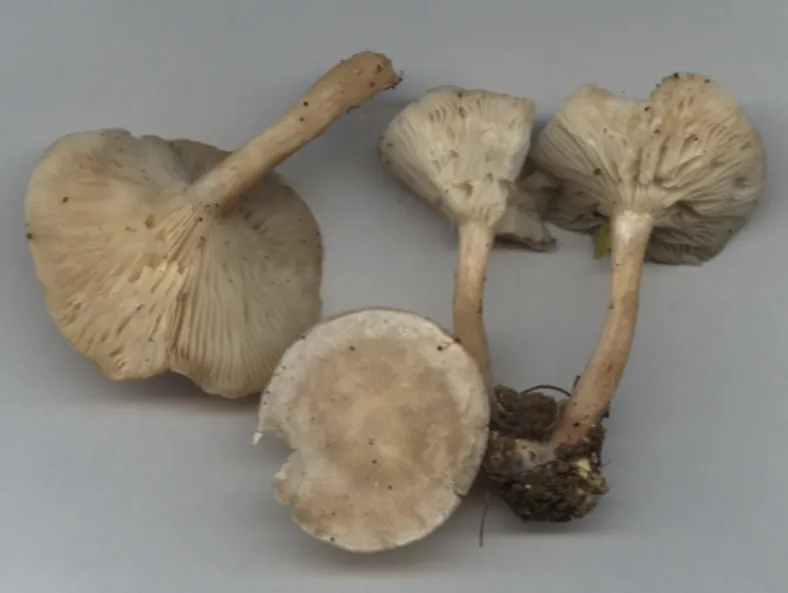
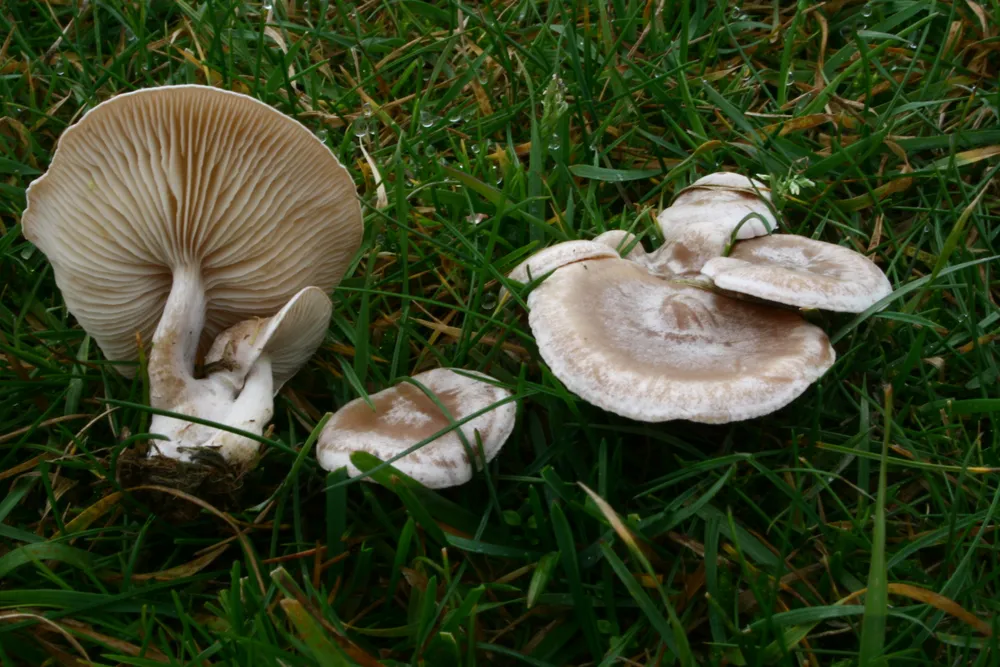
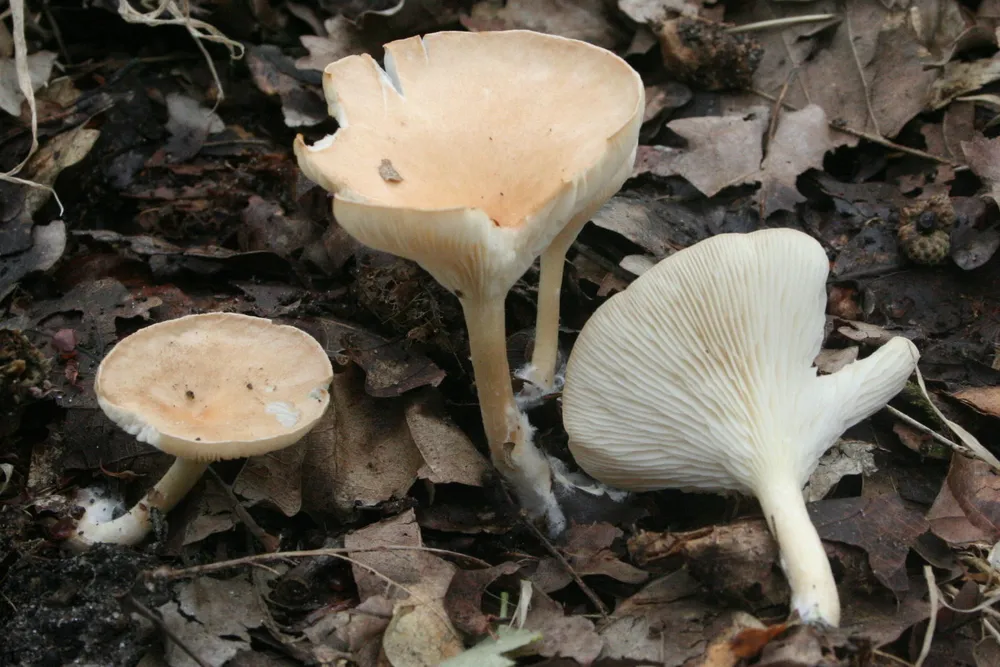
Related species
Mushrooms of the same genus and habitat — to study side by side and never mix up.
Aniseed funnel
Clitocybe odora
Trooping funnel
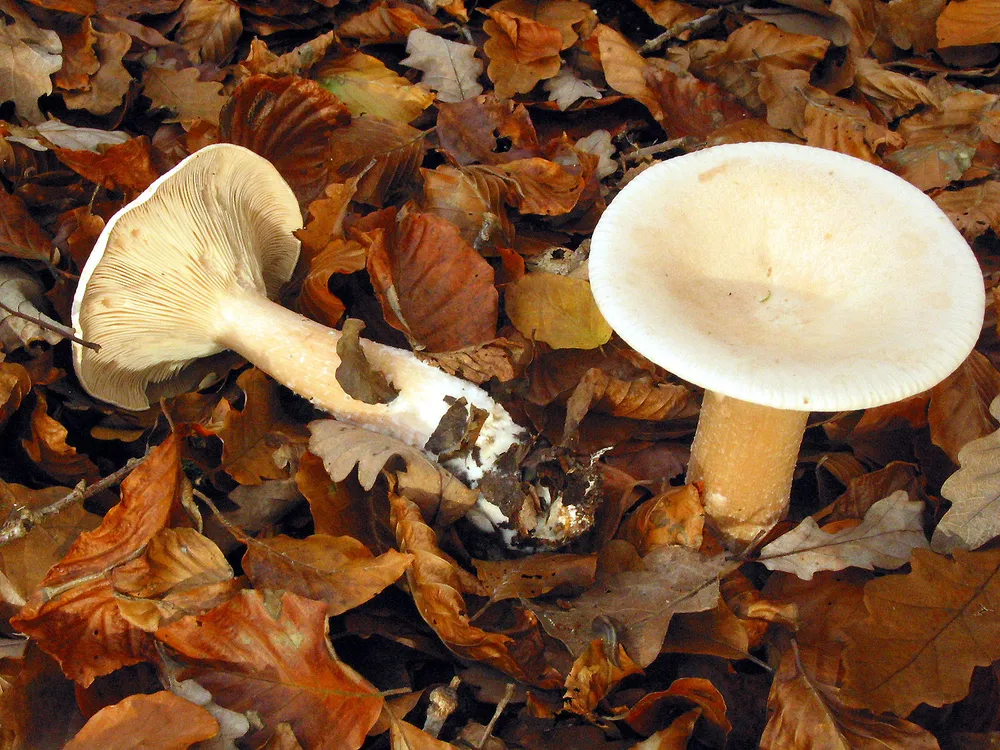
Clitocybe geotropa
_Ricken_185798.webp)
Booted knight
Tricholoma focale
Charbonnier
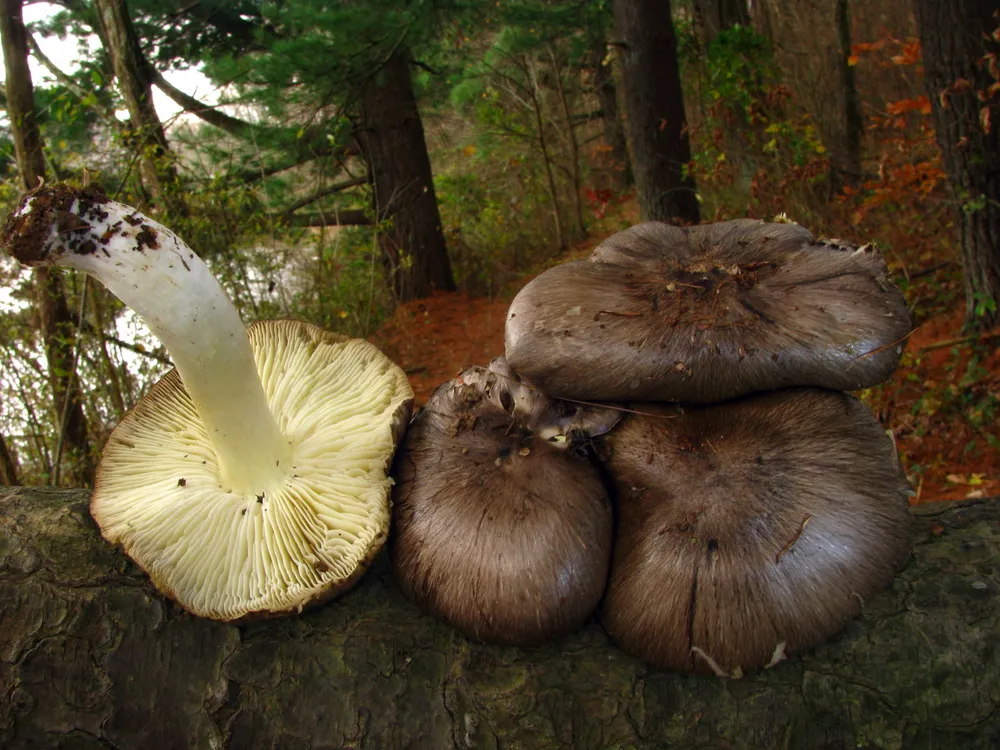
Tricholoma portentosum
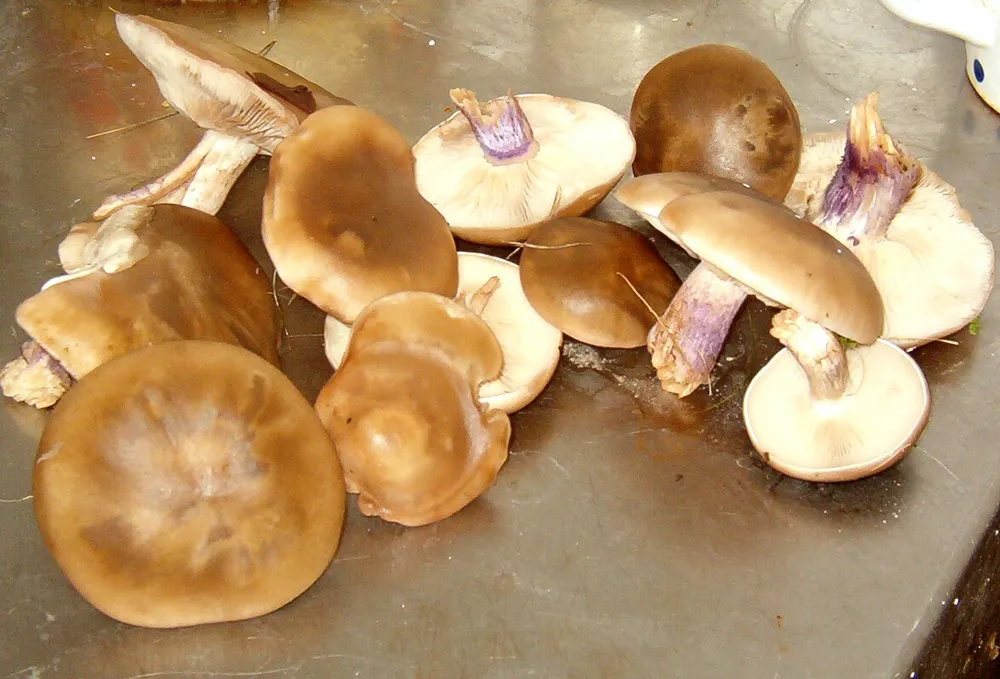
Field blewit
Collybia personata
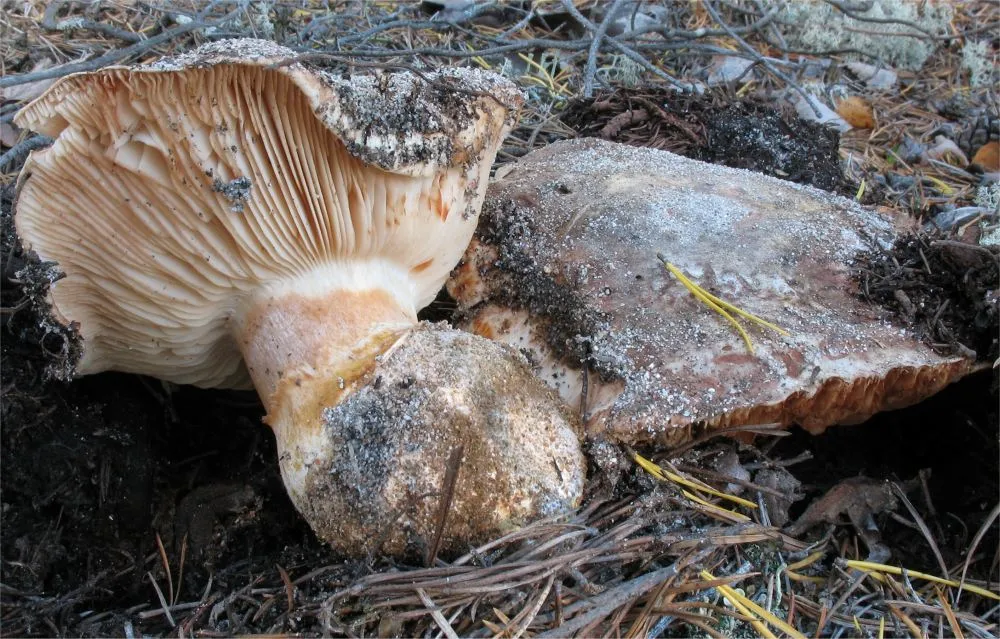
Giant knight
Tricholoma colossus
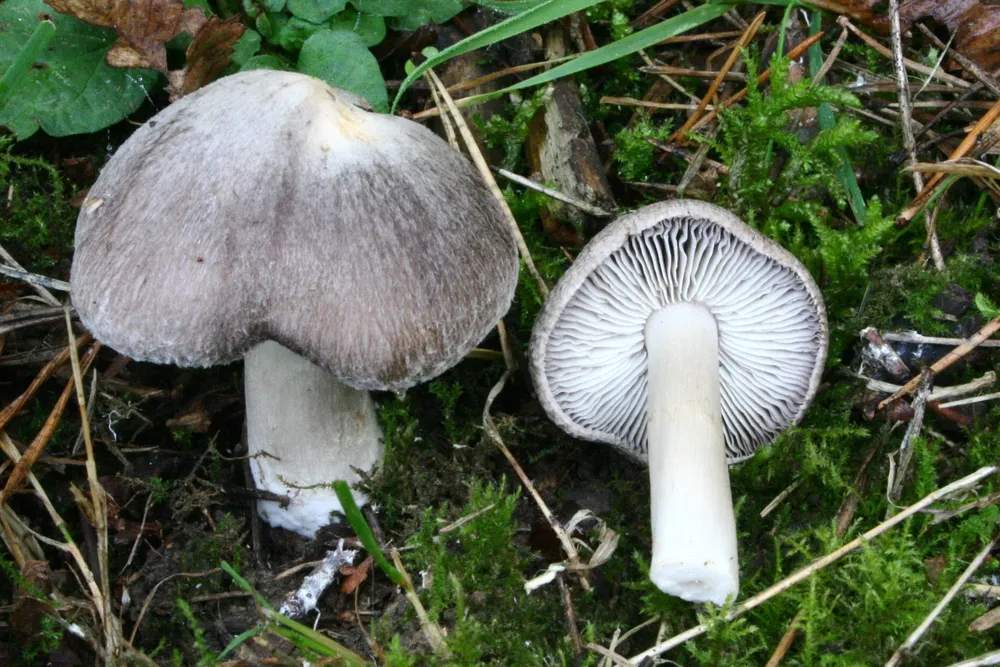
Grey knight
Рядовка наземна
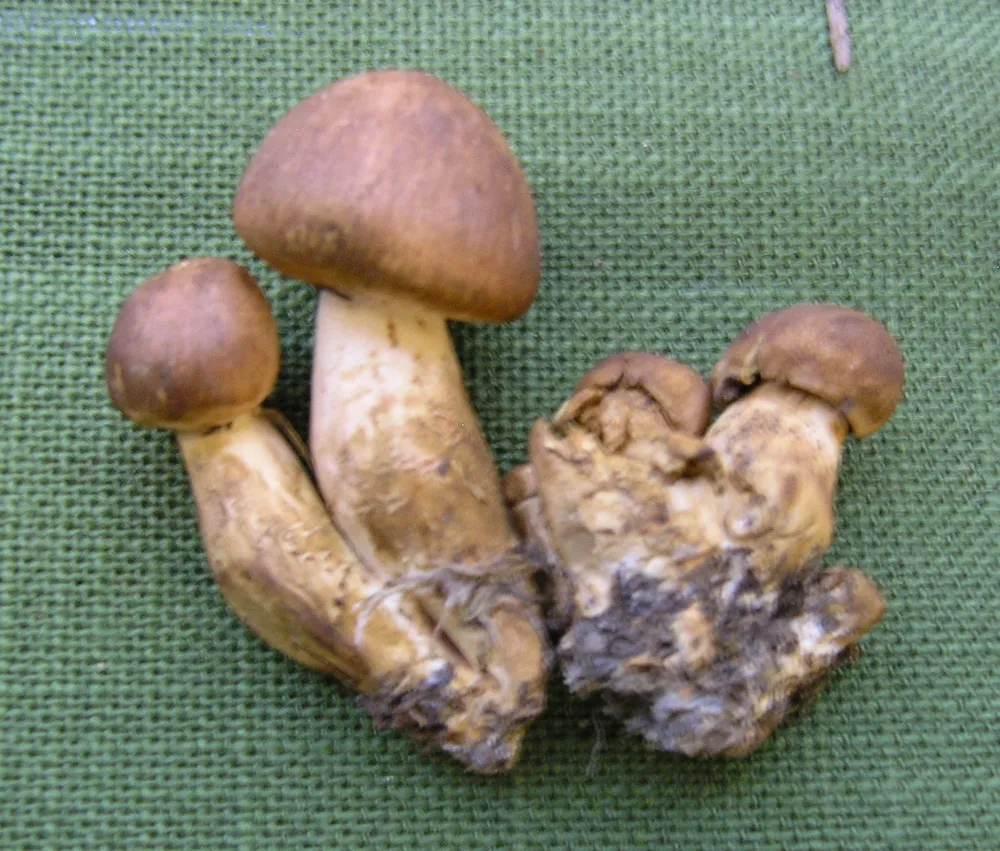
Matt knight
Tricholoma imbricatum
Frequently asked questions
What happens if you eat it by accident?
Within 15-60 minutes — heavy salivation, sweating that soaks through your clothes, watering eyes, runny nose, a feeling of suffocation, abdominal cramps, diarrhea, slow heartbeat. Call 112 or your local emergency number immediately. Put the mushroom remains in a bag for identification. In hospital you'll be given atropine. With prompt care the prognosis is good.
Is there any way to cook it safely?
No. Muscarine is heat-stable — boiling, pickling, drying and freezing do not destroy it. No method of preparation makes this mushroom safe. There is no "right way to cook it" — just don't eat it.
How do you keep it out of your basket?
Never pick an unknown small whitish funnel-shaped mushroom with decurrent gills from under fallen leaves — that is the classic look of poisonous Clitocybe. If you can't identify it with certainty in the field, leave it in the forest. It's safer to pass up a doubtful mushroom than to put a dangerous lookalike in your basket.
Where does it usually grow?
In broadleaf and mixed forests — mainly under oak, beech, hornbeam and birch. It loves thick, moist leaf litter, woodland edges and the slopes of forest ravines. It often grows in groups of 5-20 fruiting bodies among fallen leaves. Less common in pine forests.
Which regions of Ukraine is it found in?
Throughout the forest and forest-steppe zones: the Carpathians, Prykarpattia, Polissia and all three forest-steppe belts. In the steppe — in ravine (bairak) forests. A common species.
When does it fruit?
August — November, peaking in September-October. This overlaps with the main season for porcini and chanterelles — hence the risk of it accidentally ending up in a mixed basket.
Which edible mushrooms is it confused with?
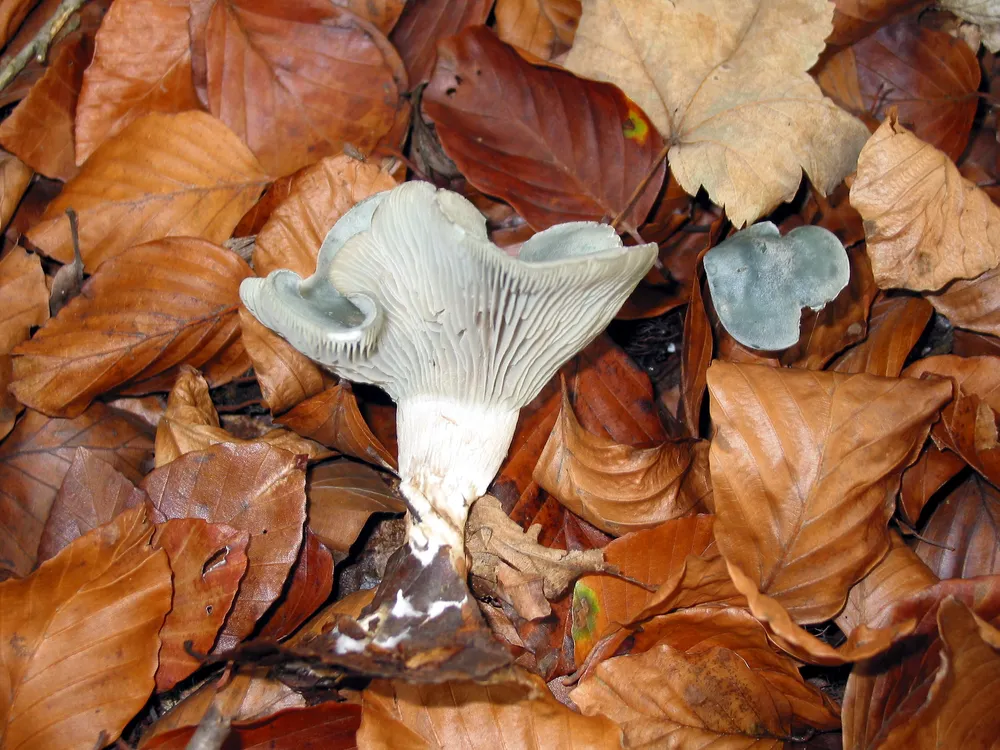
With the edible common funnel (Clitocybe gibba) — that one is reddish-orange, not white. With the aniseed funnel (Clitocybe odora) — that one has a distinct aniseed smell and a bluish-green color. With young funnels and Tricholoma (knights). General rule: skip all small whitish woodland Clitocybe with decurrent gills unless you can identify them with certainty.
How do you tell it apart from the ivory funnel?
Without a microscope it is almost impossible to tell them apart reliably — the two species are so similar that they are often described as a complex. The key difference: C. dealbata mostly grows in meadows and pastures, C. phyllophila — in forests among fallen leaves. But both are equally poisonous, so in practice the difference is purely scientific — for a forager, both are equally dangerous.
Is Frosty funnel edible or poisonous?
Does Frosty funnel have gills or pores?
What does the cap of Frosty funnel look like?
What does the stem of Frosty funnel look like?
Sources
- [1]Вікіпедія (українська)
- [2]Атлас грибів України, Зеров Д.К. (1979)
- [3]MycoBank Database
- [4]Index Fungorum
- [5]GBIF
- [6]iNaturalist Ukraine