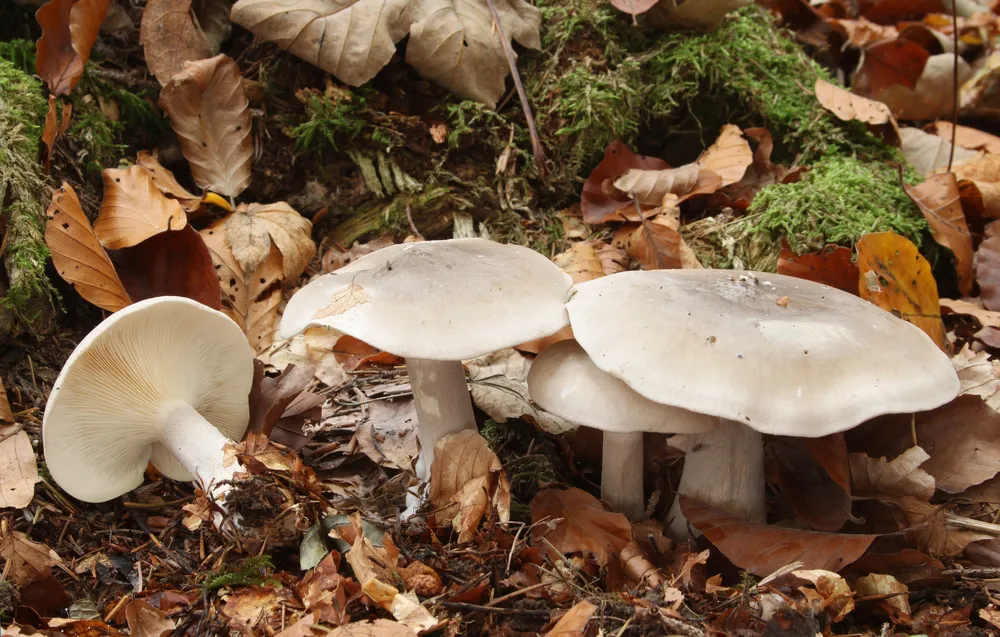
Clouded funnelClitocybe nebularis
Expert-verifiedUpdated October 3, 2026
Passport
- Edibility
- Conditionally edible
- Season
- Oct — Nov
- Hymenophore
- Gilled
- Cap color
- Grey
- Size
- Large (over 15 cm)
- Smell
- Floury
- Reviewed
- Yes ✓
Quick answers
Where to look?
Deciduous forest, Conifer forest, Mixed forest
When does it appear?
Oct — Nov
Active months: October, November.
How to recognize it? Three signs
- Cap color: Grey, Brown
- Cap shape: Convex
- Smell: Floury
Fruiting season
October – November
Description
The clouded funnel (Clitocybe nebularis) is one of the biggest and most controversial mushrooms of late autumn. It's a really hefty mushroom with a broad grayish, smoky cap 8-20 cm across and a thick white stem. Modern Western mycological guides list it as conditionally edible, with a caveat: in some people it causes gastrointestinal upset even after proper preparation. That's why the rule of recent decades is caution and small amounts, with mandatory boiling and discarding the water. In the Soviet tradition it was gathered en masse as an edible — today that approach is considered outdated.
This is a conditionally edible mushroom whose toxicological status is still actively debated. It's cooked after mandatory boiling for 15-20 minutes in plenty of water, with the water discarded. Compounds that irritate the gut pass into the water (their exact nature is debated — probably small amounts of lectins and proteases). Even after proper preparation, some people get mild diarrhea and stomach discomfort — this is individual intolerance. The first time, try a small portion, then wait 24 hours after eating it and see how you react. Don't eat it in large amounts.
In Ukraine it's widespread throughout the forest zone: in deciduous, mixed and coniferous woods. A saprotroph. It likes forest edges, mossy patches and compacted forest litter. The season is October-November, peaking in late October — early November. It tolerates the first frosts. It often grows in groups and rings ("fairy rings") of 10-30 fruiting bodies. Very recognizable thanks to its size and distinctive mealy smell.
Cap
The cap is large: 8-20 cm across, hemispherical to convex in young mushrooms, with an inrolled margin, later flattening out with a small bump in the center. The color is smoky gray, mouse-gray, darker in wet weather and lighter in dry weather. The surface is silky-matte, with a thin whitish bloom (as if dusted with flour). The cap margin is often wavy and curled downward.
Hymenophore
The underside has gills. The gills are crowded, thin, decurrent down the stem. Whitish to cream, turning cream-ochre with age. The spore print is white to pale cream. The gills detach easily from the cap — a characteristic feature of the genus.
Stem
The stem is sturdy: 5-10 cm tall, 2-4 cm thick, cylindrical or thickening toward the base. White to dirty grayish-cream. The surface is lengthwise fibrous, with white mycelial fuzz at the base. No ring. The stem flesh is firm, becoming hollow with age.
Flesh
The flesh is thick and white, firm in young mushrooms and looser in old ones. It doesn't change color when cut. It has a distinct mealy smell and a mild taste.
Smell
Strongly mealy, with a hint of cucumber — typical of the species. In old mushrooms it's sourish and unpleasant. The smell is so distinctive that it's used as a diagnostic feature for identification in the field.
›Scientific synonyms (4)
Agaricus nebularis Batsch (1789), Gymnopus nebularis (Batsch) Gray (1821), Omphalia nebularis (Batsch) Quél. (1886), Lepista nebularis (Fr.) Harmaja (1974)
Lookalikes
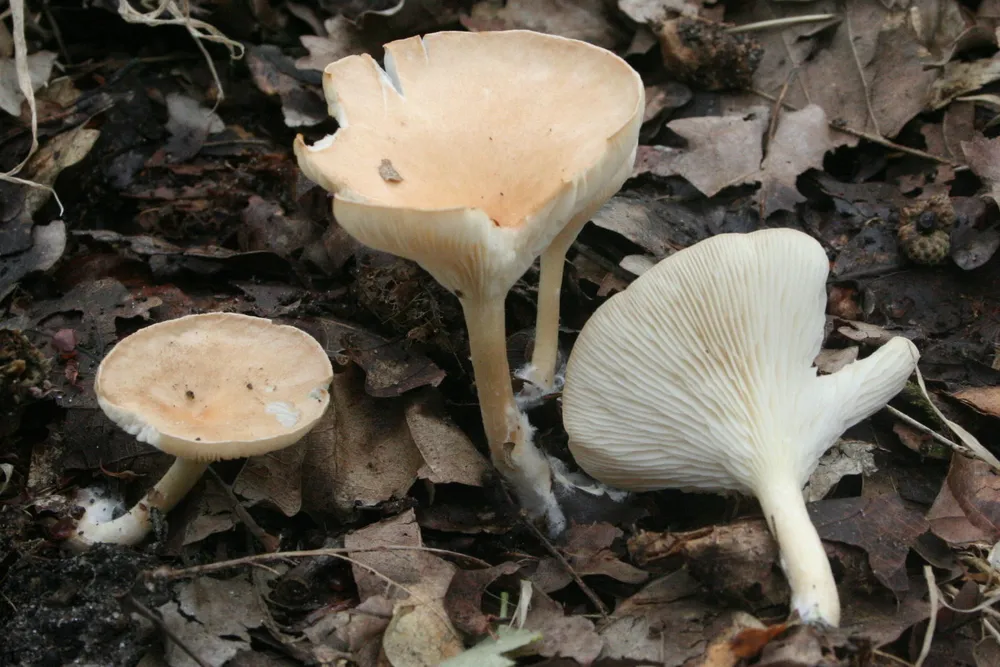
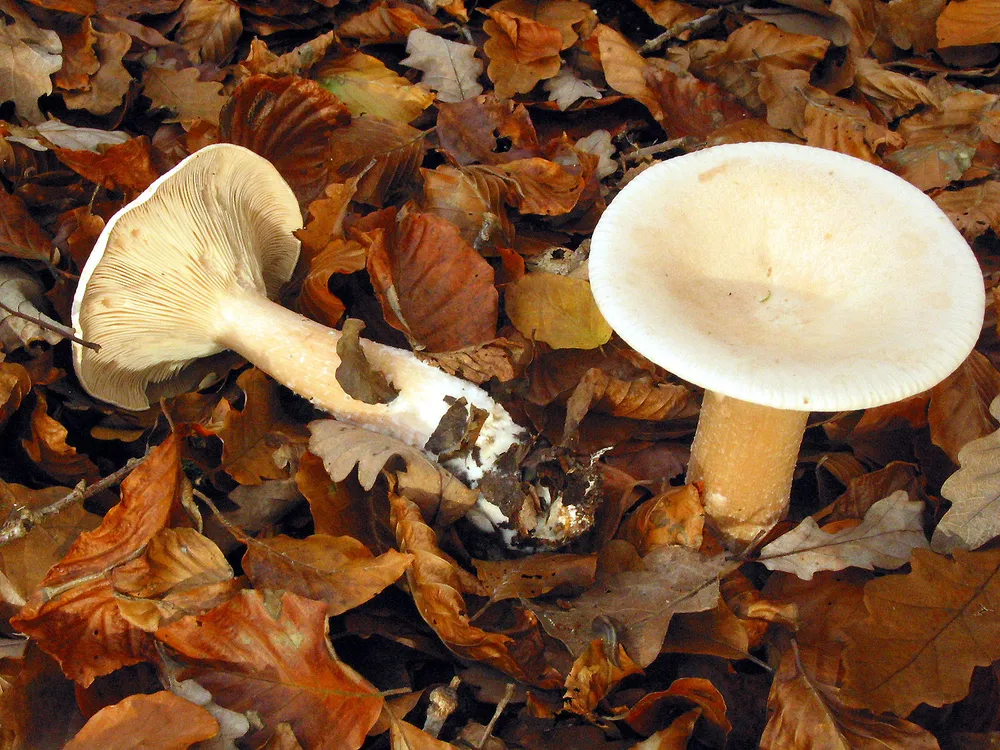
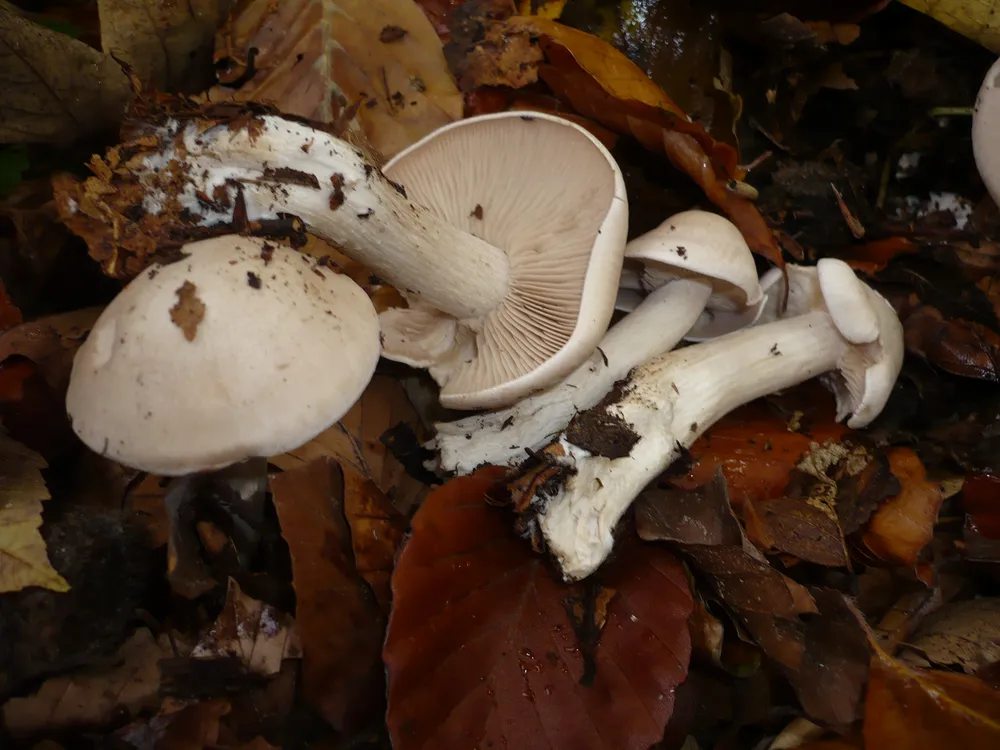

Related species
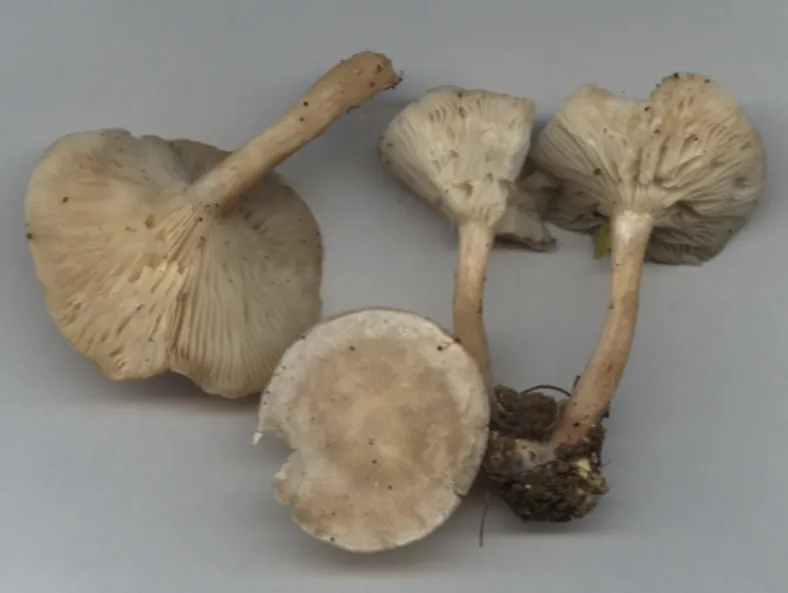
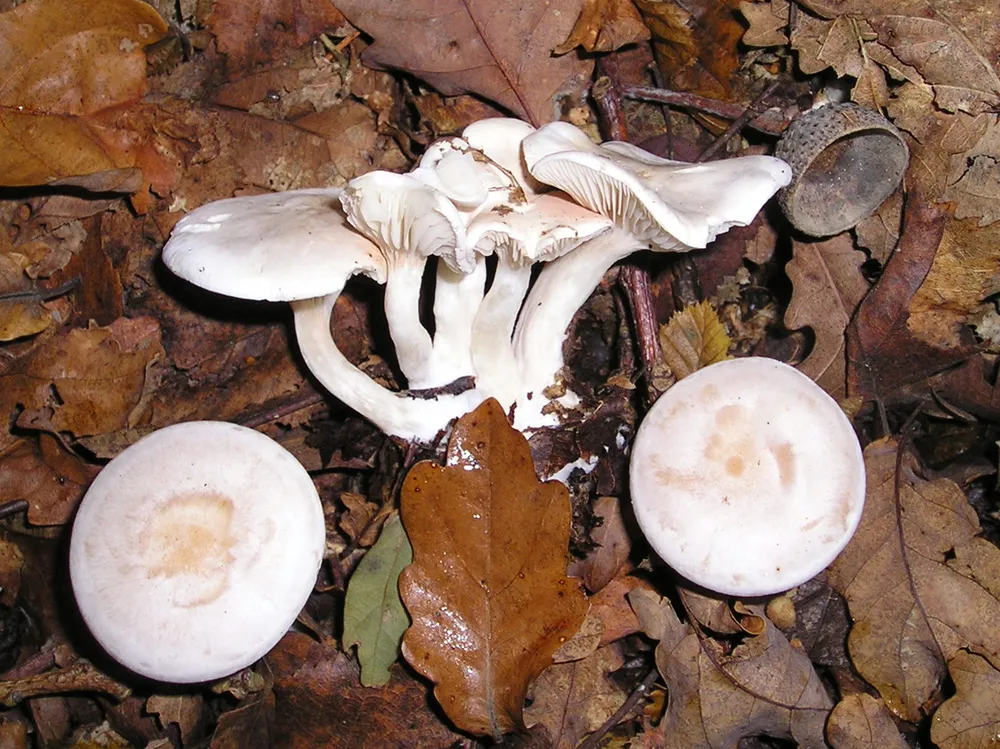
Mushrooms of the same genus and habitat — to study side by side and never mix up.
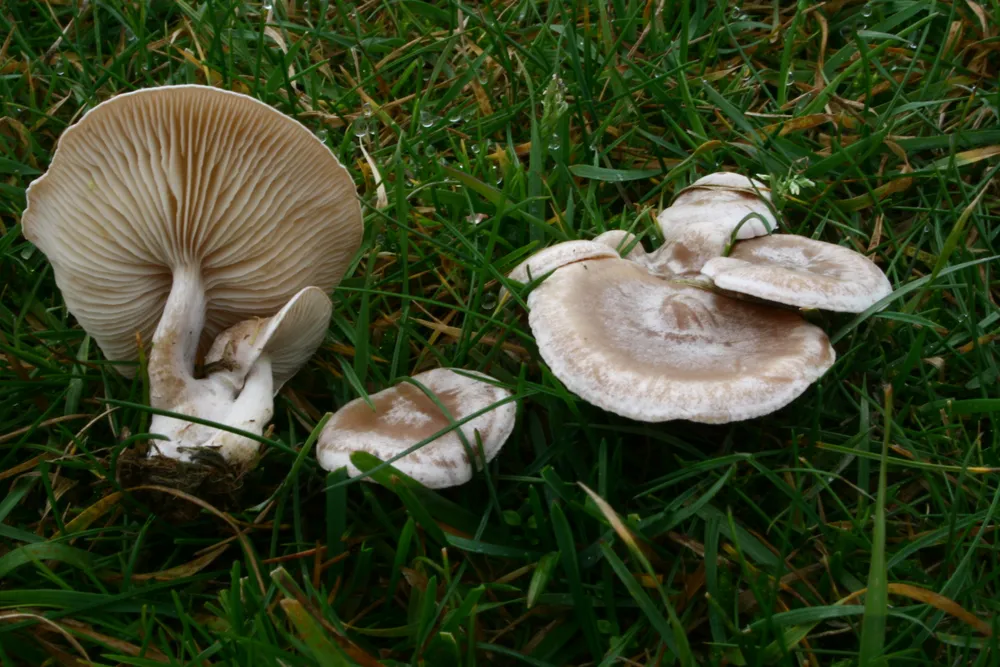
Fool's funnel
Clitocybe rivulosa
_Ricken_185798.webp)
Booted knight
Tricholoma focale
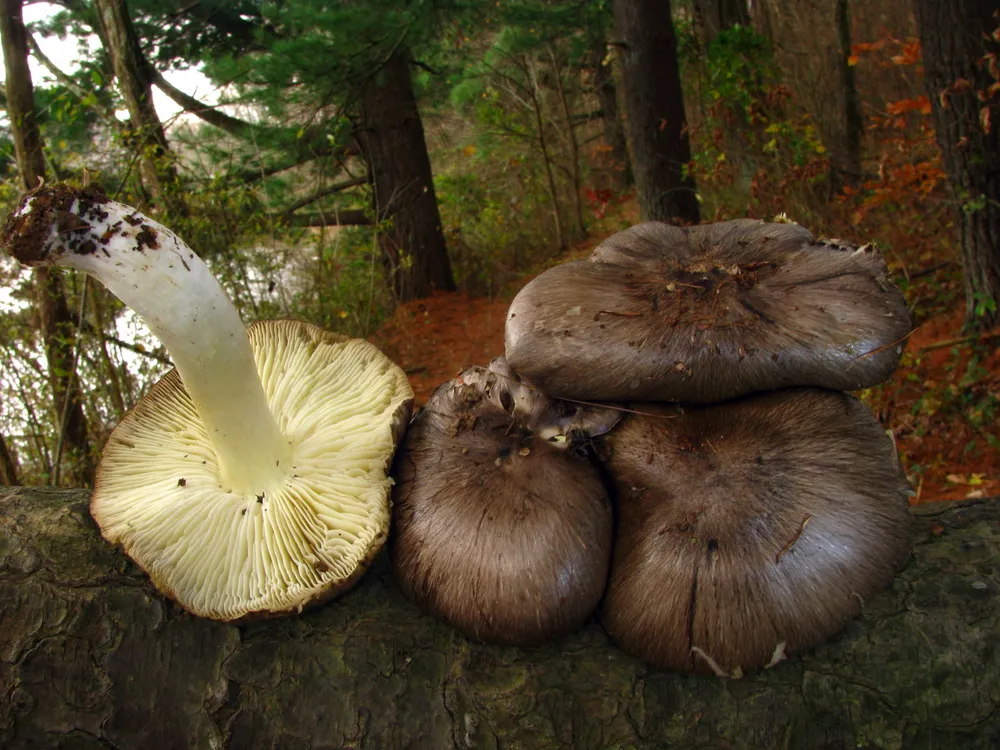
Charbonnier
Tricholoma portentosum
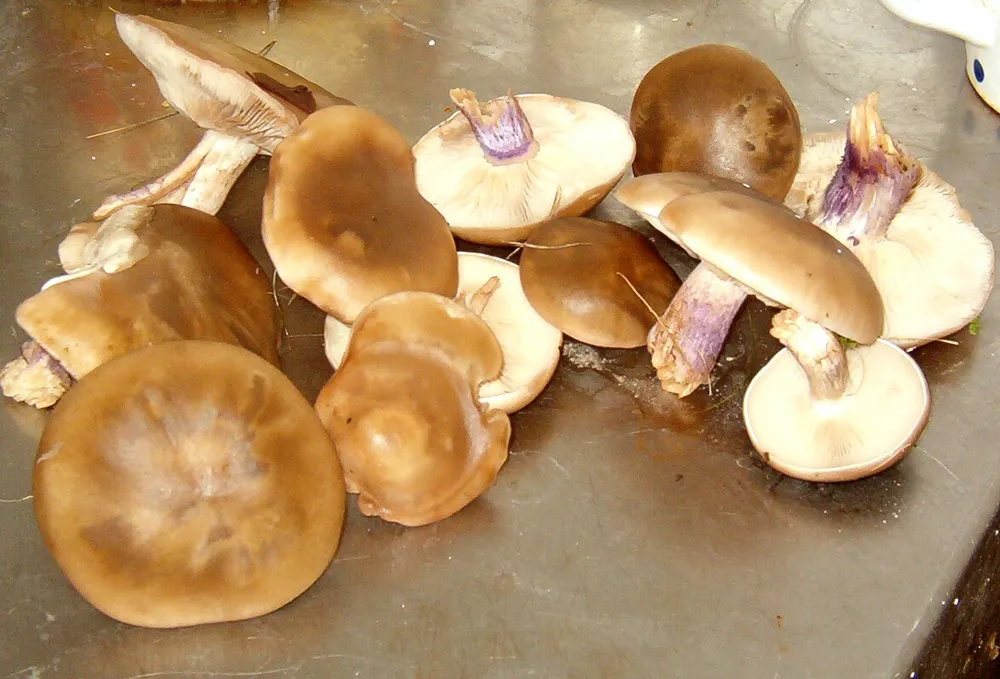
Field blewit
Collybia personata
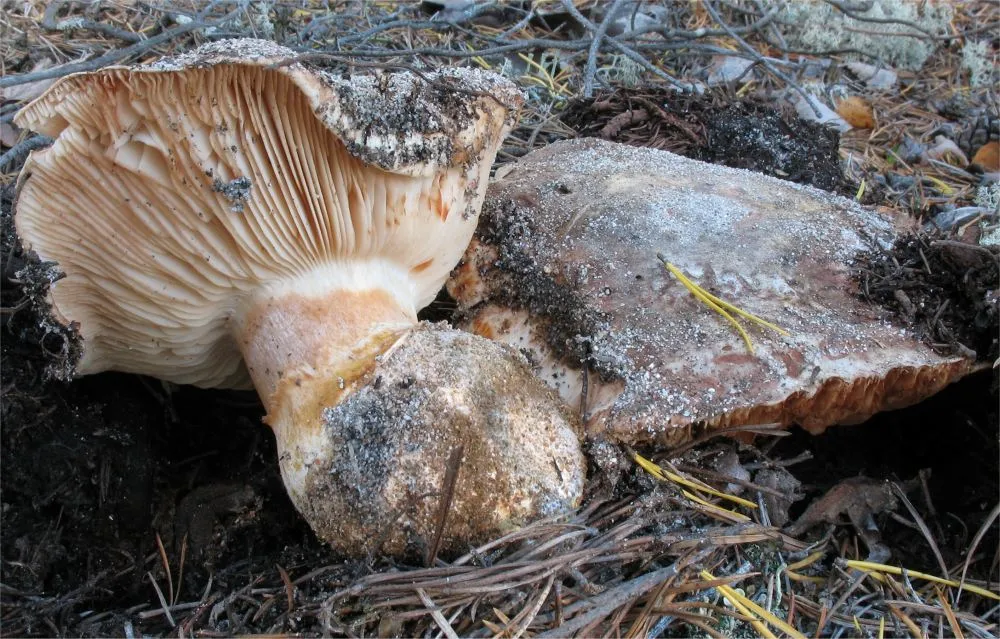
Giant knight
Tricholoma colossus
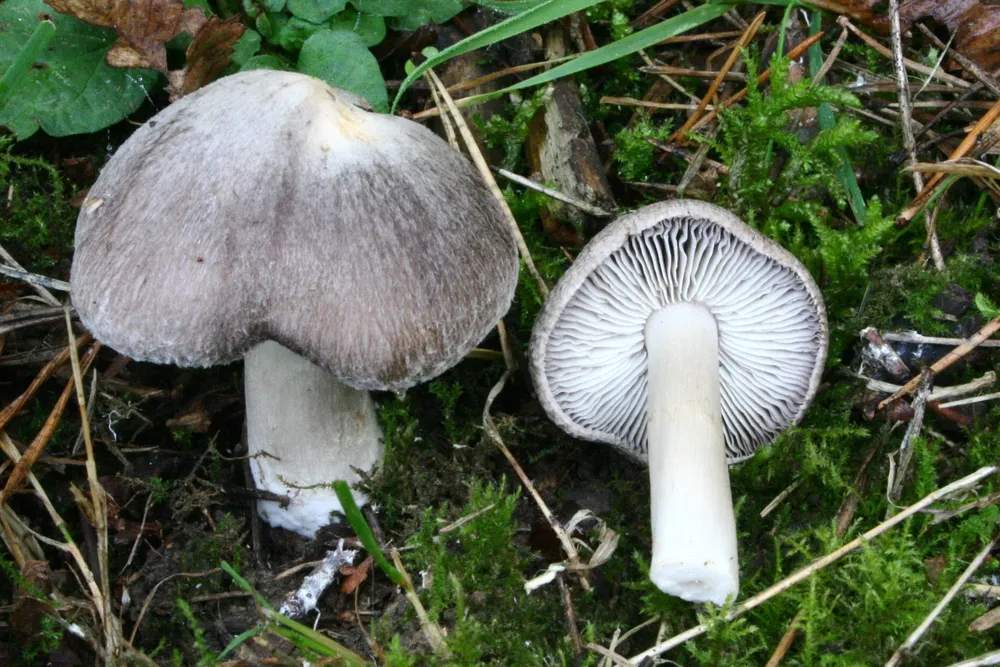
Grey knight
Рядовка наземна
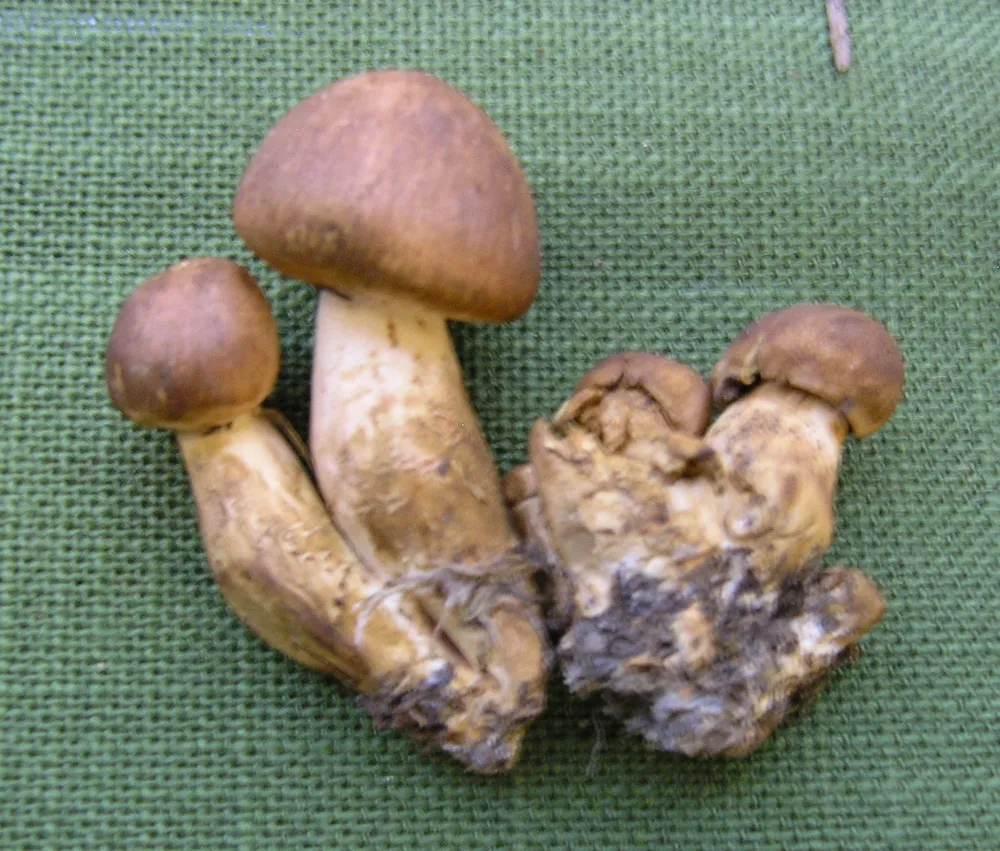
Matt knight
Tricholoma imbricatum
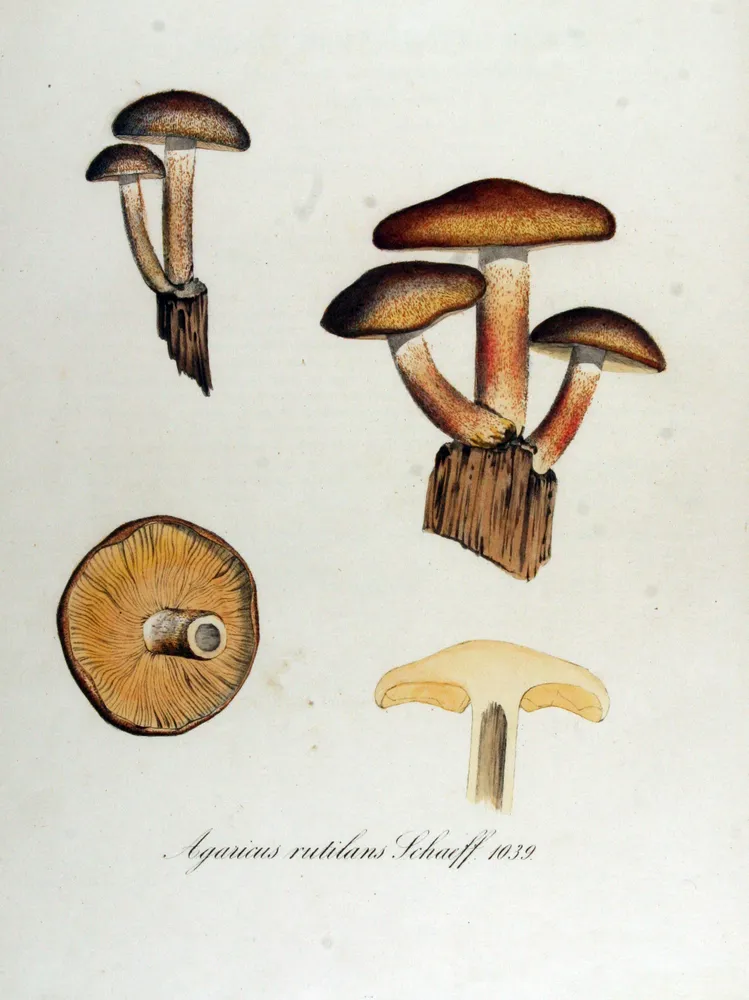
Plums and custard
Рядовка червона
Frequently asked questions
Is it safe to eat?
Conditionally — after mandatory boiling for 15-20 minutes in plenty of water, with the water discarded. Raw or undercooked, it causes gastrointestinal upset. In some people, even when properly cooked, it causes mild malaise — this is individual intolerance. The rule: the first time, try a small portion, wait 24 hours and watch how you react. If all is well, you can eat it in moderate amounts. If you feel unwell, don't eat it again.
How should you cook it?
Mandatory: (1) clean and slice; (2) boil for 15-20 min in plenty of water; (3) discard the water — irritating compounds pass into it; (4) rinse the mushrooms. Then fry with onion and sour cream, stew, or add to soups. It pickles well (also after pre-boiling). Drying is a less common but possible option.
Can children eat it?
No. This isn't the mushroom to start a child's acquaintance with mushrooms. Children from 5-6 years old can have it only after the parents have tried it themselves and have no individual intolerance. It's better to start with chanterelles, porcini and hedgehog mushrooms — trouble-free species. Don't give children under 4-5 any conditionally edible mushrooms at all.
Where should you look for it?
In deciduous, mixed and coniferous woods — under oak, beech, spruce and birch. It likes forest edges, mossy patches and compacted forest litter. It often grows in groups and rings of 10-30 fruiting bodies. Not fussy — it turns up in many types of forest.
Which regions of Ukraine is it found in?
Throughout the forest and forest-steppe zones: the Carpathians, Prykarpattia, Polissia and all three forest-steppe belts. In the steppe — in ravine woods and park forests. Overall a common, abundant species.
When should you look for it?
October — November, peaking in late October — early November. One of the latest abundant mushrooms — it fruits after the main wave of porcini, chanterelles and honey fungus is over. It tolerates the first light frosts.
What is it confused with?
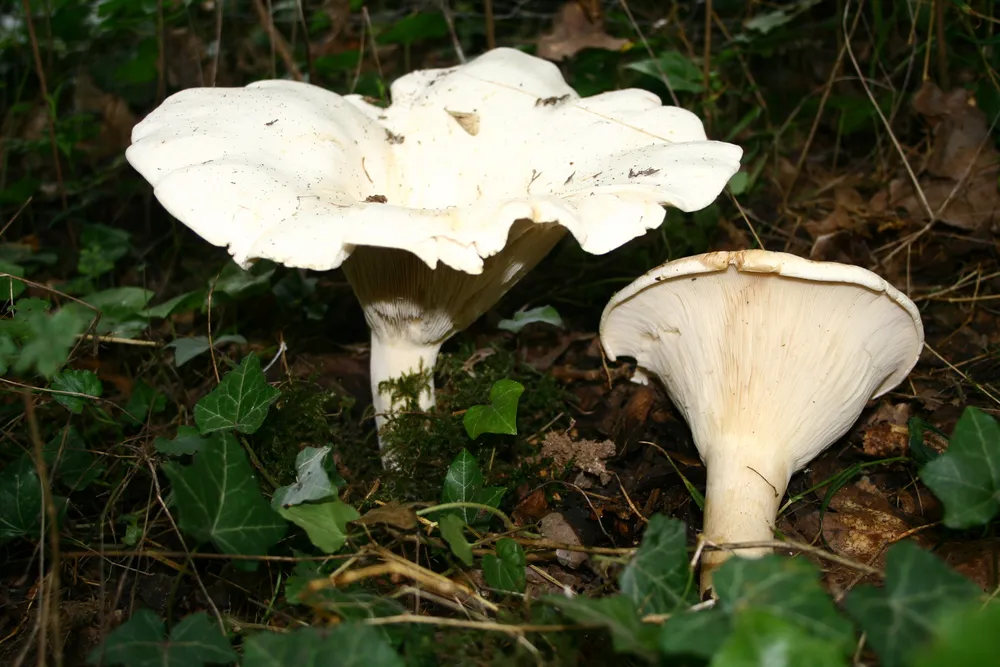
With matsutake (Tricholoma matsutake) — also a large gray-brown late-autumn mushroom, but it has a ring on the stem and a spicy scent. With the giant funnel (Leucopaxillus giganteus) — that one is white, not gray. Among the dangerous ones: the small poisonous Clitocybe (C. dealbata, C. phyllophila) — much smaller (2-5 cm versus 8-20). A large gray mushroom with a mealy smell is almost certainly C. nebularis.
What should you do if you find it but lack experience?
If in doubt, leave it. This isn't a mushroom worth taking risks for: its culinary value is moderate, its status is conditionally edible, and some people have an individual intolerance. Better to gather chanterelles, porcini and honey fungus. If you do take it, follow the rules exactly: boil for 15-20 min, discard the water, and try a small portion the first time.
Is Clouded funnel edible or poisonous?
Does Clouded funnel have gills or pores?
What does the cap of Clouded funnel look like?
What does the stem of Clouded funnel look like?
Sources
- [1]Вікіпедія (українська)
- [2]Атлас грибів України, Зеров Д.К. (1979)
- [3]MycoBank Database
- [4]Index Fungorum
- [5]GBIF
- [6]iNaturalist Ukraine