Trooping funnelClitocybe geotropa
Expert-verifiedUpdated October 3, 2026
Passport
- Edibility
- Edible
- Season
- Sep — Nov
- Hymenophore
- Gilled
- Cap color
- Cream
- Size
- Large (over 15 cm)
- Smell
- Pleasant
- Reviewed
- Yes ✓
Quick answers
Where to look?
Deciduous forest, Mixed forest
When does it appear?
Sep — Nov
Active months: September, October, November.
How to recognize it? Three signs
- Cap color: Cream, Orange, Brown
- Cap shape: Funnel-shaped
- Smell: Pleasant
Fruiting season
September – November
Description
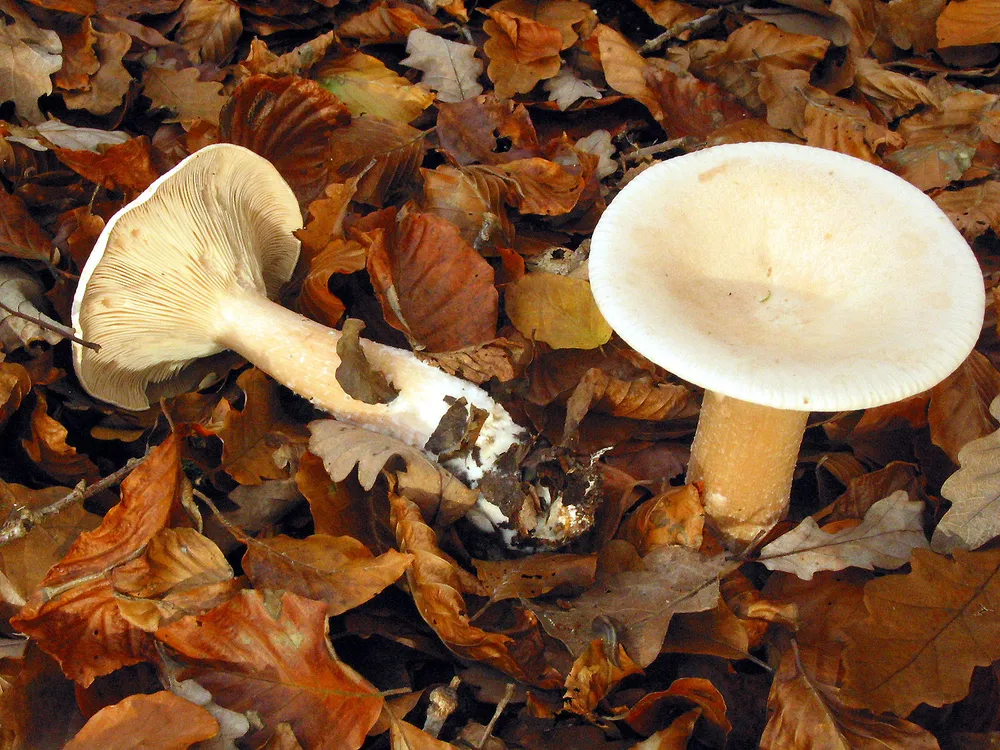
The trooping funnel (Clitocybe geotropa) is a big, hefty relative of the common funnel, with a cap up to 20 cm across and a sturdy stem up to 15 cm tall. The color is pale ochre to reddish, with a characteristic brown bump in the center of the funnel-shaped cap. It's famous for forming the largest "fairy rings" of any forest mushroom — the rings can have a radius of 10-15 meters and number 100-200 fruiting bodies. In Western Europe (Spain, Italy) it's a traditional autumn mushroom, valued and gathered in large quantities.
This is a good edible mushroom with firm, meaty flesh, a pleasant nutty taste and a lovely aroma. Young mushrooms are the best for cooking: frying, stewing, pickling, adding to soups and sauces. Old specimens with a wide funnel get a bit tough — they're better stewed for a long time or dried. One of the few Clitocybe that gives a really worthwhile result in the kitchen. In Italian and Spanish restaurants it sits alongside porcini and chanterelles.
In Ukraine it's widespread in deciduous and mixed woods — mostly under oak, beech, hornbeam and hazel. A saprotroph. It likes forest edges, woodland clearings and the slopes of forest ravines. The season is September-November, peaking in October. It often grows in fairy rings — look for fruiting bodies in groups rather than singly. The best finds are in the Carpathian beech forests and the oak woods of Polissia.
Cap
The cap is very large: 8-20 cm across, convex with an inrolled margin in young mushrooms, later becoming funnel-shaped with a sunken center and a characteristic small brown bump in the central hollow. The color is pale ochre, creamy-reddish, darker in wet weather and lighter in dry weather. The surface is silky-matte and smooth; the margin is often wavy and slightly wrinkled.
Hymenophore
The underside has gills. The gills are crowded, thin, strongly decurrent down the stem. Whitish to cream, turning cream-ochre with age. The spore print is white to pale cream.
Stem
The stem is sturdy: 5-15 cm tall, 2-4 cm thick, cylindrical or thickening toward the base, often with white mycelial fuzz at the bottom. Whitish to cream, matching the cap. The surface is smooth or has fine lengthwise fibers. No ring. The stem flesh is firm, hollow in old mushrooms.
Flesh
The flesh is thick, white, firm and meaty. It doesn't change color when cut. It has a pleasant nutty-fruity taste. In old mushrooms it's slightly sourish.
Smell
A distinct, pleasant mushroomy-nutty smell with a note of ripe apple. One of the most fragrant of the forest Clitocybe. The taste is delicate with a sweetish note.
›Scientific synonyms (1)
Infundibulicybe geotropa
Lookalikes
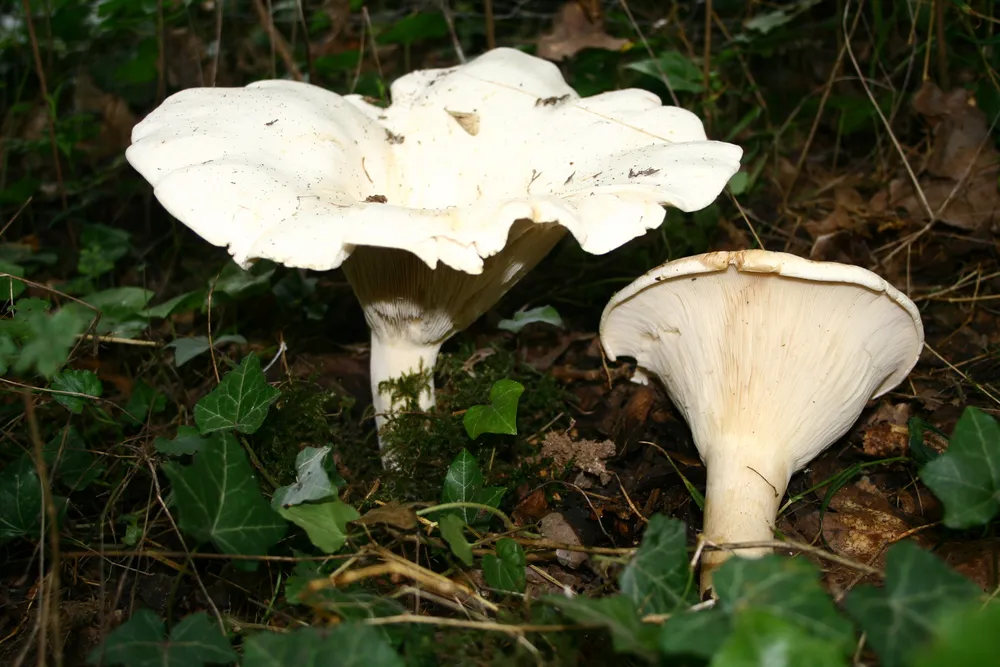
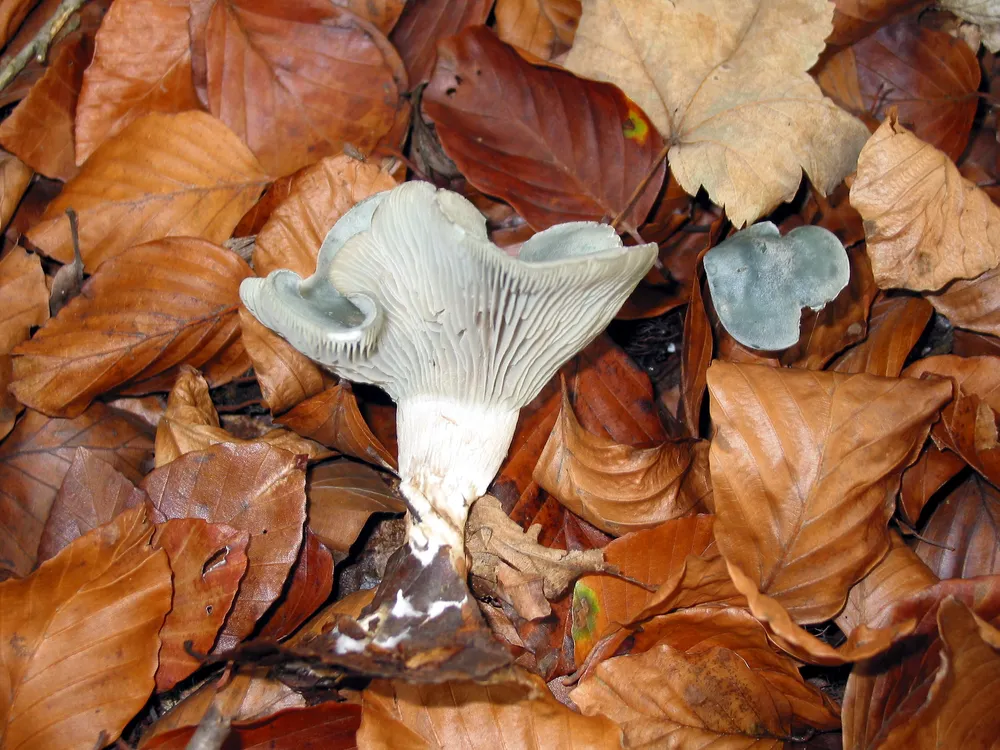
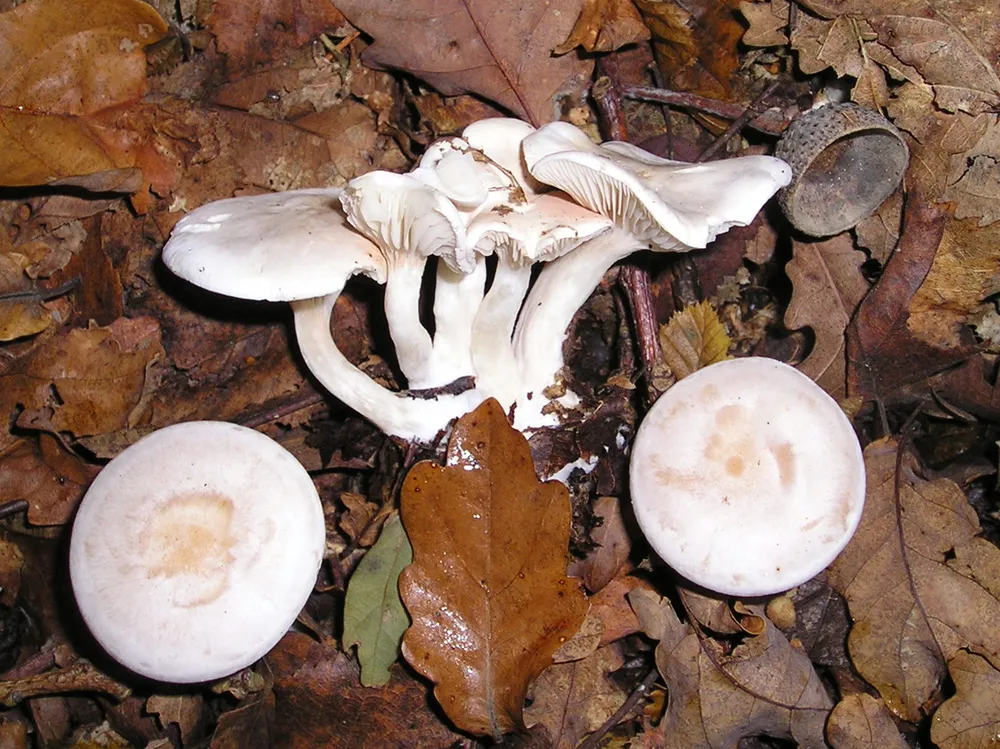
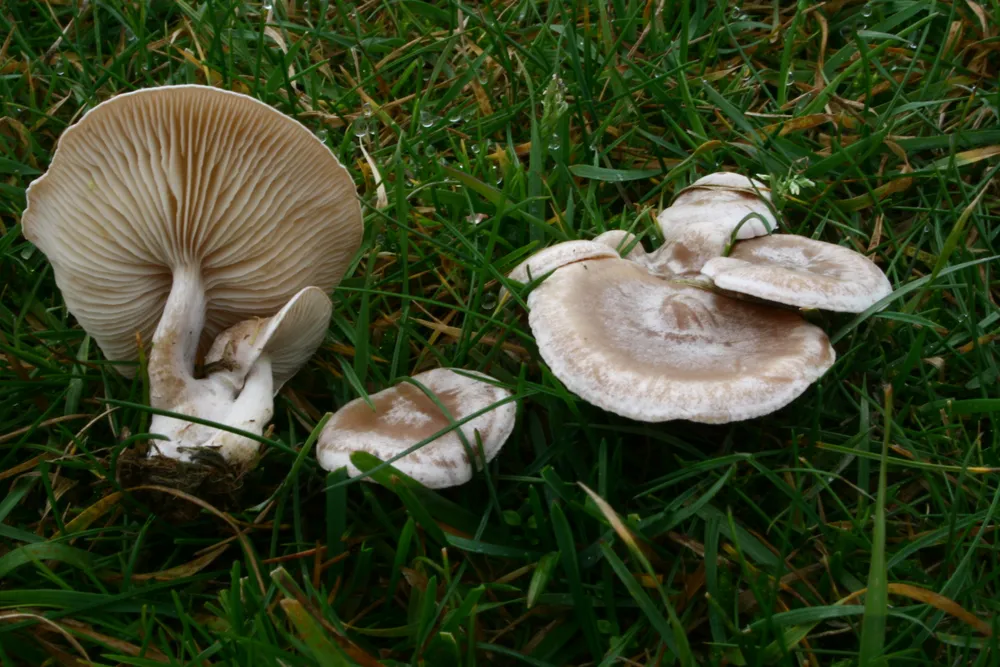
Related species
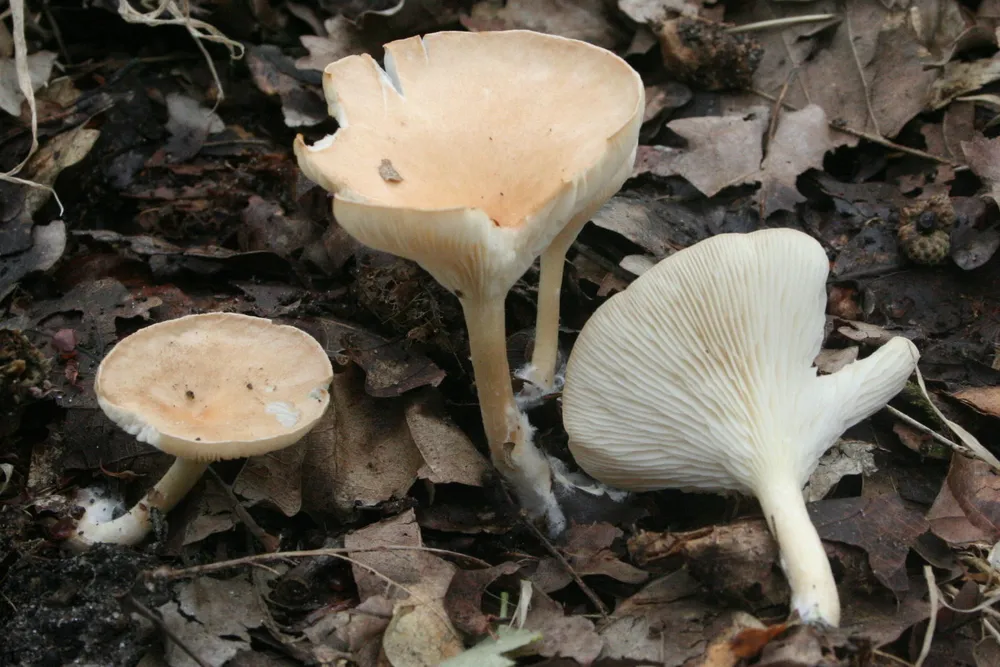
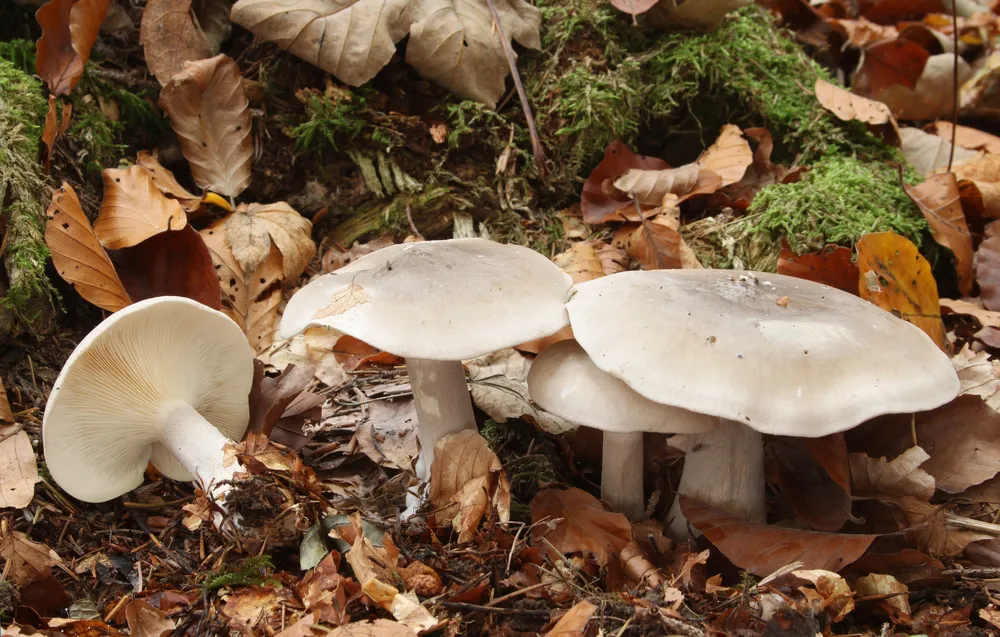
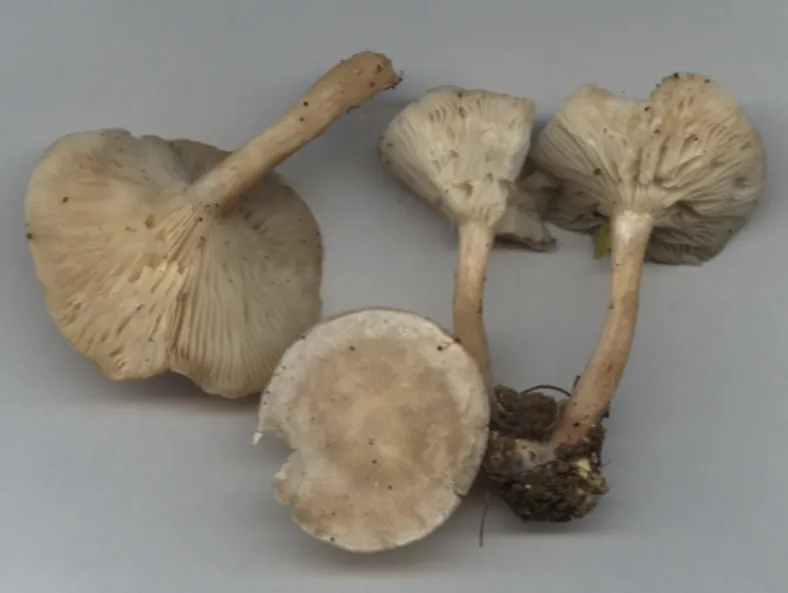
Mushrooms of the same genus and habitat — to study side by side and never mix up.
Aniseed funnel
Clitocybe odora
Frosty funnel
Clitocybe phyllophila
Fool's funnel
Clitocybe rivulosa
_Ricken_185798.webp)
Booted knight
Tricholoma focale
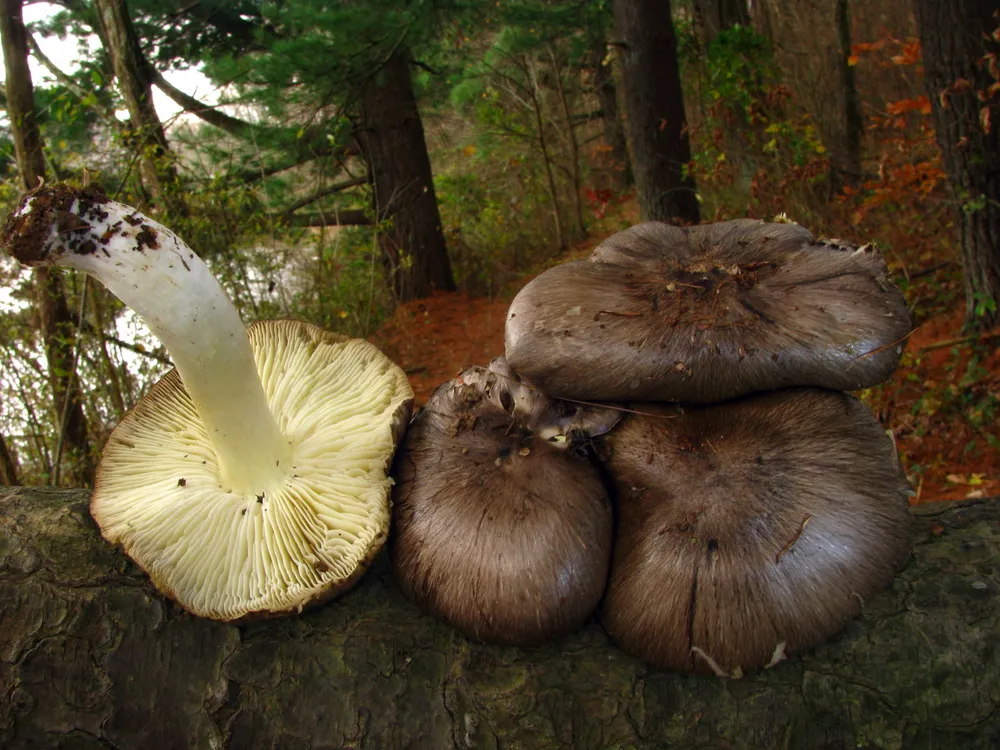
Charbonnier
Tricholoma portentosum
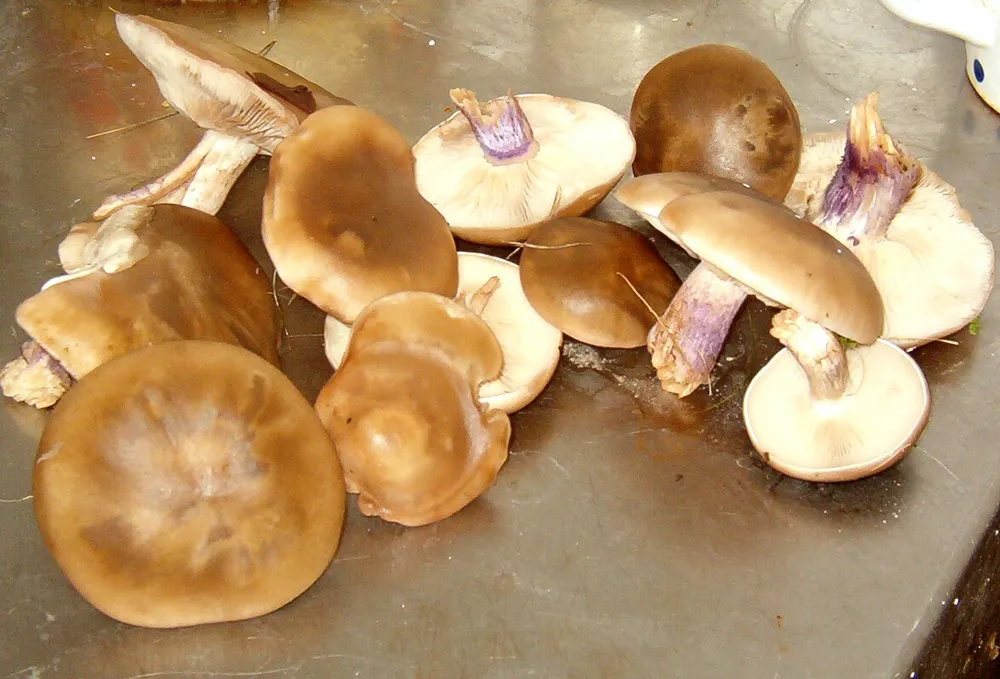
Field blewit
Collybia personata
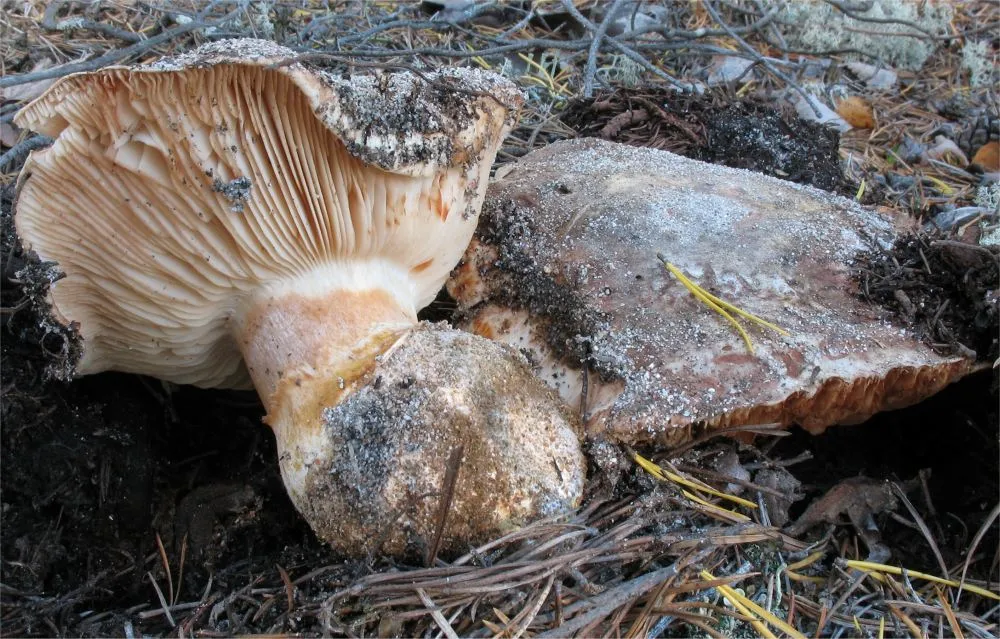
Giant knight
Tricholoma colossus
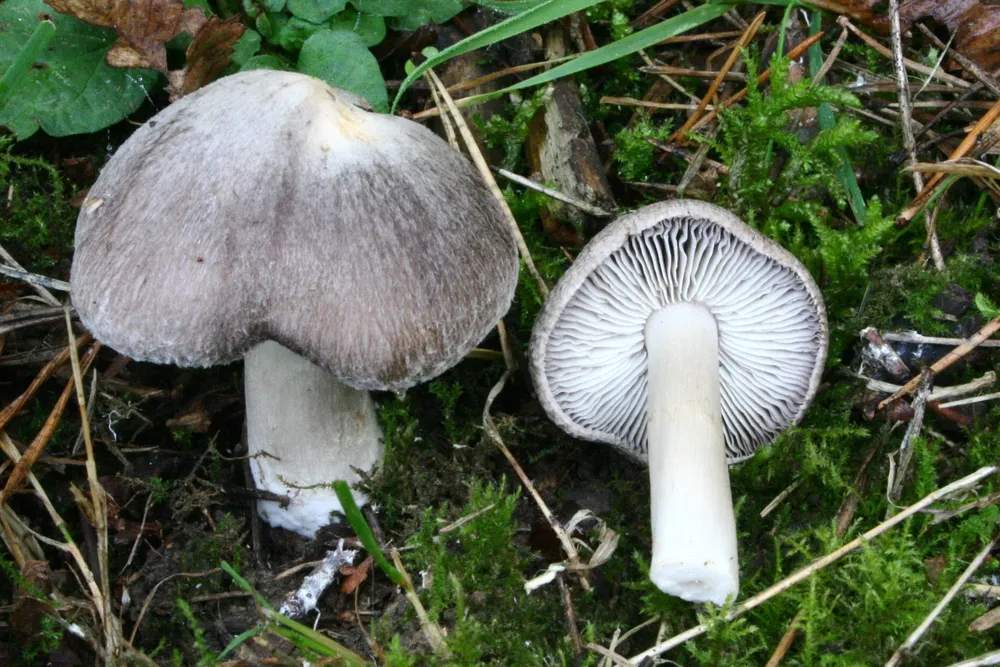
Grey knight
Рядовка наземна
Frequently asked questions
Is it safe to eat?
Yes, this is a good edible mushroom with real culinary value. Its poisonous lookalikes are other Clitocybe (especially C. dealbata, C. phyllophila), but they're much smaller (2-5 cm versus 8-20 cm) and whitish, not reddish. A large reddish mushroom with a funnel-shaped cap in a deciduous forest is almost certainly C. geotropa.
How should you cook it?
Clean and slice. Young mushrooms can go straight into the pan for 15-20 min with onion and cream. Mature ones (wide funnel) — stew them longer or boil for 5-7 min, discard the water, then carry on cooking. It pickles well — the firm flesh holds its shape. Drying gives an intense aroma for winter soups and sauces.
Can children eat it?
From 4-5 years old, in small portions as part of cooked dishes (stew, mushroom sauce, soup). Firm flesh often suits children better than thin, brittle mushrooms. Cook it thoroughly and never serve it undercooked. Children under 3 shouldn't be given any mushrooms at all.
Where should you look for it?
In deciduous and mixed woods — most often under oak, beech, hornbeam and hazel. It likes forest edges, woodland clearings, the slopes of forest ravines and well-lit open patches of forest. It often grows in fairy rings — if you've found one, walk around within 5-15 meters looking for the ring.
Which regions of Ukraine is it found in?
Throughout the forest zone — the Carpathians (especially the beech forests of Zakarpattia), Prykarpattia, Polissia (oak woods) and all three forest-steppe belts (Podillia, Kyiv region, Poltava region). In the steppe — in ravine woods. Overall an occasional-to-common species, but big hauls do happen.
When should you look for it?
September — November, peaking in October. It loves a damp, cool autumn with moderate temperatures. It tolerates the first light frosts. It doesn't fruit in summer heat or early autumn.
What is it confused with?
With the common funnel (Clitocybe gibba) — it's smaller (3-8 cm), a vivid orange-red, with no brown bump; also edible. With the clouded funnel (Clitocybe nebularis) — that one is grayish and smoky, with a mealy smell; also edible. Among the more dangerous ones: the ivory funnel/frosty funnel — much smaller and whitish, not reddish. If the mushroom is large (>8 cm) and reddish, it's the safe C. geotropa or a relative.
How can you identify it for sure?
Four features together: (1) large size, 8-20 cm; (2) a funnel-shaped cap with a brown bump in the center; (3) a pale ochre or reddish-cream color; (4) growth in fairy rings. If all four match, it's C. geotropa with confidence.
Is Trooping funnel edible or poisonous?
Does Trooping funnel have gills or pores?
What does the cap of Trooping funnel look like?
What does the stem of Trooping funnel look like?
Sources
- [1]Вікіпедія (українська)
- [2]Атлас грибів України, Зеров Д.К. (1979)
- [3]MycoBank Database
- [4]Index Fungorum
- [5]GBIF
- [6]iNaturalist Ukraine