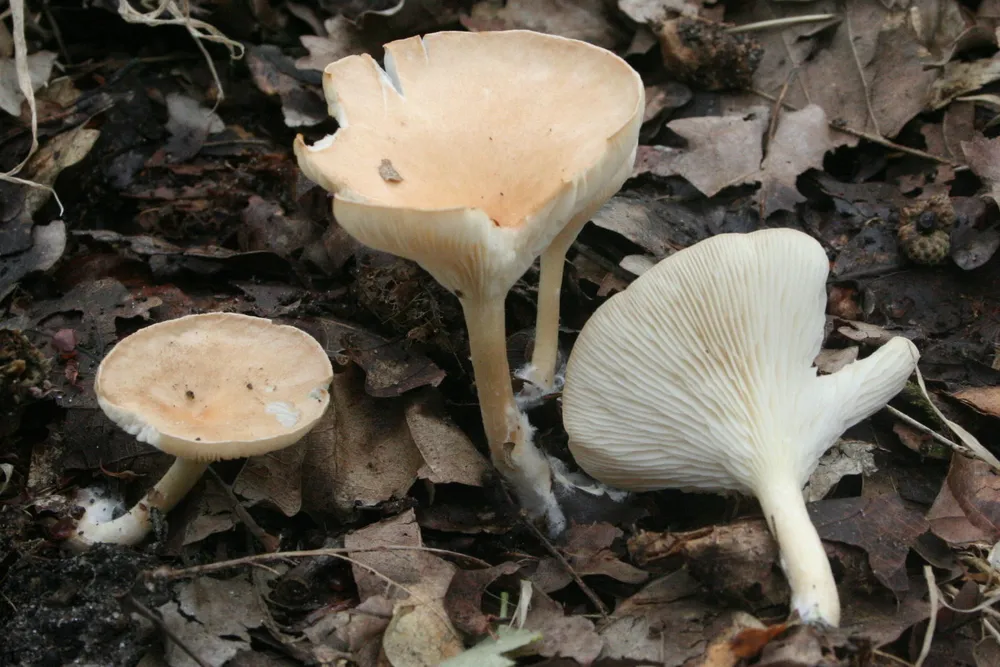
Common funnelInfundibulicybe gibba
Expert-verifiedUpdated October 3, 2026
Passport
- Edibility
- Edible
- Season
- Aug — Nov
- Hymenophore
- Gilled
- Cap color
- Orange
- Size
- Small (up to 5 cm)
- Smell
- Pleasant
- Reviewed
- Yes ✓
Quick answers
Where to look?
Deciduous forest, Mixed forest
When does it appear?
Aug — Nov
Active months: August, September, October, November.
How to recognize it? Three signs
- Cap color: Orange, Brown
- Cap shape: Funnel-shaped
- Smell: Pleasant
Fruiting season
August – November
Description
The common funnel (Clitocybe gibba) is one of the most distinctive and recognizable mushrooms of late summer and autumn in deciduous woods. Its striking shape gave it its name: the mature cap turns into a real reddish-orange funnel with a pointed bump in the center and a thin, wavy margin. The color is cinnamon-brick — warm and autumnal. It looks so typical that even a beginner, after meeting it once, will recognize it from ten meters away. One of the few safe funnel-shaped Clitocybe — most of its relatives are far more dangerous.
This is an edible mushroom of moderate culinary value. The flesh is thin but firm; the taste is mild with a note of ripe fruit, and the aroma is pleasantly mushroomy-fruity. Good for frying, stewing, adding to soups and pickling. It can't match the top species (porcini, chanterelle), but it's a nice addition to an autumn mix. Being abundant and easy to recognize, it's a good mushroom for beginners: once you can recognize the funnel, you'll be able to pick it with confidence every time.
In Ukraine it's widespread in deciduous and mixed woods — mostly under oak, beech, hornbeam, birch and hazel. A saprotroph on forest litter. The season is August-November, peaking in September-October. It often grows in groups and rings of 10-50 fruiting bodies among fallen leaves. Overall an abundant species — in the Carpathian beech forests and the mixed woodlands of Polissia you can find patches with hundreds of specimens.
Cap
The cap is 3-8 cm across, convex in young mushrooms, later becoming funnel-shaped with a clearly sunken center and often a small pointed bump in the central hollow. The color is cinnamon-orange, brick, reddish-brown — more intense in young mushrooms and lighter in mature ones. The surface is silky-matte and smooth. The cap skin is thin.
Hymenophore
The underside has gills. The gills are crowded, thin, strongly decurrent down the stem. Whitish to cream, turning cream-ochre with age. The spore print is white to pale cream.
Stem
The stem is 3-7 cm tall, 0.5-1 cm thick, cylindrical or slightly thickening toward the base. Orange-cream, matching the cap, with white mycelial fuzz at the bottom. The surface is smooth or has fine lengthwise fibers. No ring.
Flesh
The flesh is thin, white to cream, soft and brittle. It doesn't change color when cut. It has a pleasant mushroomy-fruity taste.
Smell
A pleasant mushroomy-fruity smell with a note of ripe apple or pear. One of the typical aromas of the forest Clitocybe. The taste is mild and delicate.
›Scientific synonyms (5)
Agaricus gibbus, Clitocybe gibba, Agaricus maximus, Clitocybe gibba (Pers.) P. Kumm., Agaricus gibbus Pers.
Lookalikes
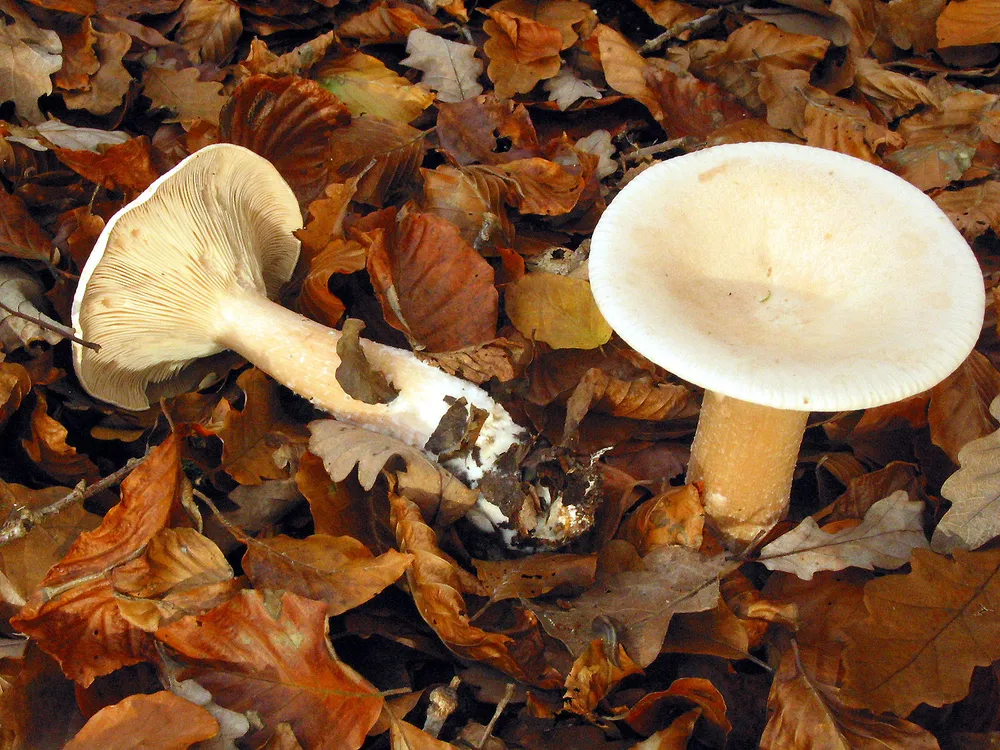
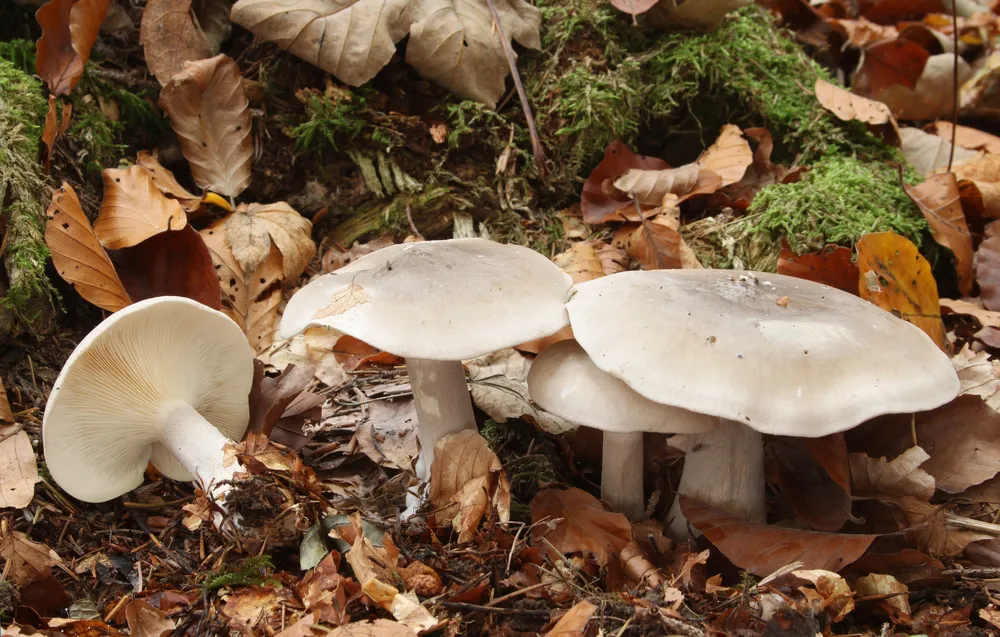
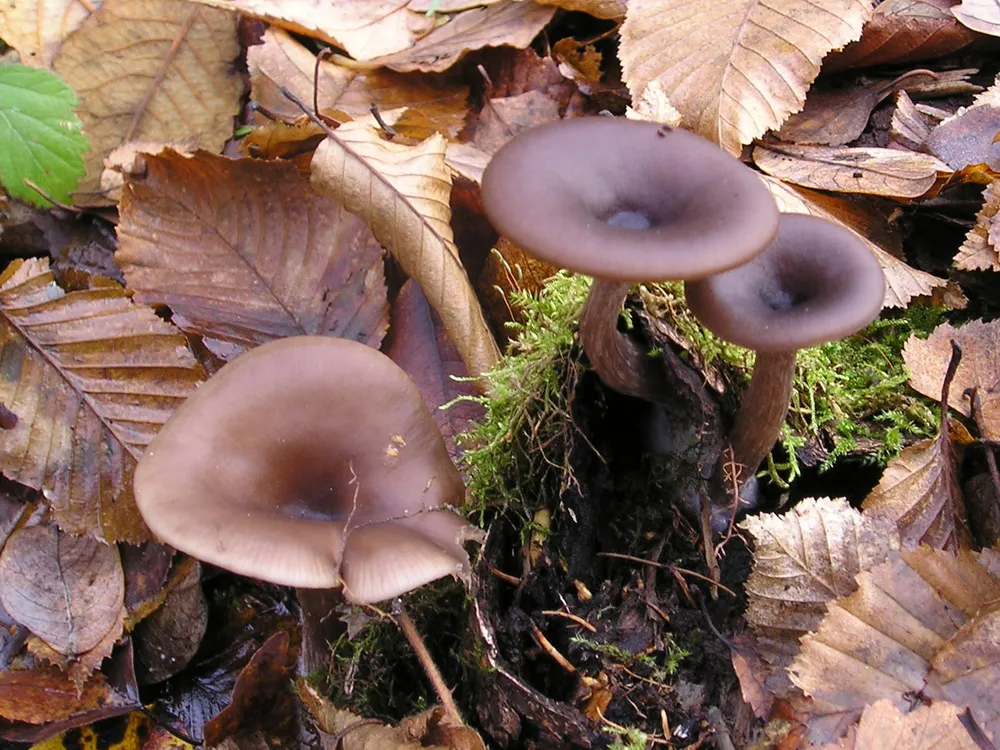
Related species
Mushrooms of the same genus and habitat — to study side by side and never mix up.
_Ricken_185798.webp)
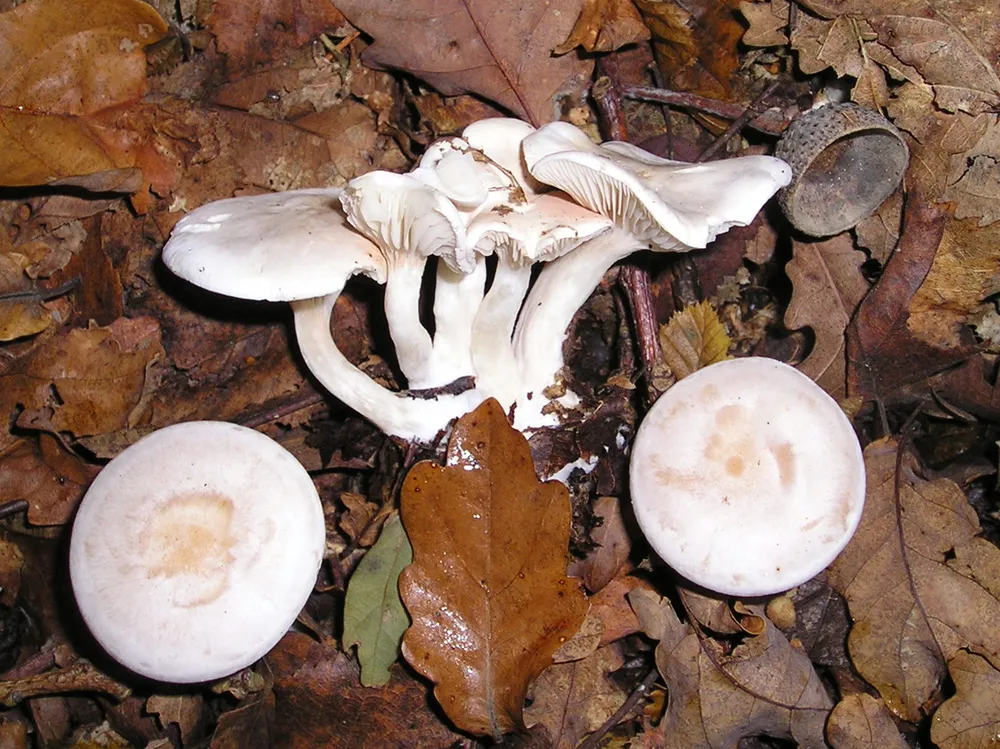
Booted knight
Tricholoma focale
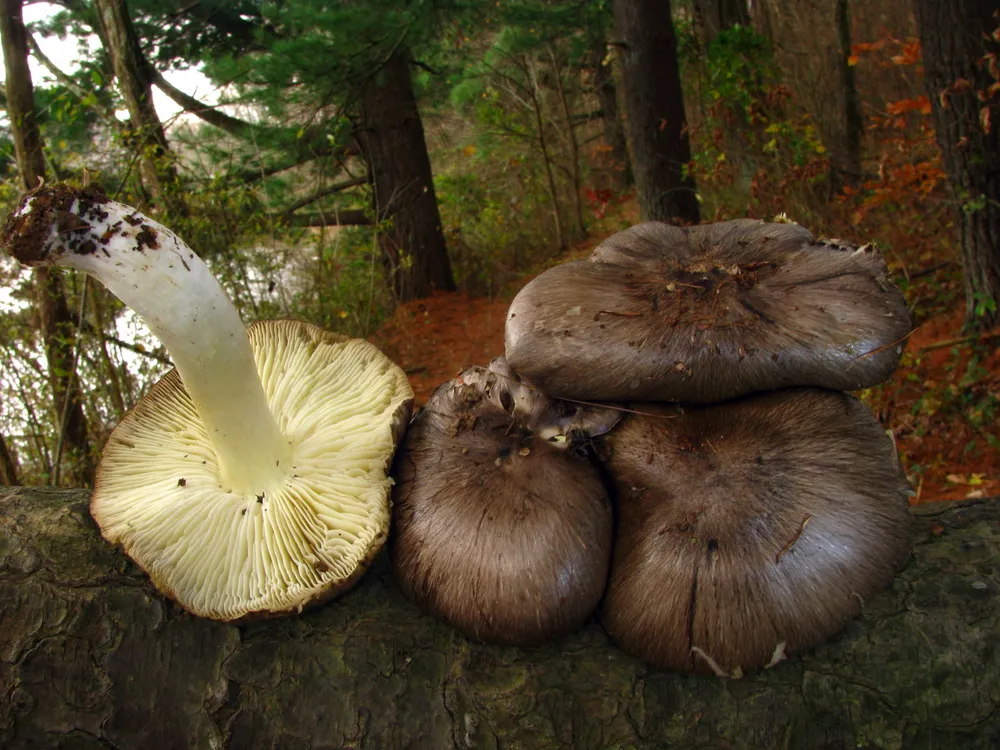
Charbonnier
Tricholoma portentosum
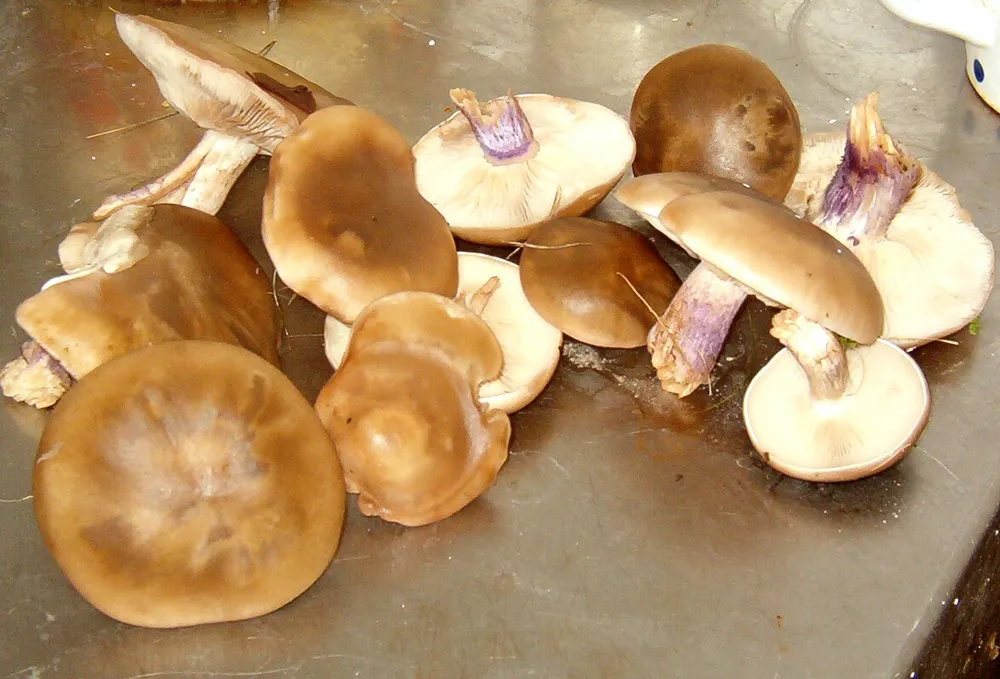
Field blewit
Collybia personata
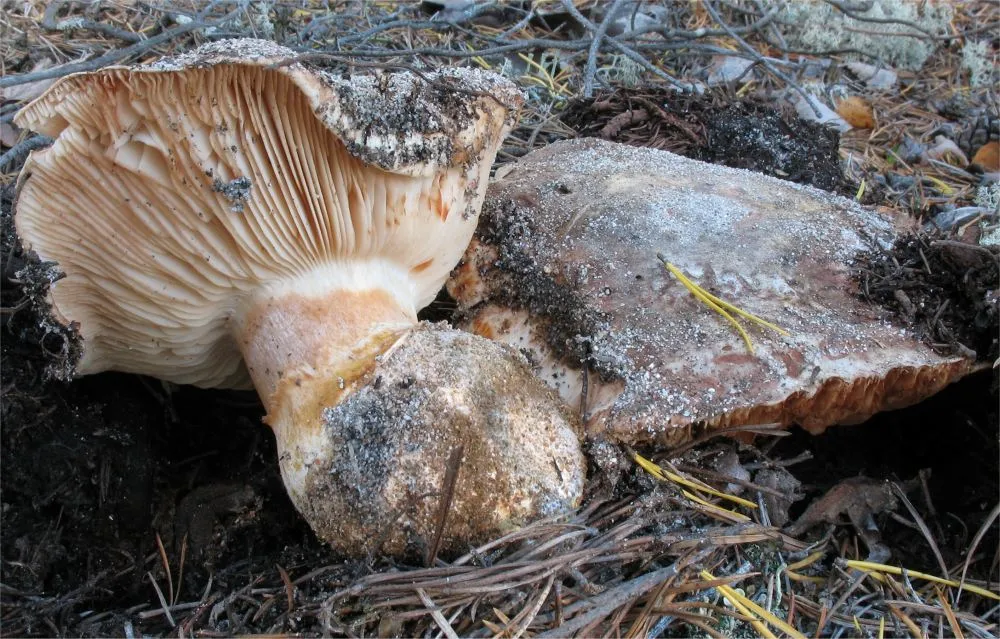
Giant knight
Tricholoma colossus
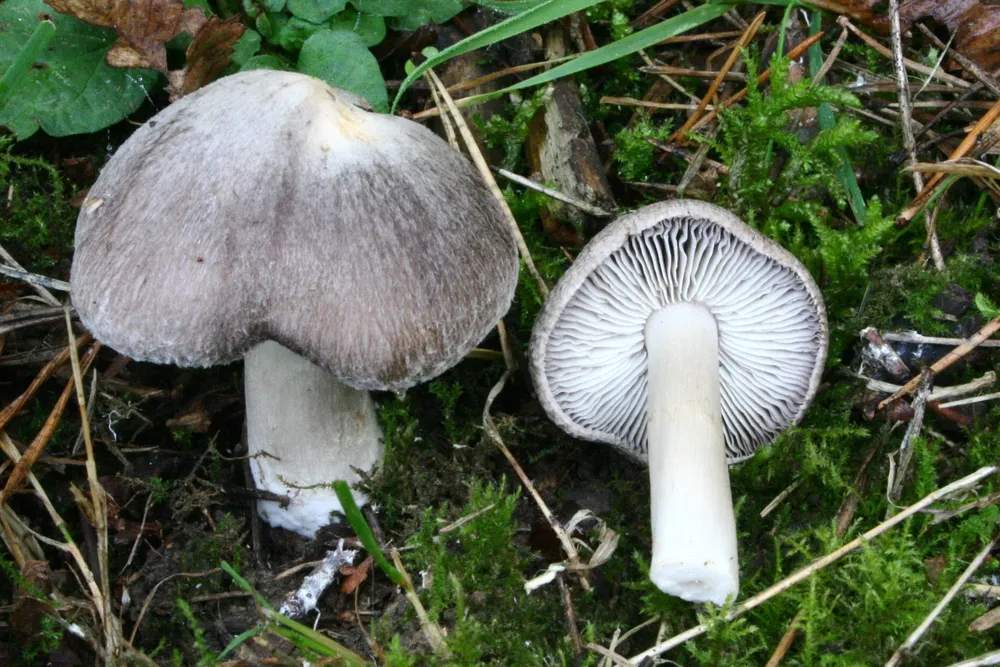
Grey knight
Рядовка наземна
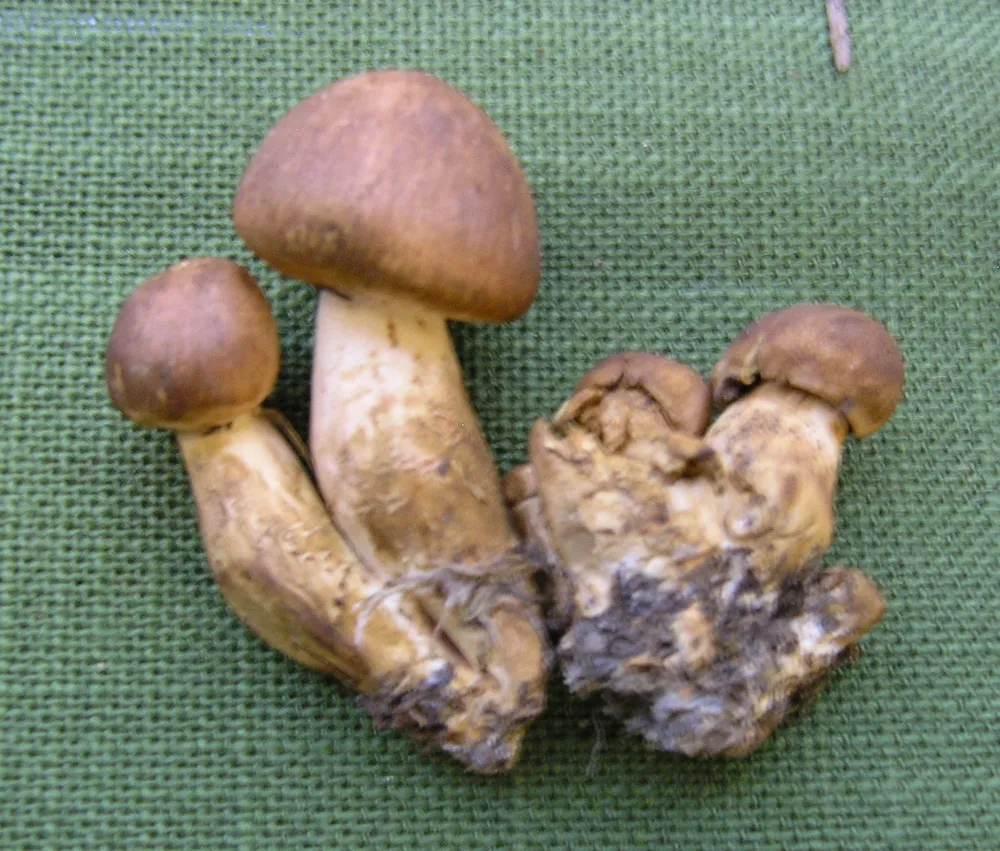
Matt knight
Tricholoma imbricatum
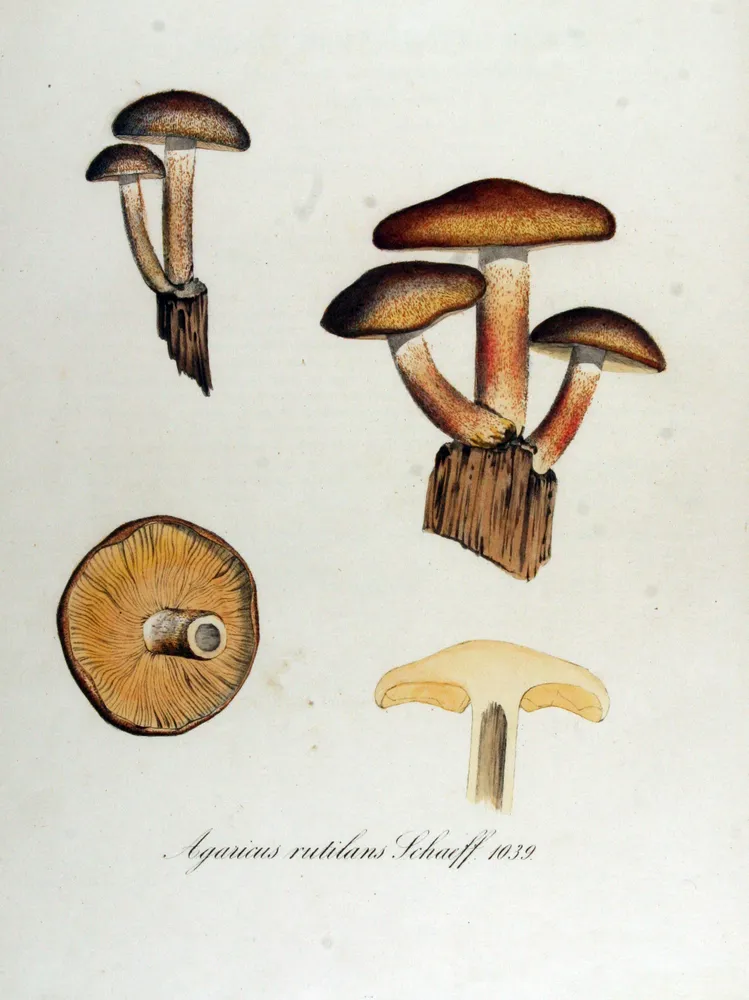
Plums and custard
Рядовка червона
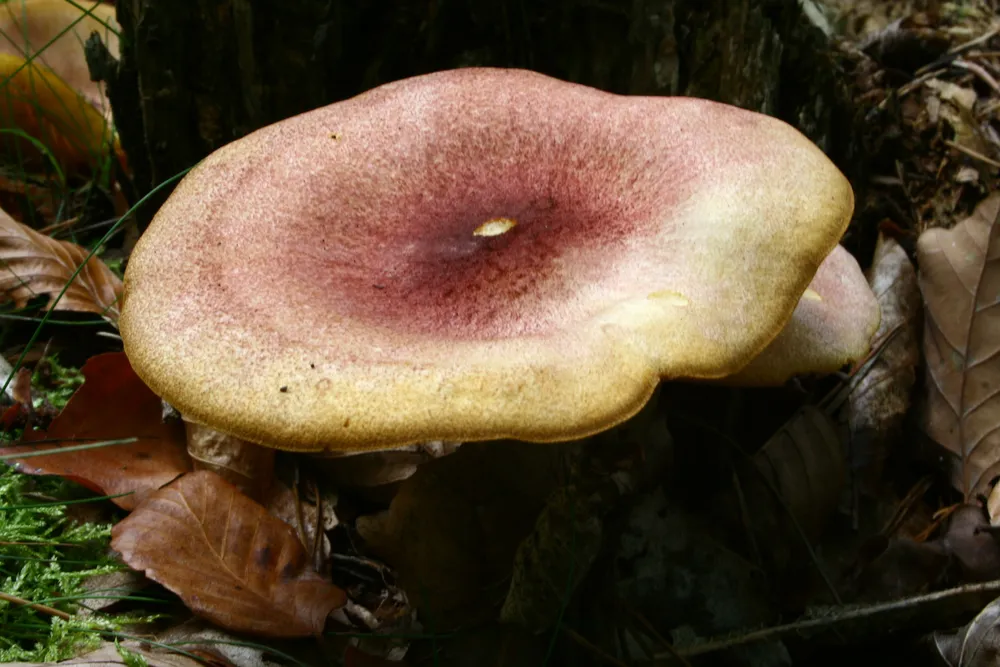
Plums and custard
Tricholomopsis rutilans
Frequently asked questions
Is it safe to eat?
Yes, it's an edible mushroom. Its culinary value is moderate — the flesh is thin and doesn't have the flavor of porcini or chanterelle, but it's perfectly fine in an autumn mushroom mix. Its poisonous lookalikes are other Clitocybe (especially C. dealbata, C. phyllophila), which are whitish rather than reddish-orange. If the cap is clearly reddish or orange, it's the safe C. gibba.
How should you cook it?
Clean and slice. You can fry it straight away for 10-15 min or stew it with onion and cream. In soups, add it toward the end of cooking. Young mushrooms are best — old ones get tough and less fragrant. It pickles well.
Can children eat it?
From 4-5 years old, in small portions as part of cooked dishes (sauce, stew, soup). On its own the mushroom doesn't have much culinary value — better to let a child try chanterelle, porcini or hedgehog mushroom. Children under 3 shouldn't be given any mushrooms at all.
Where should you look for it?
In deciduous and mixed woods — most often under oak, beech, hornbeam, birch and hazel. It likes forest edges, the slopes of forest ravines and patches with a thick layer of leaf litter. It often grows in groups and rings of 10-50 fruiting bodies. Less often in young plantations and pine forests.
Which regions of Ukraine is it found in?
Throughout the forest zone — the Carpathians (especially in the beech forests of Zakarpattia), Prykarpattia, Polissia and all three forest-steppe belts. In the steppe — in ravine woods. Overall a common, abundant species.
When should you look for it?
August — November, peaking in September-October. It tolerates the first light frosts. In a wet autumn it comes up in plentiful groups; in a dry one there are fewer, but it's reliable. One of the most eye-catching mushrooms of the autumn forest.
What is it confused with?
With the more dangerous Clitocybe — especially the ivory funnel (C. dealbata, poisonous, muscarine) and the frosty funnel (C. phyllophila, poisonous). The key difference of C. gibba is the reddish-orange cap color, whereas the poisonous species are whitish or cream. If the cap is clearly reddish-brown or cinnamon-orange, it's the safe, edible C. gibba. If it's white or cream, leave it.
How can you identify it for sure?
Three features together: (1) a distinct funnel shape with a small pointed bump in the center of the hollow; (2) a reddish-orange cap color; (3) decurrent whitish gills. If all three match, it's Clitocybe gibba. If even one doesn't match (especially the color), leave it.
Is Common funnel edible or poisonous?
Does Common funnel have gills or pores?
What does the cap of Common funnel look like?
What does the stem of Common funnel look like?
Sources
- [1]Вікіпедія (українська)
- [2]Атлас грибів України, Зеров Д.К. (1979)
- [3]MycoBank Database
- [4]Index Fungorum
- [5]GBIF
- [6]iNaturalist Ukraine