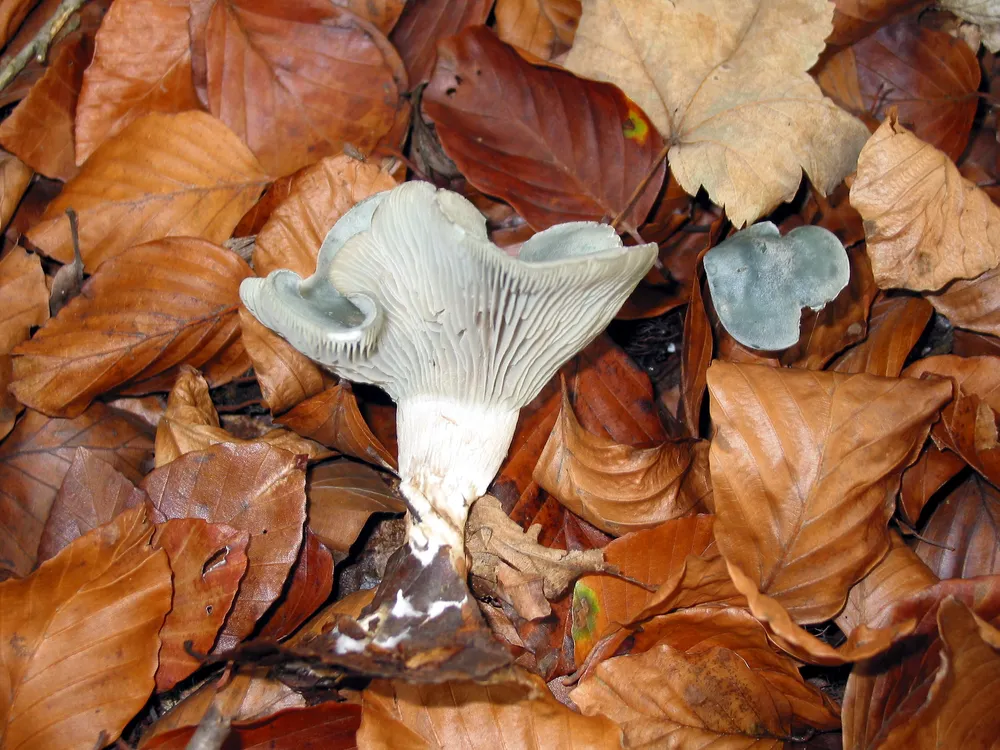
Aniseed funnelClitocybe odora
Expert-verifiedUpdated October 3, 2026
Passport
- Edibility
- Edible
- Season
- Aug — Nov
- Hymenophore
- Gilled
- Cap color
- Grey
- Size
- Small (up to 5 cm)
- Smell
- Anise
- Reviewed
- Yes ✓
Quick answers
Where to look?
Deciduous forest, Mixed forest
When does it appear?
Aug — Nov
Active months: August, September, October, November.
How to recognize it? Three signs
- Cap color: Grey, Cream
- Cap shape: Funnel-shaped
- Smell: Anise
Fruiting season
August – November
Description
The aniseed funnel is a mushroom that is easier to find by smell than by sight. Its small, pale bluish-green funnel-shaped cap hides among moss and conifer litter, but gives itself away from meters off with an intense aroma of anise, or of fresh macarons with star anise. It is one of the most fragrant mushrooms of European forests — and it is precisely its smell that has earned it a special culinary role: not as a main ingredient, but as a natural flavoring for sauces, fish dishes and mushroom soups.
This is an edible mushroom, but not for an ordinary fried dish — the flesh is thin and aromatic, without a pronounced mushroom taste. Best use: dried and ground into powder as a seasoning for fish, meat and vegetables. Or added in small amounts to sauces and cream gravies. Fresh, it is added to a mixed mushroom dish for aroma. Fried on its own — not very impressive. In Western folk tradition it is a "culinary spice mushroom".
In Ukraine it is widespread in deciduous and mixed forests — most often under oak, beech, hornbeam and birch. A saprotroph. It likes damp spots with thick leaf litter, forest edges and the slopes of wooded ravines. Season August–November, peaking in September–October. It often grows in groups of 5-15 fruiting bodies among moss. Beginners very often find it easily thanks to the smell — the unmistakable whiff of anise in the forest is hard to confuse with anything else.
Cap
Cap 3-7 cm across, flat-convex in young mushrooms, later funnel-shaped with a sunken center and a thin wavy margin. Color grayish-blue to greenish-blue, fading with age to pale gray-green and cream. This characteristic bluish-green palette is the main visual feature. Surface smooth, slightly moist in wet weather, matte in dry weather. Cap skin thin.
Hymenophore
Gilled hymenophore. Gills crowded, decurrent down the stem (a typical feature of the genus Clitocybe). Color whitish to cream, with a faint greenish tint echoing the cap. Spore print white to cream.
Stem
Stem 3-7 cm tall, 0.5-1.5 cm thick, cylindrical or slightly thickened toward the base, often curved. Color greenish-gray to cream, with white mycelial down at the bottom. Surface smooth, no ring. Stem flesh firm, hollow in old mushrooms.
Flesh
Flesh thin, whitish with a faint greenish tint, soft. Does not change color when cut. Has a very distinct aniseed taste and smell.
Smell
Intense anise, with notes of licorice and freshly cut fennel. The most fragrant mushroom among European Clitocybe — one of the genus's culinary markers. The smell is so distinct that it is used as a diagnostic feature in field identification.
Lookalikes
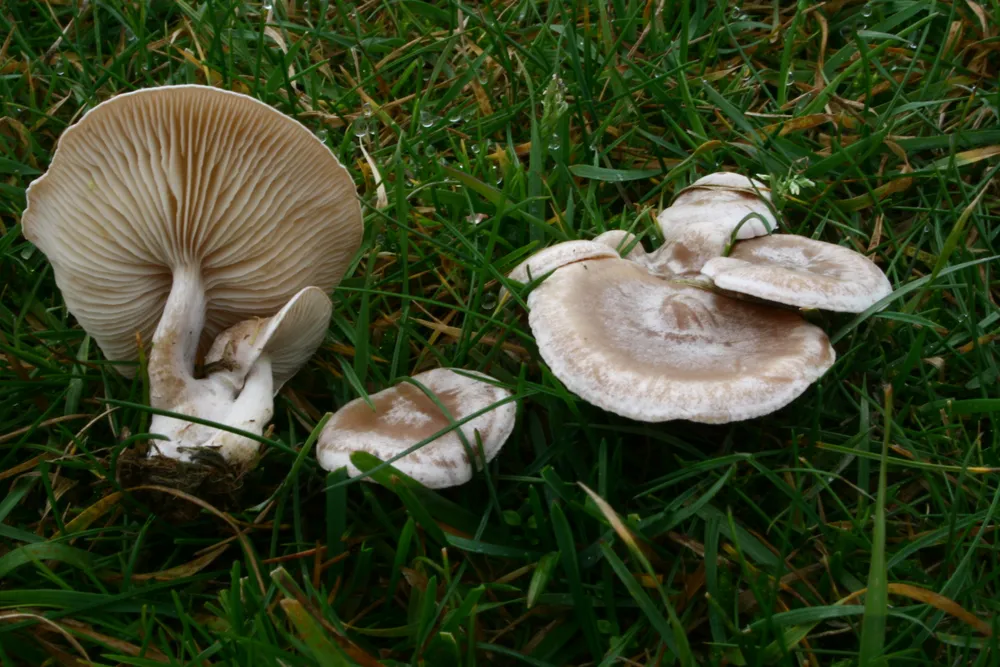
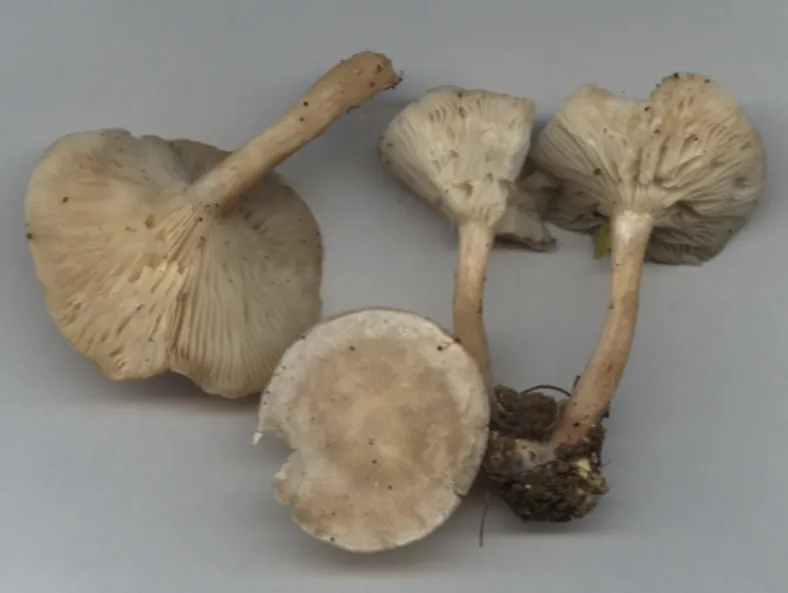
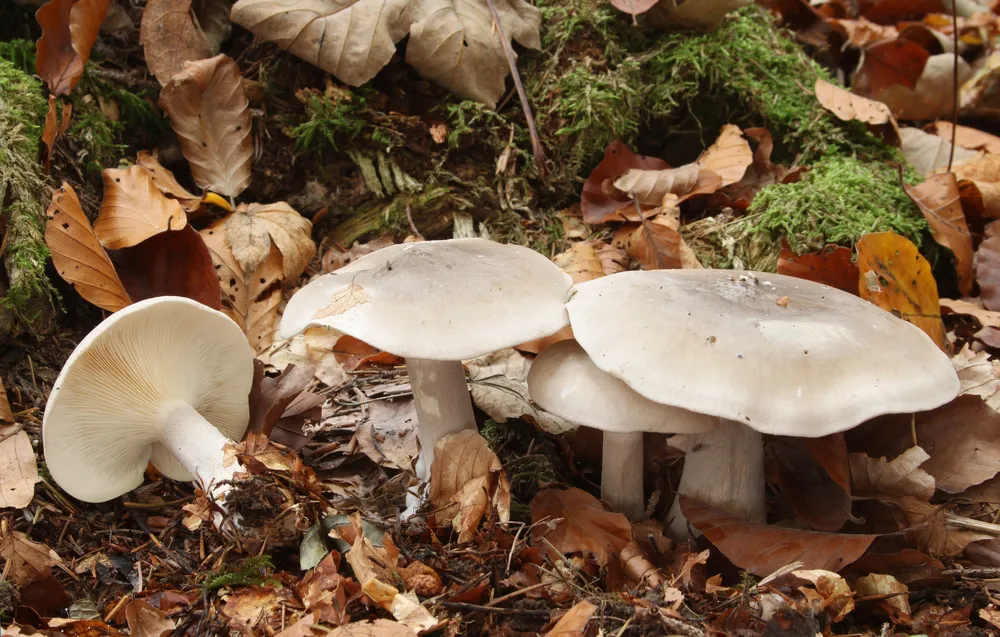
Related species
Mushrooms of the same genus and habitat — to study side by side and never mix up.
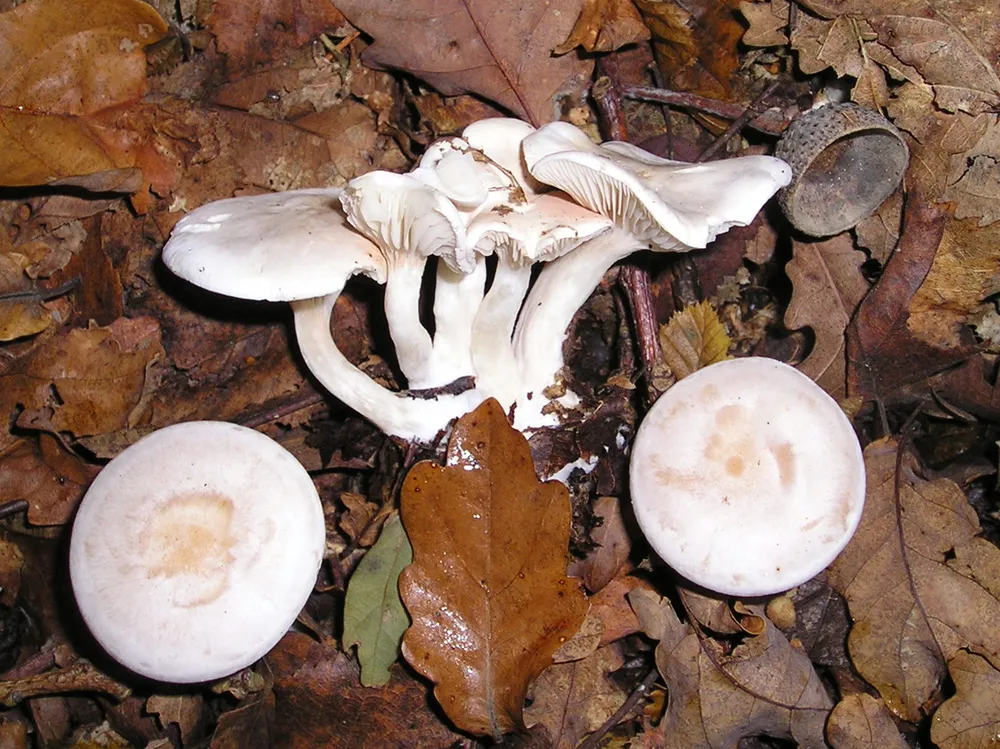
Frosty funnel
Clitocybe phyllophila
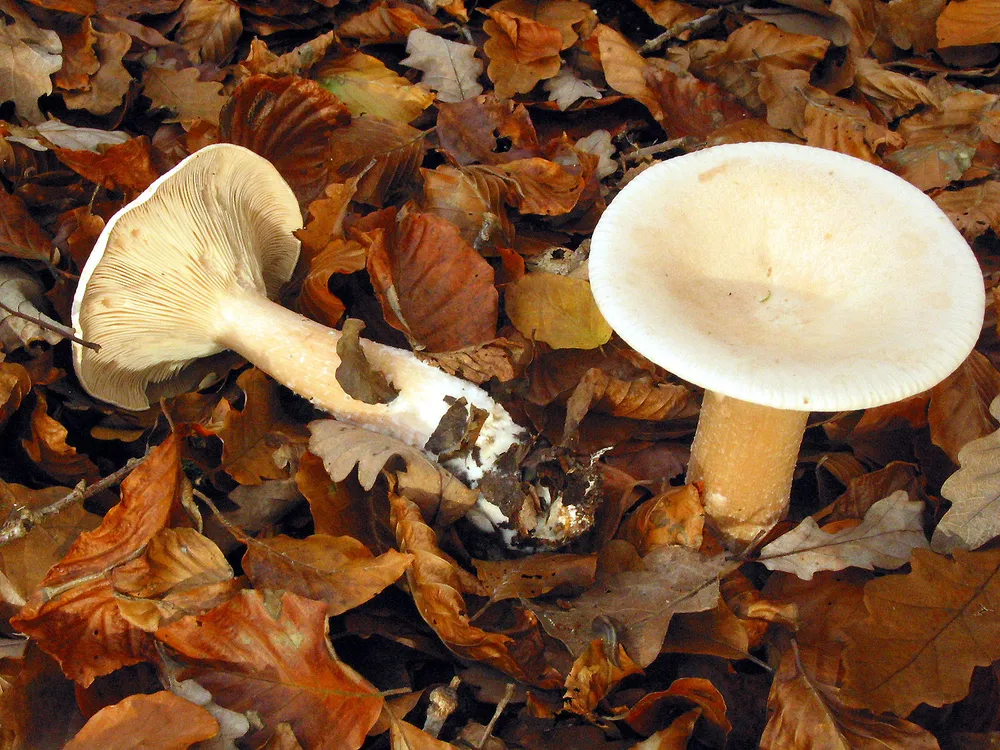
Trooping funnel
Clitocybe geotropa
_Ricken_185798.webp)
Booted knight
Tricholoma focale
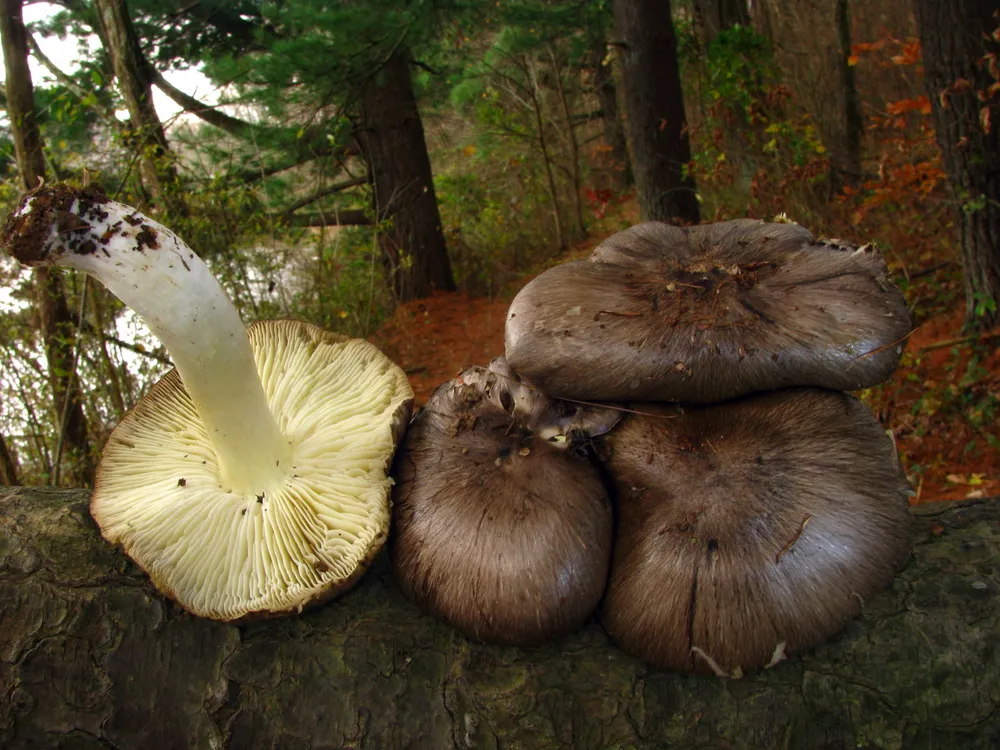
Charbonnier
Tricholoma portentosum
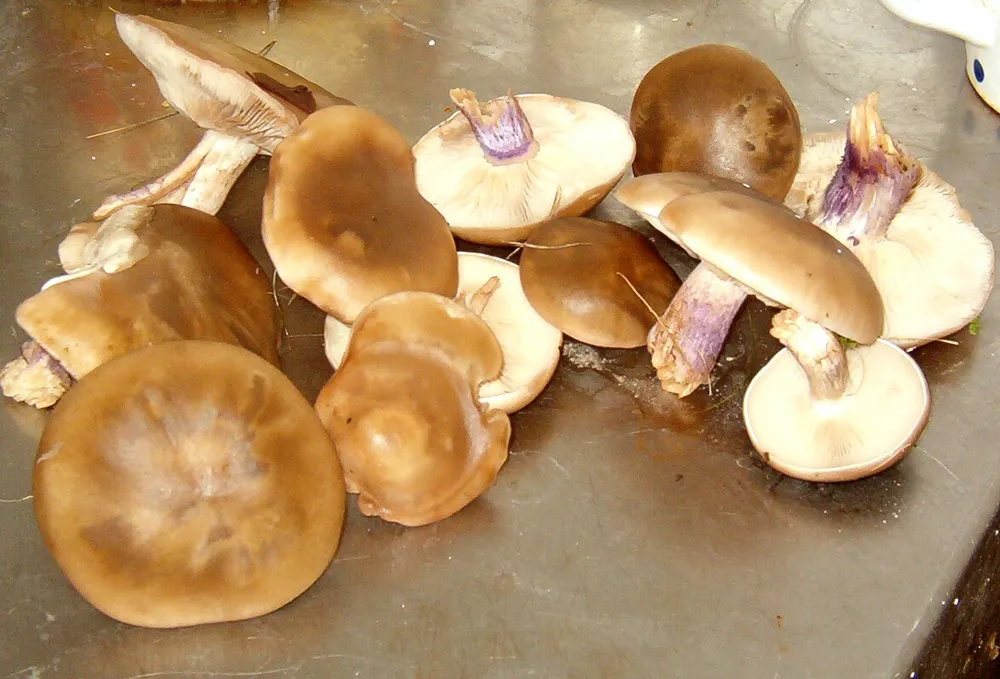
Field blewit
Collybia personata
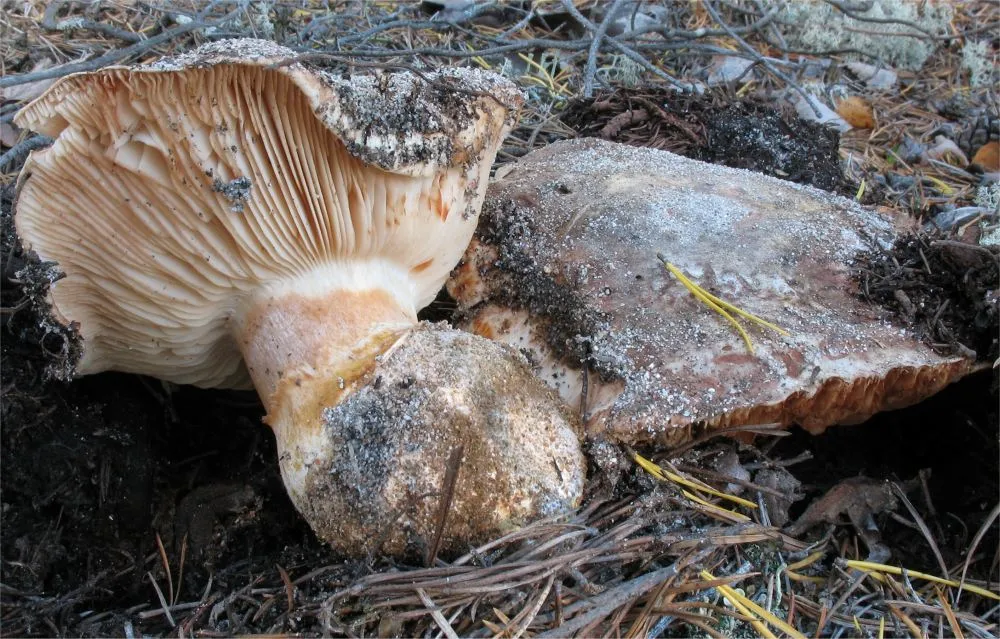
Giant knight
Tricholoma colossus
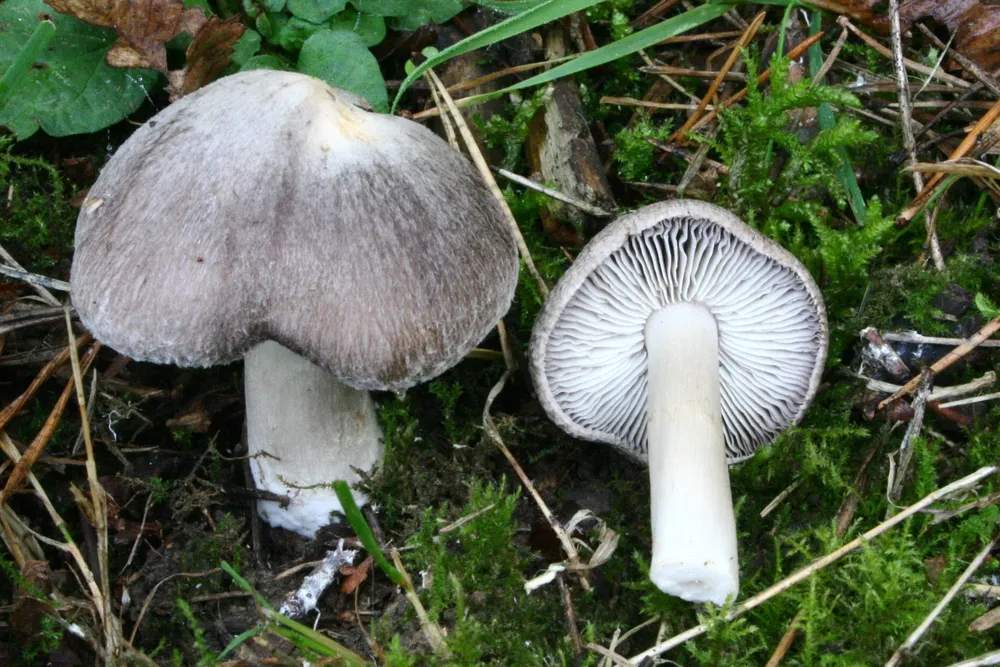
Grey knight
Рядовка наземна
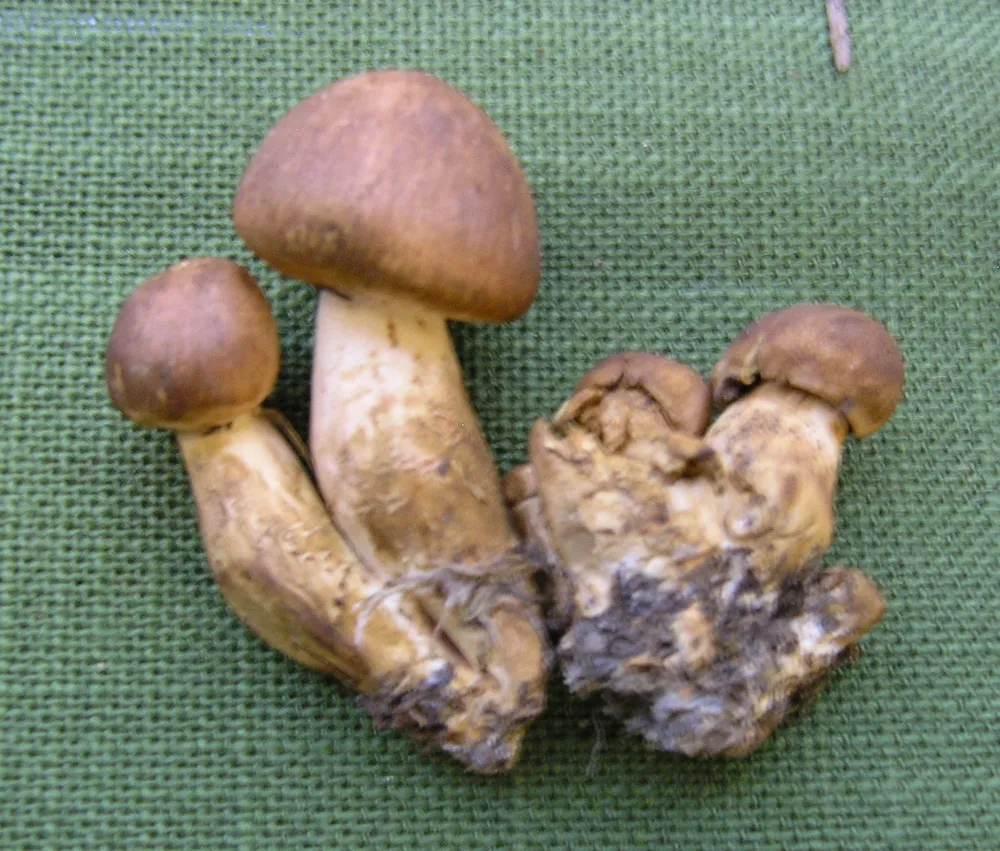
Matt knight
Tricholoma imbricatum
Frequently asked questions
Is it safe to eat?
Yes, it is an edible mushroom. It has practically no poisonous look-alikes — an intense aniseed smell + a pale greenish-bluish cap with decurrent gills is a combination so distinctive that it is hard to confuse with another species. But there are several small white Clitocybe containing muscarine — so the rule is simple: if there's no clear anise, don't take it.
How should you cook it?
Not for ordinary frying — the flesh is thin, without a pronounced mushroom taste. Best use: dry it, grind it into powder and add it as a seasoning to fish, meat and vegetable soups — as a natural substitute for anise. Fresh — in small amounts in sauces, cream gravies and mushroom risotto. Don't boil it in lots of water — the aroma will escape with the water.
Can you use it instead of star anise in recipes?
Yes — in many European culinary traditions this spice mushroom is used instead of anise or fennel in fish sauces, meat marinades and flavored oils. The ratio is roughly 1 tsp of dried powder per 1 kg of food. The aroma is not as sharp as star anise, but rounder and softer.
Where should you look for it?
In deciduous and mixed forests — mostly under oak, beech, hornbeam and birch. It likes damp spots with thick leaf litter, forest edges, the slopes of wooded ravines and mossy patches. It often grows among fallen leaves, in the shade. In coniferous forests and young plantations it is less common. How to find it: walk through the forest and sniff the air — the aniseed smell will lead you to it.
Which regions of Ukraine is it found in?
Throughout the forest zone — the Carpathians, Prykarpattia, Polissia and all three forest-steppe belts. Especially abundant in Carpathian beech and oak forests and the mixed woodlands of Polissia. In the steppe — in ravine (bairak) forests. Widespread overall, but not a common species.
When should you look for it?
August to November, peaking in September–October. It tolerates the first frosts. In a wet autumn — abundant groups; in a dry one — scattered finds. It does not fruit in summer heat.
What is it confused with?
With other small Clitocybe — especially with Clitocybe rivulosa (a whitish, poisonous muscarine mushroom, with no aniseed smell) and Clitocybe dealbata (similar, also poisonous). The fundamental difference: Clitocybe odora always has an intense anise smell. If you sniff the mushroom and there's no anise — it's a different species. Smell is the most reliable field test for this species.
And if I can't smell anything — how do I check?
Break the cap in half and sniff the fresh break — in Clitocybe odora the anise is unmistakable even with a runny nose. If you still can't catch it — DON'T take it. It is safer to skip a doubtful mushroom than to put a poisonous look-alike in your basket. The genus Clitocybe has several species containing muscarine — the same toxin as in the deadly fibrecap.
Is Aniseed funnel edible or poisonous?
Does Aniseed funnel have gills or pores?
What does the cap of Aniseed funnel look like?
What does the stem of Aniseed funnel look like?
Sources
- [1]Вікіпедія (українська)
- [2]Атлас грибів України, Зеров Д.К. (1979)
- [3]MycoBank Database
- [4]Index Fungorum
- [5]GBIF
- [6]iNaturalist Ukraine