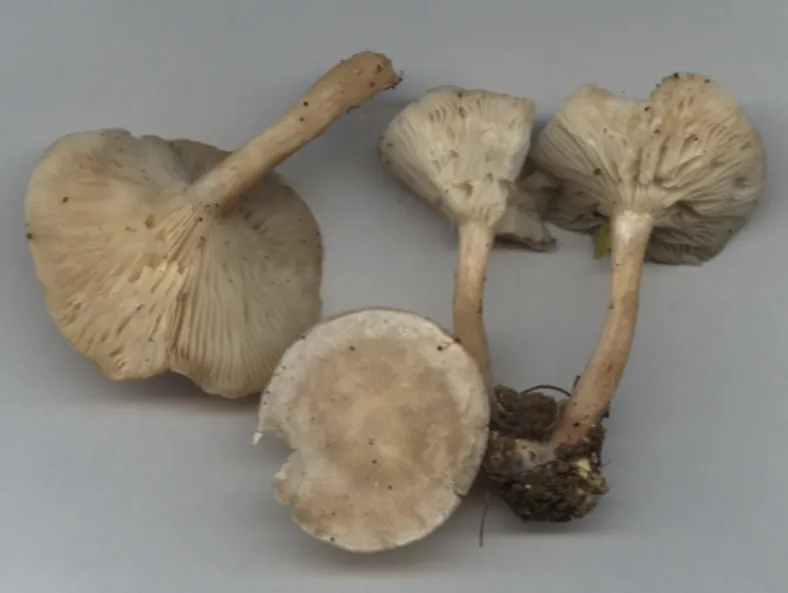
Ivory funnelClitocybe dealbata
Expert-verifiedUpdated October 3, 2026
Passport
- Edibility
- Poisonous
- Season
- Aug — Nov
- Hymenophore
- Gilled
- Cap color
- White
- Size
- Small (up to 5 cm)
- Smell
- Floury
- Reviewed
- Yes ✓
POISONOUS
Eating it causes poisoning. Do not pick it unless you have identified it with certainty.
Toxin: muscarine in high concentration. Symptoms begin 15-60 minutes after eating (fast). Classic muscarinic syndrome (PSL): profuse salivation (by the liter), sweating that soaks through clothing, tearing, runny nose, constricted pupils (miosis), bronchospasm with a feeling of suffocation, bradycardia down to 30-40 bpm, low blood pressure, intestinal cramps, diarrhea, nausea, vomiting. In severe cases — collapse, pulmonary edema, risk of cardiac arrest. The antidote is atropine (in hospital, under ECG monitoring). If you suspect poisoning — call 112 or your local emergency number immediately. Keep the mushroom remains and vomit. The prognosis is good with prompt treatment (1-2 hours); without help it is potentially dangerous.
If you suspect poisoning, call an ambulance immediately: 112 (the European emergency number) or your local emergency number
Quick answers
Where to look?
Deciduous forest, Mixed forest
When does it appear?
Aug — Nov
Active months: August, September, October, November.
How to recognize it? Three signs
- Cap color: White, Cream
- Cap shape: Funnel-shaped
- Smell: Floury
Fruiting season
August – November
Description
The ivory funnel (Clitocybe dealbata) is one of the most dangerous "little white funnels" of European meadows and woodland edges. It's a small mushroom, 2-5 cm across, with a whitish or cream funnel-shaped cap, a thin stem and crowded white decurrent gills. It looks modest and harmless — and that's exactly the trap: it grows in meadows, gardens and along woodland edges, right alongside the field mushroom, St George's mushroom and the fairy ring champignon. A forager who tosses small white mushrooms into the basket can easily slip an ivory funnel in among them without noticing — and end up with severe poisoning for the whole family.
This is a highly poisonous mushroom with muscarinic action. It contains a high concentration of muscarine — the same toxin found in Inocybe. Symptoms begin 15-60 minutes after eating: profuse salivation, heavy sweating, tearing, constricted pupils, slow heartbeat, abdominal cramps, diarrhea, bronchospasm. In severe cases — collapse and risk of cardiac arrest. The antidote is atropine, given in hospital. Never pick it in any form — no method of preparation neutralizes the toxin.
In Ukraine it is widespread throughout the forest and forest-steppe zones: in meadows, pastures, gardens, parks and along woodland edges. Saprotroph. Season August-November, peaking in September-October. It often grows in groups and rings ("fairy rings") of 10-50 fruiting bodies. It is especially dangerous because it very often turns up in the very same spots where edible species grow — the field mushroom, the fairy ring champignon, matsutake.
Cap
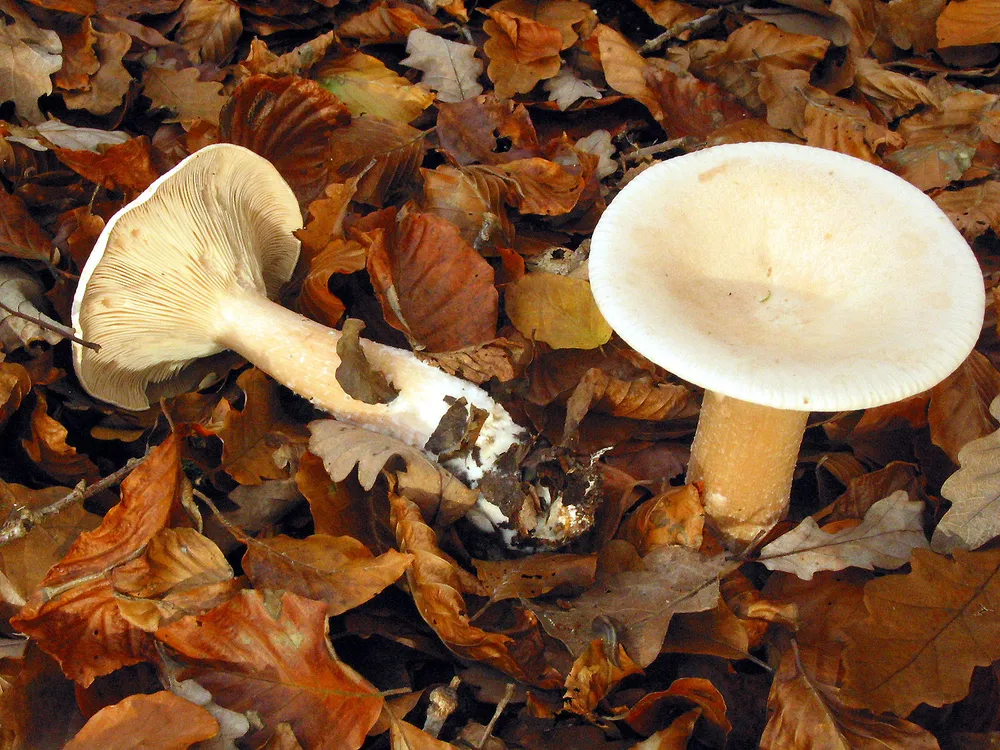
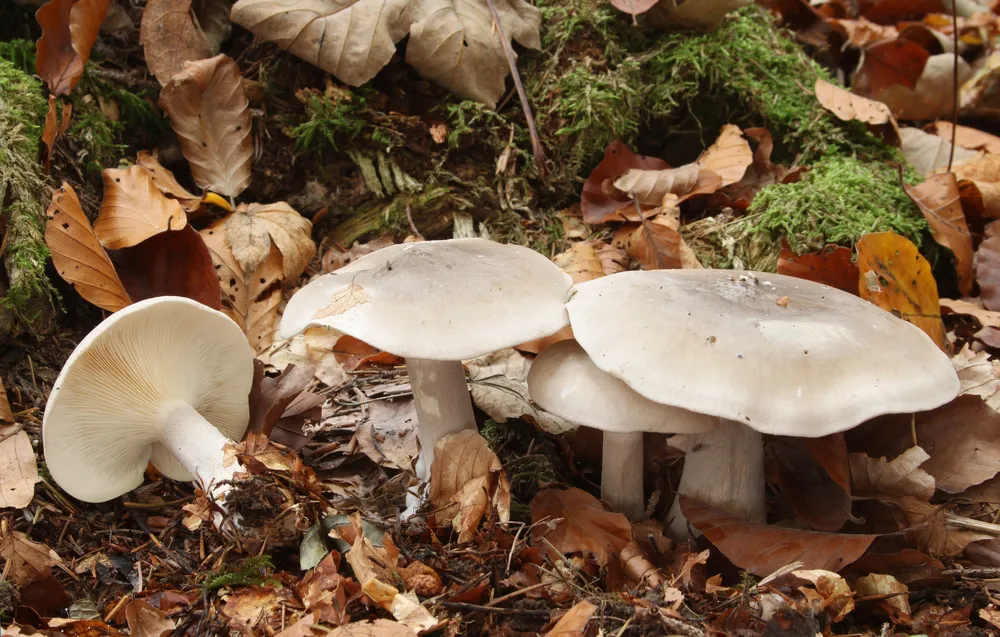
Cap 2-5 cm across, convex when young, becoming funnel-shaped over time, with a depressed center and a thin wavy margin. Color whitish, cream, with pale gray or ochre patches; silky-sheened in wet weather, chalky white when dry. Surface smooth, with barely visible radial streaks.
Hymenophore
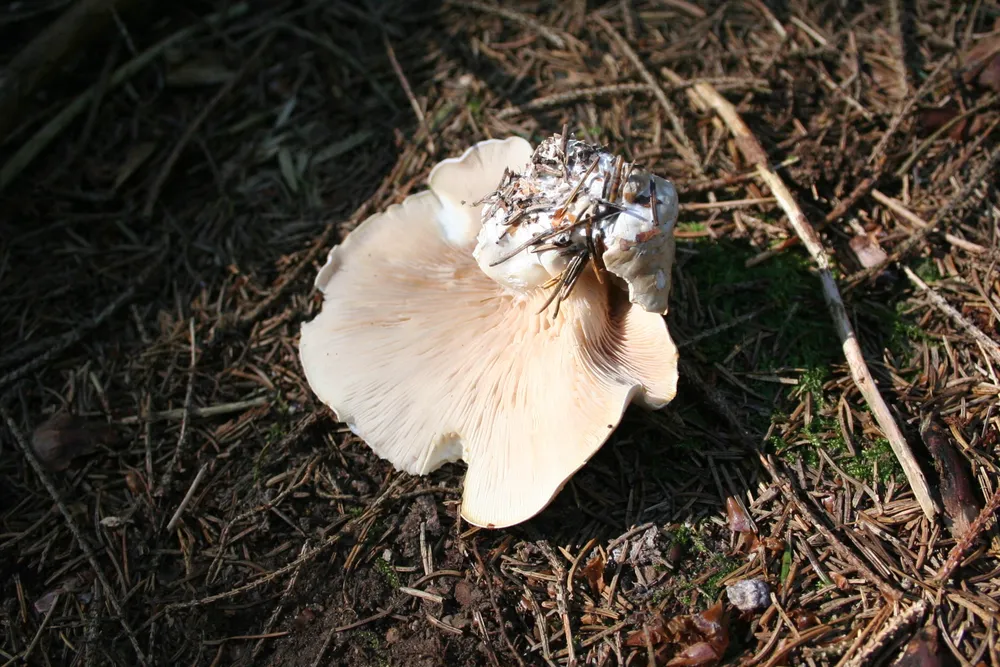
Gilled hymenophore. Gills crowded, thin, decurrent down the stem (a hallmark of the genus Clitocybe). Color whitish to cream. Spore print white.
Stem
Stem 2-4 cm tall, 0.3-0.8 cm thick, slender, cylindrical, often curved. Color whitish to cream, with white mycelial fuzz at the base. Surface smooth, no ring. Stem flesh firm.
Flesh
Flesh thin, white, watery, brittle. Does not change color when cut. It has a pleasant mealy smell and a mild taste — and that is what makes this species so treacherous: it smells and tastes "right", nothing sets off alarm bells.
Smell
Faintly mealy, pleasant — typical of many Clitocybe. This adds to the danger: the smell raises no suspicion. Never rely on smell when identifying mushrooms of this size.
Lookalikes
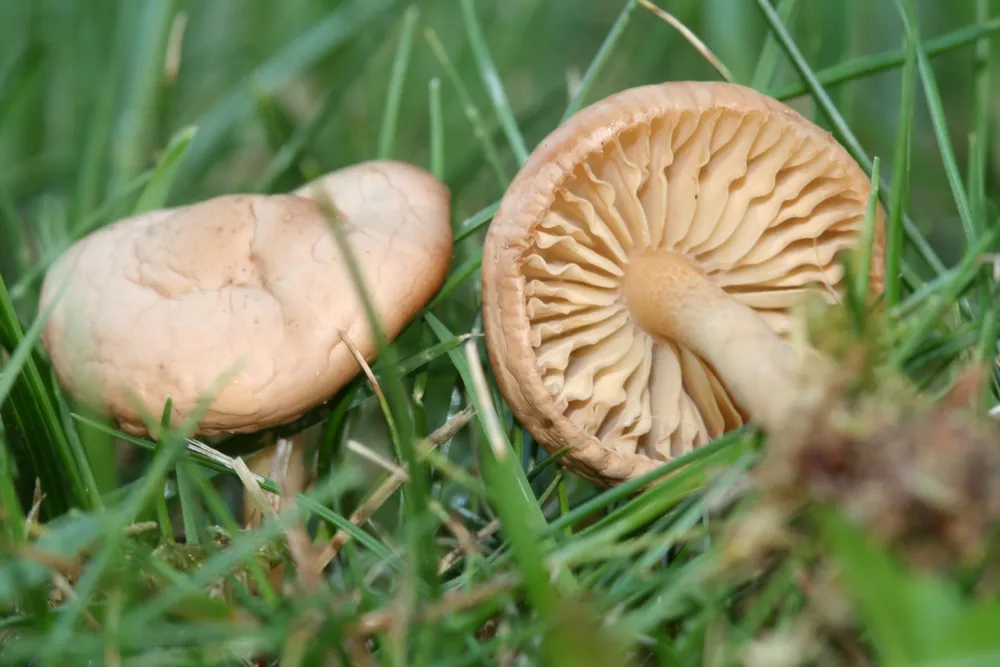
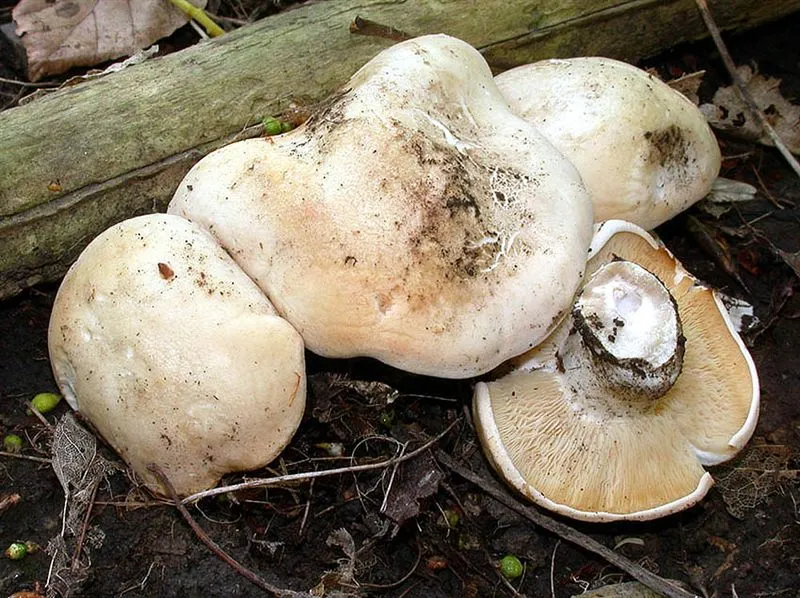
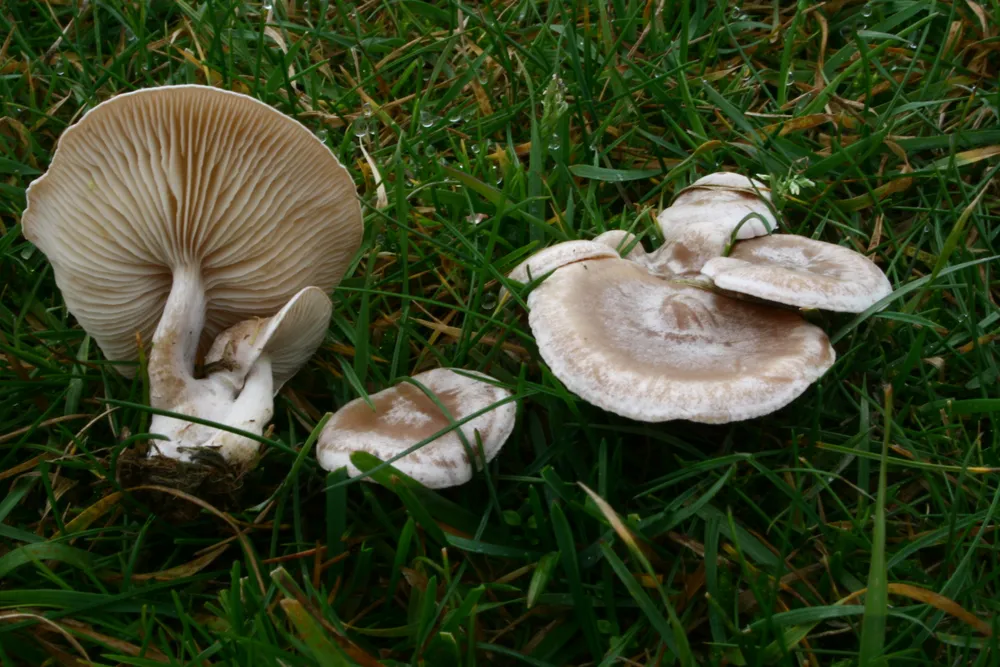
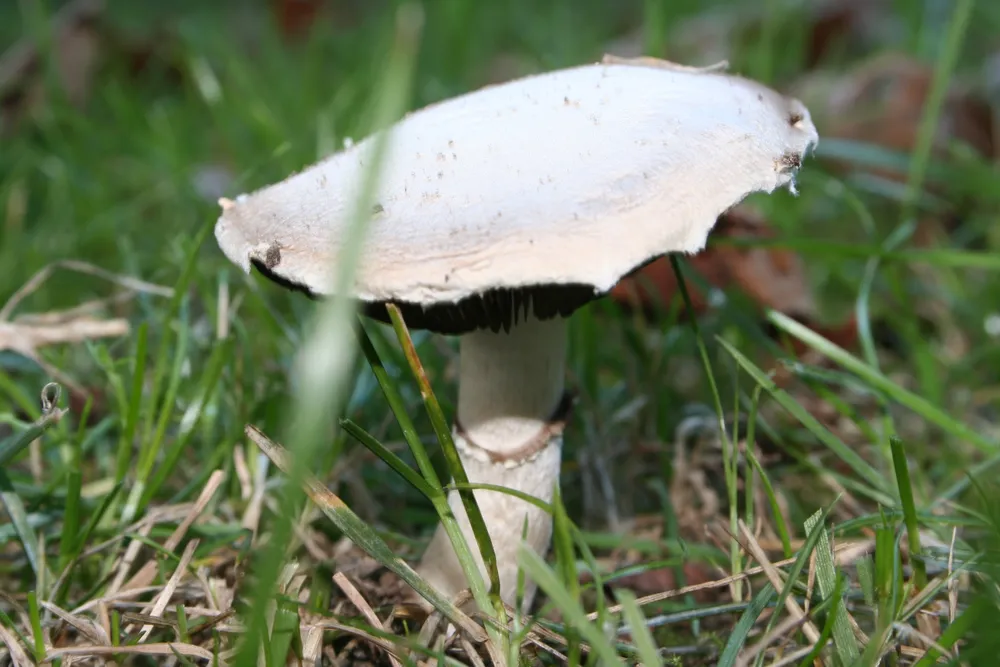
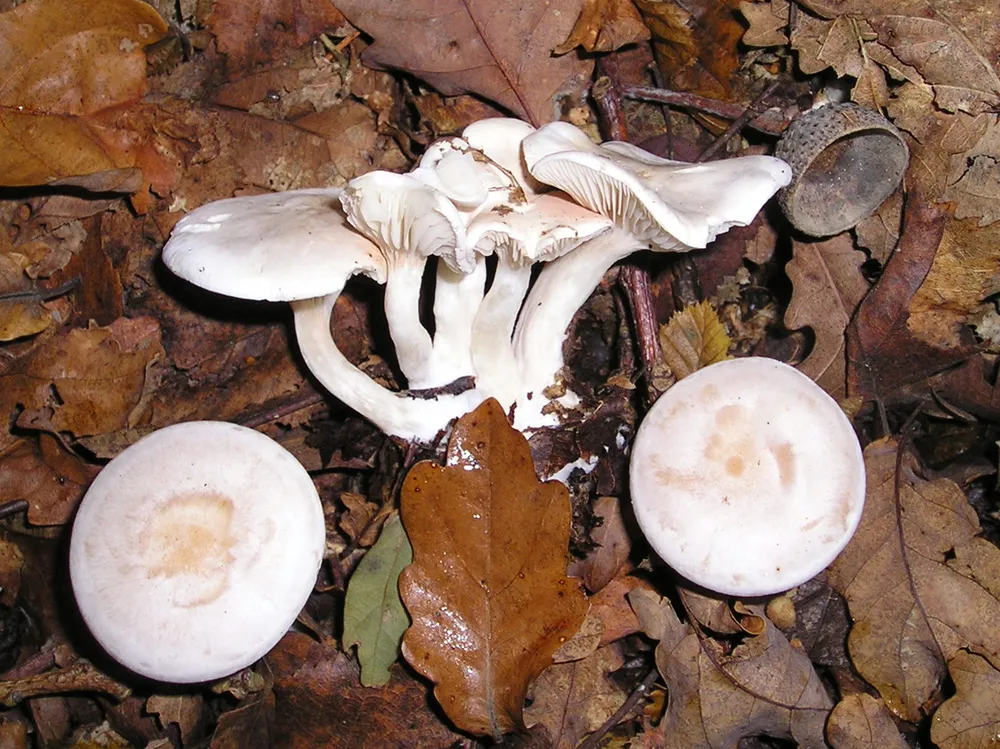
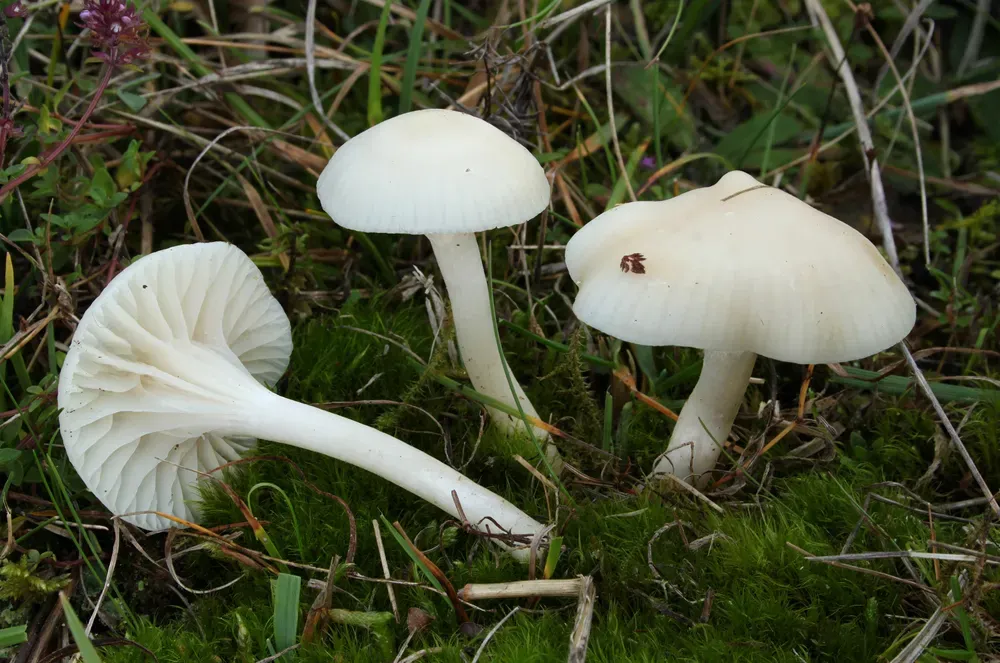
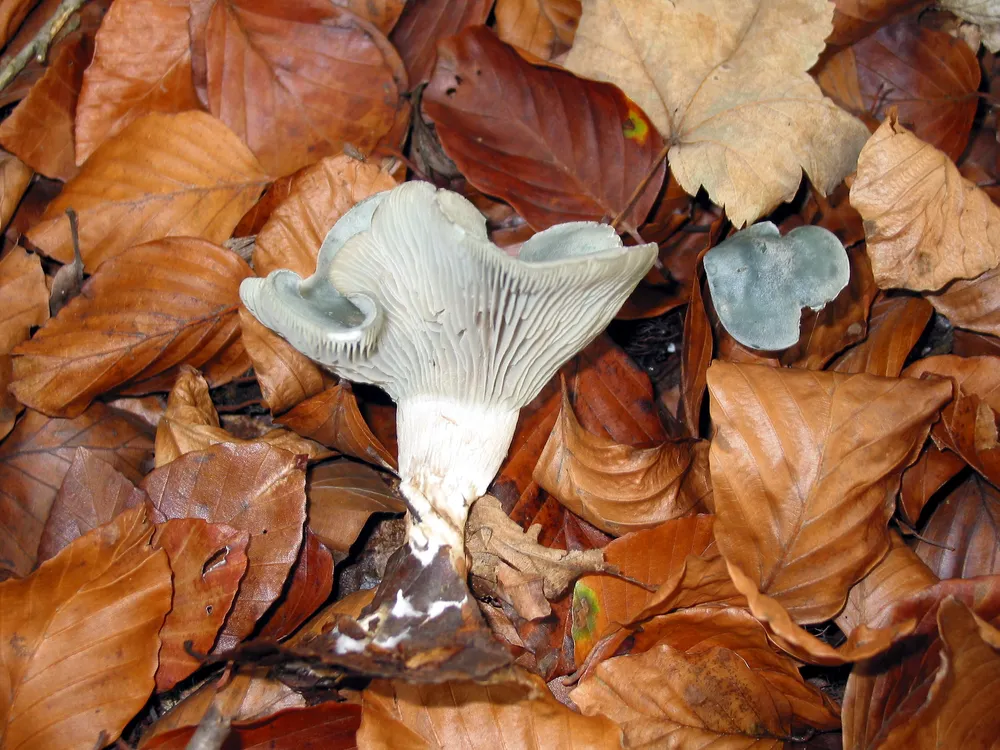
Related species
Mushrooms of the same genus and habitat — to study side by side and never mix up.
_Ricken_185798.webp)
Booted knight
Tricholoma focale
Charbonnier
Tricholoma portentosum
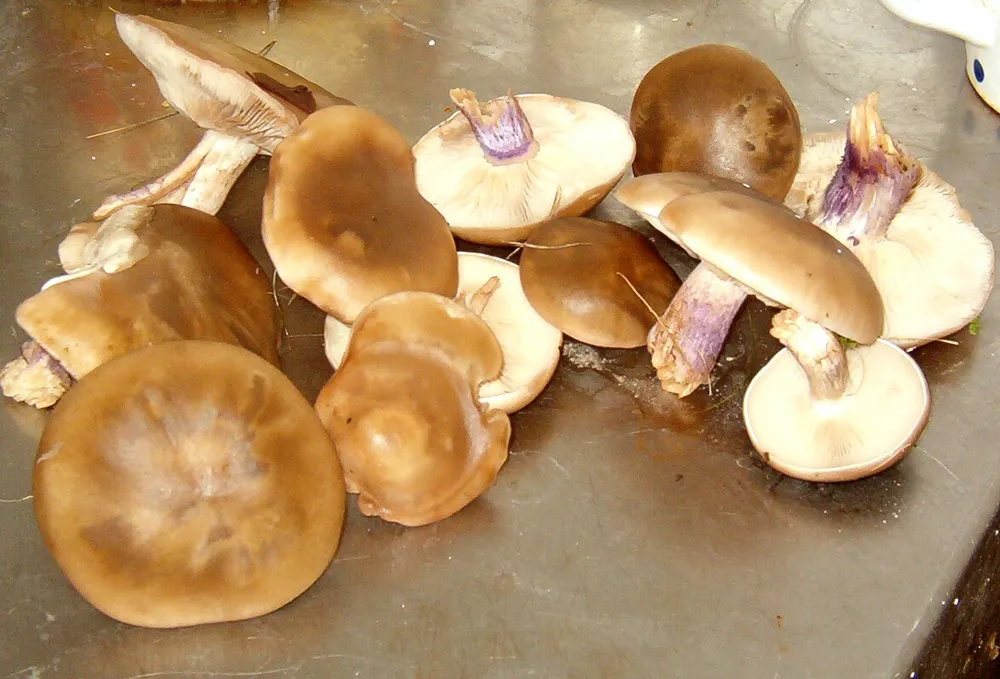
Field blewit
Collybia personata
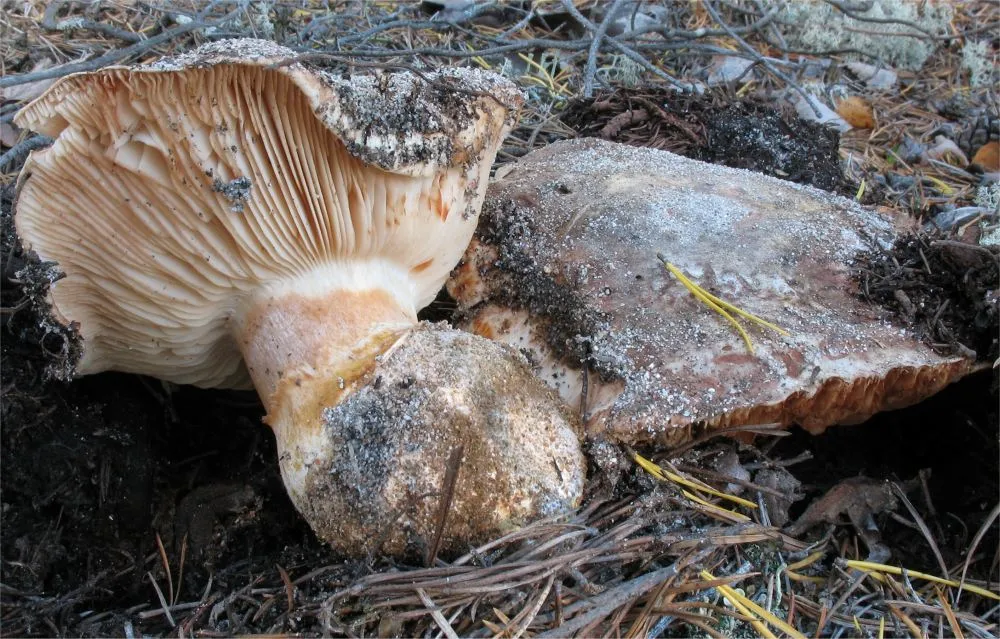
Giant knight
Tricholoma colossus
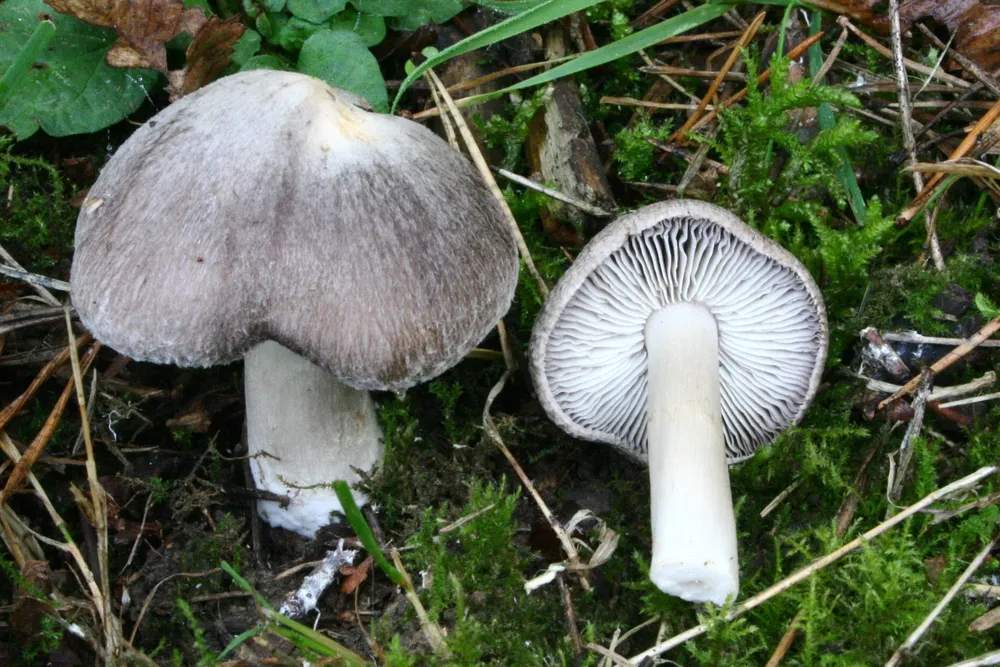
Grey knight
Рядовка наземна
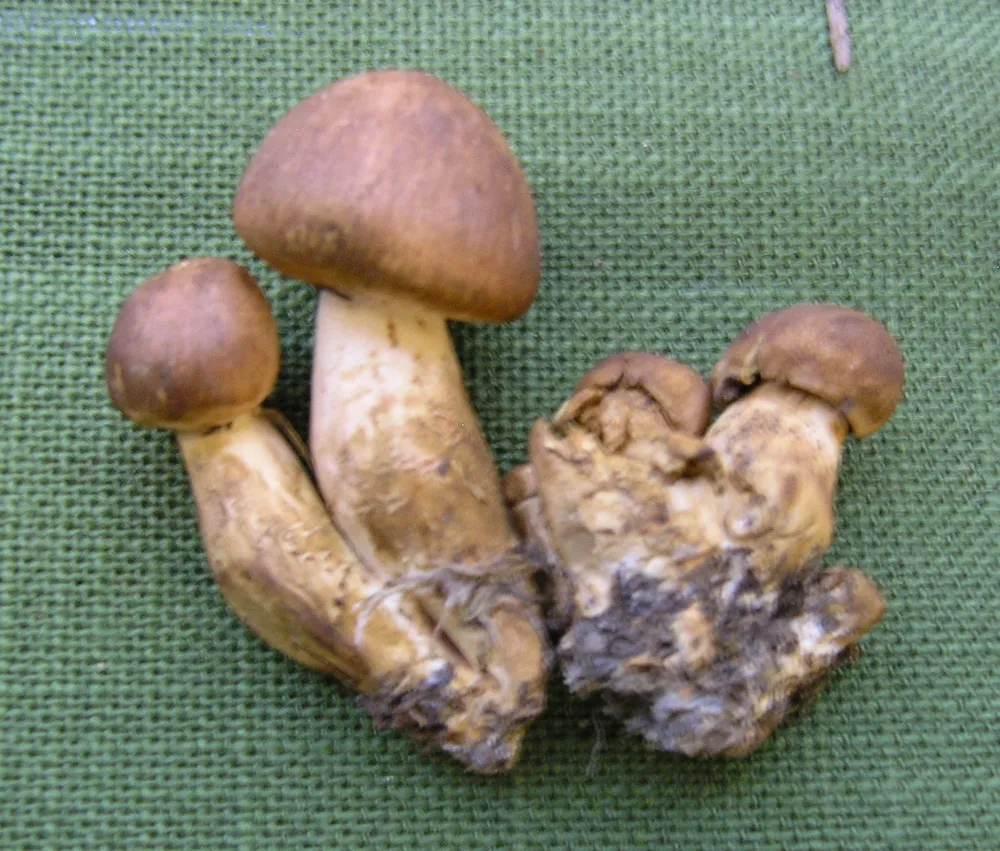
Matt knight
Tricholoma imbricatum
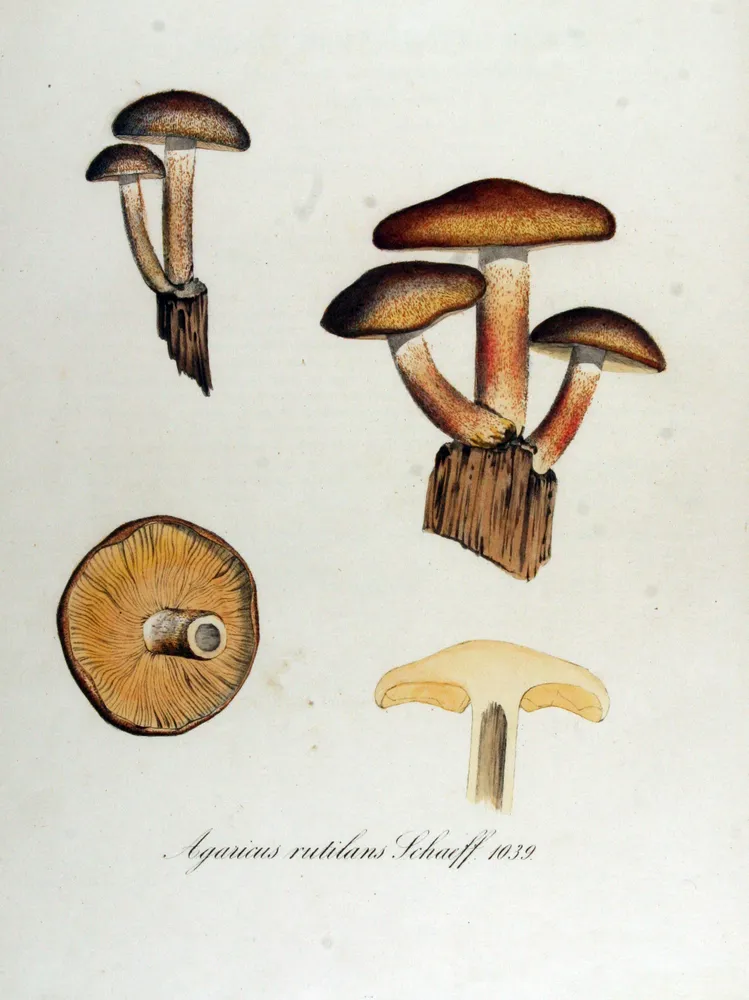
Plums and custard
Рядовка червона
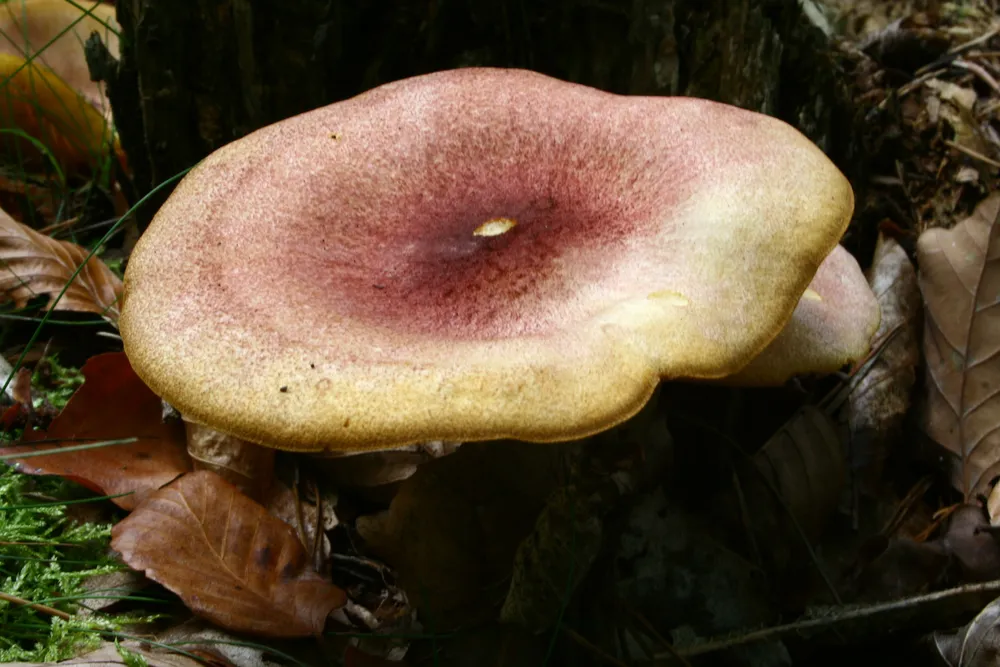
Plums and custard
Tricholomopsis rutilans
Frequently asked questions
What happens if you eat it by accident?
Within 15-60 minutes — sudden heavy salivation, sweating that soaks through your clothes, watering eyes, runny nose, a feeling of suffocation, abdominal cramps, diarrhea, slow heartbeat. Call 112 or your local emergency number immediately. Put the mushroom remains in a bag for identification. In hospital you'll be given the antidote — atropine. With prompt care (1-2 hours) the prognosis is good. Never treat yourself with atropine — at the wrong dose it is lethal.
How do you keep it out of a basket of field mushrooms?
Two key features. (1) Gills: in the field mushroom they are pink when young, chocolate-brown when mature, almost black when old. In the ivory funnel they are always white and decurrent down the stem. (2) Spore print: dark brownish-black in the field mushroom, white in the ivory funnel. Before cooking, ALWAYS take a spore print from one mushroom in the batch: cut off the cap, place it gills down on white paper, and check the color after 4-6 hours. If it's white, it's not a field mushroom.
What if I boil it for a long time — will it become edible?
No. Muscarine is heat-stable — boiling, pickling, drying and freezing do not destroy it. No method of preparation makes this mushroom safe. This is a fundamental difference from, say, the false morel, whose toxins are partly washed out by water — in the ivory funnel they remain after any processing.
Where does it usually grow?
In meadows and pastures, gardens, parks, along woodland edges and in forest clearings. It loves open grassy places with moist alkaline soils. It often grows in groups and rings ("fairy rings") of 10-50 mushrooms. This sets it apart from ordinary woodland Clitocybe, which grow deeper in the forest.
Which regions of Ukraine is it found in?
Throughout the forest and forest-steppe zones; in the steppe — in parks and shelterbelts. A common species — found in every region. Especially often on cultivated meadows, in gardens, on dacha plots and next to vegetable patches.
When does it fruit?
August — November, peaking in September-October. This overlaps with the season of field mushrooms and fairy ring champignons — and that is where the main risk of confusion comes from.
Which edible mushrooms is it most often confused with?
With the field mushroom (Agaricus campestris) — most often and most fatally. With the fairy ring champignon (Marasmius oreades) — an edible mushroom of the same meadows. With young St George's mushroom (Calocybe gambosa) — a spring species, but sometimes with an autumn flush. General rule: in meadows and pastures, do NOT pick small white mushrooms without checking the spore print. If the spore print is white, it is definitely not a field mushroom (its print is dark brown). But the fairy ring champignon and St George's mushroom also give a white print, so the print won't tell them apart from the ivory funnel. The fairy ring champignon has widely spaced gills that don't run down the stem, and a tough, springy stem you can twist without it snapping. The ivory funnel has crowded gills that run down the stem, and its stem breaks easily. White spore print + small white mushroom in a meadow = ivory funnel risk.
Could it end up among other small white mushrooms in the basket?
Yes — that is the main risk. In a haul of fairy ring champignons or young field mushrooms, one ivory funnel among a dozen good ones can slip through unnoticed. The rule: at home, sort through every mushroom individually, checking the features. If you find even one with white decurrent gills + a white spore print — throw out the whole batch, because juices rubbing off in transit can carry muscarine onto neighboring mushrooms.
Is Ivory funnel edible or poisonous?
Does Ivory funnel have gills or pores?
What does the cap of Ivory funnel look like?
What does the stem of Ivory funnel look like?
Sources
- [1]Вікіпедія (українська)
- [2]Атлас грибів України, Зеров Д.К. (1979)
- [3]MycoBank Database
- [4]Index Fungorum
- [5]GBIF
- [6]iNaturalist Ukraine