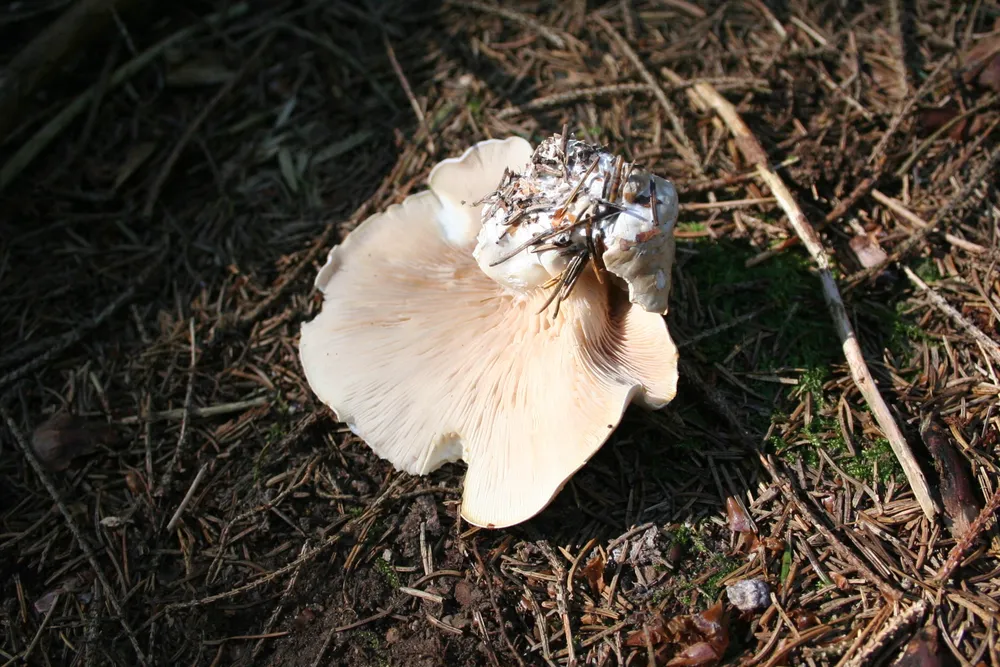
The millerClitopilus prunulus
Expert-verifiedUpdated October 3, 2026
Passport
- Edibility
- Edible
- Season
- Jun — Oct
- Hymenophore
- Gilled
- Cap color
- White
- Size
- Small (up to 5 cm)
- Smell
- Floury
- Reviewed
- Yes ✓
Quick answers
Where to look?
Deciduous forest, Mixed forest
When does it appear?
Jun — Oct
Active months: June, July, August, September, October.
How to recognize it? Three signs
- Cap color: White, Cream
- Cap shape: Funnel-shaped
- Smell: Floury
Fruiting season
June – October
Description
The miller (Clitopilus prunulus) is one of the most important "cautionary" mushrooms in Ukrainian mycology: edible and tasty, yet very similar to a severely poisonous lookalike — the livid pinkgill (Entoloma sinuatum). Folk names for it include "ivanchyk", "mukoplyz" and "plodova slyvonosachka". The Latin epithet prunulus refers to its distinctive mealy smell, reminiscent of raw dough or freshly milled grain.
Edible, tasty. Young mushrooms are fleshy, with an aromatic mushroomy flavor and a distinctive note of fresh bread. Good for frying, pickling, or mixed with other mushrooms. On its own it's pleasant, but no "wow".
The most critical thing is the lookalike. The livid pinkgill (Entoloma sinuatum) looks very similar: a white fleshy cap, decurrent whitish gills, no ring and no volva. The key difference is the color of the spore print and gills: in the miller it's PINK (the spores are pink, so mature gills turn pink too), in the pinkgill — pinkish-cream to dirty pink, and often with a distinct dirty-cream tint. The pinkgill's smell is raw and mealy, but with a rancid or sourish note, not pleasantly fresh like the miller's. For beginners: don't pick it at all. For experienced foragers: always make a spore print.
In Ukraine it is widespread in deciduous and mixed forests: the Carpathians, Prykarpattia, Polissia, the forest-steppe. A saprotroph or a weak mycorrhizal partner. Season: June — October, peaking in August–September. It often grows in groups of 3-10 fruit bodies along damp forest edges. The Ukrainian name "pidvyshen" ("under the cherry") comes from the tradition that it's often found under cherry and plum trees, but the link is coincidental: the mushroom isn't tied to fruit trees.
Cap
Cap 3-10 cm across; hemispherical in young mushrooms, later becoming convex-flat to funnel-shaped with a thin, wavy margin. Color white to cream, with a faint grayish-pink tint in old specimens. Surface smooth, dryish, slightly sticky in wet weather. The cap margin is thin.
Hymenophore
Gilled hymenophore — the gills are running down the stem (decurrent), crowded, thin. In young mushrooms — whitish, with age they become pink from the ripened pink spores. Spore print PINK — the main diagnostic feature of the species (and of the whole genus Clitopilus). Most gilled mushrooms have a white or brown spore print — a pink one tells you it's either the miller or an Entoloma.
Stem
Stem 3-7 cm tall, 0.7-1.5 cm thick, cylindrical, relatively short, often tapering toward the base. Color white to cream. Surface with fine lengthwise fibers. No ring and no volva.
Flesh
Flesh firm, white, when cut it doesn't change color. Smell distinctly mealy — like raw dough or freshly milled grain — the most characteristic feature of the species.
Smell
Distinctly mealy and pleasant, like raw dough or freshly milled grain (Russian sources call it "the smell of cucumber flour"). Fresh, not rancid — this sets it apart from the livid pinkgill, whose smell is also mealy, but with a sour or rancid note.
Lookalikes
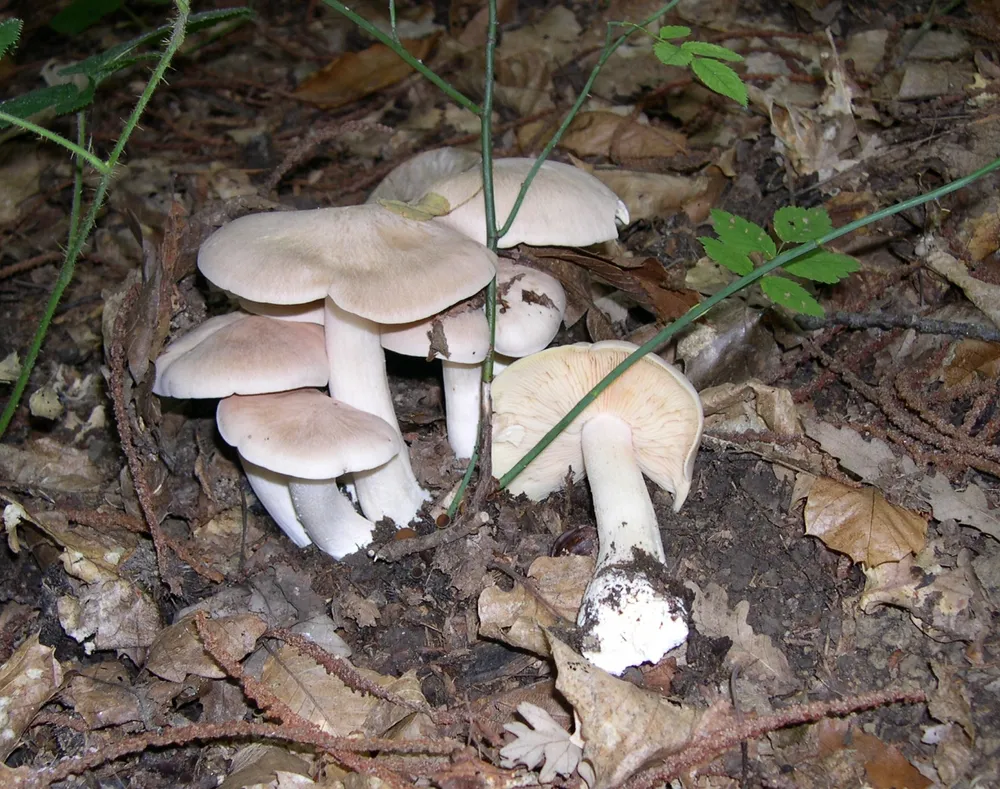
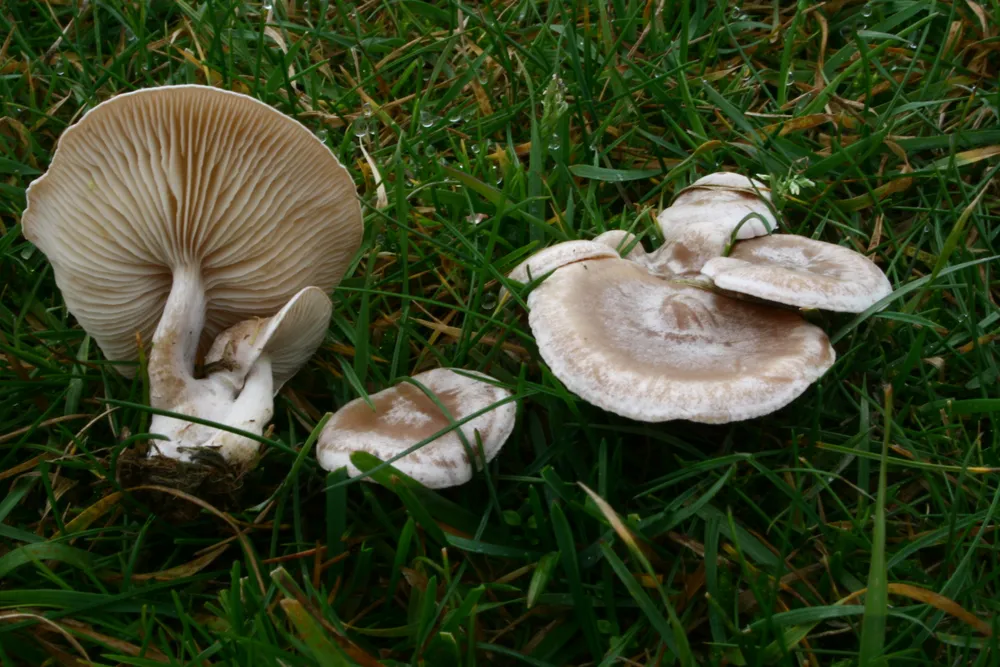
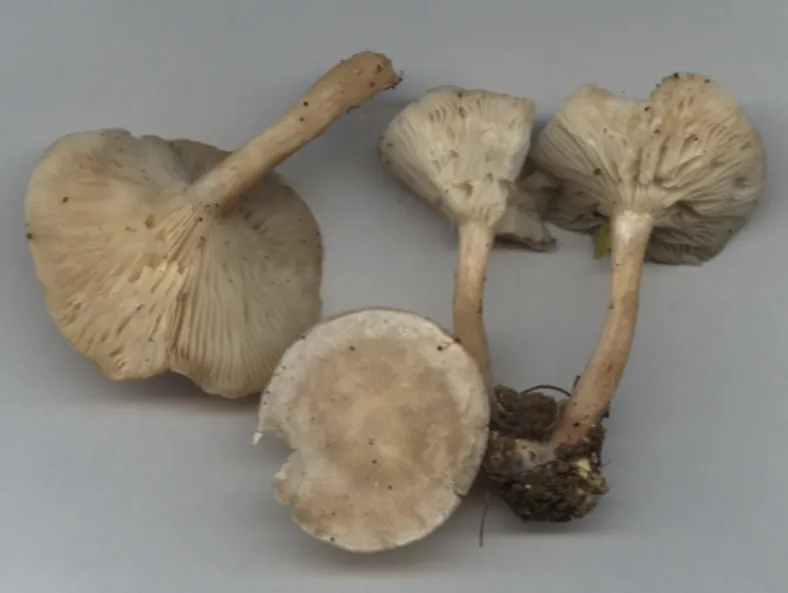
Related species
Mushrooms of the same genus and habitat — to study side by side and never mix up.
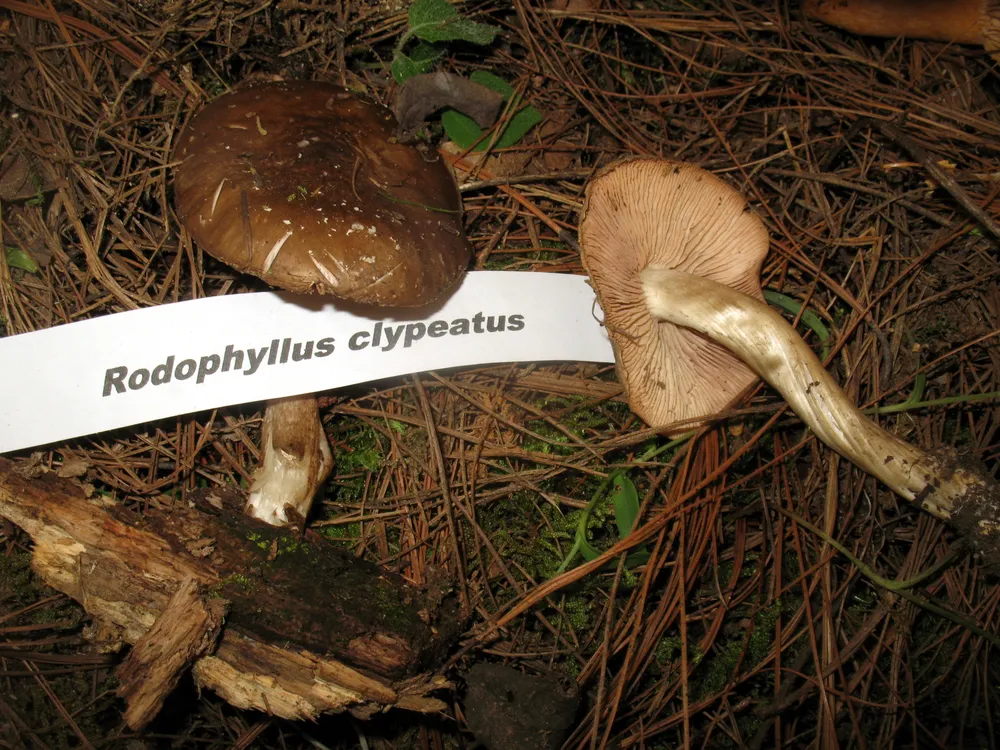
Shield pinkgill
Entoloma clypeatum
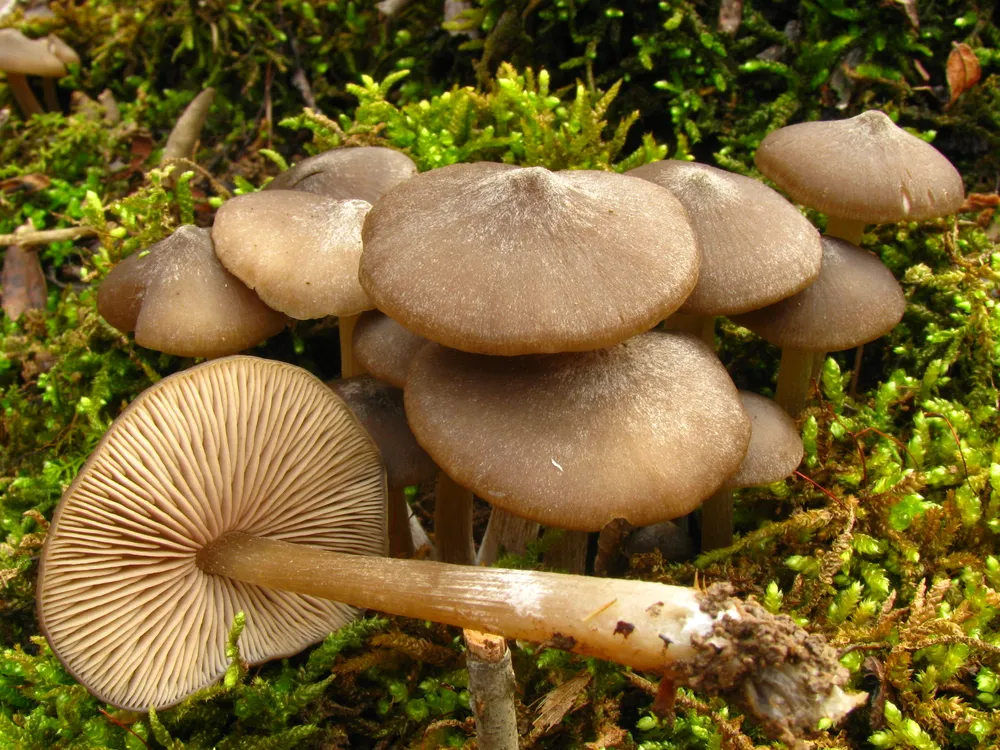
Spring pinkgill
Entoloma vernum
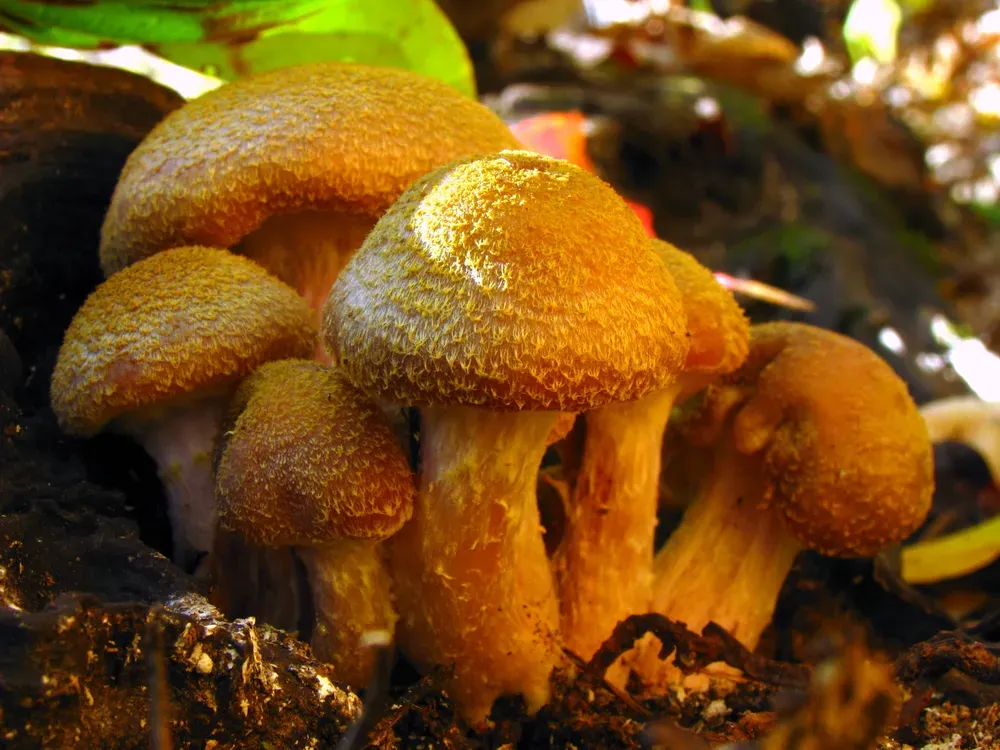
Bulbous honey fungus
Armillaria gallica
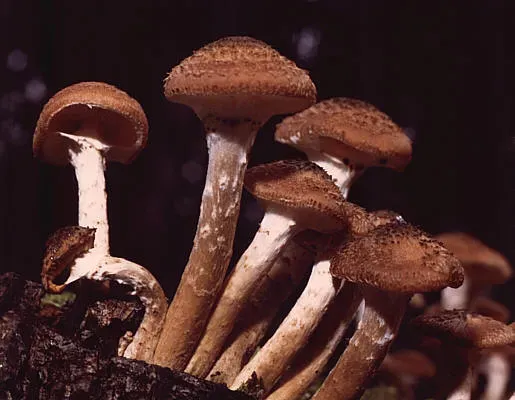
Dark honey fungus
Armillaria ostoyae
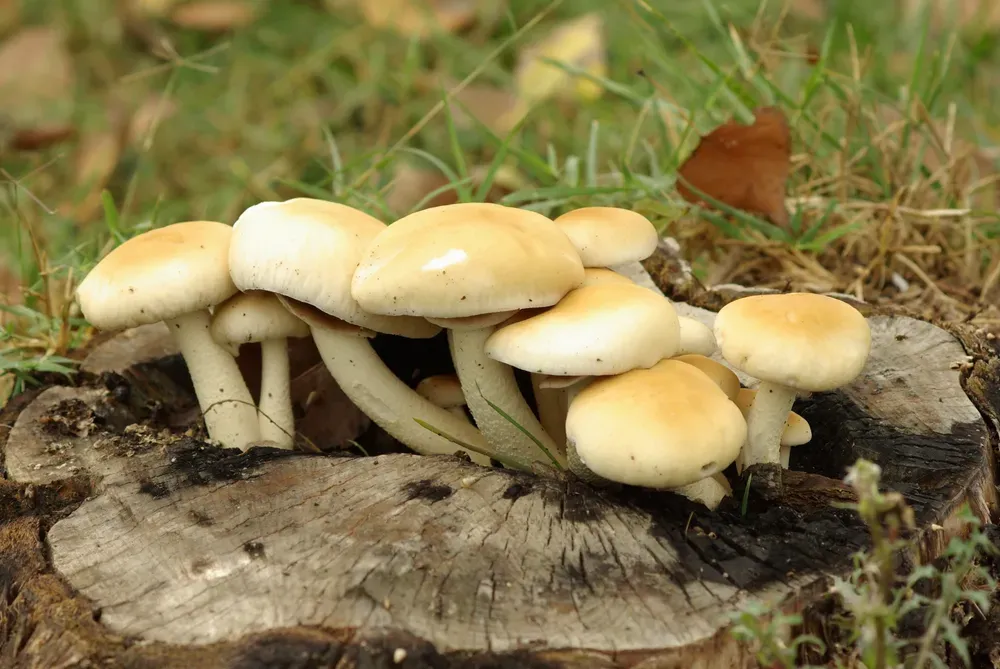
Poplar fieldcap
Cyclocybe aegerita
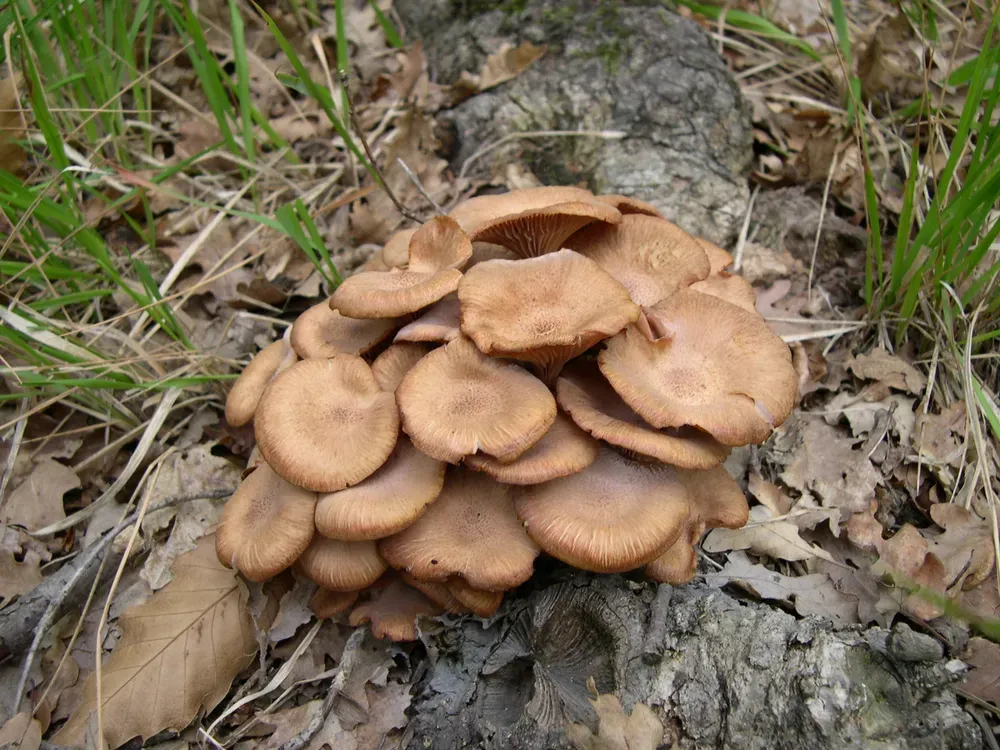
Ringless honey fungus
Desarmillaria tabescens
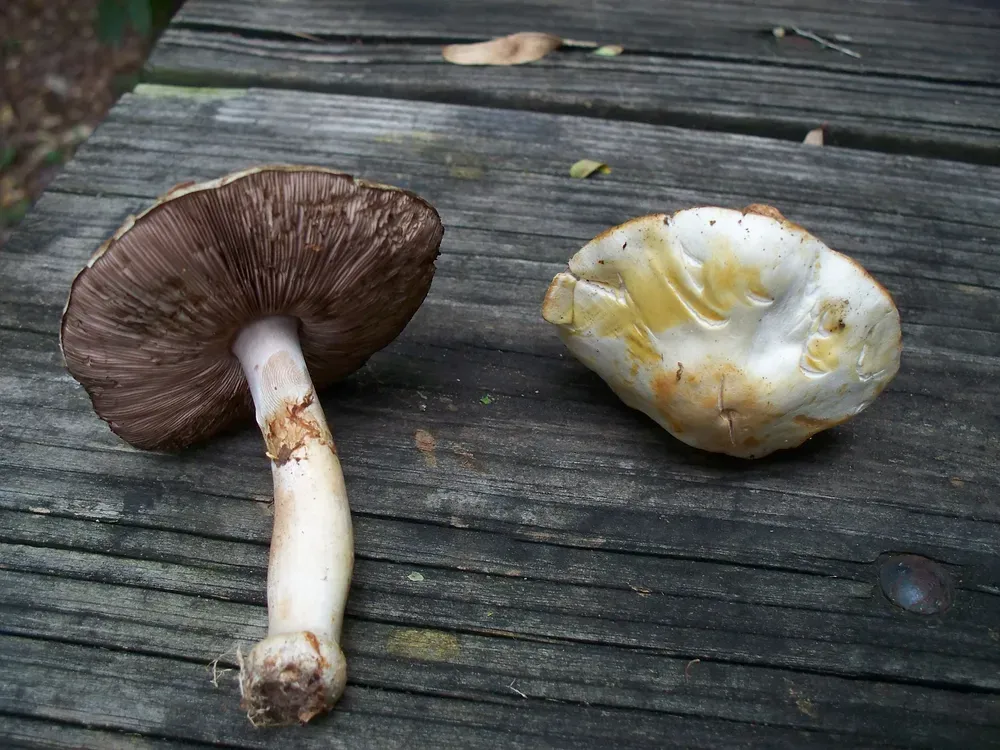
Agaricus abruptibulbus
Agaricus haemorrhoidarius
Agaricus haemorroidarius
Frequently asked questions
Is it safe to eat?
Yes, provided you've ruled out the lookalike — the livid pinkgill (Entoloma sinuatum). On its own it's tasty and safe. Young mushrooms are best. We recommend that beginners don't pick it because the lookalike is so close. Experienced foragers — always make a spore print and check the smell.
How can you reliably tell it from the livid pinkgill?
Three critical features, taken together. (1) Smell: the miller — fresh and mealy, pleasant, like raw dough. The pinkgill — mealy, but with a rancid or sour note, unpleasant. (2) Size: the miller is small (3-10 cm caps) and soft. The pinkgill is much larger (8-20 cm), fleshier, with distinctly white flesh. (3) Spore print: in the miller — pure pink, salmon-pink. In the pinkgill — pink with a distinct dirty, cream or yellowish tint. Always make a spore print: cover the cap with paper for 6-12 hours.
What happens if you mistake a livid pinkgill for it?
The livid pinkgill causes severe gastroenteritis 30 min - 2 h after eating: repeated vomiting, severe abdominal pain, watery or bloody diarrhea, dehydration. It lasts 12-48 hours and requires hospitalization. Not fatal, but among the "milder" poisonings it's one of the most severe. In severe cases, dehydration with complications is possible. Calling an ambulance is a must.
What is a spore print and how do you make one?
Spore print — a paper trace of the spores falling from a mature mushroom; it lets you pin down the spore color precisely (a critical diagnostic feature). How to do it: cut off the stem and place the cap gills down on a clean sheet of paper (half white, half black — so both dark and light prints show up). Cover with a glass to keep it moist. Leave for 6-12 hours. After that, lift the cap — the paper will show a pink, white or brown spore print. It's a basic diagnostic tool in mycology, worth learning.
Where should you look for it?
In deciduous and mixed forests — mostly with oak, beech, hornbeam and birch. It likes damp forest edges, shady slopes and forest clearings. The name "pidvyshen" comes from the folk tradition of gathering it under wild cherries and plums, but that's a coincidence — it isn't tied to fruit trees.
Which regions of Ukraine is it found in?
Throughout the forest and forest-steppe zones: the Carpathians, Prykarpattia, Polissia, the forest-steppe. In the steppe — in floodplain oak woods and parks.
When should you look for it?
June — October, peaking in August–September. It likes warm, humid weather after summer rains.
What mushrooms is it confused with?
Most importantly — with the livid pinkgill (Entoloma sinuatum), which causes serious poisoning (see above). Also — with Clitocybe candicans — also white, but without the mealy smell, and not edible. With young white Hypholoma — also not of interest. Our rule: if you have any doubt about a white gilled mushroom with a pink or cream tint to its gills — skip it.
Why is it called "ivanchyk"?
From its habit of appearing around St. John's Day (Kupala) — late June to early July, the first flush of fruiting in a wet summer. In different regions of Ukraine it is also called "mukoplyz" ("mealy and slimy"), "plodova slyvonosachka" ("the one under the plums") and "pecherytsia boroshnysta" ("mealy champignon"). The modern literary standard is "pidvyshen".
Is The miller edible or poisonous?
Does The miller have gills or pores?
What does the cap of The miller look like?
Sources
- [1]Вікіпедія (українська)
- [2]Атлас грибів України, Зеров Д.К. (1979)
- [3]MycoBank Database
- [4]Index Fungorum
- [5]GBIF
- [6]iNaturalist Ukraine