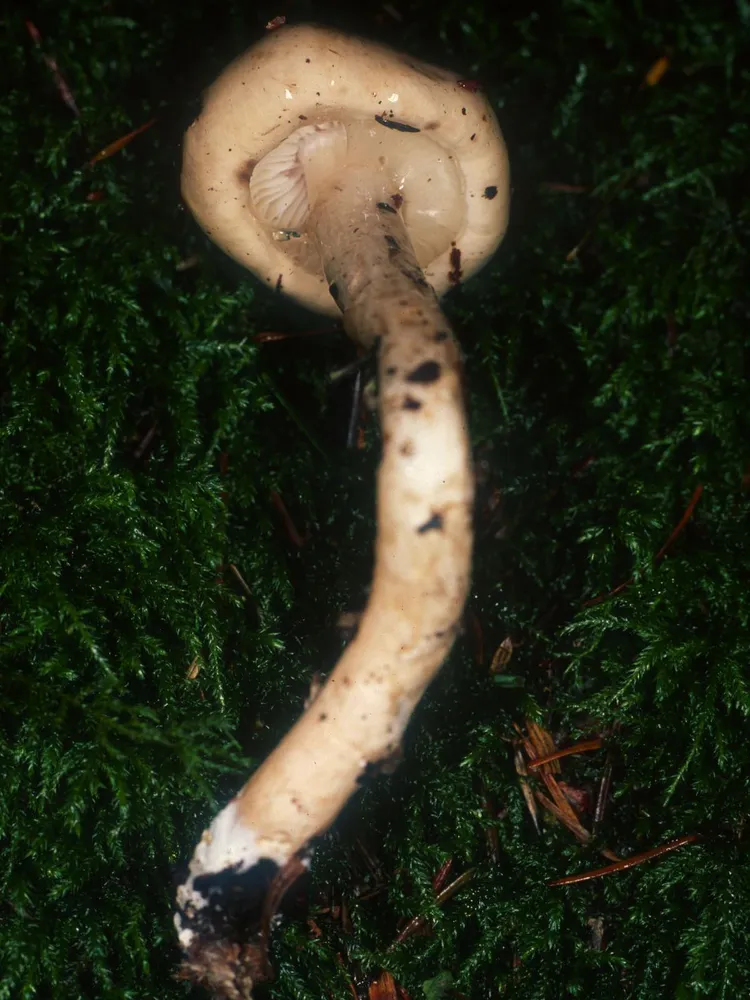
Dripping slimecapLimacella illinita
Expert-verifiedUpdated October 3, 2026
Passport
- Edibility
- Inedible
- Season
- Aug — Oct
- Hymenophore
- Gilled
- Cap color
- White
- Size
- Small (up to 5 cm)
- Smell
- Odorless
- Reviewed
- Yes ✓
Quick answers
Where to look?
Conifer forest, Mixed forest
When does it appear?
Aug — Oct
Active months: August, September, October.
How to recognize it? Three signs
- Cap color: White, Cream
- Cap shape: Convex
- Smell: Odorless
Fruiting season
August – October
Description
The Dripping slimecap (Limacella illinita) is a rare gilled mushroom with a slimy, glassy, translucent cap and stem from top to bottom. It belongs to the amanita family (Amanitaceae) and has long been placed in its own genus, Limacella, because of its unusual structure: there is a remnant of the universal veil in the form of slime, but none of the volva and ring that classic amanitas have. The name illinita is Latin for “smeared” or “daubed,” which perfectly describes the distinctive sticky film of slime that coats the whole mushroom in wet weather.
The mushroom is inedible — the flesh is thin and watery, with an unpleasant, bland taste. Some Western European sources allow it as a second-rate mushroom for salting, but it has no culinary value, and the slimy surface is unpleasant to handle. Modern field guides unanimously list it as “not recommended for picking.”
In Ukraine there are only scattered finds, mostly in the Carpathians, the Carpathian foothills and Polissia — in damp conifer and mixed forests, on mossy forest floor. Not a common find. Season: August–October.
Cap
Cap 3-7 cm, hemispherical at first, then flattening out, with a depressed center in mature specimens. Color pure white to creamy white; in wet weather it looks glassy and translucent because of the thick layer of slime. In dry weather the slime dries to a thin glossy film. The cap margin is even, slightly inrolled in young specimens.
Hymenophore
Gilled hymenophore. Gills crowded, free (not attached to the stem), white. Spore print white. This is the classic structure of the Amanitaceae family, but without a ring or volva.
Stem
Stem 5-9 cm tall, 0.5-1 cm thick, cylindrical or slightly club-shaped. White. The surface is very slimy, just like the cap — a hallmark of the species. There is no ring and no volva (unlike true amanitas).
Flesh
Flesh white, thin, watery, does not change color when cut. Soft when fresh, turns brittle as it dries.
Smell
Odor faint; some sources mention a slightly mealy or cucumber-like note, but in most specimens it is neutral. The flesh tastes mild, with no acridity or bitterness.
Lookalikes
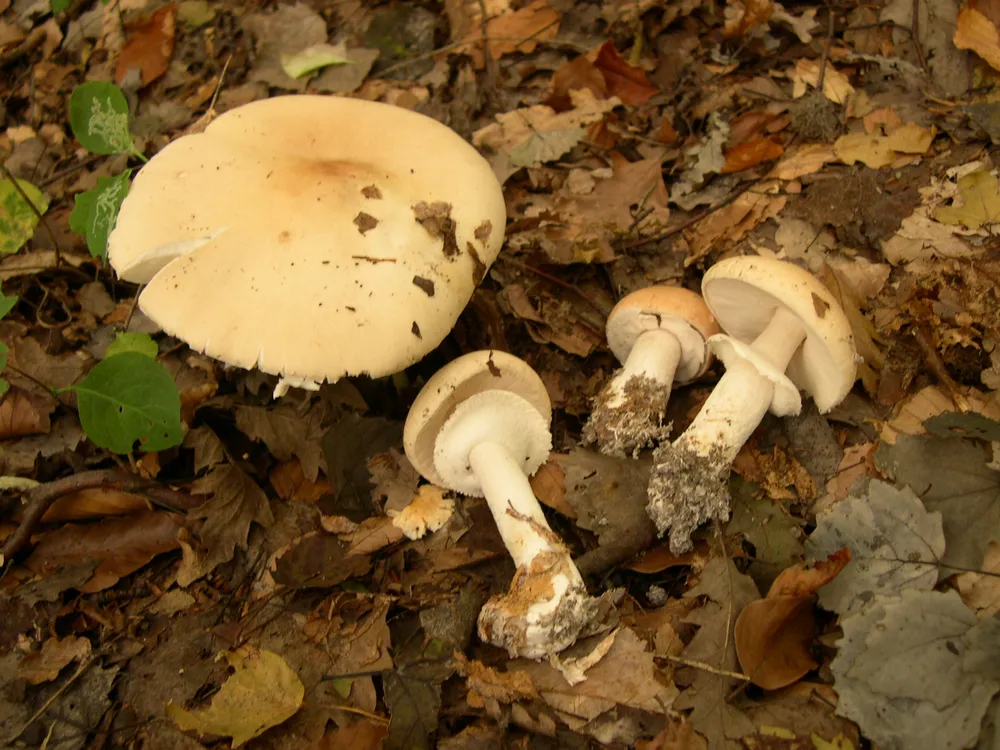
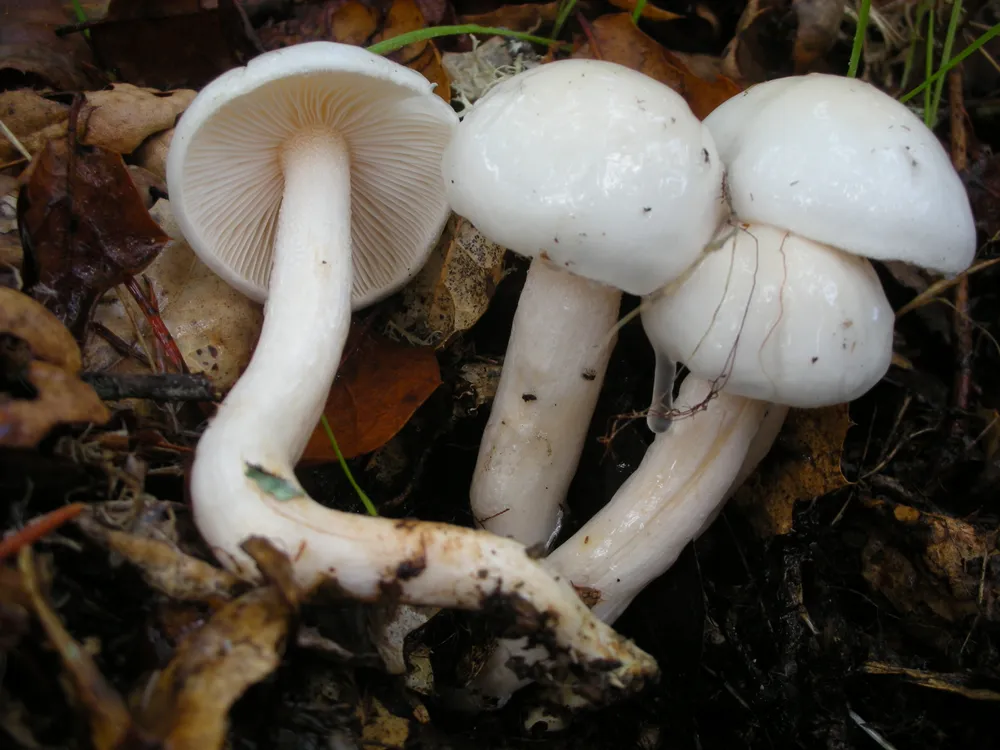
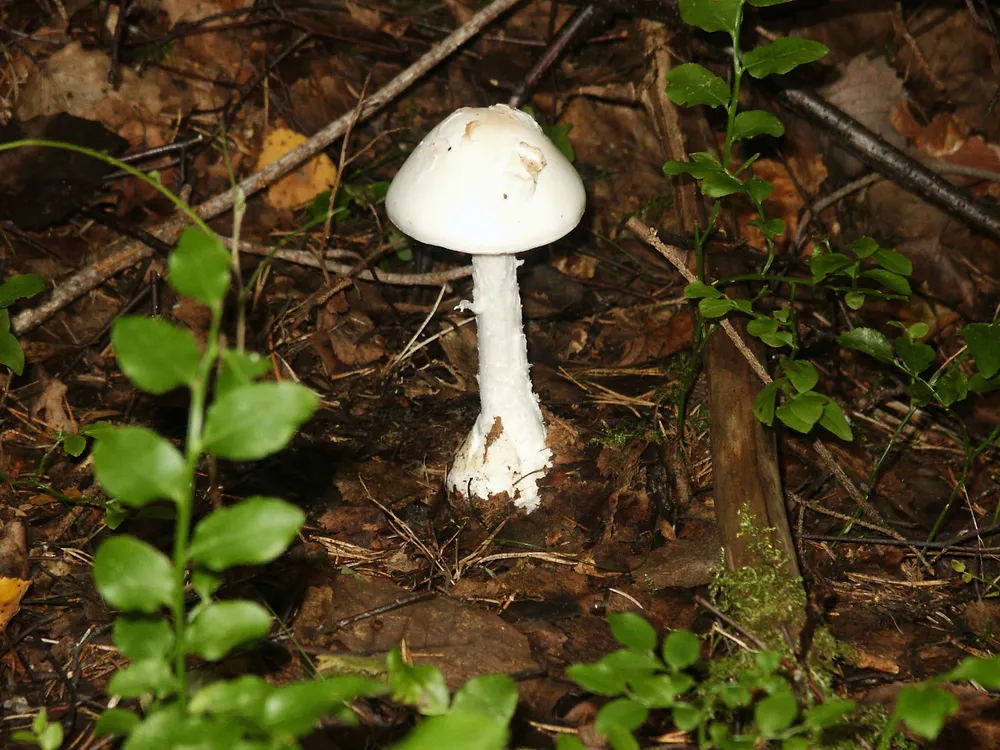
Related species
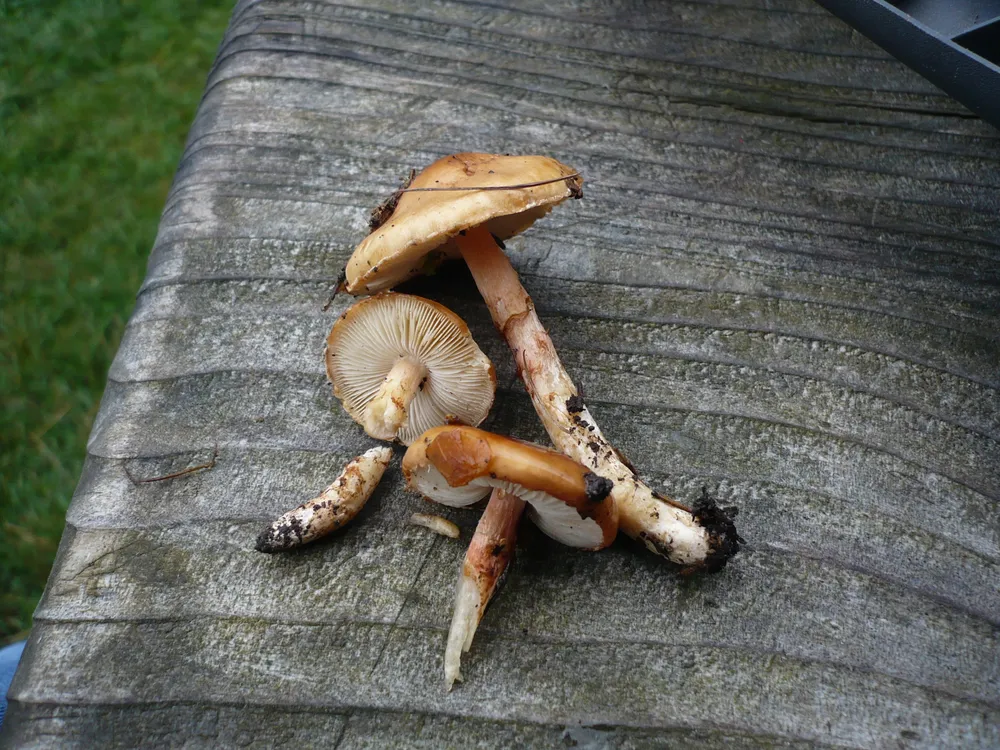
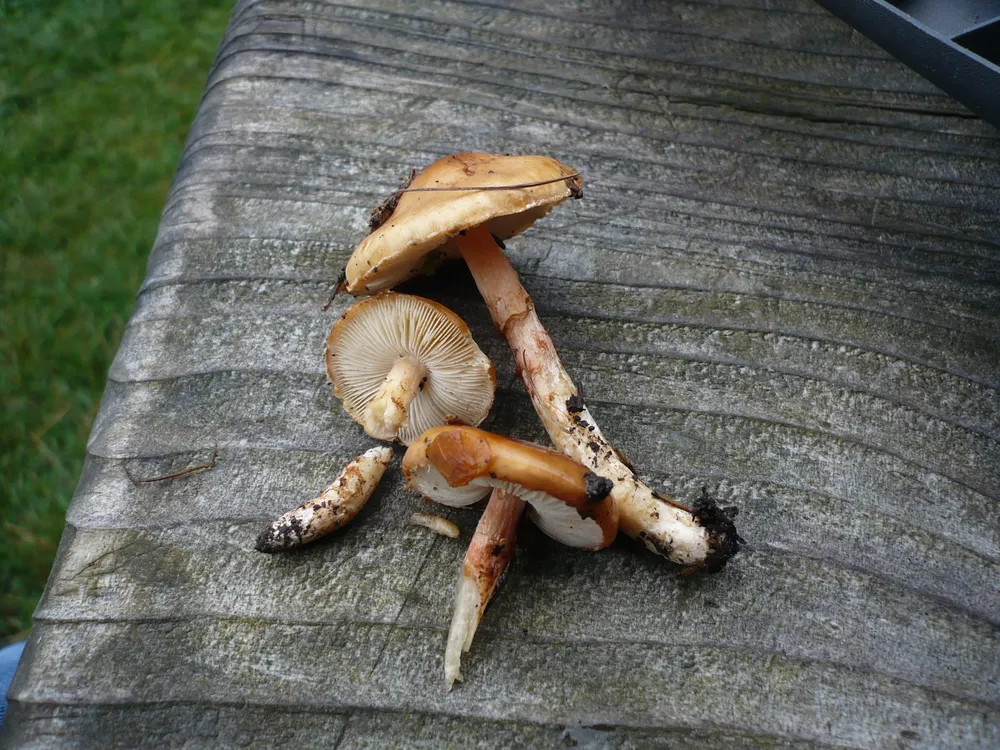
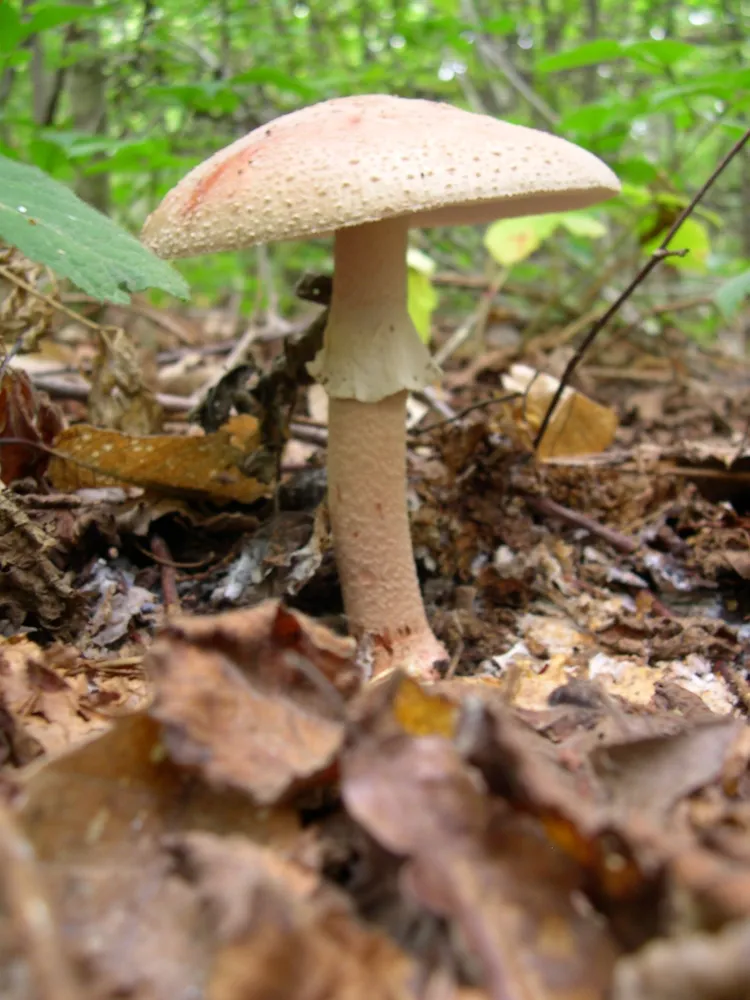
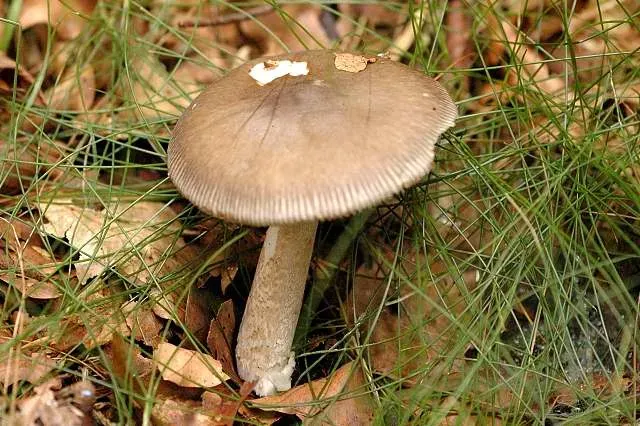
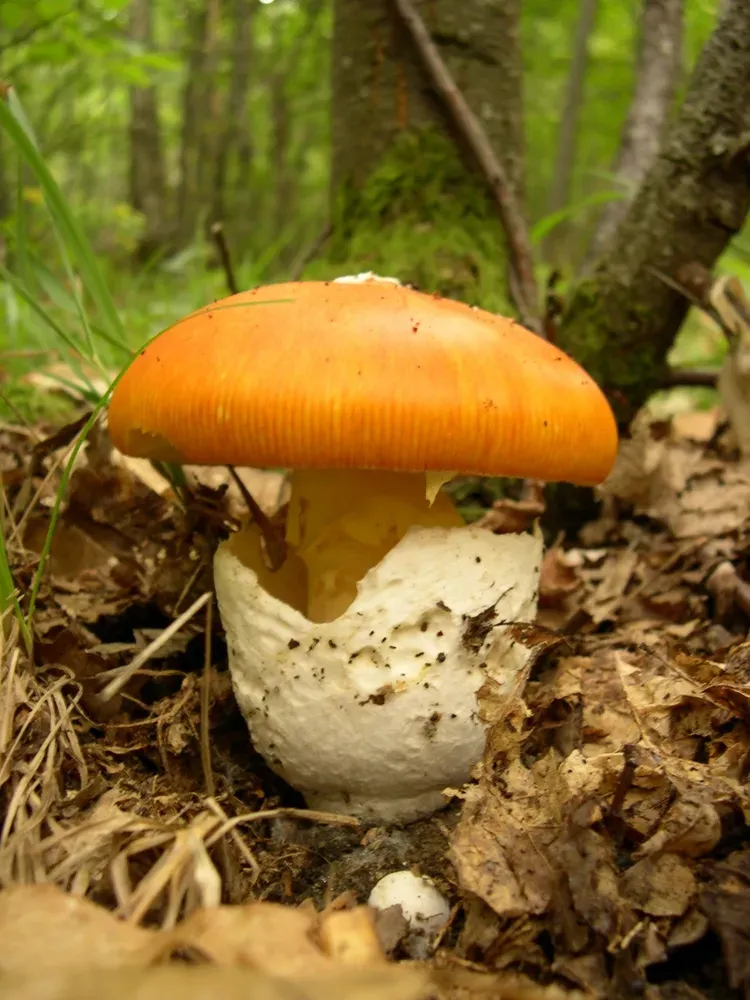
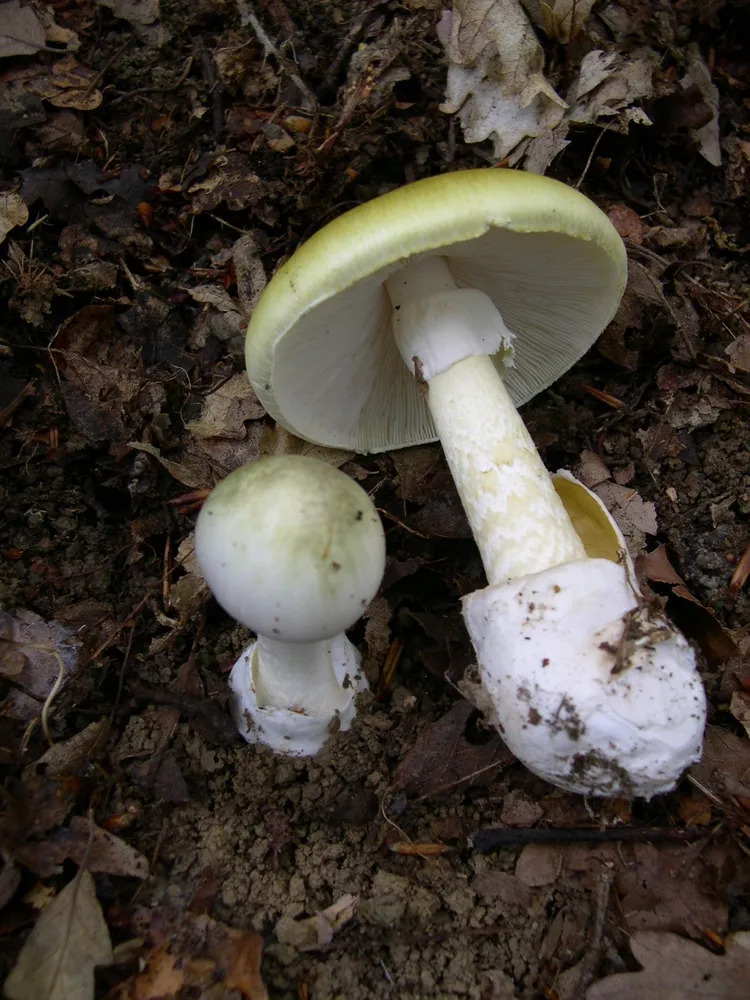
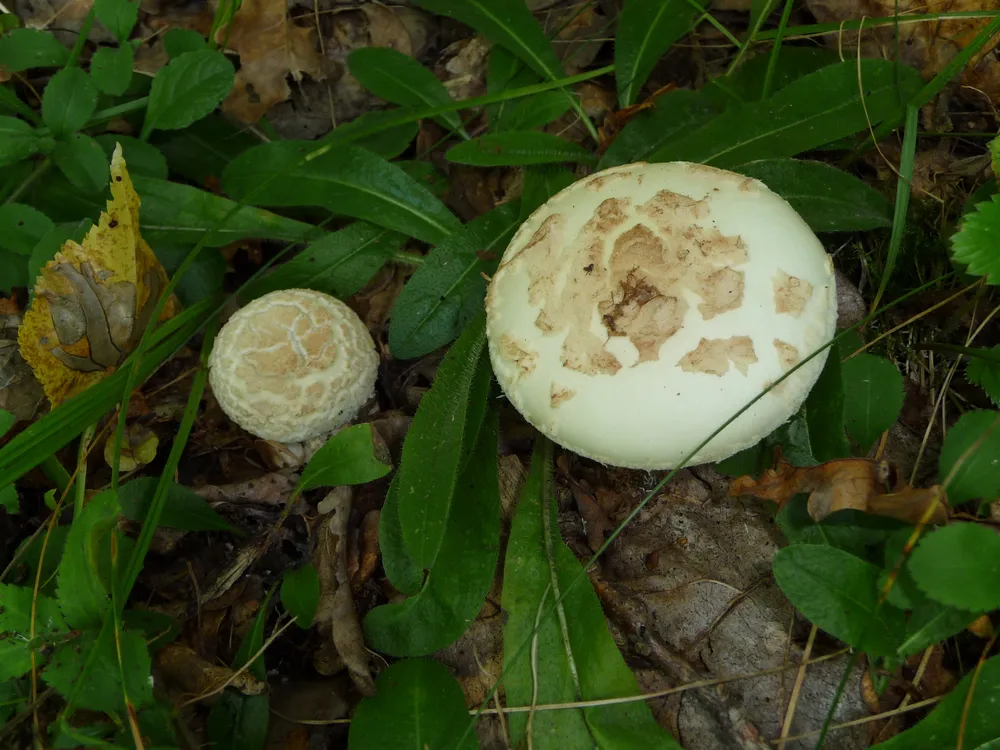
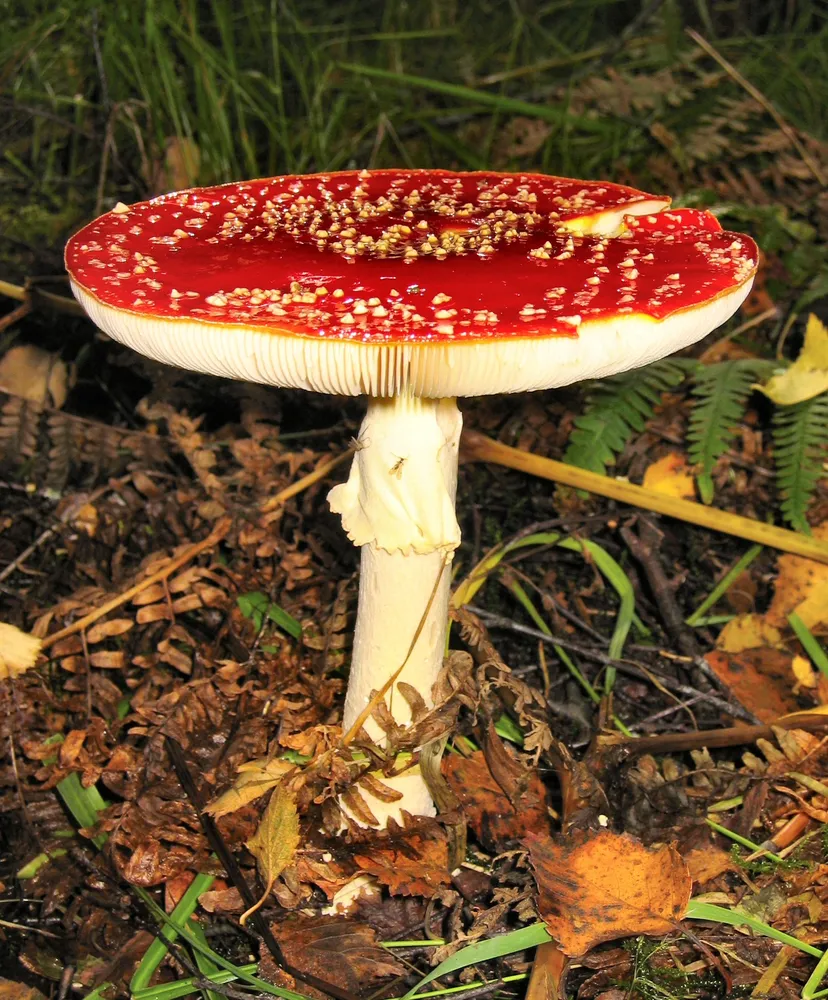
Mushrooms of the same genus and habitat — to study side by side and never mix up.
Frequently asked questions
Can you eat it?
Modern field guides agree: no, it’s not worth picking. The flesh is watery and tasteless, and the slimy surface is unpleasant. It contains no serious toxins, but it has no culinary value either. Among white agarics, better choices are Agaricus mushrooms and some Tricholoma (knights).
Is it related to amanitas?
Yes, Limacella species belong to the amanita family (Amanitaceae). Unlike true amanitas and the death cap, they contain no amatoxins and have neither a ring nor a volva. In other words, there is no acute poison, but you still shouldn’t pick them — they have no culinary interest, and among white agarics it’s all too easy to confuse them with the dangerous Destroying angel (Amanita virosa).
Where should you look for it?
In damp conifer and mixed forests, on mossy forest floor, near the roots of old spruces, in wet spots. Occasionally at forest edges under birch. In Ukraine it’s an uncommon find; your best chances are in a wet summer in the Carpathians and Polissia.
Which regions of Ukraine?
Scattered finds are known from the Carpathians (Zakarpattia and Lviv oblasts), the Carpathian foothills and Polissia. It does not occur in the forest-steppe or steppe. Overall it’s a rare mushroom — you won’t stumble across it every year.
When should you look for it?
August–October. Peak fruiting is late August–September, after prolonged rain. In a dry summer it may not appear at all.
What is it confused with?
With the Destroying angel (Amanita virosa) — a deadly poisonous white mushroom. The key: the amanita always has a ring on the stem and a volva at the base (a sac). The Limacella has neither a ring nor a volva. If in doubt — do NOT eat it; check the base of the stem (the volva is often buried in the soil).
What about other slimy white mushrooms?
The Ivory woodwax (Hygrophorus eburneus) is also white and slimy, but its gills are waxy and more widely spaced, and the stem is not as slimy. Spikes (Gomphidius) have a stem that isn’t slimy and a cap with a grayish-wine tint. The Limacella is glassy, translucent and slimy all over — both cap and stem.
Does it have dangerous lookalikes?
The biggest risk is confusing it with the Destroying angel (Amanita virosa), which is deadly poisonous (amatoxins that destroy the liver). The volva and ring are the main markers of the amanita. If you’re not sure — do NOT pick it. Among white forest agarics the rule is simple: anything without a confident identification doesn’t go in the basket.
Is Dripping slimecap edible or poisonous?
Does Dripping slimecap have gills or pores?
What does the cap of Dripping slimecap look like?
What does the stem of Dripping slimecap look like?
Sources
- [1]Вікіпедія (українська)
- [2]Атлас грибів України, Зеров Д.К. (1979)
- [3]MycoBank Database
- [4]Index Fungorum
- [5]GBIF
- [6]iNaturalist Ukraine