
Clustered domecapLyophyllum decastes
Expert-verifiedUpdated October 3, 2026
Passport
- Edibility
- Edible
- Season
- Jul — Nov
- Hymenophore
- Gilled
- Cap color
- Grey
- Size
- Medium (5–15 cm)
- Smell
- Odorless
- Reviewed
- Yes ✓
Quick answers
Where to look?
Deciduous forest, Mixed forest
When does it appear?
Jul — Nov
Active months: July, August, September, October, November.
How to recognize it? Three signs
- Cap color: Grey, Brown, Cream
- Cap shape: Convex
- Smell: Odorless
Fruiting season
July – November
Description
The clustered domecap (Lyophyllum decastes) is a mushroom you can spot from afar. It almost always grows in large, dense "bouquets" of 20–50 (sometimes up to 200) fruit bodies fused at the base. Finding one of these "nests" in the forest or simply on the verge of a forest road means a full basket right away. The mushroom is very undemanding and settles where others don't grow: on trampled paths, gravel embankments, in young plantations.
In Ukraine it is widespread throughout the forest belt and the Forest-Steppe — from the Carpathians to Slobozhanshchyna. Most often it appears on roadsides, in gardens, on neglected lawns, near rotting tree roots. It is saprotrophic and not tied to a particular mycorrhizal partner, so it grows in deciduous and mixed forests and even in open areas. The season is long: August — November.
Edibility: good, a category 3 mushroom. In Japan and South Korea, related species are cultivated commercially under the name "hon-shimeji". In Ukraine it is less popular — many foragers don't like its thin, moist flesh and neutral taste. But as a "bulk" mushroom for frying with onions, in soup or stewed with meat, it is an excellent choice. Pickling isn't worth it: it turns mushy in the jar. In cultivated form it has become popular in European restaurants over the last decade.
Cap
Cap 4–12 cm, hemispherical in young mushrooms, then flattening to plano-convex, almost flat in old ones, with a slightly raised center. The color varies: grayish, brownish, ochre, sometimes almost white or chocolate. The surface is smooth, dry, slightly sticky in wet weather. The skin does not peel.
Hymenophore
Gills attached to the stem or slightly decurrent. White when young, turning yellowish with age, cream with an ochre tint in mature mushrooms. Crowded. Spore print white.
Stem
Stem 5–10 cm tall, 1–3 cm thick, cylindrical, sometimes somewhat curved because of the clustered growth. Whitish gray, with no ring and no volva. At the base it is often fused with others in the cluster, forming a shared "heel".
Flesh
Flesh white, springy in young mushrooms, becoming cottony and moist with age. Does NOT change color when cut. The texture is slightly cartilaginous in the stem, more tender in the cap.
Smell
Smell faint, mushroomy, without distinctive notes. Taste mild, bland and neutral. Some specimens have a barely noticeable sweetish note.
›Scientific synonyms (2)
Agaricus decastes Fr. (1818), hymenium Type
Lookalikes
,_to_serve_as_an_atlas_to_the_Handbook_of_British_Fungi_(Pl._81)_(8163893789).webp)
Related species
Mushrooms of the same genus and habitat — to study side by side and never mix up.
Gilded domecap
Lyophyllum favrei
Lyophyllum fumatofoetens
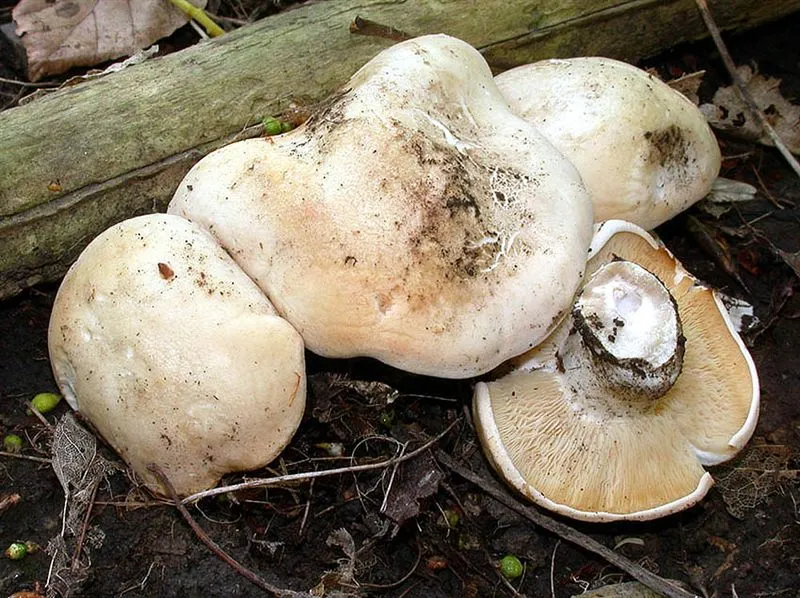
St George's mushroom
Calocybe gambosa
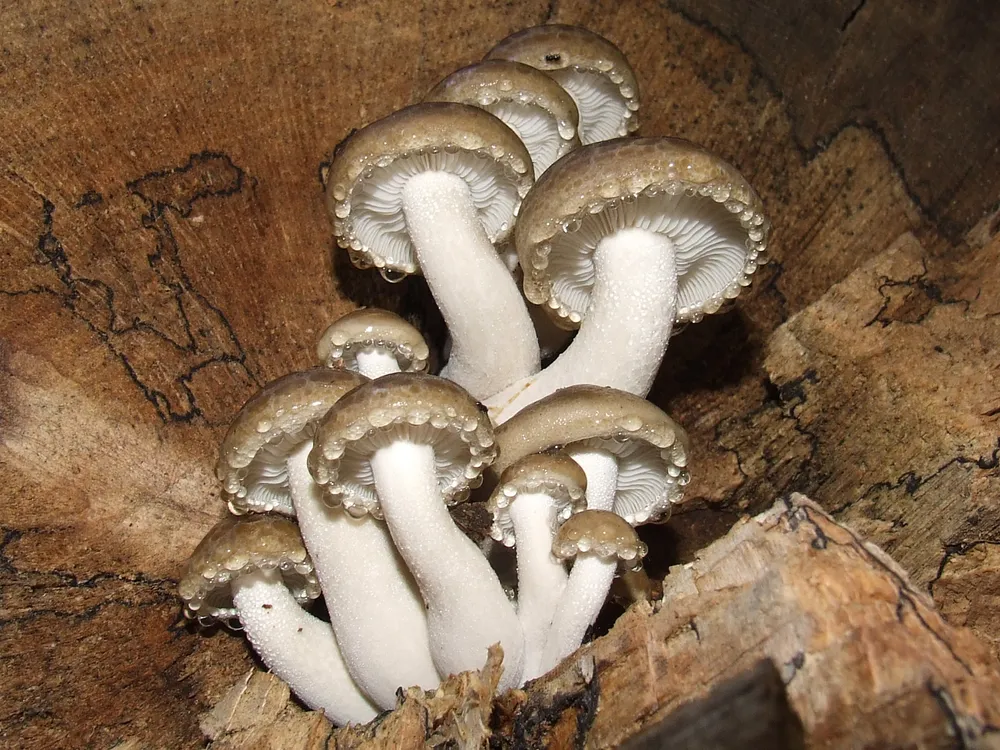
Elm oyster
Hypsizygus ulmarius
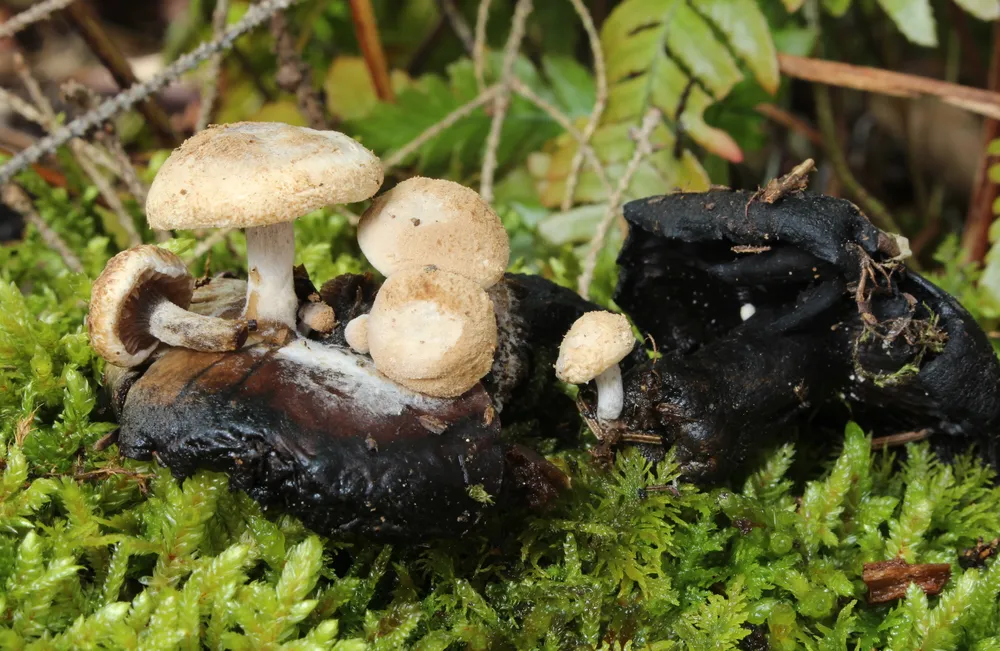
Powdery piggyback
Asterophora lycoperdoides
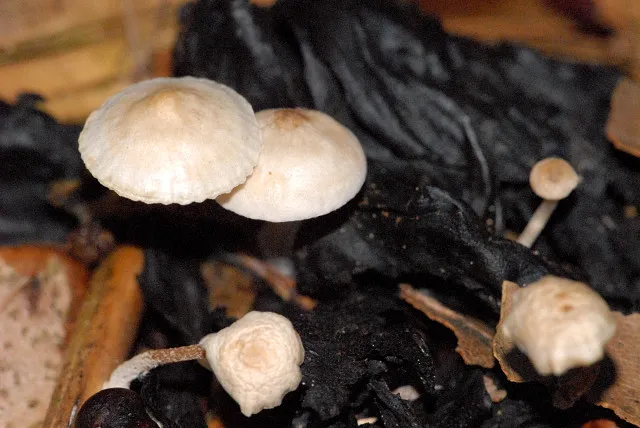
Silky piggyback
Asterophora parasitica
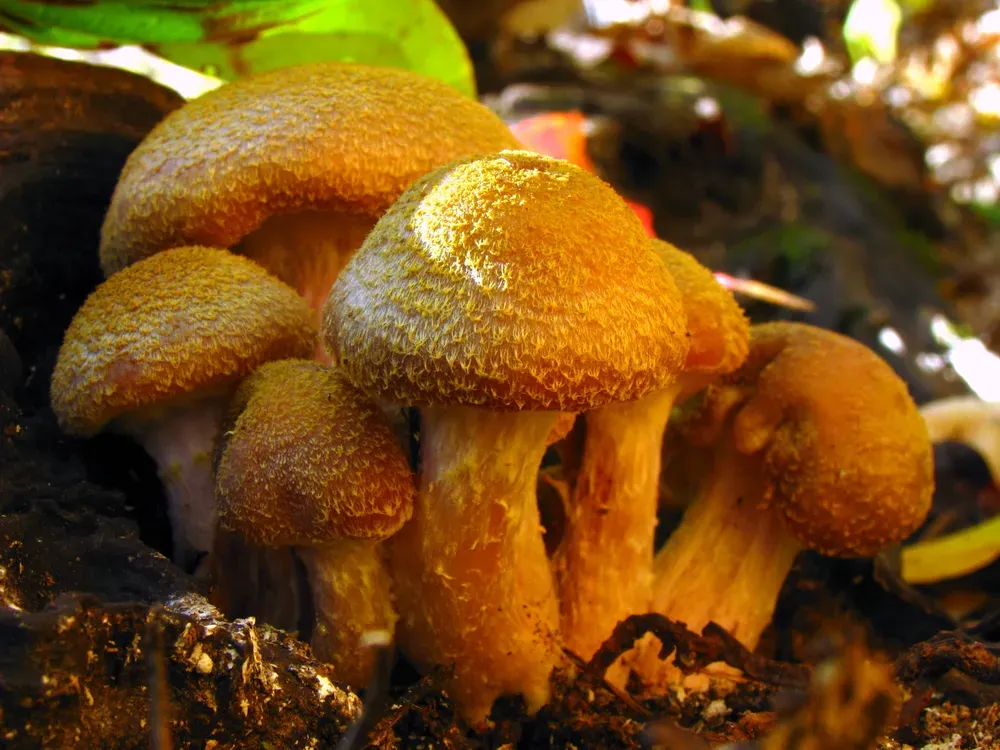
Bulbous honey fungus
Armillaria gallica
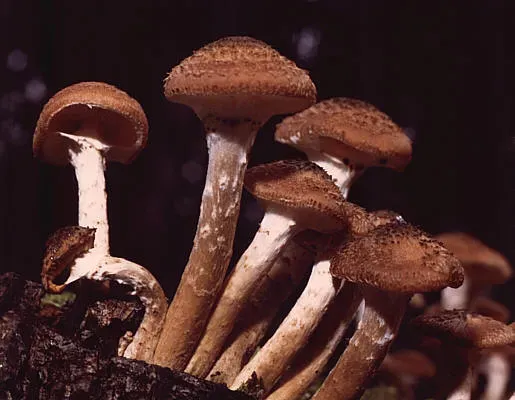
Dark honey fungus
Armillaria ostoyae
Frequently asked questions
Are there dangerous lookalikes?
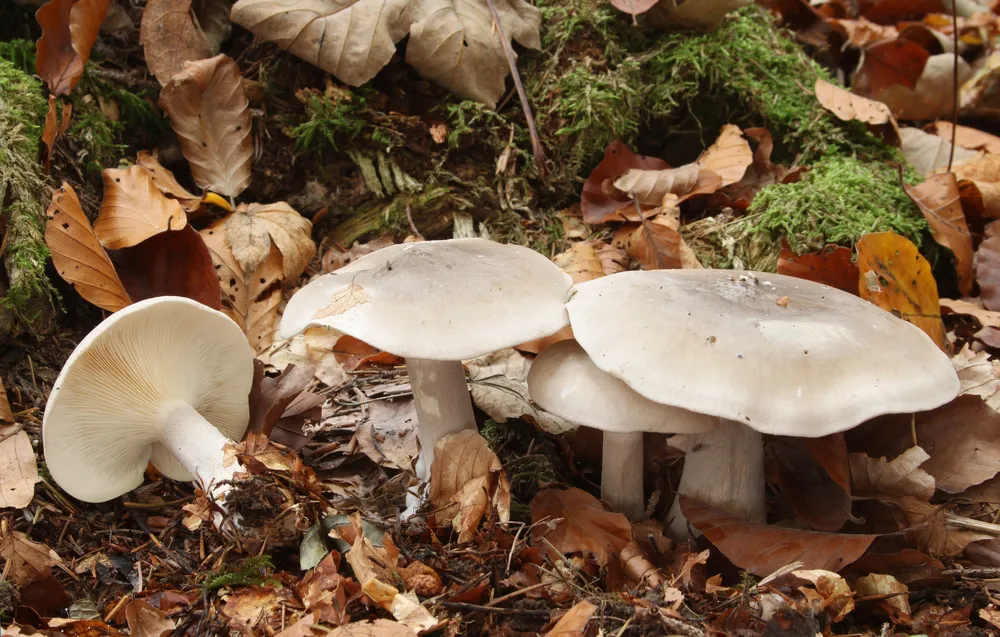
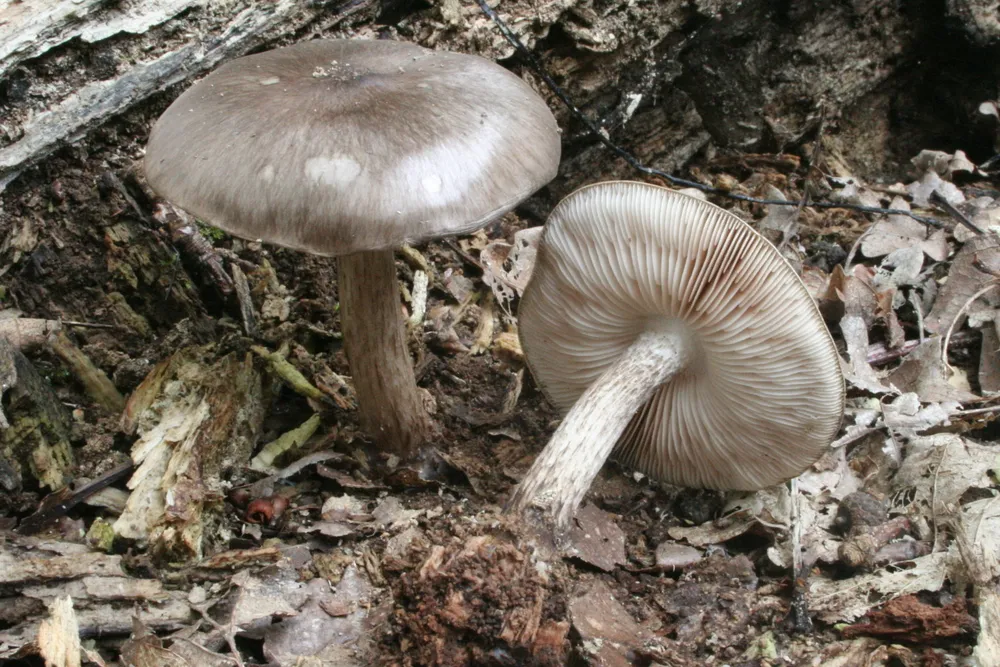
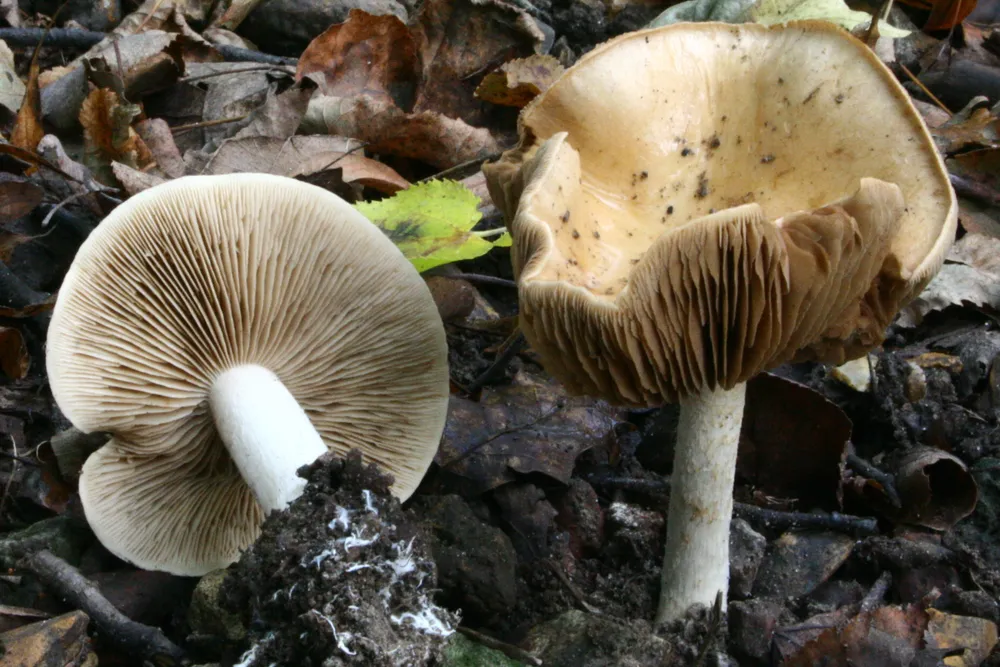
Yes — potentially. The most dangerous is Clitocybe dilatata (conditionally edible or toxic), which also grows in large clusters. How to tell them apart: in Clitocybe the gills run further down the stem, the cap is funnel-shaped and the flesh is drier. It's also worth checking for Entoloma — some species are pink-spored and poisonous. If in doubt, don't pick it.
Can it be confused with a poisonous Clitocybe?
The ivory funnel (Clitocybe dealbata) is poisonous, but smaller (3–5 cm) and pale white. The clustered domecap is larger and darker, and forms big clusters. The most reliable sign: the domecap grows as a "bouquet" with fused stems; the ivory funnel grows singly or in small groups without fusing. The size of the cluster is the key.
Where to look in Ukraine?
Forest road verges, gravel embankments, gardens, parks, lawns, neglected plots. It loves disturbed soil — places with dead tree roots. Throughout the forest belt and the Forest-Steppe. Less common in the steppe and in pure conifer forests.
When does it fruit?
The season is long: from late July to early November, peaking in September–October. It likes a moderately damp, cool fall. A single "family" can fruit for 3–4 weeks, with new flushes appearing from time to time.
How is it different from honey fungus?
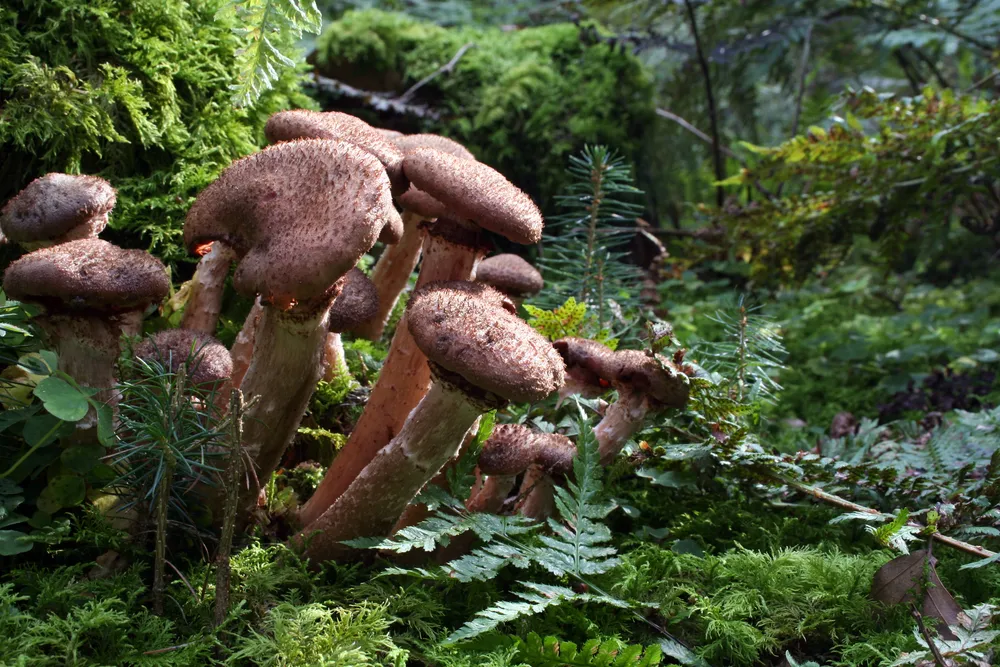
Honey fungus (Armillaria) grows on stumps and roots, has a characteristic ring on the stem and dark scales on the cap. The clustered domecap grows on soil, has no ring, and its cap skin is smooth. Both grow in clusters, but honey fungus is on wood, the domecap on soil.
Why does it grow in such big clumps?
It's a feature of the species — the mycelium forms dense "nests" from which 20–200 fruit bodies, fused at the base, grow at the same time. This strategy helps retain moisture and fend off competitors. In the literature such growth is called "cespitose" (clustered).
How to cook it?
Separate the cluster into individual mushrooms. Rinse them (they often carry sand from road dust). Best of all — fry with onion and carrot, stew with cream, add to soups. They pickle poorly — they turn mushy. You can dry them, but the aroma is weak. For full enjoyment, cook them fresh the day you pick them.
Is it safe to eat in large amounts?
In Japan and Korea, related species (shimeji) have been eaten for centuries. In Ukraine there are rare reports of mild stomach upset — mostly when eaten mixed with other species. The first time, try a small portion of 100–150 g and see how you react.
Is Clustered domecap edible or poisonous?
Does Clustered domecap have gills or pores?
What does the cap of Clustered domecap look like?
What does the stem of Clustered domecap look like?
Sources
- [1]Вікіпедія (українська)
- [2]Атлас грибів України, Зеров Д.К. (1979)
- [3]MycoBank Database
- [4]Index Fungorum
- [5]GBIF
- [6]iNaturalist Ukraine