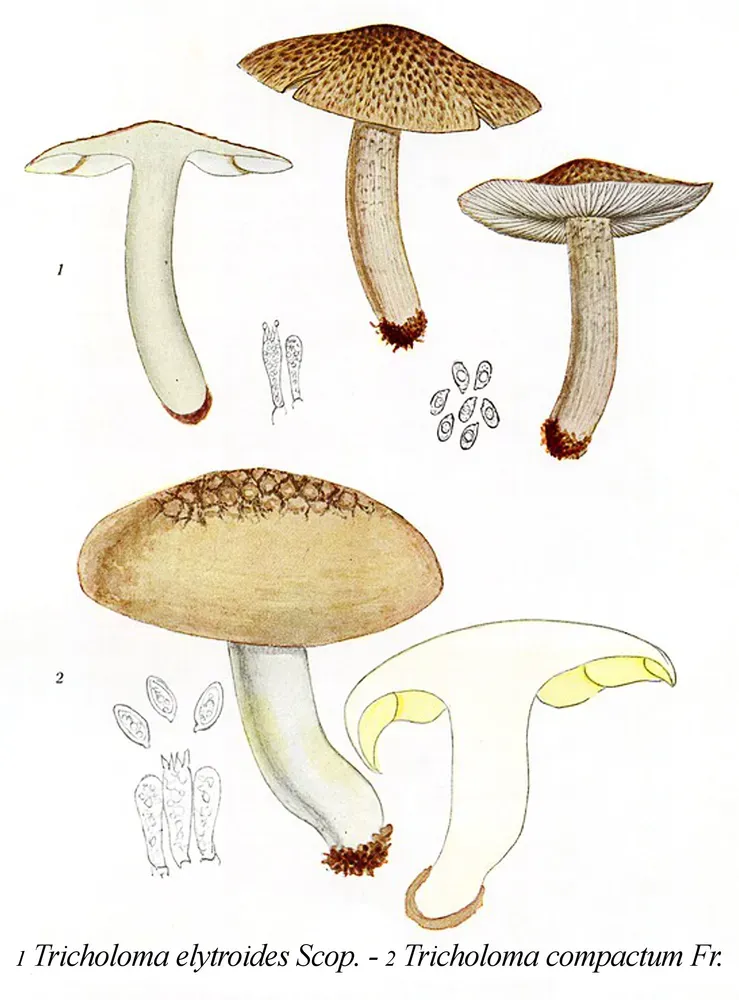
Leucopaxillus tricolor
Expert-verifiedUpdated June 13, 2026
Passport
- Edibility
- Edible
- Season
- Aug — Oct
- Hymenophore
- Gilled
- Cap color
- Cream
- Size
- Giant (>25 cm)
- Smell
- Pleasant
- Reviewed
- Yes ✓
Quick answers
Where to look?
Deciduous forest, Mixed forest
When does it appear?
Aug — Oct
Active months: August, September, October.
How to recognize it? Three signs
- Cap color: Cream, Yellow, White
- Cap shape: Convex
- Smell: Pleasant
Fruiting season
August – October
Description
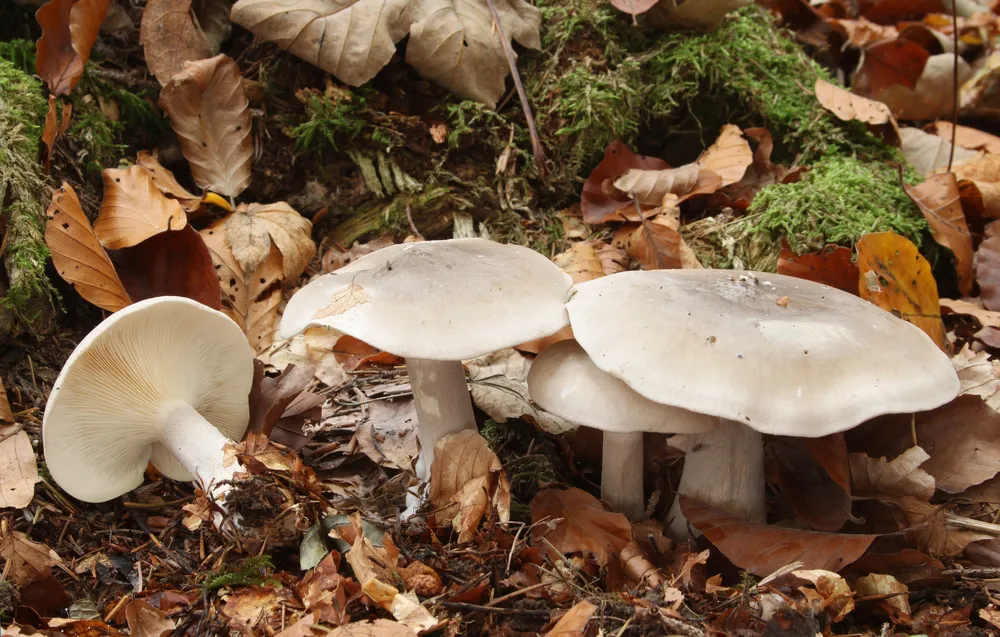
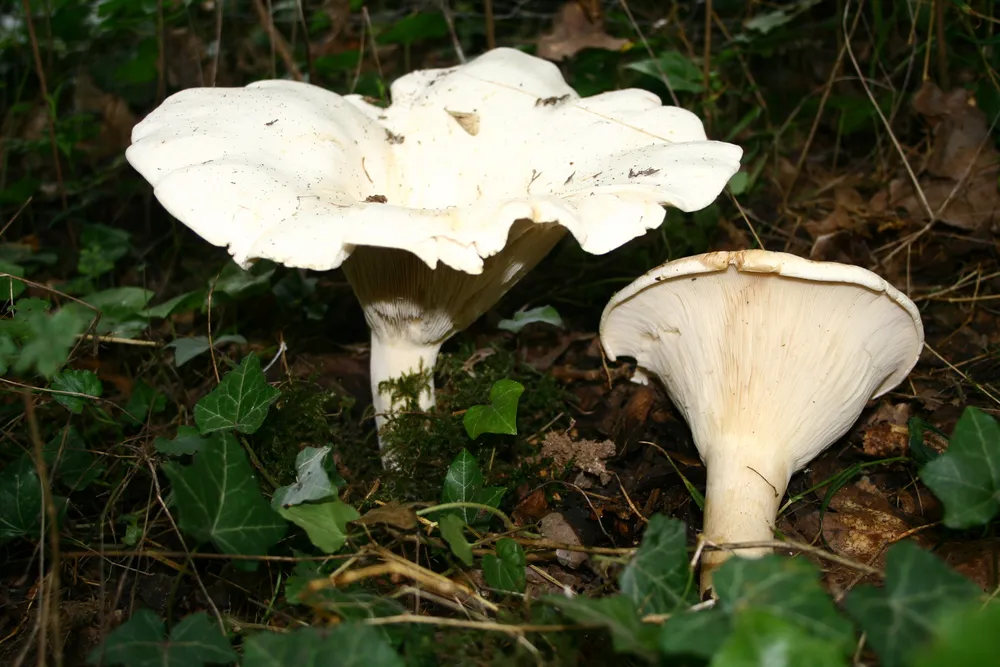
Leucopaxillus tricolor is one of the largest and most recognizable white ground-dwelling mushrooms in Ukraine's flora. It reaches up to 25 cm across, with a massive dense stem and the characteristic "three-colored" look that gave the species its name: the cap is creamy yellowish, the gills cream, the cut flesh yellowish — three shades in one mushroom.
The species is saprotrophic and settles in forest litter in deciduous and mixed forests. In Ukraine it is found in the Carpathians, Prykarpattia, the Forest-Steppe, and less often in Polissia. It likes older oak, beech and hornbeam forests with thick litter. It often forms large "fairy rings" of 5–15 fruit bodies arranged in a semicircle. Season — August–October.
Edibility — limited. Technically the mushroom is edible, but its taste is not interesting — slightly bitter, especially in mature specimens. Before cooking, you must boil it for 15–20 min and pour off the first water (to reduce the bitterness). It is best used in mixed mushroom dishes with more aromatic species. Because of its rarity we do not recommend picking it: document your finds on iNaturalist, but leave the fruit bodies in nature.
Cap
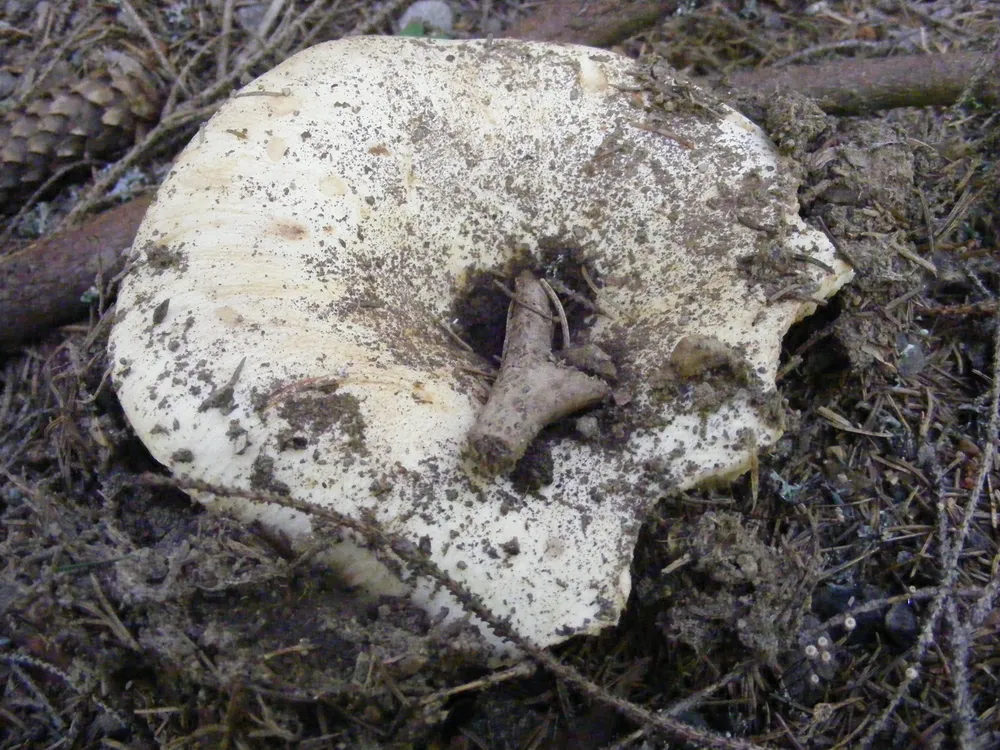
Cap 8–25 cm, hemispherical in young mushrooms, then flattening to plano-convex. Color creamy yellowish, ochre, slightly darker in the center. The surface is matte, felty to the touch, slightly sticky in wet weather. The margins are often inrolled in young mushrooms and wavy in mature ones.
Hymenophore
Gills attached to the stem and often slightly decurrent. Color cream to pale yellowish, crowded. Spore print white. A characteristic feature: the gills separate easily from the cap flesh (a typical trait of the genus Leucopaxillus).
Stem
Stem massive: 6–15 cm tall, 2–5 cm thick, cylindrical, often with a bulbous base. Color white to cream, sometimes brownish in the lower part. No ring or volva. Very dense — it feels like wood.
Flesh
Flesh creamy yellowish, very dense in young mushrooms, becoming crumbly in mature ones. When cut it does NOT change color noticeably. Fibrous texture.
Smell
Smell faint, pleasantly mushroomy, with a hint of forest litter in young ones. Taste — characteristically slightly bitter, especially in mature specimens. In young ones the bitterness is milder.
Lookalikes
Related species
Mushrooms of the same genus and habitat — to study side by side and never mix up.
_Ricken_185798.webp)
Booted knight
Tricholoma focale
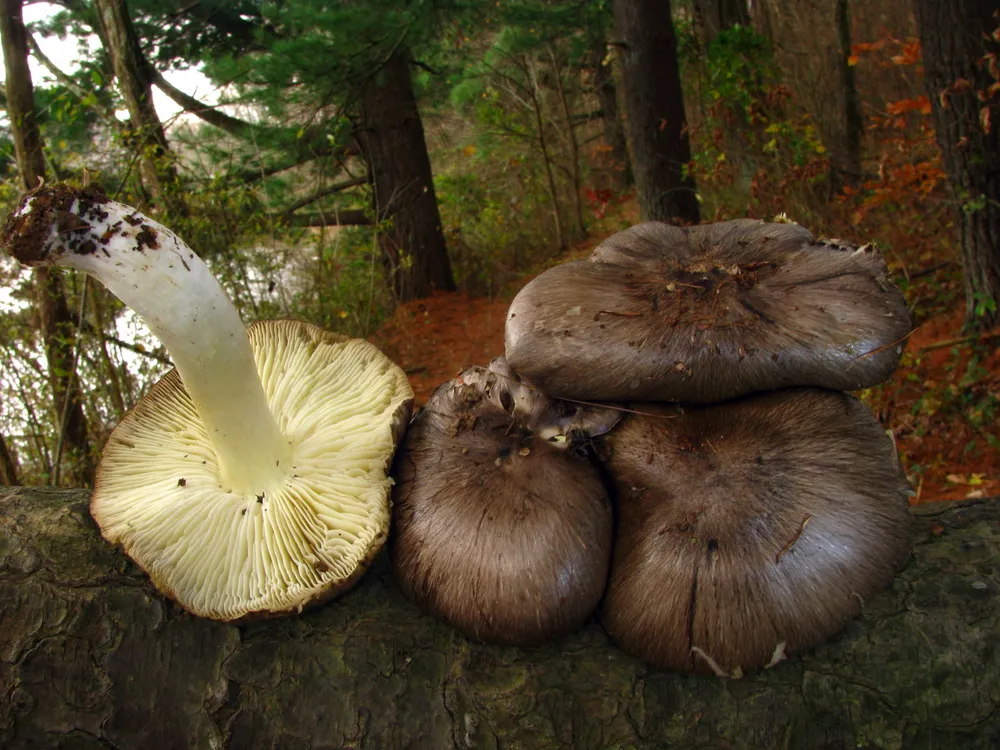
Charbonnier
Tricholoma portentosum
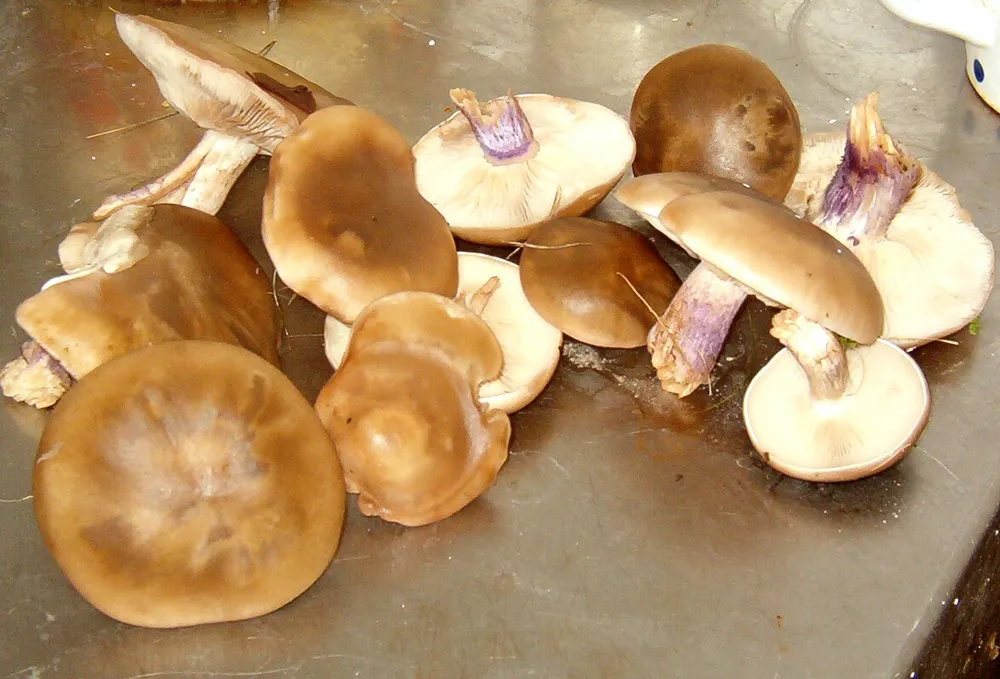
Field blewit
Collybia personata
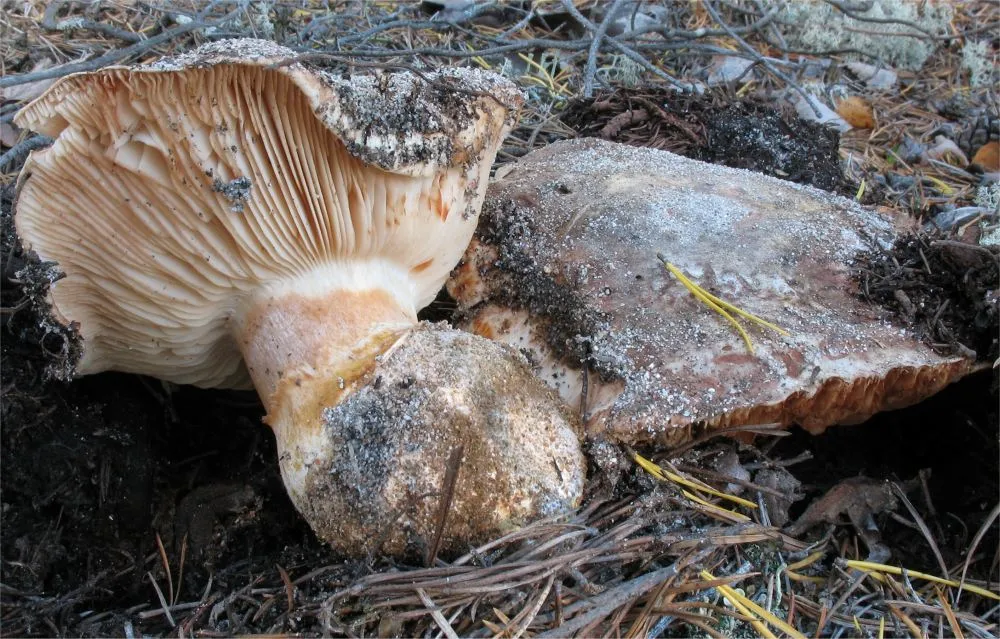
Giant knight
Tricholoma colossus
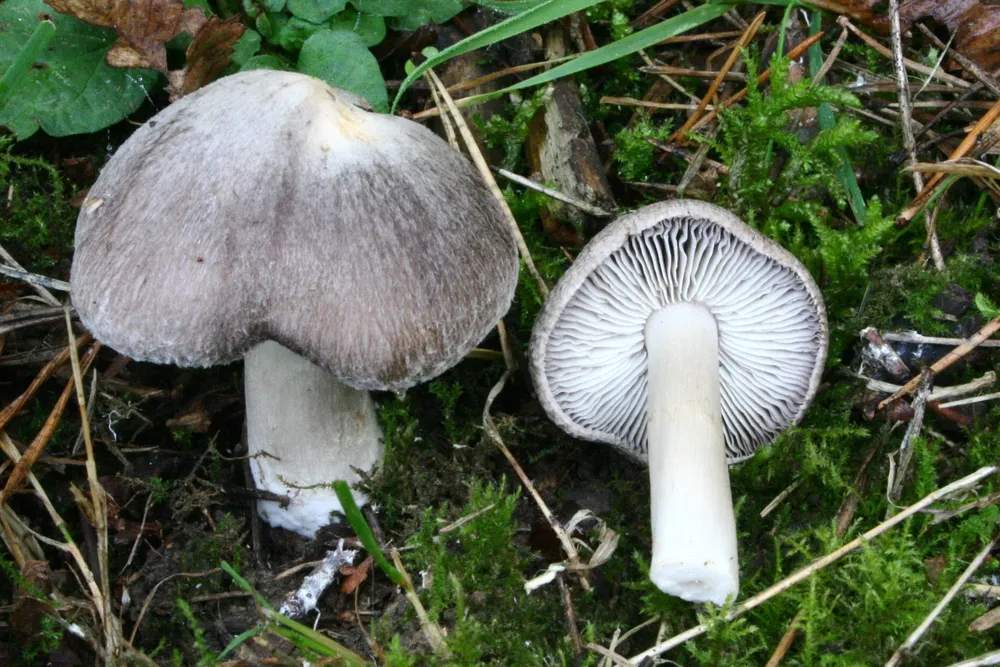
Grey knight
Рядовка наземна
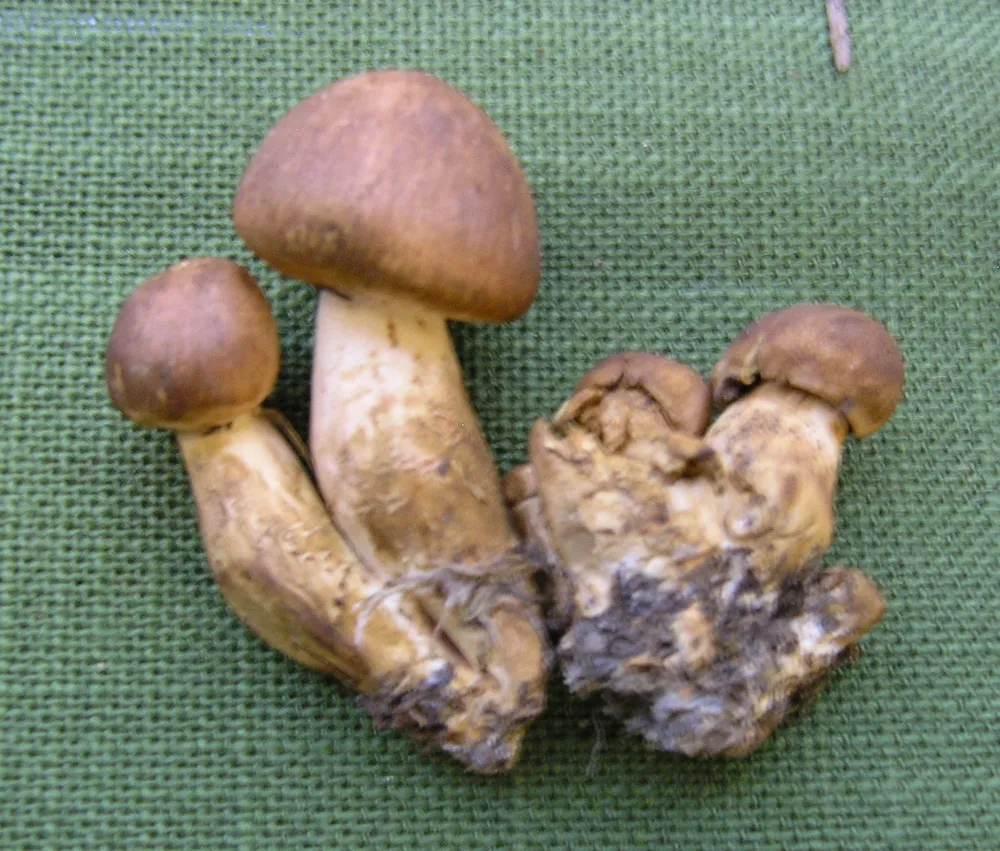
Matt knight
Tricholoma imbricatum
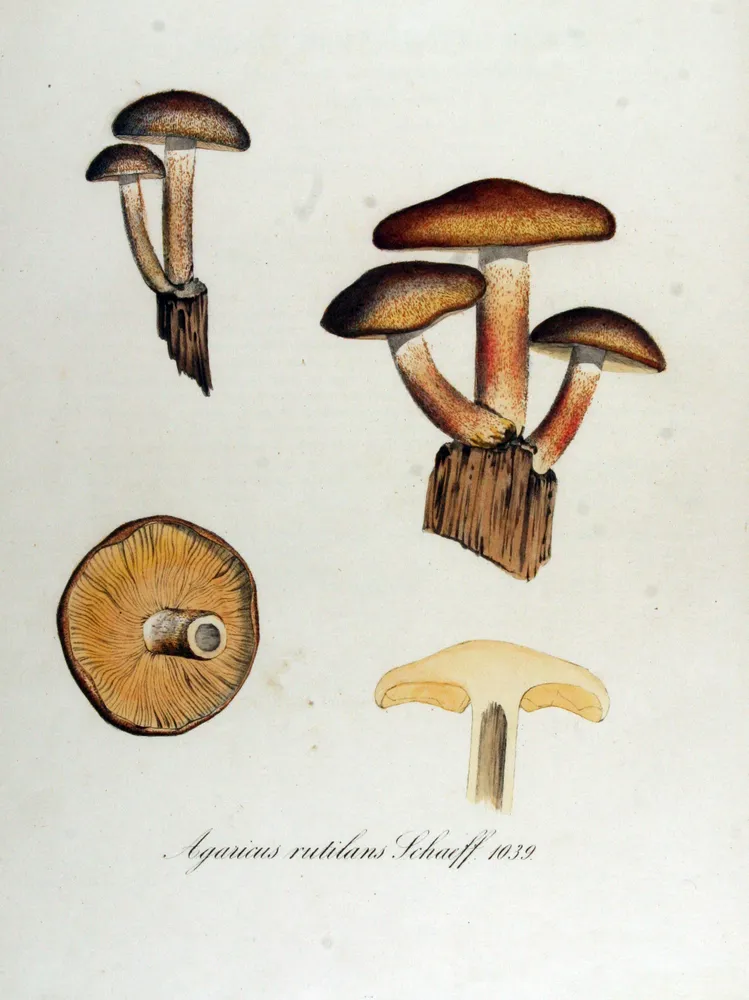
Plums and custard
Рядовка червона
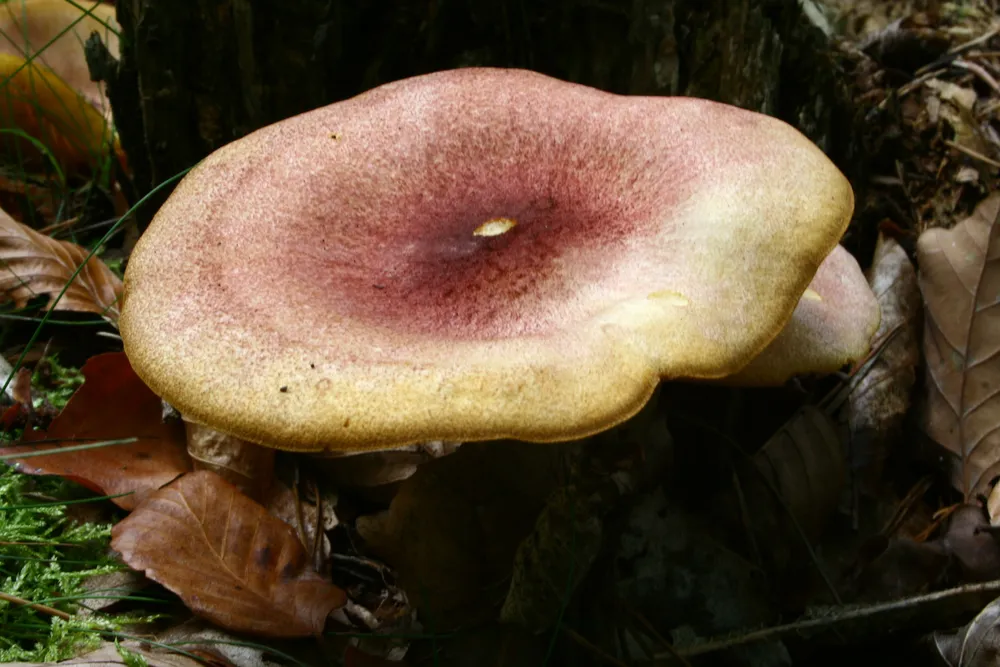
Plums and custard
Tricholomopsis rutilans
Frequently asked questions
Is it safe to eat?
After thorough cooking — yes. You MUST boil it for 15–20 min and pour off the first water (to reduce the bitterness and draw out potential irritants). Do NOT eat it raw — it can cause gastrointestinal upset.
Are there dangerous lookalikes?
It can be confused with some white funnels (Clitocybe). Avoid pure white funnel-shaped mushrooms in meadows — some of them are deadly poisonous (C. dealbata, C. rivulosa). Leucopaxillus tricolor is larger and has a yellowish cap, not a pure white one.
Where to look in Ukraine?
Older deciduous and mixed forests with thick litter. The Carpathians, Prykarpattia, the Forest-Steppe, less often Polissia. It likes oak, beech and hornbeam forests on fertile soils. It often forms "fairy rings".
When does it fruit?
August — October, peaking in September. It likes a moderately humid, warm autumn. In very dry years it turns up less often. The season lasts 6–8 weeks.
How is it different from other Leucopaxillus?
There are several species of Leucopaxillus in Europe. L. giganteus is the largest, pure white, without the three colors. L. tricolor is smaller (though still large), with a characteristic yellowish cap. L. paradoxus is pinkish and rarer. All are edible, but all have a slightly bitter aftertaste.
What are "fairy rings"?
A ring of fruit bodies is a characteristic feature of the genus Leucopaxillus. The mycelium grows outward from the point of inoculation, forming a ring 1–5 m in diameter. Every year the "ring" widens by 5–20 cm. Once you find one fruit body, look for others along a semicircle or circle.
How to cook it?
Pick young ones with closed gills. Peel the stem (it is tough). Boil for 15–20 min and be SURE to pour off the water. Then stew with vegetables in cream or fry with onion as part of a mushroom mix. On its own it is slightly bitter; in a mix it is fine.
Why don't we recommend picking it?
Its culinary value is low (bitterness), and the species is moderately rare. As a forest-litter saprotroph, it is an important link in the ecosystem. Better to leave the fruit bodies in nature to release spores and reproduce. Take a photo for iNaturalist — that will do more good.
Is Leucopaxillus tricolor edible or poisonous?
Does Leucopaxillus tricolor have gills or pores?
What does the cap of Leucopaxillus tricolor look like?
What does the stem of Leucopaxillus tricolor look like?
Sources
- [1]Вікіпедія (українська)
- [2]Mushrooms Demystified, David Arora
- [3]Mushrooms (Roger Phillips), Roger Phillips
- [4]Визначник грибів України, Зерова М.Я. та ін. (1979)
- [5]iNaturalist Ukraine
- [6]Species Fungorum
- [7]Index Fungorum
- [8]GBIF
- [9]MycoBank Database
- [10]Атлас грибів України, Зеров Д.К. (1979)