Fool's funnelClitocybe rivulosa
Expert-verifiedUpdated August 15, 2026
Passport
- Edibility
- Poisonous
- Season
- Aug — Nov
- Hymenophore
- Gilled
- Cap color
- White
- Size
- Small (up to 5 cm)
- Smell
- Floury
- Reviewed
- Yes ✓
POISONOUS
Eating it causes poisoning. Do not pick it unless you have identified it with certainty.
Toxin: muscarine in high concentration. Symptoms begin 15-60 minutes after eating (fast). The classic muscarinic syndrome (PSL): profuse salivation (liters of it), heavy sweating that soaks through clothing, tearing, runny nose, constricted pupils (miosis), bronchospasm with a feeling of suffocation, bradycardia down to 30-40 bpm, a drop in blood pressure, intestinal cramps, diarrhea, nausea. In severe cases — collapse, pulmonary edema, risk of cardiac arrest. The antidote is atropine, given in hospital under ECG monitoring. If you suspect poisoning, call 112 or your local emergency number immediately. Keep the mushroom remains and any vomit. The prognosis is favorable with prompt treatment (1-2 hours).
If you suspect poisoning, call an ambulance immediately: 112 (the European emergency number) or your local emergency number
Quick answers
Where to look?
Deciduous forest, Mixed forest
When does it appear?
Aug — Nov
Active months: August, September, October, November.
How to recognize it? Three signs
- Cap color: White, Cream, Pink
- Cap shape: Flat
- Smell: Floury
Fruiting season
August – November
Description
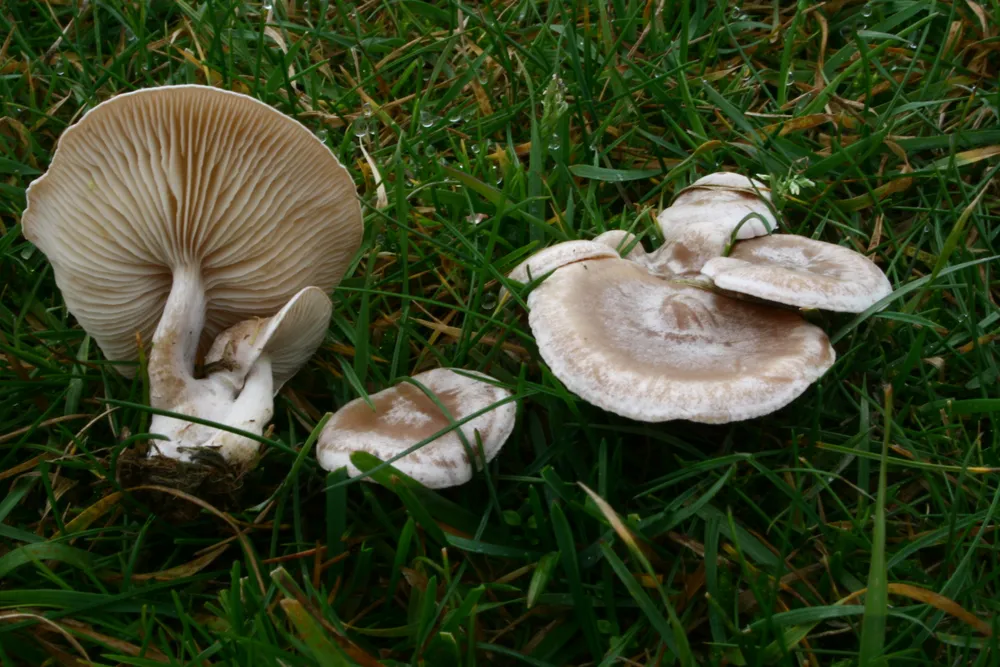
The fool's funnel (Clitocybe rivulosa) is the third member of the dangerous trio of whitish muscarine-containing Clitocybe (together with C. dealbata and C. phyllophila). A small mushroom with a whitish or cream cap that has characteristic pinkish concentric zones or streaks running from the center to the margin — hence the name "rivulosa" (streamed, veined). It grows in meadows, pastures and grassy places, often together with the fairy ring champignon (Marasmius oreades) — which explains the most common poisoning scenario: a forager picks fairy ring champignons and, without noticing, puts the clitocybe in the basket too.
This is a highly poisonous mushroom with muscarinic action — the same toxin found in Inocybe. Symptoms begin 15-60 minutes after eating: profuse salivation, heavy sweating, tearing, constricted pupils, slow heartbeat, abdominal cramps, diarrhea. In severe cases — collapse and a risk of cardiac arrest. The antidote is atropine, given in hospital. Never pick it in any form. No method of preparation neutralizes the toxin.
In Ukraine it is common throughout the forest and forest-steppe zones: in meadows, pastures, gardens, parks, on forest edges and dacha lawns. A saprotroph. Season: August–November, peaking in September–October. It often grows in groups and rings ("fairy rings") of 10-50 fruiting bodies. It is especially dangerous in the same spots where fairy ring champignons and young Agaricus mushrooms grow.
Cap
The cap is 2-5 cm across, convex in young mushrooms, becoming flat and spread out or slightly funnel-shaped with a thin wavy margin. The color is whitish to cream, with characteristic pinkish-cream concentric zones or streaks from the center to the margin — a diagnostic feature. The surface is silky-matte; in wet weather the skin is somewhat sticky.
Hymenophore
Gilled hymenophore. The gills are crowded and thin, decurrent down the stem (a feature typical of the genus Clitocybe). Whitish to pale pink. The spore print is white.
Stem
The stem is 2-5 cm tall, 0.4-0.8 cm thick, slender, cylindrical, often curved. Whitish to cream, with white mycelial fuzz at the base. The surface is smooth, with no ring.
Flesh
The flesh is thin, white, watery and brittle. It does not change color when cut. A pleasant floury smell and mild taste — dangerously "normal".
Smell
Faintly floury, pleasant — like all muscarine-containing Clitocybe. Nothing alarming. The taste is mild. Neither smell nor taste gives away that it is poisonous.
Lookalikes
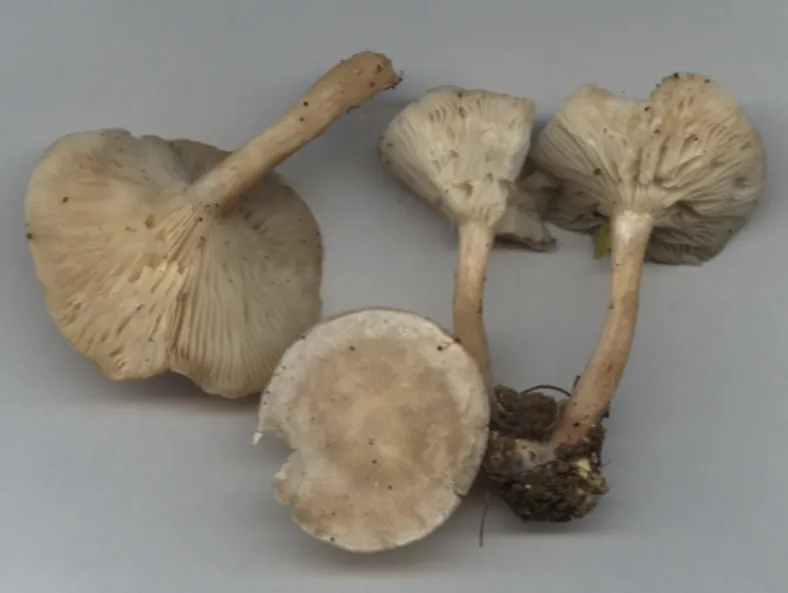
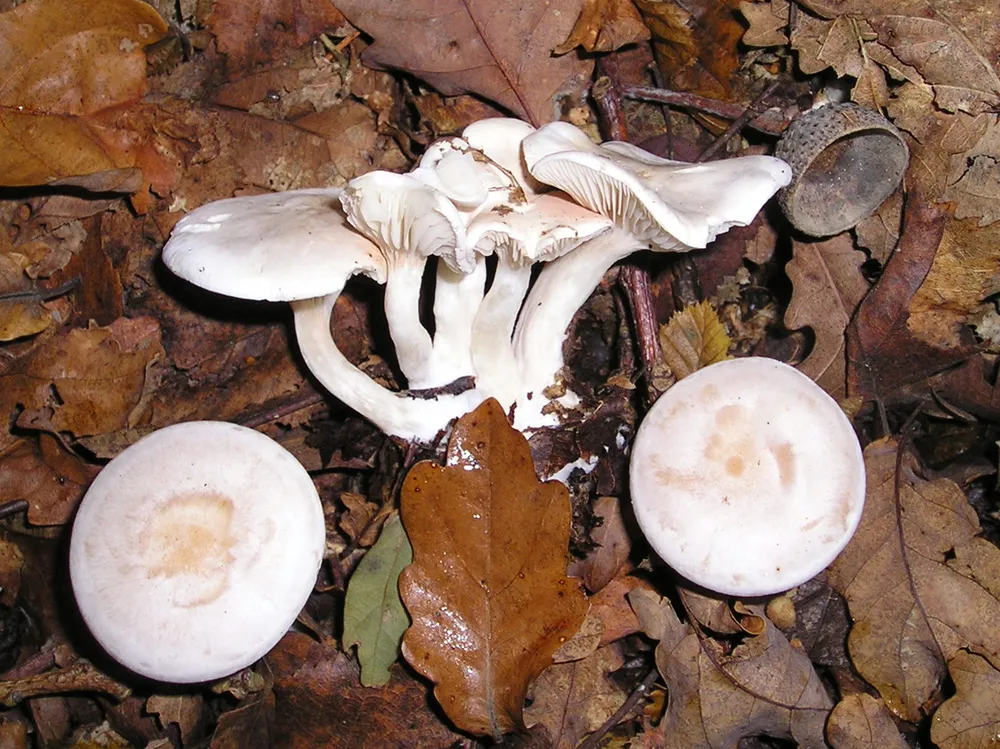
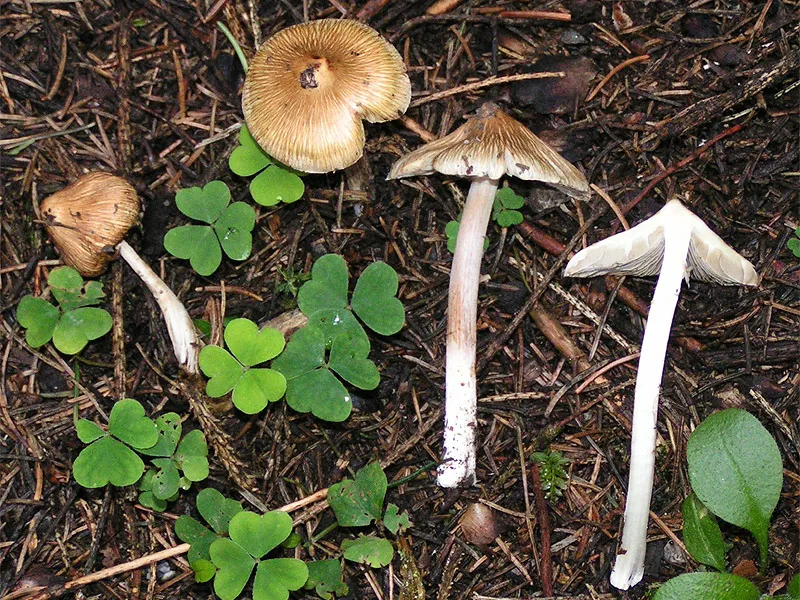
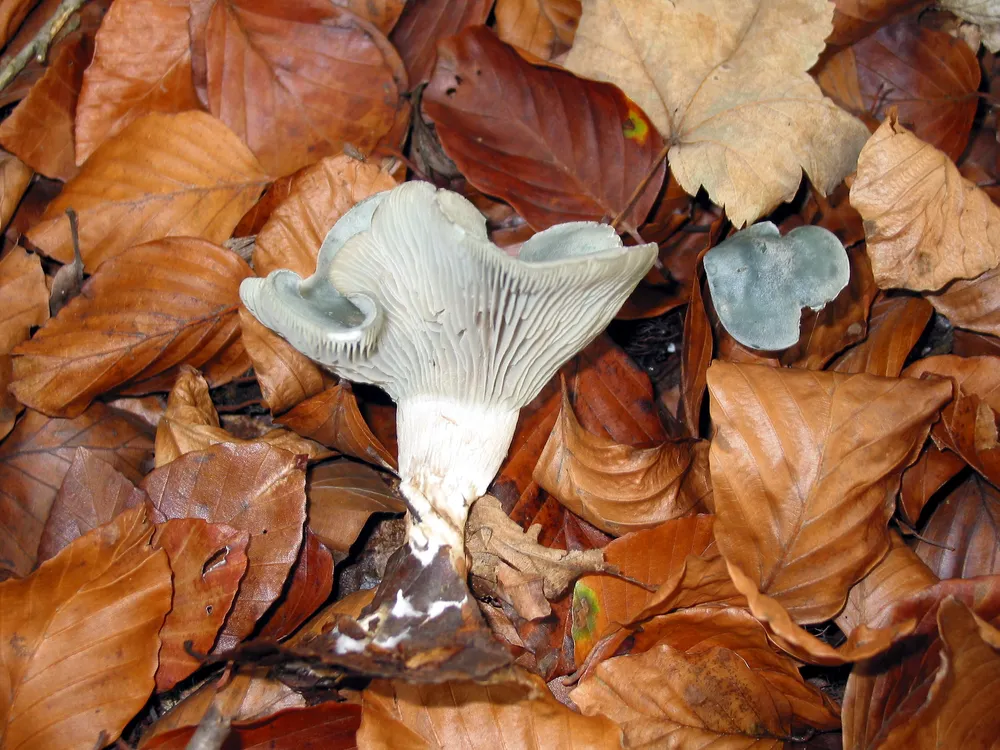
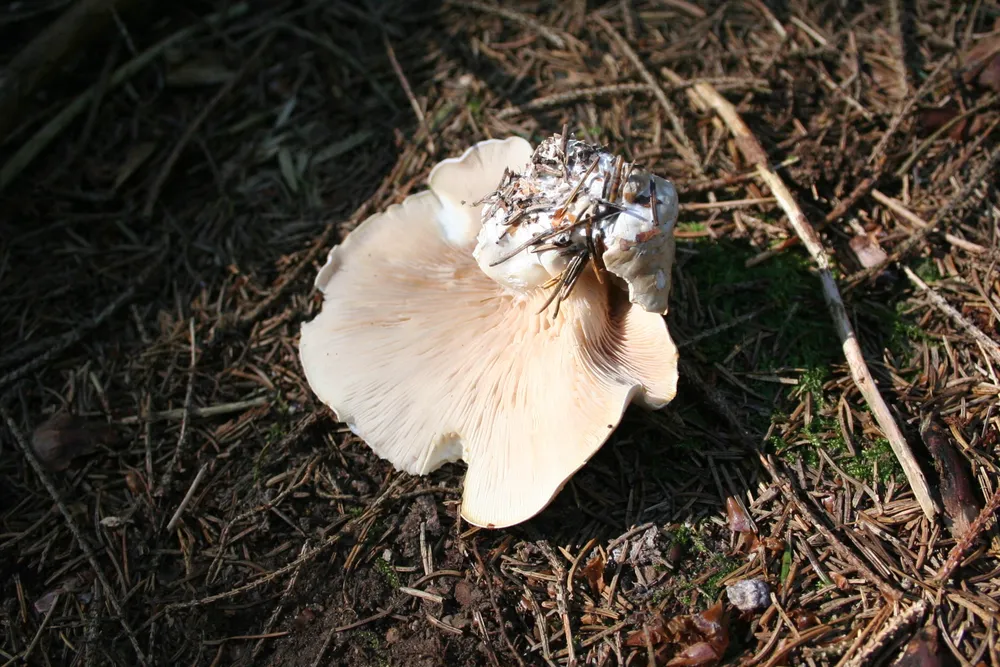
Related species
Mushrooms of the same genus and habitat — to study side by side and never mix up.
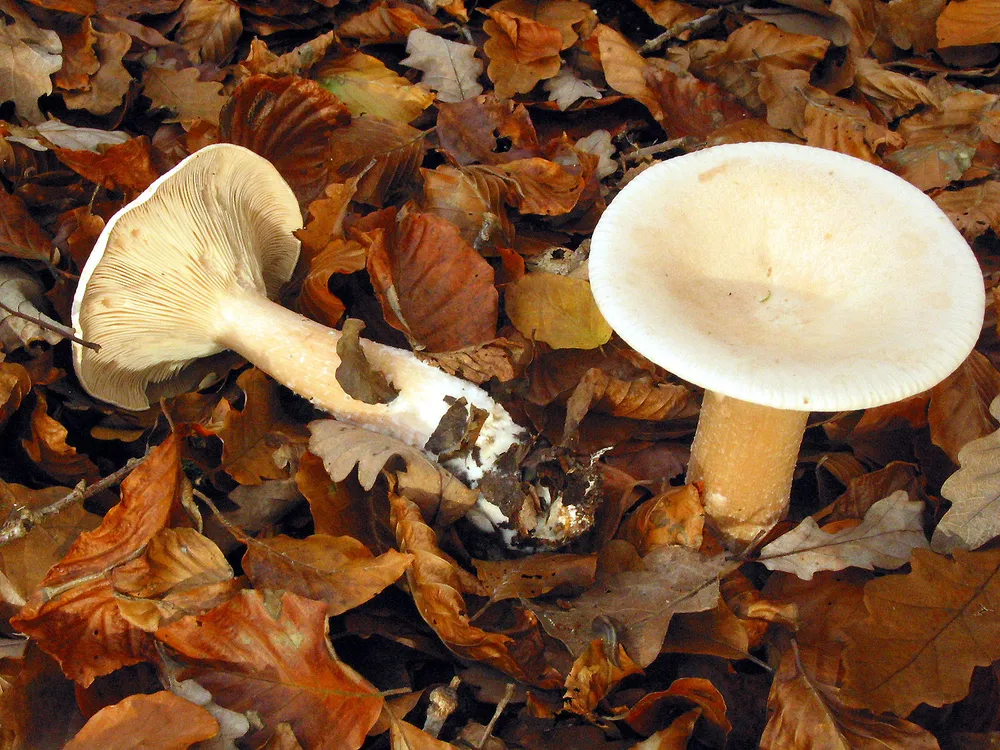
Trooping funnel
Clitocybe geotropa
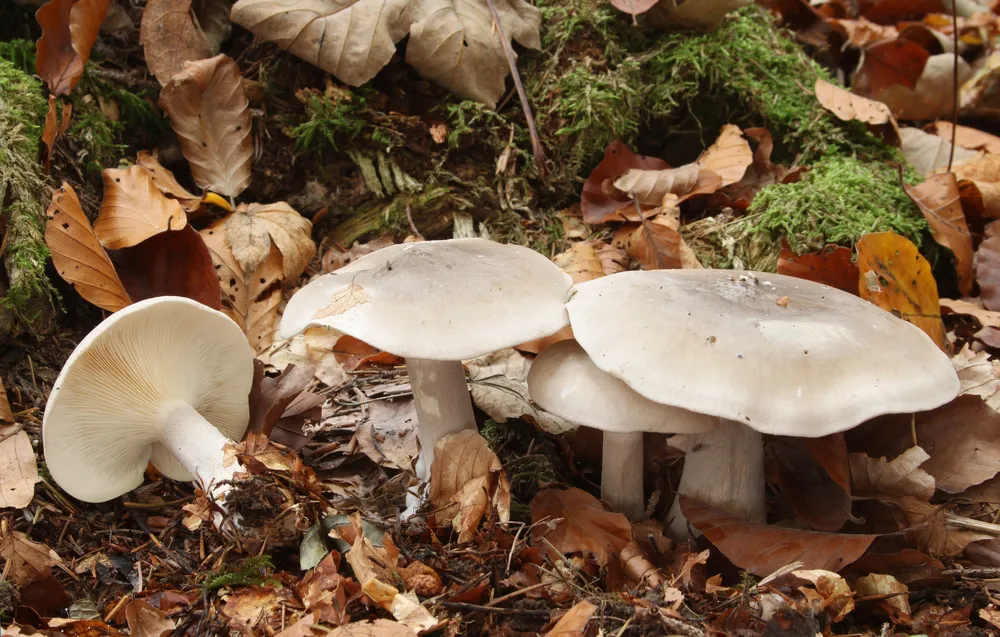
Clouded funnel
Clitocybe nebularis
_Ricken_185798.webp)
Booted knight
Tricholoma focale
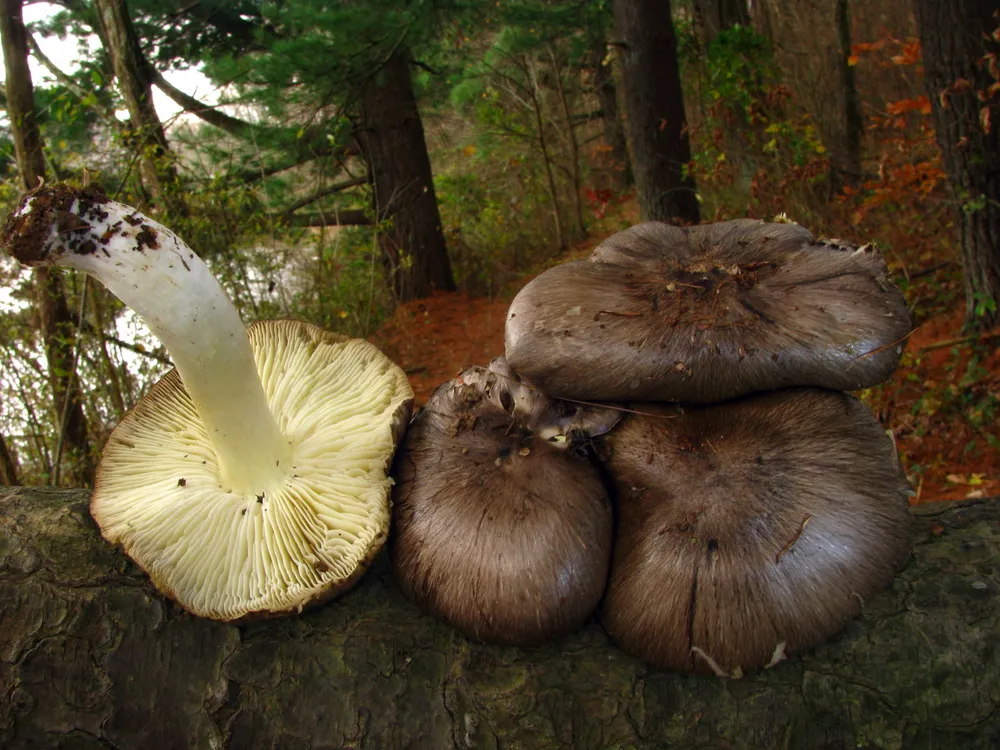
Charbonnier
Tricholoma portentosum
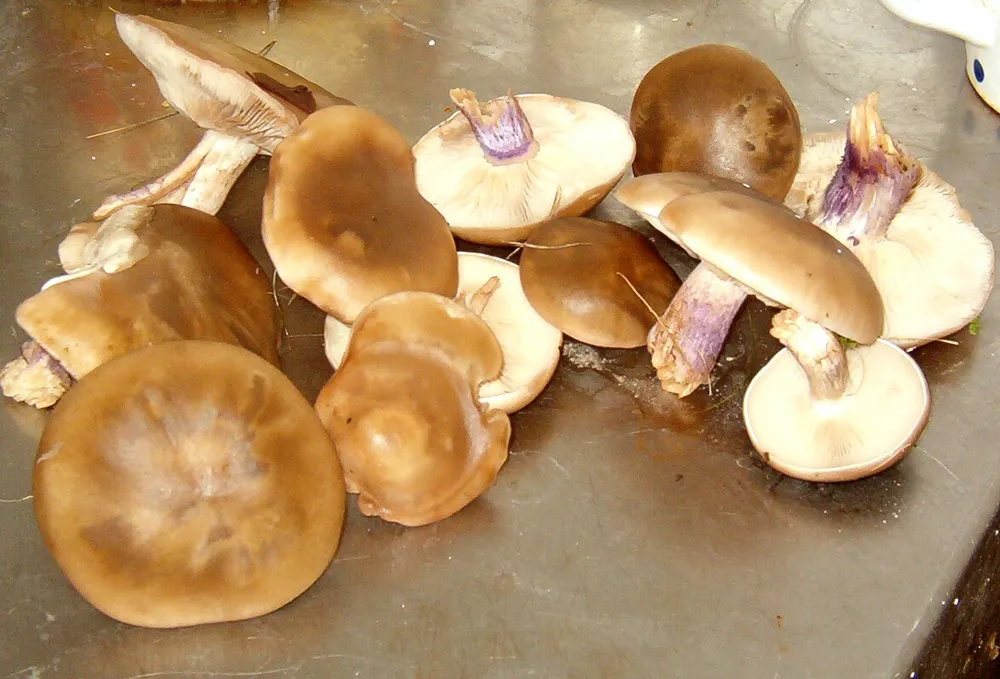
Field blewit
Collybia personata
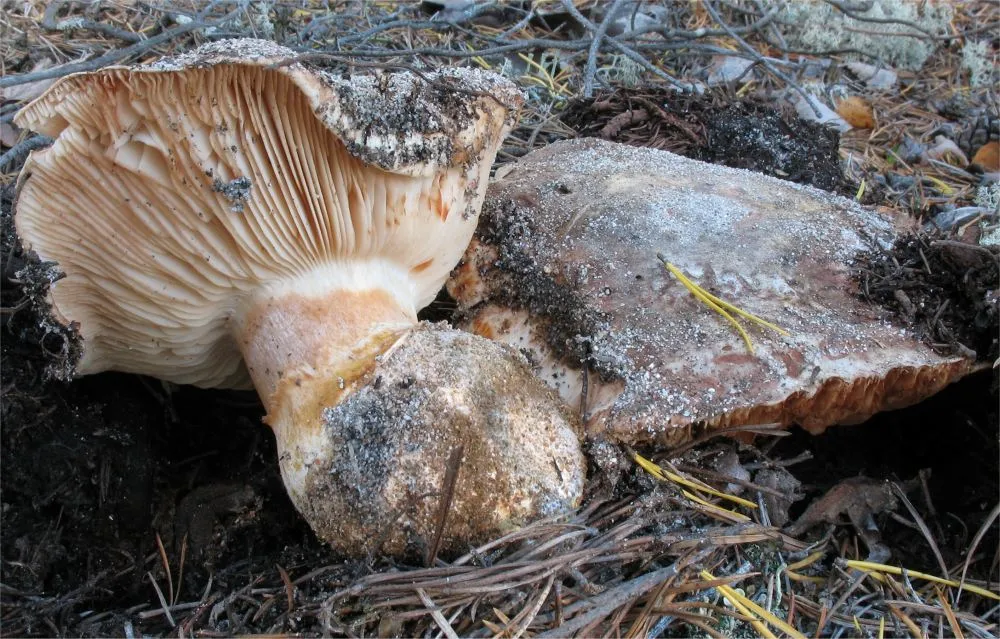
Giant knight
Tricholoma colossus
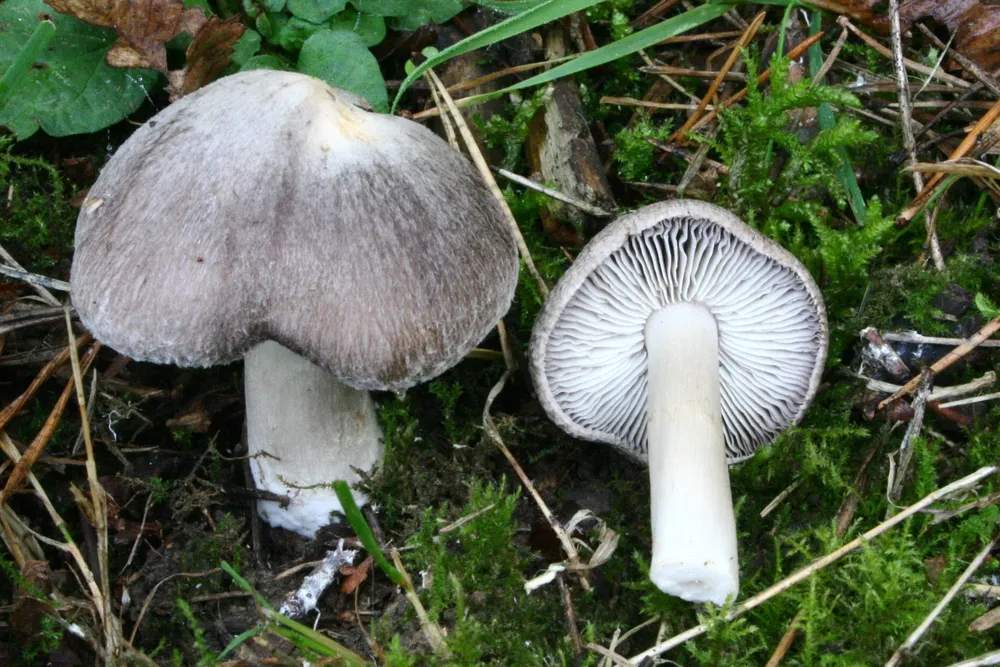
Grey knight
Рядовка наземна
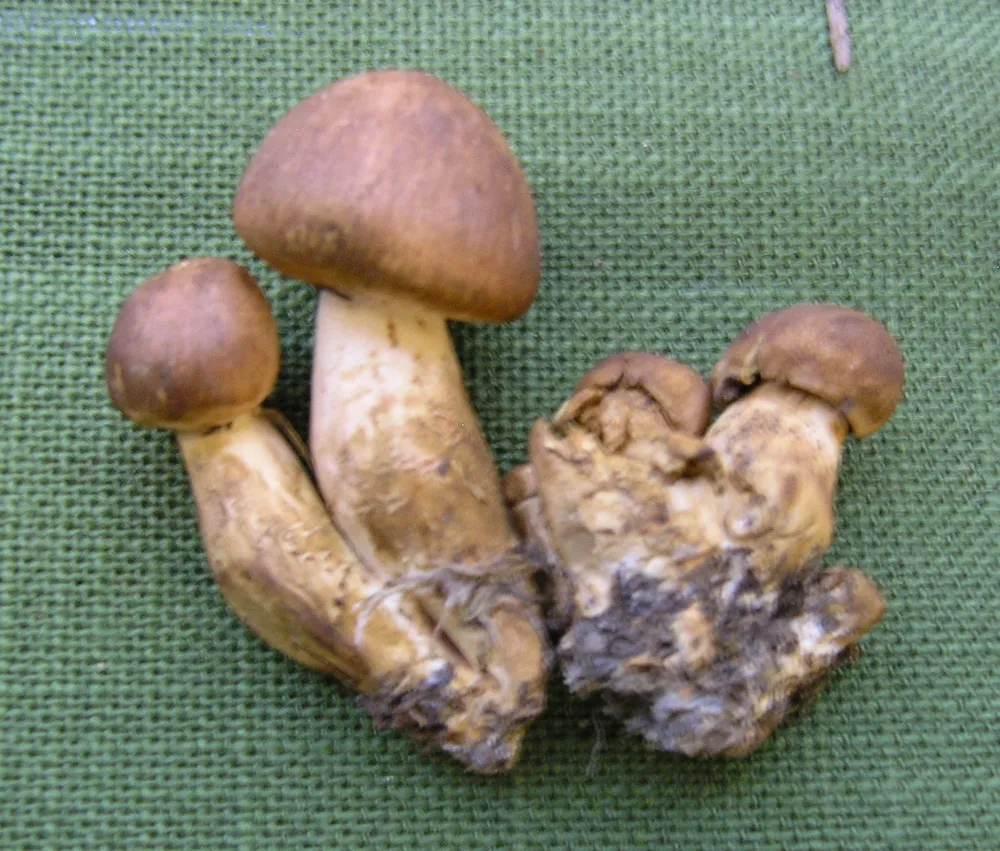
Matt knight
Tricholoma imbricatum
Frequently asked questions
What happens if you eat it by accident?
Within 15-60 minutes — heavy salivation, sweating that soaks through clothing, tearing, runny nose, abdominal cramps, diarrhea, slow heartbeat. Call 112 or your local emergency number right away. Put the mushroom remains in a bag — it is critical for the doctor to know what was eaten. In hospital you will be given atropine. The prognosis is favorable if you seek help quickly.
How do you avoid putting it in the basket with fairy ring champignons?
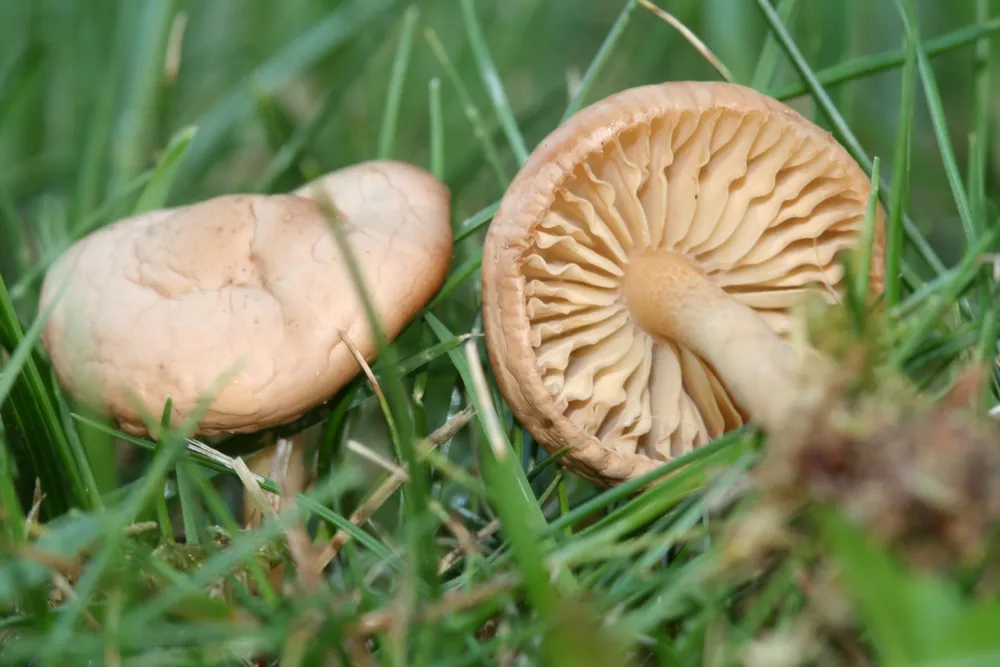
Two features. (1) Stem: in the fairy ring champignon (Marasmius oreades) it is thin, flexible, tough, twisting like wire, and does not break even when bent hard. In the clitocybe the stem is brittle and snaps easily. (2) Gills: in the fairy ring champignon they are distant, cream, attached or free. In the clitocybe they are crowded, white, decurrent down the stem. (3) Cap: in the fairy ring champignon it is umbonate, reddish-tan, without pinkish streaks. In the clitocybe it is white with pink concentric zones.
Can it be cooked safely in any way?
No. Muscarine is heat-stable — boiling, pickling, drying and freezing do not destroy it. No method of preparation makes this mushroom safe.
Where does it usually grow?
In meadows and pastures, in gardens, parks, on forest edges, dacha lawns and forest glades. It loves grassy open places with fertile soil. It often grows in fairy rings of 10-50 fruiting bodies. It is often found in the same spots as fairy ring champignons — hence the main risk of confusion.
Which regions of Ukraine is it found in?
Throughout the forest and forest-steppe zones; in the steppe — in parks and shelterbelts. A very widespread species — found in any region. Especially common in cultivated meadows, pastures and gardens.
When does it fruit?
August — November, peaking in September–October. This coincides with the season of fairy ring champignons and young Agaricus mushrooms — hence the risk of confusion. It does not fruit in the summer heat or in winter.
Which edible mushrooms is it most often confused with?
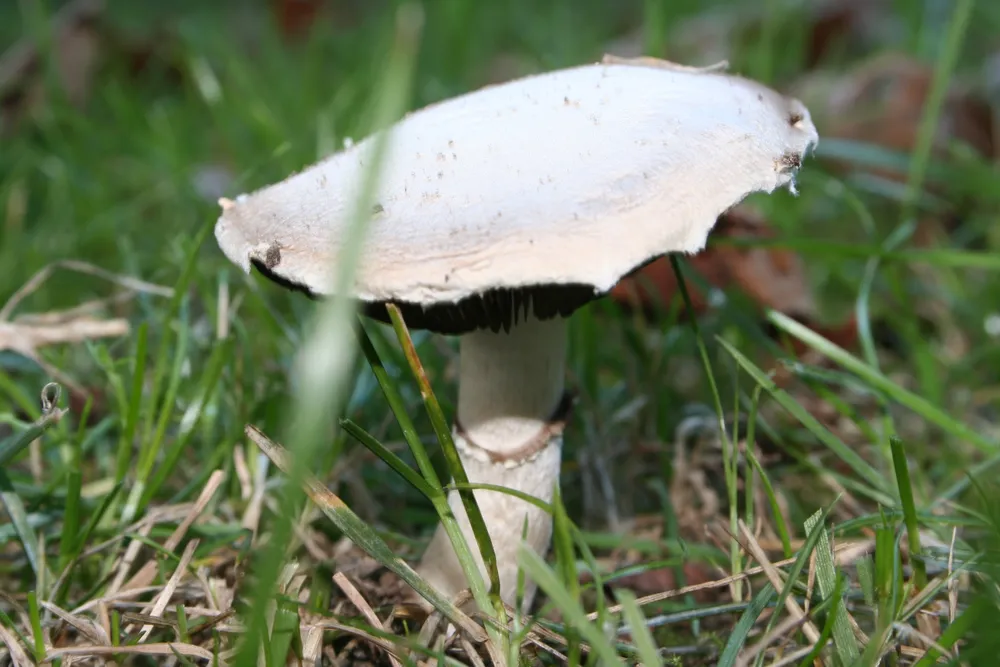
With the fairy ring champignon (Marasmius oreades) — most often and most fatally. With the young field mushroom (Agaricus campestris). With St George's mushroom (Calocybe gambosa) — a spring species, but it sometimes has a flush in autumn. The general rule: in meadows, don't pick small whitish mushrooms without checking three features: stem toughness (brittle in the poisonous one), decurrent gills (present in the poisonous one), spore print (white in the poisonous one).
How do you tell it apart from C. dealbata and C. phyllophila?
Without a microscope, telling them apart reliably is almost impossible — the three species are so similar that they are often lumped together as the "little white funnels" complex. The key feature of C. rivulosa is pinkish concentric zones on the cap. But all three are equally poisonous, so for a forager the difference doesn't matter: all three are equally dangerous, and none of them goes in the basket.
Is Fool's funnel edible or poisonous?
Does Fool's funnel have gills or pores?
What does the cap of Fool's funnel look like?
What does the stem of Fool's funnel look like?
Sources
- [1]Вікіпедія (українська)
- [2]Атлас грибів України, Зеров Д.К. (1979)
- [3]MycoBank Database
- [4]Index Fungorum
- [5]GBIF
- [6]iNaturalist Ukraine