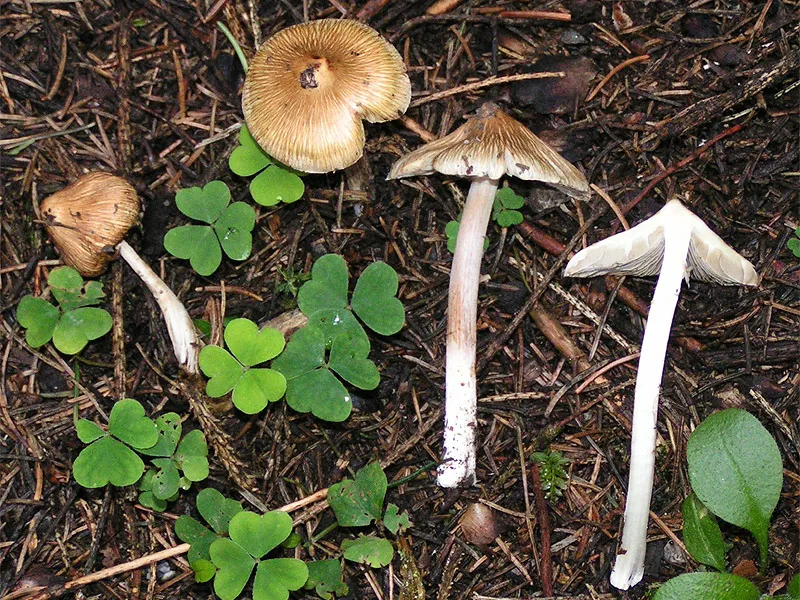
Split fibrecapInocybe rimosa
Expert-verifiedUpdated October 3, 2026
Passport
- Edibility
- Poisonous
- Season
- Jun — Oct
- Hymenophore
- Gilled
- Cap color
- Yellow
- Size
- Small (up to 5 cm)
- Smell
- Chemical
- Reviewed
- Yes ✓
POISONOUS
Eating it causes poisoning. Do not pick it unless you have identified it with certainty.
Toxin: muscarine (high concentration — up to 0.2% of dry weight, 100-200 times more than in the fly agaric). Symptoms start 15-90 min after the meal (fast). The classic "muscarinic syndrome" (PSL — "perspiration, salivation, lacrimation"): profuse salivation, heavy sweating, watering eyes, runny nose, constricted pupils (miosis), bronchospasm, bradycardia, low blood pressure, intestinal cramps, diarrhea, nausea, vomiting. Lasts 4-12 hours. In severe cases — collapse, pulmonary edema, risk of cardiac arrest. The antidote is atropine, which blocks muscarine at the muscarinic receptors. Treated only in a hospital — self-treatment with atropine is dangerous. If you suspect poisoning, call 112 or your local emergency number immediately and keep the mushroom leftovers and vomit. The prognosis is good with timely treatment.
If you suspect poisoning, call an ambulance immediately: 112 (the European emergency number) or your local emergency number
Quick answers
Where to look?
Deciduous forest, Mixed forest
When does it appear?
Jun — Oct
Active months: June, July, August, September, October.
How to recognize it? Three signs
- Cap color: Yellow, Orange, Brown
- Cap shape: Conical
- Smell: Chemical
Fruiting season
June – October
Description
The split fibrecap (Inocybe rimosa) is a typical member of one of the most dangerous genera of mushrooms. A small, inconspicuous mushroom with a distinctive conical cap in straw, ochre or brown, with a deeply radially cracked surface — hence the name "fibrecap". It looks like dozens of other brownish woodland mushrooms and easily ends up in the basket of a careless forager looking for a young knight, a funnel or a morel. That is exactly the main danger — the genus Inocybe has more than 200 species, and the vast majority are poisonous, some of them severely.
This is a poisonous mushroom with muscarinic action. Inocybe rimosa contains up to 100-200 times more muscarine than the fly agaric (Amanita muscaria), the very mushroom in which this substance was first discovered. Symptoms start fast — 15-90 minutes after the meal: profuse salivation, heavy sweating, watering eyes, constricted pupils, GI cramps, bradycardia, low blood pressure, bronchospasm. In severe cases — collapse and a risk of cardiac arrest. There is an antidote — atropine, which blocks the action of muscarine; if you get help in time (1-2 hours), the prognosis is good. But self-treatment is out of the question — hospital only.
In Ukraine it is common in deciduous and mixed forests, along forest edges, in parks and on dirt tracks. It forms mycorrhiza with broadleaf trees — oak, beech, birch, hornbeam, hazel. Season — June to October, peaking in August-September. It often grows in grassy spots on compacted soil — and that's exactly where casual foragers run into it.
Cap
Cap 2-7 cm across; in young mushrooms conical or bell-shaped with a pointed knob, later it opens out, but the knob stays. Color yellowish-ochre, straw-yellow, light brown in old mushrooms. The surface has a distinctive radially fibrous pattern, and when mature — deep radial cracks from the center to the edge (hence the species name rimosa — "cracked"). The margin is often split and upturned.
Hymenophore
Gilled hymenophore. Gills fairly crowded, notched where they meet the stem. In young mushrooms they are whitish-gray, turning olive-brown or tobacco-colored with age. Spore print olive-brown or tobacco-colored — typical of the whole genus Inocybe.
Stem
Stem 3-8 cm tall, 0.4-1 cm thick, cylindrical, even or slightly thickened toward the base. Whitish to yellowish, paler at the top. Surface lengthwise fibrous, no ring. Flesh of the stem firm, hollow in old mushrooms.
Flesh
Flesh thin, whitish to yellowish, does not change color when cut.
Smell
Distinctly spermatic or stale and musty — typical of the whole genus Inocybe. This is an important diagnostic sign: if an unknown brownish mushroom has this unpleasant smell, throw it away without hesitation. Some sources describe the smell as "stale flour". The taste is mild or slightly bitter — do NOT rely on taste.
›Scientific synonyms (1)
Inocybe fastigiata (Schaeff. ex Fr.)
Lookalikes
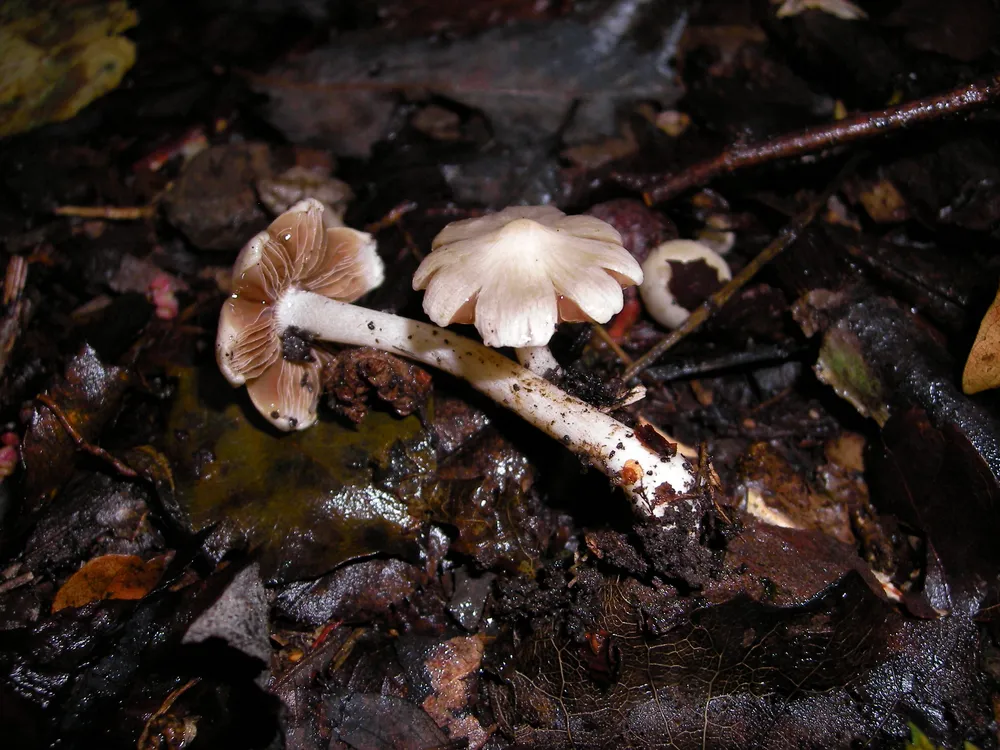
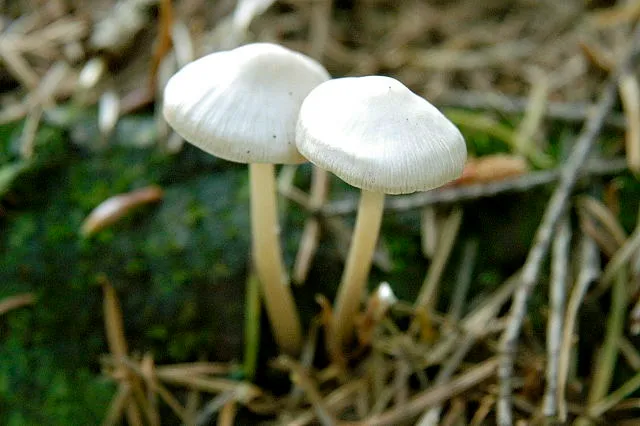
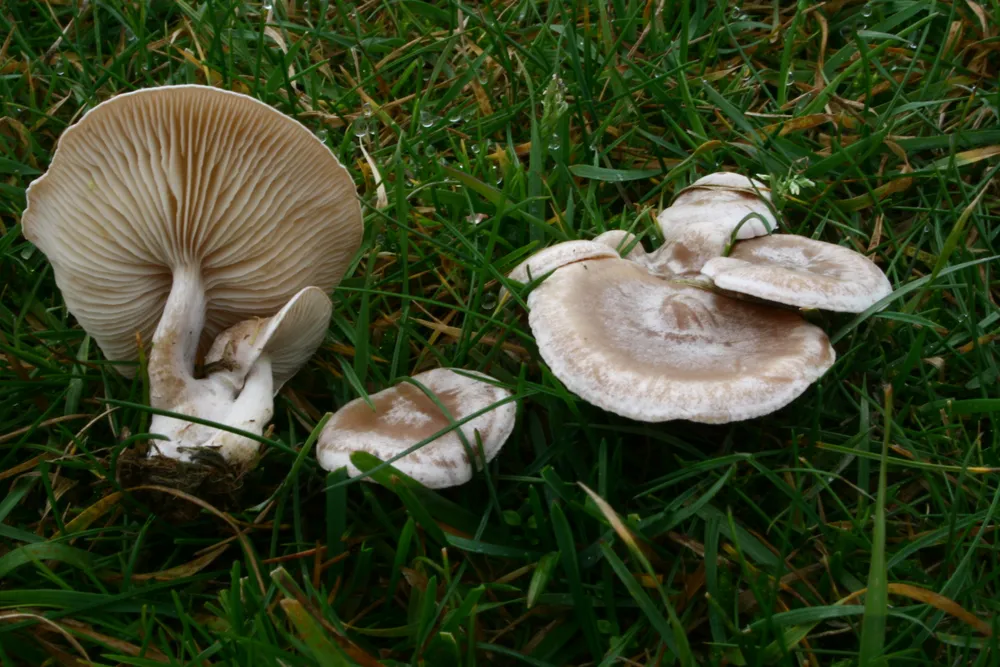
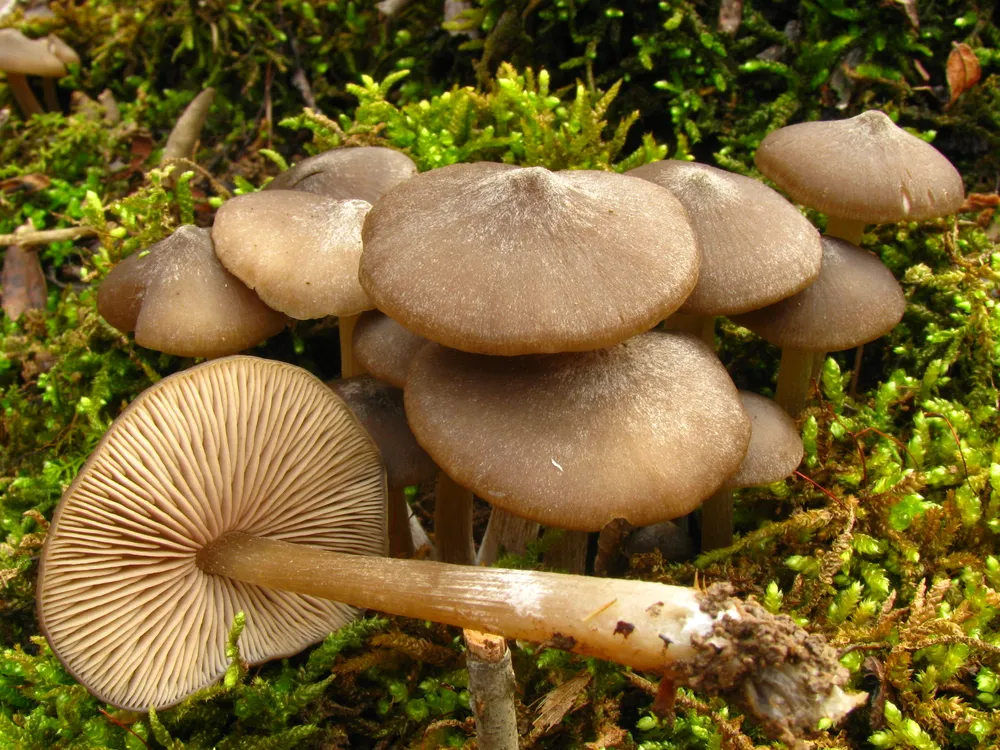
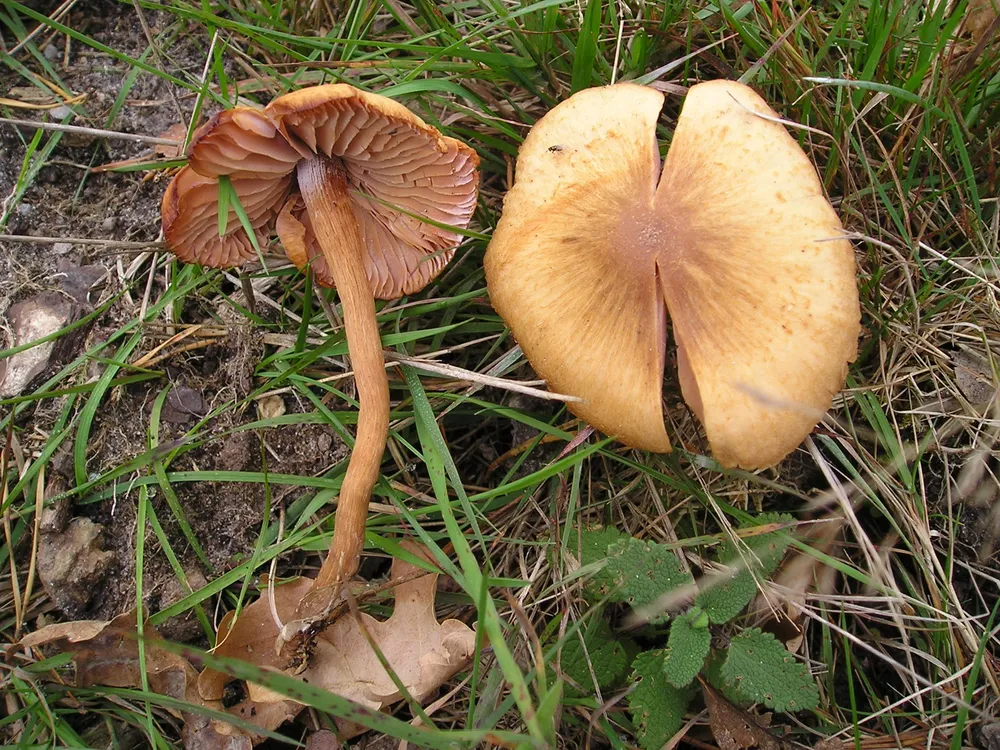
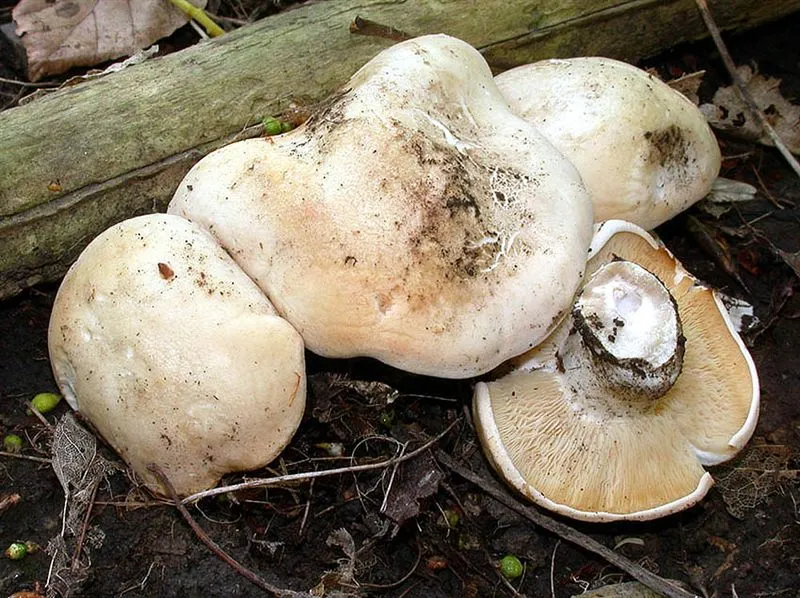
Related species
Mushrooms of the same genus and habitat — to study side by side and never mix up.
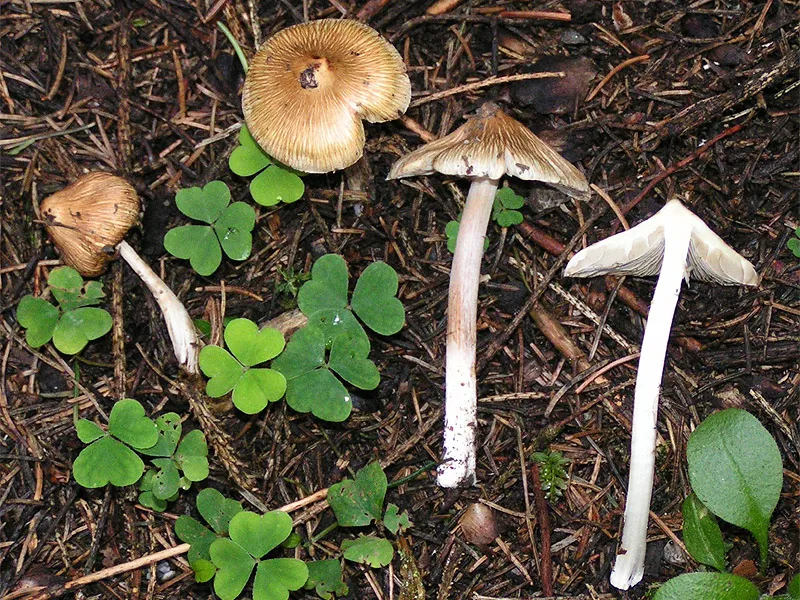
Inocybe brunnea
Inocybe serotina
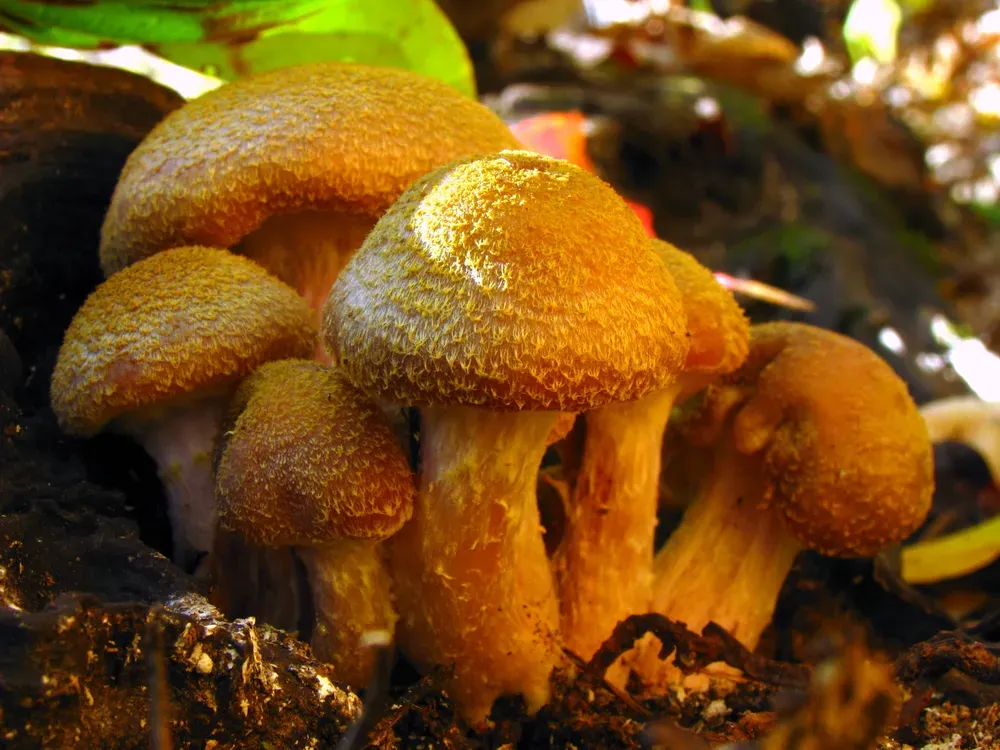
Bulbous honey fungus
Armillaria gallica
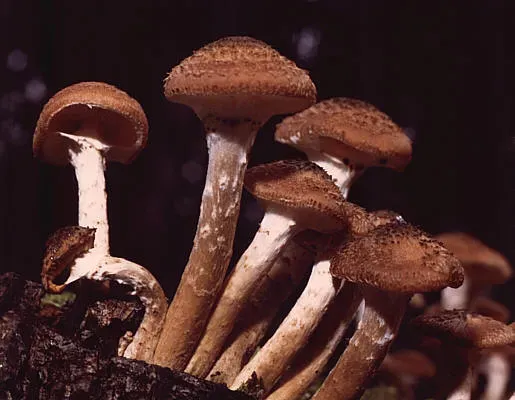
Dark honey fungus
Armillaria ostoyae
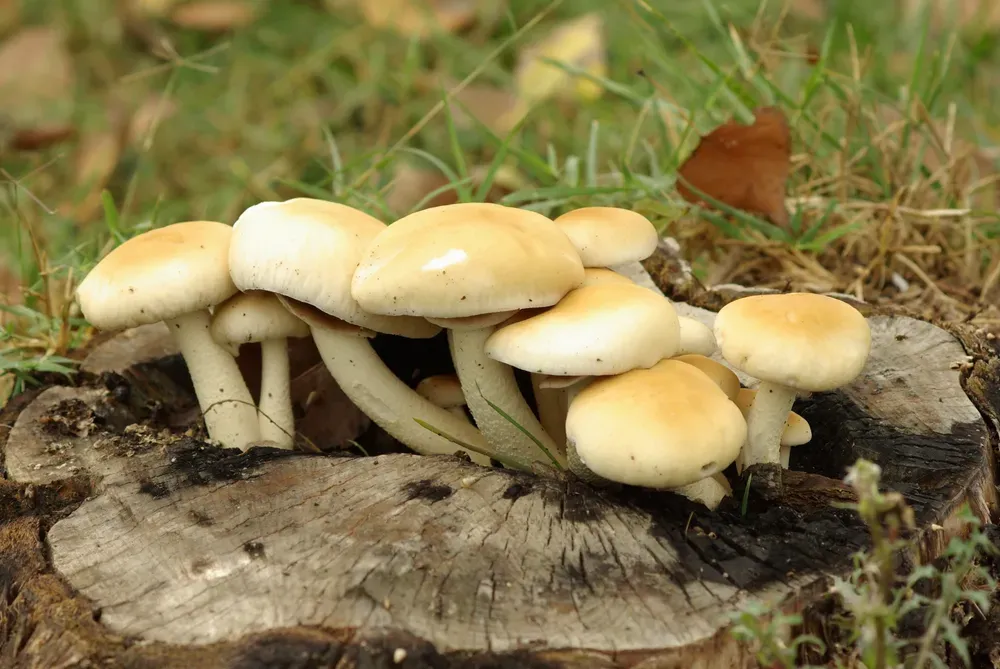
Poplar fieldcap
Cyclocybe aegerita
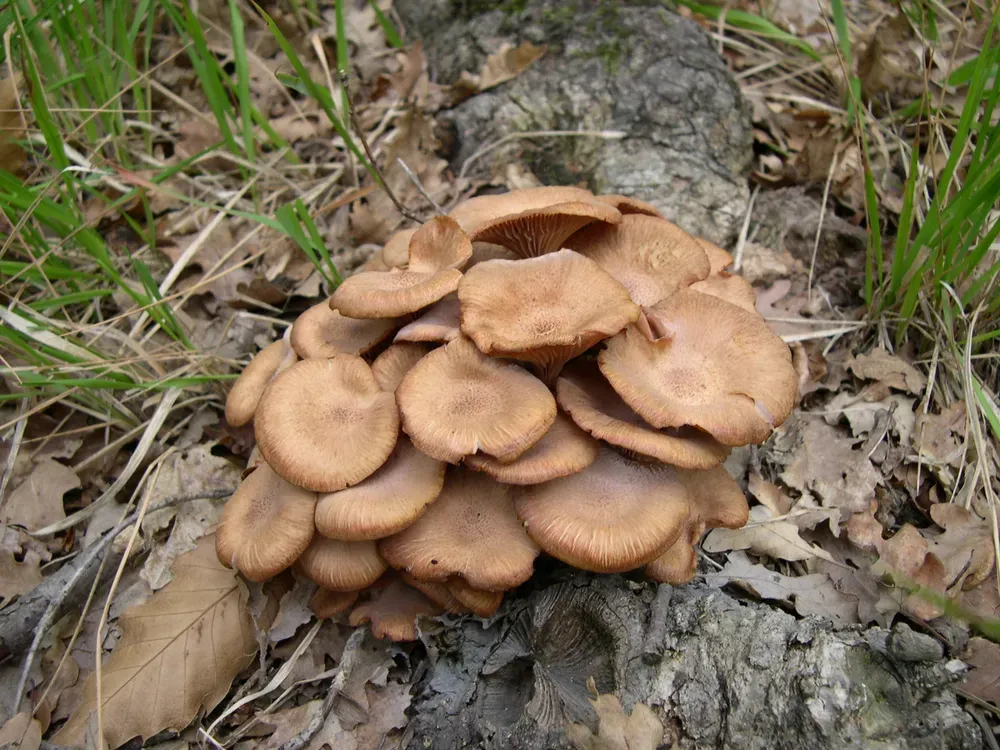
Ringless honey fungus
Desarmillaria tabescens
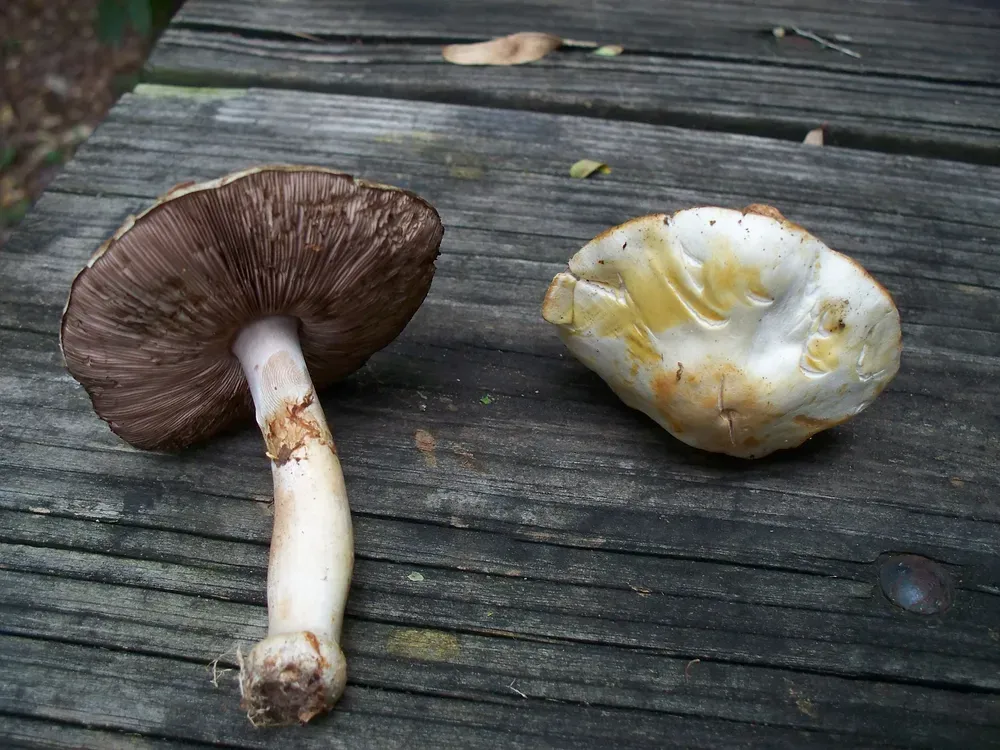
Agaricus abruptibulbus
Agaricus haemorrhoidarius
Agaricus haemorroidarius
Frequently asked questions
What happens if you eat it by accident?
Within 15-90 minutes — sudden heavy salivation, heavy sweating (clothes get soaked through), watering eyes, runny nose, stomach cramps, diarrhea, slow heartbeat, a feeling of breathlessness. Immediately call 112 or your local emergency number. Put the mushroom leftovers in a bag for identification. In hospital you'll be given the antidote — atropine. If you get help quickly (1-2 hours), the prognosis is good. Self-treatment is out of the question — atropine in the wrong dose is deadly.
How do you keep it OUT of your basket?
Never pick an unknown small brown mushroom with a conical cap and a distinctive spermatic smell. The rule for brownish Inocybe mushrooms: three signs together — a conical cap with a knob, cracks or a fibrous surface, a spermatic, musty smell. If you see all three, throw it out without regret.
Are all fibrecaps poisonous?
Most of them — YES, the bulk of the genus contains muscarine in varying concentrations. A few dozen species are considered non-toxic, but that's a matter of microscopic detail — without a microscope you can hardly tell them apart reliably. The kitchen rule: do not pick any species of the genus Inocybe to eat. This genus is for mycologists, not for foragers.
Where does it usually grow?
In deciduous and mixed forests — under oak, beech, hornbeam, birch, hazel. It forms mycorrhiza. It often grows in grassy spots, along forest edges, on dirt tracks, in parks and gardens, and on the verges of forest roads. It doesn't grow in open areas.
Which regions of Ukraine is it found in?
Throughout the forest and forest-steppe zones: the Carpathians, Prykarpattia, Polissia and all three forest-steppe belts. In the steppe — in ravine forests and parks. A very common species — you'll find it in any deciduous wood.
When does it fruit?
June to October, peaking in August-September. One of the most abundant brown mushrooms of summer and early fall.
What is it most often confused with?
With young funnels (Clitocybe), many of which also contain muscarine and are poisonous. With knights (Tricholoma). With brown pinkgills (also poisonous). The general rule: a brownish mushroom ≤7 cm with a knob, a thin stem and an unpleasant smell — leave it. Check the spore print: Inocybe — olive-brown; funnels — white; knights — white; pinkgills — pinkish. If the print is olive-brown and there are other brownish mushrooms next to it, throw out the whole batch.
Can it turn up among chanterelles or young slippery jacks?
Fibrecaps rarely end up in a haul of chanterelles or slippery jacks (they occupy different ecological niches). But in a mixed basket of young mushrooms, one can easily slip through. A must-follow rule for every forager: at home, sort through your haul one by one — pick up every mushroom and check it. If you find a single doubtful one, throw out the batch, because contact between raw mushrooms and their juices can transfer dangerous toxins.
Is Split fibrecap edible or poisonous?
Does Split fibrecap have gills or pores?
What does the cap of Split fibrecap look like?
What does the stem of Split fibrecap look like?
Sources
- [1]Вікіпедія (українська)
- [2]Атлас грибів України, Зеров Д.К. (1979)
- [3]MycoBank Database
- [4]Index Fungorum
- [5]GBIF
- [6]iNaturalist Ukraine