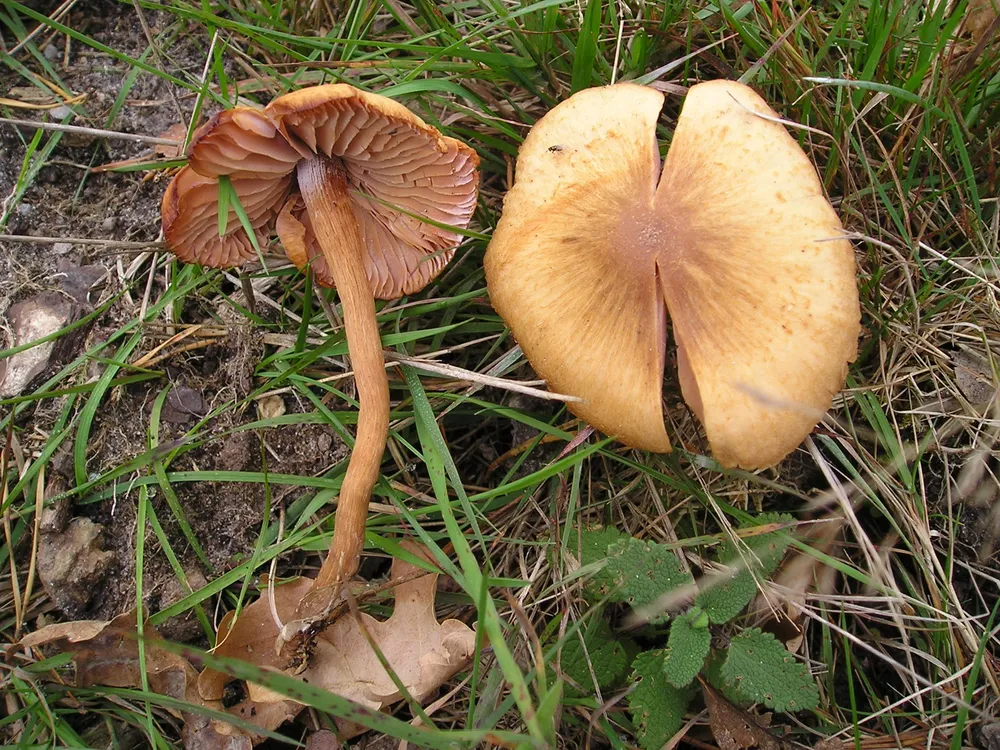
DeceiverLaccaria laccata
Expert-verifiedUpdated October 3, 2026
Passport
- Edibility
- Edible
- Season
- Aug — Nov
- Hymenophore
- Gilled
- Cap color
- Orange
- Size
- Small (up to 5 cm)
- Smell
- Odorless
- Reviewed
- Yes ✓
Quick answers
Where to look?
Deciduous forest, Mixed forest, Conifer forest
When does it appear?
Aug — Nov
Active months: August, September, October, November.
How to recognize it? Three signs
- Cap color: Orange, Brown, Red
- Cap shape: Convex
- Smell: Odorless
Fruiting season
August – November
Description
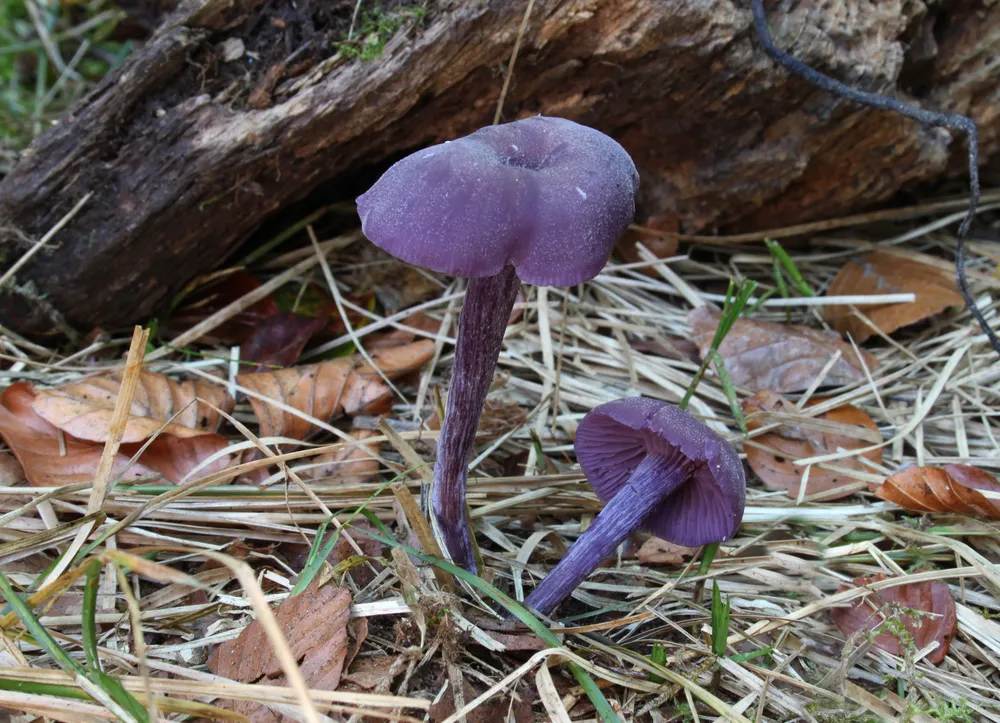
The deceiver (Laccaria laccata) is the most widespread and least noticeable of Ukraine's three Laccaria species. Unlike its bright purple relative (Laccaria amethystina), this species is rusty-orange or cinnamon-brick in color, which camouflages it well in the leaf litter. A small mushroom 2-5 cm across with a slender stem matching the cap, lost among hundreds of similar "some little rusty woodland mushrooms" — it takes skill to single out the deceiver. Still, it's a mass species and a good marker of mycorrhizal partnerships with a wide range of trees.
This is an edible mushroom, but its culinary value is low — the flesh is thin, with no pronounced flavor. It's mostly collected as a color and flavor addition to a mixed mushroom dish, rarely on its own. Its value is mainly ecological and educational: the deceiver is a good example of a widespread mycorrhizal mushroom that supports forest health. It's not worth the effort to gather it in bulk, but if one ends up in your basket alongside better species — no harm done.
In Ukraine it is widespread throughout the forest zone: in deciduous, mixed and coniferous forests. It forms mycorrhiza with oak, beech, birch, pine and spruce. It likes a variety of forest types, from mossy pine woods to deep oak forests. Season August-November, peaking in September-October. It often grows in groups of 10-30 fruiting bodies on patches of 1-2 m². One of the most abundant small woodland mushrooms in a wet autumn — in the Carpathians and Polissia you can find thousands of specimens on a single outing.
Cap
The cap is small: 2-5 cm across, convex in young mushrooms, later flattening out or becoming depressed with a thin, wavy edge. The color is rusty-orange, cinnamon-brick, reddish-brown; in wet weather darker and richer, in dry weather paler and faded (hygrophanous). The surface is silky-matte and smooth; the edge often has fine radial striations.
Hymenophore
Gilled hymenophore. The gills are widely spaced and thick, attached or slightly decurrent. Their color echoes the cap: pinkish-orange, cinnamon in old mushrooms, with a characteristic whitish, floury bloom (spores). The spore print is white.
Stem
Stem 3-7 cm tall, 0.3-0.6 cm thick, slender, cylindrical, often curved. The color is rusty-orange, matching the cap, lengthwise fibrous. At the base — white mycelial fuzz. No ring. The stem becomes hollow in old mushrooms.
Flesh
Flesh thin, rusty-cream, soft. Doesn't change color when cut. No pronounced taste.
Smell
Faint, neutral mushroomy, with no particular notes. Taste mild, not pronounced.
Lookalikes
Related species
Mushrooms of the same genus and habitat — to study side by side and never mix up.
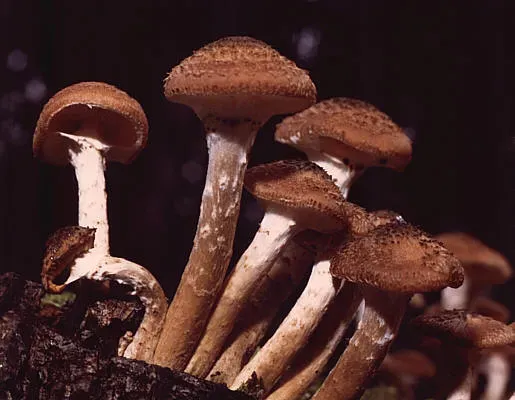
Bulbous honey fungus
Armillaria gallica
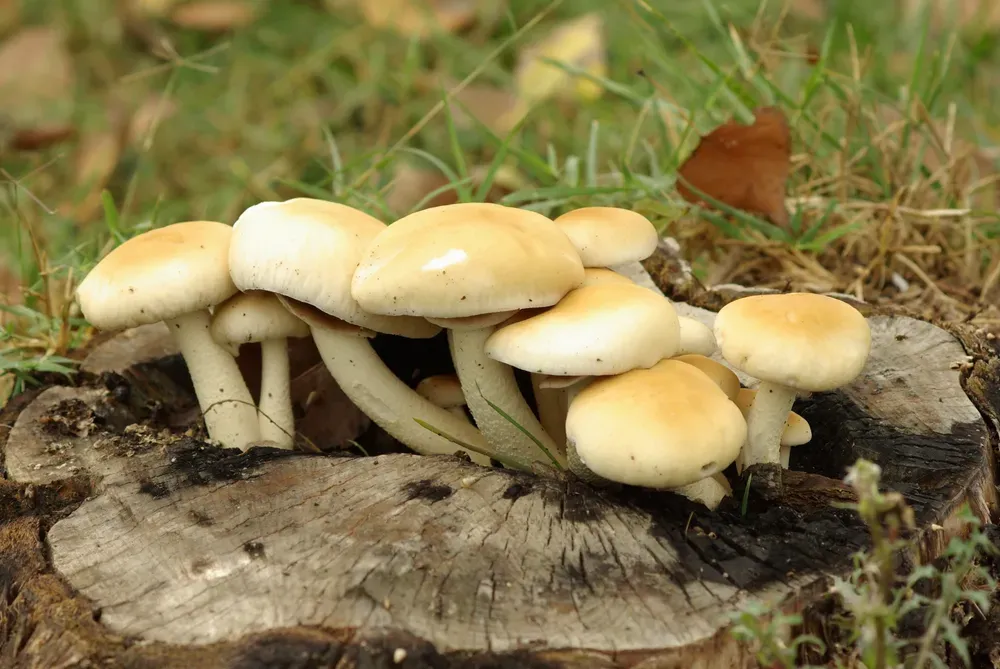
Dark honey fungus
Armillaria ostoyae
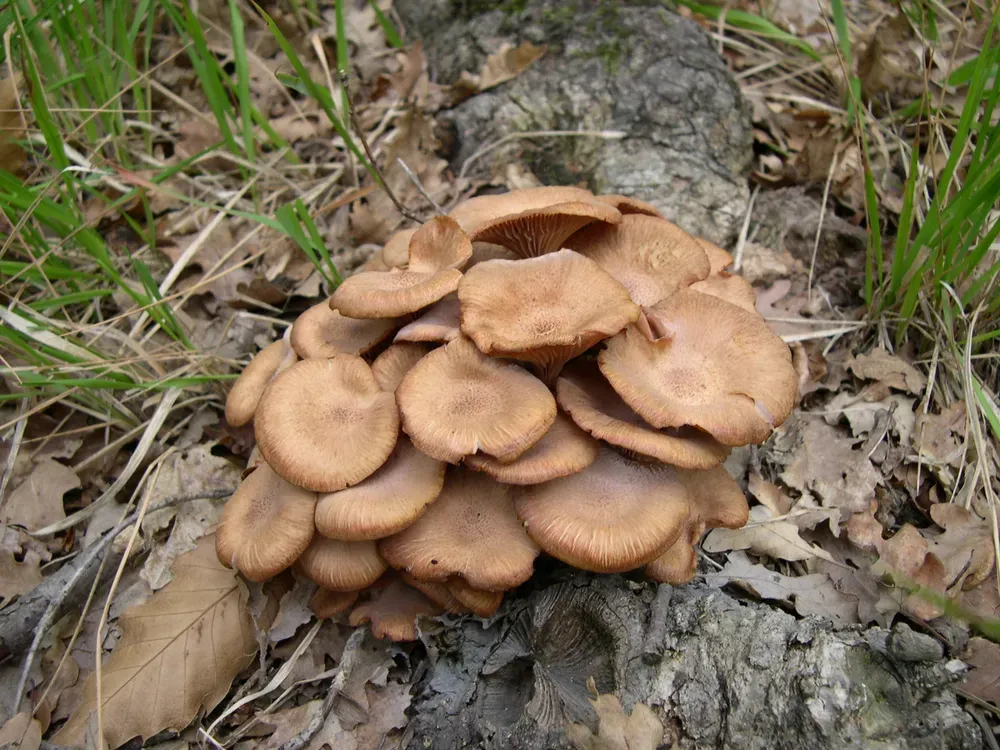
Poplar fieldcap
Cyclocybe aegerita
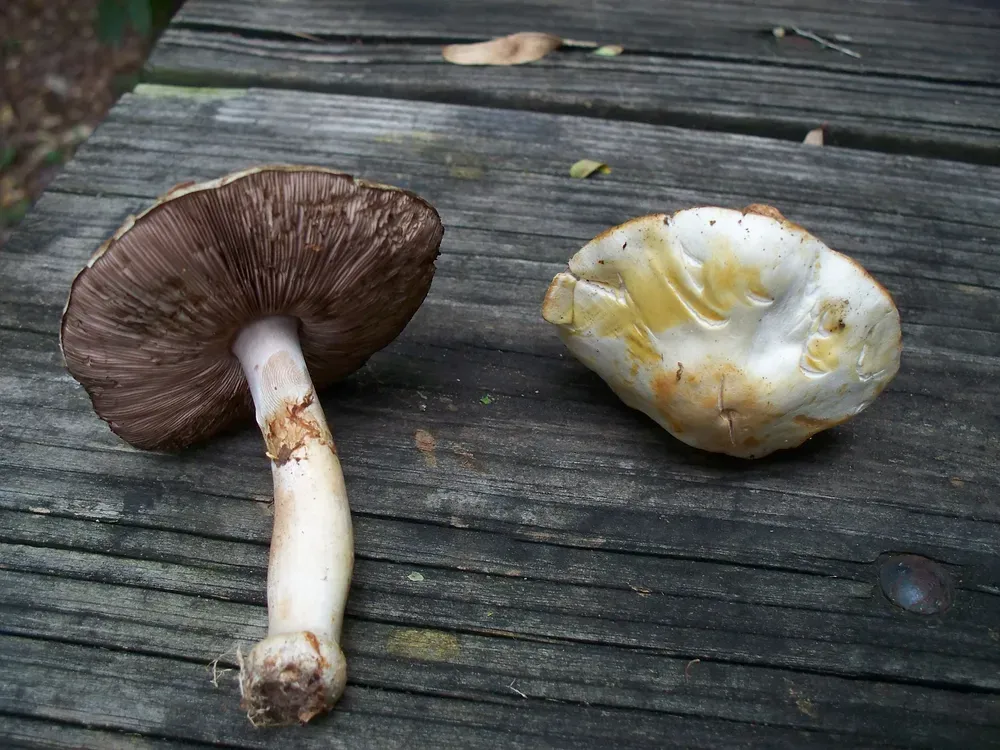
Ringless honey fungus
Desarmillaria tabescens
Agaricus abruptibulbus
Agaricus haemorrhoidarius
Agaricus haemorroidarius
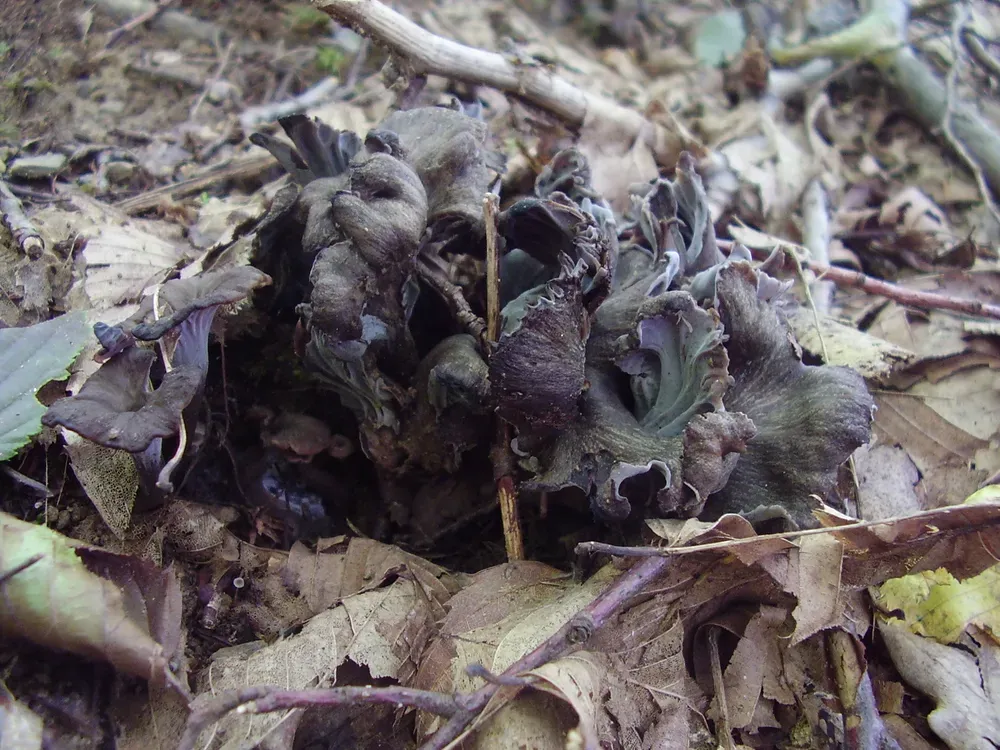
Ashen chanterelle
Cantharellus cinereus
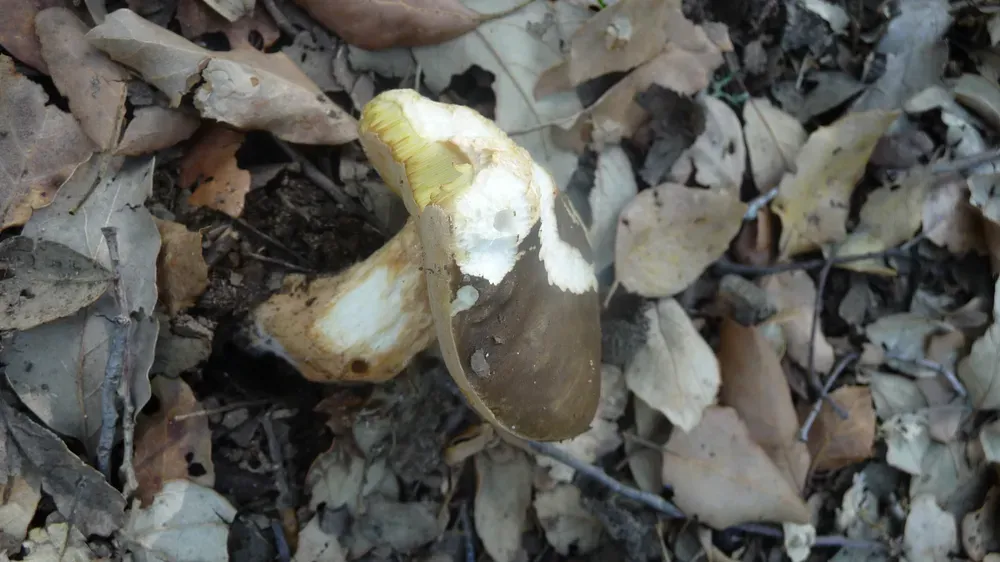
Blushing bolete
Leccinum roseofractum
Frequently asked questions
Is it safe to eat?
Yes, it's an edible mushroom. It has practically no seriously poisonous lookalikes — the telltale combination of small size, rusty-orange tone, widely spaced thick gills and white spore print is easy to recognize. A single mushroom or a handful in a mixed mushroom dish is completely safe. Culinary value is low — not worth a trip to the forest just for it.
How should you cook it?
On its own — rarely: small mushrooms with thin flesh won't give much flavor. Best added to a mixed mushroom dish with better species (chanterelle, honey fungus, porcini). Young mushrooms go into soups and stews. Drying isn't worth it — the mushroom loses its texture.
Can children eat it?
From age 4-5, in small portions as part of cooked dishes (stew, soup, sauce). Its culinary value is low, so it's better to let a child try better species. Children under 3 are not given any mushrooms at all.
Where should you look for it?
In deciduous, mixed and coniferous forests — under oak, beech, birch, pine and spruce. It likes damp mossy spots, compacted forest litter, forest edges and bilberry patches in pine woods. It forms mycorrhiza with a wide range of trees. It often grows in groups of 10-30 fruiting bodies.
Which regions of Ukraine is it found in?
Throughout the forest and forest-steppe zones: the Carpathians, the Carpathian foothills, Polissia, all three forest-steppe belts. In the steppe — in ravine forests. One of the most common small woodland mushrooms in a wet autumn.
When should you look for it?
August — November, peaking in September-October. It likes a wet autumn with moderate temperatures of +10..+15°C. It tolerates the first light frosts. In wet weather the color is rich; in dry weather it fades quickly.
What is it confused with?
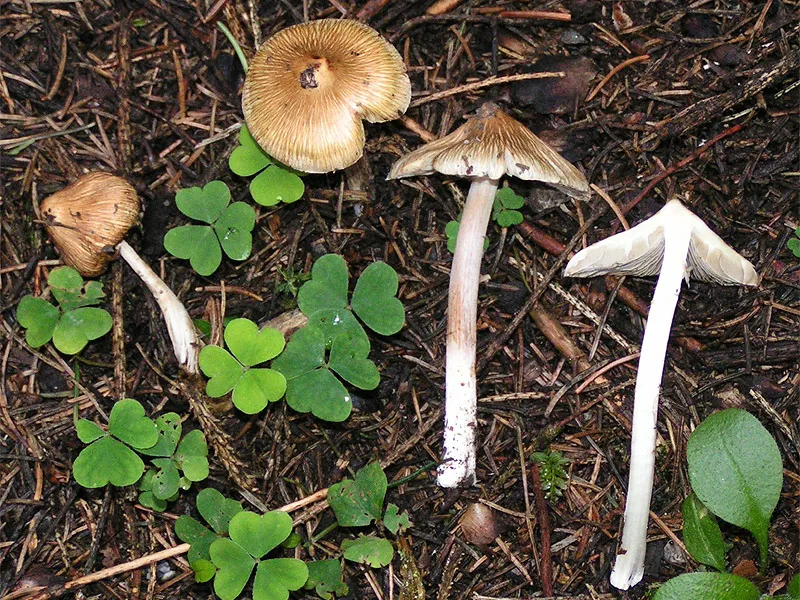
With the scurfy deceiver (Laccaria proxima) and L. bicolor — close relatives, also edible and safe. With young fibrecaps (Inocybe spp.) — small rusty mushrooms, but fibrecaps have more crowded gills that are olive-brown when mature (not pinkish), and an olive-brown spore print (not white). If the spore print is white — it's a deceiver (safe). If it's olive-brown — throw it away.
How do you identify it for sure?
Four features together: (1) small size, 2-5 cm; (2) rusty-orange cap and stem; (3) widely spaced, thick gills with a pinkish-orange tone; (4) white spore print. If all four match — it's Laccaria laccata. A spore print is the most reliable test for telling it apart from poisonous small fibrecaps.
Is Deceiver edible or poisonous?
Does Deceiver have gills or pores?
What does the cap of Deceiver look like?
What does the stem of Deceiver look like?
Sources
- [1]Вікіпедія (українська)
- [2]Атлас грибів України, Зеров Д.К. (1979)
- [3]MycoBank Database
- [4]Index Fungorum
- [5]GBIF
- [6]iNaturalist Ukraine