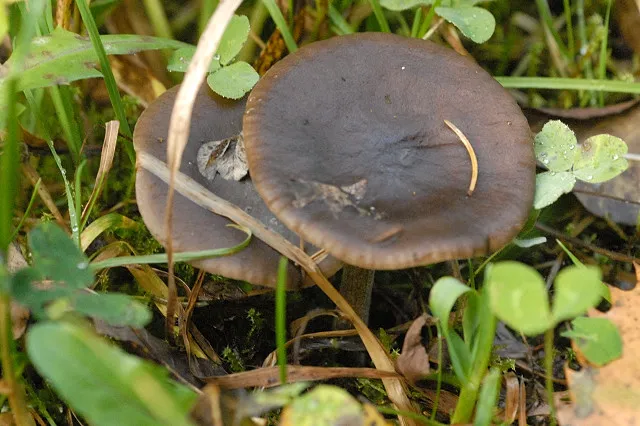
Common cavalierMelanoleuca melaleuca
Expert-verifiedUpdated October 3, 2026
Passport
- Edibility
- Edible
- Season
- Aug — Nov
- Hymenophore
- Gilled
- Cap color
- Brown
- Size
- Small (up to 5 cm)
- Smell
- Odorless
- Reviewed
- Yes ✓
Quick answers
Where to look?
Deciduous forest, Mixed forest
When does it appear?
Aug — Nov
Active months: August, September, October, November.
How to recognize it? Three signs
- Cap color: Brown, Dark brown, Black
- Cap shape: Umbonate
- Smell: Odorless
Fruiting season
August – November
Description
Common cavalier (Melanoleuca melaleuca) is a modest gilled mushroom often mistaken for young Tricholoma and Gymnopus because of its similar silhouette and dark brown cap with a pale stem. Dictionaries sometimes call it the "black-and-white melanoleuca" — after its Latin name, where melas means "black" and leukos means "white". That's exactly the key to recognizing it: dark cap + pale stem with white gills — a distinctive contrasting duo.
Edible, but not much to write home about in the kitchen. The flesh is thin, soft, with a faintly earthy taste that disappears after boiling. Some foragers take it when there's nothing better, but nobody goes out "for" it on purpose. Good for frying and pickling in a mix with other mushrooms. On its own, the dish is bland.
In Ukraine it's widespread throughout the forest and forest-steppe zones. A saprotroph — it grows on humus-rich soil in deciduous and mixed woods, along forest edges, in parks, on lawns among fallen leaves. It often grows in groups of 3-10 fruiting bodies. Season: August — November. It survives the first frosts — often staying in the woods when most summer mushrooms are already gone.
Cap
Cap 4-8 cm across, hemispherical with a noticeable bump in the center when young, becoming convex-flat with time while keeping the same bump. The color is dark brown, blackish-brown, almost black in wet weather, lighter and grayish when dry. In old mushrooms the cap edge is often wavy and cracked. The surface is smooth, slightly silky, a little slimy in wet weather.
Hymenophore
Gills — they're broad, moderately crowded, whitish, turning grayish-white with age. Attached to the stem with a notch (a small tooth). Spore print white. The contrast between the dark cap and pale gills is a diagnostic feature.
Stem
Stem 4-8 cm tall, 0.5-1 cm thick, cylindrical, relatively short (hence the Ukrainian epithet "short-legged"). The color is whitish to light gray, with thin darker lengthwise fibers. Lower down, it often has a bulb-like swelling. No ring.
Flesh
Flesh thin, soft, white, more fibrous in the stem. It doesn't change color when cut. The smell is faint, neutral, with a hint of earthiness. The taste is mild, not bitter.
Smell
Faint, neutral, mushroomy with a hint of earthiness, no distinctive notes.
›Scientific synonyms (4)
1801 Agaricus melaleucus Pers., 1871 Tricholoma melaleucum (Pers.) P.Kumm., 1886 Gyrophila melaleuca (Pers.) Quél., 1887 Melaleuca vulgaris
Lookalikes
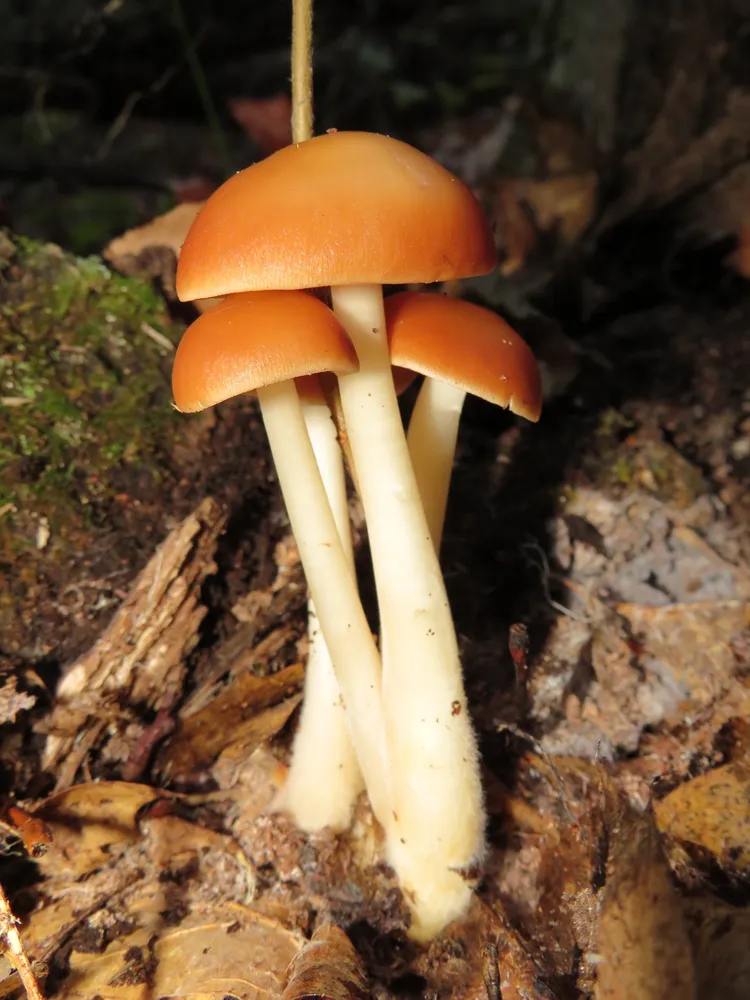
Related species
Mushrooms of the same genus and habitat — to study side by side and never mix up.
_Ricken_185798.webp)
Booted knight
Tricholoma focale
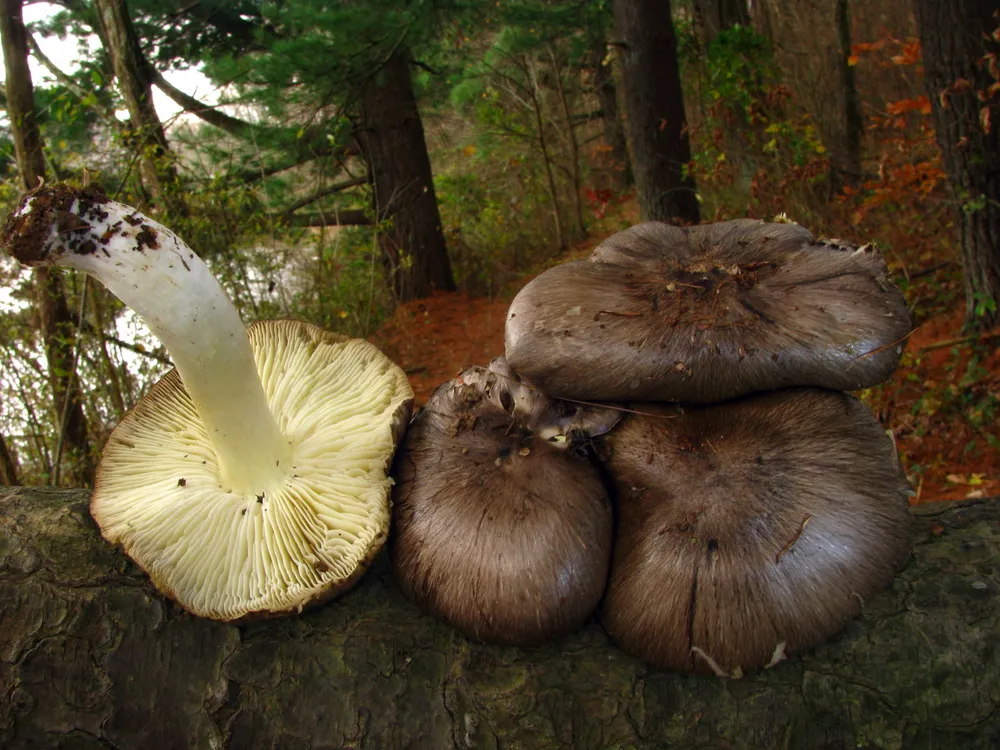
Charbonnier
Tricholoma portentosum
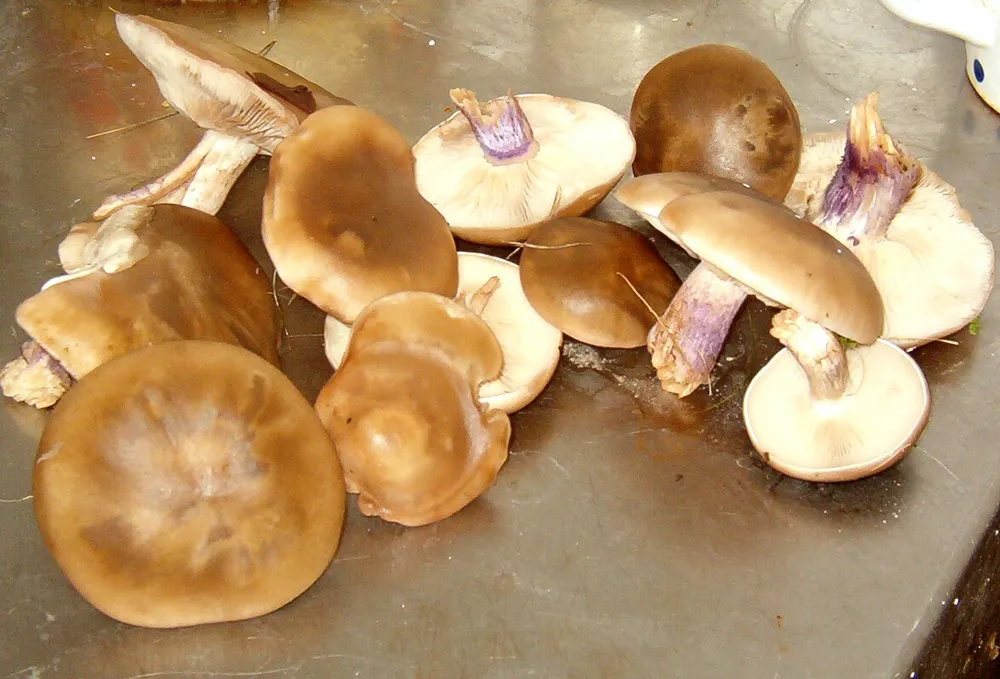
Field blewit
Collybia personata
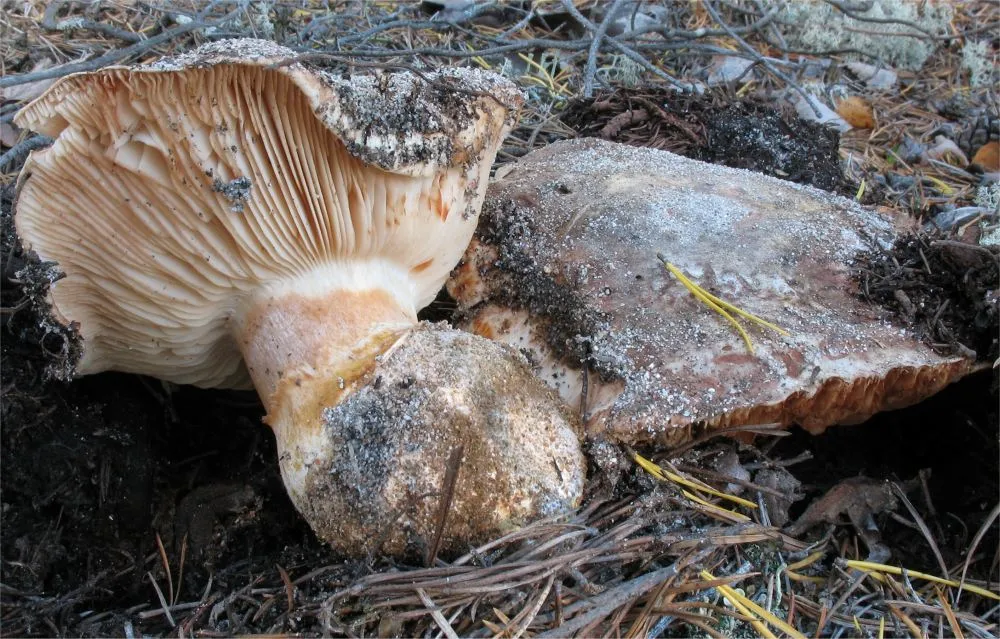
Giant knight
Tricholoma colossus
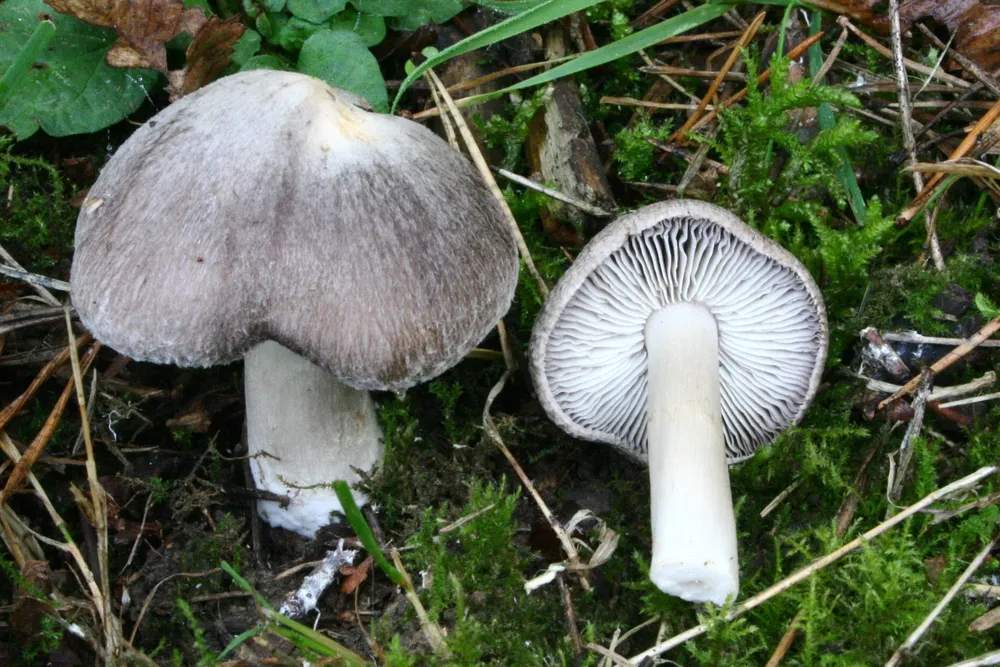
Grey knight
Рядовка наземна
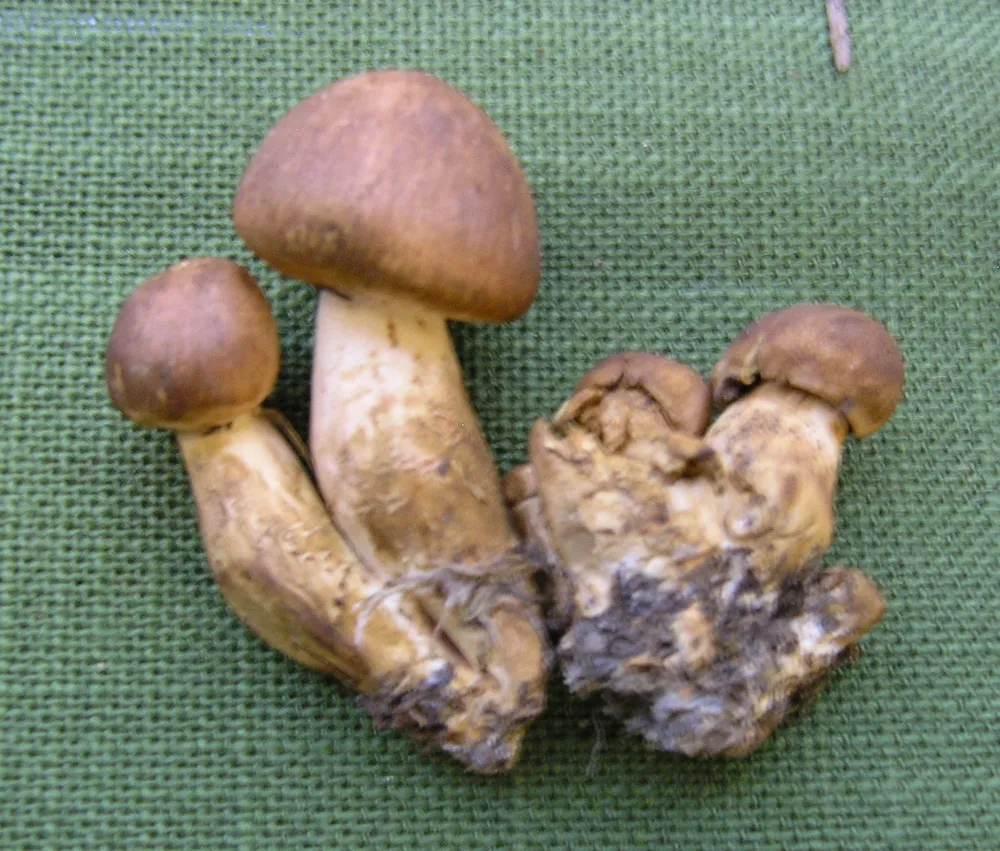
Matt knight
Tricholoma imbricatum
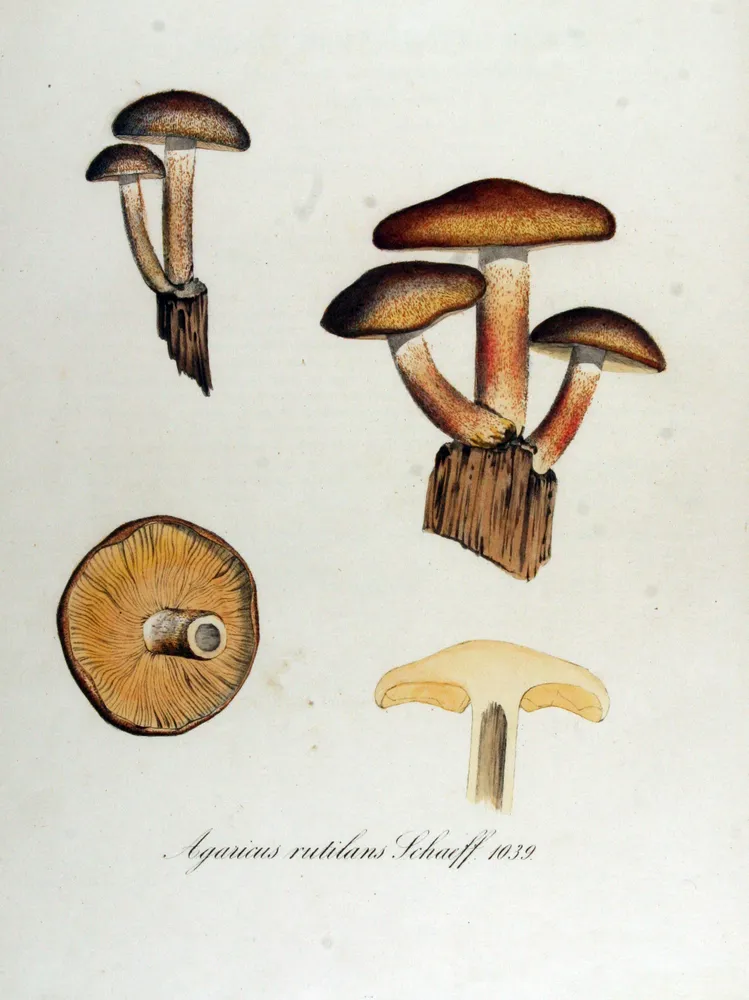
Plums and custard
Рядовка червона
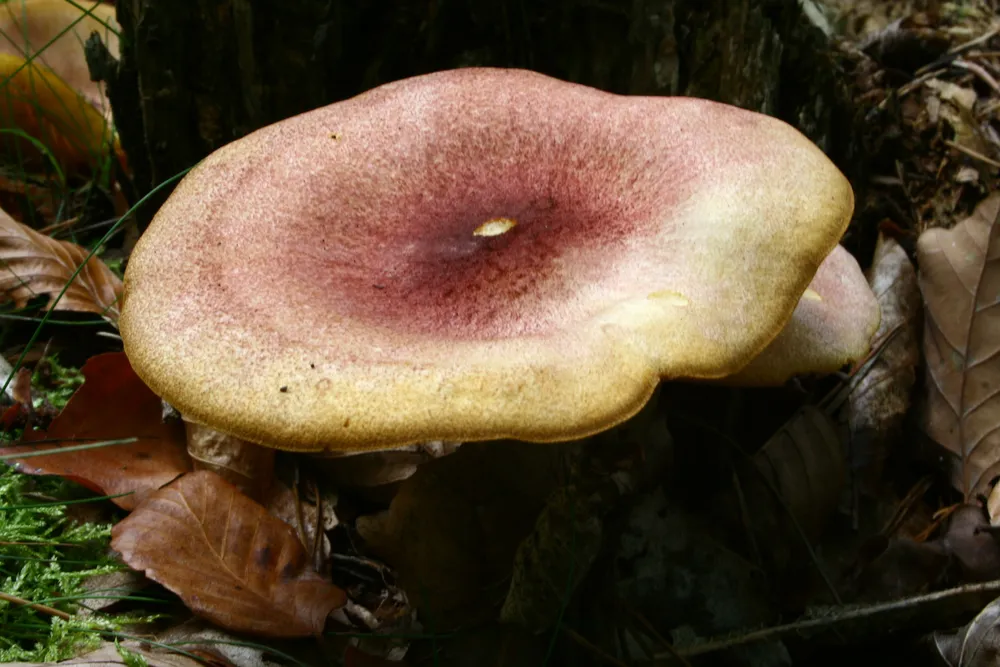
Plums and custard
Tricholomopsis rutilans
Frequently asked questions
Is it safe to eat?
Yes, without restrictions. It's small in culinary terms, so it's usually used in a mix with other mushrooms. Young ones are better — in old ones the flesh turns tough.
Does it have dangerous lookalikes?
No serious ones. In theory, you could mix it up with young dark-capped knights (Tricholoma) — some are edible, some are bitter or have a questionable reputation. Or with young Gymnopus (Gymnopus) — which are smaller, with more flexible stems. The mistake usually isn't critical, but when in doubt, leave it: neither a dark knight nor a Gymnopus will kill you, but bitterness can ruin the dish.
Does it need any pre-treatment?
It's best to boil it for 5-7 min before frying — this removes the lingering earthy taste and softens the flesh a little. You can skip boiling, but the flavor will be a bit "charred".
Where should you look for it?
In deciduous and mixed woods — on humus-rich soil among fallen leaves. It likes forest edges, clearings, park areas and lawns in city parks. A saprotroph, not tied to any particular tree.
Which regions of Ukraine is it found in?
Throughout the forest and forest-steppe zones: the Carpathians, the Carpathian foothills, Polissia, the forest-steppe. In the steppe — in planted woodlands and parks of large cities.
When should you look for it?
August — November, peaking in September-October. It survives the first light frosts. It often fruits later than most summer gilled mushrooms.
What is it most often confused with?
With young knights (Tricholoma) — especially dark-colored ones. The key difference: the common cavalier has a shorter, thinner stem, without the "muscular" look typical of Tricholoma. Also with Gymnopus (Gymnopus) — those are even smaller, with an elastic stem.
Is it worth going out specifically for it?
Usually not — its culinary value is low. It's more of a "bonus" mushroom for a late-autumn basket, once it's clear there won't be any big porcini or boletes. It's interesting as an introduction to the genus Melanoleuca — there are about 20 species in Ukraine, and they're a pretty good school of attentiveness.
Is Common cavalier edible or poisonous?
Does Common cavalier have gills or pores?
What does the cap of Common cavalier look like?
What does the stem of Common cavalier look like?
Sources
- [1]Вікіпедія (українська)
- [2]Атлас грибів України, Зеров Д.К. (1979)
- [3]MycoBank Database
- [4]Index Fungorum
- [5]GBIF
- [6]iNaturalist Ukraine