Yellowleg bonnetMycena epipterygia
Expert-verifiedUpdated October 3, 2026
Passport
- Edibility
- Inedible
- Season
- Aug — Nov
- Hymenophore
- Gilled
- Cap color
- Yellow
- Size
- Very small (<3 cm)
- Smell
- Chemical
- Reviewed
- Yes ✓
Quick answers
Where to look?
Conifer forest, Mixed forest
When does it appear?
Aug — Nov
Active months: August, September, October, November.
How to recognize it? Three signs
- Cap color: Yellow, Olive
- Cap shape: Conical
- Smell: Chemical, Odorless
Fruiting season
August – November
Description
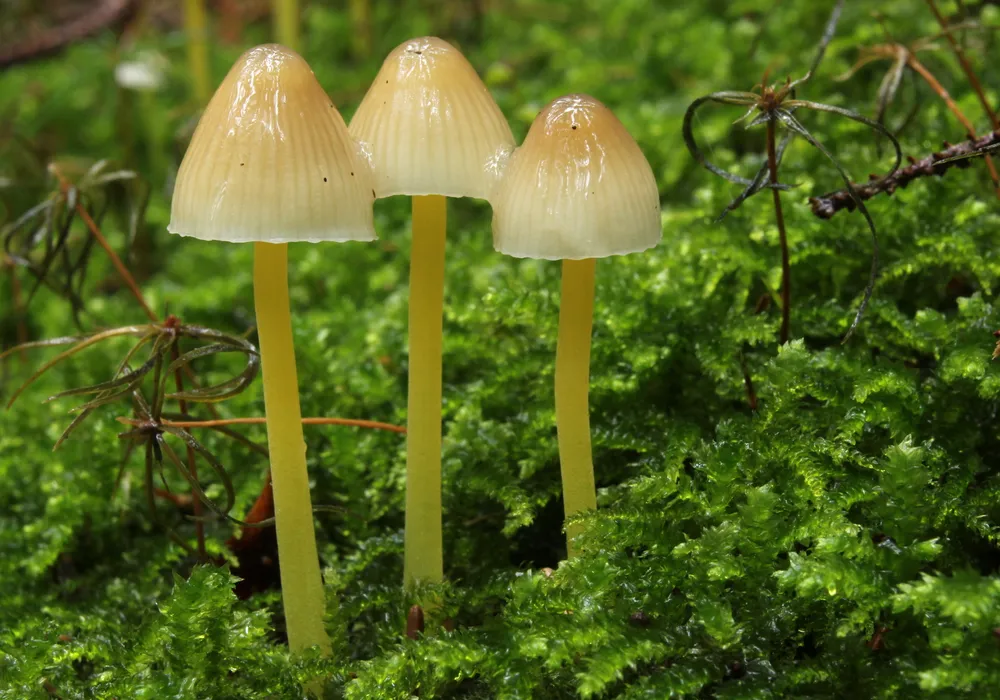
The yellowleg bonnet (Mycena epipterygia) is a small gilled mushroom with a distinctive yellowish, slimy cap, which makes it easy to tell from most of its gray-brown bonnet cousins. In wet weather its cap and stem are covered with a noticeable layer of slime that you can peel off as a film, like on a young slippery jack. Hence the Latin name epipterygia — "with a film on top." Another trait is a faint smell of rancid fat or fish in some populations, which has earned it a reputation as an "unappealing" mushroom.
Inedible. Besides the unpleasant smell and sliminess, some sources mention mild gastrointestinal upset after accidental consumption. Not very dangerous, but no use either. Worthless in the kitchen — the flesh is thin, slimy, and watery. Not worth picking.
In Ukraine it occurs throughout the forest zone, especially in coniferous forests: pine woods, spruce stands, and mixed forests with conifers. It loves moss carpets, especially sphagnum and haircap moss. A saprotroph — it grows on conifer litter, rotting moss, and small twigs. Season: August to November, peaking in September-October. Often grows singly or in groups of 3-10 fruit bodies in moss.
Cap
Cap 1-2.5 cm across, bell-shaped or conical with a little bump, becoming convex with age. Color yellowish, yellow-olive, lemon-yellow, darker in the center to brownish-yellow. The surface is noticeably slimy in wet weather — this is the species' main diagnostic feature. You can catch the slime with a fingernail and peel it off as a film. In dry weather the cap is simply shiny, without obvious sliminess. The cap margin is thin, with radial grooves.
Hymenophore
Gills — whitish to pale yellowish, moderately distant. Attachment to the stem notched (adnexed). Spore print white.
Stem
Stem 4-8 cm tall, 0.1-0.2 cm thick — very thin, threadlike, fragile, slimy in wet weather. Color yellowish above, darkening with age to yellow-brown toward the base. The surface is smooth, with a noticeable layer of slime.
Flesh
Flesh very thin, watery, yellowish. Does not change color when cut. Smell faint; in some populations rancid, with a note of old fat or fish. Taste mild, unremarkable.
Smell
In some populations — faint, rancid, with a note of stale fish oil or old butter. Not in every find — some yellowleg bonnets have no smell at all.
›Scientific synonyms (2)
Agaricus epipterygius Scop., Prunulus epipterygius (Scop.) Murrill
Lookalikes
.webp)
Related species
Mushrooms of the same genus and habitat — to study side by side and never mix up.
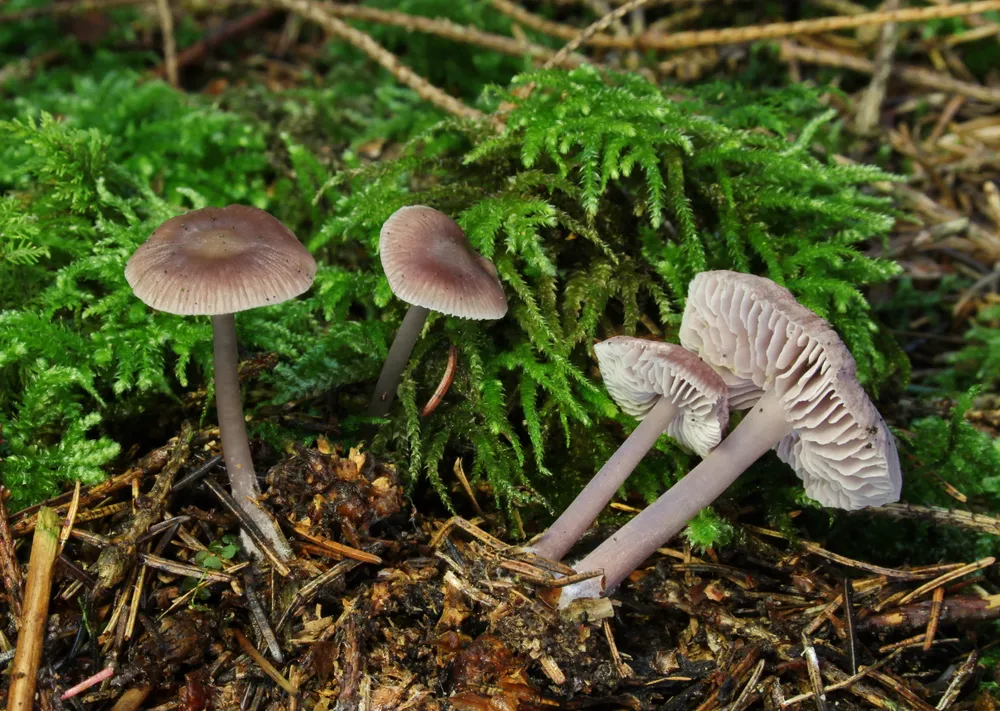
Lilac bonnet
Mycena pura
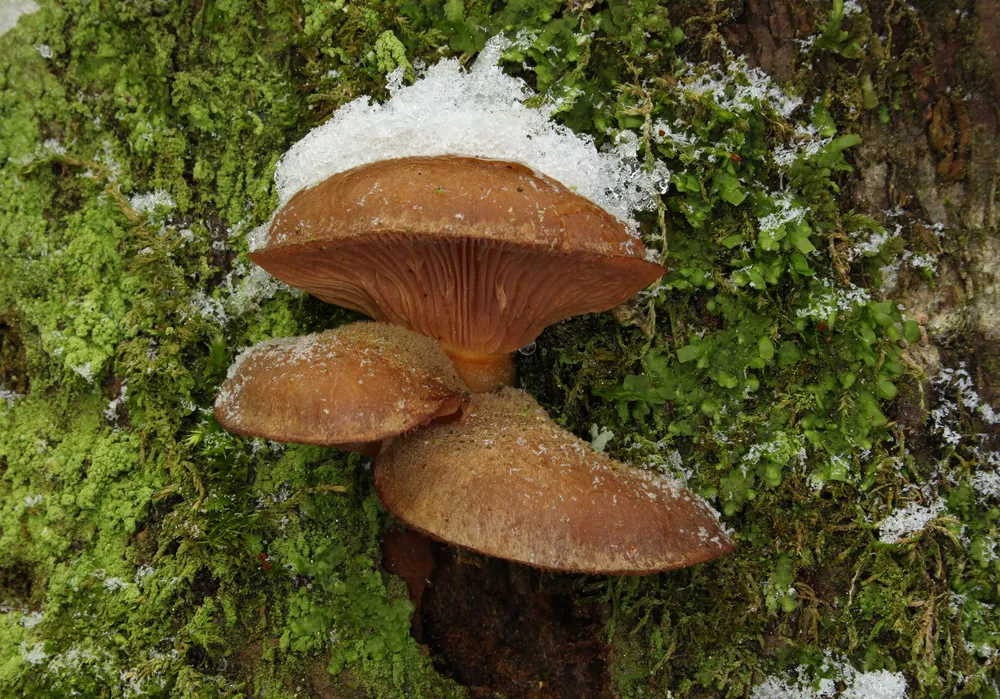
Olive oysterling
Panellus serotinus
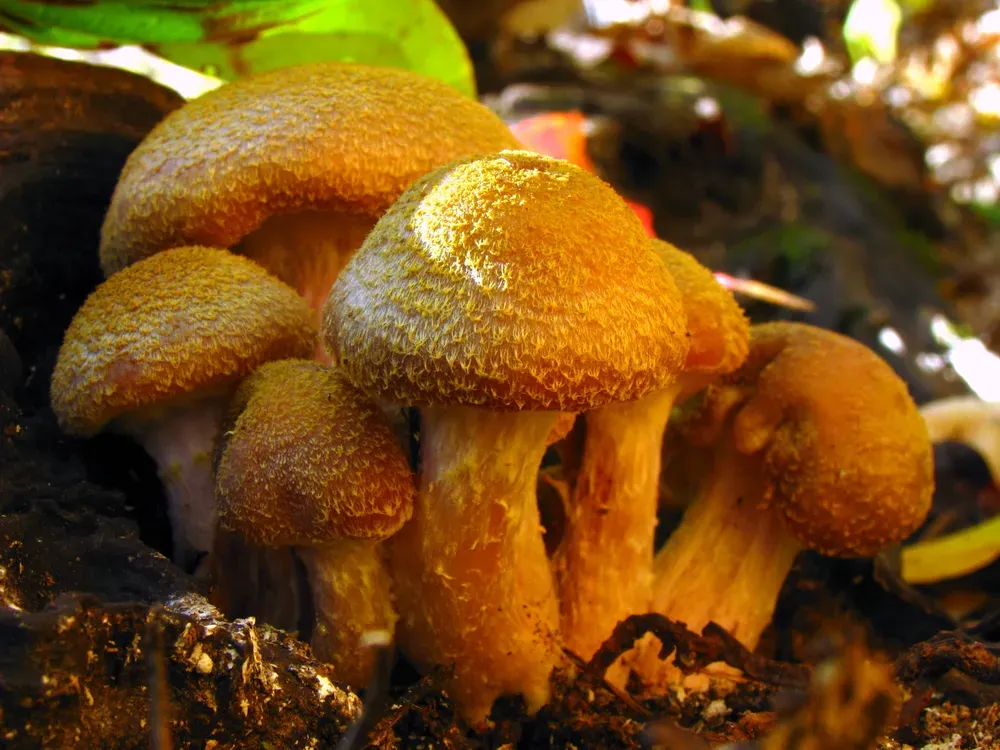
Bulbous honey fungus
Armillaria gallica
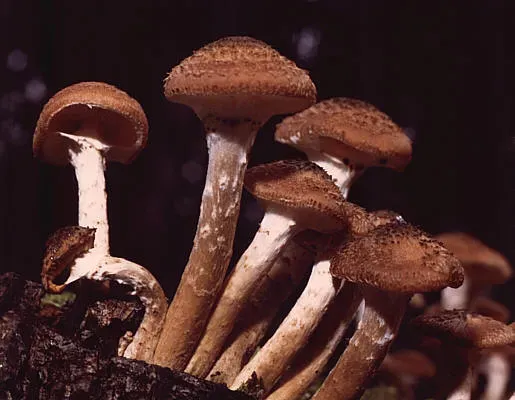
Dark honey fungus
Armillaria ostoyae
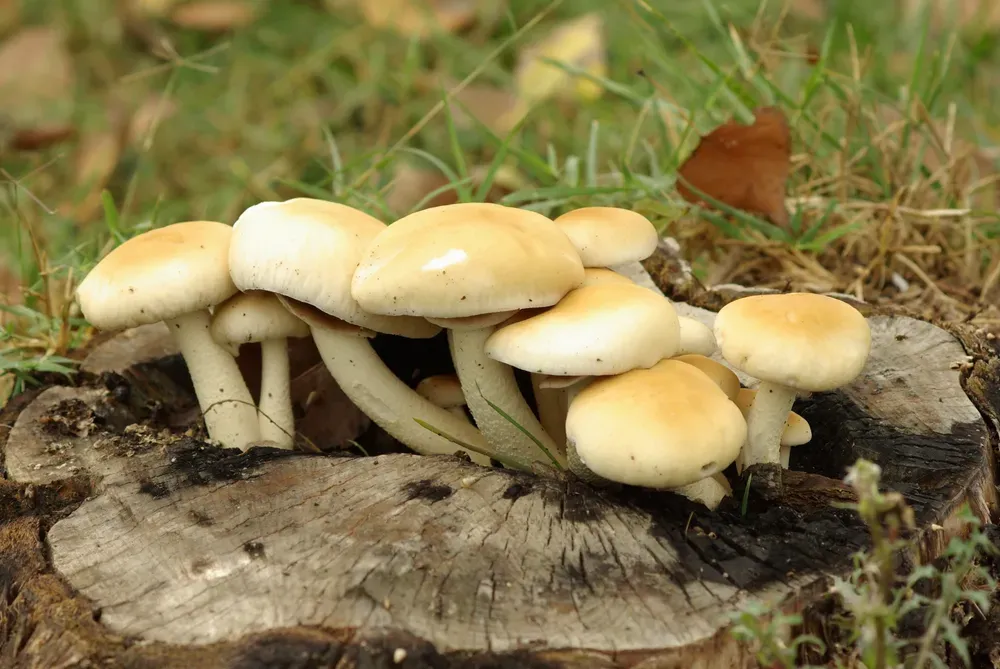
Poplar fieldcap
Cyclocybe aegerita
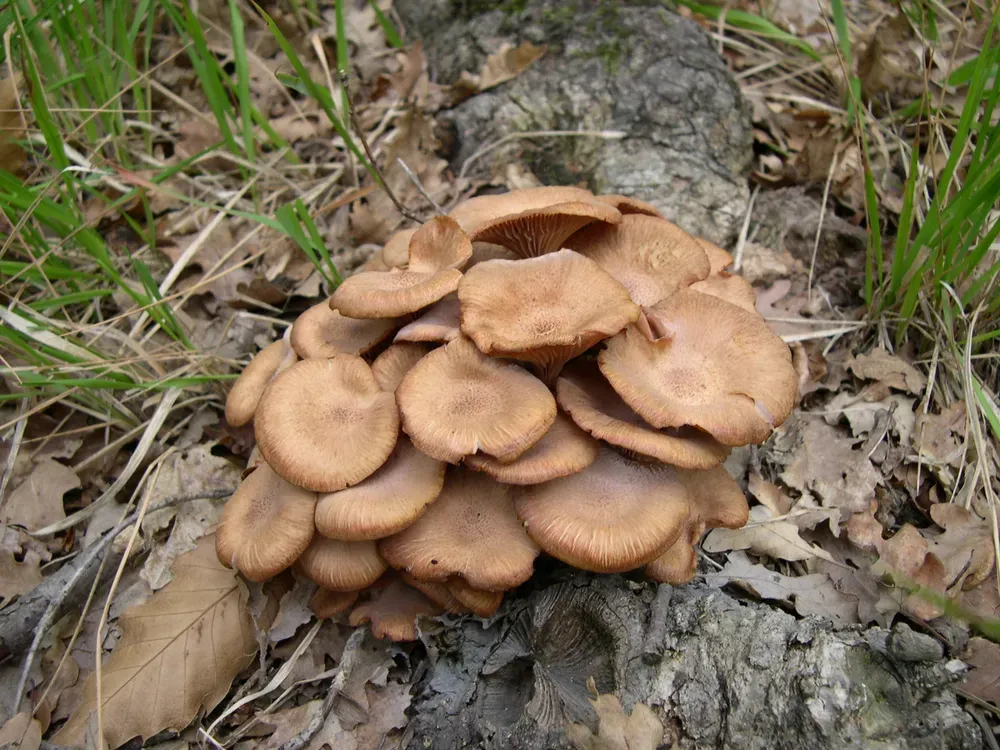
Ringless honey fungus
Desarmillaria tabescens
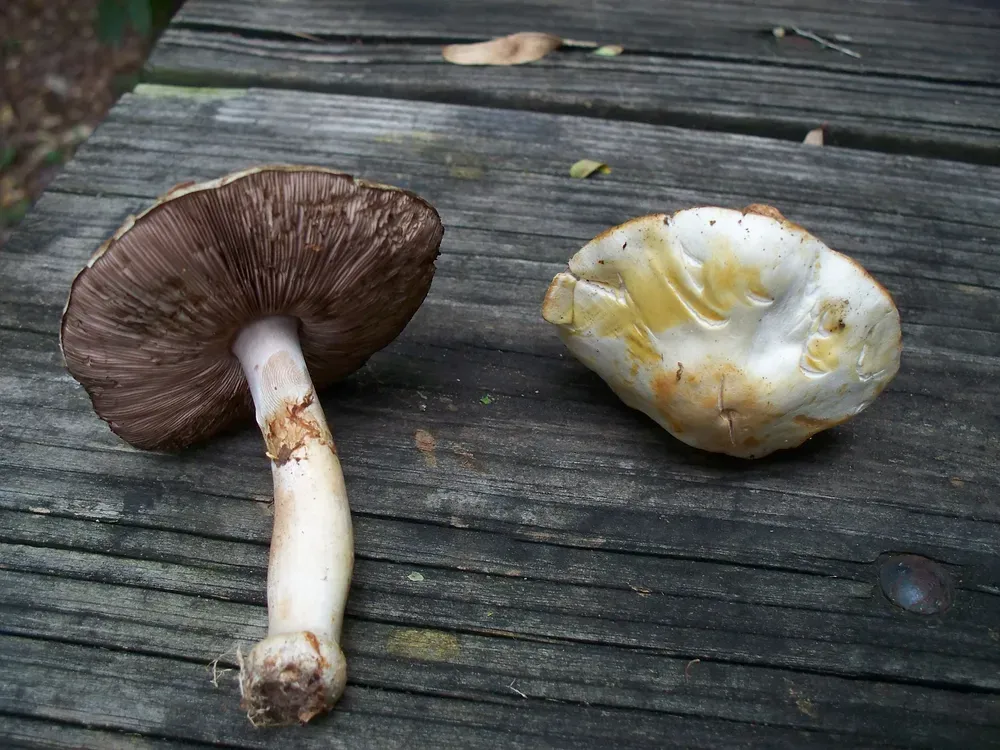
Agaricus abruptibulbus
Agaricus haemorrhoidarius
Agaricus haemorroidarius
Frequently asked questions
Can you eat it?
No, it's not worth it. Technically not very poisonous, but worthless in the kitchen — slimy, unpleasant-smelling, watery. Some sources mention mild stomach upset after accidental consumption. There's no point in picking it.
Why does it smell so unpleasant?
In some populations, the yellowleg bonnet produces fatty acids and aldehydes, which smell like rancid fat. It's part of its biochemistry, not a sign of spoilage. The smell is an extra diagnostic feature of the species, along with the slimy cap.
Does it have dangerous lookalikes?
Nothing serious among the bonnets. All the tiny yellowish mushrooms of the conifer carpet are usually inedible or of no culinary interest. The real danger is mistaking a very young one for a young funeral bell (Galerina marginata), which is deadly poisonous. The galerina has a darker, brown cap, a ringed stem, and a brown spore print. The key difference: the yellowleg bonnet is yellowish with a slimy skin, the galerina is brown with a matte skin and a ring.
Where should you look for it?
In coniferous and mixed forests, mostly pine woods and spruce stands. It loves a damp moss carpet — sphagnum, haircap moss. A saprotroph, it grows on conifer litter and rotting moss.
Which regions of Ukraine is it found in?
Throughout the forest zone: the Carpathians, the Carpathian foothills, Polissia (especially abundant in pine woods), and in places the forest-steppe in pine plantations. In the steppe — in planted pine woods.
When should you look for it?
August to November, peaking in September-October. It survives the first frosts. It's easiest to spot in wet weather, when the slimy cap glistens brightly in the moss.
How do you tell it from other small yellowish mushrooms?
The most reliable feature is the slimy cap and stem. Among the bonnets of our flora, only M. epipterygia has such pronounced slime. If you find a tiny yellowish mushroom in the moss and your fingers stick to the stem, there's a 90% chance it's our bonnet. The second clue is the distinctive rancid smell in some populations.
Is it worth paying attention to?
As a "stunning find" — no. As a diagnostic exercise — yes. Telling bonnets apart (milking, common, yellowleg, bleeding fairy helmet) is great training in attentiveness for a beginner who isn't yet ready to take on serious edible species.
Is Yellowleg bonnet edible or poisonous?
Does Yellowleg bonnet have gills or pores?
What does the cap of Yellowleg bonnet look like?
What does the stem of Yellowleg bonnet look like?
Sources
- [1]Вікіпедія (українська)
- [2]Атлас грибів України, Зеров Д.К. (1979)
- [3]MycoBank Database
- [4]Index Fungorum
- [5]GBIF
- [6]iNaturalist Ukraine