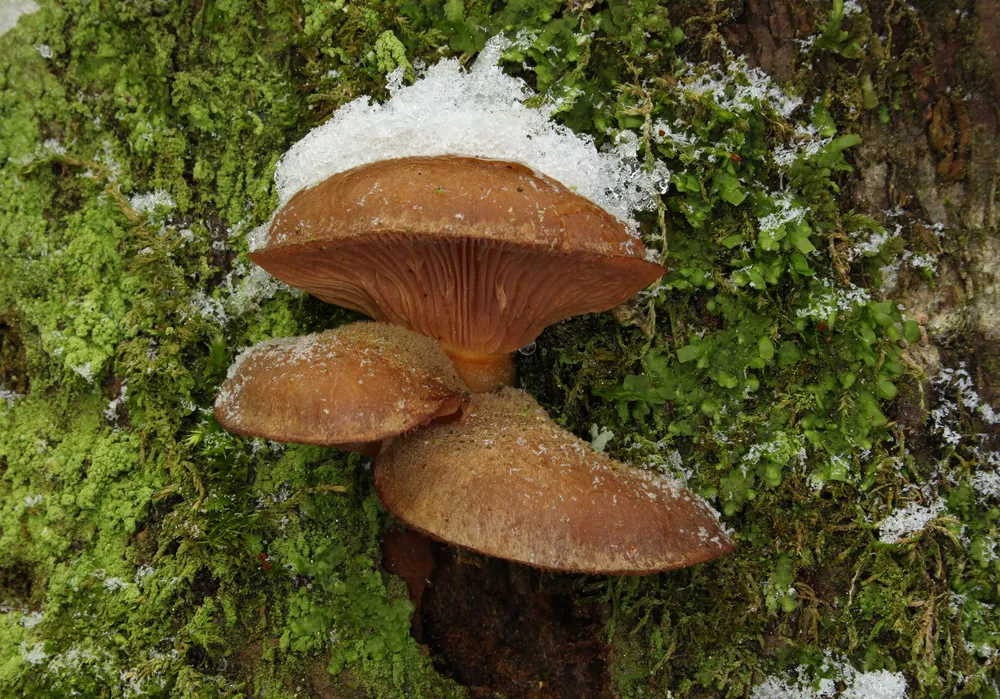
Olive oysterlingPanellus serotinus
Expert-verifiedUpdated October 3, 2026
Passport
- Edibility
- Edible
- Season
- Oct — Nov
- Hymenophore
- Gilled
- Cap color
- Olive
- Size
- Medium (5–15 cm)
- Smell
- Pleasant
- Reviewed
- Yes ✓
Quick answers
Where to look?
Deciduous forest, Mixed forest
When does it appear?
Oct — Nov
Active months: October, November.
How to recognize it? Three signs
- Cap color: Olive, Brown, Yellow
- Cap shape: Irregular
- Smell: Pleasant
Fruiting season
October – November
Description
The olive oysterling is the older autumn relative of the oyster mushroom. Unlike it, it fruits mostly in late autumn, from October to November, sometimes even catching the first frosts. The cap is fan-shaped or semicircular, olive-greenish to olive-brown with a characteristic yellowish tinge at the base. The stem is very short, lateral, sometimes almost absent. It grows in groups on the trunks and logs of deciduous trees — mainly alder, aspen, poplar, beech and willow.
This is a good edible mushroom, but with some caveats. Young fruit bodies have tender, pleasant-tasting flesh — they're good for frying, stewing and pickling. Older ones become stringy and slightly bitter and have no culinary value. Before cooking, it's best to remove the tough skin of the cap. It's safe to pick — the distinctive combination of an olive cap, a lateral stem and a late season on deciduous trees rarely causes confusion.
In Ukraine it is widespread in floodplain, deciduous and mixed forests, in old parks and tree-lined avenues. It is especially common in the Carpathians, Prykarpattia, Polissia and the Forest-Steppe. Season: October–November, peaking in mid-to-late October.
Cap
Cap 5-15 cm, fan-shaped, semicircular or tongue-shaped. Color olive-greenish, olive-brown, lighter and yellowish toward the edge. Surface moist, smooth, slippery in wet weather. The skin is tough — it's best to peel it before cooking.
Hymenophore
Gilled hymenophore. Gills close, thin, decurrent on the stem (where there is one). Color whitish to cream, yellowish with age. Spore print pale yellow.
Stem
Stem short, 1-3 cm, lateral, thickened at the base, sometimes almost absent. Color yellowish to yellow-brown, finely downy in the lower part. No ring.
Flesh
The flesh is white to yellowish, soft and juicy in young specimens, stringy in old ones. The color doesn't change when cut. Pleasant mushroomy taste when young, slightly bitter when old.
Smell
Pleasant mushroomy smell. Mild taste when young, slightly bitter when old.
›Scientific synonyms (6)
Agaricus serotinus Pers. (1793), Pleurotus serotinus (Pers.) P.Kumm. (1871), Sarcomyxa serotina (Pers.) P.Karst. (1891), Acanthocystis serotinus (Pers.) Konrad & Maubl. (1937), Hohenbuehelia serotina (Pers.) Singer (1951), Panus serotinus (Pers.) Kühner (1980)
Lookalikes
Related species
Mushrooms of the same genus and habitat — to study side by side and never mix up.
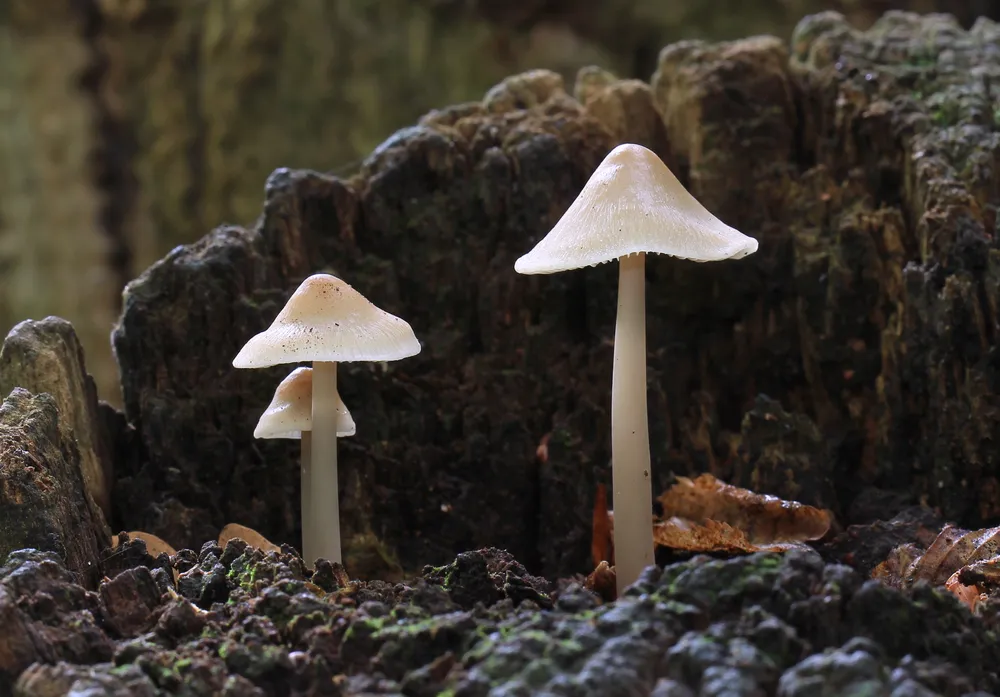
Common bonnet
Mycena galericulata
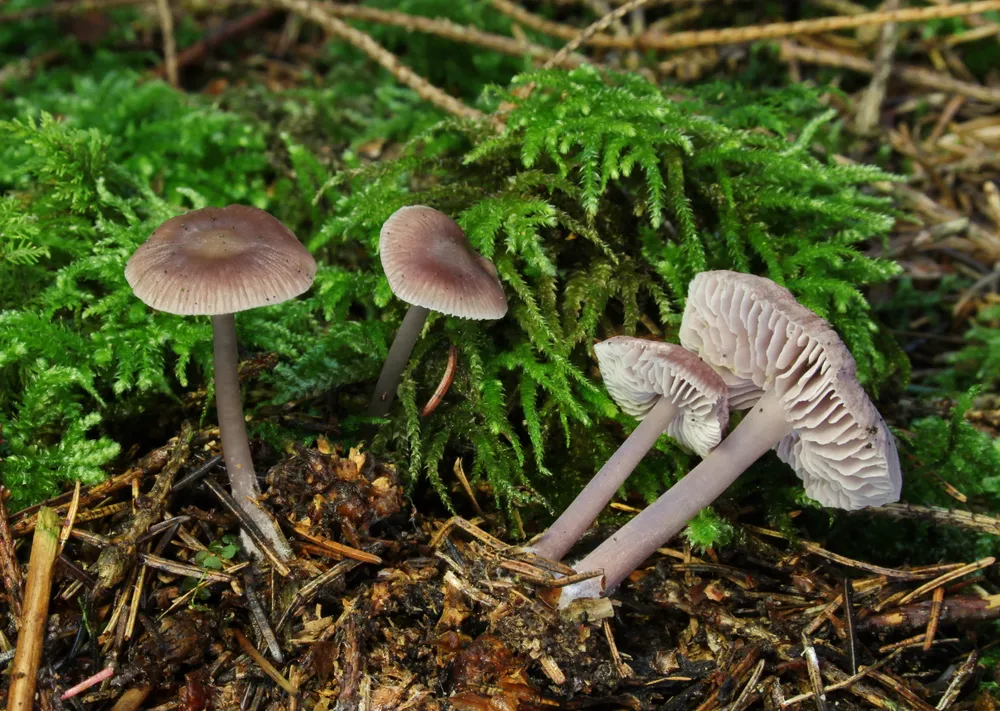
Lilac bonnet
Mycena pura
.webp)
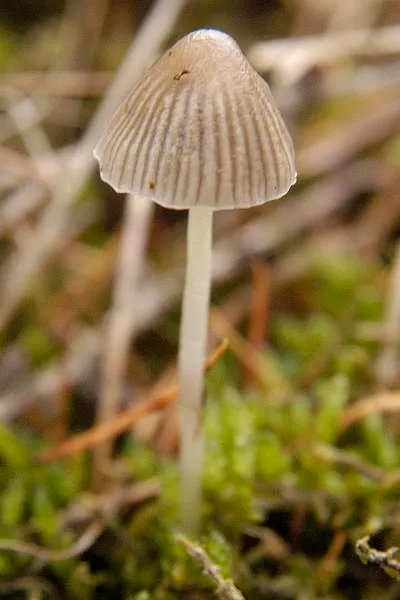
Milking bonnet
Mycena galopus
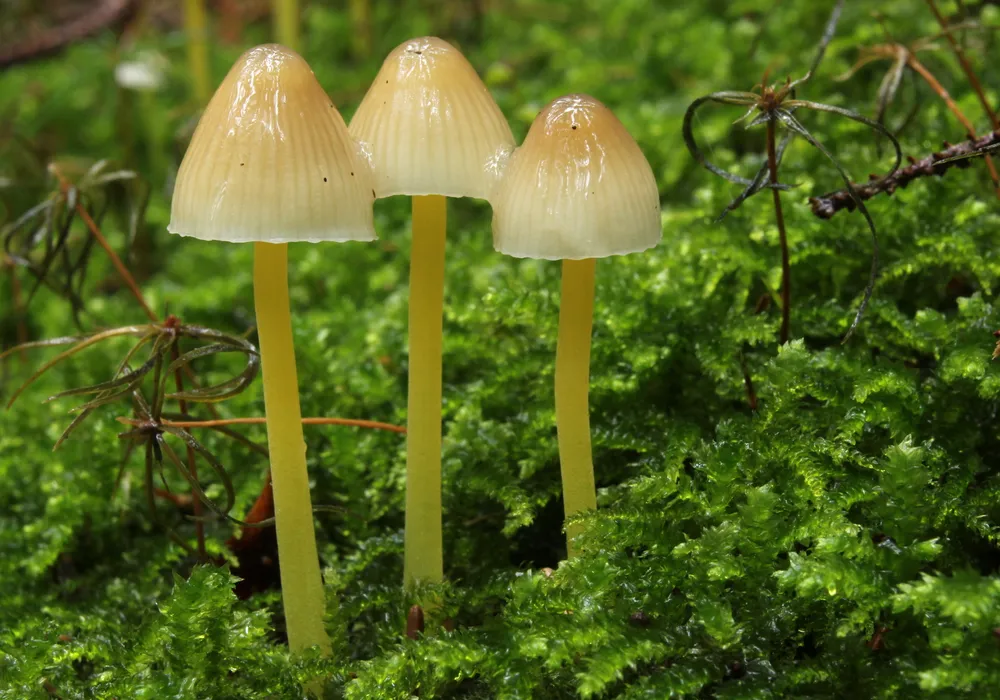
Nitrous bonnet
Mycena leptocephala
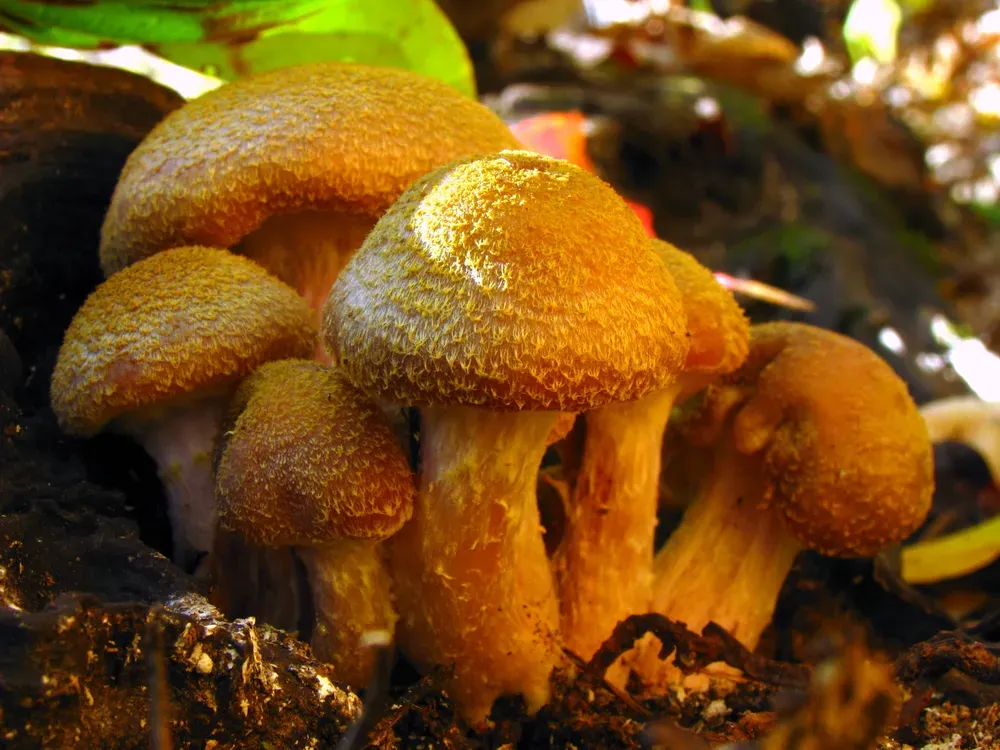
Yellowleg bonnet
Mycena epipterygia
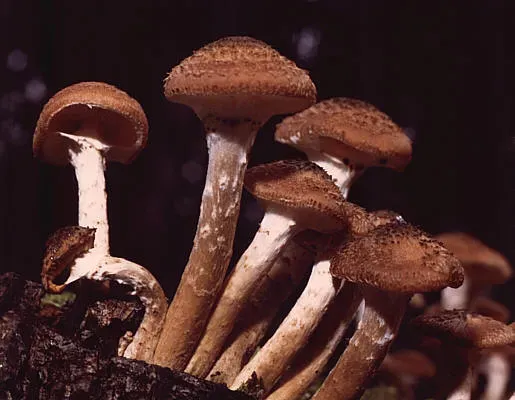
Bulbous honey fungus
Armillaria gallica
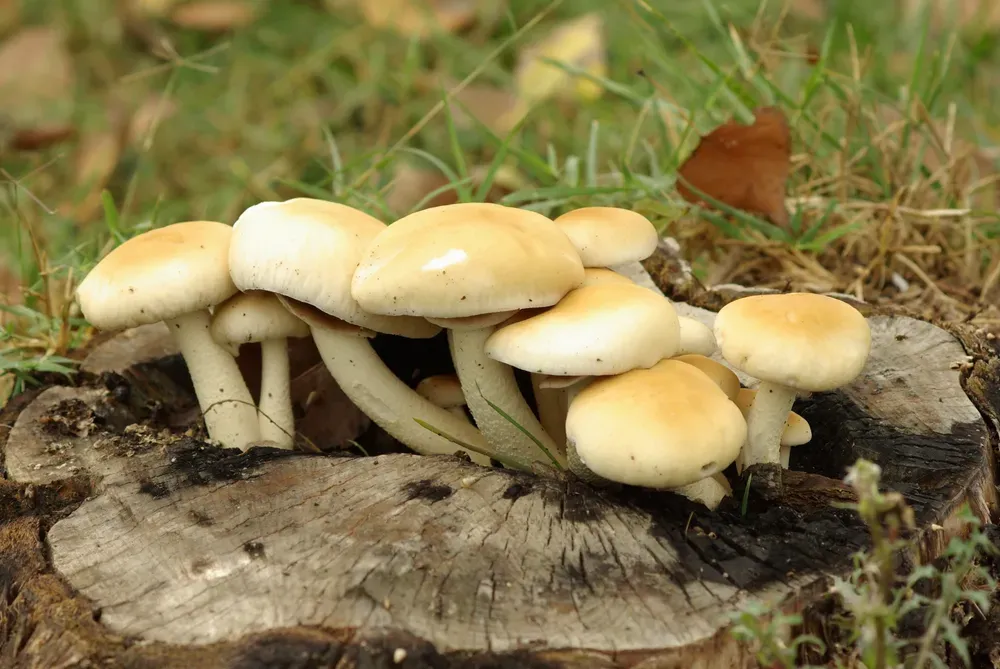
Dark honey fungus
Armillaria ostoyae
Poplar fieldcap
Cyclocybe aegerita
Related reading
_are_growing_at_the_ches_-_panoramio.webp) Where & when to forage
Where & when to forageCan you pick mushrooms after a frost?
The first frosts don't always mean the end of the season. Some mushrooms are ruined by frost, while others are…
July 29, 2026·2 min._Paddenstoel_op_els_01.webp) Where & when to forage
Where & when to forageOyster mushrooms: when they appear and where to look
The oyster mushroom is a tasty wood-dwelling mushroom that grows in clusters on tree trunks in late autumn and…
July 19, 2026·2 min._Paddenstoel_op_els_03.webp) Where & when to forage
Where & when to forageOyster mushroom, the one that grows even in winter
The oyster mushroom grows on trees in clusters and isn't afraid of the cold. Here's what it looks like, where…
June 11, 2026·3 min
Frequently asked questions
Is it safe to eat?
Yes, it's a good edible mushroom. Safe to pick — the combination of an olive cap, a lateral stem, a late season and growth on deciduous trees rarely leads to confusion with dangerous species. Take young fruit bodies.
How to cook it properly?
Peel the tough skin off the cap and remove the gills of old mushrooms, which may be bitter. You can fry it straight away (10-15 min) or boil it for 5-10 min and then fry or stew. Good for pickling. Take only young fruit bodies — old ones are stringy and slightly bitter.
Where to look for it?
On the trunks and logs of deciduous trees — mainly alder, aspen, poplar, beech, willow, less often oak and maple. In groups of 3-10 fruit bodies, often overlapping like roof tiles. In floodplain forests, along riverbanks, in old parks and tree-lined avenues.
Which regions of Ukraine does it grow in?
Throughout the forest and forest-steppe zones: the Carpathians, Prykarpattia, Polissia, the Western/Right-Bank/Left-Bank Forest-Steppe. In the steppe — in floodplain forests and park plantings. Especially common in river floodplains with alder and willow.
When to look for it?
October–November. This is a truly late species — it starts fruiting when most other mushrooms have already finished. Peak — mid-to-late October. It can fruit until the end of November and tolerates the first light frosts.
Does it appear in September?
Occasional finds in the second half of September do happen, especially in the Carpathians and Prykarpattia when it turns cold early. But the main season is October–November. In September, Pleurotus ostreatus (the oyster mushroom), which fruits earlier, is usually still active.
What is it confused with?
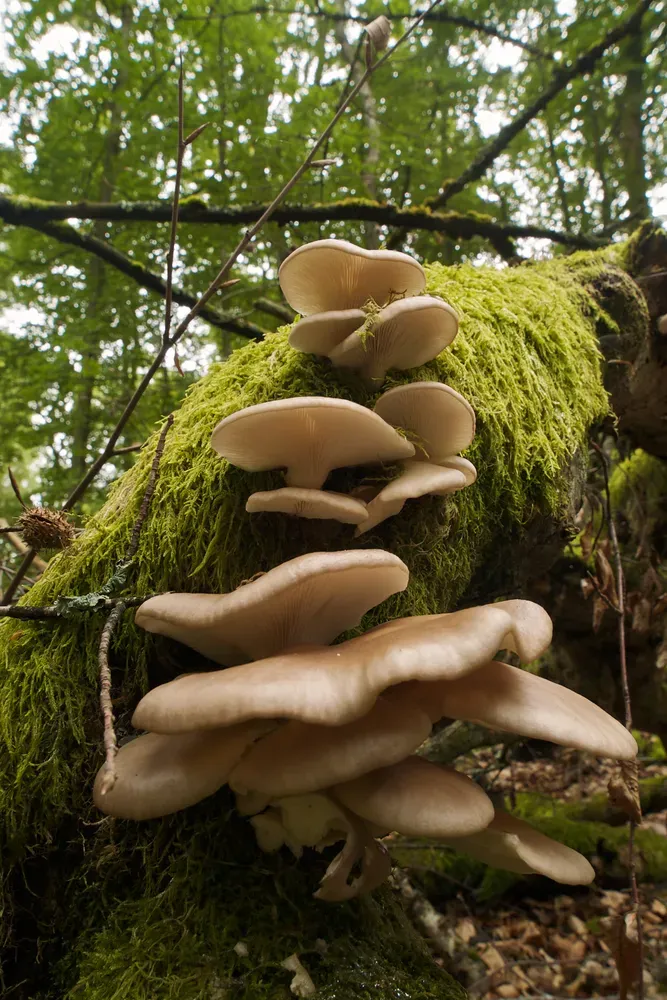
With the oyster mushroom (Pleurotus ostreatus). Differences: the oyster mushroom's cap is gray-blue or gray-brown, the olive oysterling's is olive-greenish. The oyster mushroom's stem is short but noticeable; the olive oysterling's is almost absent. The oyster mushroom fruits earlier (September–November), the olive oysterling mostly in October–November. Both species are edible — a mix-up isn't dangerous.
Are there dangerous lookalikes?
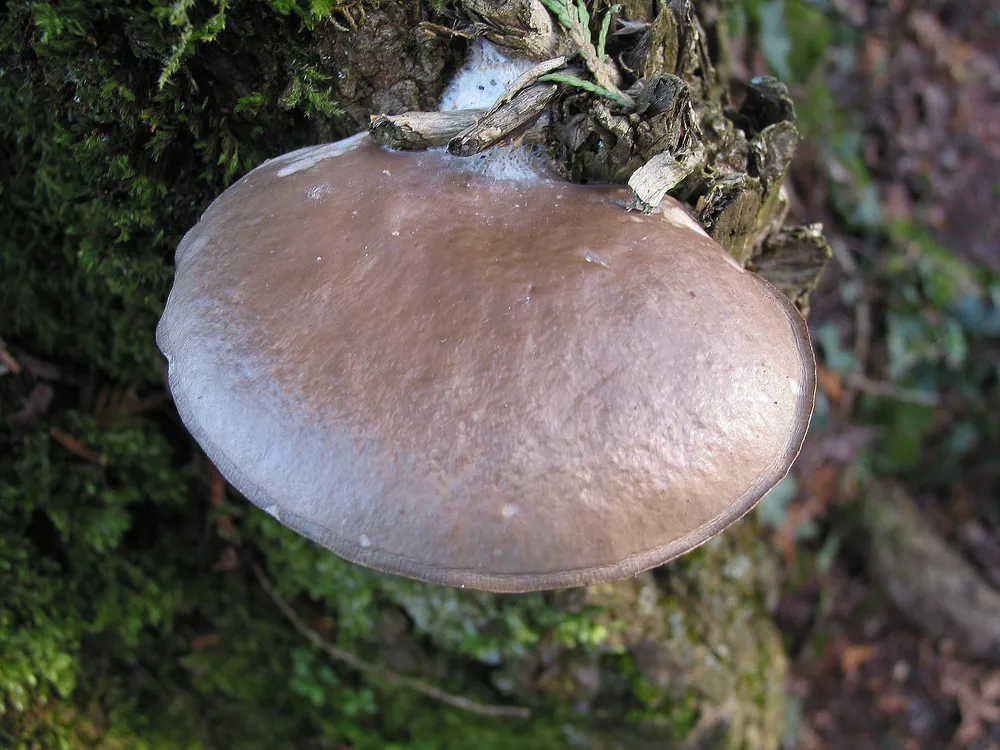
Among mushrooms that grow in fans on deciduous trunks in late autumn with an olive cap, there are no seriously dangerous lookalikes. The key thing is to make sure the mushroom is growing on wood and has a gilled hymenophore. Bracket fungi have a pored hymenophore and woody flesh.
Is Olive oysterling edible or poisonous?
Does Olive oysterling have gills or pores?
What does the cap of Olive oysterling look like?
What does the stem of Olive oysterling look like?
Sources
- [1]Вікіпедія (українська)
- [2]Атлас грибів України, Зеров Д.К. (1979)
- [3]MycoBank Database
- [4]Index Fungorum
- [5]GBIF
- [6]iNaturalist Ukraine