._Paddenstoel_op_els_01.webp)
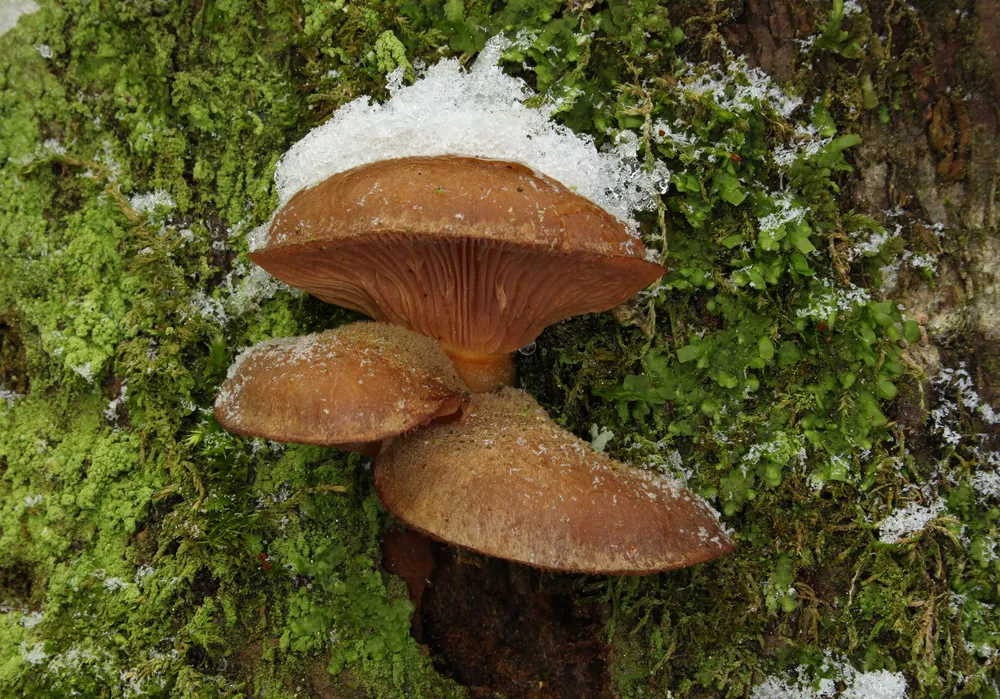
Many people know oyster mushrooms only from the store, but they grow beautifully in the forest too — and at a time when other mushrooms are already gone. This is a cold-season mushroom: clusters of gray-brown caps cling to trunks in late autumn and even in winter during thaws. If you know where to look, oyster mushrooms stretch the season almost to spring.
Let's look at when oyster mushrooms appear, where to find them and how to recognize them.
When oyster mushrooms appear
The oyster mushroom is one of the latest mushrooms of the year. In the wild it fruits from October and keeps going all through November, and during warm winter thaws it turns up even in December–February. Its appearance is a sign that the main mushroom season is ending, but isn't completely over.
The main trigger is a cold snap with moisture: oyster mushrooms love cool weather and aren't afraid of light frosts.
Where to look for oyster mushrooms
The oyster mushroom is a wood-decaying mushroom that grows on dead and weakened hardwood.
- Stumps and fallen trunks of broadleaf trees — poplar, willow, beech, aspen.
- Standing deadwood and weakened trees — the clusters cling to the trunk high up.
- Parks and shelterbelts — oyster mushrooms often turn up even in cities on old trees.
Once you've found a tree with oyster mushrooms, remember it: the mushroom comes back to the same spot for years. For more on Ukraine's winter mushrooms and on how oyster mushrooms grow even in winter, see our separate articles.
How to recognize an oyster mushroom
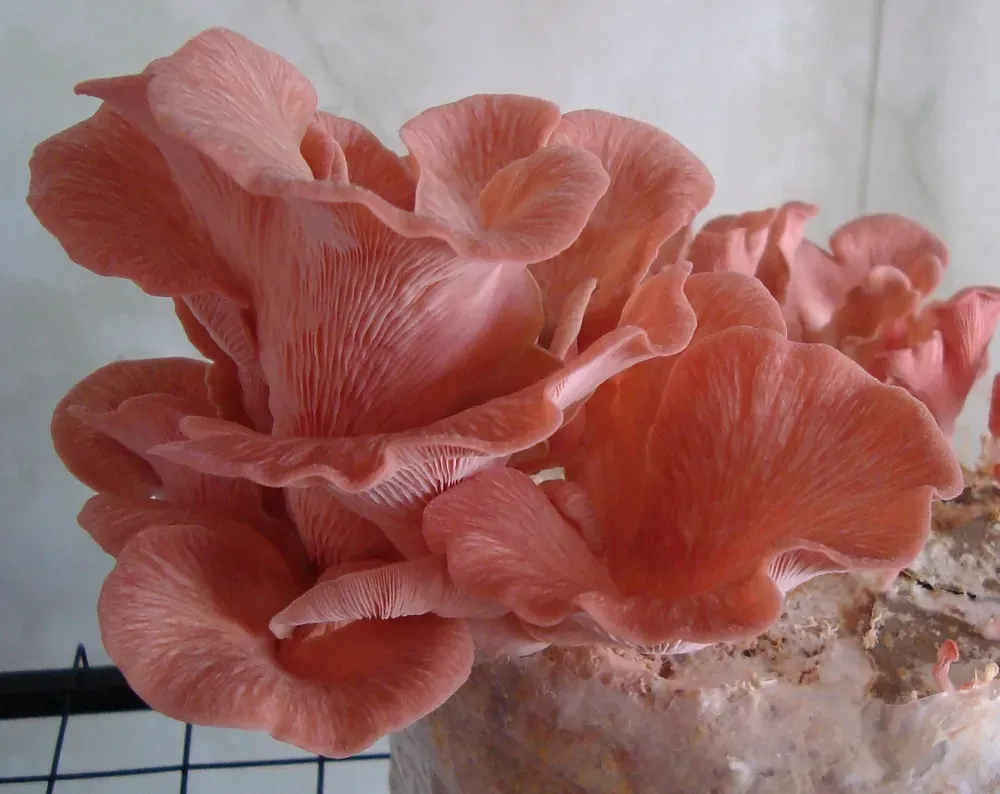
- Cap 5–15 cm, semicircular or ear-shaped, gray-brown, smooth.
- Gills whitish, running down onto a short side stem, or almost no stem at all.
- Growth — in dense, overlapping, shingle-like clusters on wood.
- Flesh white, firm, with a pleasant smell.
Clustered growth on a trunk and a short side stem are reliable signs of an oyster mushroom.
What to keep in mind
- Pick young ones. Old oyster mushrooms get tough; young, firm caps taste better.
- Only on hardwood. Oyster mushrooms don't grow on conifers.
- Cook them fresh — oyster mushrooms are great fried and stewed.
Sources
- “Identification Guide to the Fungi of Ukraine” (Kyiv, Naukova Dumka publishing house).
- Pleurotus ostreatus in GBIF, the global biodiversity database.
- Pleurotus ostreatus in MycoBank, the international fungal nomenclature database.
- Pleurotus ostreatus on Wikipedia.
Frequently asked questions
When do oyster mushrooms appear in the forest?
From October through November, and during warm winter thaws even in December–February. It's a cold-season mushroom that isn't afraid of light frosts.
Where do oyster mushrooms grow?
On dead and weakened hardwood — stumps, fallen trunks, standing dead poplars, willows, beeches and aspens, often in clusters high up.
How do you recognize an oyster mushroom?
By its gray-brown, ear-shaped cap, whitish gills running down onto a short side stem, and its growth in dense clusters on wood.
Do oyster mushrooms grow in winter?
Yes, during warm winter thaws oyster mushrooms fruit even in December–February. They love cool weather and come back with every warm spell.
Can you confuse an oyster mushroom with a poisonous mushroom?
Oyster mushrooms have no dangerous deadly look-alikes, but always check for clustered growth on hardwood and a side stem.
Are wild oyster mushrooms edible?
Yes, wild oyster mushrooms are edible and just as tasty as store-bought ones. Young, firm caps are fried and stewed.
Which trees should you check for oyster mushrooms?
Broadleaf trees — poplar, willow, beech, aspen. Oyster mushrooms don't grow on conifer wood.
Do oyster mushrooms come back to the same spot?
Yes, the mycelium lives in the wood for years, so a tree with oyster mushrooms gives a harvest for more than one season. Remember spots like these.
Mushrooms in this article
Related articles
 Recipes & cooking
How to store fresh mushrooms, and for how long
Fresh mushrooms spoil faster than you might think. Here's how long they keep in the fridge, how to store them…
August 21, 2026·4 min How to identify
Truffles in Ukraine: do they grow here, and where to look
Truffles aren't just a French delicacy. Several species grow in Ukraine too. Here's which ones, where they occ…
August 24, 2026·2 min Recipes & cooking
How long to boil mushrooms
Boiling time depends on the type of mushroom and on what you're cooking next. Here's a clear cheat sheet: how…
August 22, 2026·4 min