._Paddenstoel_op_els_03.webp)
When most mushrooms are gone and the forest is getting ready for winter, oyster mushrooms appear on tree trunks. This mushroom isn't afraid of the cold and can even handle light frosts, so it stretches the mushroom season right up to winter. On top of that, oyster mushrooms grow in large clusters, so a single find often gives a generous harvest.
Let's look at what the oyster mushroom looks like, where to find it, why it's so cold-hardy and why it's one of the safest mushrooms for beginners.
What the oyster mushroom looks like
Oyster mushroom has a distinctive look that makes it easy to recognize.
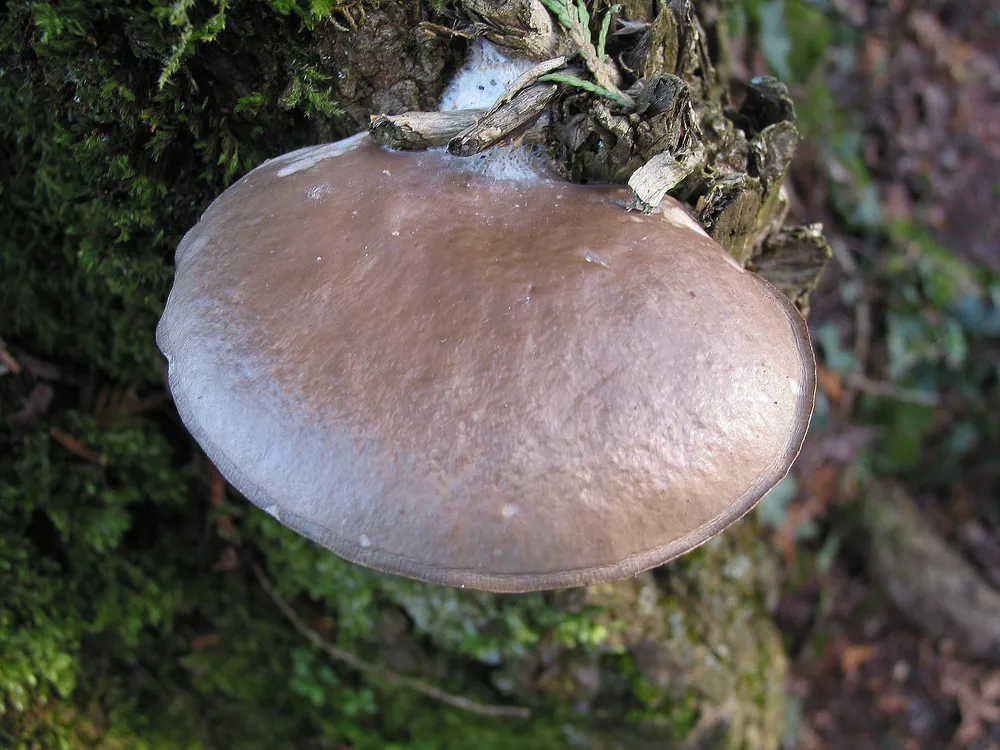
- Cap. Semicircular or tongue-shaped, like an ear or a shell, gray, gray-brown or ashy.
- Gills. White or cream, running down onto a short side stem.
- Stem. Short, often off to the side, and sometimes almost invisible.
- Grows in clusters. The mushrooms sit one above another like roof tiles, forming large fused clusters.
The oyster mushroom grows on wood, attached to the trunk by its side, so you can't mistake it for anything else. The flesh is white and firm, with a pleasant mushroomy smell.
Where and when the oyster mushroom grows
The oyster mushroom is a wood-decay fungus, so you need to look for it on trees.
It grows on the trunks and stumps of broadleaf trees, especially poplars, willows, beeches and aspens, both living and dead. The clusters often sit high on the trunk, so it's worth looking up, not just at your feet.
The oyster mushroom's season falls in the cool part of the year: it appears in autumn and fruits until winter, tolerating light frosts. It's this cold-hardiness that makes it a standout mushroom at the end of the season, as we describe in our piece on mushrooms of the cold season and first frosts.
Why the oyster mushroom isn't afraid of the cold
The oyster mushroom is one of those mushrooms whose mycelium is active at low temperatures.
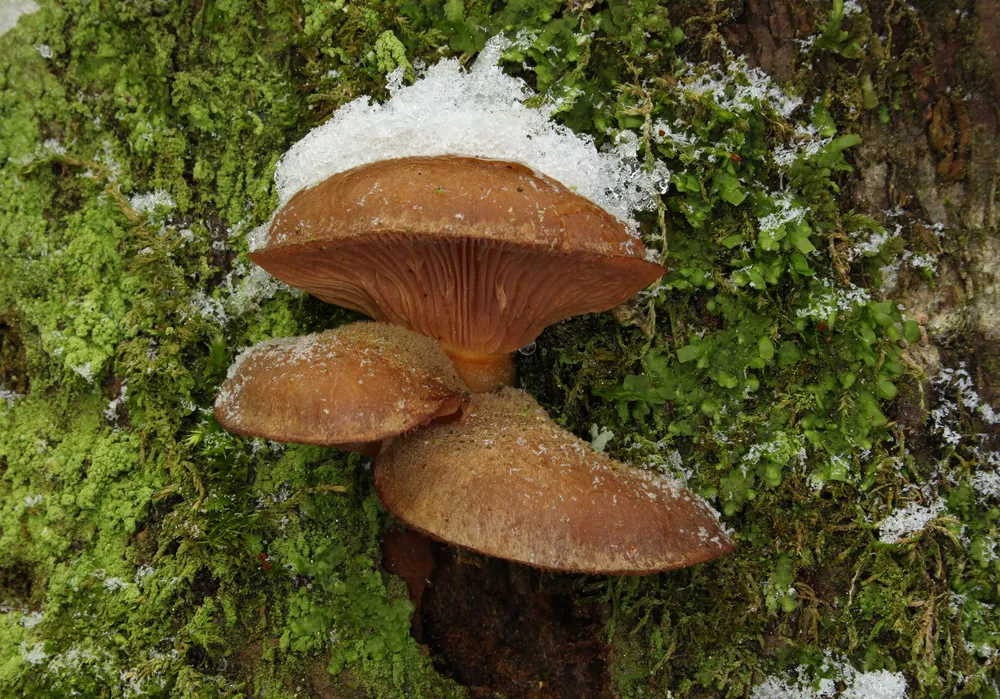
While warmth-loving species go dormant as the cold sets in, the oyster mushroom takes the stage. A light frost doesn't scare it: after a thaw the clusters often stand intact and fit for picking. At this time of year you may also find the olive oysterling, as well as the cold-hardy velvet shank.
Thanks to this, the oyster mushroom extends the mushroom season when the forest is already almost empty, and gives you fresh mushrooms almost until winter.
Why the oyster mushroom suits beginners
The oyster mushroom is a great choice for anyone just learning to forage.
- No deadly lookalikes. There's practically no mushroom in our forests that looks like the oyster mushroom and is dangerous.
- Easy to recognize. Growing in clusters on a trunk, the side stem and the ear-shaped cap mean you can't confuse it with anything.
- Grows predictably. Once you've found a tree with oyster mushrooms, you can come back to it every year.
- Versatile in the kitchen. Oyster mushrooms are fried, stewed and added to soups, and they don't need complicated preparation.
Young oyster mushrooms are the tastiest, because old ones get tough. When picking, cut the clusters with a knife, leaving part of them on the trunk. Read more about cold-hardy mushrooms in a separate article, and for the best time to head out, check the mushroom radar.
Sources
- "Key to the Fungi of Ukraine" (Kyiv, Naukova Dumka publishing house).
- Pleurotus ostreatus on GBIF, the global biodiversity database.
- Pleurotus ostreatus on MycoBank, the international fungal nomenclature database.
- Pleurotus ostreatus on Wikipedia.
Frequently asked questions
What does the oyster mushroom look like?
A semicircular, ear-shaped cap that's gray or gray-brown, with white gills running down onto a short side stem. It grows in large clusters on the trunks and stumps of broadleaf trees.
Where does the oyster mushroom grow?
On the wood of broadleaf trees: the trunks and stumps of poplars, willows, beeches and aspens, living and dead. The clusters often sit high up, so when searching, it's worth looking up the trunk too.
When should you pick oyster mushrooms?
In autumn and early winter. The oyster mushroom is cold-hardy, fruits in the cool season and tolerates light frosts, so it extends the mushroom season when there are almost no other mushrooms left.
Why isn't the oyster mushroom afraid of frost?
Because its mycelium is active at low temperatures. A light frost doesn't harm it: after a thaw the clusters often stay intact and fit for picking, just as with the .
Does the oyster mushroom have poisonous lookalikes?
Practically none. There's no dangerous mushroom in our forests that looks like the oyster mushroom, so it's considered one of the safest mushrooms for beginners.
Why is the oyster mushroom good for beginners?
Because it's easy to recognize by its clusters on a trunk and its side stem, it has no deadly lookalikes, it grows predictably and it's simple to cook.
Which oyster mushrooms are the tastiest?
Young ones with small caps. Old oyster mushrooms get coarser and tougher. When picking, cut the clusters with a knife, leaving part on the trunk.
How do you cook oyster mushrooms?
Oyster mushrooms are fried, stewed and added to soups. They don't need pre-boiling or complicated preparation, and young mushrooms cook quickly and have a delicate flavor.
Mushrooms in this article
Related articles
 Science & taxonomy
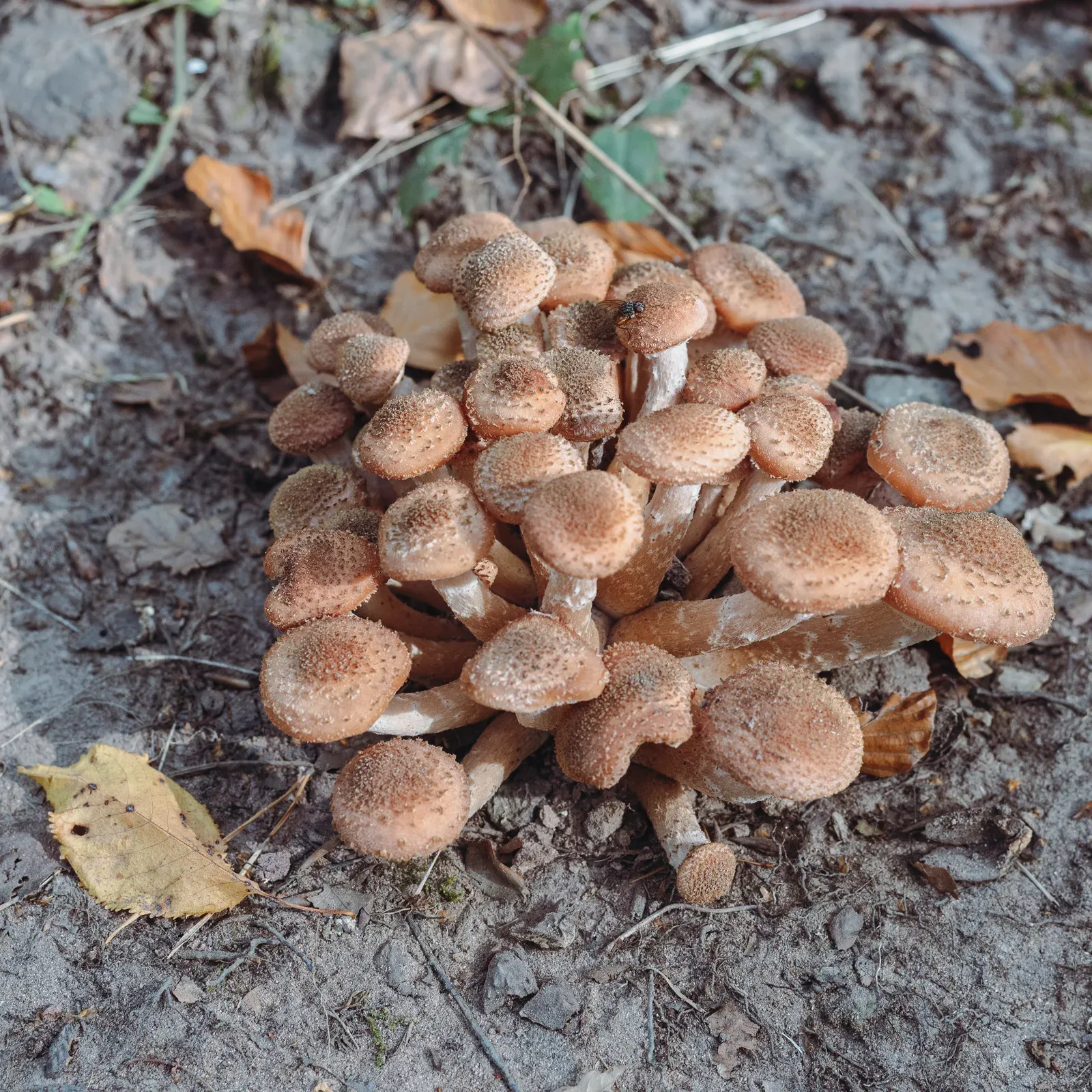
Honey fungus: health benefits and risks
Honey fungus is a nourishing autumn mushroom, rich in protein and minerals. Here's why honey fungus is good fo…
August 20, 2026·2 min Recipes & cooking
How to store fresh mushrooms, and for how long
Fresh mushrooms spoil faster than you might think. Here's how long they keep in the fridge, how to store them…
August 21, 2026·4 min How to identify
Truffles in Ukraine: do they grow here, and where to look
Truffles aren't just a French delicacy. Several species grow in Ukraine too. Here's which ones, where they occ…
August 24, 2026·2 min