Conifercone capBaeospora myosura
Expert-verifiedUpdated August 15, 2026
Passport
- Edibility
- Inedible
- Season
- Jul — Nov
- Hymenophore
- Gilled
- Cap color
- Pink
- Size
- Very small (<3 cm)
- Smell
- Odorless
- Reviewed
- Yes ✓
Quick answers
Where to look?
Conifer forest, Mixed forest
When does it appear?
Jul — Nov
Active months: July, August, September, October, November.
How to recognize it? Three signs
- Cap color: Pink, Brown, Cream
- Cap shape: Umbonate
- Smell: Odorless
Fruiting season
July – November
Description
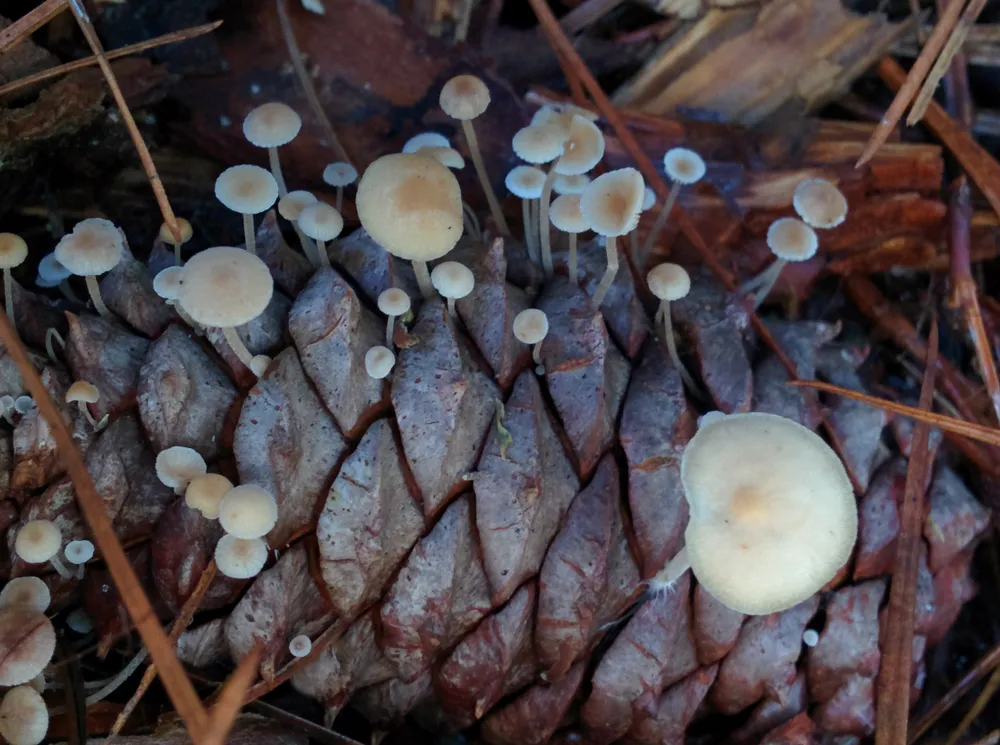
The Conifercone cap is a specialist of pine and spruce forests. Its main substrate is fallen conifer cones. Sometimes it moves onto rotting wood, but that's not typical.
It grows in large groups: once you've found one cone, there may be a dozen more little mushrooms nearby. The cap is small (1–2 cm), with a characteristic bump in the middle. Color — pinkish-gray-brown, noticeably darker in the center.
An interesting feature is the white mealy "powder" on the lower part of the stem. Its Mycena relatives don't have this coating. The mushroom isn't edible — tiny, thin-fleshed, a typical "background" species of coniferous forests.
Cap
Cap 1–2 cm. Hemispherical at first, then opening out flat with a central bump. Pinkish-gray-brown, darker in the center, paler toward the margin.
Hymenophore
Gilled hymenophore. Gills crowded, white or grayish. Spore print white. Spores very small, 2.7–4 × 1–2.2 µm.
Stem
Stem 2–8 cm tall, thin. Colored: reddish-brown, cream-brown, yellow-brown. Covered with a white mealy coating — this is the most characteristic feature.
Flesh
flesh very thin, fragile. White to cream. No notable changes.
Smell
Faint, mushroomy. No sharp notes.
Lookalikes
_Singer_172533.webp)
Related species
Mushrooms of the same genus and habitat — to study side by side and never mix up.
Fairy ring champignon
Marasmius oreades
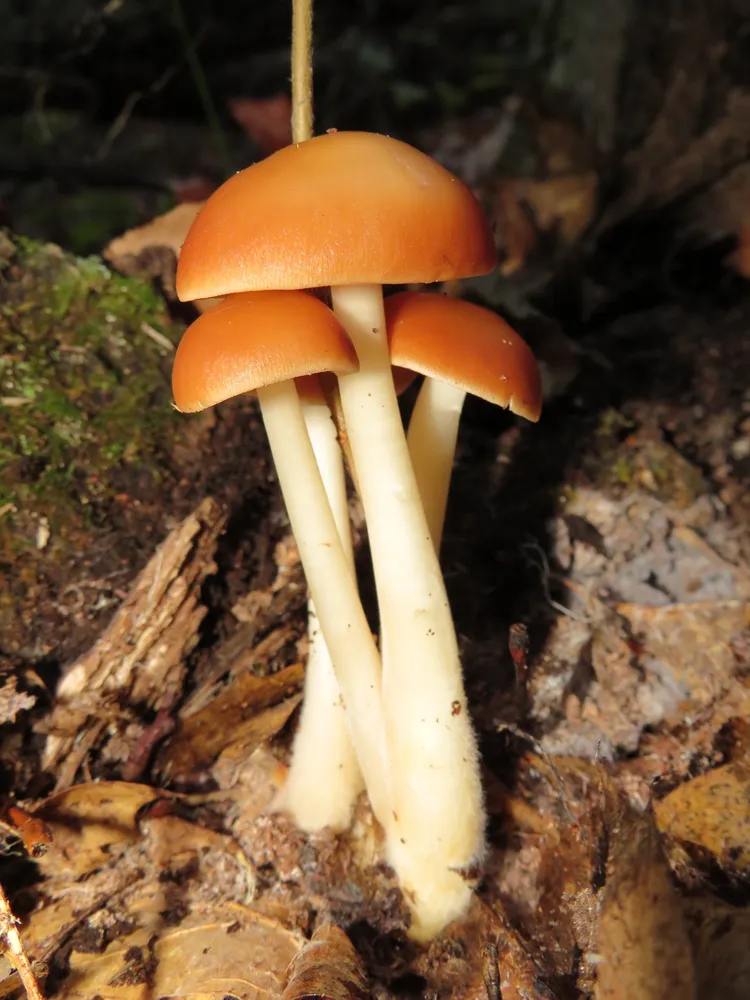
Russet toughshank
Gymnopus dryophilus
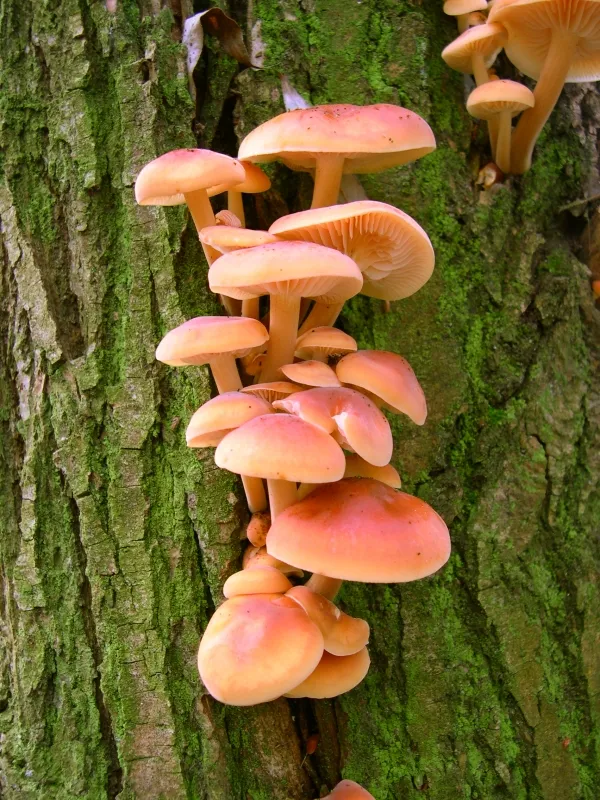
Velvet shank
Flammulina velutipes
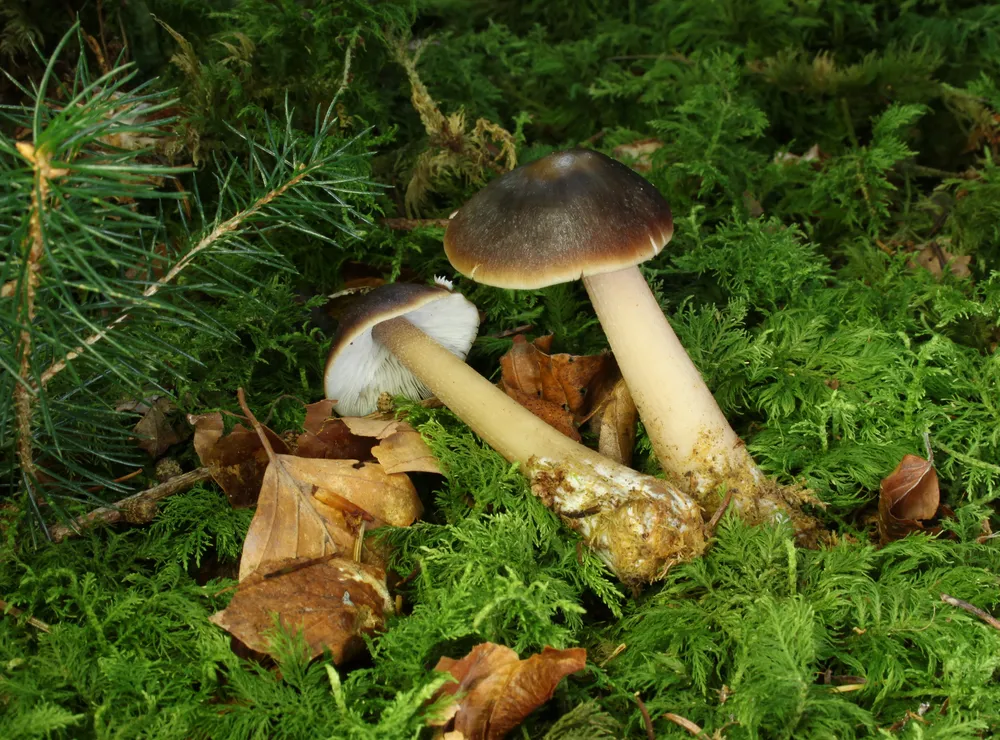
Butter cap
Rhodocollybia butyracea
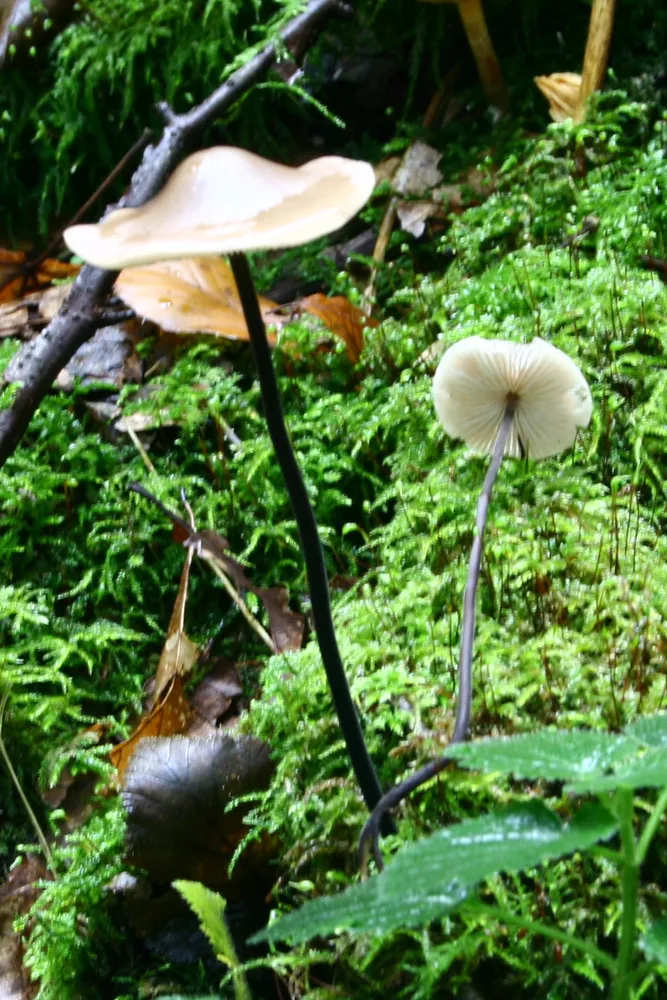
Mycetinis prasiosmus
Marasmius prasiosmus
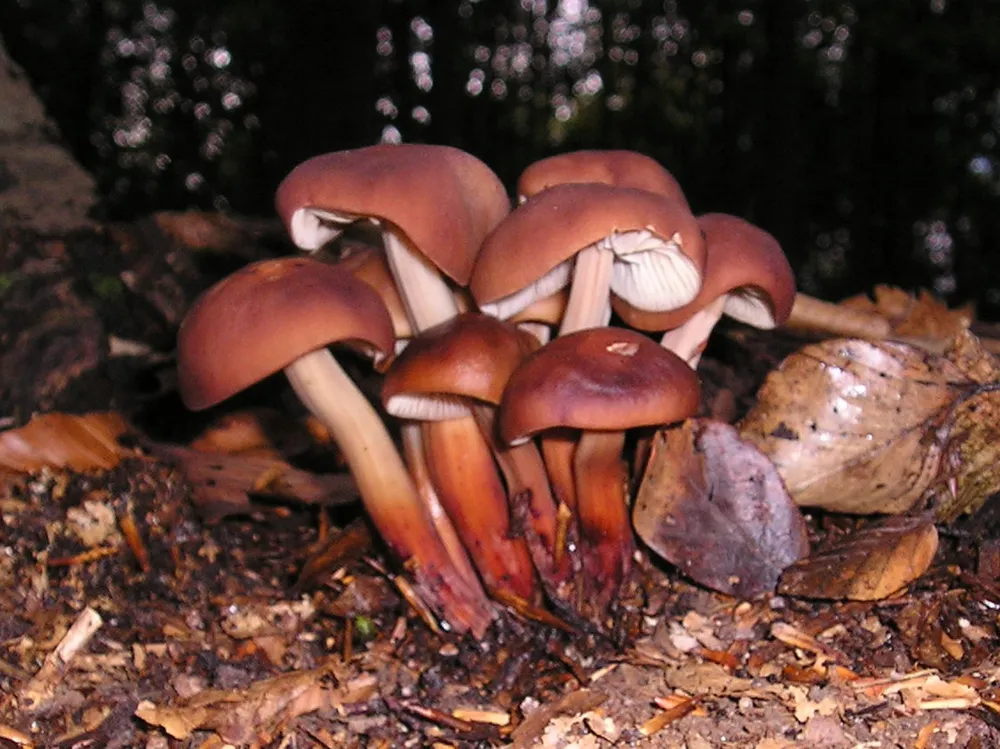
Spindle toughshank
Gymnopus fusipes
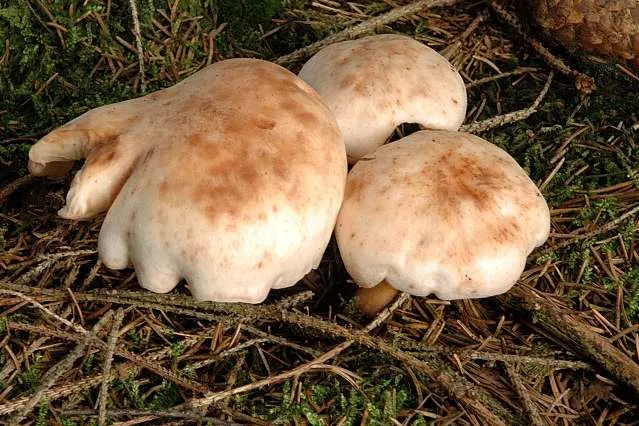
Spotted toughshank
Rhodocollybia maculata
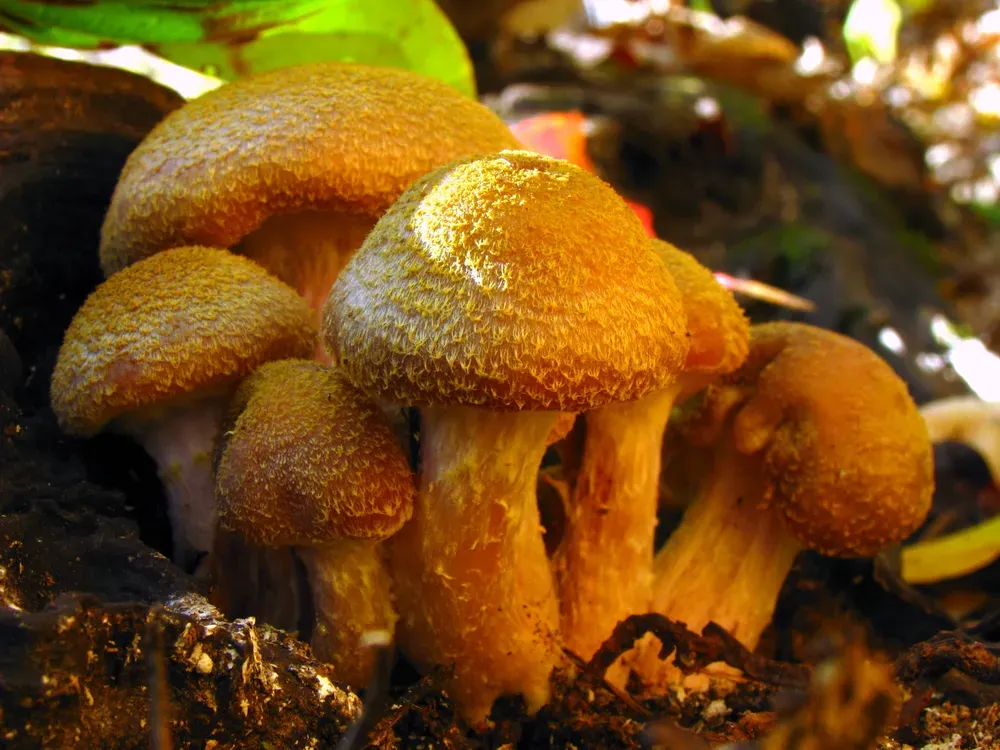
Bulbous honey fungus
Armillaria gallica
Frequently asked questions
Can you eat it?
No, it isn't eaten. Tiny and thin-fleshed — there's no food value and no flavor worth having. Ukrainian sources don't confirm it as edible.
Is it poisonous?
No toxins have been described. It's simply a small, inedible species of coniferous forests.
Where should you look for it?
On fallen pine and spruce cones in coniferous and mixed forests. Occasionally on rotting wood. Always in large groups.
Does it grow in broadleaf forests?
No. It's strictly a conifer substrate — pine and spruce cones. You won't see it in oak or beech forests.
When can you see it?
From summer to late autumn. Look during damp spells, when the cones are swollen and starting to decay.
Can you find it in autumn under snow?
Sometimes, yes — late-autumn fruiting bodies stay in the litter until the first frosts.
What is it confused with?
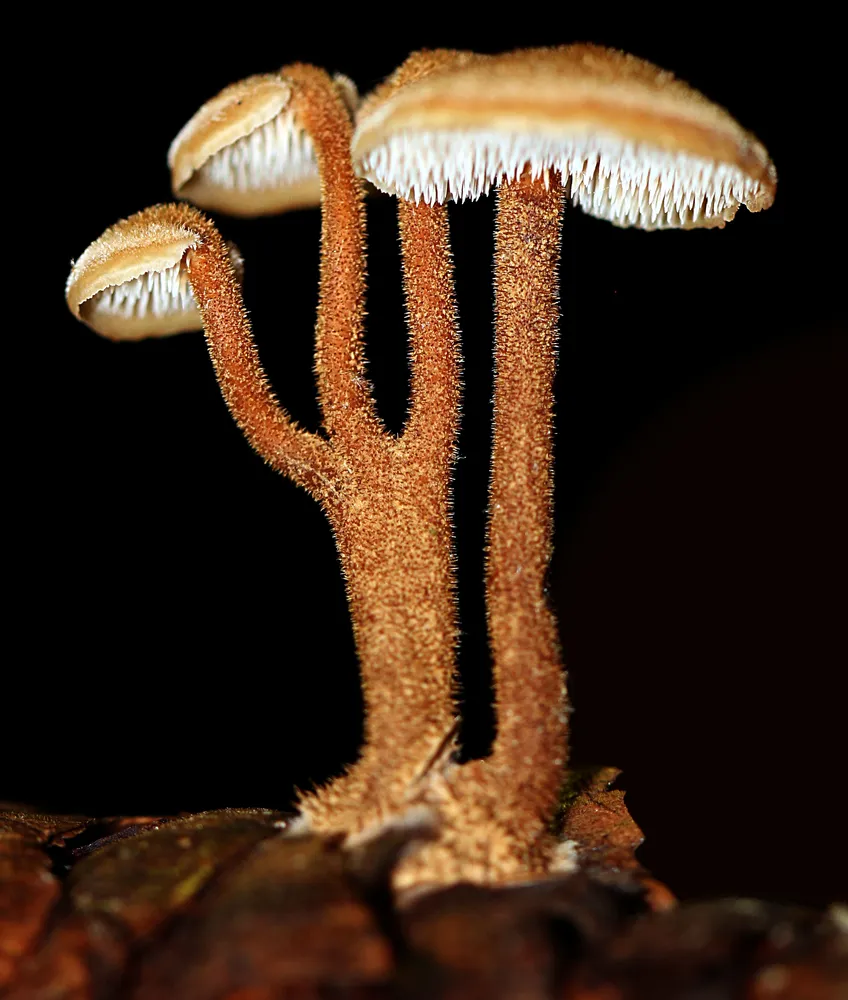
With its relative the Earpick fungus, which also sits on pine cones. The Earpick fungus has a spiny hymenophore and a dark stem; the Conifercone cap has gills and is paler.
How do you identify it for sure?
Check two features: gills under the cap (not spines) and a white mealy coating on the lower part of the stem. Both together — that's the Conifercone cap.
Is Conifercone cap edible or poisonous?
Does Conifercone cap have gills or pores?
What does the cap of Conifercone cap look like?
What does the stem of Conifercone cap look like?
Sources
- [1]Вікіпедія (українська)
- [2]Атлас грибів України, Зеров Д.К. (1979)
- [3]MycoBank Database
- [4]Index Fungorum
- [5]GBIF
- [6]iNaturalist Ukraine