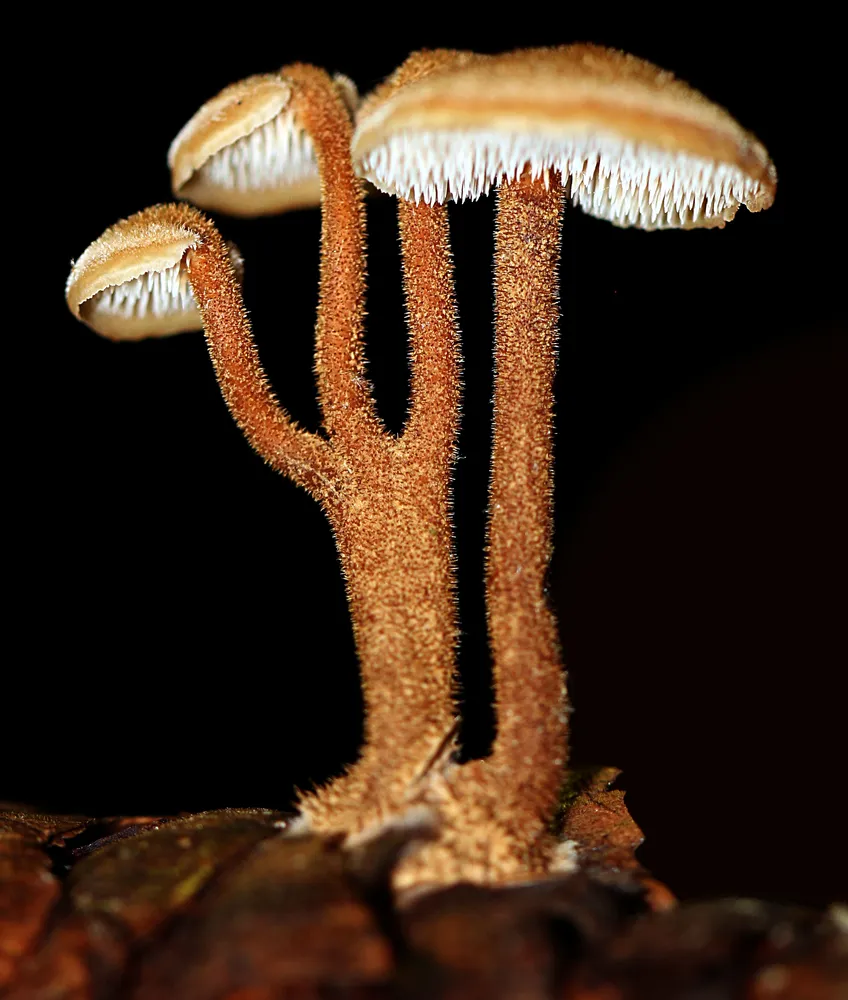
Earpick fungusAuriscalpium vulgare
Expert-verifiedUpdated August 15, 2026
Passport
- Edibility
- Inedible
- Season
- Apr — Oct
- Hymenophore
- Spiny
- Cap color
- Brown
- Size
- Very small (<3 cm)
- Smell
- Odorless
- Reviewed
- Yes ✓
Quick answers
Where to look?
Conifer forest, Mixed forest
When does it appear?
Apr — Oct
Active months: April, May, June, July, August, September, October.
How to recognize it? Three signs
- Cap color: Brown, Dark brown, Black
- Cap shape: Convex
- Smell: Odorless
Fruiting season
April – October
Description
The Earpick fungus is perhaps the strangest-looking mushroom of Ukraine's pine woods. It grows directly on conifer cones — mostly on old pine cones lying in the litter. Nowhere else.
From the outside, the Earpick fungus looks like a tiny dark spoon: an off-center or lateral stem, an asymmetric semicircular cap, a dark brown or nearly black bristly surface. And under the cap there are spines instead of gills or tubes. That makes it a vivid example of a spine-bearing mushroom unrelated to the hedgehogs.
The species is fairly widespread in Europe, temperate Asia and North America. In Ukraine it occurs in coniferous and mixed forests — wherever there are pine cones on the ground. Fruiting bodies appear over a long period — from late April to late October, and dried specimens can remain on the cone until March of the following year.
Cap
Cap 0.5–2.5 cm across, asymmetric, semicircular, often lopsided. Surface bristly. Brownish-gray at first, then dark brown to black.
Hymenophore
Spiny hymenophore — spines up to 3 mm long, cone-shaped. Whitish at first, then creamy-yellowish. This is what sets the Earpick fungus apart from its relatives.
Stem
Stem 3–10 cm tall, very thin (1–2 mm thick), off-center or lateral. Surface hairy, dark brown.
Flesh
flesh thin, leathery, dark. No distinctive color changes.
Smell
Faint, nondescript. Not sharp.
Lookalikes
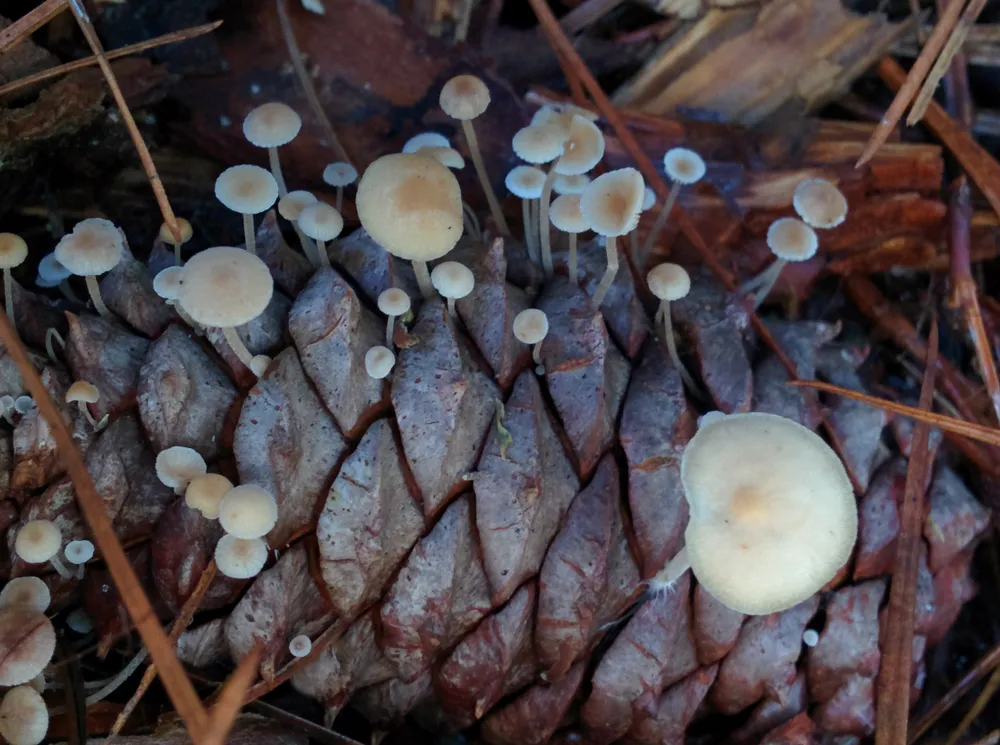
Related species
Mushrooms of the same genus and habitat — to study side by side and never mix up.
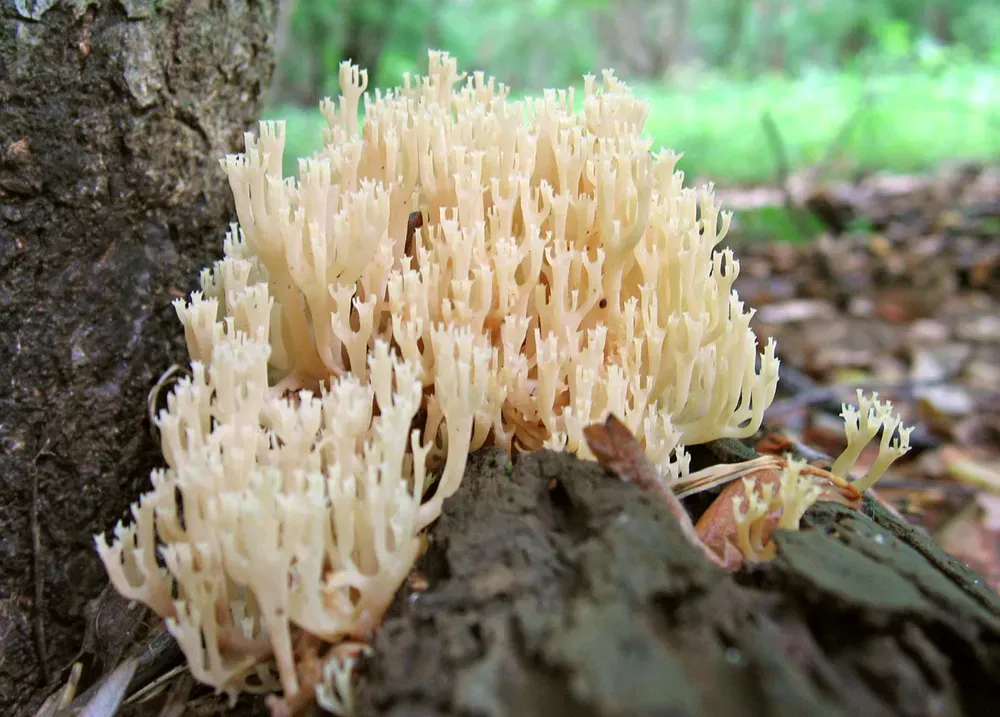
Candelabra coral
Artomyces pyxidatus
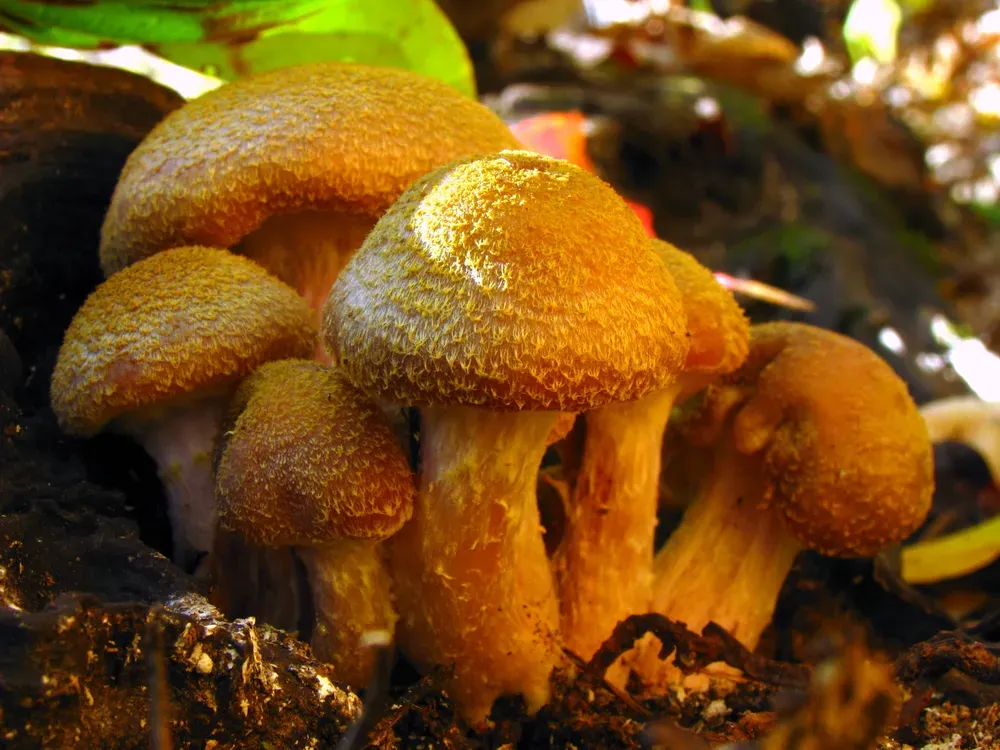
Bulbous honey fungus
Armillaria gallica
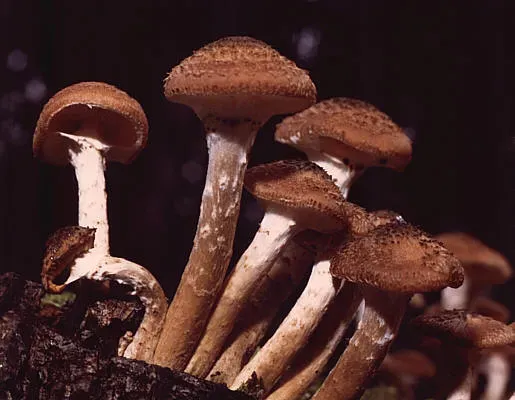
Dark honey fungus
Armillaria ostoyae
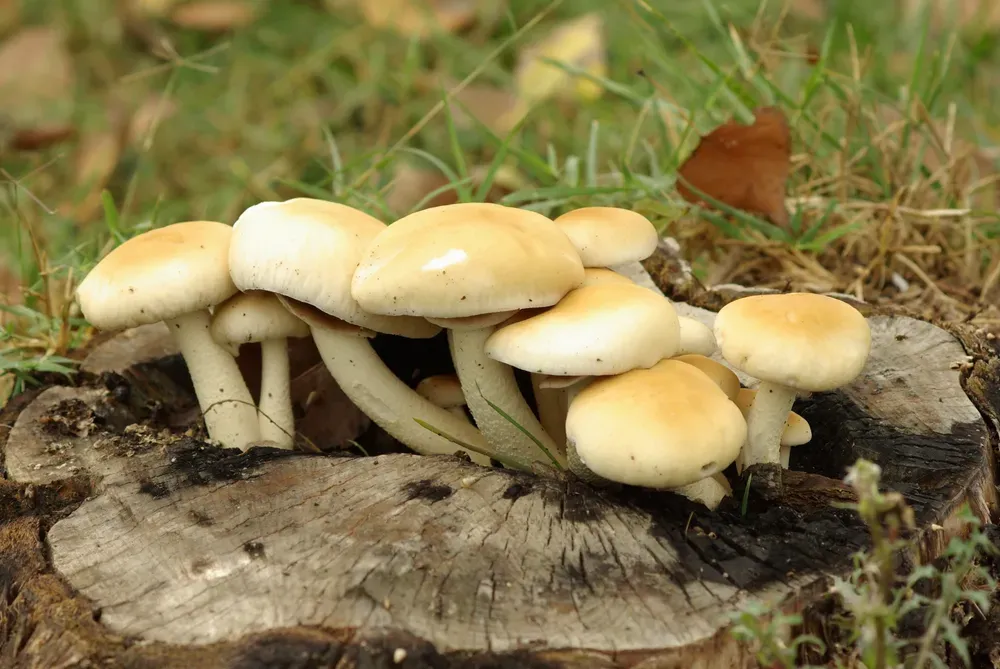
Poplar fieldcap
Cyclocybe aegerita
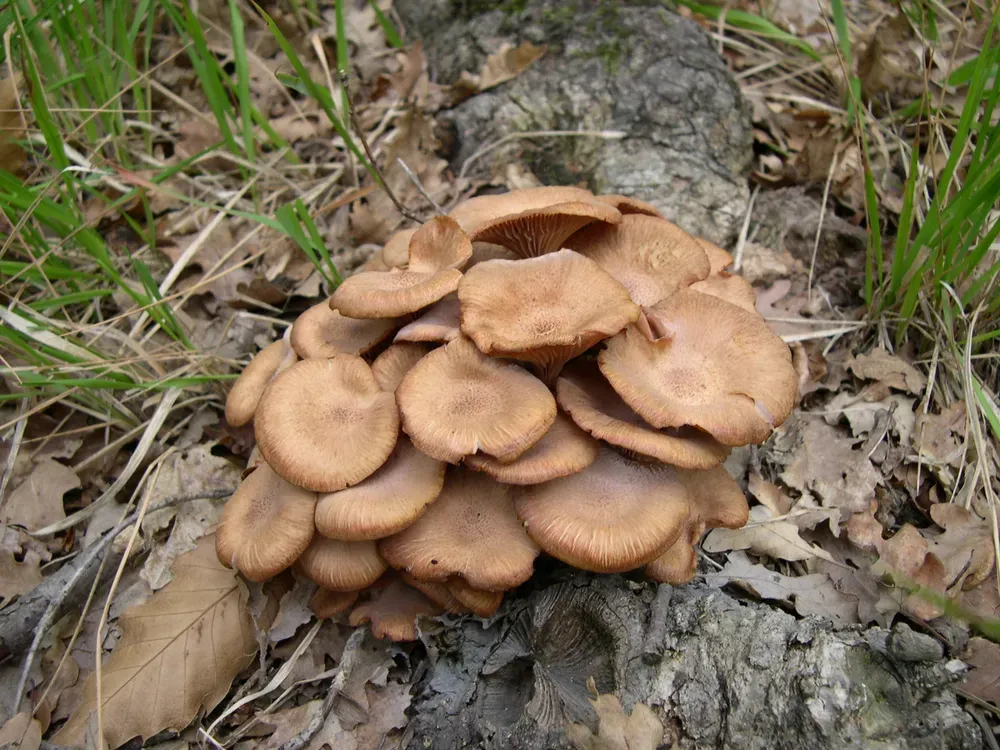
Ringless honey fungus
Desarmillaria tabescens
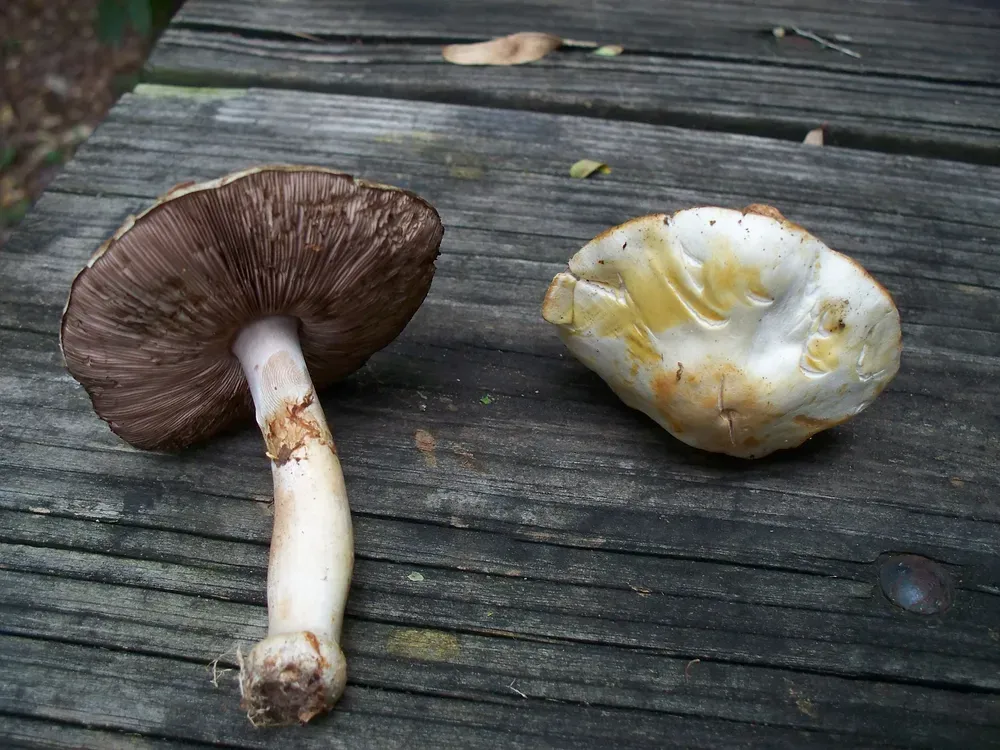
Agaricus abruptibulbus
Agaricus haemorrhoidarius
Agaricus haemorroidarius
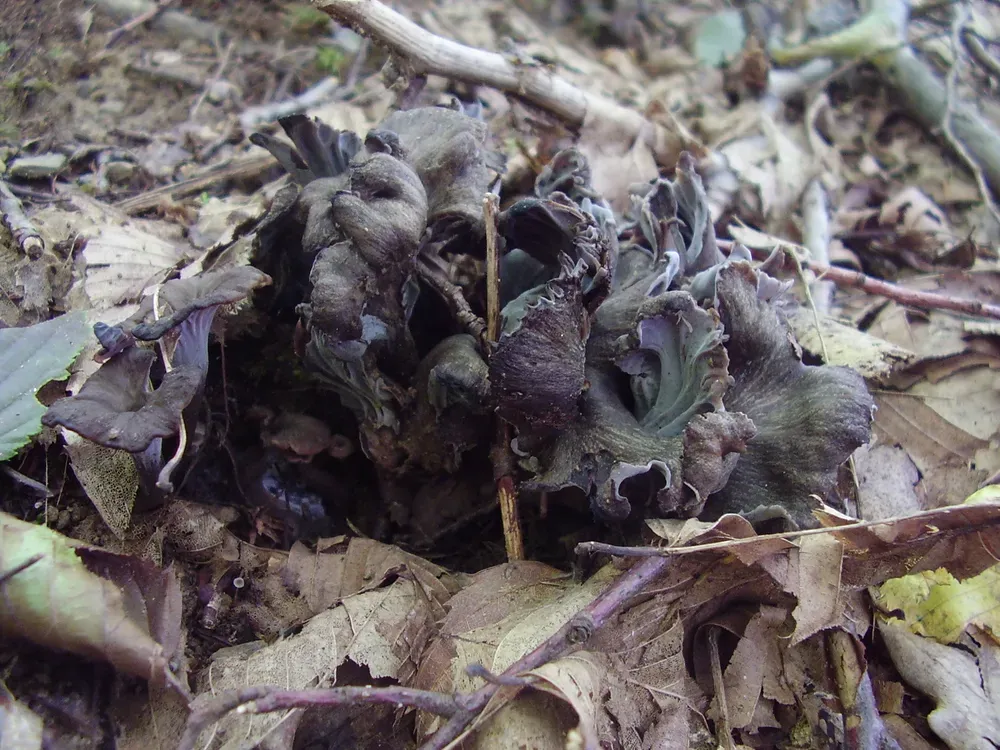
Ashen chanterelle
Cantharellus cinereus
Frequently asked questions
Can you eat it?
No. flesh thin and leathery, no culinary value.
Is it dangerous to touch?
No dangerous toxins have been described. Go ahead and photograph it — it's one of the most photogenic small mushrooms.
Where should you look for it?
Directly on pine cones — mostly ones lying on the ground in the litter. In coniferous and mixed forests. It practically never uses other substrates.
In which regions of Ukraine?
Wherever there are pine forests — Polissia, the Forest-Steppe with pine plantations, the Carpathians. In the steppe zone it turns up in planted pine stands.
When can you see it?
A very long period — from late April to late October. Old fruiting bodies stay on the cone until March of the following year, so in practice there's a chance of coming across it all year round.
Is autumn the best time to look?
In autumn the fruiting bodies are at their freshest and darkest. In spring and summer you can often find young cream-colored ones.
What is it confused with?
Among Ukrainian mushrooms — practically nothing. A tiny dark spiny "spoon" on a pine cone is almost always the Earpick fungus.
Does it have dangerous lookalikes?
No. The substrate itself (a pine cone) reliably rules out most capped mushrooms.
Is Earpick fungus edible or poisonous?
What kind of spore-bearing surface does Earpick fungus have?
What does the cap of Earpick fungus look like?
What does the stem of Earpick fungus look like?
Sources
- [1]Вікіпедія (українська)
- [2]Атлас грибів України, Зеров Д.К. (1979)
- [3]MycoBank Database
- [4]Index Fungorum
- [5]GBIF
- [6]iNaturalist Ukraine