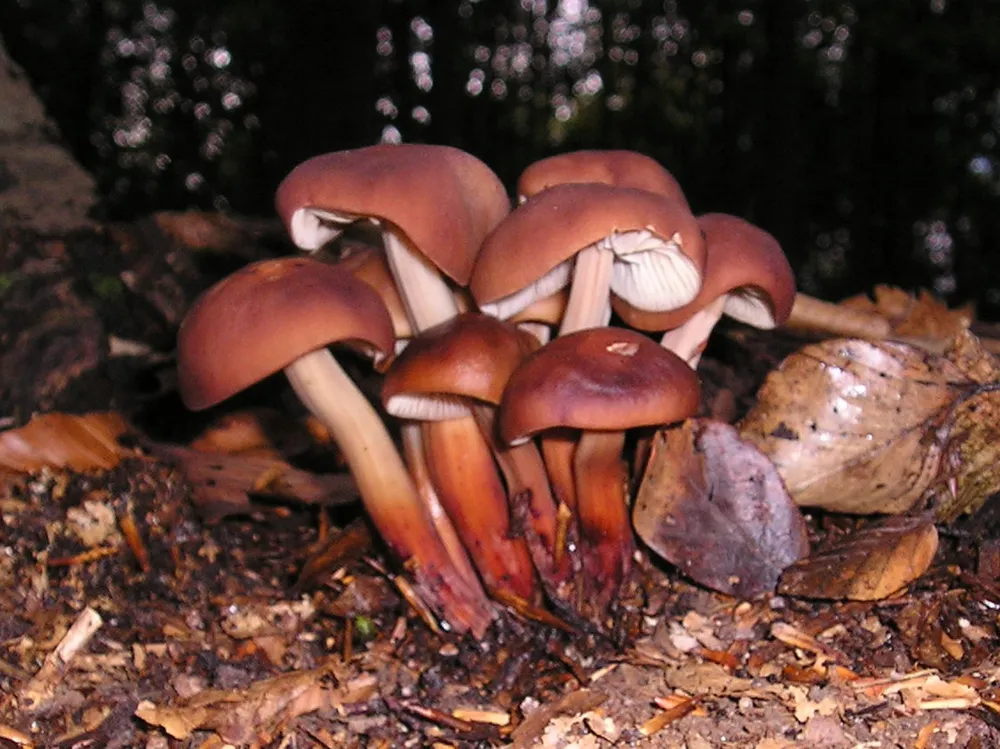
Spindle toughshankGymnopus fusipes
Expert-verifiedUpdated October 3, 2026
Passport
- Edibility
- Conditionally edible
- Season
- Aug — Nov
- Hymenophore
- Gilled
- Cap color
- Brown
- Size
- Medium (5–15 cm)
- Smell
- Pleasant
- Reviewed
- Yes ✓
Quick answers
Where to look?
Deciduous forest, Mixed forest
When does it appear?
Aug — Nov
Active months: August, September, October, November.
How to recognize it? Three signs
- Cap color: Brown, Red, Orange
- Cap shape: Convex
- Smell: Pleasant
Fruiting season
August – November
Description
The spindle toughshank is a mushroom with a very distinctive silhouette. Its stem is spindle-shaped: thick in the middle, tapering both downward and upward, with deep lengthwise furrows and reddish-brown spots. It grows fused with others in tight clusters of 5-20 fruiting bodies at the base of living or recently dead oaks. It's a parasite/weak pathogen of oak — it attacks the roots and lower trunk of old trees and causes root rot.
Technically edible, but only conditionally — the flesh is fairly tough and slightly bitter, and many sources describe the mushroom as "of low culinary quality" or "tasteless". Before cooking you must boil it for 15-20 minutes and pour off the water to get rid of the bitterness. Do not eat it without this step. Some foragers pickle it and say it's not bad — like a Tricholoma, but meatier. Most foragers leave it in the woods.
In Ukraine it is common throughout the forest and forest-steppe zones wherever there are old oaks — Polissia, the Forest-Steppe, the Carpathians, the Crimean Mountains. Season: August–November, peaking in September–October. It often fruits in masses in years when an old oak forest is under stress — drought, frost. It can be a sign of a sick tree.
Cap
Cap 3-10 cm, hemispherical at first, then convex-spreading; in old specimens with an upturned, wavy edge. Color reddish brown, russet-brown, darker in the center and paler toward the edge. The surface is dry and smooth, slightly shiny in wet weather.
Hymenophore
Gilled hymenophore. Gills fairly distant, attached or slightly decurrent. Pale cream to yellowish, developing rusty spots with age. Spore print white.
Stem
Stem 6-15 cm tall, 1.5-3 cm thick in the middle, characteristically spindle-shaped — swollen in the middle, narrowing downward (to 0.5-1 cm), and at the base it turns into a long pointed "root" that goes deep into the ground to the oak root. Deep lengthwise furrows and red-brown spots are diagnostic features. There is no ring.
Flesh
The flesh is whitish to yellowish in the cap; in the stem it is dense, woody, with reddish spots. It barely changes color when cut. Tough — especially in the stem. It has a faint bitter aftertaste.
Smell
Faint mushroomy or slightly sourish smell. The taste is slightly bitter — it needs boiling.
›Scientific synonyms (1)
Collybia fusipes (Bull.) Quél. (1872)
Lookalikes
Related species
Mushrooms of the same genus and habitat — to study side by side and never mix up.
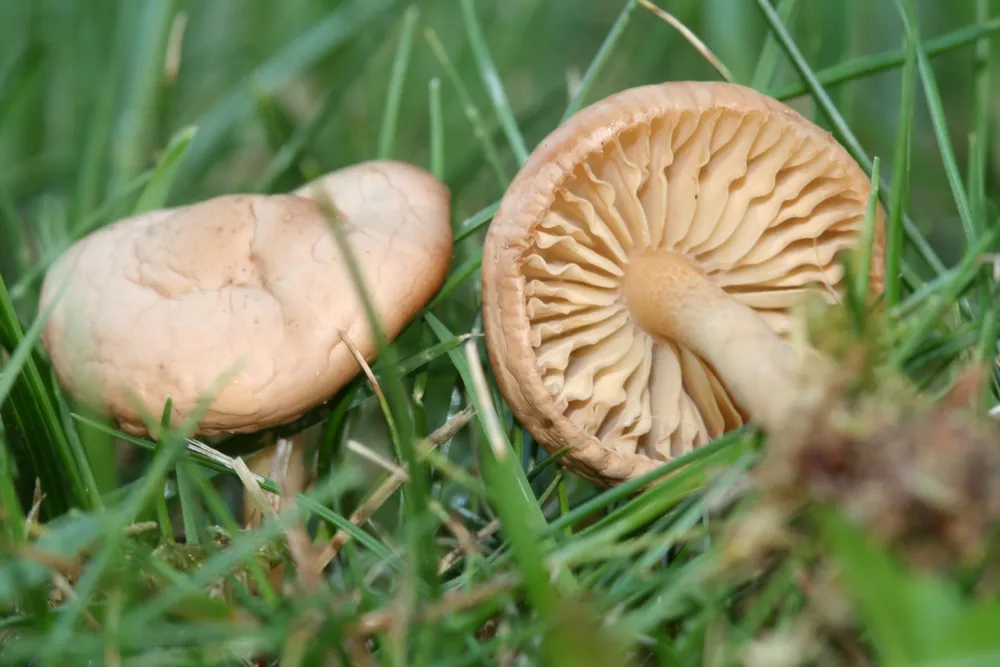
Fairy ring champignon
Marasmius oreades
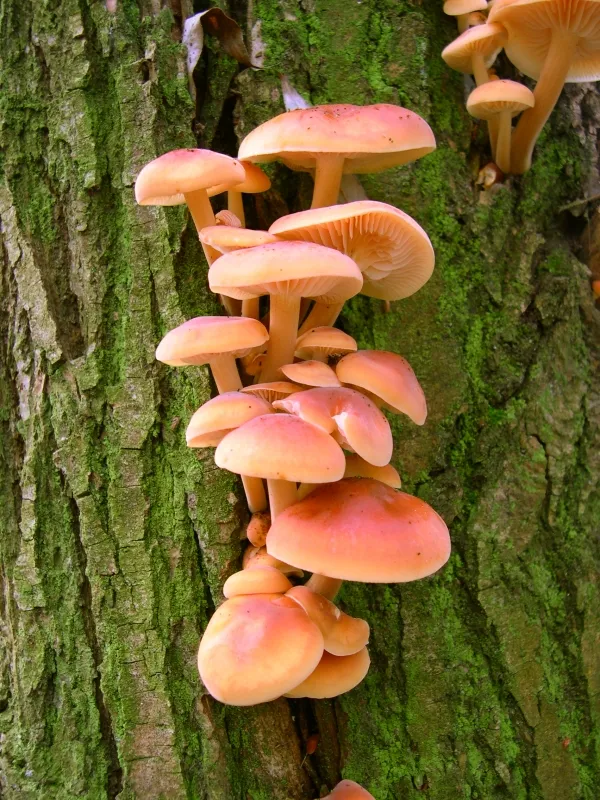
Velvet shank
Flammulina velutipes
_Singer_172533.webp)
Baeospora myriadophylla
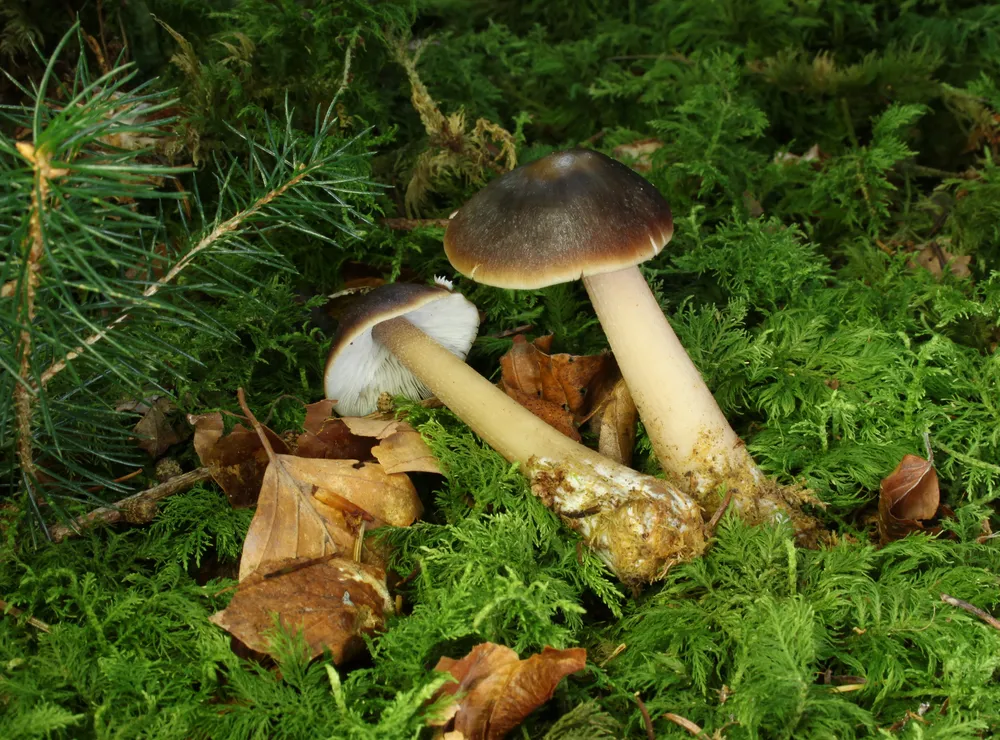
Butter cap
Rhodocollybia butyracea
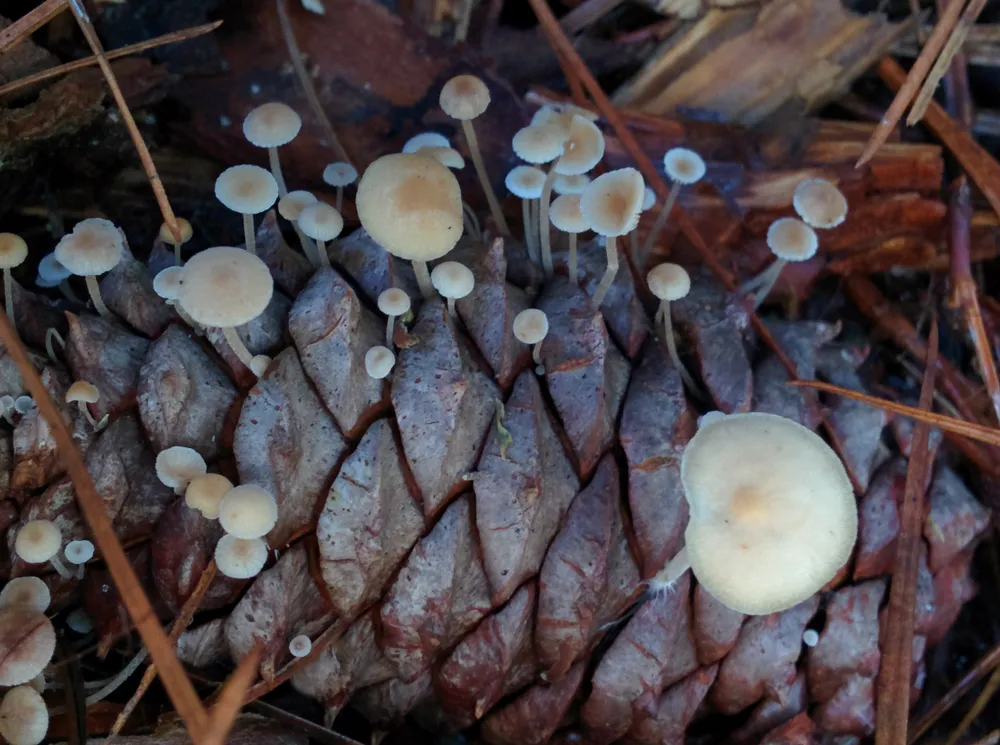
Conifercone cap
Baeospora myosura
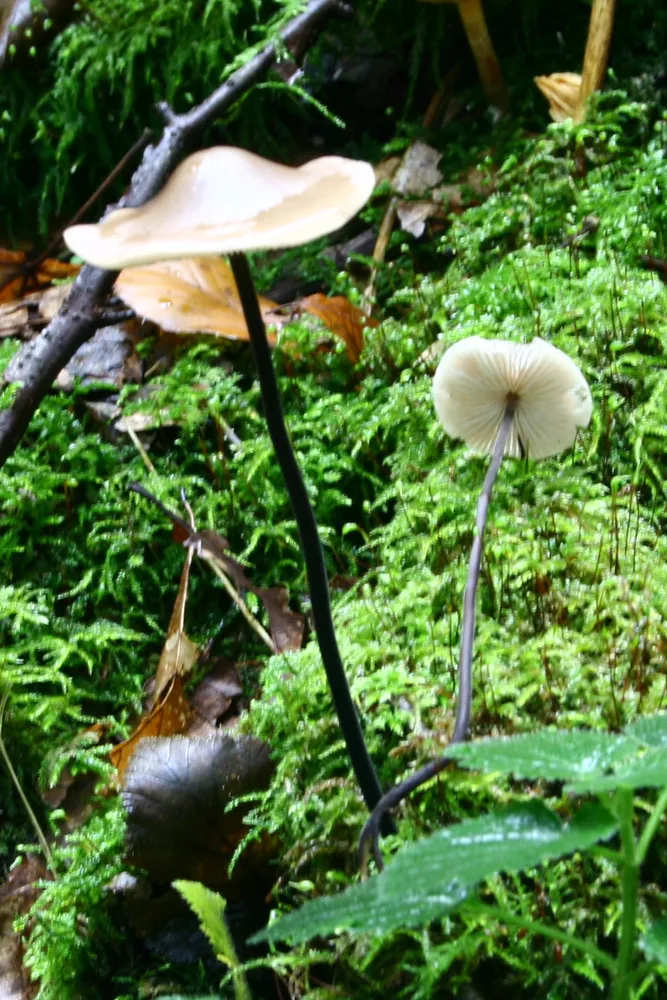
Mycetinis prasiosmus
Marasmius prasiosmus
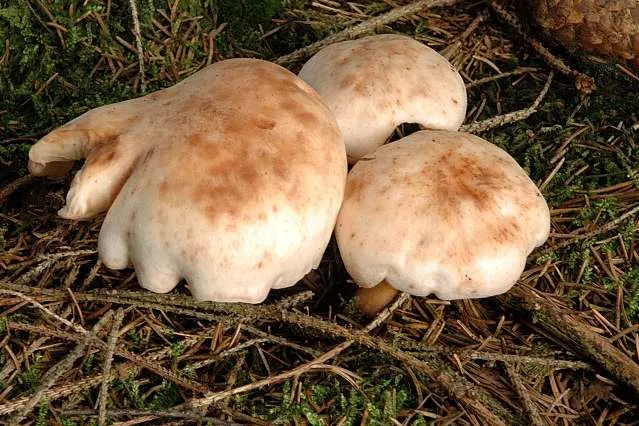
Spotted toughshank
Rhodocollybia maculata
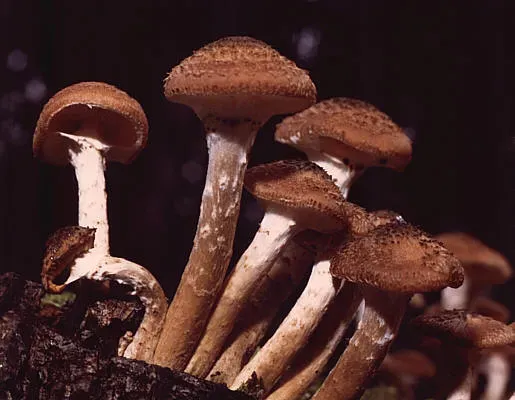
Dark honey fungus
Armillaria ostoyae
Frequently asked questions
Is it safe to eat?
Yes, the mushroom is technically edible, but only conditionally. It's not poisonous, but it tastes slightly bitter and the flesh is tough. Be sure to boil it for 15-20 minutes and pour off the water before cooking. Fresh (fried without any pre-treatment) it tastes bad and can cause stomach upset in sensitive people.
How should you prepare it?
Clean and slice it. Cover with cold water, bring to a boil and boil for 15-20 min. Be sure to pour off the water. Rinse. Then fry, stew or pickle. For your basket, take only the caps and the upper part of the stem — the lower part is woody. Pickling gives better results than frying.
Where should you look for it?
At the base of old living or recently dead oaks, sometimes on the roots. In dense clusters of 5-20 fruiting bodies. It's a parasite/pathogen of oak — it doesn't attack other trees. You won't find it in young oak woods — it needs old trees (50+ years).
Which regions of Ukraine does it grow in?
Throughout the forest and forest-steppe zones wherever there are old oaks: Polissia, the Western/Right-Bank/Left-Bank Forest-Steppe, the Carpathians, the Crimean Mountains. In the steppe — only in oak plantings. Especially common in the old-growth oak forests of Podillia and Polissia.
When should you look for it?
August–November. Peak fruiting is September–October. It tolerates the first frosts. In a warm autumn it can fruit into November. The first fruiting bodies sometimes appear at the end of July.
Does it appear in summer?
Rarely. In a rainy summer, the odd find is possible from the end of July. But the typical season is early to mid-autumn. Summer drought usually stops fruiting completely.
What is it confused with?
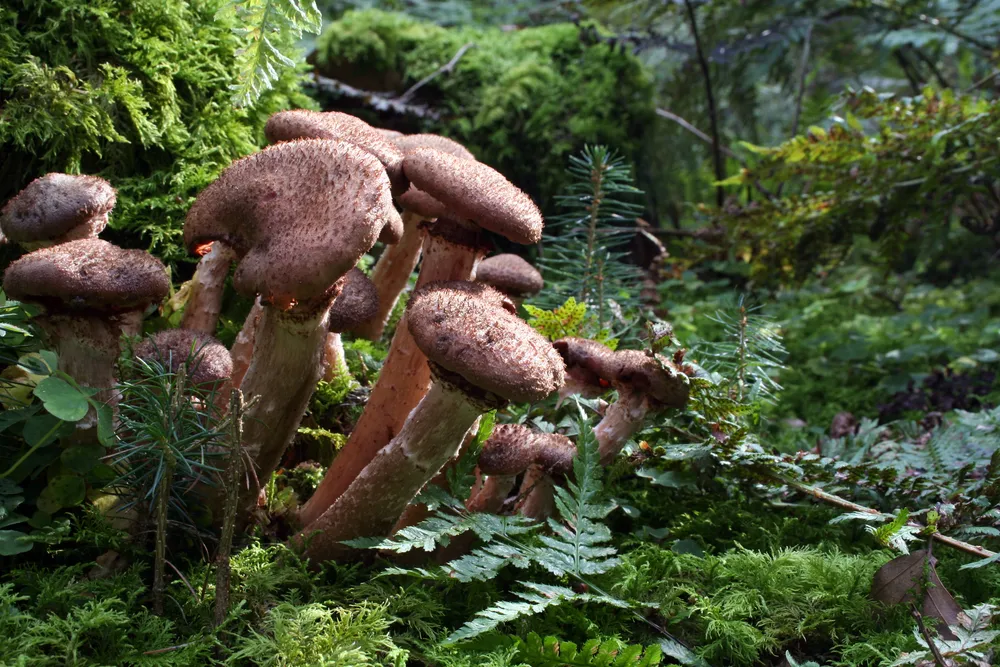
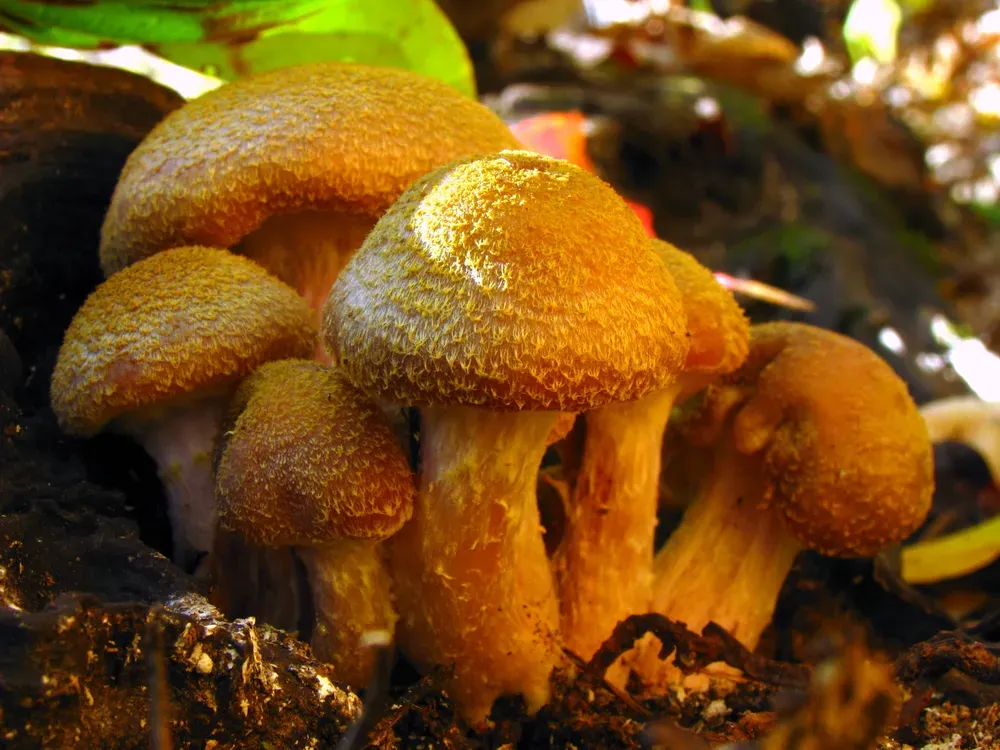
With honey fungus (Armillaria) — both grow in clusters near trunks. The difference: honey fungus has a ring on the stem, the spindle toughshank has none. Plus, the honey fungus stem is cylindrical, while the toughshank's is distinctly spindle-shaped and furrowed.
How do you tell it from honey fungus?
Three key points: (1) ring — honey fungus has one, the toughshank doesn't; (2) stem shape — straight and cylindrical in honey fungus, spindle-shaped and furrowed in the toughshank; (3) color — honey fungus is yellow-brown with small scales on the cap, the toughshank is russet to red-brown with a smooth cap. If in doubt — leave it; better to look for real honey fungus.
Is Spindle toughshank edible or poisonous?
Does Spindle toughshank have gills or pores?
What does the cap of Spindle toughshank look like?
What does the stem of Spindle toughshank look like?
Sources
- [1]Вікіпедія (українська)
- [2]Атлас грибів України, Зеров Д.К. (1979)
- [3]MycoBank Database
- [4]Index Fungorum
- [5]GBIF
- [6]iNaturalist Ukraine