Spotted toughshankRhodocollybia maculata
Expert-verifiedUpdated October 3, 2026
Passport
- Edibility
- Inedible
- Season
- Aug — Nov
- Hymenophore
- Gilled
- Cap color
- White
- Size
- Medium (5–15 cm)
- Smell
- Odorless
- Reviewed
- Yes ✓
Quick answers
Where to look?
Conifer forest, Mixed forest
When does it appear?
Aug — Nov
Active months: August, September, October, November.
How to recognize it? Three signs
- Cap color: White, Cream
- Cap shape: Flat
- Smell: Odorless
Fruiting season
August – November
Description
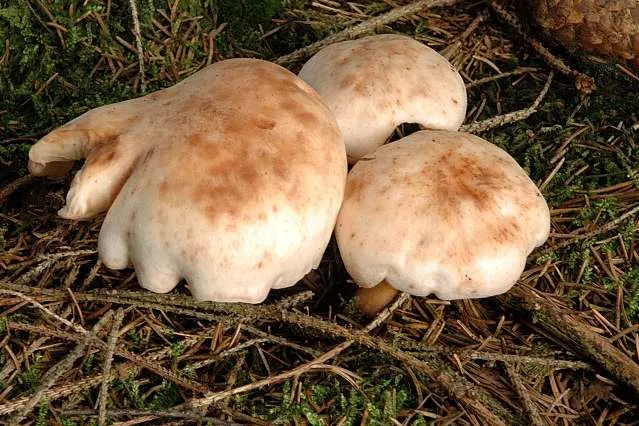
Spotted toughshank (Rhodocollybia maculata, synonym — Collybia maculata) — a common mushroom of conifer and mixed forests with a characteristic white-to-cream cap, densely covered with reddish rusty spots. The Latin epithet maculata means "spotted" — and the name fits: young fruiting bodies are almost white, but with age the cap and stem develop characteristic rusty-red spots and marbling, as if the mushroom had "rusted".
Cap 5-15 cm across (a fairly large mushroom), firm, fleshy, convex to flat-expanded with an inrolled margin. Inedible — the flesh is distinctly bitter and astringent, and even after long boiling the bitterness doesn't go away completely. Smell faintly mushroomy, nothing distinctive.
Some sources list it as "conditionally edible after long boiling" — in practice, the bitterness and toughness make it unfit for the kitchen. Mixed with other mushrooms, it spoils the taste of the dish. Not poisonous in the usual sense — it doesn't cause serious gastrointestinal reactions, but there's no benefit either.
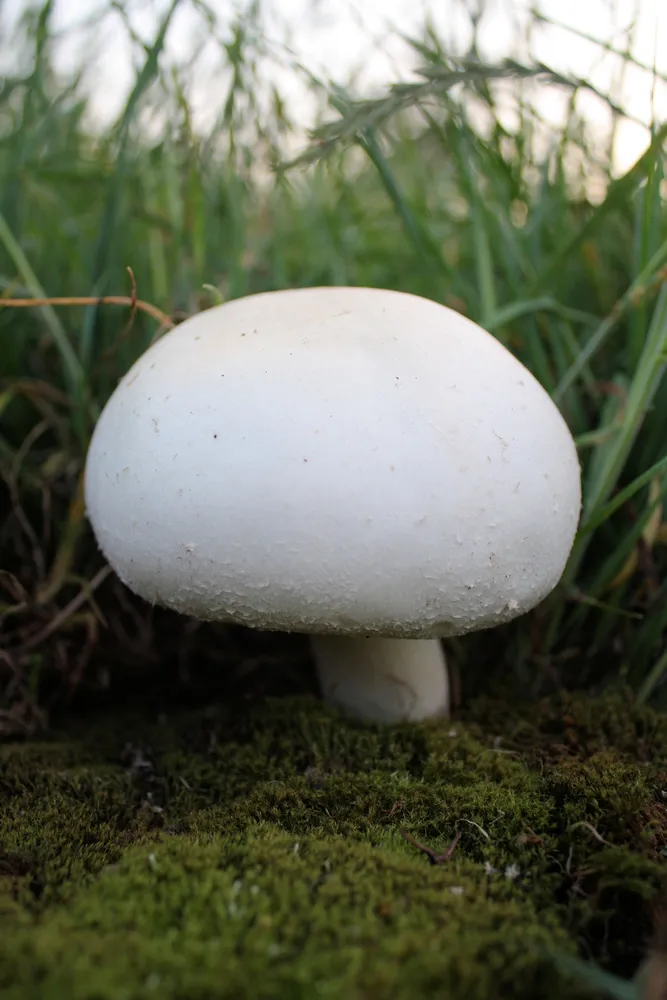
The main thing is to recognize it so you don't confuse it with the edible R. butyracea (which has no rusty spots and a buttery sheen on the cap) or with white Agaricus mushrooms (which have a ring on the stem and pinkish-brown gills; the toughshank has no ring and cream-white gills).
In Ukraine the spotted toughshank is common in pine, spruce and mixed forests: the Carpathians, Prykarpattia, Polissia, and parts of the forest-steppe. Season: August — November. A saprotroph of conifer litter. It often grows in groups or clusters of 2-5 fruiting bodies from a shared base.
Cap
Cap 5-15 cm across, firm, fleshy, when young convex with an inrolled margin, becoming with age flat-expanded with a slightly wavy margin. Cap skin smooth, dry, matte. Color when young — pure white to cream, with age it becomes covered in characteristic rusty-red spots and marbling, especially in the center and on damaged areas. Old fruiting bodies are cream-ochre overall with reddish streaks.
Hymenophore
Gilled hymenophore — the gills are adnate or free, very crowded, thin, whitish to cream, gradually turning reddish when damaged — a diagnostic trait. Spore print pale pink to cream (a typical Rhodocollybia trait).
Stem
Stem 5-12 cm tall, 1-2 cm thick, cylindrical, firm, fleshy, thickening toward the base with a "root-like" extension into the substrate. Color white at first, with age covered in the same rusty spots as the cap. Surface smooth or with lengthwise fibers.
Flesh
Flesh firm, white, marbled. When cut, it slowly (over 10-30 min) turns cream-reddish — oxidation, a characteristic reaction. Smell faintly mushroomy, taste distinctly bitter and astringent — and this is the main reason it's inedible.
Smell
Faint, neutral, mushroomy, nothing distinctive.
›Scientific synonyms (2)
Agaricus maculatus Alb. & Schwein., Collybia maculata (Alb. & Schwein.) P.Kumm.
Lookalikes
Related species
Mushrooms of the same genus and habitat — to study side by side and never mix up.
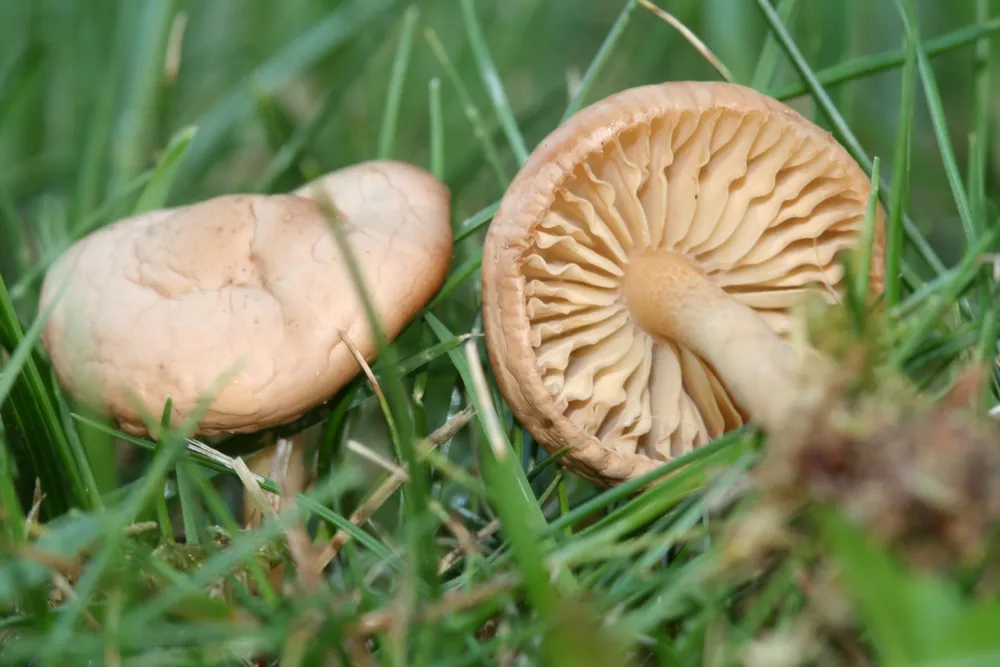
Fairy ring champignon
Marasmius oreades
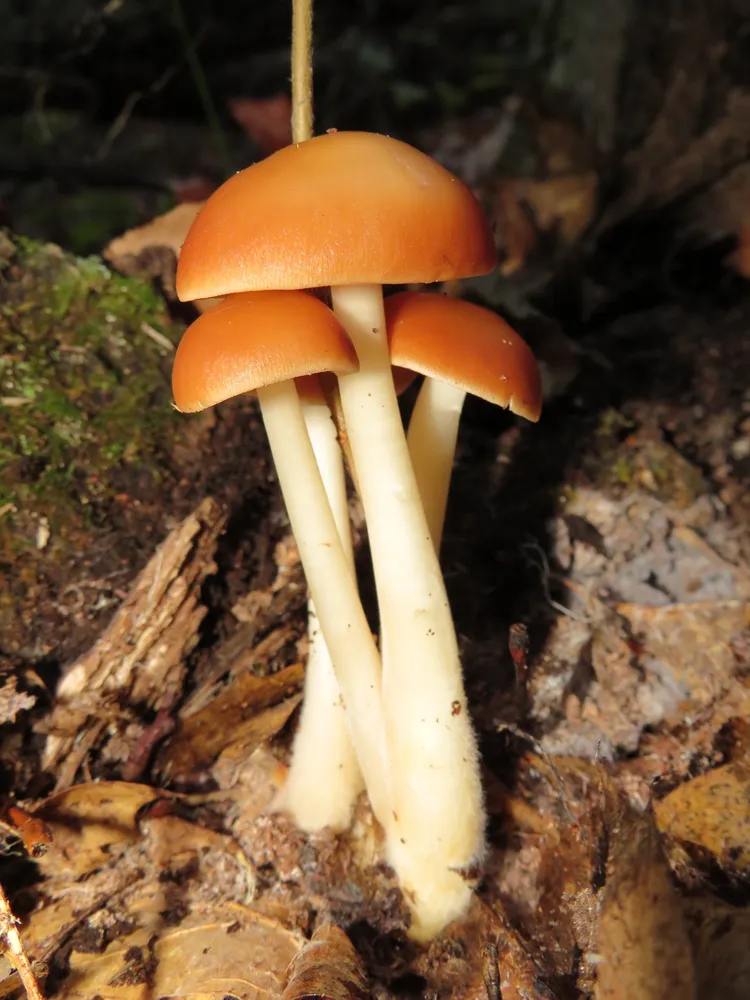
Russet toughshank
Gymnopus dryophilus
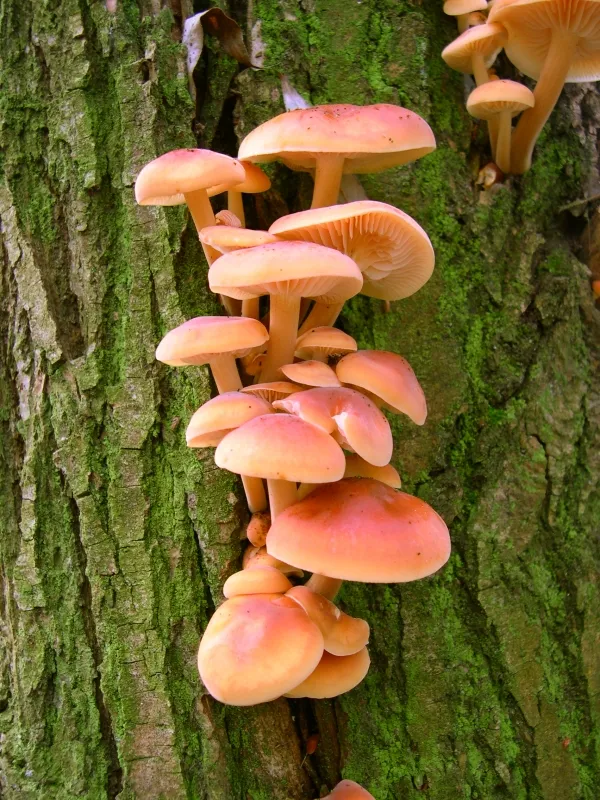
Velvet shank
Flammulina velutipes
_Singer_172533.webp)
Baeospora myriadophylla
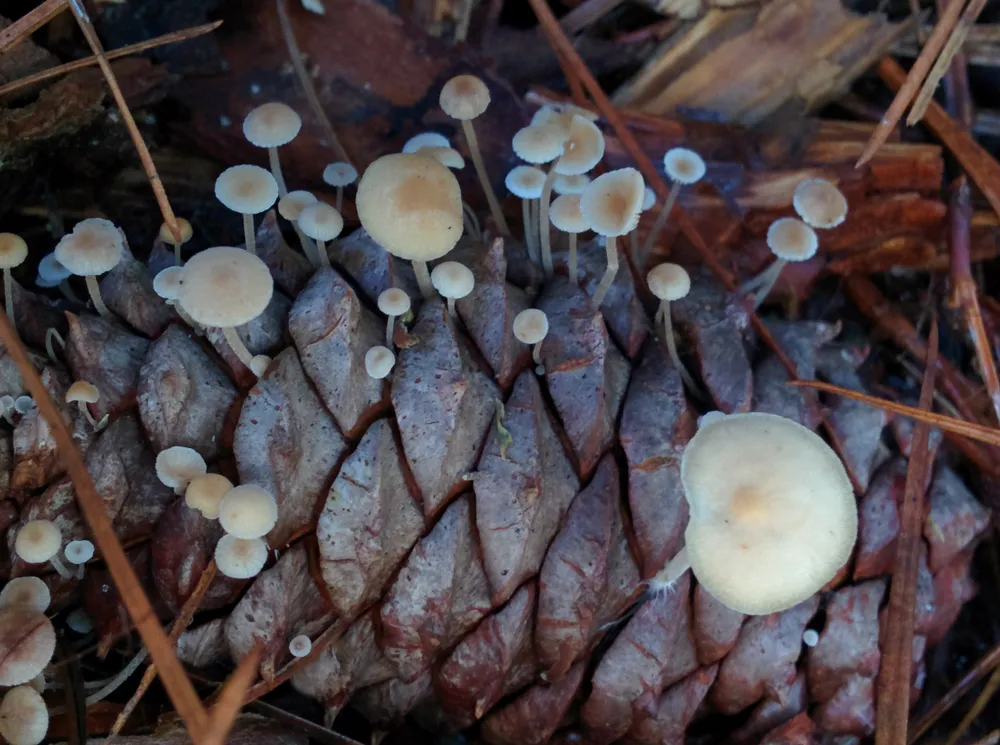
Conifercone cap
Baeospora myosura
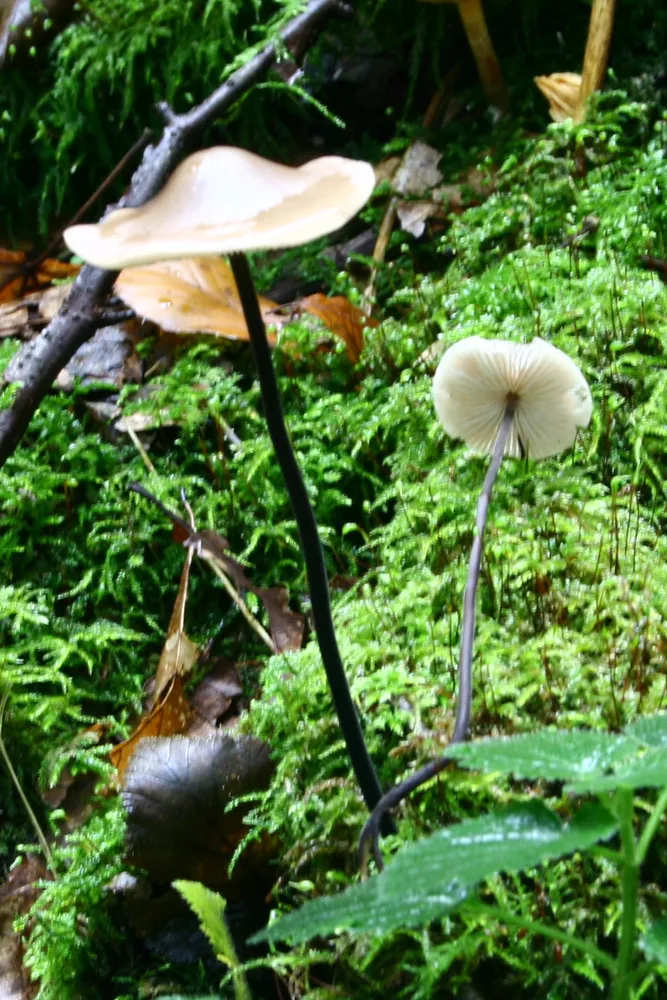
Mycetinis prasiosmus
Marasmius prasiosmus
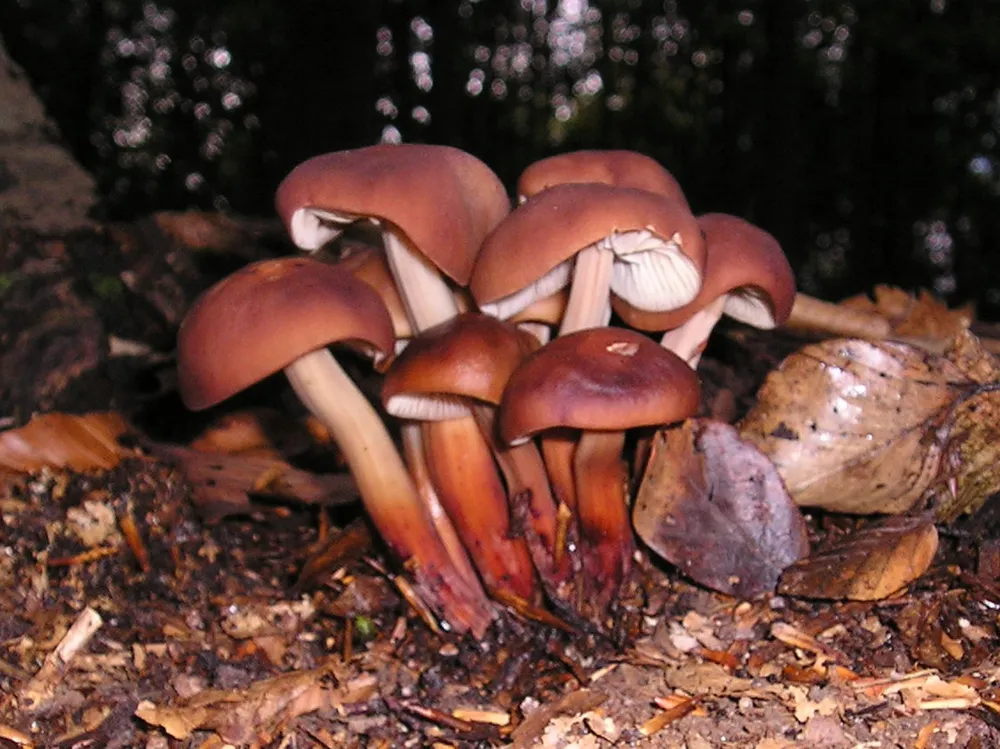
Spindle toughshank
Gymnopus fusipes
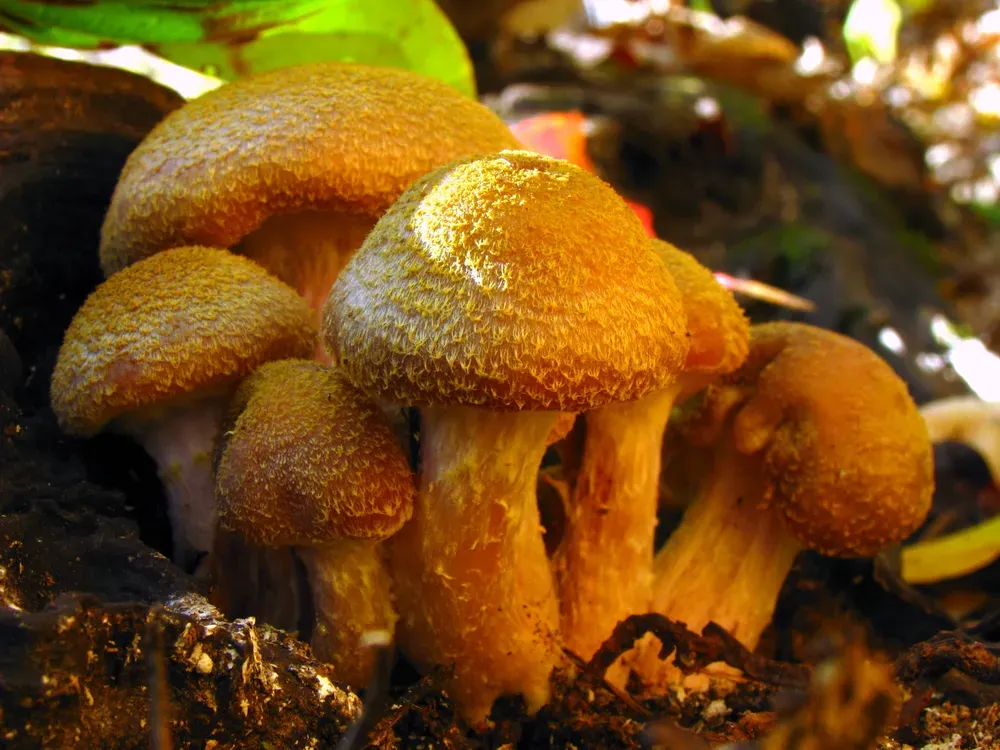
Bulbous honey fungus
Armillaria gallica
Frequently asked questions
Is it poisonous?
Not poisonous in the usual sense — it doesn't cause serious gastrointestinal reactions. But it's inedible because of its pronounced bitterness, which doesn't go away with boiling. It spoils the taste of a dish.
How do you tell it apart from edible species?
Key features of R. maculata: (1) rusty-red spots and marbling on a white cap — the most important; (2) firm, fleshy texture, a stem with a "root"; (3) distinctly bitter taste; (4) pink spore print. R. butyracea (edible) has no rusty spots and a greasy sheen on the cap. Agaricus mushrooms have a ring on the stem and pink/brown gills.
Can you eat it after long boiling?
Better not. Even after 30 minutes of boiling with a change of water, a bitterish aftertaste remains. There's no culinary point — the same spots often have genuinely tasty mushrooms (saffron milk caps, slippery jacks).
Where can you find it, so you learn to recognize it?
On conifer litter in pine, spruce and mixed forests. On moss or grass among the needles. It often grows in clusters of 2-5 fruiting bodies from a shared base — a characteristic trait of the species.
Which regions of Ukraine is it found in?
Common in the forest zone with conifers: the Carpathians, Prykarpattia, Polissia, and parts of the forest-steppe in pine stands.
When should you look for it?
August — November, peaking in September-October. Like R. butyracea, it's one of the late-autumn species.
What mushrooms is it confused with?
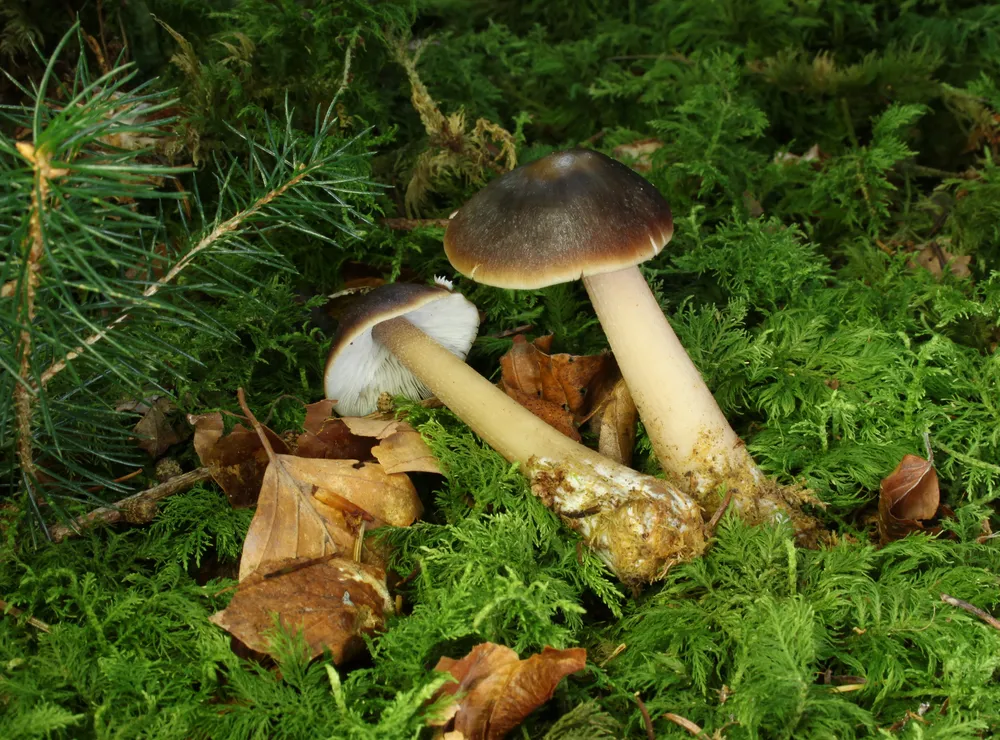
With R. butyracea (butter cap) — edible, without rusty spots, with a greasy sheen. With young Agaricus arvensis (horse mushroom) — it has a ring on the stem and pink gills. With Leucopaxillus albissimus — also white, but larger, without rusty spots. With Tricholoma columbetta — also white, without rusty spots, in broadleaf forests.
Is Spotted toughshank edible or poisonous?
Does Spotted toughshank have gills or pores?
What does the cap of Spotted toughshank look like?
What does the stem of Spotted toughshank look like?
What do Spotted toughshank smell and taste like?
Sources
- [1]Вікіпедія (українська)
- [2]Атлас грибів України, Зеров Д.К. (1979)
- [3]MycoBank Database
- [4]Index Fungorum
- [5]GBIF
- [6]iNaturalist Ukraine