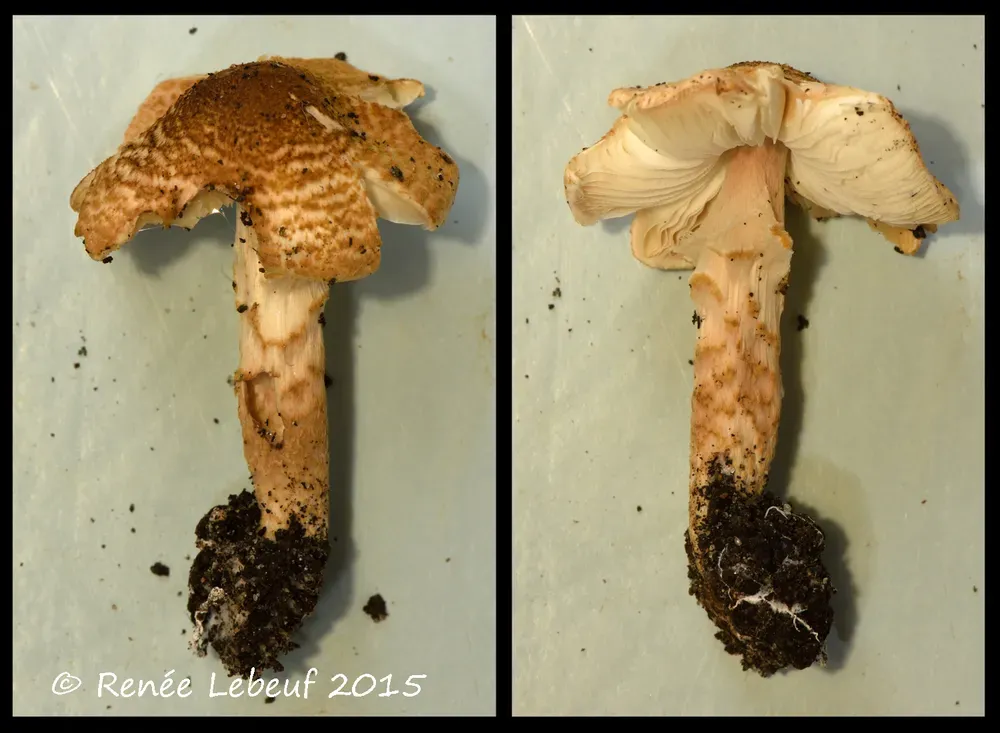
Lepiota helveola
Expert-verifiedUpdated August 6, 2026
Passport
- Edibility
- Deadly poisonous
- Season
- Jun — Oct
- Hymenophore
- Gilled
- Cap color
- Cream
- Size
- Small (up to 5 cm)
- Smell
- Odorless
- Reviewed
- Yes ✓
DEADLY POISONOUS
Eating it can cause death. Do not pick it and do not taste it.
Toxin: amatoxins (α-amanitin, β-amanitin). The concentration is enough for fatal poisoning of an adult from 50-100 g of raw mushroom, and of a child from a single piece. Stages of poisoning, counting from the meal: (1) first 0-12 h — nothing; (2) 12-36 h — acute gastroenteritis with vomiting and diarrhea; (3) 36-72 h — a deceptive improvement; (4) from the third day — hepatorenal failure, jaundice, hepatic coma; (5) without a liver transplant death is possible, most often on day 6-16. Treatment only in hospital: intravenous silibinin, a sorbent, many hours of IV drips, hemodialysis; in severe cases a liver transplant. Urgency is critical: in an Italian study of 105 patients, everyone whose treatment began within 36 hours of the meal recovered without lasting effects.
If you suspect poisoning, call an ambulance immediately: 112 (the European emergency number) or your local emergency number
Quick answers
Where to look?
Deciduous forest, Mixed forest
When does it appear?
Jun — Oct
Active months: June, July, August, September, October.
How to recognize it? Three signs
- Cap color: Cream, Pink, Brown
- Cap shape: Convex
- Smell: Odorless
Fruiting season
June – October
Description
Lepiota helveola (Leucoagaricus helveola, in some sources Lepiota helveola) is a close "relative" of Lepiota brunneoincarnata, with the same amatoxin poison and equally high lethality. A small mushroom 2-5 cm across with a whitish or cream cap densely covered in fine brownish-pink scales. Like its relative, it grows on lawns and in parks, gardens and backyards — where people live and children play. One of the "silent killers" of European mycology, treacherous precisely because of its small size and "innocent" look.
This is a deadly poisonous mushroom with the same amatoxins as the death cap and Lepiota brunneoincarnata. It acts slowly and in stages, counting from the meal: the first 12 hours — silence; after 12-36 hours — acute gastroenteritis; after 36-72 hours — a deceptive improvement; and from the third day — severe liver failure with a possible fatal outcome. No processing method neutralizes the toxins. Never pick it in any form — even a single mushroom can kill a child. For any small gilled mushroom with scales on the stem and cap, our foraging tradition has one rule: skip it, don't touch it, don't let children play with it.
In Ukraine it is widespread throughout the forest-steppe zone: on lawns, in parks, gardens and at forest edges. A saprotroph. The season runs June–October, peaking in September. It often grows in groups of 3-10 fruiting bodies. Telling Lepiota helveola apart from other small Lepiota without microscopy is hard — hence the canonical rule of mycology: all small Lepiota (cap up to 5 cm, thin stem, scales) — never pick them, no exceptions. There are practically no edible ones among them, while several species are deadly poisonous.
Cap
The cap is small: 2-5 cm across, hemispherical when young, later becoming convex to flattened with a small bump in the center. Cream or pale ochre, with characteristic pinkish-brown or ochre-brick scales, scattered irregularly or in concentric rings. The scales are denser in the center of the cap. The surface beneath the scales is smooth.
Hymenophore
Gills. The gills are crowded, thin, free (not attached to the stem). White to cream. The spore print is white — a critical feature for telling it apart from Agaricus (theirs is blackish-brown).
Stem
Stem 3-6 cm tall, 0.3-0.7 cm thick, cylindrical, slender. Whitish in the upper part, and lower down with pinkish-brown tones. The ring is absent or present as a thin, indistinct band — practically invisible in mature mushrooms. The stem flesh is thin, hollow in old mushrooms.
Flesh
Flesh thin, white, with a pink tint at the base of the stem. It doesn't change color quickly when cut.
Smell
Faint and neutral, or with a note of raw dough. Nothing alarming. The taste is mild. Neither smell nor taste hints at deadly toxicity — the treachery of amatoxin mushrooms lies in the absence of any sensory warning.
Lookalikes
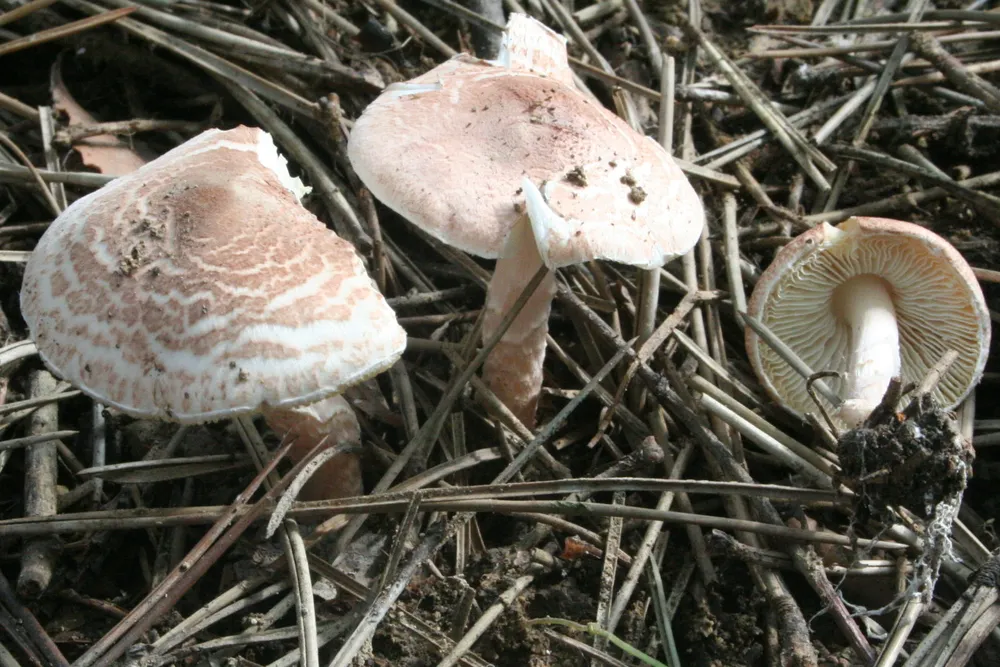
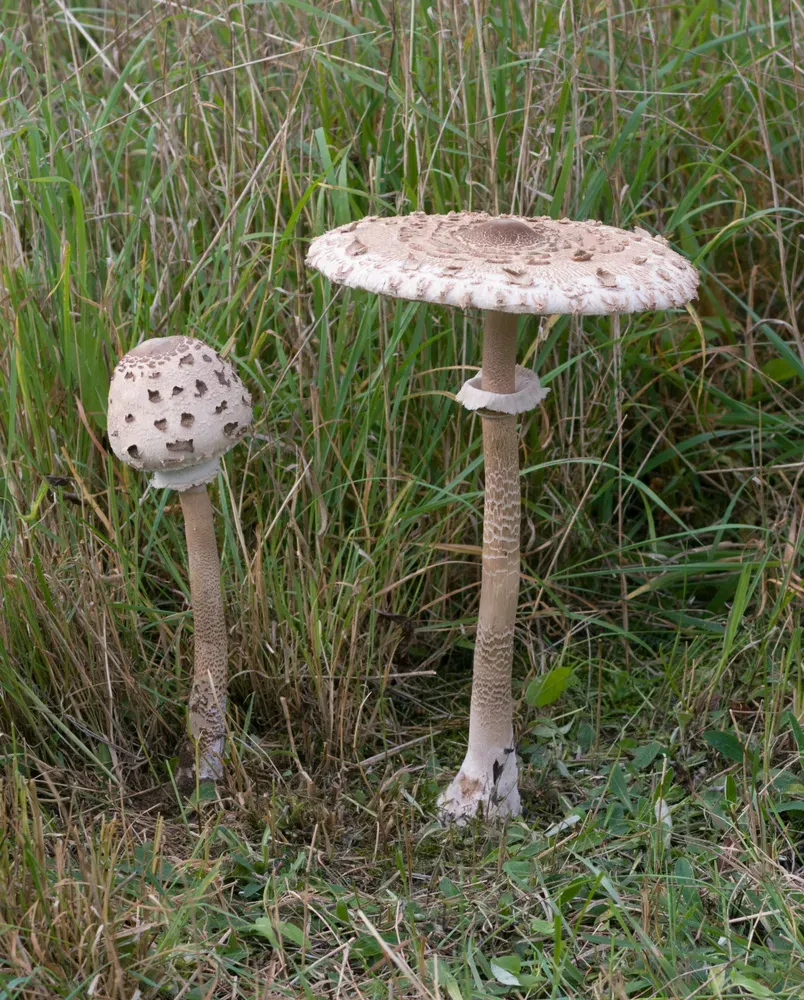
_M.M._Moser_ex_Bon_61894_crop.webp)
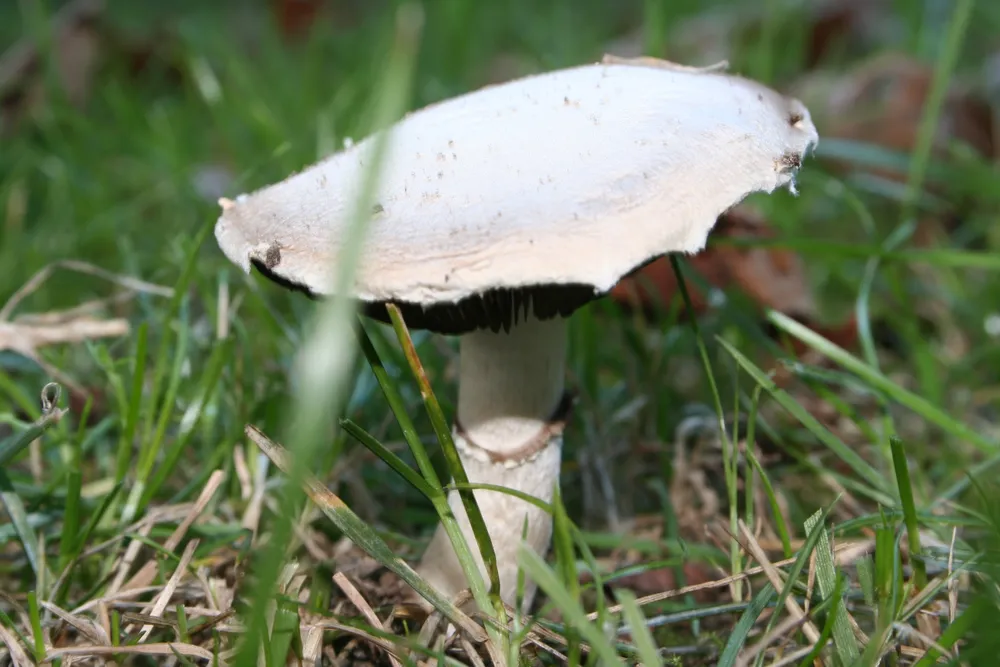
Related species
Mushrooms of the same genus and habitat — to study side by side and never mix up.
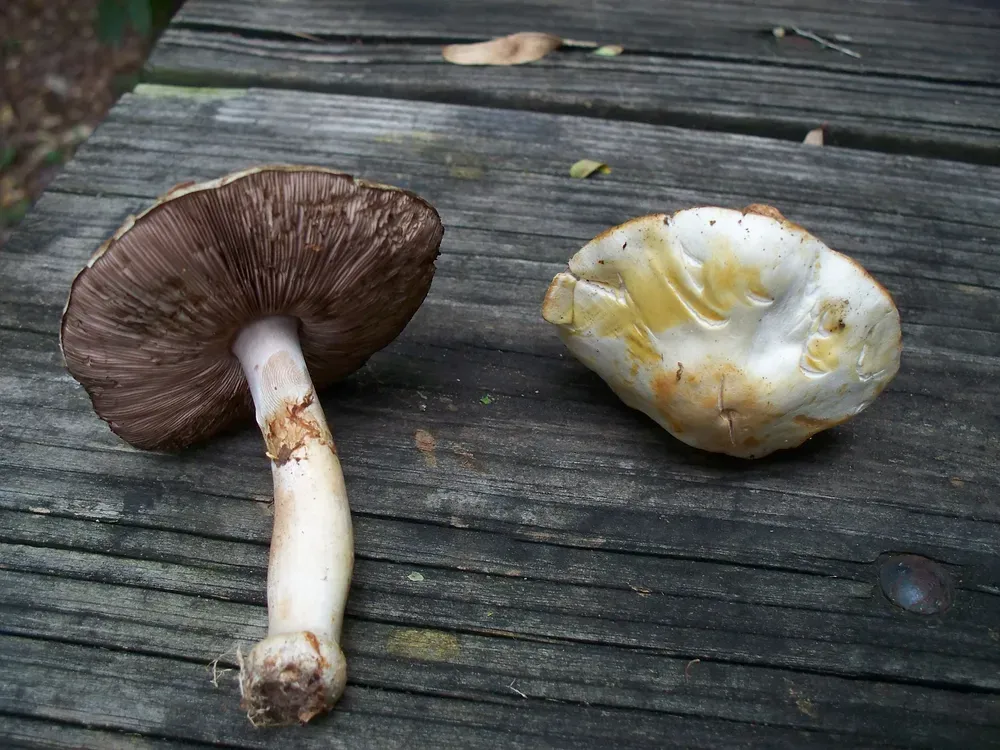
.webp)
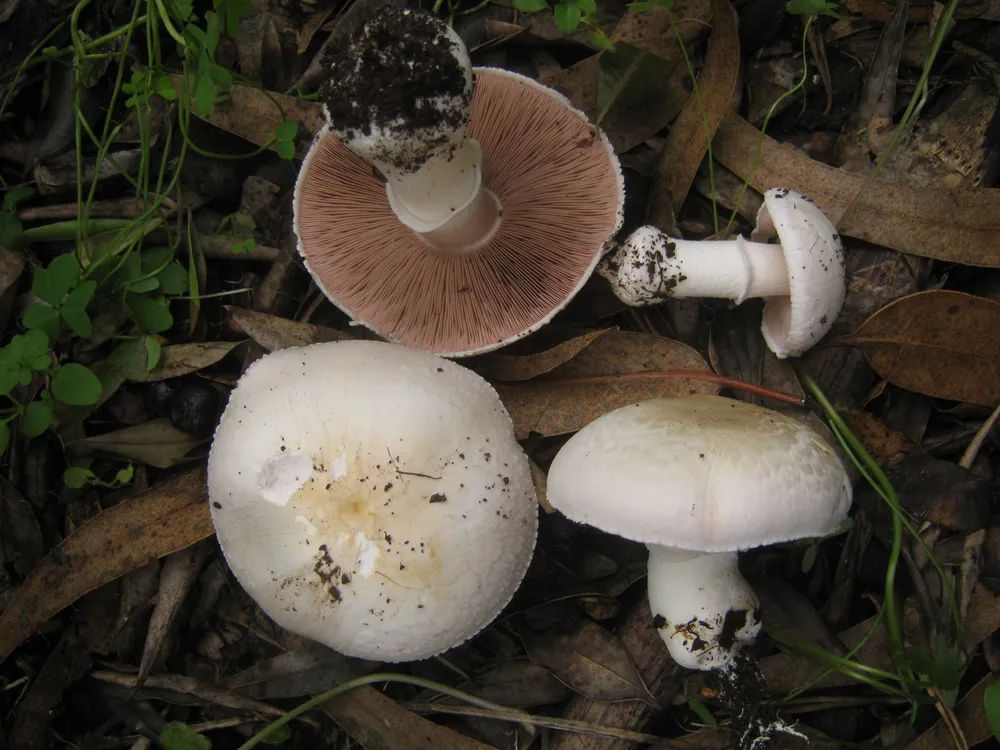
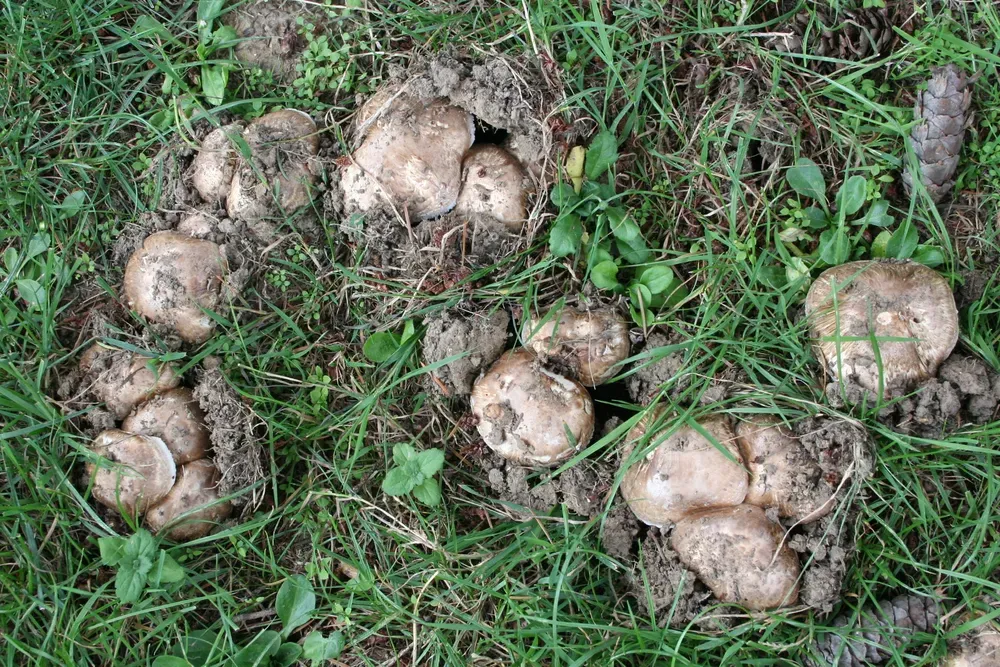
_Fr._4948278370-2.webp)
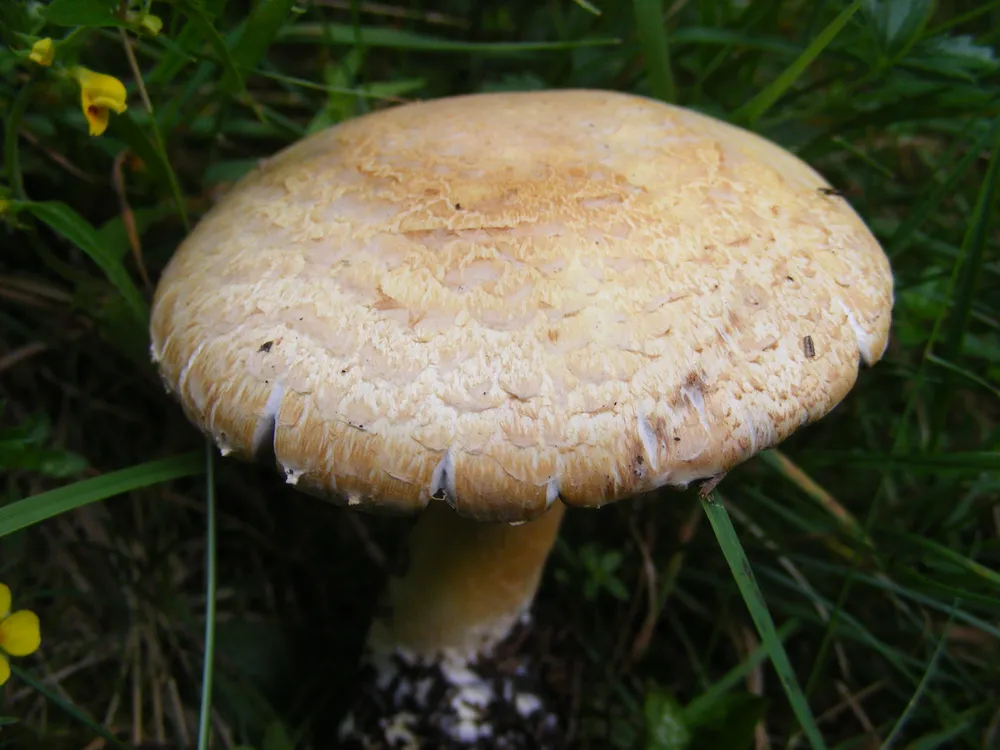
Frequently asked questions
Is it really a deadly mushroom?
Yes — just like its relative Lepiota brunneoincarnata and the death cap. Amatoxins destroy the liver slowly and inevitably without specific treatment. Fatal cases are documented in Europe, mostly among children. Never touch it, and don't let children play with it. If you suspect a child has swallowed some — go to the hospital immediately, even without symptoms.
What happens if someone swallows it?
The first 12 hours — nothing, the person feels normal. This is the most dangerous stage, because nothing raises the alarm. After 12-36 hours — sudden acute gastroenteritis: vomiting, diarrhea, dehydration. After 36-72 hours — a deceptive improvement. From the third day — liver failure, jaundice, possible death without a liver transplant. Call 112 or your local emergency number as soon as you suspect it — don't wait for symptoms.
How do you spot it on a lawn?
A small (2-5 cm) cap with pinkish-brown scales on a pale cream background. A thin stem with pink tones toward the base. White gills under the cap. The general rule: any small scaly mushroom on a lawn with white gills — carefully cut it out with a trowel along with a clump of soil and throw it away in a sturdy bag. Don't pull it out with bare hands. Wash your hands.
Is there any way to cook it safely?
No. Amatoxins are heat-stable. No boiling, pickling, drying or freezing neutralizes the toxin. There is no safe dose.
Where does it usually grow?
On lawns, in parks, gardens, flower beds, playgrounds and allotment areas. It loves rich, grassy soils. It often grows in groups of 3-10 mushrooms. A classic "urban" mushroom — the main threat lies not in the wild but in towns and villages.
Where in Ukraine does it occur?
Throughout the forest-steppe zone: all three forest-steppe belts, the Carpathians, the Carpathian foothills, Polissia, and in the southern steppes — in parks and public gardens. Common in towns and villages. Any lawn in the forest-steppe and neighboring regions is potential habitat.
When does it fruit?
June — October, peaking in September–October. A very long season. Your best chance to find it is 5-7 days after heavy rain.
What is it confused with?
Most dangerously — with young parasol mushrooms (Macrolepiota procera): but as adults they're 10-30 cm and never small. With young Agaricus mushrooms: but they have pink/brown/black gills, while Lepiota helveola has white ones. The rule for any small scaly mushroom with white gills on a lawn: don't take it, even if a precise identification seems possible. The genera Lepiota and Leucoagaricus do include edible species, but the difference is so subtle that even professionals need a microscope. The safe choice is not to pick them at all.
Is Lepiota helveola edible or poisonous?
Does Lepiota helveola have gills or pores?
What does the cap of Lepiota helveola look like?
What does the stem of Lepiota helveola look like?
Sources
- [1]Вікіпедія (українська)
- [2]Атлас грибів України, Зеров Д.К. (1979)
- [3]MycoBank Database
- [4]Index Fungorum
- [5]GBIF
- [6]iNaturalist Ukraine