.webp)
Russula integra
Expert-verifiedUpdated August 15, 2026
Passport
- Edibility
- Edible
- Season
- Aug — Oct
- Hymenophore
- Gilled
- Cap color
- Violet
- Size
- Medium (5–15 cm)
- Smell
- Pleasant
- Reviewed
- Yes ✓
Quick answers
Where to look?
Conifer forest, Mixed forest
When does it appear?
Aug — Oct
Active months: August, September, October.
How to recognize it? Three signs
- Cap color: Violet, Brown, Red
- Cap shape: Depressed
- Smell: Pleasant
Fruiting season
August – October
Description
Russula integra is one of the best edible brittlegills, with a characteristic dark purple-chestnut cap, fleshy white flesh and a completely mild taste without a trace of bitterness. The Latin epithet integra — "flawless, whole, untouched" — hints at its excellent culinary quality and clean taste, free of the unpleasant notes some other brittlegills have.
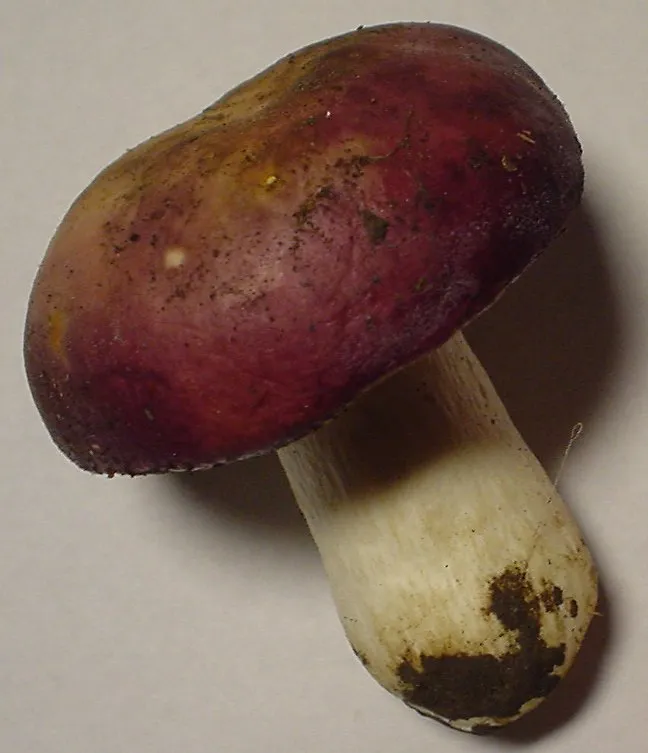
Cap 6-15 cm across, hemispherical at first, becoming flat and spread out with a funnel-like depression as it ages, dark purple, chestnut-purple, deeper in the center, lighter toward the margin, with a characteristic finely radially grooved margin in mature specimens. The skin is peels easily over 2/3 of the cap — a typical brittlegill with an "easy-peel" skin (one of the diagnostic features).
An excellent edible mushroom — no boiling required, the flesh is tender with a nutty flavor. Cook it like porcini: fry, stew, pickle, dry. In the spruce-beech forests of the Carpathians it's a common find, and locals value it as highly as the best brittlegills.
The key thing is to among brittlegills, clearly tell the acrid/hot ones from the non-acrid/mild ones. The brittlegill forager's rule: bite off a tiny piece of the gill edge and hold it in your mouth for 30 seconds: if it's sweetish and mild — edible; if it's burning, bitter and acrid — DO NOT EAT (acrid brittlegills can cause gastroenteritis). Russula integra tastes unambiguously mild, sweet and nutty.
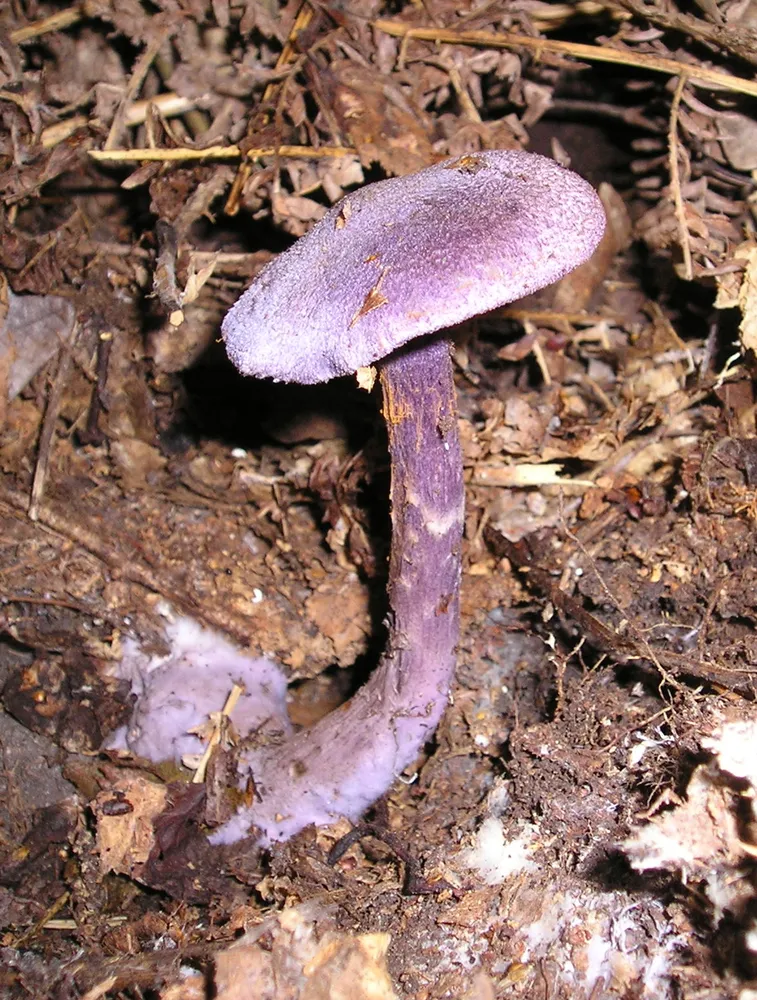
The main risk is confusing it with purple poisonous webcaps (Cortinarius spp.), some of which are deadly dangerous (C. orellanus with the toxin orellanine). The key test is the Russula spore print — YELLOW-OCHRE, webcaps — RUSTY BROWN, and webcaps have a cobwebby veil (cortina) on the stem.
In Ukraine, Russula integra is common in spruce-beech and spruce forests: the Carpathians, Prykarpattia, Polissia (in part). A mycorrhizal partner of spruce and beech. Season: August — October.
Cap
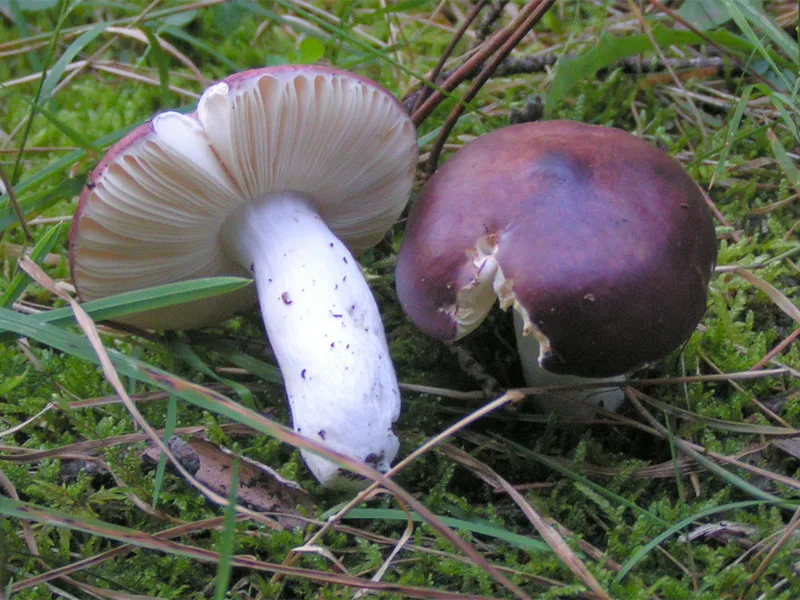
Cap 6-15 cm across, when young hemispherical, with age becoming flat and spread out with a slightly depressed center. The skin is smooth, slimy in wet weather, dry and matte in dry weather, peels easily over 2/3 of the cap toward the center. Color: dark purple, chestnut-purple, wine-red, with a darker center and lighter margin. In mature specimens the margin has fine radial grooves resembling coarse ribbing.
Hymenophore
Gilled hymenophore — the gills are attached or free from the stem, moderately spaced, fleshy, brittle. Color when young: whitish, with age turning ochre-cream to yellowish from the ripe yellow-ochre spores. Spore print yellow-ochre — a diagnostic feature (distinguishes it from the rusty brown of webcaps).
Stem
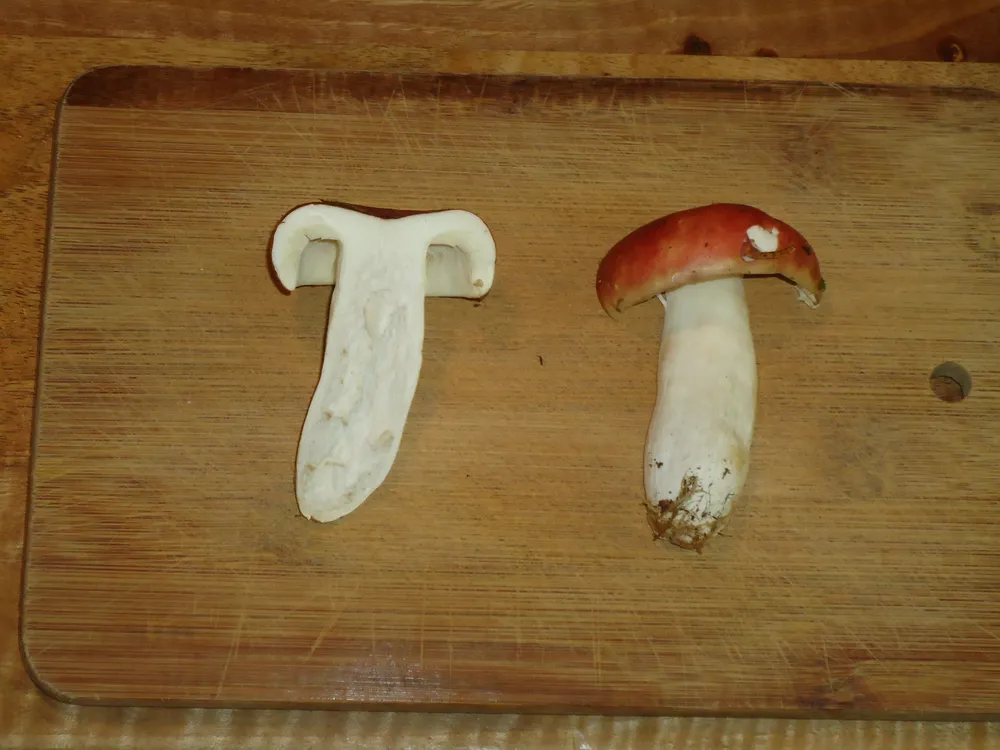
Stem 4-8 cm tall, 1.5-3 cm thick, firm, fleshy, cylindrical, hollow inside in old specimens. Color: white to creamy white, with a faint yellowish tint when old, browning toward the base. Surface smooth with fine lengthwise wrinkles. No ring.
Flesh
Flesh firm, brittle, white; where cut, it slowly turns yellow (a reaction typical of the genus Russula). Smell pleasantly mushroomy, with a fruity note in mature specimens, taste mild, sweetish and nutty, with no bitterness or acridity — a diagnostic feature.
Smell
Pleasantly fruity-mushroomy, with no sharp notes.
Lookalikes
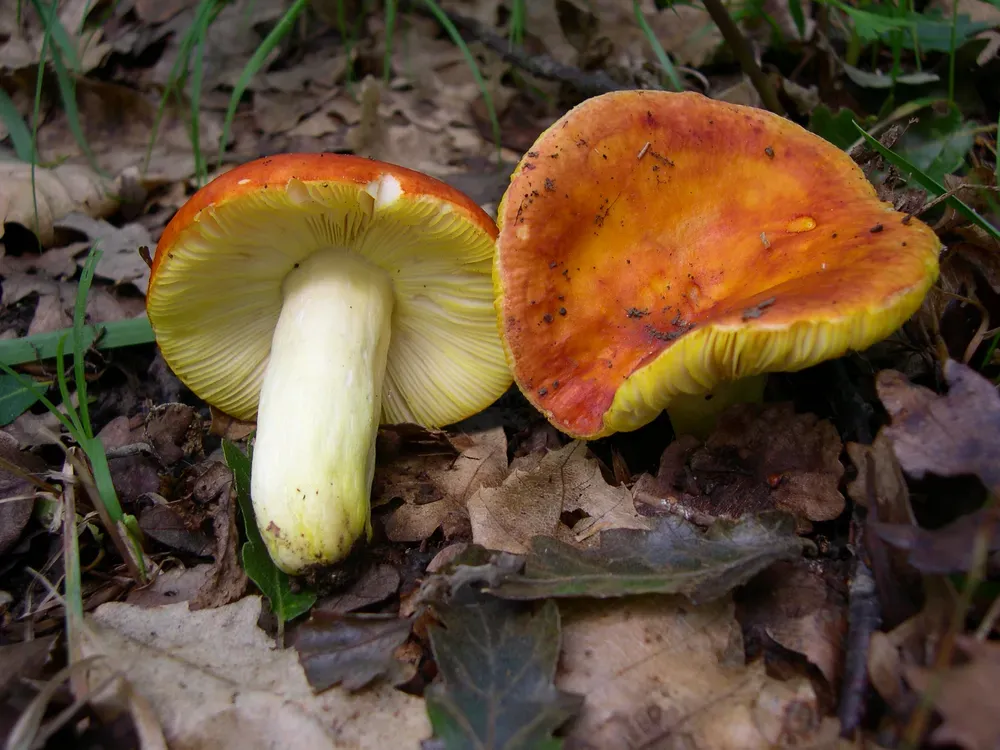
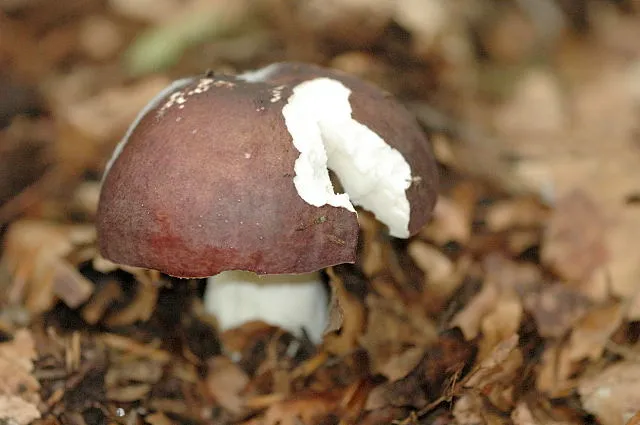
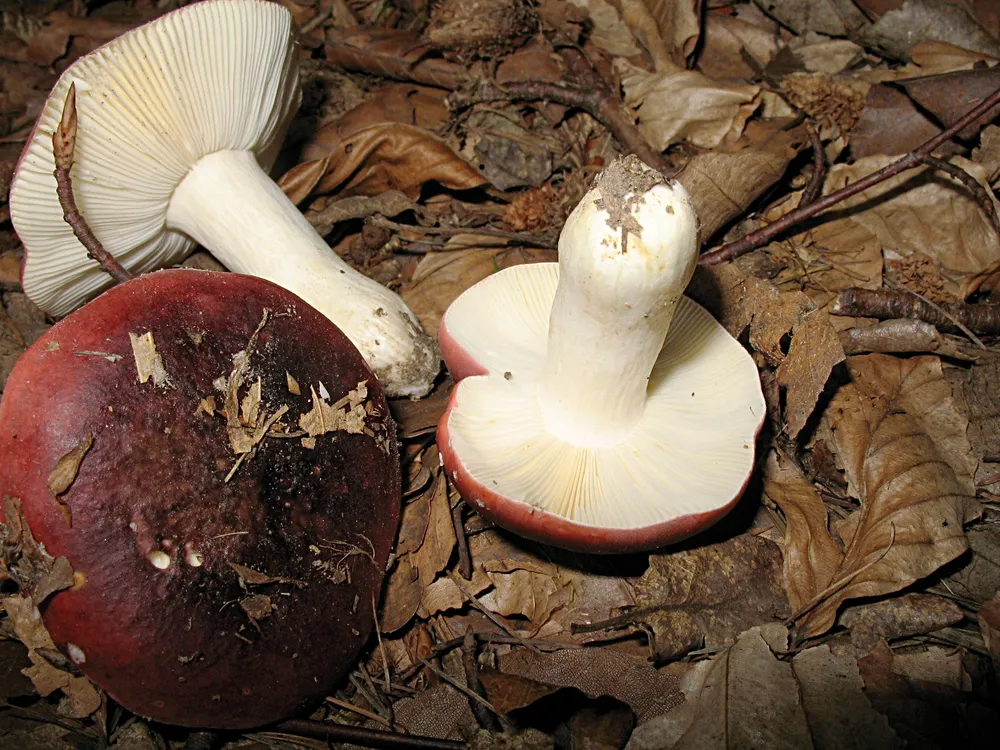
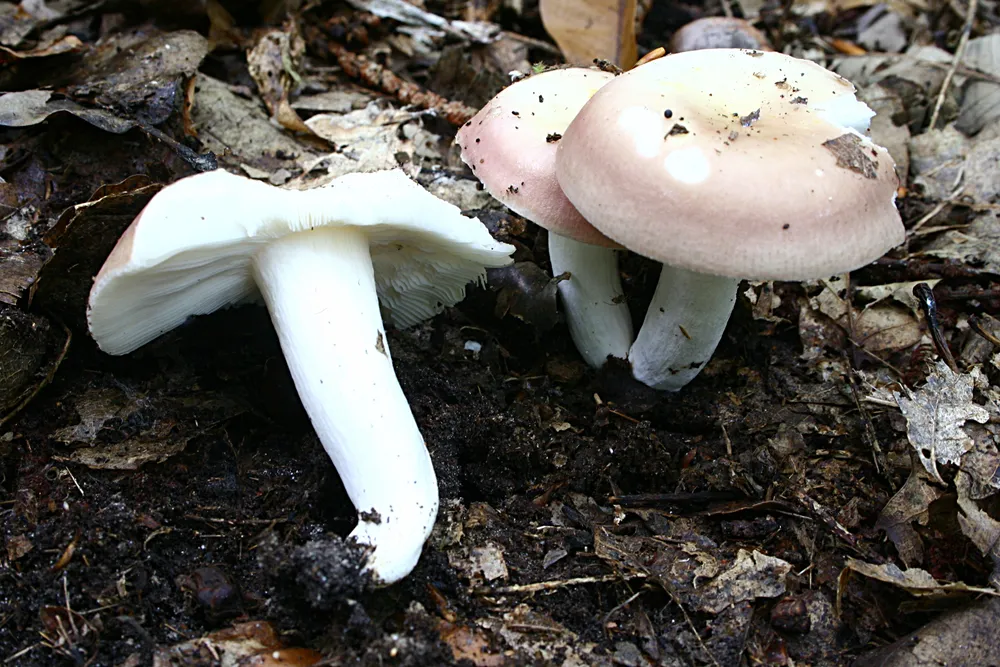
Related species
Mushrooms of the same genus and habitat — to study side by side and never mix up.
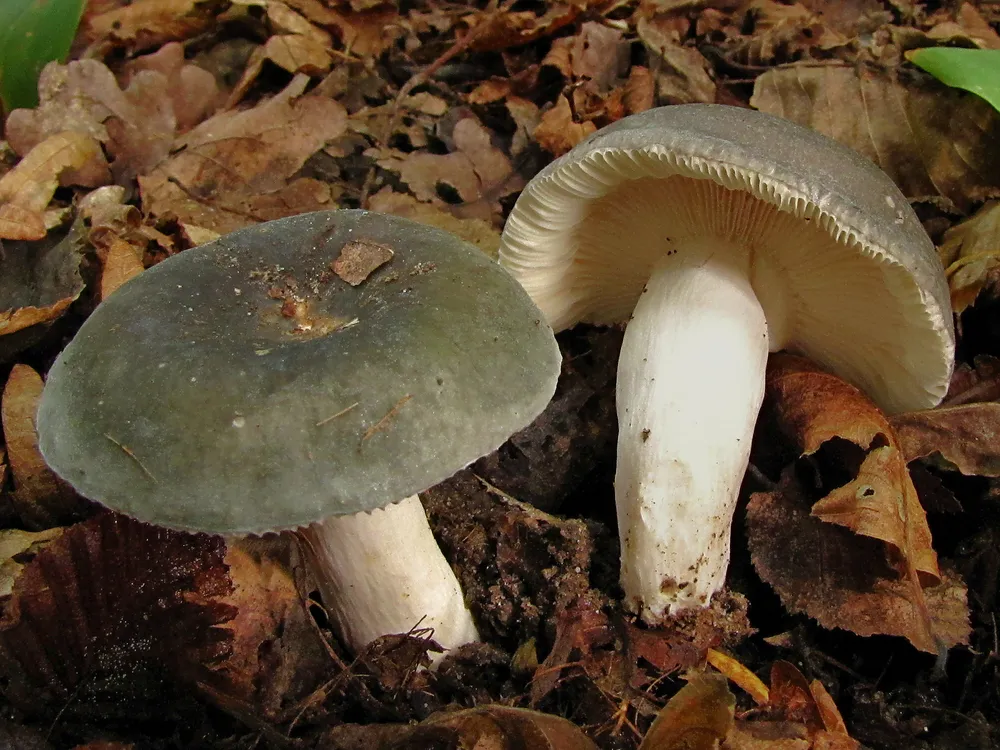
Charcoal burner
Russula cyanoxantha
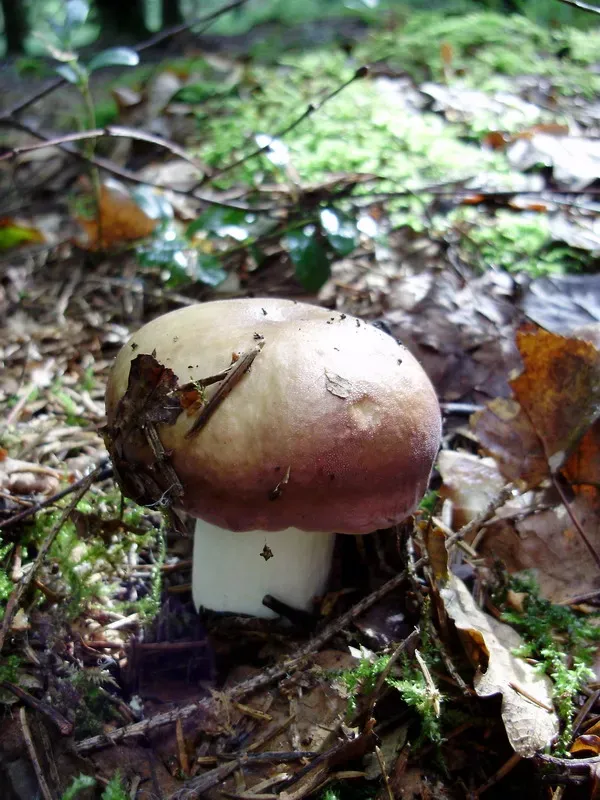
Copper brittlegill
Russula decolorans
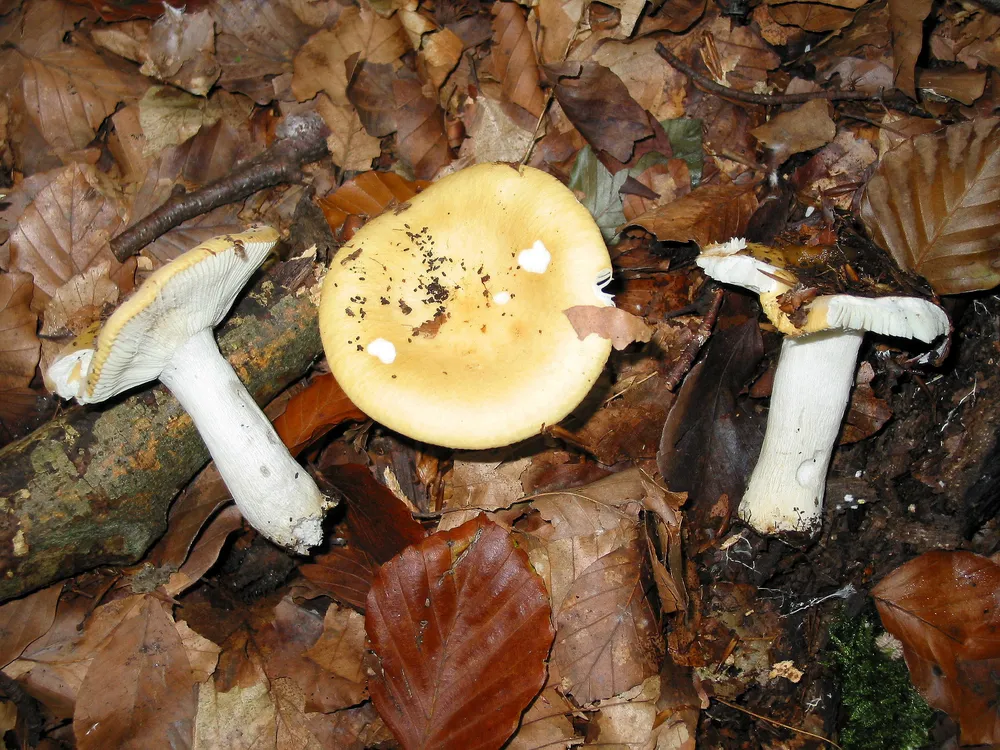
Golden brittlegill
Russula lutea
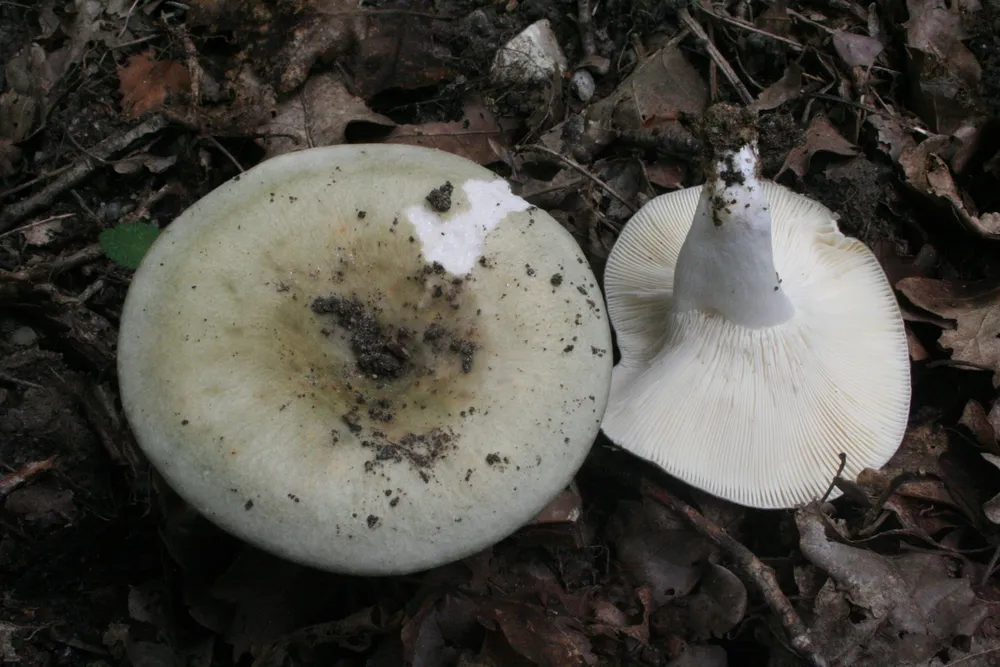
Greasy green brittlegill
Russula heterophylla
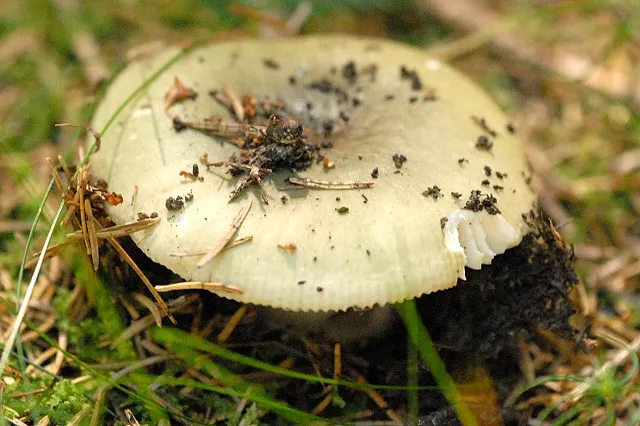
Green brittlegill
Russula aeruginea
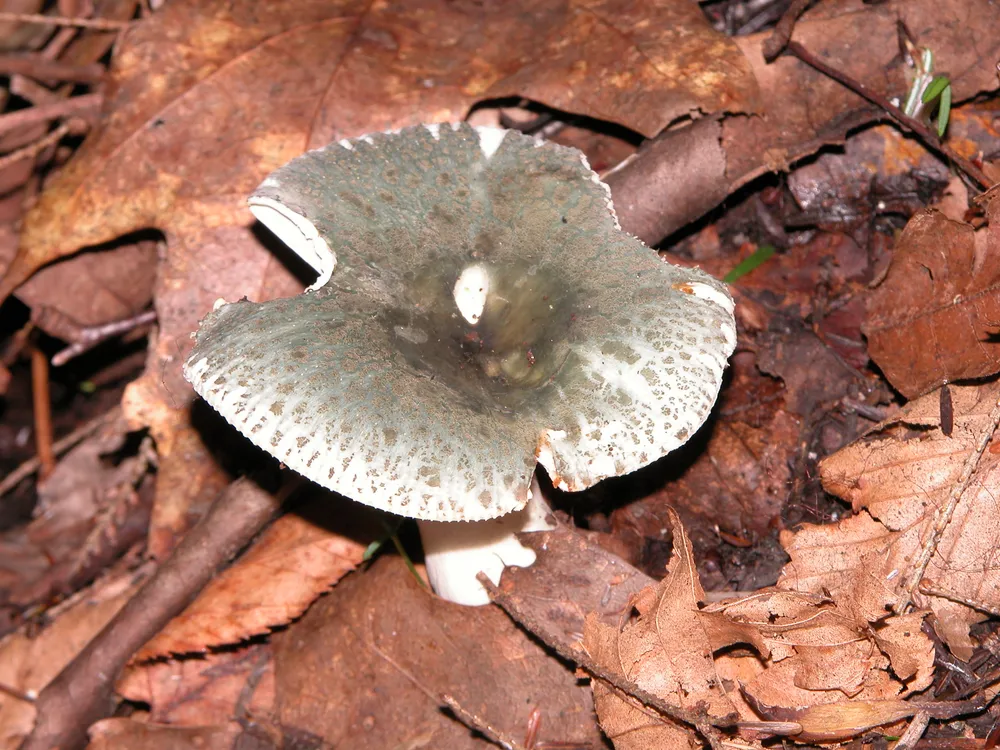
Greencracked brittlegill
Russula virescens
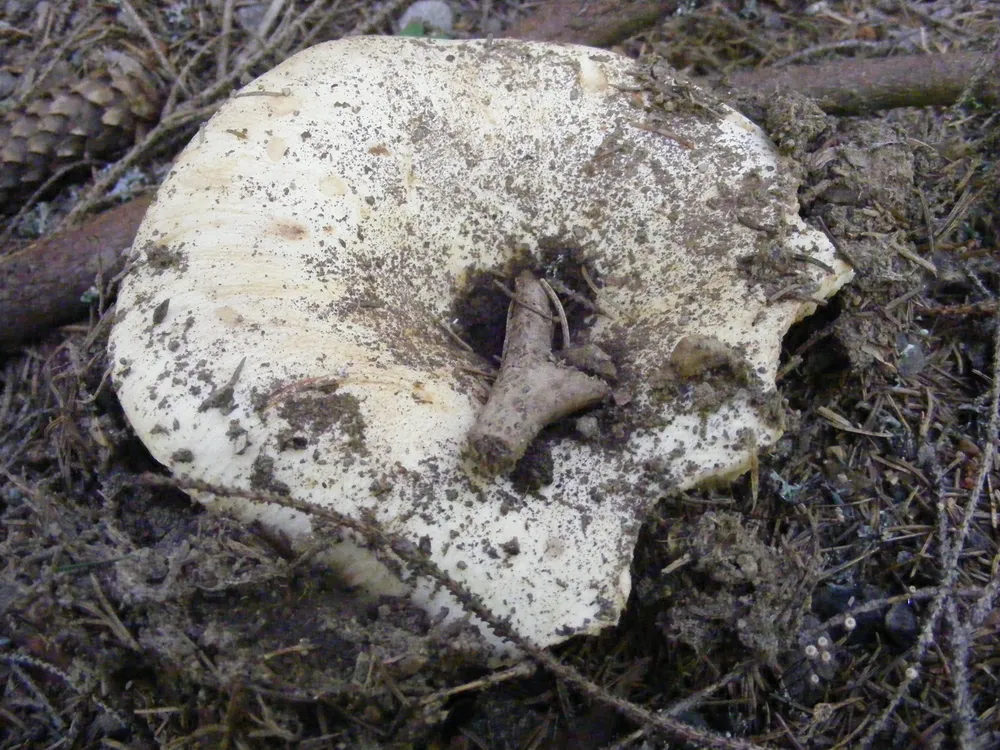
Milk-white brittlegill
Russula delica
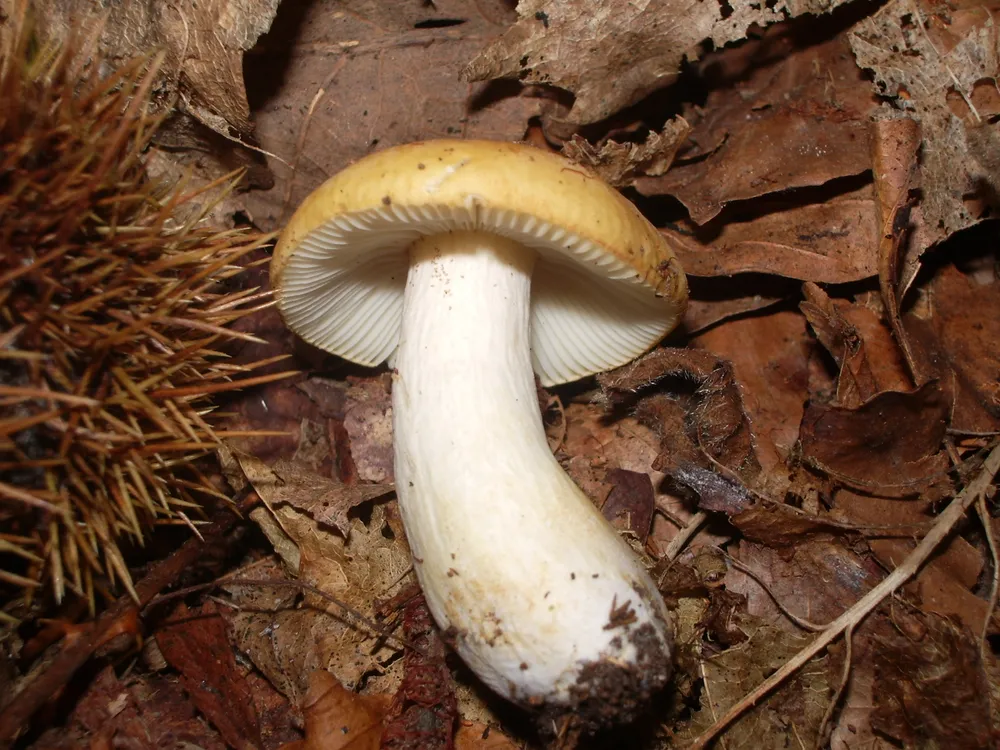
Ochre brittlegill
Russula ochroleuca
Frequently asked questions
How do you tell it from poisonous webcaps?
The key test is a spore print. Russula integra — yellow-ochre spore print, webcaps — rusty brown. Second — young webcaps have a cobwebby veil (cortina) on the stem; Russula doesn't. Third — Russula flesh is very brittle and crumbly, while webcap flesh is more elastic. Fourth — Russula tastes mild and sweetish, webcaps taste neutral and unremarkable.
Does it have dangerous lookalikes among brittlegills?
Among purple-chestnut brittlegills there are no dangerously poisonous ones, but there are acrid-bitter ones (Russula sardonia, R. queletii) that cause gastroenteritis. The key test is tasting: bite off a tiny piece of the gill edge and hold it for 30 sec: acrid and burning — DO NOT EAT, spit it out; mild and sweetish — fine to eat. Russula integra tastes unambiguously mild.
How do you cook it?
No boiling required (fresh, it isn't bitter). Fry young ones with onions, stew them with potatoes, add them to soups. Pickling — excellent (keeps its shape and flavor). Drying — fine, but the aroma is modest. In sauces it gives a rich nutty-mushroom flavor. A classic is a brittlegill "pechenia" (pan roast) in cream.
Where should you look for it?
In spruce-beech and spruce forests in the forest litter among moss and grass. It loves rich, moist humus and often grows on thick moss cushions near old spruces.
Which regions of Ukraine is it found in?
Mostly in the Carpathians and Prykarpattia, and in part in Polissia — in natural spruce-beech forests. In the forest-steppe and steppe it is rare, found in spruce plantations.
When should you look for it?
August — October, peaking in September. It loves a warm autumn with moderate rain.
Which mushrooms is it confused with?
With Russula olivacea (olive russula) — edible, dark olive-green. With R. xerampelina (crab brittlegill) — edible, wine-red, with a hint of herring. With R. queletii (acrid) — violet to wine-colored, but distinctly burning and bitter. With purple webcaps (C. violaceus, C. traganus) — rusty brown spore print. Rule of thumb: always taste a tiny piece of gill.
Is Russula integra edible or poisonous?
Does Russula integra have gills or pores?
What does the cap of Russula integra look like?
What does the stem of Russula integra look like?
What do Russula integra smell and taste like?
Sources
- [1]Вікіпедія (українська)
- [2]Атлас грибів України, Зеров Д.К. (1979)
- [3]MycoBank Database
- [4]Index Fungorum
- [5]GBIF
- [6]iNaturalist Ukraine