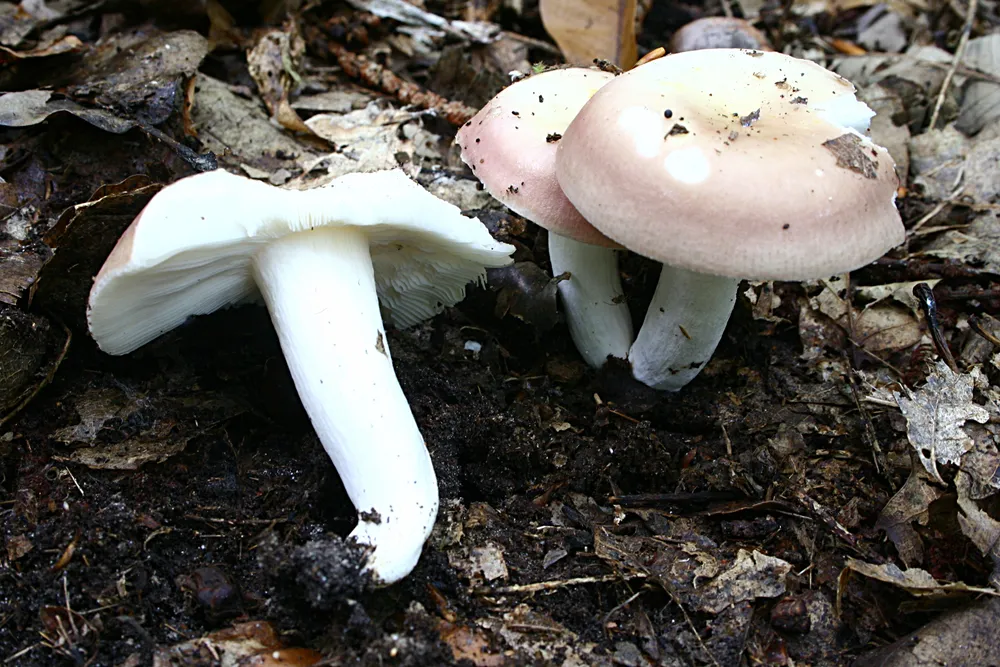
Bare-toothed russulaRussula vesca
Expert-verifiedUpdated August 15, 2026
Passport
- Edibility
- Edible
- Season
- Jul — Oct
- Hymenophore
- Gilled
- Cap color
- Pink
- Size
- Medium (5–15 cm)
- Smell
- Pleasant
- Reviewed
- Yes ✓
Quick answers
Where to look?
Deciduous forest, Mixed forest
When does it appear?
Jul — Oct
Active months: July, August, September, October.
How to recognize it? Three signs
- Cap color: Pink, Red, Cream
- Cap shape: Depressed
- Smell: Pleasant
Fruiting season
July – October
Description
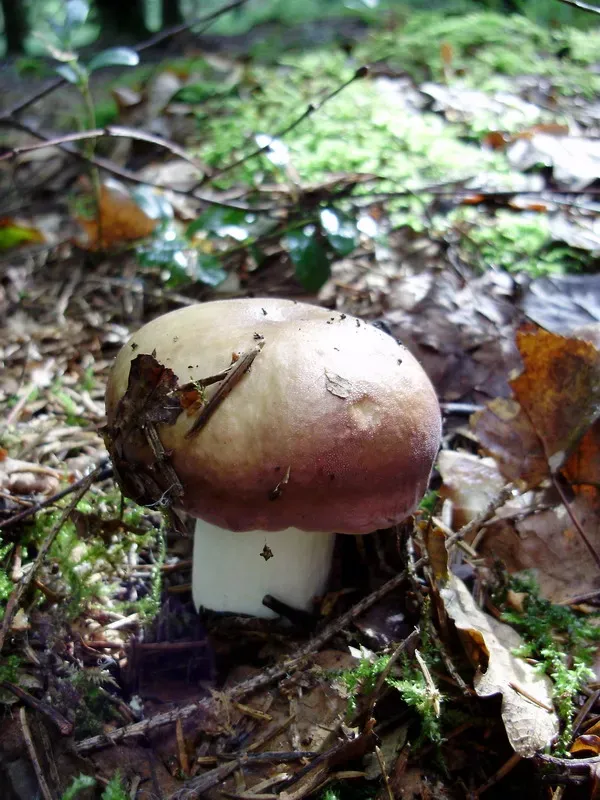
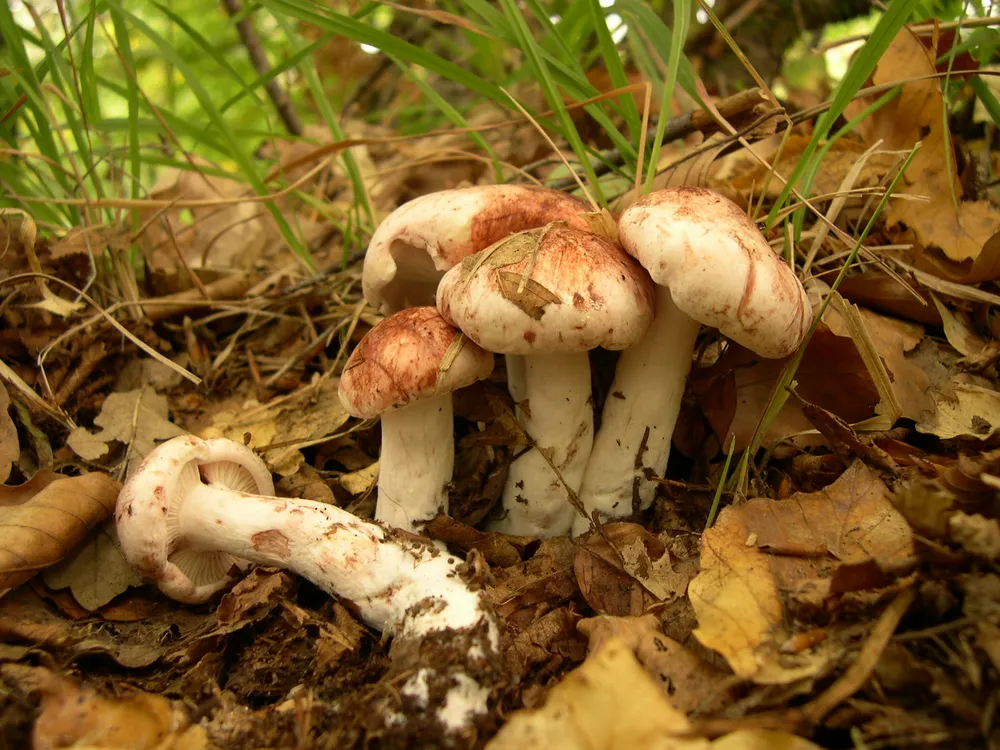
The bare-toothed russula (Russula vesca) is one of the best edible brittlegills and the flagship of the genus in terms of safety and flavor. The Latin epithet vesca simply means "edible" — Carl Linnaeus named it so because it is the most obviously edible member of the genus, with no caveats at all. The cap is 5-10 cm across, convex to flattened with a slightly depressed center, flesh-pink, skin-pink, wine-reddish with a distinct ochre-cream tinge, especially toward the margin.
Its main unique diagnostic feature — the cap skin is shorter than the gill edges, so in mature fruiting bodies you can see along the cap margin a distinct "toothed" or "finger-like" fringe of gills peeking out from under the skin ("the cap is too short"). This is the trait that lets you recognize the bare-toothed russula the very first time you meet it.
An excellent edible mushroom of outstanding culinary quality — the flesh is tender, with a mild, nutty, sweetish flavor, without a trace of bitterness or acridity. Cook it like porcini: fry, stew, pickle, dry. No pre-boiling needed. Old Soviet literature rated it "edible, category 2" (one of the highest ratings among brittlegills); today it is valued even more.
Diagnostic features of Russula vesca: Cap skin shorter than the gill edges — a "toothed fringe" visible from under the cap Flesh-pink, wine-red, meaty-cream color with a distinct ochre tinge toward the margin The cap skin peels easily 1/3-2/3 of the way Spore print white Taste mild, sweetish (tongue test) Flesh brittle, may turn slightly pink when damaged Grows in broadleaf forests (oak, beech, birch) FeSO₄ test: pink to pinkish-orange (a mycological test for confirmation)
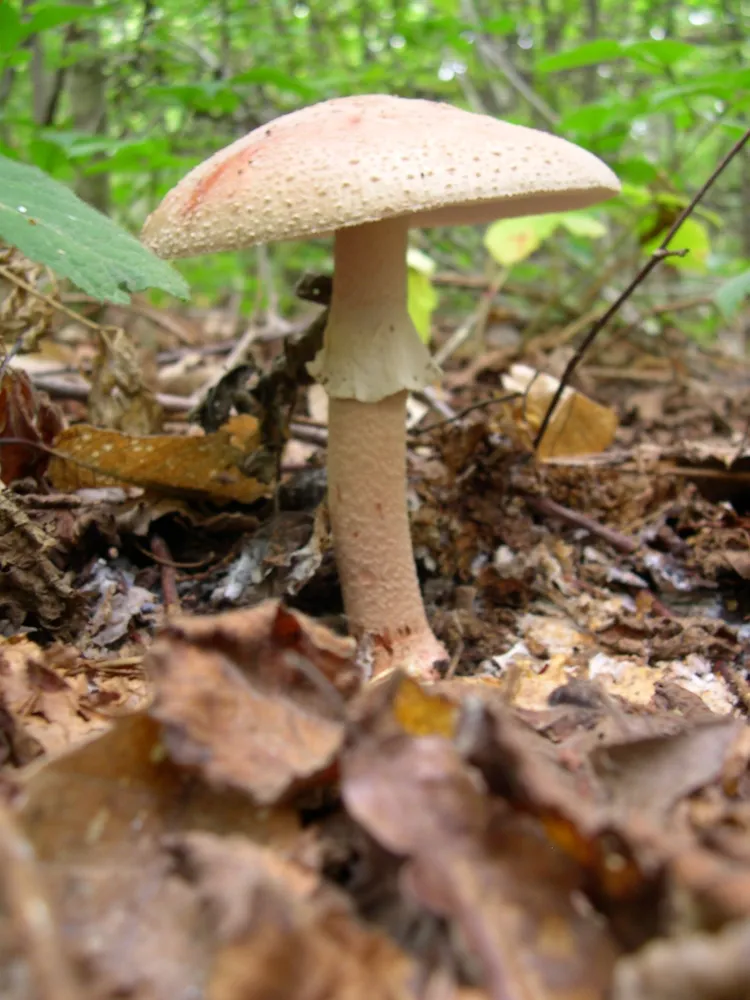
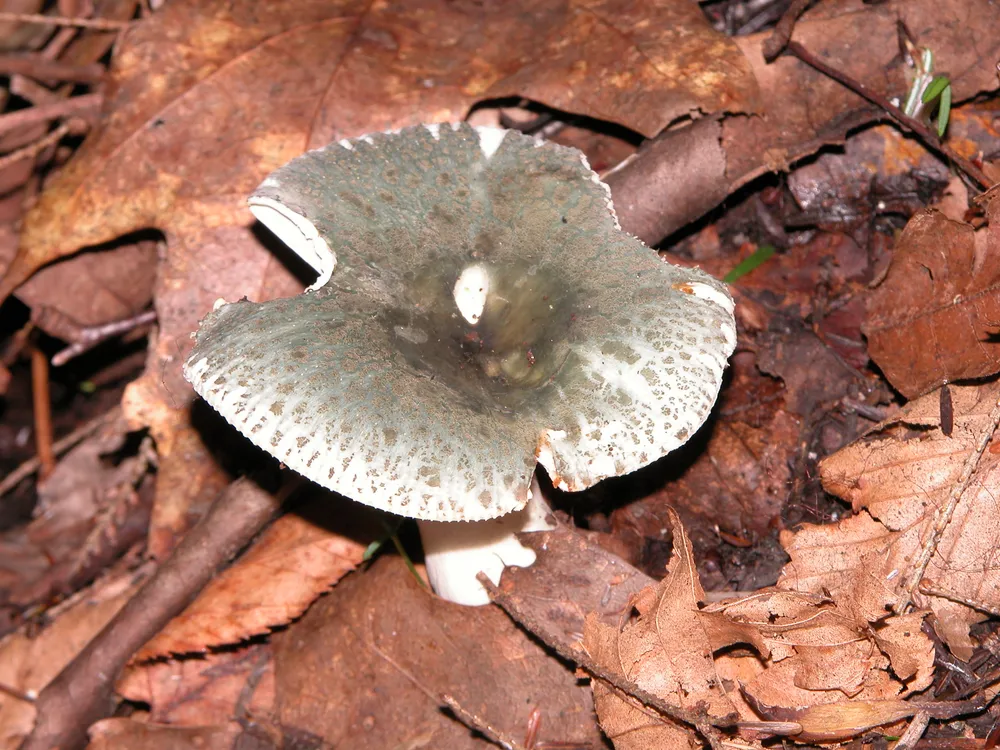
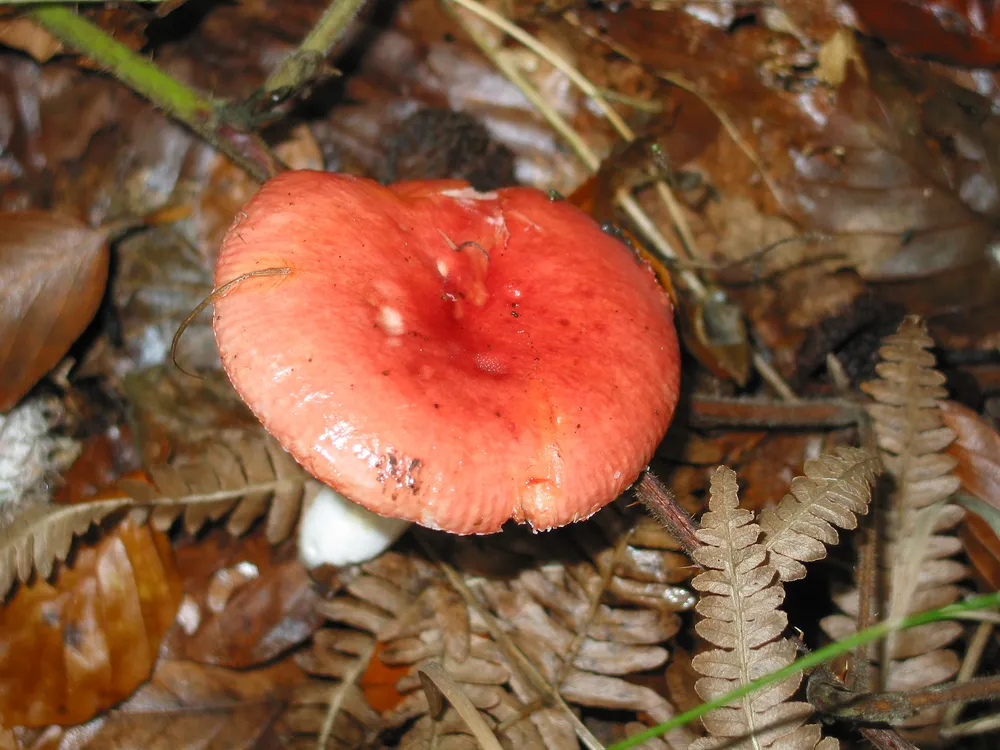
The main risk is confusing it with acrid brittlegills (R. fragilis, R. queletii) and young poisonous amanitas (A. rubescens — pinkish-russet, but with a ring and volva). A tongue test and a look at the stem base are your main safeguards.
In Ukraine, Russula vesca is common in broadleaf and mixed forests: the Carpathians, Prykarpattia, Polissia and the forest-steppe. A mycorrhizal partner of oak, beech, hornbeam and birch. Season: July — October.
Cap
Cap 5-10 cm across, when young convex with an inrolled margin, with age becoming flattened with a slightly depressed center. The cap skin is smooth, slimy-sticky in wet weather, dry and matte in dry weather, peels back 1/3-2/3 of the way to the center, distinctly shorter than the gill edges (the telltale trait — a "toothed fringe" visible from under the skin). Color: flesh-pink, skin-pink, wine-reddish-cream, with an ochre-cream tinge toward the margin, deeper at the center. Old fruiting bodies are creamy ochre-pink and faded.
Hymenophore
Gilled hymenophore — the gills are attached or free from the stem, moderately crowded, thin, brittle. Color: pure white to creamy white, with no pink or yellow tinge. Spore print white.
Stem
Stem 3-7 cm tall, 1.5-3 cm thick, firm, fleshy, cylindrical, with a small cavity in old specimens. Color: white to cream, often with a faint pink or rusty tinge where damaged, with fine browning spots toward the base. Surface smooth with fine lengthwise wrinkles. No ring, no volva — the crucial difference from amanitas.
Flesh
Flesh firm, brittle, white, when damaged slowly takes on a pale pink or cream tinge. Smell faint, pleasant, mushroomy-fruity, taste mild, sweetish and nutty (the tongue test confirms it — no burning at all).
Smell
Faint, pleasant, fruity-mushroomy, neutral.
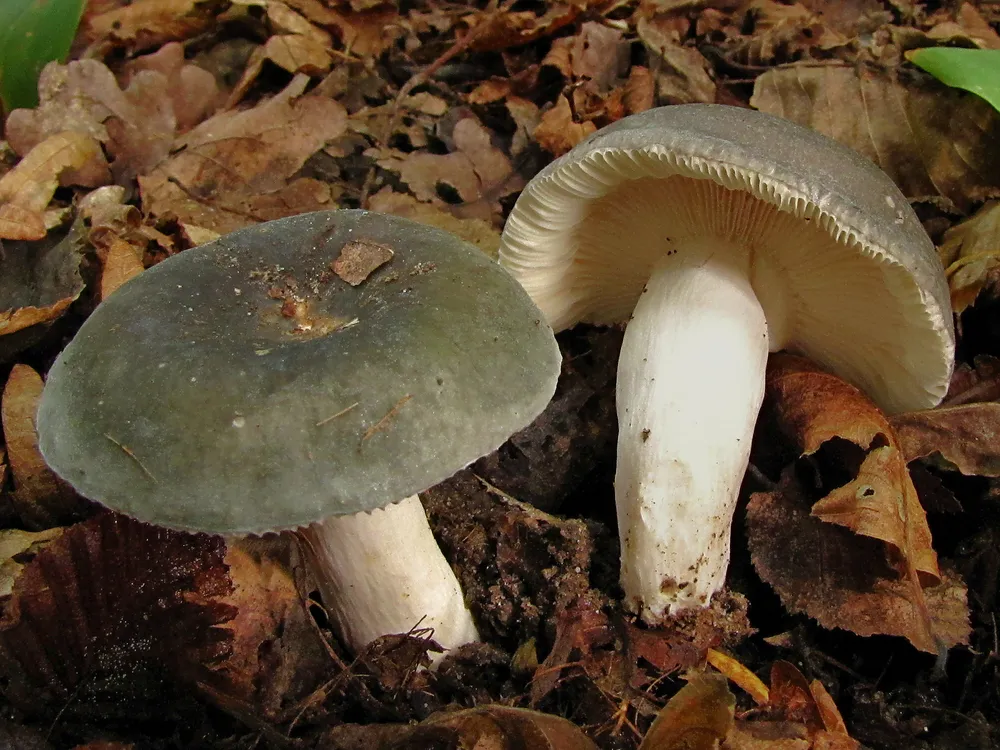
Lookalikes
.webp)
Related species
Mushrooms of the same genus and habitat — to study side by side and never mix up.
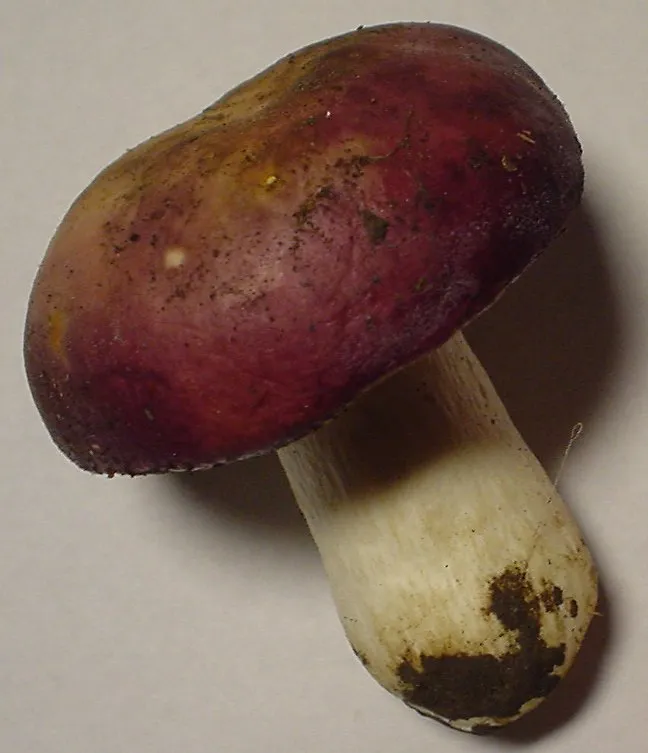
Crab brittlegill
Russula xerampelina
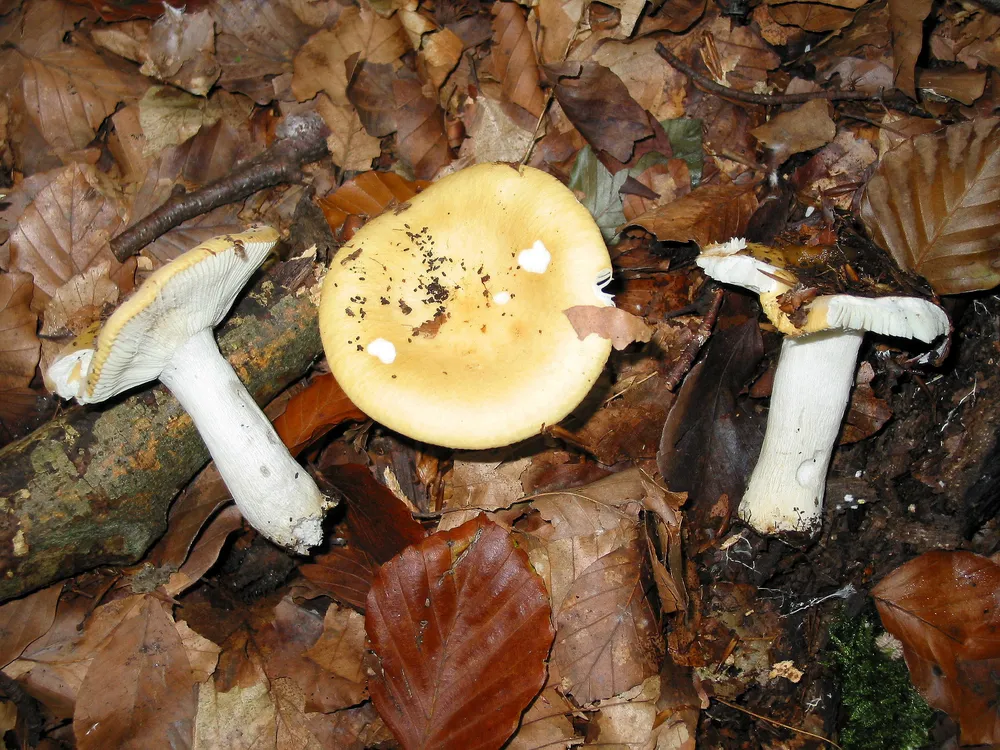
Golden brittlegill
Russula lutea
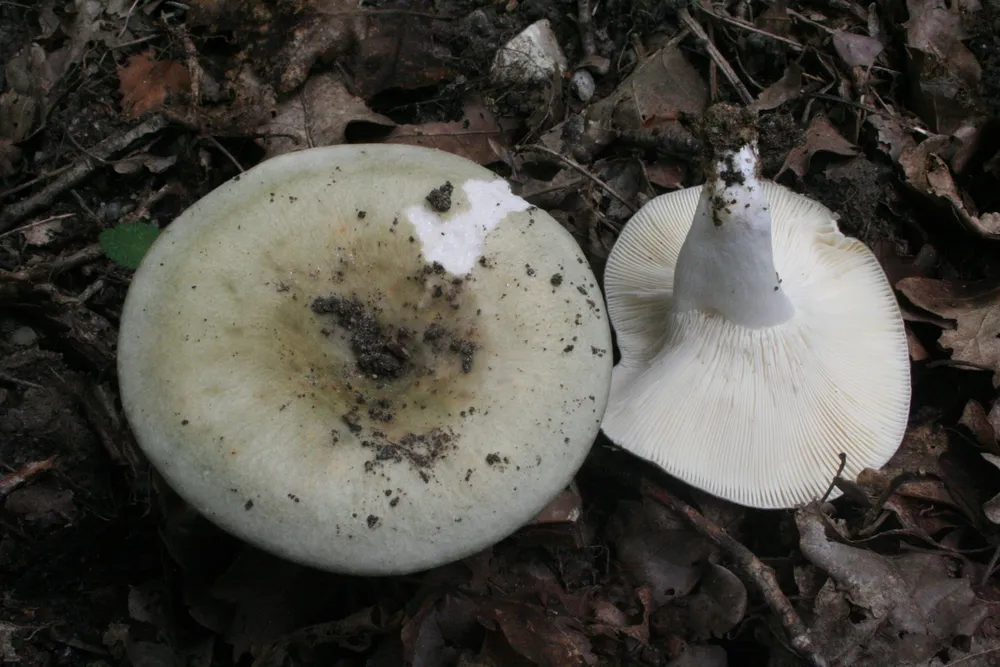
Greasy green brittlegill
Russula heterophylla
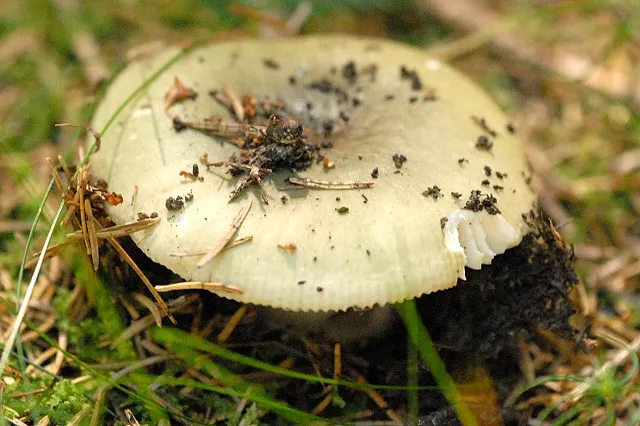
Green brittlegill
Russula aeruginea
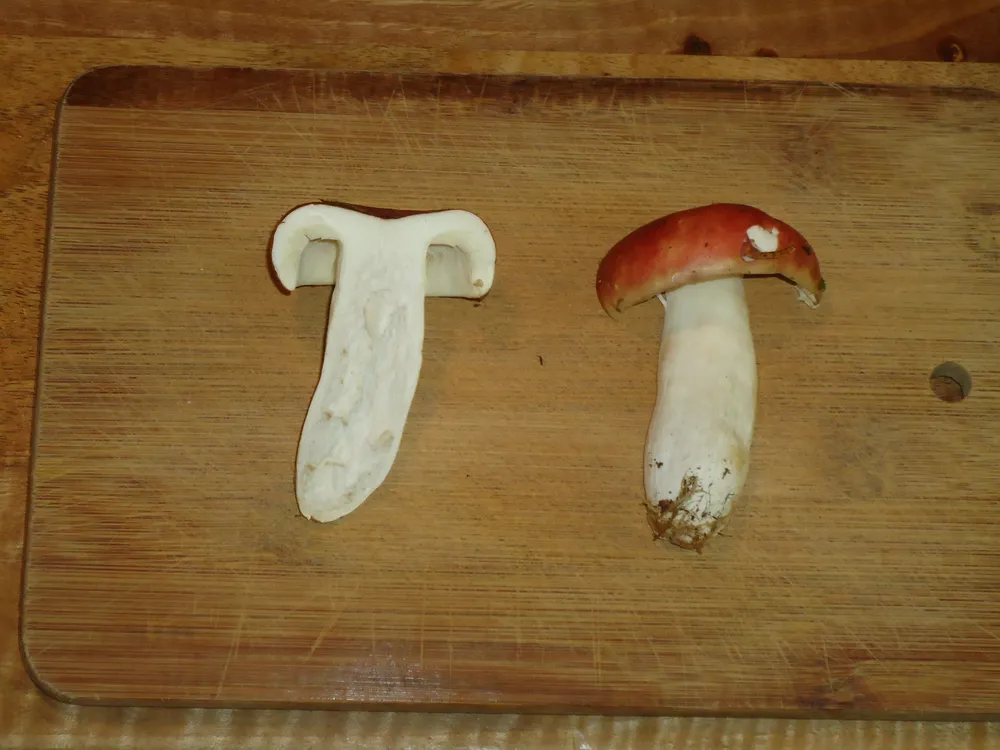
Hintapink
Russula paludosa
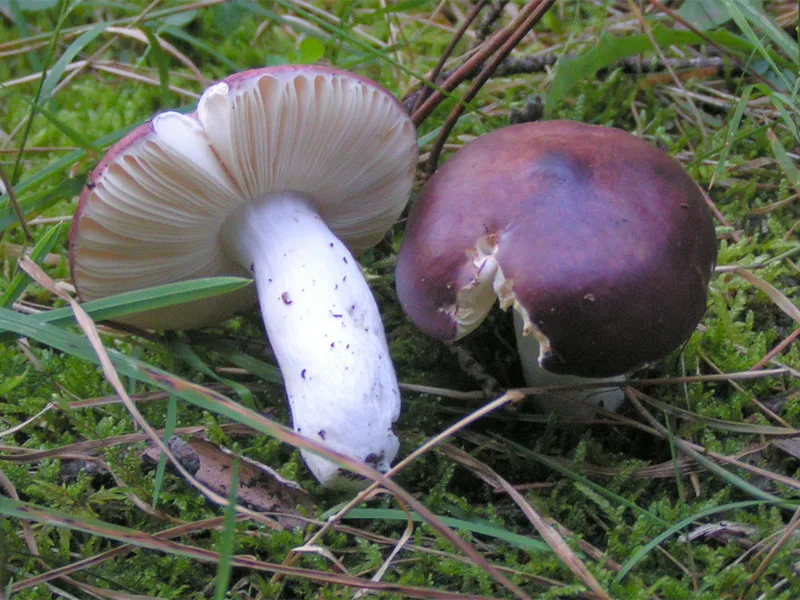
Humpback brittlegill
Russula caerulea
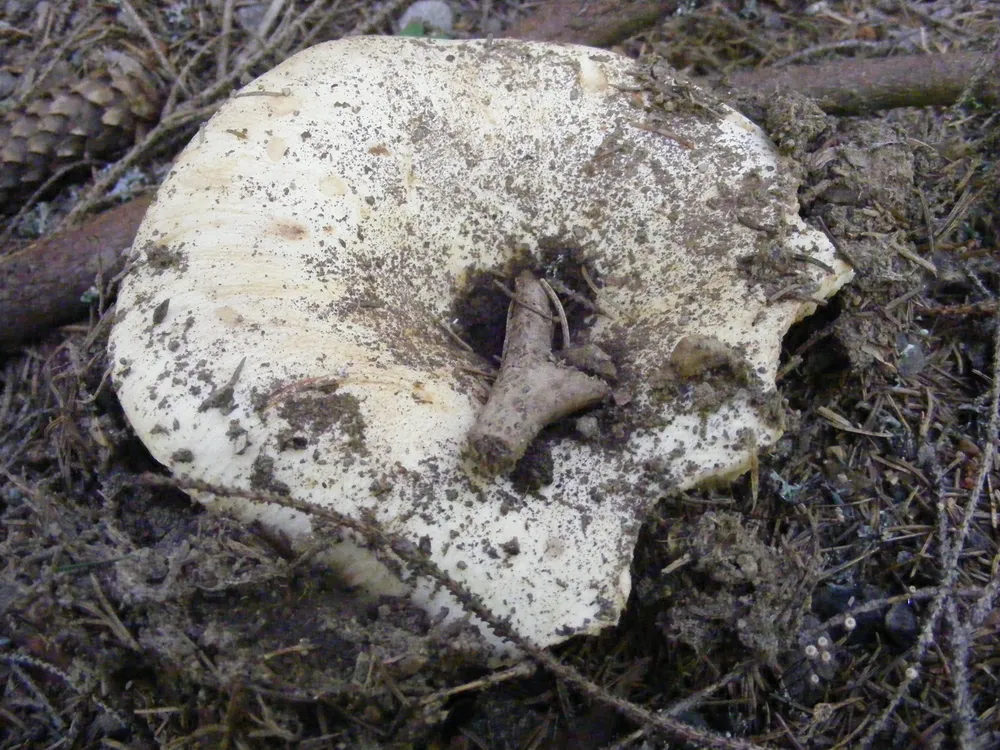
Milk-white brittlegill
Russula delica
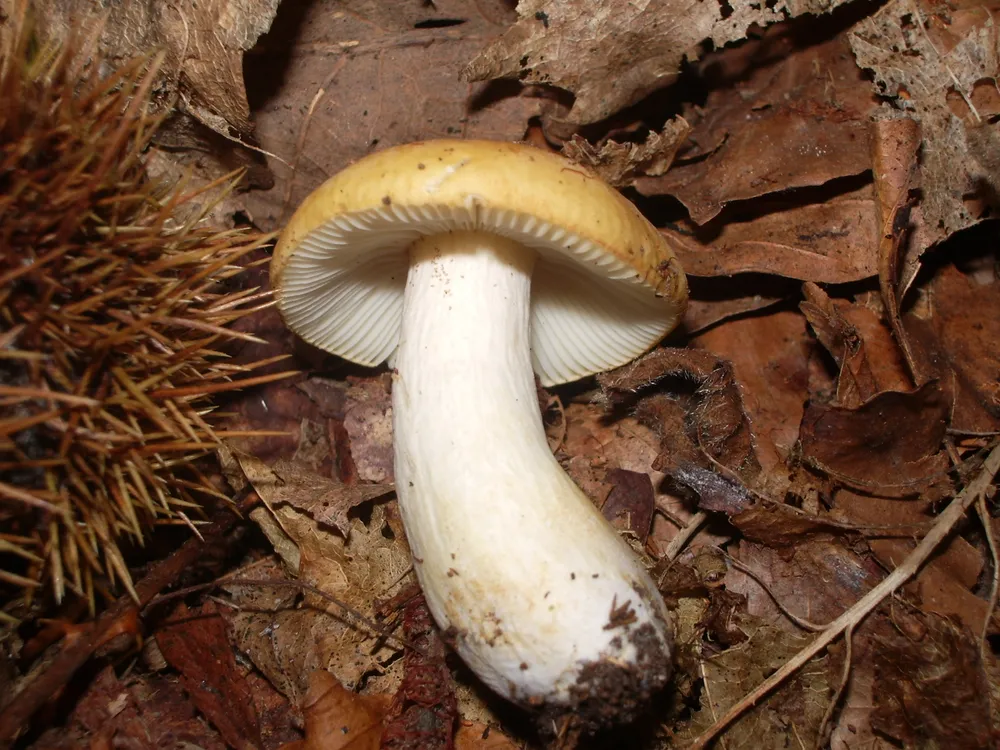
Ochre brittlegill
Russula ochroleuca
Related reading
 How to identify
Pored or gilled mushrooms: how and why to tell them apart
Looking under the cap is the first thing an experienced forager does. Here's how pored mushrooms differ from g…
August 14, 2026·3 min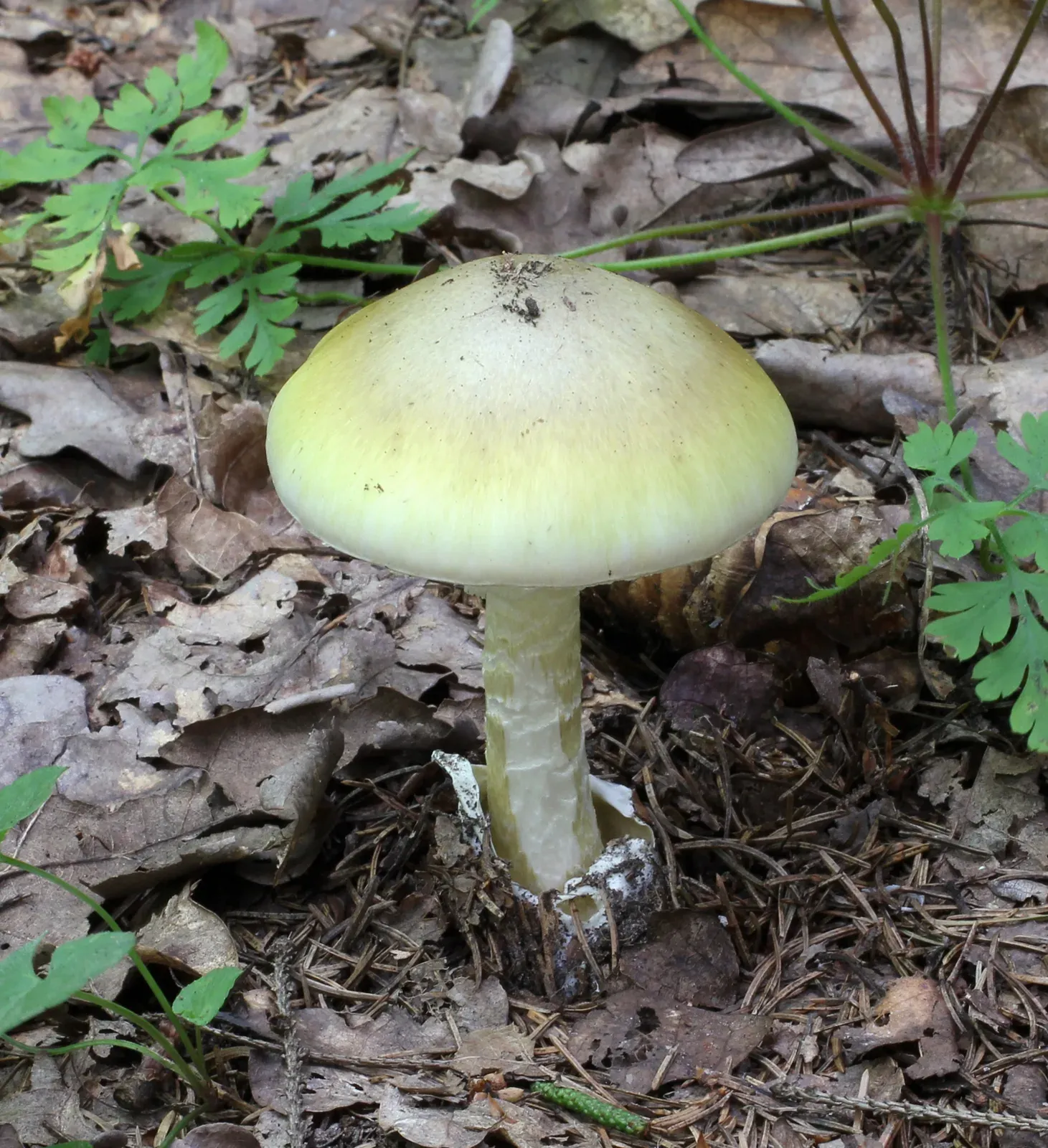 Safety
Brittlegill lookalikes: how not to confuse them with a death cap
Brittlegills hide a dangerous trap: a green or whitish brittlegill can be mistaken for the deadly death cap. H…
July 20, 2026·2 min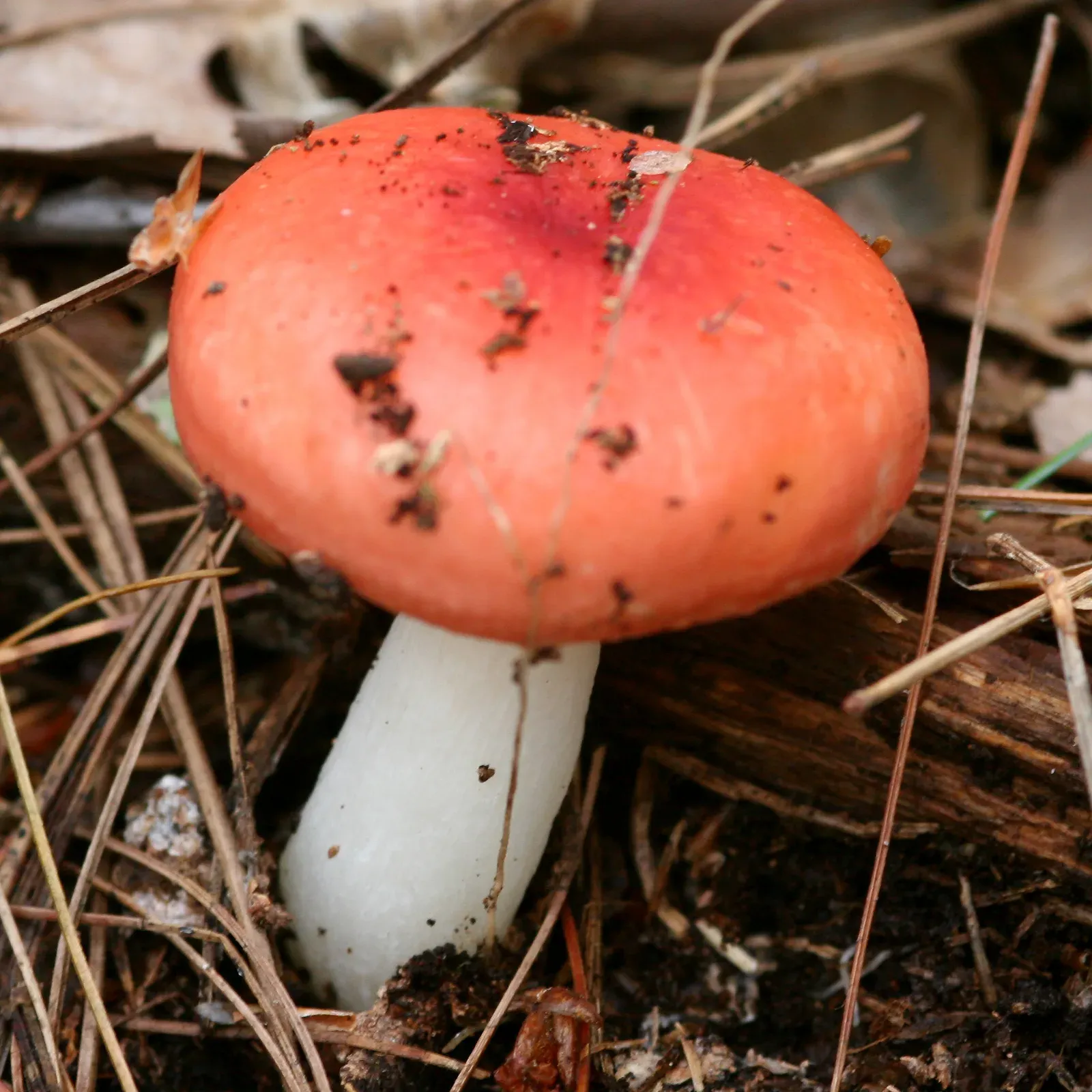 How to identify
Types of brittlegills in Ukraine: a complete guide
Brittlegills are the most colorful family in our forests: green, red, blue, yellow. Some are tasty, others are…
July 18, 2026·2 min
Frequently asked questions
Why is it called "edible"?
It was named by Carl Linnaeus in the 18th century: among the many brittlegills, some of which cause gastroenteritis, this one is the most obviously and safely edible. The Latin vesca means "edible". It really is the flagship of the genus in terms of safety and flavor — and it's the one recommended to beginners as their first brittlegill to learn.
How can you identify it for sure?
Its unique trait — the cap skin is shorter than the gill edges. In mature ones you can see a toothed or finger-like fringe of gills peeking out from under the skin ("the cap is too short"). You won't see this in any other brittlegill. Plus — flesh-pink coloring with an ochre tinge, white gills, a mild, sweetish taste, it grows in broadleaf forests.
Does it have dangerous lookalikes?
No seriously poisonous close lookalikes. A young Amanita rubescens (blusher) is also pinkish-russet, but has a ring on the stem and volva remnants at the base (reddish scales), and its flesh clearly turns red when damaged. Among brittlegills there are acrid ones (R. fragilis, R. queletii) that cause gastroenteritis. The key check is the tongue test (mild and sweetish = R. vesca, burning = acrid).
How do you cook it?
No pre-boiling needed (fresh ones aren't bitter). Young ones — fry with onion and cream (a superb dish!), stew with potatoes, add to soups. Pickling — keeps its shape and color beautifully. Drying — fine; the aroma is partly preserved. In sauces it gives a rich nutty flavor.
Where should you look for it?
In broadleaf and mixed forests — under oak, beech, hornbeam and birch. In the forest litter among moss and grass. It likes slightly acidic to neutral soils with a thick humus layer. Often grows in groups of 5-15 fruiting bodies.
Which regions of Ukraine is it found in?
Common throughout the forest zone: the Carpathians, Prykarpattia, Polissia and the forest-steppe. In the steppe — in planted oak and beech woods.
When should you look for it?
July — October, peaking in August–September. It likes a warm autumn with moderate rain.
Which brittlegills is it confused with?
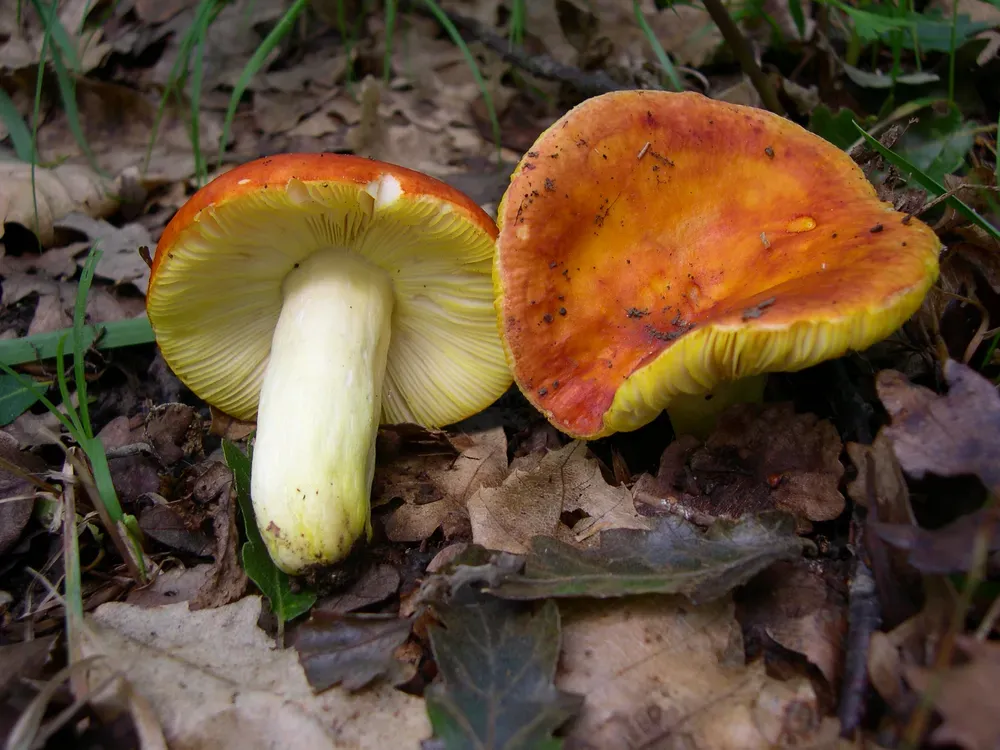
With R. cyanoxantha (charcoal burner) — also edible, but violet-greenish with flexible (not brittle) gills. With R. fragilis (fragile brittlegill, acrid!) — smaller, with a burning-acrid taste, on sphagnum. With R. integra — more violet, in spruce-beech forests. The key check is the "toothed fringe" of gills under the cap skin.
Is Bare-toothed russula edible or poisonous?
Does Bare-toothed russula have gills or pores?
What does the cap of Bare-toothed russula look like?
What does the stem of Bare-toothed russula look like?
Sources
- [1]Вікіпедія (українська)
- [2]Атлас грибів України, Зеров Д.К. (1979)
- [3]MycoBank Database
- [4]Index Fungorum
- [5]GBIF
- [6]iNaturalist Ukraine