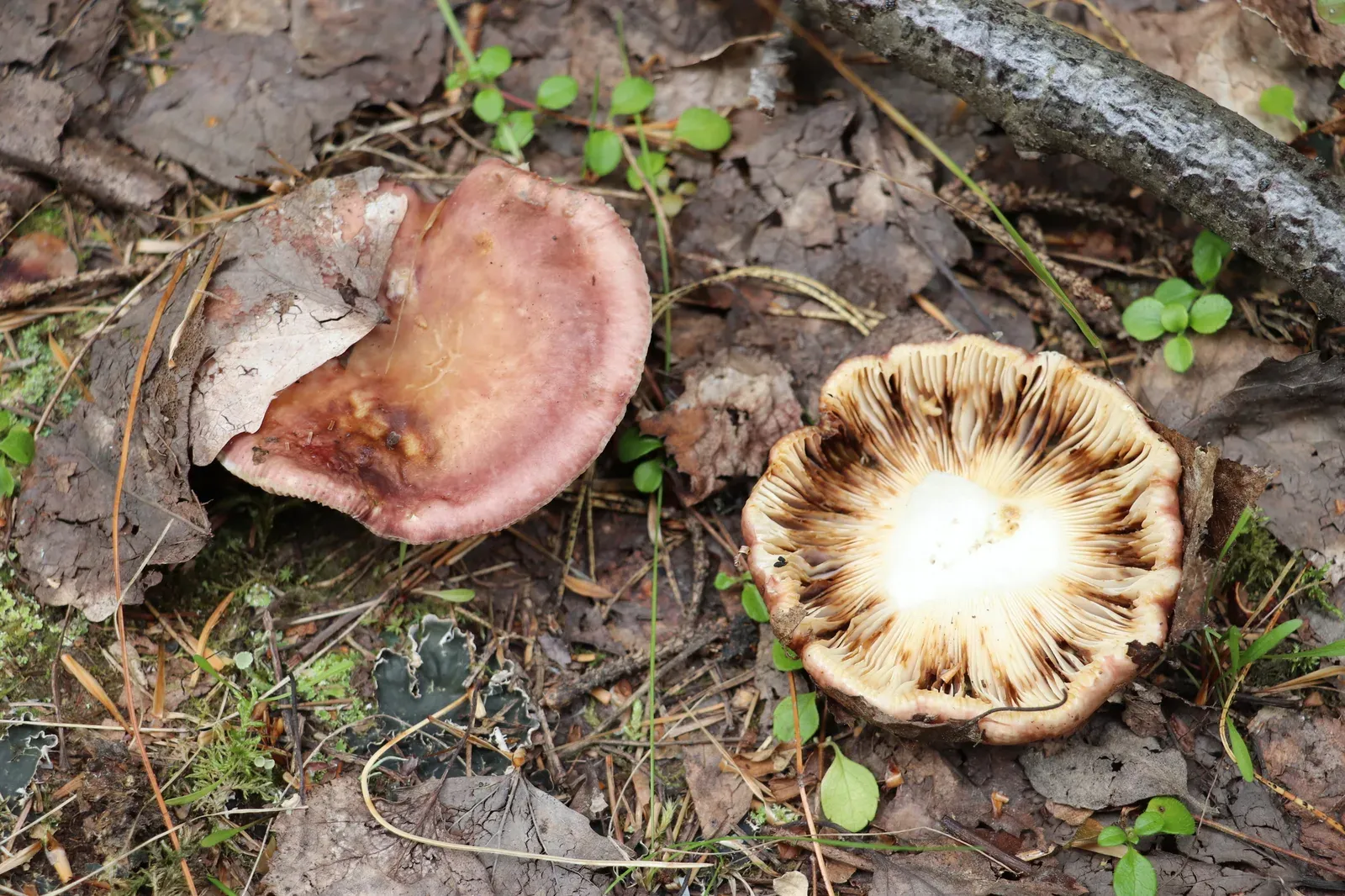
Brittlegills are probably the most common mushrooms in our forests. Their bright caps in red, green, yellow or purple turn up practically at every step from early summer to late fall. But despite their Ukrainian name, syroizhka (“eaten raw”), not all brittlegills can be eaten raw, and some are bitter or even poisonous. So pick them wisely.
Let's work out how to recognize a good brittlegill, which colors should put you on guard and why these mushrooms are so fragile.
How to recognize a brittlegill
Brittlegills belong to a large genus, but they share common traits that make them easy to tell apart from other mushrooms.
- Cap. Rounded, flattening or even becoming sunken with age, with smooth, often shiny skin.
- Gills. White or cream, even, brittle.
- Stem. White, cylindrical, with no ring and no sac at the base.
- Flesh. White, very fragile, crumbles easily.
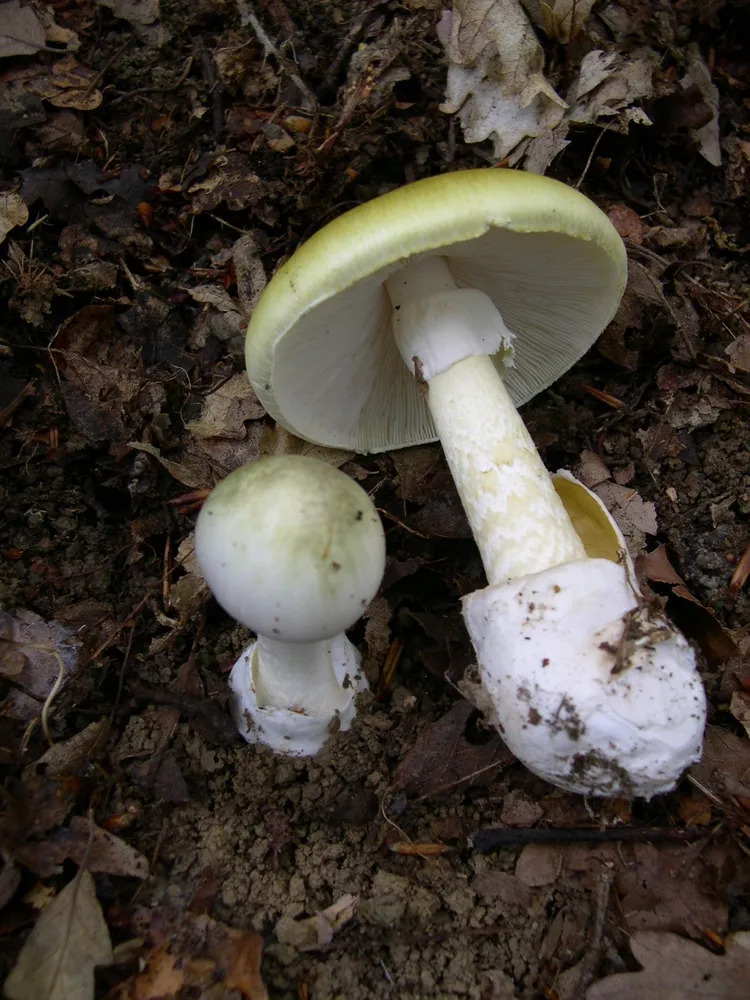
Most importantly, a brittlegill has neither a skirt on the stem nor a sac at the base. These are exactly the details that set it apart from dangerous mushrooms such as the death cap.
Which brittlegills are edible
There are plenty of tasty species among brittlegills, and they all share one simple trait.
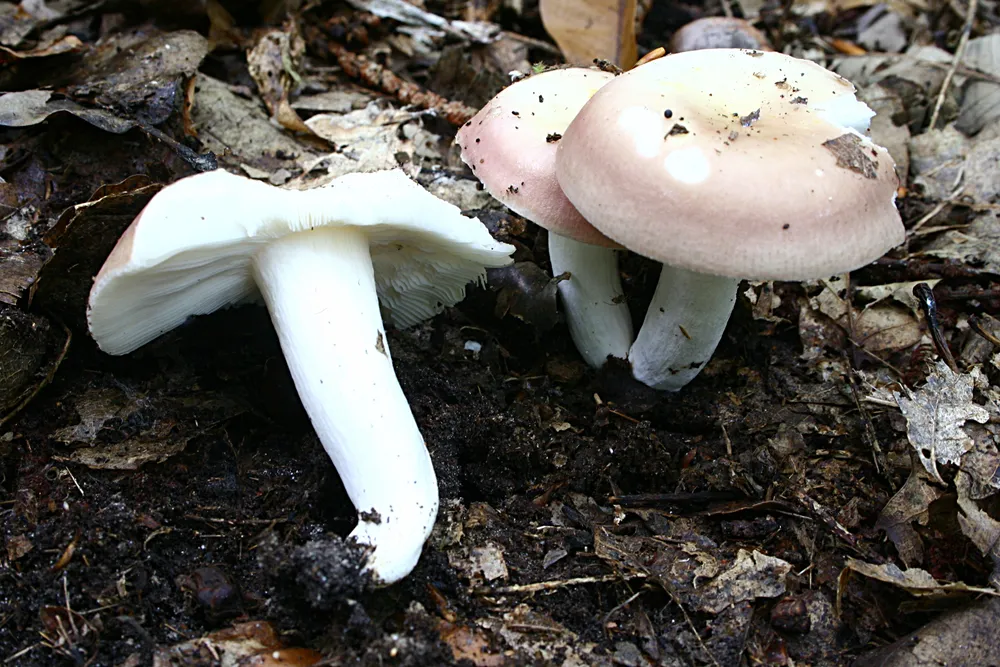
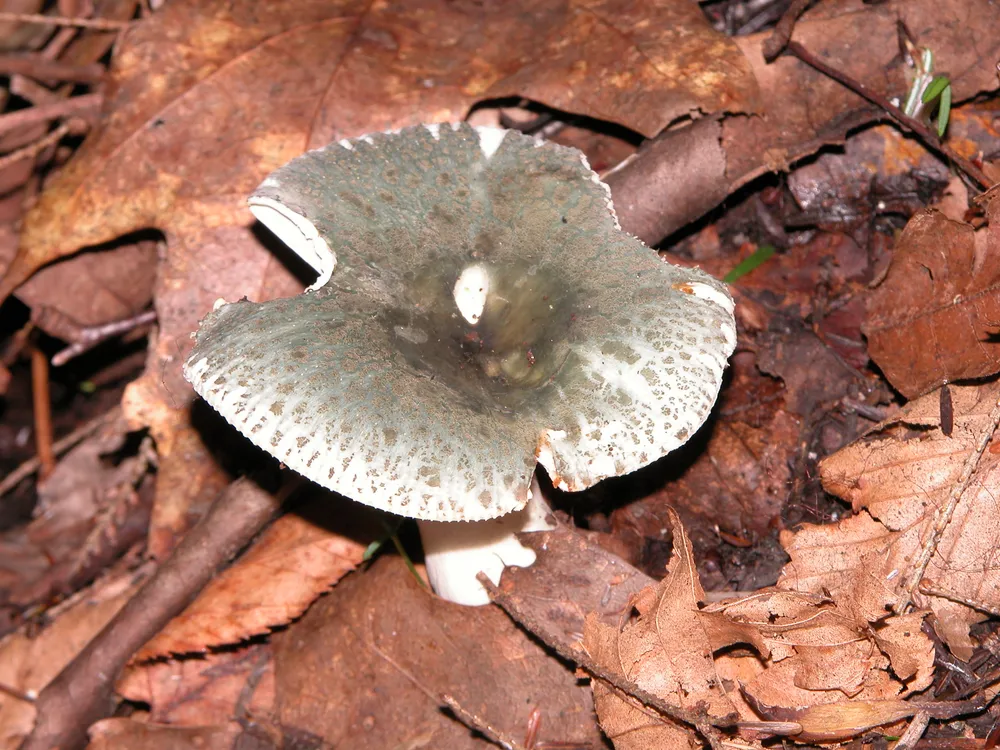
Edible brittlegills are not bitter. Among the best are the bare-toothed russula, greencracked brittlegill and other species with a mild, nutty taste. These are usually brittlegills in calm colors: greenish, brown, yellowish, pink.
There's a simple way to check: break off a tiny piece of the cap and touch it with your tongue. If the taste is mild, the brittlegill is edible; if it's burning and bitter, leave the mushroom be. Spit out the piece you tasted without swallowing it.
Which brittlegills are dangerous
Not all brittlegills are safe, so a few rules are worth remembering.
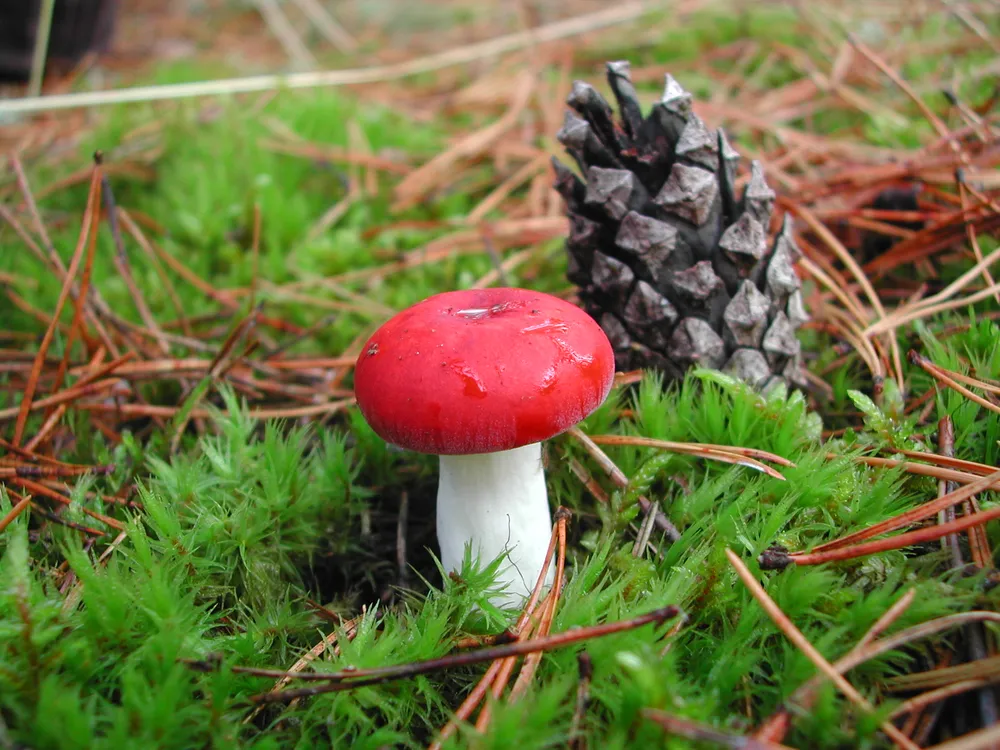
- Hot and bitter. Bright red acrid brittlegills, such as the sickener, cause digestive upset. Bitterness is your signal to pass.
- Bright red with a blood-red tinge. Most of the acrid species are among them, so beginners are better off leaving them alone.
And most importantly: a young greenish brittlegill can be mistaken for the death cap. We show in detail how to tell them apart in our comparison of the death cap and the greencracked brittlegill.
Why brittlegills are so fragile
Their remarkable fragility is the brittlegill's signature trait, and it has both upsides and downsides.
Brittlegill flesh is made up of rounded cells, so it crumbles easily and the gills break at the slightest touch. That's why it's hard to carry brittlegills home in one piece, and they often go on top of the basket.
But this same fragility helps you recognize the mushroom: if the gills and flesh are brittle as chalk, you're most likely looking at a brittlegill. In the kitchen, brittlegills are fried, boiled and salted, and the slightly bitter species are boiled before cooking. Unsure about a mushroom? Check it against our safe foraging rules.
Sources
- “Key to the Fungi of Ukraine” (Kyiv, Naukova Dumka publishing house).
- Russula in GBIF, the global biodiversity database.
- Russula in MycoBank, the international fungal nomenclature database.
- Russula on Wikipedia.
Frequently asked questions
How do you recognize a brittlegill?
By its rounded smooth cap, white brittle gills and white fragile stem with no ring and no sac. The flesh is very fragile and crumbles easily. Cap colors vary enormously.
Are all brittlegills edible?
No. Many species are edible, but there are bitter and acrid brittlegills, such as the , that cause digestive upset. Edible brittlegills are never bitter.
How can you check whether a brittlegill is edible?
Break off a tiny piece of the cap and touch it with your tongue. A mild taste means an edible mushroom; a burning, bitter one is your cue to pass. Spit out the piece you tasted without swallowing it.
Can a brittlegill be mistaken for a death cap?
Yes, a young greenish brittlegill gets mistaken for the . What saves you is that a brittlegill has neither a skirt nor a sac at the base. Details in our .
Why are brittlegills so fragile?
Because their flesh is made up of rounded cells, so it crumbles easily and the gills break at a touch. At the same time, this fragility helps you recognize a brittlegill.
Which brittlegills taste best?
Species in calm colors with a mild, nutty taste, including the and the . Bright red acrid species are best avoided.
Can you eat brittlegills raw?
Despite the Ukrainian name, better not. Some species are bitter or acrid, so brittlegills are cooked: fried, boiled and salted, with the slightly bitter species boiled first.
Why shouldn't you pick bright red brittlegills?
Bright red species include the most acrid and bitter ones, which cause digestive upset. Beginners are safer choosing brittlegills in calm greenish and brown shades.
Mushrooms in this article
Related articles
 How to identify
Truffles in Ukraine: do they grow here, and where to look
Truffles aren't just a French delicacy. Several species grow in Ukraine too. Here's which ones, where they occ…
August 24, 2026·2 min Recipes & cooking
How to store fresh mushrooms, and for how long
Fresh mushrooms spoil faster than you might think. Here's how long they keep in the fridge, how to store them…
August 21, 2026·4 min Recipes & cooking
How long to boil mushrooms
Boiling time depends on the type of mushroom and on what you're cooking next. Here's a clear cheat sheet: how…
August 22, 2026·4 min