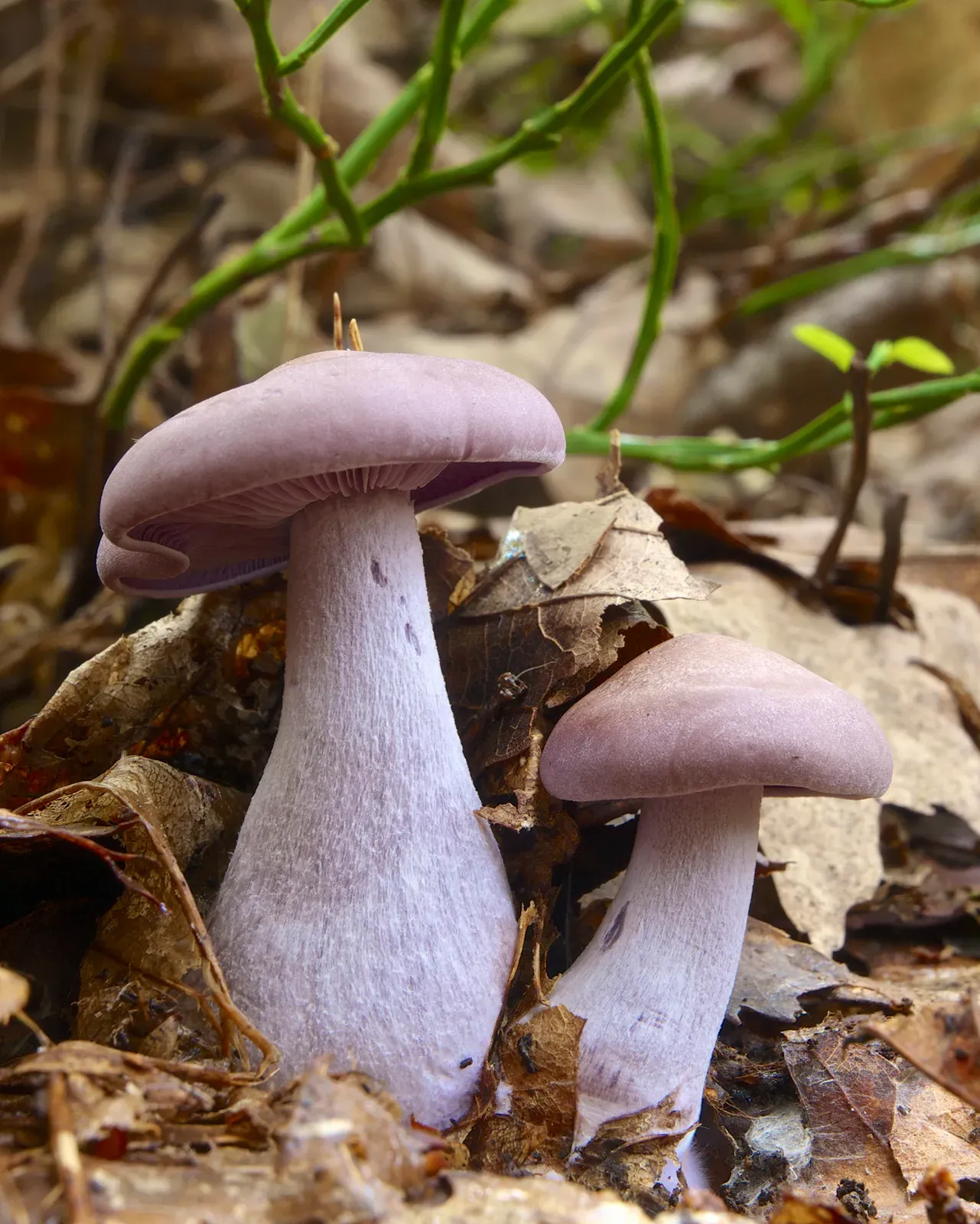
Late October, the forest has gone quiet, and your basket is full of tricholomas. And here comes the question that field guides answer so vaguely: what to do with them now, in the kitchen.
The short answer is this: clean them, boil them for 15 minutes and pour the water away. After that a tricholoma behaves like any ordinary autumn trophy, and you can fry it, salt it, pickle it or freeze it.
Now for the details, because the difference between a good dish and a pot that tastes of soil hides in exactly those details.
How to clean tricholomas
Tricholomas live in the litter layer, often half-buried in needles or leaves, so they bring a good helping of that forest home on them. Sand that gets into the gills will not wash out later, so start on the mushrooms straight away, while they are fresh.
- Sort the mushrooms by species. Different tricholomas are cooked differently, and mixing them in one pot is not a good idea.
- Cut off the bottom of the stem, it is the dirtiest part.
- Scrape the needles, leaves and sand off the cap with a knife or a brush. In wet weather the cap can be slimy, and then the skin is easier to peel off than to wash.
- Cut the mushroom open and look inside. Tricholomas get maggoty less often than summer mushrooms, but it is still worth checking.
- Rinse them quickly in cold water. There is no need for a long soak: the mushroom takes up water and turns cottony.
Take young, firm mushrooms to the kitchen. Old, soggy caps will give the dish nothing good, but they will happily give it a harsh smell.
How long to boil tricholomas and whether to pour the water away
The answer is short: 15 minutes, and pour the water away.
This is exactly the advice for the wood blewit, the main tricholoma of late October: 15 minutes of boiling, drain the water, and only then fry them or put them away for the pantry. The same rule works for the other tricholomas that end up on the table.
Why. Tricholomas are conditionally edible mushrooms: they are not eaten fresh. That first boil is not a formality here but part of the cooking, because along with the water go the taste of the forest litter and whatever the mushroom may have taken up from the soil.
If you want an extra margin of safety, there is also a minimum threshold for wild mushrooms: at least 15 minutes at a steady 70–80 °C right through the flesh. That same temperature, 70 °C, destroys echinococcus eggs, which a mushroom can bring in from the forest.
So the more cautious route is simple: keep a real, even boil for all 15 minutes, not a barely visible simmer. It is hard to overcook a tricholoma by boiling, the flesh is firm and holds its shape well.
And here is what boiling does not do: it does not save you from poisonous mushrooms. The toxins of the tiger tricholoma are not destroyed by boiling, and no pot will make it edible. Only mushrooms you are sure of go into the pot. Boiling times for other species are gathered in a separate cheat sheet, how long to boil mushrooms.
Why tricholomas smell of earth and how to get rid of it
Plenty of people try a tricholoma for the first time and come away disappointed: it smells of earth, of flour, of a damp cellar. This is not a spoiled mushroom, this is its nature. Tricholomas grow right in the litter layer, and it is the breath of that litter they bring with them. The good news is that the smell sits mostly in the skin of the cap and passes easily into the water.
What really helps:
- Boil them and pour the water away. This is the main step, and after it the smell is noticeably weaker. That is exactly why the water is poured away rather than kept for soup.
- Peel the skin off the cap, if it is dark and slimy.
- Take young mushrooms. In old ones the smell is sharper and harder to remove.
- Give the mushrooms some company in the pan. Onion, butter, sour cream, pepper and a bay leaf turn that earthy note into a familiar mushroomy one.
- Do not boil tricholomas together with delicate mushrooms. The water will happily share the smell with its neighbours.
If after boiling the smell has not merely failed to go but has turned unpleasantly sharp or sour, it is better not to eat the mushrooms. That is no longer the character of the species but a sign that they have been sitting around too long.
Which tricholomas you can take and which you cannot
There are many tricholomas, and they are very different from one another. Briefly, about the ones that reach the table:
- **Wood blewit** (Lepista nuda), a conditionally edible mushroom of high quality. It is picked from August to November, and it is the most frequent guest in the basket in the last warm weeks of autumn.
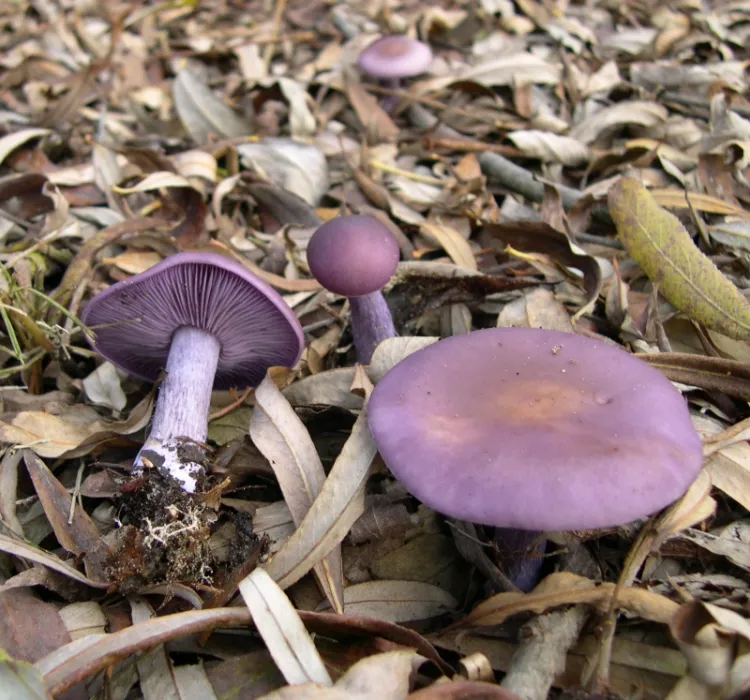
- **Field blewit**, also known as the blue-leg, with its bright lilac stem. It is prized for its firm flesh, and it is cooked the same way. Its field marks are gathered in the article about the field blewit.
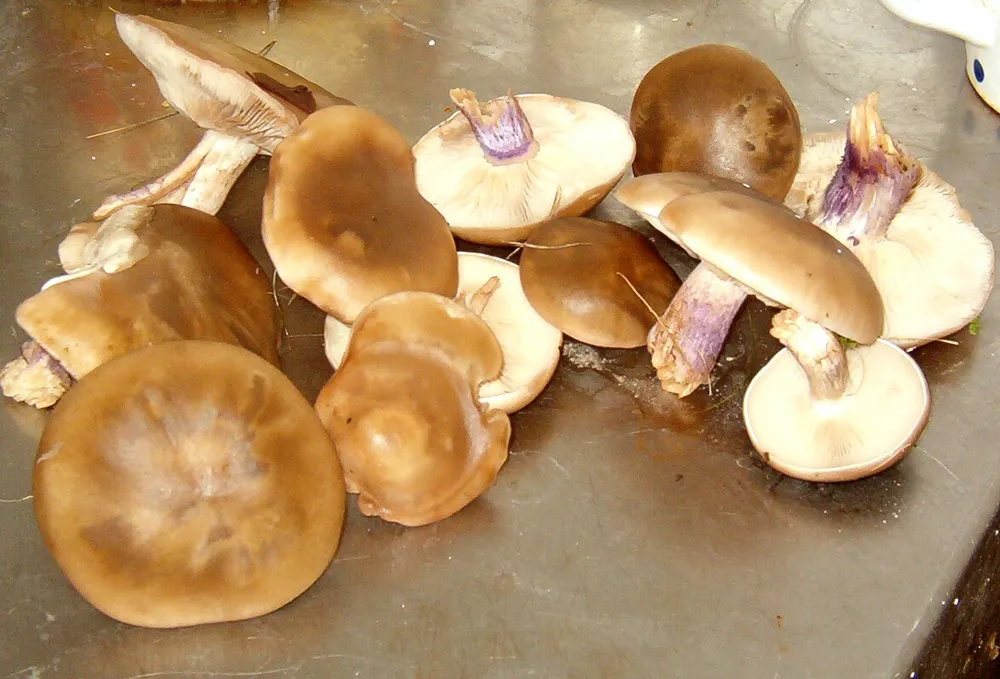
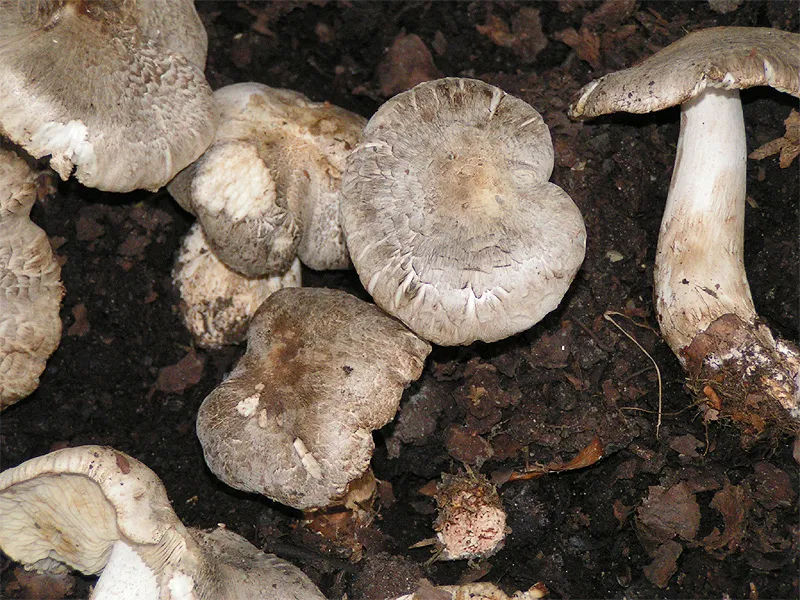
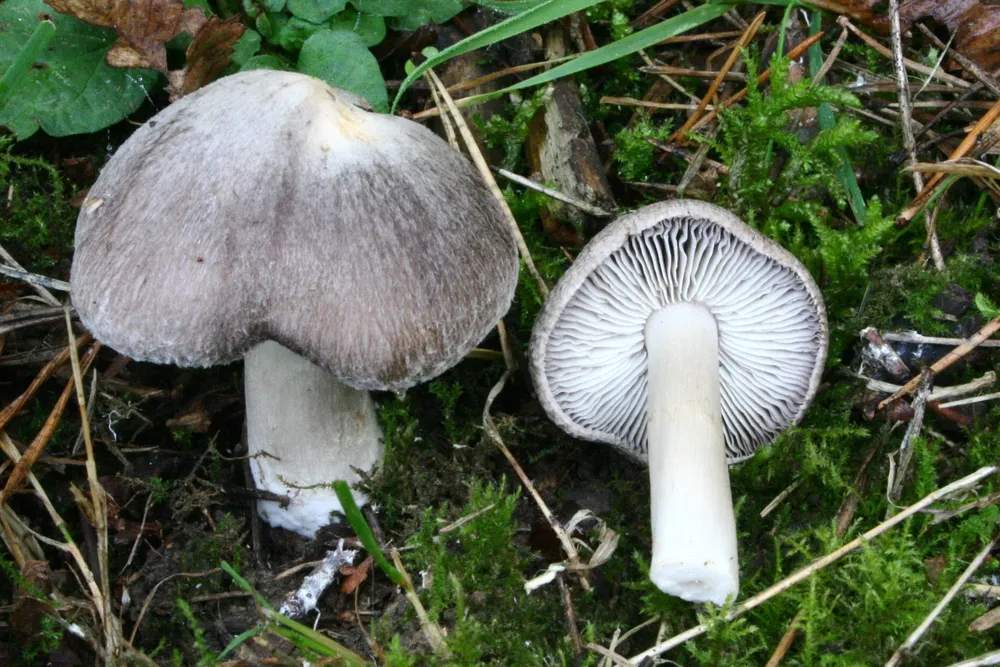
- **Charbonnier and grey knight** (Tricholoma portentosum and Tricholoma terreum), mushrooms of pine woods. The grey knight is cooked only after boiling and pouring the water away.
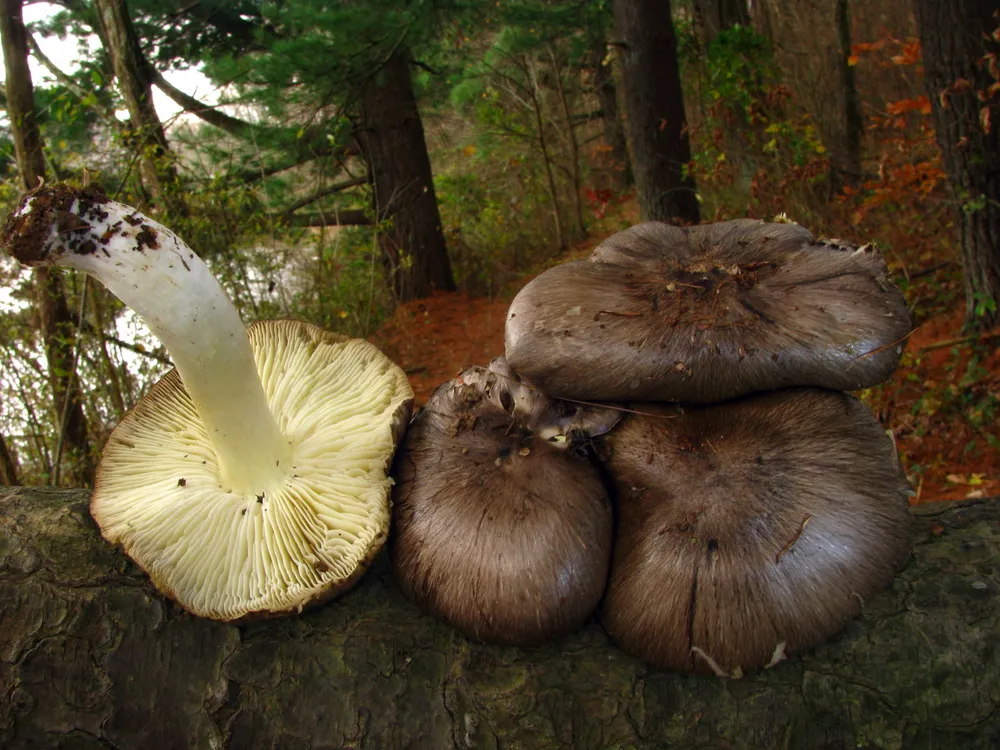
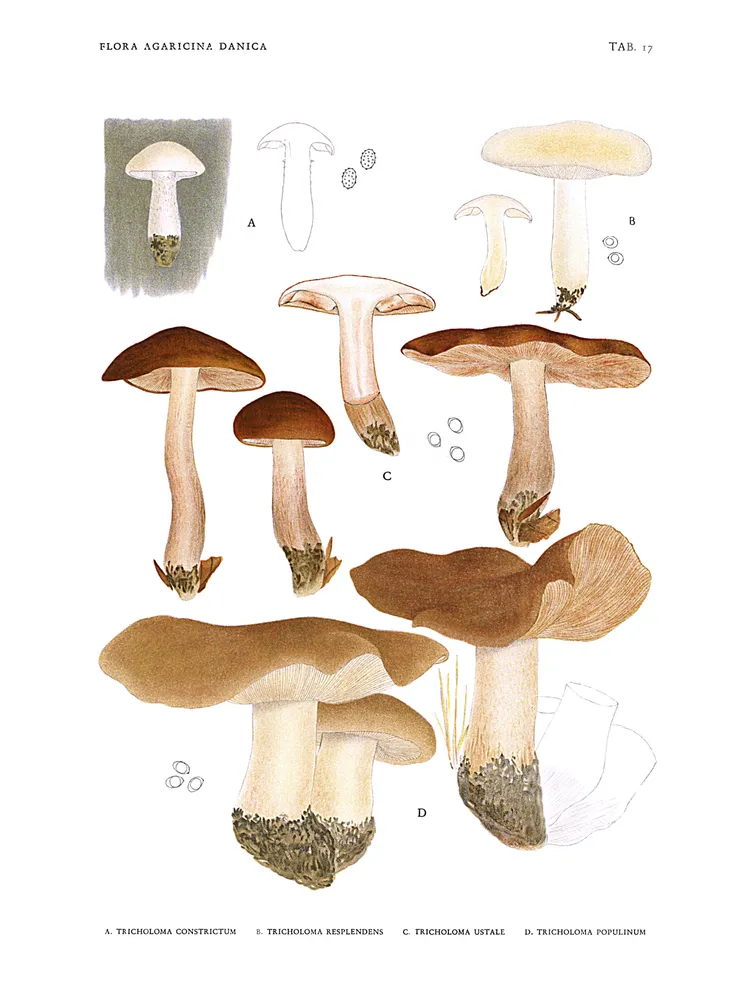
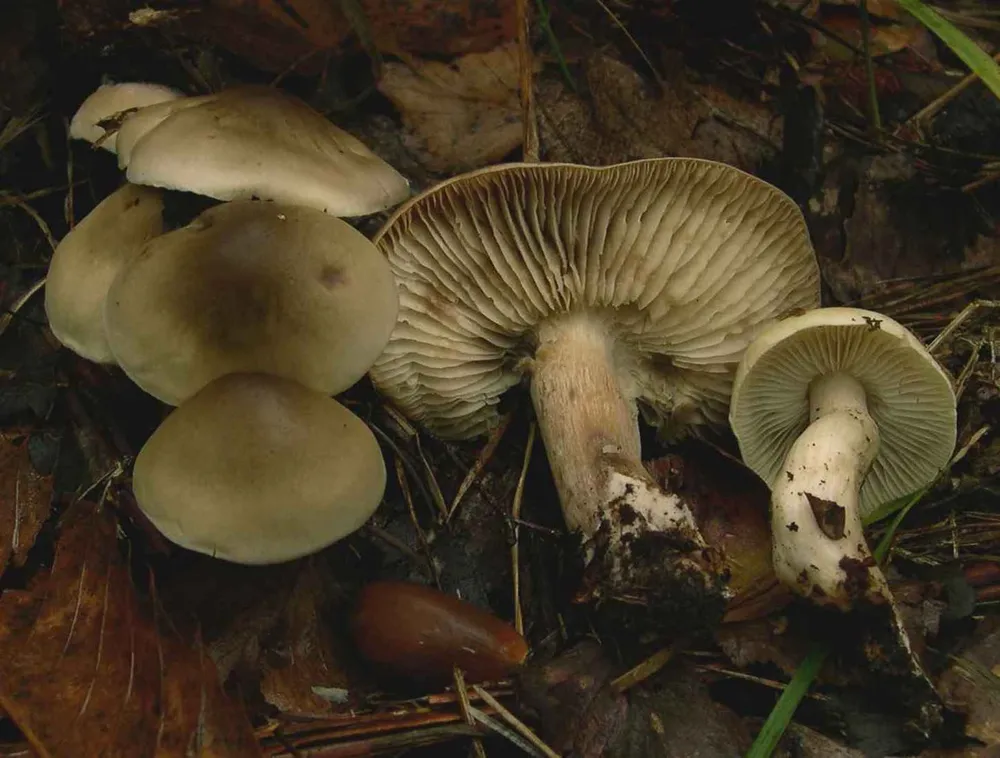
- **Poplar knight** (Tricholoma populinum), a mushroom of poplar plantings. Conditionally edible, boiling is mandatory.
- **Tiger tricholoma** (Tricholoma pardinum), poisonous. This is the one you must not mistake for anything else under any circumstances.
Two warnings worth remembering while you are still in the kitchen.
First: “grey tricholoma” is a name that several different mushrooms travel under, and it is in the grey group that mistakes happen. Before you carry a grey tricholoma to the pot, check its features against our descriptions: soapy knight and, in more detail, how to identify the soapy knight.
Second: the yellow knight, Tricholoma equestre, is a species of its own, not the charbonnier under another name. It comes with its own, more serious warnings, so this kitchen guide does not cover it.
We have put together a full run-through of the species in the guide to Tricholoma species, and the dangerous lookalikes in the articles on Tricholoma lookalikes and on poisonous Tricholomas. If you are not sure, the tricholoma stays in the forest, not in the pot.
Salting, pickling or freezing
Tricholomas hold up well in preserves, because their flesh is firm rather than watery. Every route starts the same way: clean them, boil them for 15 minutes, pour the water away, drain them in a colander and let them cool.
- Frying. The simplest and the tastiest option. The boiled mushrooms go into the pan, fried with onion, salted at the end, with sour cream added if you like.
- Salting. For the wood blewit this is the classic: it is salted down for the pantry. The scheme is the usual one, boiled mushrooms, salt, spices, cold and patience.
- Pickling. Again, after boiling. Make the marinade to your usual recipe, a tricholoma does not go soggy in it and stays springy.
- Freezing. Freeze them already boiled and thoroughly cooled, divided into portions: mushrooms should not be thawed twice.
- Drying. The wood blewit is dried as well, it gives up water readily and does not crumble.
One rule applies to any home-made mushroom preserves: hermetically sealed jars mean a risk of botulism, which we wrote about in detail in the article how to pickle mushrooms. It is safer to rely on salting or on a marinade with acid in it, and to keep your preserves cold.
How many tricholomas you can eat
Even with a good mushroom, the amount matters. Public health guidance in Ukraine advises eating no more than 200–250 g of wild mushrooms per adult per week: the mushroom is hard to digest and it accumulates whatever is in the soil.
And for children under 12, Ukraine's Public Health Centre advises not giving wild mushrooms at all. Tricholomas are no exception here, not even the tastiest wood blewit.
Sources
- Wood blewit in the Ukrainian Wikipedia, the source of the recommendation to boil for 15 minutes and pour the water away.
- Recommendations of the German Federal Institute for Risk Assessment (BfR) and the German Mycological Society (DGfM) on the heat treatment of wild mushrooms.
- Consumer guidance from the German federal state of Hesse on heating mushrooms to 70 °C.
- Recommendations of the Public Health Centre of Ukraine's Ministry of Health on eating wild mushrooms.
Frequently asked questions
How long do you boil tricholomas?
15 minutes from the boil, and pour the water away. This is exactly the advice for the , and it is the benchmark for the other tricholomas. The main thing is that a real boil holds for all 15 minutes, not a barely visible simmer.
Do you need to pour away the water tricholomas were boiled in?
Yes, always. The water tricholomas were boiled in is poured away: along with it go the earthy taste and whatever the mushroom took up from the soil. This water is not used for soup.
Can you fry tricholomas without boiling them first?
No. Tricholomas are conditionally edible mushrooms, and they are not cooked fresh. First boil them for 15 minutes and pour the water away, and only then fry them. That way the mushroom is both safer and better tasting.
Why do tricholomas smell of earth?
Because they grow right in the forest litter, and that smell sits in the skin of the cap. It passes easily into the water, so after boiling and pouring the water away it becomes noticeably weaker. Peeling the skin off the cap and taking young mushrooms help too.
Which tricholomas are edible and which are not?
The ones that most often reach the table are the , a conditionally edible mushroom of high quality, and the . and are cooked only after boiling. And the is poisonous, and boiling does not make it safe.
Can you salt and pickle tricholomas?
You can, and they hold their shape better than many other mushrooms. The wood blewit is traditionally salted down and dried for the pantry. Both salting and pickling start with the same step: boil for 15 minutes and pour the water away.
Can you freeze tricholomas?
Yes, but only once they are boiled. Boil them for 15 minutes, pour the water away, drain them in a colander, cool them thoroughly and divide them into portions. Mushrooms should not be thawed a second time.
How many tricholomas can you eat at one time?
Public health guidance in Ukraine advises eating no more than 200–250 g of wild mushrooms per adult per week, and tricholomas are no exception. For children under 12, Ukraine's Public Health Centre advises not giving wild mushrooms at all.
Mushrooms in this article
Related articles
 Recipes & cooking
Should you drain the water after boiling mushrooms?
The answer is not the same for every mushroom: porcini and chanterelles need only one boil, while honey mushro…
October 4, 2026·9 min Recipes & cooking
How to clean and cook brittlegills
Despite a Ukrainian name that literally says “eat it raw”, brittlegills are never eaten raw. Here is how to ta…
October 4, 2026·8 min Recipes & cooking
How to store fresh mushrooms, and for how long
Fresh mushrooms spoil faster than you might think. Here's how long they keep in the fridge, how to store them…
August 21, 2026·4 min