Silky rosegillVolvariella bombycina
Expert-verifiedUpdated October 3, 2026
Passport
- Edibility
- Edible
- Season
- Jun — Oct
- Hymenophore
- Gilled
- Cap color
- White
- Size
- Large (over 15 cm)
- Smell
- Odorless
- Reviewed
- Yes ✓
Quick answers
Where to look?
Deciduous forest, Mixed forest
When does it appear?
Jun — Oct
Active months: June, July, August, September, October.
How to recognize it? Three signs
- Cap color: White, Cream, Brown
- Cap shape: Convex
- Smell: Odorless
Fruiting season
June – October
Description
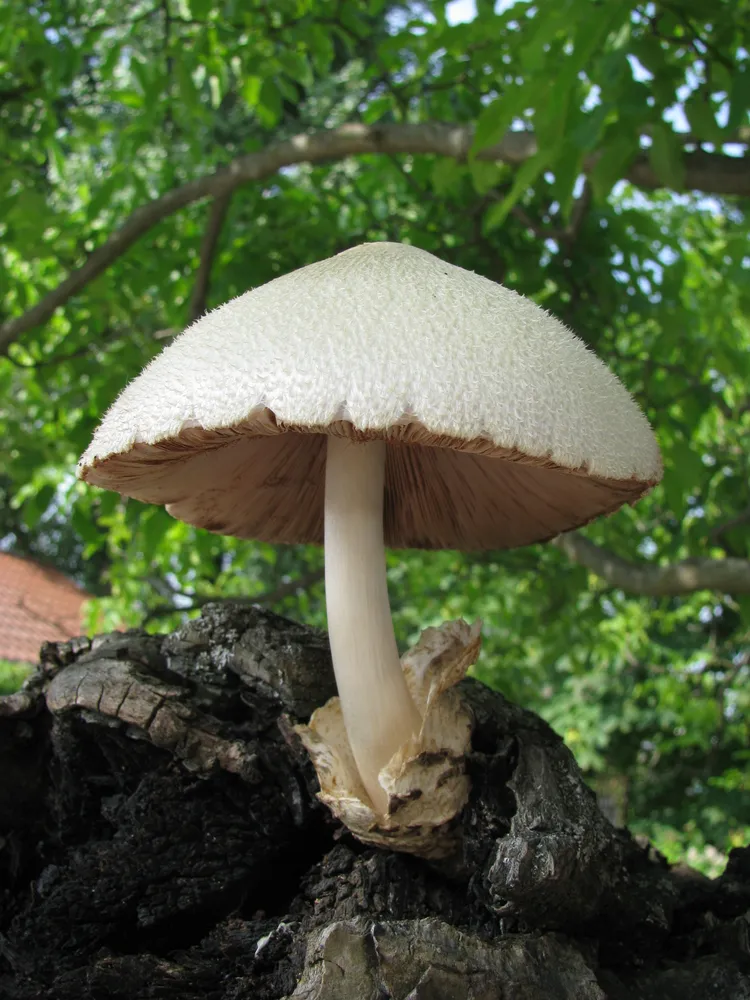
The Silky rosegill is the most beautiful member of its genus. A large cap with a silky sheen, like fine fabric in ochre and cream tones, sits on a tall stem rising from a white sac-like volva. It grows not on the ground but straight out of the tree — on living and dead trunks of deciduous trees, often high above the ground.
This is an edible mushroom, but little known — traditional foragers tend to overlook it. It's eaten only fresh and young, before the cap fully opens. The taste is delicate and mushroomy, without sharp notes, but the flesh quickly turns watery with age. Large specimens are a treat for the eye, but for cooking it's better to take only young ones — and only when you're sure of the identification.
In Ukraine it grows in deciduous and mixed forests, on trunks and stumps of elm, aspen and poplar, less often maple and birch. The season is long — summer and autumn. It's rare, but found throughout the forest zone.
Cap
Cap 7-18 cm, egg-shaped or bell-shaped at first, then expanding to conical with an umbo. White or cream, ochre-brown in the center, with silky, fibrous scales in a radial pattern. Silky to the touch, with a matte sheen. The margin is often fringed with remnants of the veil.
Hymenophore
Gilled hymenophore. Gills 6-12 mm wide, free (not attached to the stem), crowded. White at first, turning pink with age, then pinkish-brown. Spore print pink — a key feature.
Stem
Stem 7-19 cm tall, 1-2.5 cm thick, central, cylindrical, slightly thickened toward the base. White, smooth. No ring. At the base there's a large, sac-like white or grayish volva that hugs the stem tightly, with a wide upper rim.
Flesh
The flesh is white, firm in young mushrooms, quickly yellowing and turning watery with age. It may turn slightly yellow when cut. It doesn't keep — use it on the day you pick it.
Smell
Faint mushroomy smell. Mild, delicate taste with no pronounced notes. Some sources describe a barely noticeable radish-like hint in young specimens.
›Scientific synonyms (6)
Agaricus bombycinus Schaeff. (1774), Agaricus denudatus Batsch (1783), Amanita calyptrata Lam. (1783), Pluteus bombycinus (Schaeff.) Fr. (1836), Volvaria bombycina (Schaeff.) P.Kumm. (1871), Volvariopsis bombycina (Schaeff.)
Lookalikes
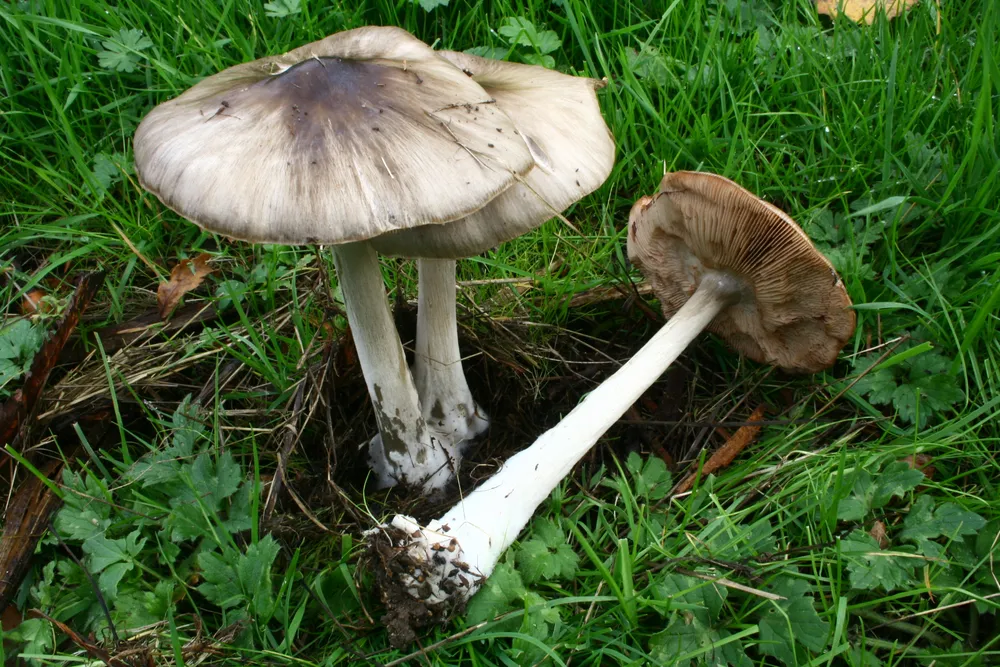
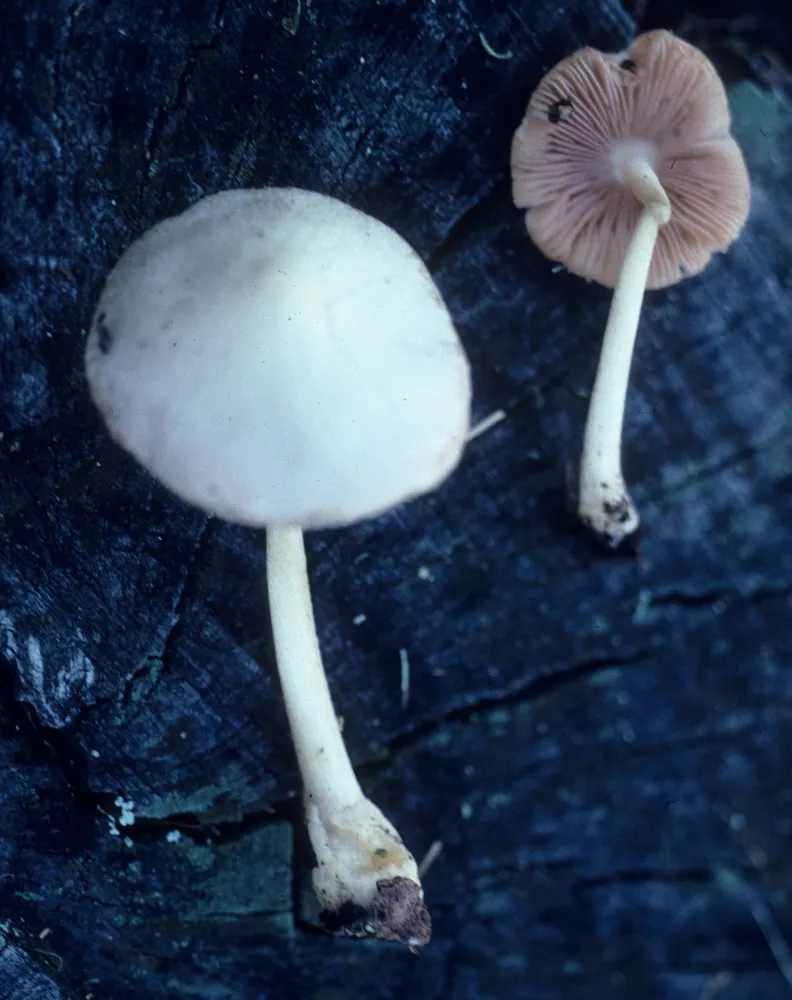
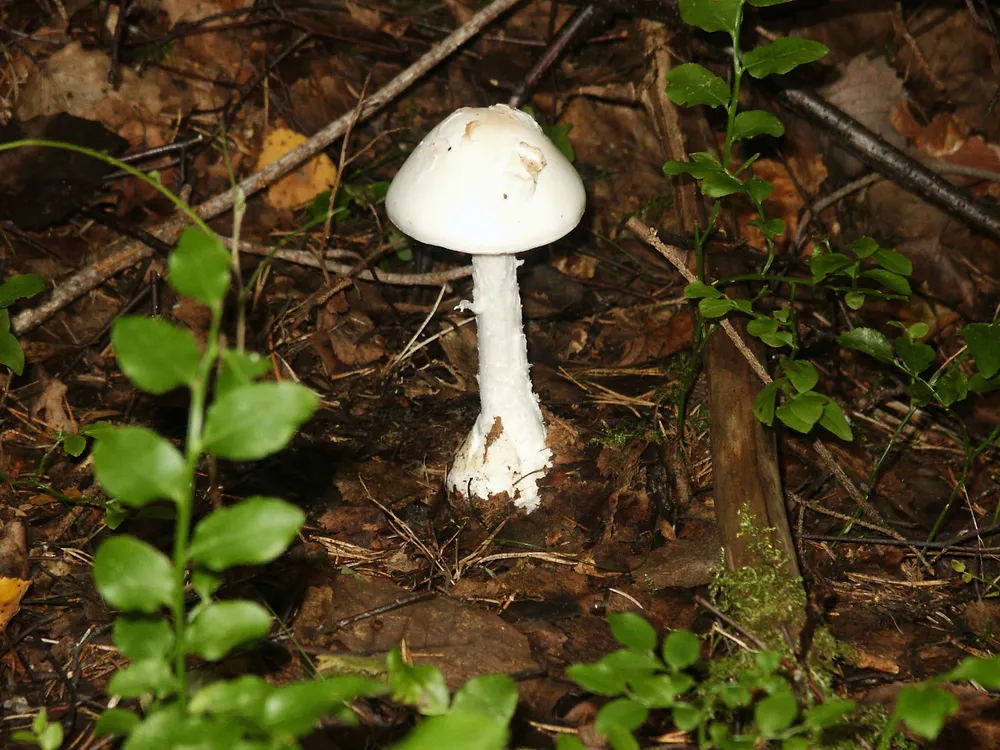
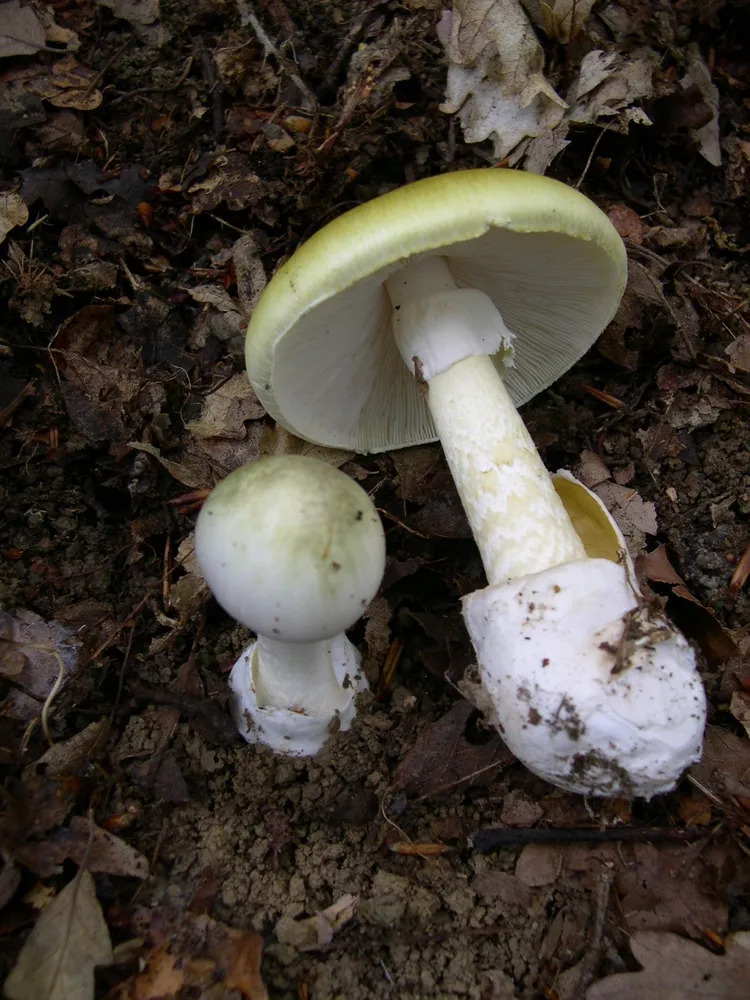
Related species
Mushrooms of the same genus and habitat — to study side by side and never mix up.
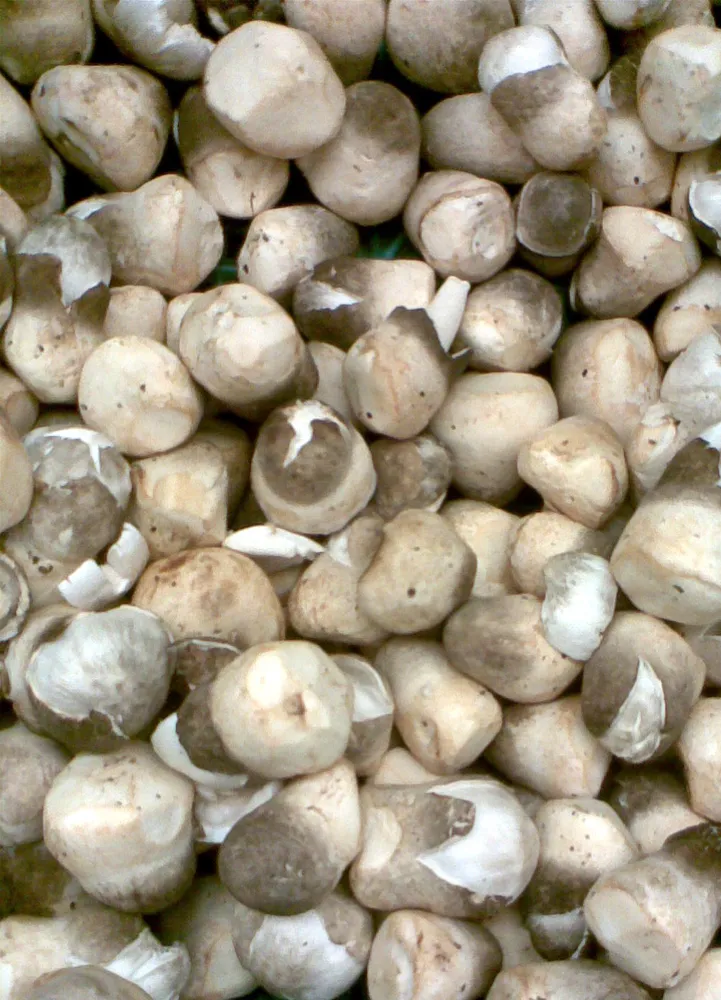
Paddy straw mushroom
Volvariella volvacea
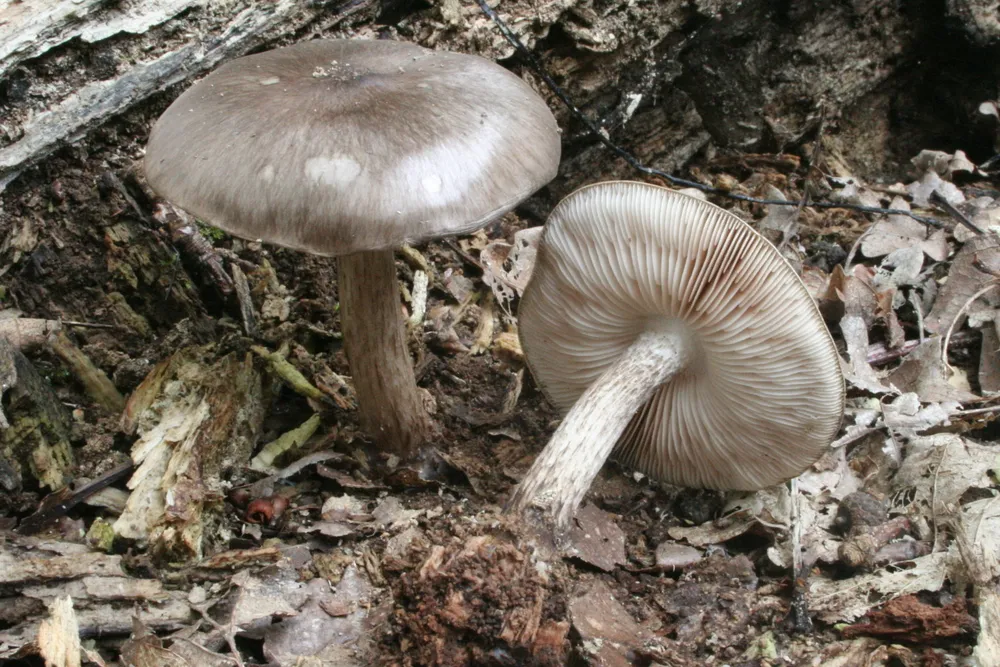
Deer shield
Pluteus cervinus
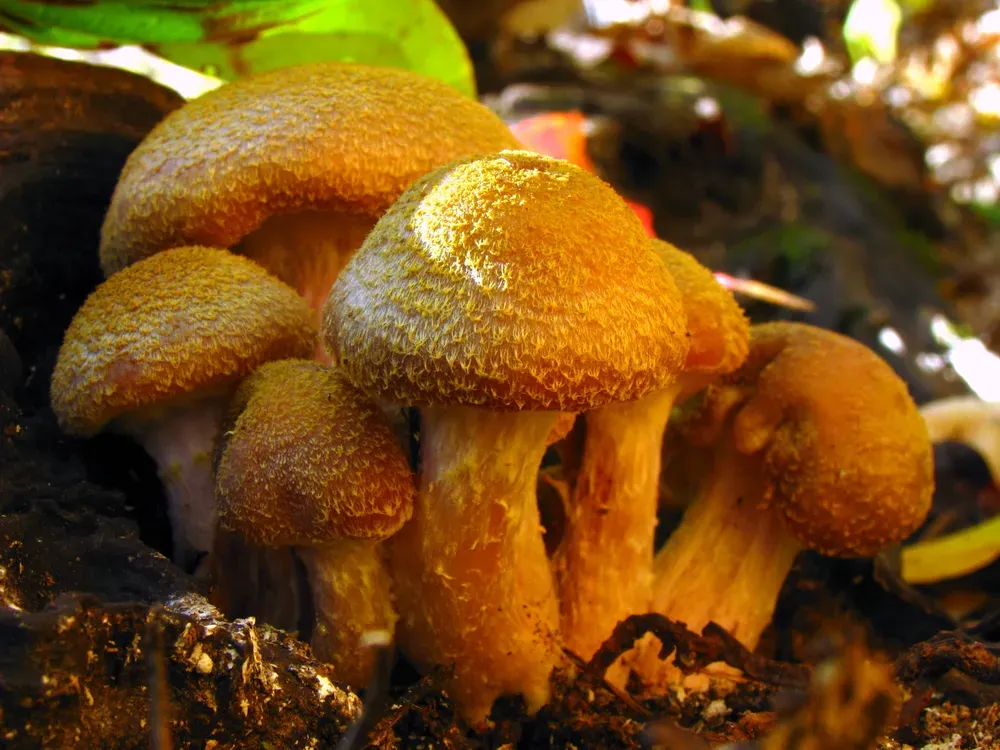
Bulbous honey fungus
Armillaria gallica
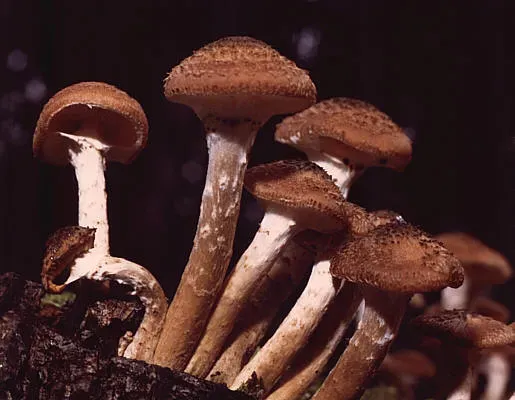
Dark honey fungus
Armillaria ostoyae
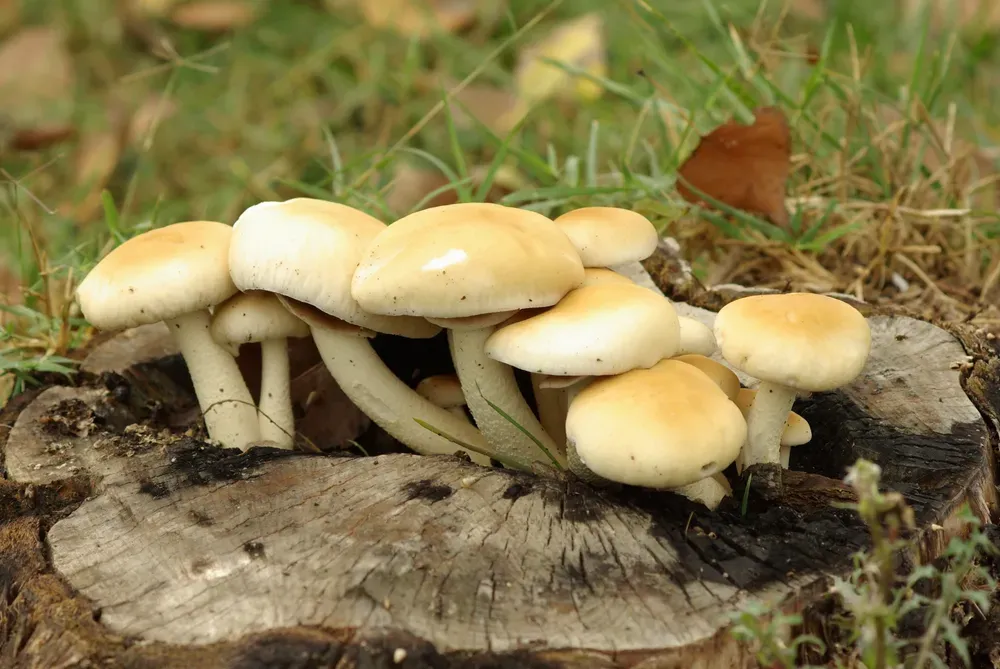
Poplar fieldcap
Cyclocybe aegerita
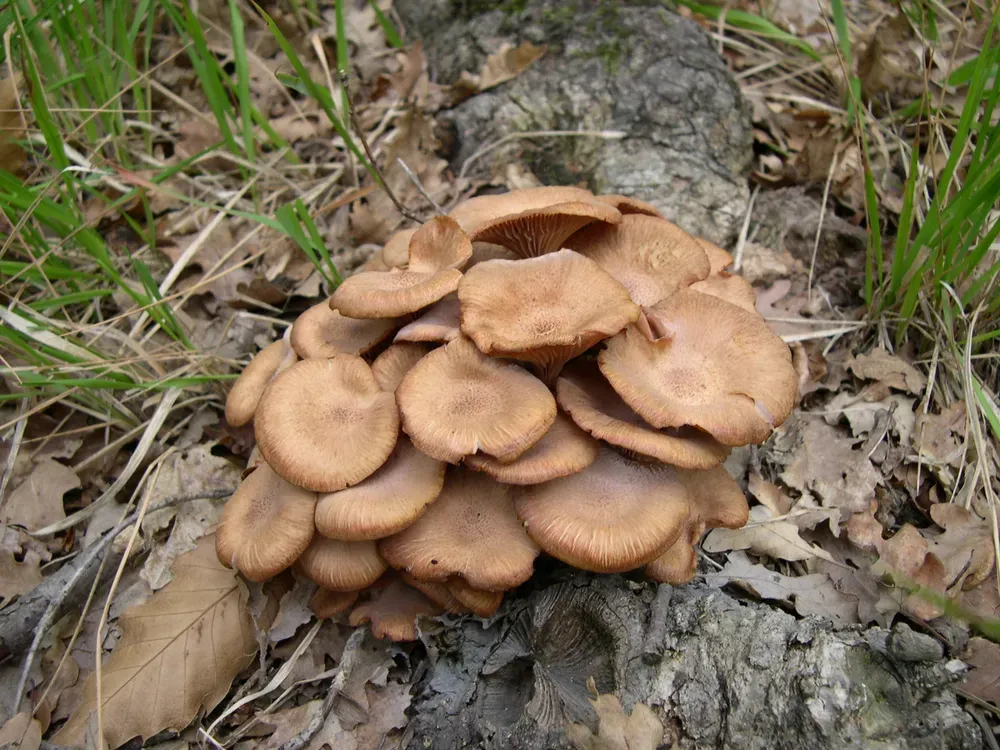
Ringless honey fungus
Desarmillaria tabescens
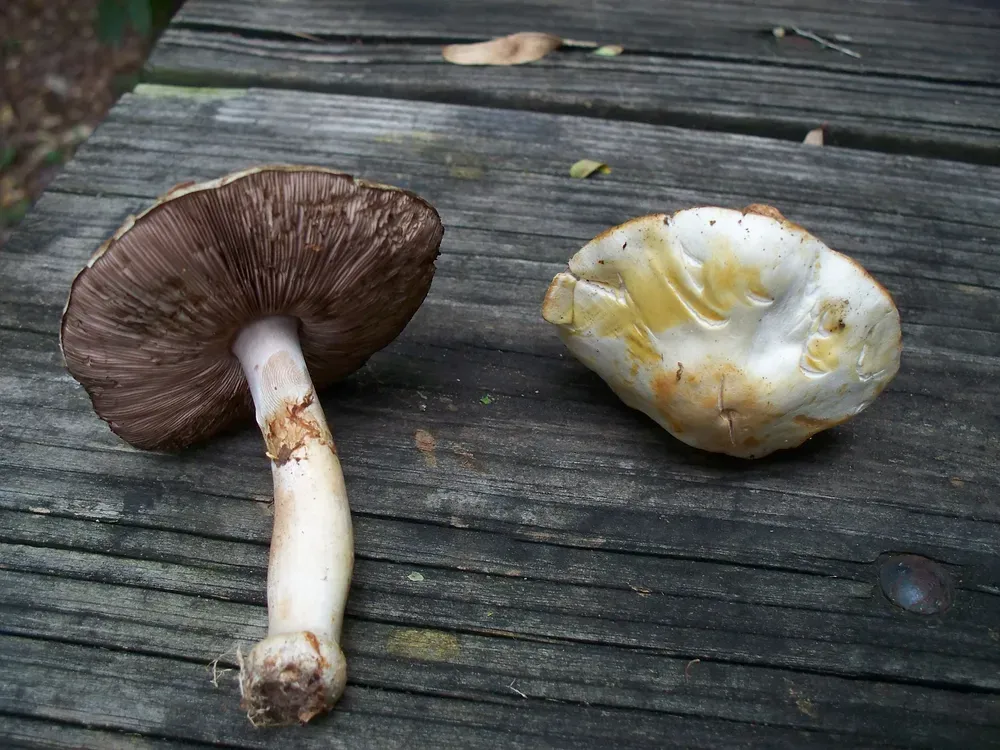
Agaricus abruptibulbus
Agaricus haemorrhoidarius
Agaricus haemorroidarius
Frequently asked questions
Can you eat it?
Yes, the mushroom is edible fresh. Take only young specimens with gills still white and firm flesh. Cook it right away — it spoils fast. Drying and preserving don't work — the watery flesh loses its shape.
Could you confuse it with an amanita?
The silhouette really does resemble an amanita — a white volva, a tall stem. But the key differences: Volvariella has no ring on the stem, and its gills turn pink with age. Besides, the Silky rosegill grows on wood, while dangerous amanitas (Amanita phalloides, A. virosa) grow on soil. That's a strong marker.
Where should you look for it?
On living and dead trunks of deciduous trees — especially elm, aspen and poplar, less often maple and birch. It often grows in tree hollows, on damaged spots and on stumps. It can fruit high above the ground — at a height of 2-5 meters.
Which regions of Ukraine is it found in?
Throughout the forest zone wherever there are deciduous trees — the Carpathians, Polissia, the Forest-Steppe and mountainous Crimea. Finds are reported in Zakarpattia and the Chernihiv, Kyiv and Poltava regions. Regularly, but not in large numbers.
When does it appear?
June–October. A summer-autumn species that loves warmth and moisture. Peak fruiting is August–September after good rains.
How fast does it spoil?
Very fast. A young mushroom is fit to eat for 1-2 days. By the third day the flesh turns watery, the cap darkens and an unpleasant taste appears. Pick it and cook it the same day.
What is it confused with?
The most dangerous confusion is with the Destroying angel (Amanita virosa) and the Death cap (Amanita phalloides). They also have a volva, and some forms lack a ring. The main difference: amanitas grow on soil, the Silky rosegill on wood. Plus, Volvariella gills turn pink.
How do you tell it from other Volvariellas?
The Silky rosegill is the largest (cap up to 18 cm) and the only one that grows on wood. The Stubble rosegill (V. gloiocephalus) grows on soil and is smooth. Volvariella hypopithys is small and lives in conifer forests. If you find a large one with a silky cap on a trunk — it's almost certainly V. bombycina.
Is Silky rosegill edible or poisonous?
Does Silky rosegill have gills or pores?
What does the cap of Silky rosegill look like?
What does the stem of Silky rosegill look like?
Sources
- [1]Вікіпедія (українська)
- [2]Атлас грибів України, Зеров Д.К. (1979)
- [3]MycoBank Database
- [4]Index Fungorum
- [5]GBIF
- [6]iNaturalist Ukraine