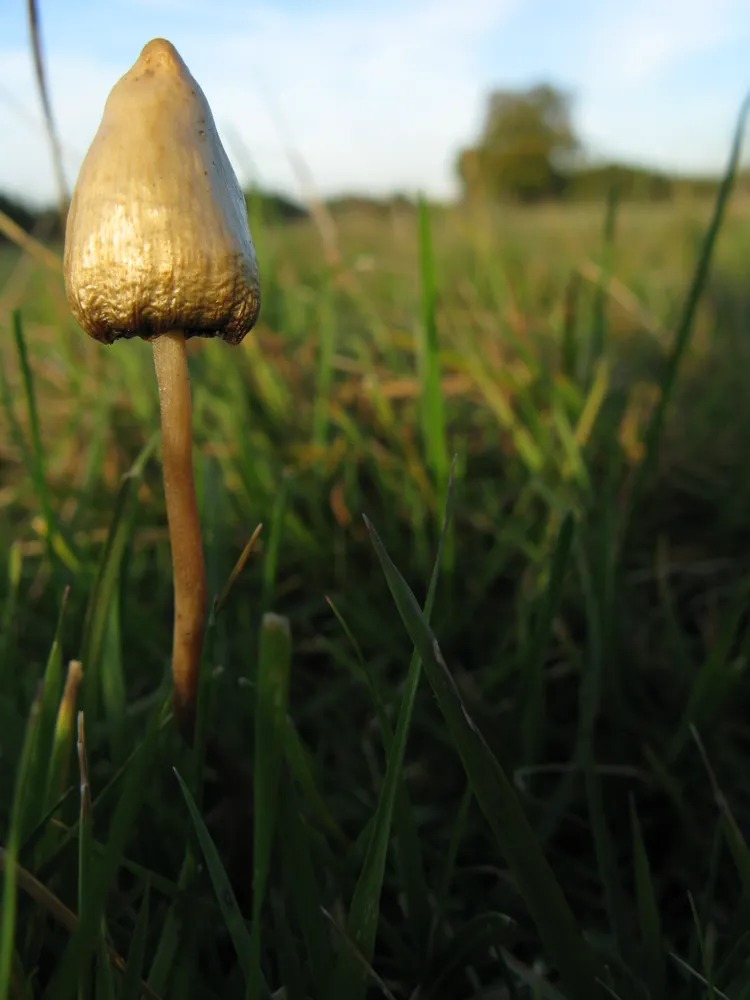
Liberty capPsilocybe semilanceata
Expert-verifiedUpdated October 3, 2026
Passport
- Edibility
- Poisonous
- Season
- Sep — Nov
- Hymenophore
- Gilled
- Cap color
- Brown
- Size
- Very small (<3 cm)
- Smell
- Floury
- Reviewed
- Yes ✓
POISONOUS
Eating it causes poisoning. Do not pick it unless you have identified it with certainty.
If you suspect poisoning, call an ambulance immediately: 112 (the European emergency number) or your local emergency number
Quick answers
Where to look?
Deciduous forest
When does it appear?
Sep — Nov
Active months: September, October, November.
How to recognize it? Three signs
- Cap color: Brown, Yellow, Olive
- Cap shape: Conical
- Smell: Floury, Odorless
Fruiting season
September – November
Description
Liberty cap (Psilocybe semilanceata), known in Ukrainian folk speech as the "pointed cap" or "magic mushroom", and in Western literature as "Liberty Cap" — Europe's best-known psychoactive mushroom, containing psilocybin and psilocin — substances that act on serotonin receptors in the central nervous system and cause intense hallucinatory experiences. It's small (cap 1-2.5 cm, stem 5-10 cm) and unremarkable to look at — but chemically one of the most potent natural psychedelics.
In Ukraine, psilocybin and psilocin are controlled substances (List of narcotic drugs, psychotropic substances and precursors approved by Cabinet of Ministers Resolution No. 770). Picking, possessing, cultivating and using it are criminal offenses. This is a matter not of mycology but of the criminal code.
Beyond the legal ban, it is psychologically dangerous: unprepared use can cause severe panic attacks and psychotic episodes, and in predisposed people it can trigger latent mental disorders (schizophrenia, bipolar disorder). Therapeutic research on psychedelics is carried out only in clinical settings under medical supervision — it's not "something to try with friends in the woods".
This mushroom is in the catalog because recognizing it in the field is part of mycological literacy. If you find it, photograph it for iNaturalist UA, don't pick it, don't try it, don't pass it on.
In Ukraine it's widespread in meadows and pastures, especially on manured ground and near livestock farms: the Carpathians (mountain meadows), Prykarpattia, Polissia, less often the forest-steppe. Saprotroph. Season: September — November, peaking in October. It often grows in groups of 10-100 fruiting bodies in the grass.
Cap
The cap is small, 1-2.5 cm across, sharply conical or bell-shaped with a pronounced pointed knob in the center — hence the epithet semilanceata ("half-lance-shaped"). The cap skin is smooth, slimy in wet weather, dry with lengthwise grooves in dry weather. Color ochre-cream; olive-brown with a greenish tint in wet weather, pale cream in dry weather. The pointed central knob — the most characteristic diagnostic feature.
Hymenophore
Gilled hymenophore — the gills are attached to the stem, moderately crowded. In young ones they're grayish-cream, darkening with age to purplish-blackish as the spores mature. Spore print dark purple-black — a diagnostic feature of the genus Psilocybe.
Stem
Stem 5-10 cm tall, 0.15-0.3 cm thick — very long and thin, often curved. Color yellow-cream to light brown. The surface is smooth with fine lengthwise fibers. No ring — this is essential. It often turns blue when damaged — a characteristic psilocybin reaction (one of the diagnostic tests).
Flesh
Flesh very thin, soft, yellowish to greenish. It quickly turns blue to blue-green when cut or damaged — a characteristic reaction of psilocybin alkaloids on contact with air. The smell is faint, mealy in some populations.
Smell
Faint, neutral or mealy, nothing distinctive. The smell is not a warning sign.
›Scientific synonyms (3)
Agaricus semilanceatus Fr., Panaeolus semilanceatus (Fr.) J.E. Lange, Panaeolus semilanceatus (Fr.) J.E. Lange
Lookalikes
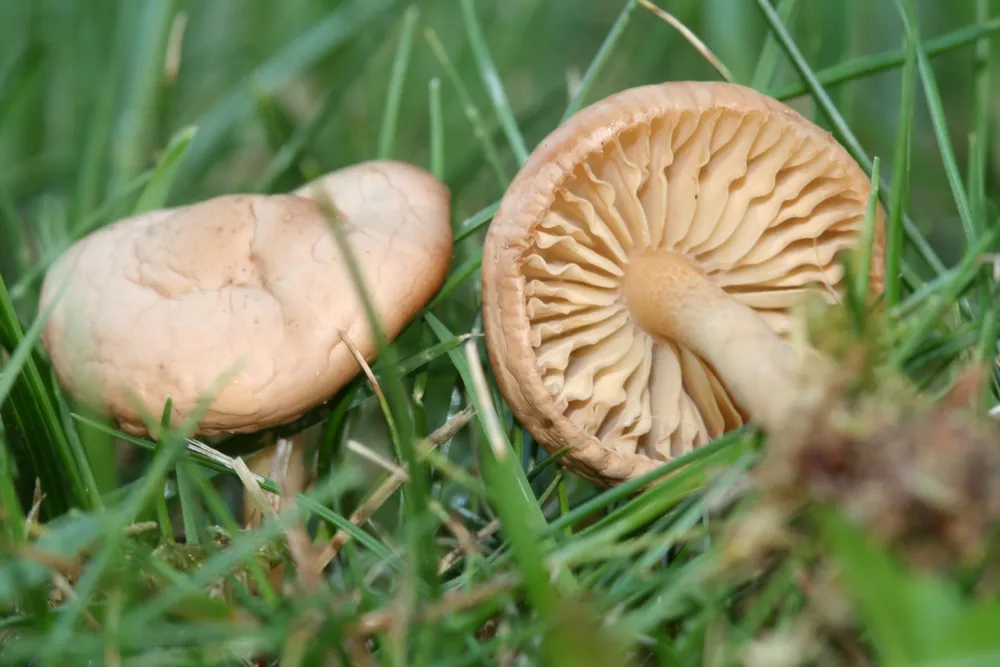
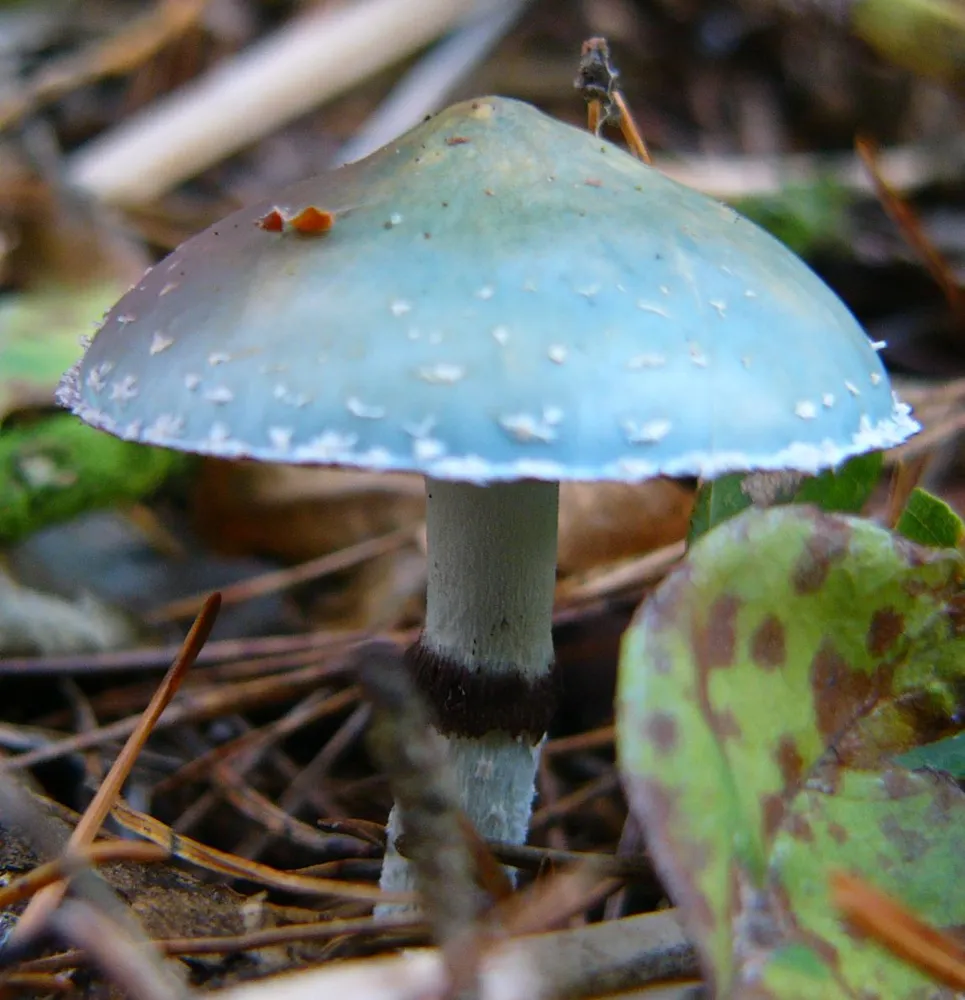
Related species
Mushrooms of the same genus and habitat — to study side by side and never mix up.
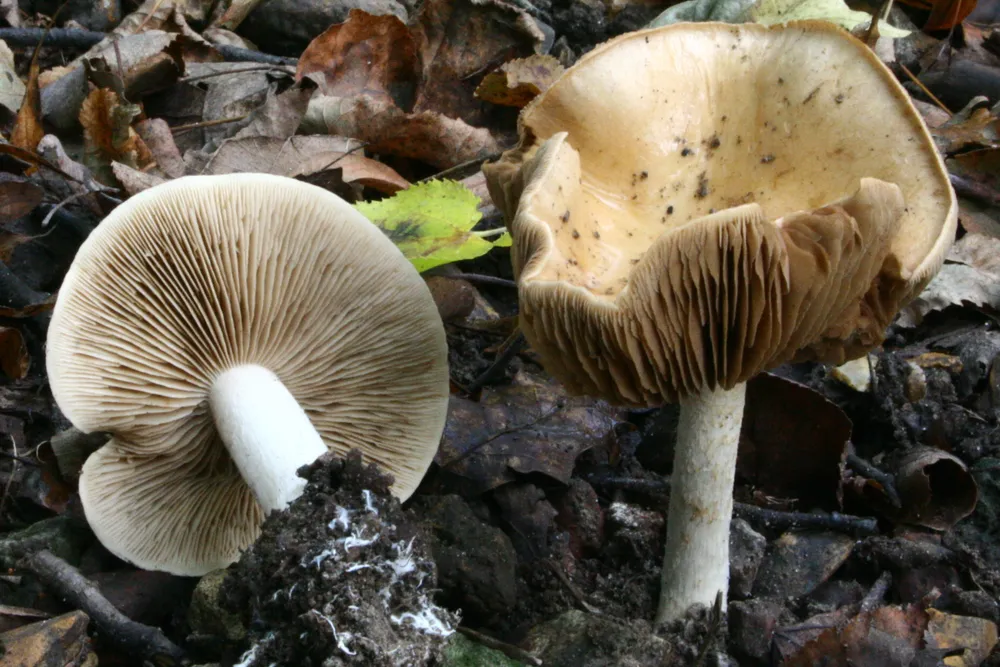
Poisonpie
Hebeloma crustuliniforme
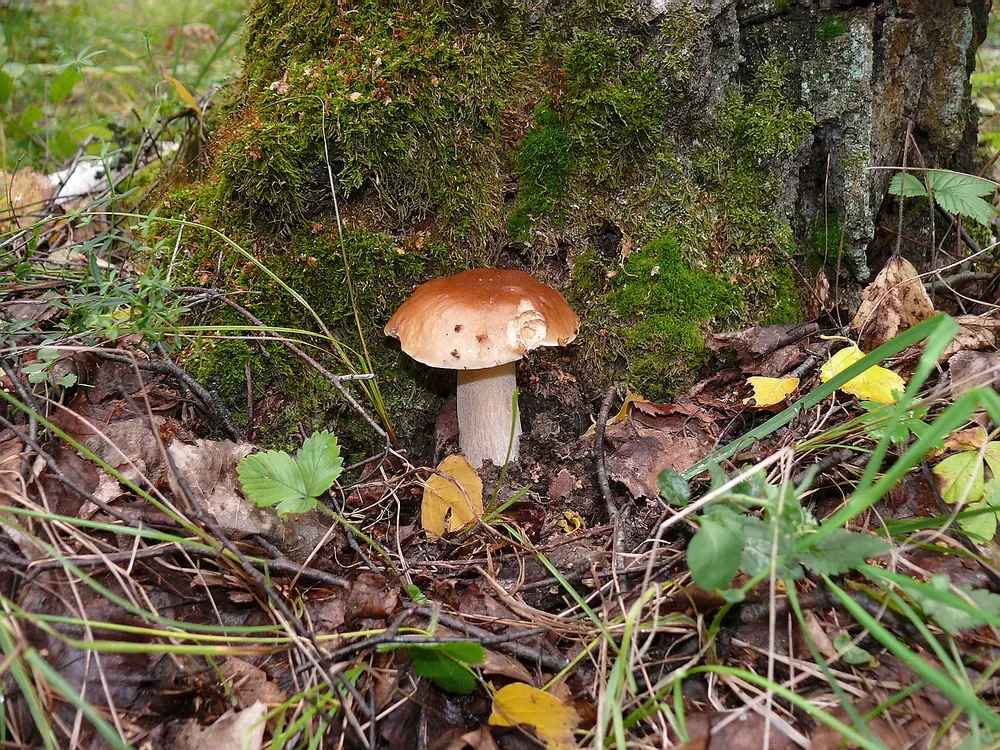
Boletus betulicola
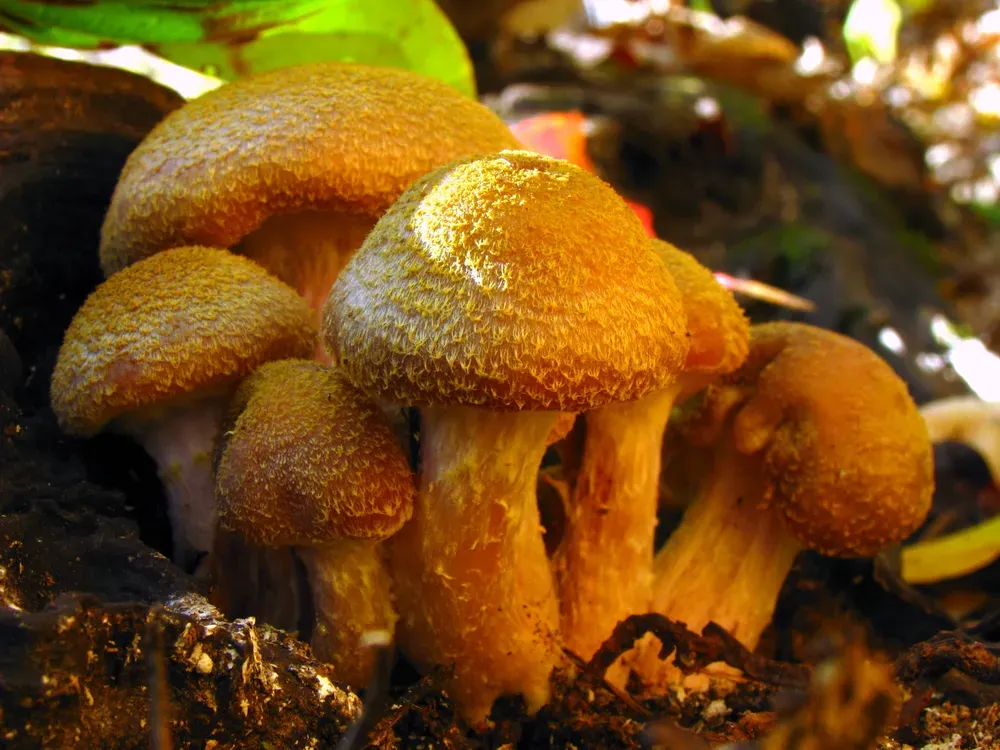
Bulbous honey fungus
Armillaria gallica
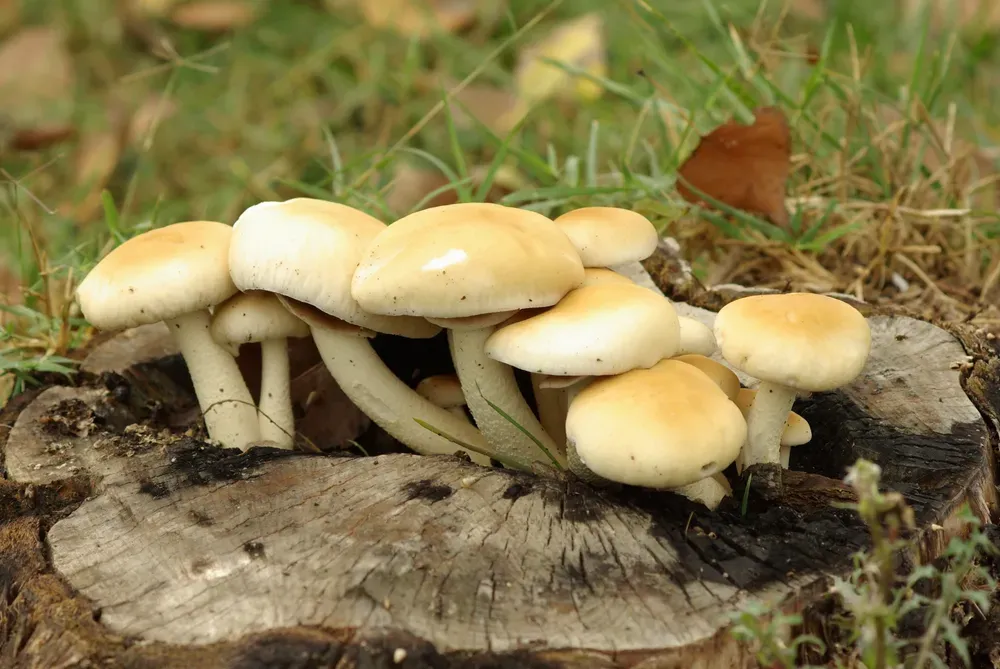
Poplar fieldcap
Cyclocybe aegerita
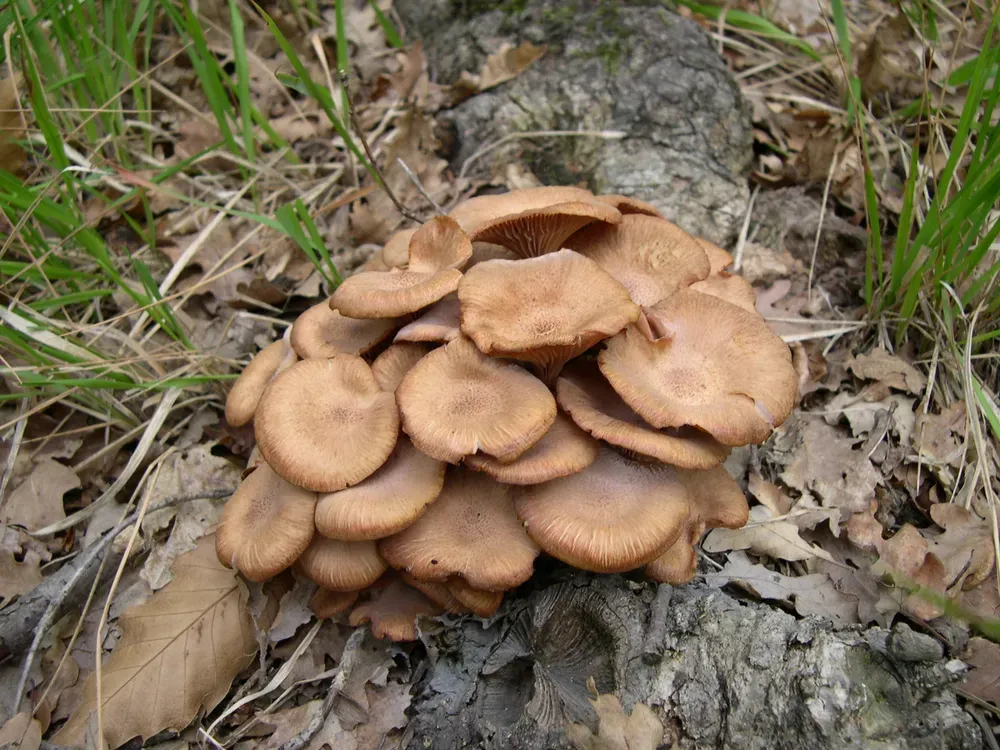
Ringless honey fungus
Desarmillaria tabescens
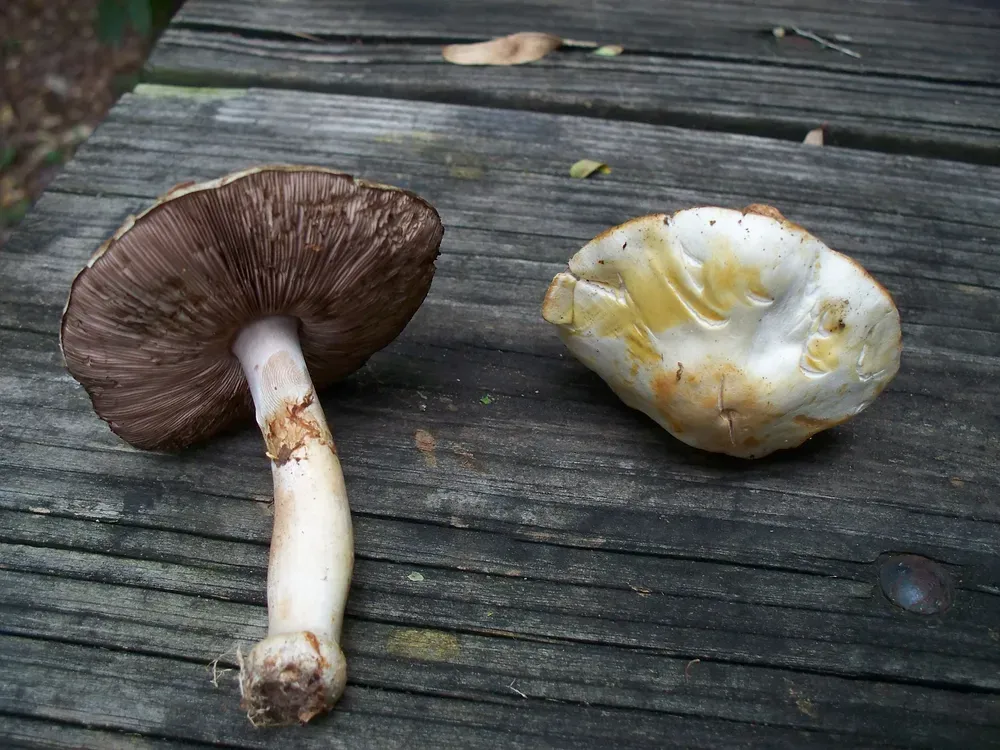
Agaricus abruptibulbus
Agaricus haemorrhoidarius
Agaricus haemorroidarius
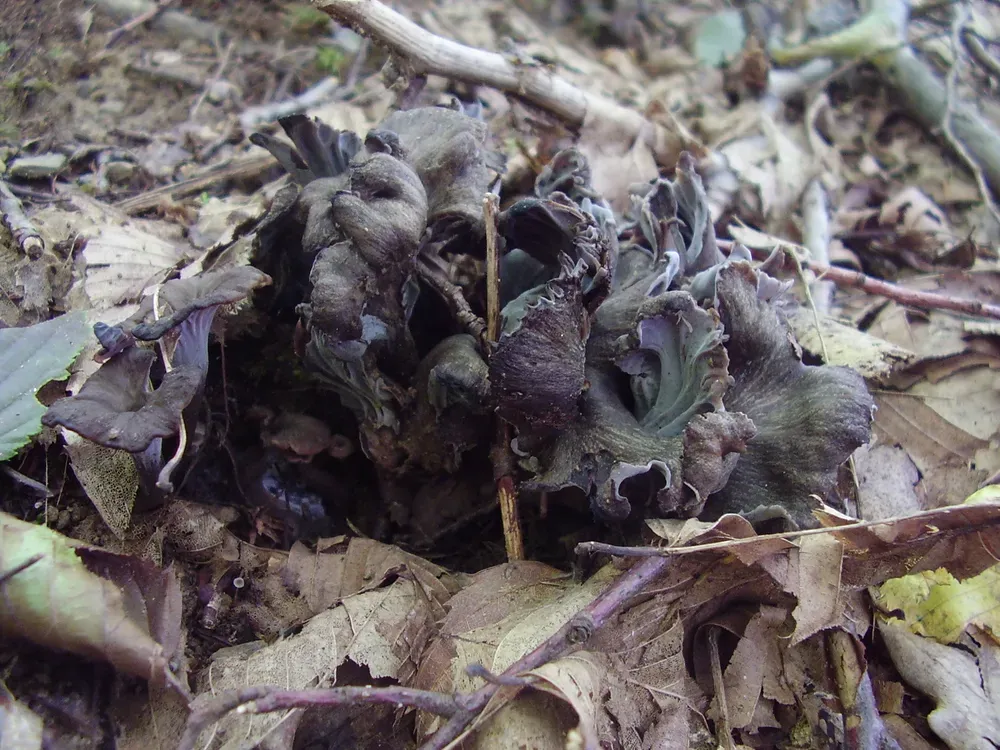
Ashen chanterelle
Cantharellus cinereus
Frequently asked questions
Can you eat it?
No. Legally — it's prohibited in Ukraine (psilocybin is on the list of narcotic substances). Medically — it's dangerous: severe panic attacks, a risk of triggering mental disorders. Ethically — this is not a recreational little mushroom but a powerful psychedelic with real consequences.
How do you identify it reliably, so you can avoid it?
Four features taken together. (1) A small cap (1-2.5 cm) with a pointed conical central knob — like the tip of an elf's hat. (2) A very long, thin stem (5-10 cm × 0.2 cm), often curved. (3) The flesh turns blue when damaged to blue-green. (4) A dark purple-black spore print. (5) Habitat — meadows and pastures, on manured soil, in the grass.
What happens if you eat it by accident?
After 20-40 min — a psychedelic effect (hallucinations, distorted perception), lasting 4-6 hours. It is not acutely lethal, but unprepared use is dangerous: severe panic attacks, risk of injury while trying to act in a psychotic state. Calling an ambulance is a must, especially for children, the elderly and people with a history of mental disorders.
Why is it a matter for the criminal code?
In Ukraine, psilocybin is classified as a narcotic/psychotropic substance because it has no recognized medical use and has potential for abuse. This is in line with the UN international conventions (1971). In some countries (Canada, some US states, Australia) psychedelic therapy for mental disorders is clinically permitted, but only under medical supervision in specialized centers, not privately.
And if I found it in the forest — is that a problem?
Finding and photographing it — that's fine, mycological curiosity. Cutting it, taking it, passing it on — counts as possession/distribution. The rule: if you find it, photograph it as it grows for iNaturalist UA, wash your hands, and move on. Don't touch it, don't pick it.
Where to look for it, so you learn to recognize it?
On meadows, pastures, forest edges, humus-rich spots, near livestock farms. Especially abundant on manured ground and where cattle have grazed for a long time. In the grass, among moss, in damp places.
Which regions of Ukraine is it found in?
Mostly in mountain and foothill areas with pastures and mountain meadows: the Carpathians (Zakarpattia, Lviv and Ivano-Frankivsk regions), Prykarpattia, less often Polissia and the forest-steppe on natural pastures.
When should you look for it?
Rather — "when to recognize it". September — November, peaking in October. A late-autumn species — it often fruits after the first light frosts, when most summer mushrooms are already gone.
Which mushrooms is it confused with?
With other small brown meadow mushrooms — Panaeolus, Conocybe, young bonnets (Mycena). Among them, some are psychoactive too (Panaeolus cinctulus, P. cyanescens — also contain psilocybin). The firm recommendation: never eat any small brown meadow mushrooms in any form, no matter how "familiar" they look.
Is Liberty cap edible or poisonous?
Does Liberty cap have gills or pores?
What does the cap of Liberty cap look like?
Sources
- [1]Вікіпедія (українська)
- [2]Атлас грибів України, Зеров Д.К. (1979)
- [3]MycoBank Database
- [4]Index Fungorum
- [5]GBIF
- [6]iNaturalist Ukraine